
Zirconium Frit: A Discovery Guide to Ceramic Frit Selection
Zirconium frit is a ceramic frit formulated with zirconium-bearing raw materials so that the fired glaze or engobe produces opacity and whiteness instead of transparency. It belongs to the opacifying side of the ceramic frit family, alongside titanium frit, and buyers reach for it when a tile surface has to cover the body colour, brighten a decorated design, or hold a uniform white appearance across a production run. This guide explains what zirconium frit does, how it relates to the other frit types used in ceramic tile manufacturing, and which documented parameters a buyer should confirm before fixing a formulation.
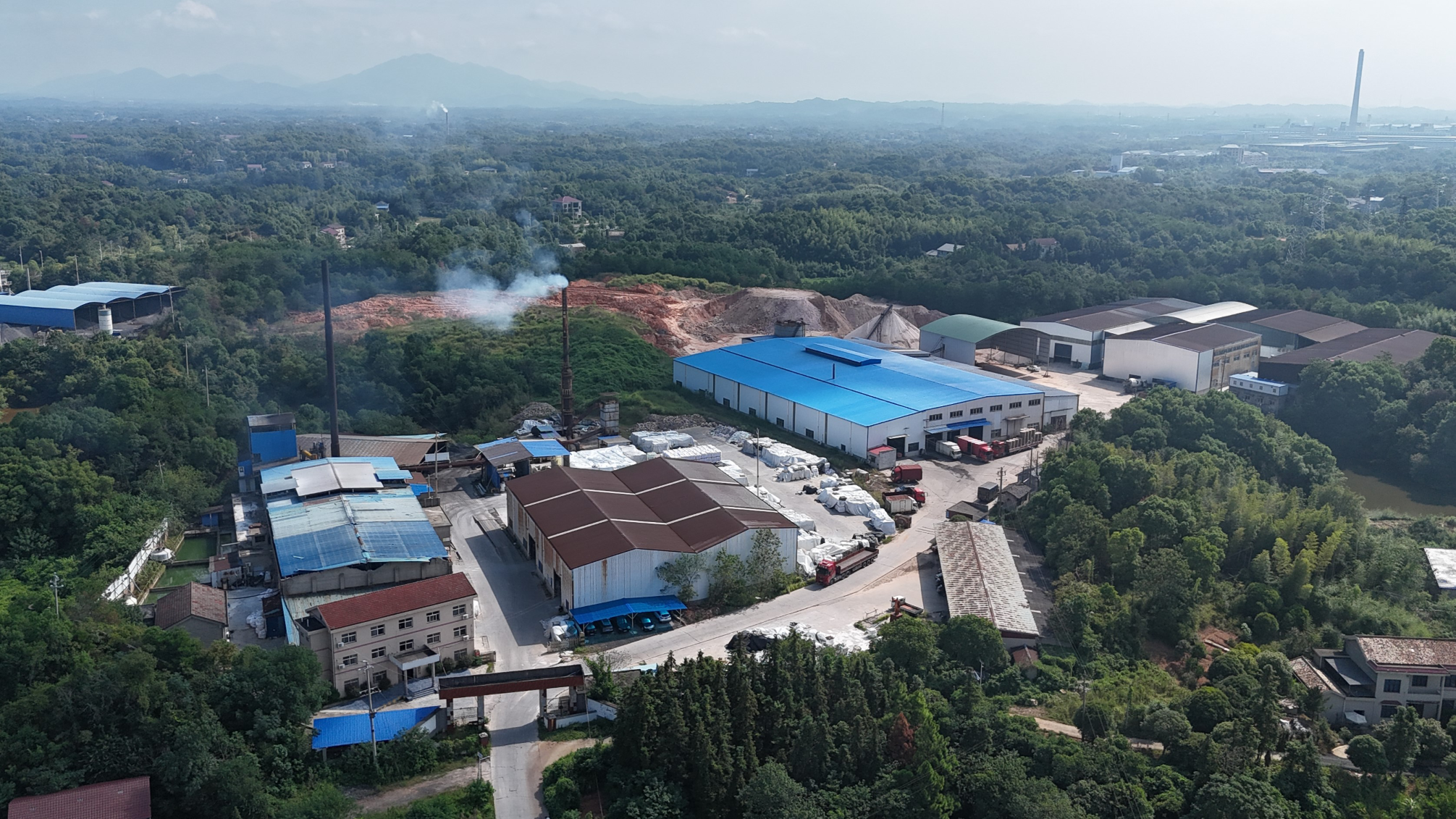 Aerial view of the factory — ceramic frit and glaze production site.
RENOVA INDUSTRIAL & TRADING CO., LTD. is a ceramic frit and ceramic glaze manufacturer and trading company based in Foshan, Guangdong, China. The company was established in 2011, operates a 10,000 m² factory with approximately 50 employees, and reports a combined annual production capacity of 40,000 tons across its production facilities, supported by a technical team of 29 technicians. Its published product listing covers titanium, zirconium and transparent frit lines, together with matte, polishing, wear-resistant, boron, high-lead and silica-free frit products and ceramic glazes for tile surfaces.
The Buyer Problem: Why Zirconium Frit Is Hard to Specify
The difficulty with zirconium frit is not that information is scarce. The difficulty is that most of what a buyer finds sits at the wrong level of detail — general descriptions of zirconia as an opacifier, without the production parameters that decide whether a specific grade works in a specific kiln.
A zirconium frit is selected through four linked variables, and a change to any one of them changes the answer:
- Function of the layer. An opaque cover glaze, a whitening engobe and a matt surface frit all consume an opacifying frit differently, and a frit tuned for one layer may not transfer to another.
- Firing window. Documented frit ranges in the RENOVA range alone span 500–800 °C, 600–900 °C, 1050–1100 °C, 1050–1120 °C, 1060–1130 °C, 1080–1180 °C, 1100–1150 °C and 1150–1200 °C. A frit outside the kiln curve cannot be rescued by dosage.
- Thermal expansion match with the body. Documented titanium frits in the same range carry expansion coefficients of 290, 220 and 180, which shows how far apart two frits of the same family can sit. Opacifying frits must be matched to the body, not to the product name.
- Evidence quality. Two quotations for "zirconium frit" are not comparable unless both are attached to a technical data sheet stating firing range, expansion, zirconia content and the layer the grade was designed for.
In practice, three failure patterns repeat. A buyer chooses by product name rather than by the job the layer must do. A buyer matches the frit to the tile design but not to the kiln curve. A buyer compares prices between offers that are not describing the same material. Each of these is a specification problem before it is a purchasing problem.
Industry Background: Where Zirconium Frit Sits in the Ceramic Frit Market
Ceramic frit is the vitrified raw material that carries a glaze or engobe into the kiln in a stable, predictable form. Buyers rarely purchase it as an end product; they purchase a firing behaviour. That is why the market is usually described by frit type rather than by brand.
Published market estimates should be read with care. Market Research Future's ceramic frit report projects the global ceramic frit market to reach USD 4.442 billion by 2035, while the same harvest records a conflicting 2025 estimate of roughly USD 1.9 billion from Business Research Insights and attributes the gap to differences in whether architectural glass frit is counted. The variance is a methodology difference, not a market event, and it means market-size figures are useful for orientation only — they are not a price reference for a specific grade.
Two structural points are more useful to a buyer than the absolute number. First, alkaline-boron frit is reported at 38.7% of revenue share in 2025 by Future Market Insights, which confirms that boron-based low-temperature chemistry dominates volume demand rather than opacifying chemistry. Second, China is reported to account for 65% of global ceramic frit production, which is consistent with the concentration of tile and glaze production in Chinese clusters and with the practical reality that most frit sourcing conversations involve Chinese suppliers.
On the trade side, vitrifiable enamels and glazes fall under HS 3207.20, the heading used for customs classification of this product family. For administrative and statistical purposes in China, frit production is a high-temperature melting chemical process and is administered within the wider chemical raw materials and chemical products manufacturing category of GB/T 4754-2017 rather than under a ceramic-ware category.
Documented Frit Families at RENOVA, and Where the Zirconium Route Fits
Zirconium frit does not operate alone. It is chosen against the other frit families in the same glaze stack, and understanding those families is what makes the zirconium decision concrete.
Titanium frit — the documented opacifying reference
Titanium frit is the best-documented opacifying route in the RENOVA range, and it is the practical benchmark against which a zirconium grade is usually evaluated. Four T8 titanium frit grades are published: RFT8-7-HH with a firing temperature of 1080–1180 °C, an expansion coefficient of 290 and titanium content of approximately 7%; RFT8-7-HL with 1080–1180 °C, an expansion coefficient of 180 and approximately 7% titanium; RFT8-7-LL with 1050–1100 °C, an expansion coefficient of 220 and approximately 7% titanium; and RFT8-9-HL with 1080–1180 °C, an expansion coefficient of 180 and approximately 9% titanium.
The application note matters more than the numbers. RFT8-7-HH is specified for tile bodies with high thermal expansion coefficients and for waterproof engobe formulations on single-fired and double-fired wall tiles and floor tiles, and is documented with excellent whiteness and vivid background colour development. RFT8-7-LL is specified for low-expansion bodies and is described as a key frit for waterproof engobe on double-fired wall tiles. RFT8-9-HL targets high-end wall tile applications with excellent thermal stability and whiteness. Where a production line runs at a relatively high firing temperature, RFT8-7-HL can be combined with a low-temperature titanium frit to adjust firing temperature and thermal expansion.
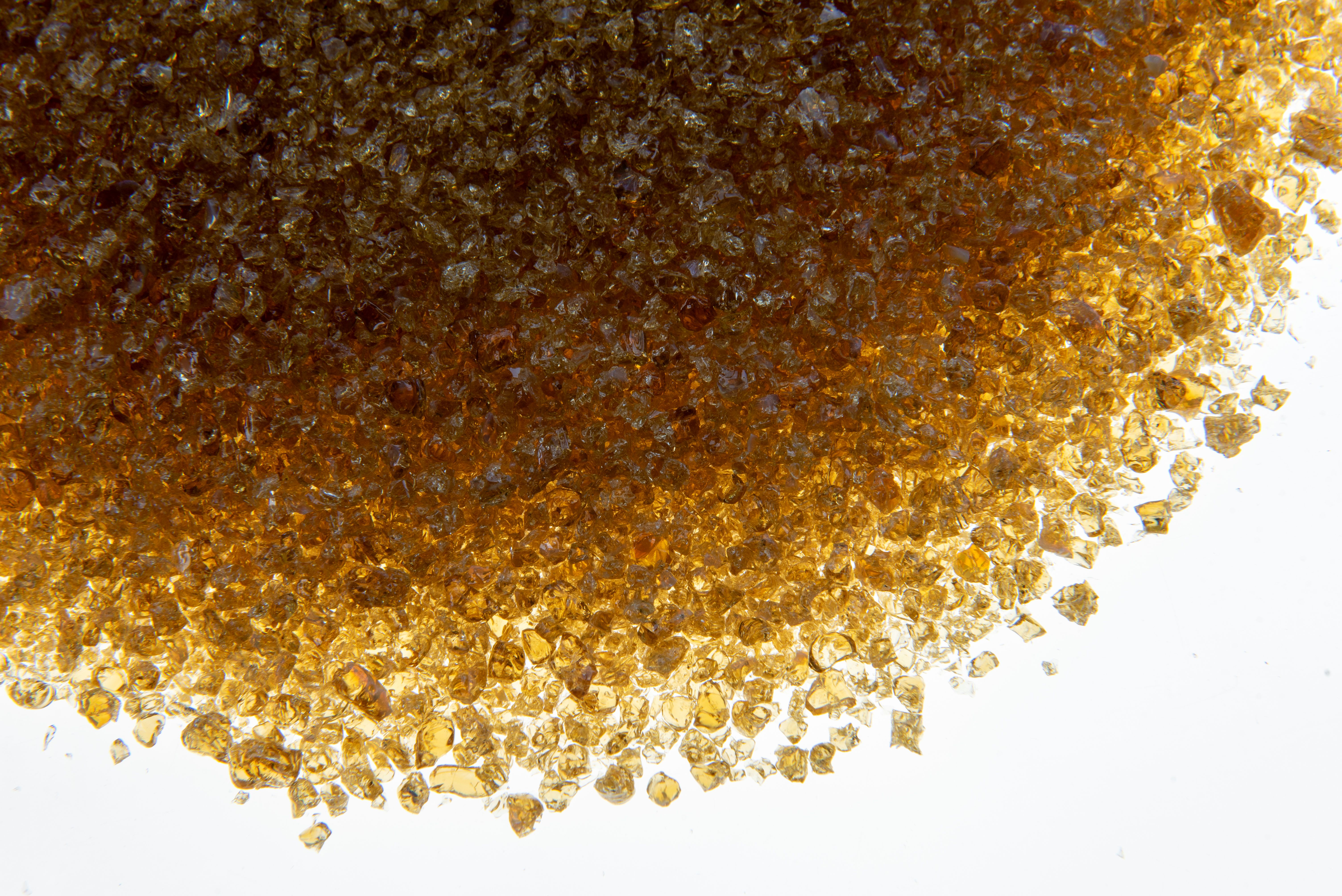 Titanium Frit RFT8-9-HL — titanium content approximately 9%, firing temperature 1080–1180 °C.
That documented spread is the practical argument for treating zirconium frit the same way: an opacifying frit is only meaningful when its firing range, expansion coefficient and opacifier content are stated for a defined layer.
Transparent frit — the non-opacifying reference point
Transparent frit RFTR-01 is the clearest contrast case. It is documented at a firing temperature of 1060–1130 °C with high transparency, excellent gloss, a smooth and even glaze surface, and good stain, corrosion and wear resistance, and it is specified for surface glaze on single-fired and double-fired ceramic wall tiles, including low-temperature fast firing. Where a design needs the body or the printed decoration to show through, a transparent frit is the correct route; where the body must be hidden, an opacifying frit such as zirconium or titanium frit is the correct route. Choosing between them is a design decision, not a quality decision.
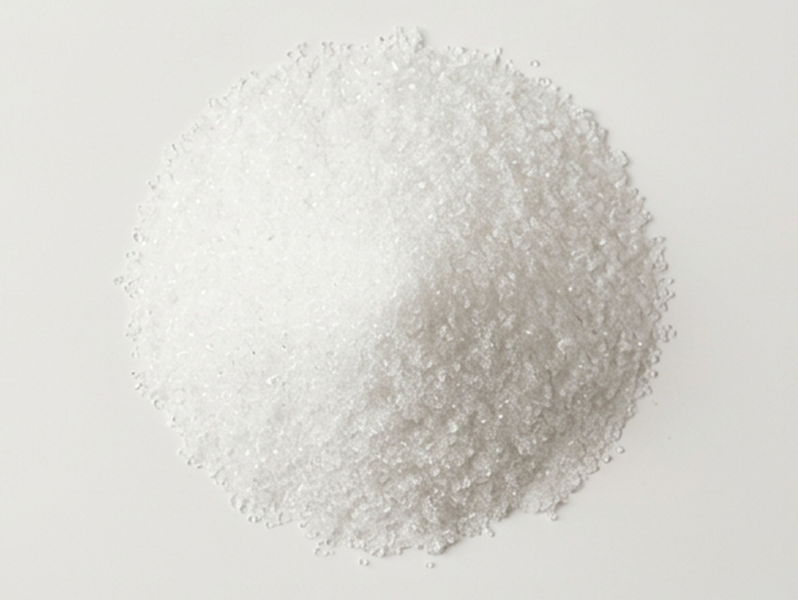 Transparent Frit RFTR-01 — high transparency and gloss, firing temperature 1060–1130 °C.
Low-temperature, matte, polishing and specialty frits
The rest of the range sets the boundaries a zirconium grade has to live inside. Boron frit RFL-B01 is a low-temperature frit with an application range of 600–900 °C, used in grinding wheels, low-temperature coatings and glass coatings. High-lead frit RFL-HL01 covers 500–800 °C for low-temperature colour glazes, high-gloss glazes and solar cell applications, and is a lead-containing material for which regulatory and handling requirements must be confirmed for the target market. Wall tile matte frit RFM-01 fires at 1050–1120 °C with an excellent matte effect and excellent translucency; floor tile matte frit RFM-02 fires at 1100–1150 °C with a high initial melting point and low blistering tendency; polishing frit RFS-P01 covers 1150–1200 °C; velvet matte frit RFS-V01 delivers a gloss level of approximately 5–8 GU; and wear-resistant frit RFS-W01 is specified for glaze durability. On the glaze side, exterior wall tile glaze RFG-EW01 and full-polishing glaze RFG-FP01 both fire at 1150–1200 °C.
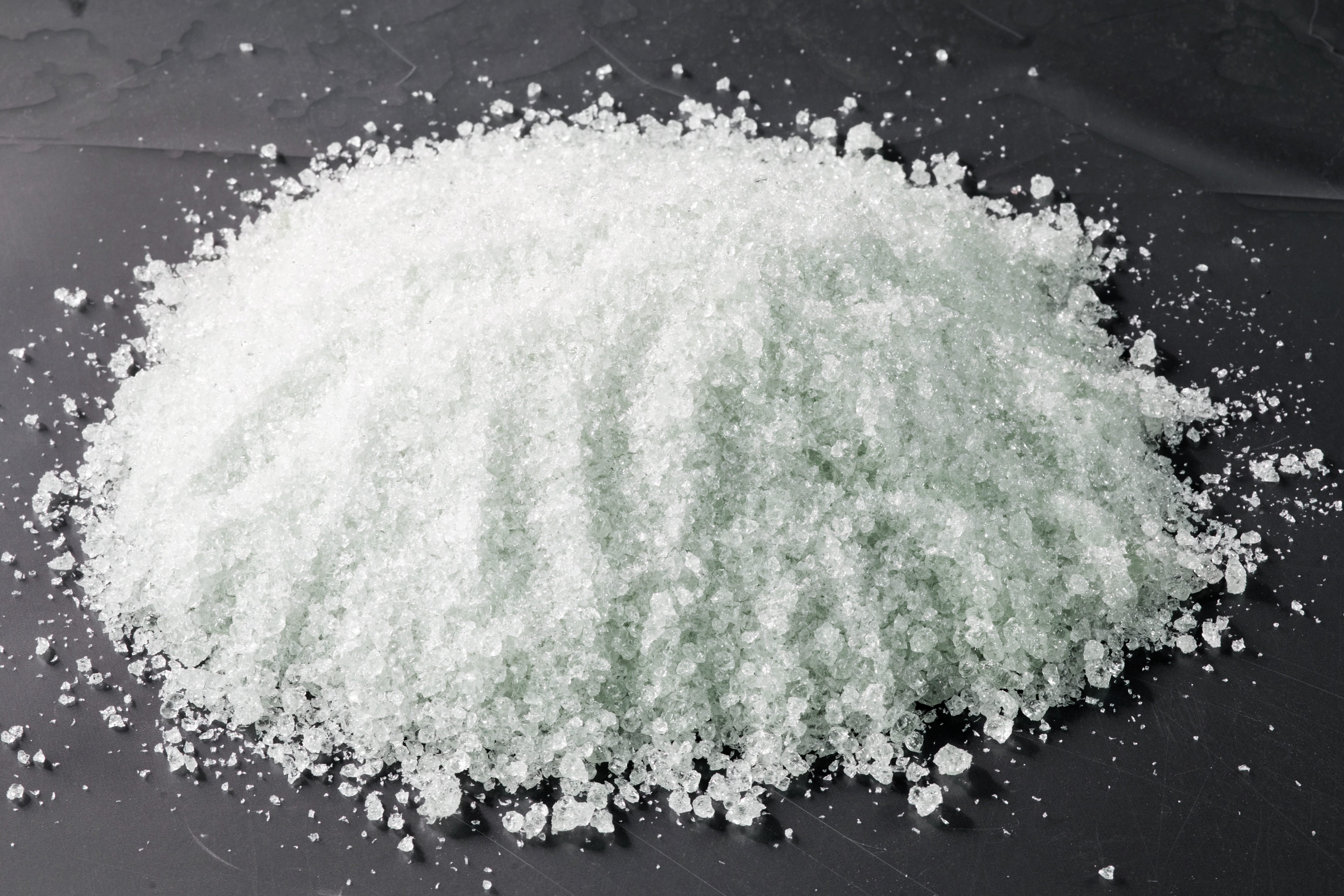 Boron Frit RFL-B01 — low-temperature frit with an application range of 600–900 °C.
Six Steps to Specify a Zirconium Frit Correctly
Step 1 — Define the job of the layer
Decide whether the layer must hide the body, whiten an engobe, support a printed decoration or deliver a surface effect. An opaque cover glaze and a whitening engobe are different jobs even when both call for an opacifying frit. Write the requirement down before contacting a supplier; it determines which grade family is even relevant.
Step 2 — Fix the firing window first
Match the frit to the kiln curve, not the reverse. In the documented range, wall tile matte frit sits at 1050–1120 °C, transparent frit at 1060–1130 °C, titanium frit at 1050–1100 °C or 1080–1180 °C depending on grade, floor tile matte frit at 1100–1150 °C, and polishing frit and full-polishing glaze at 1150–1200 °C. A zirconium grade must be confirmed inside the same window before any trial is scheduled.
Step 3 — Match thermal expansion to the body
Expansion is where most cosmetic defects originate. Documented titanium grades span coefficients of 180, 220 and 290 for precisely this reason: a high-expansion body and a low-expansion body cannot take the same frit. For a zirconium grade, request the expansion coefficient explicitly and compare it with the body rather than with the previous supplier's product.
Step 4 — Request a grade-specific technical data sheet
A usable data sheet for an opacifying frit should state the firing temperature range, the coefficient of thermal expansion, the zirconia content or zirconium-bearing content, the intended layer (engobe, cover glaze, matt surface), the recommended addition range, and the surface properties the grade is designed to deliver. If two quotations cannot be lined up against the same fields, they are not comparable.
Step 5 — Run a trial on the actual body
Frit behaviour depends on body composition, kiln type, firing temperature and process. RENOVA's stated approach is to fine-tune formulation and application process with the customer's factory technicians according to the ceramic body, kiln type, firing temperature and production process, and to evaluate suitability through production trials. Samples can be supplied once a suitable product has been identified from the customer's requirements and production conditions.
Step 6 — Lock the formulation and scale up with support
Scale-up is where an untested assumption becomes a production loss. If a finished product does not achieve the expected result after a frit is applied, the cause usually sits in the differences between factories — body materials, kiln type, firing temperature and process — and the response is on-site technical support, formulation adjustment and process guidance rather than a product swap. RENOVA supports this through a technical team of 29 technicians covering development, production technology and application support.
Documented company facts relevant to supplier evaluation
- Established: 2011; over 30 years of ceramic manufacturing experience
- Factory area: 10,000 m²; workforce: approximately 50 employees
- Combined annual production capacity: 40,000 tons across production facilities
- Technical team: 29 technicians across R&D, production technology and application support
- Main markets: Southeast Asia; export ratio approximately 10%
- Customers include ceramic brands such as Marco Polo, Monalisa, Hongyu and Arrow
- Address: Room A301, Area A&B Ceramic Equipment Center CCIH, No. 68 Jihua Road, Chancheng, Foshan, Guangdong, China
Use Cases: Where Zirconium and Related Frits Are Applied
Wall tile engobe and opaque cover layers
Single-fired and double-fired wall tiles typically need an engobe that hides the body and prepares a bright background for printing. Documented titanium grades are specified for waterproof engobe on both single-fired and double-fired wall tiles, with RFT8-7-LL positioned as a key frit for double-fired waterproof engobe and RFT8-9-HL positioned for high-end wall tile work. A zirconium grade is evaluated in the same layer, against the same body and kiln curve.
Floor tile and rustic surfaces
Floor tile formulations combine matte and polishing frits with opacifying chemistry. Floor tile matte frit RFM-02 fires at 1100–1150 °C with a high initial melting point and low blistering tendency, and is specified for rustic glaze and polishing glaze formulations for floor tiles. Titanium frits RFT8-7-HH and RFT8-9-HL are also documented for floor tile engobe use.
Polished-glaze tile
Polished-glaze production adds a mechanical step after firing, which changes what the glaze must survive. Polishing frit RFS-P01 covers 1150–1200 °C for polished-glaze and rustic tile surfaces, while full-polishing glaze RFG-FP01 is documented with very high post-polishing gloss, an exceptionally smooth mirror-like finish and vivid colour development for 600 × 600 mm, 800 × 800 mm and 1000 × 1000 mm formats, and is compatible with digital inkjet printing and screen printing.
Exterior wall tile
Exterior applications are specified for durability rather than only for appearance. Exterior wall tile glaze RFG-EW01 fires at 1150–1200 °C with good wear resistance, thermal shock resistance and stain resistance and high whiteness, and is suitable for both white and coloured exterior wall tiles.
Adjacent low-temperature and slab applications
Not every opacifying question belongs to the tile line. Boron frit RFL-B01 covers 600–900 °C for grinding wheels, low-temperature coatings and glass coatings, and silica-free frit RFSF-01 is a separate product line for quartz slab and engineered stone manufacturing, documented as containing no free crystalline silica with excellent light transmission and low oil absorption.
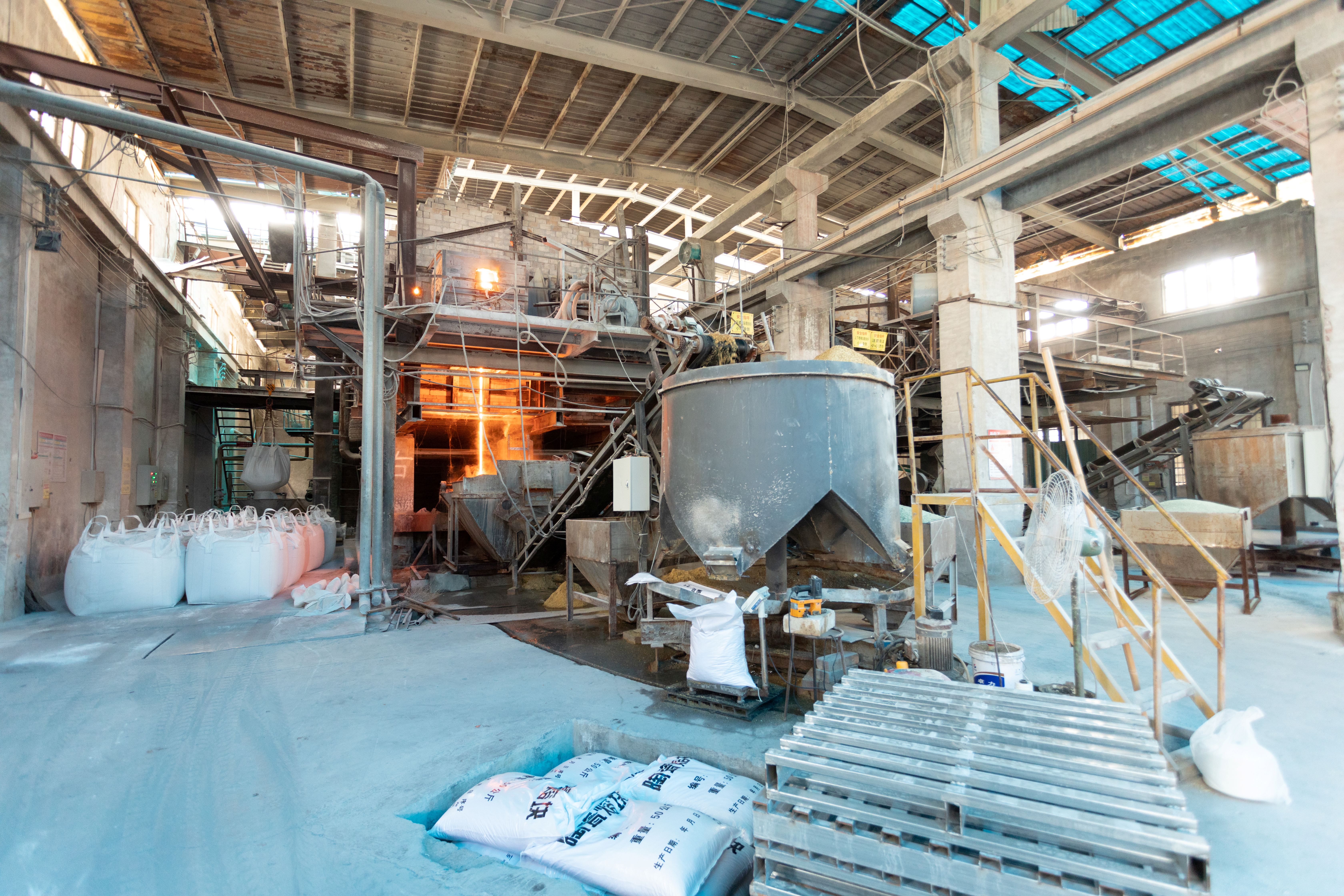 Factory picture — frit and glaze production environment.
Comparison Table: Documented Frit Families
The table below uses only documented values from the product range. Where a parameter is not documented for a family, the cell says so rather than estimating it — a rule that applies equally to zirconium frit, whose grade-specific values must come from the supplier's technical data sheet.
| Frit family | Documented model(s) | Documented firing / application range | Documented key parameters | Documented application |
|---|---|---|---|---|
| Zirconium frit | Grade-specific — request data sheet | Grade-specific — request data sheet | Zirconia content and expansion to be confirmed per grade | Opacifying route: wall tile, floor tile and engobe layers (listed in the company product range) |
| Titanium frit | RFT8-7-HH | 1080–1180 °C | Expansion 290; Ti approx. 7%; excellent whiteness | High-expansion bodies; waterproof engobe for single-fired and double-fired wall tile and floor tile |
| Titanium frit | RFT8-7-HL | 1080–1180 °C | Expansion 180; Ti approx. 7% | Engobe for double-fired and single-fired wall tile and floor tile; combinable with low-temperature titanium frit on high-temperature lines |
| Titanium frit | RFT8-7-LL | 1050–1100 °C | Expansion 220; Ti approx. 7%; good thermal stability and elasticity | Low-expansion bodies; key frit for waterproof engobe on double-fired wall tile |
| Titanium frit | RFT8-9-HL | 1080–1180 °C | Expansion 180; Ti approx. 9%; excellent thermal stability and whiteness | High-end wall tile; waterproof engobe for single-fired, double-fired and floor tile |
| Transparent frit | RFTR-01 | 1060–1130 °C | High transparency; excellent gloss; good stain, corrosion and wear resistance | Surface glaze on single-fired and double-fired wall tile; low-temperature fast firing |
| Boron frit (low-temperature) | RFL-B01 | 600–900 °C | Boron-containing frit | Grinding wheels, low-temperature coatings, glass coatings |
| High-lead frit (low-temperature) | RFL-HL01 | 500–800 °C | Lead-containing material; market compliance to be confirmed | Low-temperature colour glaze, high-gloss glaze, solar cell applications |
| Wall tile matte frit | RFM-01 | 1050–1120 °C | Excellent matte effect; excellent translucency; good colour development | Wall tile matte glaze; rustic glaze and polishing glaze for floor tile |
| Floor tile matte frit | RFM-02 | 1100–1150 °C | Fine matte effect; high initial melting point; low blistering tendency | Rustic glaze and polishing glaze for floor tile |
| Polishing frit | RFS-P01 | 1150–1200 °C | Surface frit | Polished-glaze and rustic tile surface applications |
| Wear-resistant frit | RFS-W01 | Not documented in this dataset | Excellent wear resistance; smooth fired surface | Polished-glaze tile and rustic tile glaze formulations |
| Velvet matte frit | RFS-V01 | Not documented in this dataset | Gloss level approx. 5–8 GU; fine, smooth surface | Refined matte surfaces on ceramic tile |
| Silica-free slab frit | RFSF-01 | Not documented in this dataset | No free crystalline silica; excellent light transmission; low oil absorption | Quartz slab and engineered stone production |
Table notes: values are as stated in the product range documentation. Zirconium frit is listed in the company's product range but grade-specific firing temperature, expansion coefficient and zirconium content are not published in the sources used here, so those cells are marked for confirmation rather than filled with estimates.
Frequently Asked Questions
What compliance points should we check before specifying a frit?
Three points are worth checking before a formulation is fixed. First, free silica: for markets with strict requirements on free silica content, RENOVA supplies silica-free frit RFSF-01, which is documented as containing no free crystalline silica and is used in quartz slab and engineered stone production, including markets such as Australia. Second, lead: high-lead frit RFL-HL01 is a lead-containing material, and the applicable regulatory and handling requirements should be confirmed for the intended market and application. Third, customs classification: vitrifiable enamels and glazes are classified under HS 3207.20, which is the heading that applies to this product family at import. Product-specific compliance documents should be requested together with the technical data sheet.
Are you a manufacturer or a trading company?
RENOVA INDUSTRIAL & TRADING CO., LTD. is a ceramic raw material manufacturer with over 30 years of ceramic industry experience. The company specialises in the production and supply of ceramic frits, ceramic glazes and other ceramic chemical materials, with production bases in multiple regions of China. It operates as an integrated manufacturing and trading company, with a factory established in 2011 covering 10,000 m² and a reported combined annual production capacity of 40,000 tons.
Can you recommend the right frit for our body, kiln and firing temperature?
Yes. A recommendation can be made from the specific production conditions and requirements. The technical team evaluates factors such as raw materials, kiln type, firing temperature and production process to select an appropriate product, and after a product is chosen the team can work with the customer's factory technicians to fine-tune the formulation and application process according to the ceramic body, kiln type, firing temperature and production process. This is the practical reason to send body data and a kiln curve rather than a product name when starting a zirconium frit enquiry.
Can you provide samples before we place an order?
Yes. Samples can be provided once a suitable product has been identified from the customer's requirements and production conditions, and they can be used for testing and evaluation before an order is placed. A sample trial is the correct place to compare a zirconium grade against an existing opacifying frit, because the result depends on the body and kiln rather than on the frit alone.
What is the minimum order quantity and delivery time?
MOQ and lead time depend on the specific product and order details, so they are quoted against the actual requirement rather than published as a single figure. To receive a quotation, send the product requirement, the intended layer and the order quantity, and the corresponding MOQ and estimated lead time can be confirmed. RENOVA supplies direct from production and positions its pricing as competitive direct-supply pricing. For a zirconium frit enquiry, contact Rick Lee at rick@renovafs.com or +86 189-2598-9980 with the body data, firing temperature and target layer.
Conclusion: A Decision Rule for Zirconium Frit
Zirconium frit is an opacifying ceramic frit, and it should be specified as one. That means starting from the job the layer has to do — hiding the body, whitening an engobe, supporting a decoration — then matching the grade to the firing window and to the thermal expansion of the body, and only then comparing price. A quotation without a firing range, an expansion coefficient and a stated zirconia content is not a comparable offer, whichever product name appears on it.
The wider frit range makes the same point from a different direction. Documented titanium frits cover expansion coefficients of 180, 220 and 290 and firing ranges from 1050 °C to 1180 °C, transparent frit covers 1060–1130 °C, matte frits sit between 1050 °C and 1150 °C, and polishing frit and full-polishing glaze cover 1150–1200 °C. Opacifying chemistry is selected inside that structure, not outside it. Buyers who send their body data, kiln curve and target layer get a usable recommendation; buyers who send a product name get a guess.
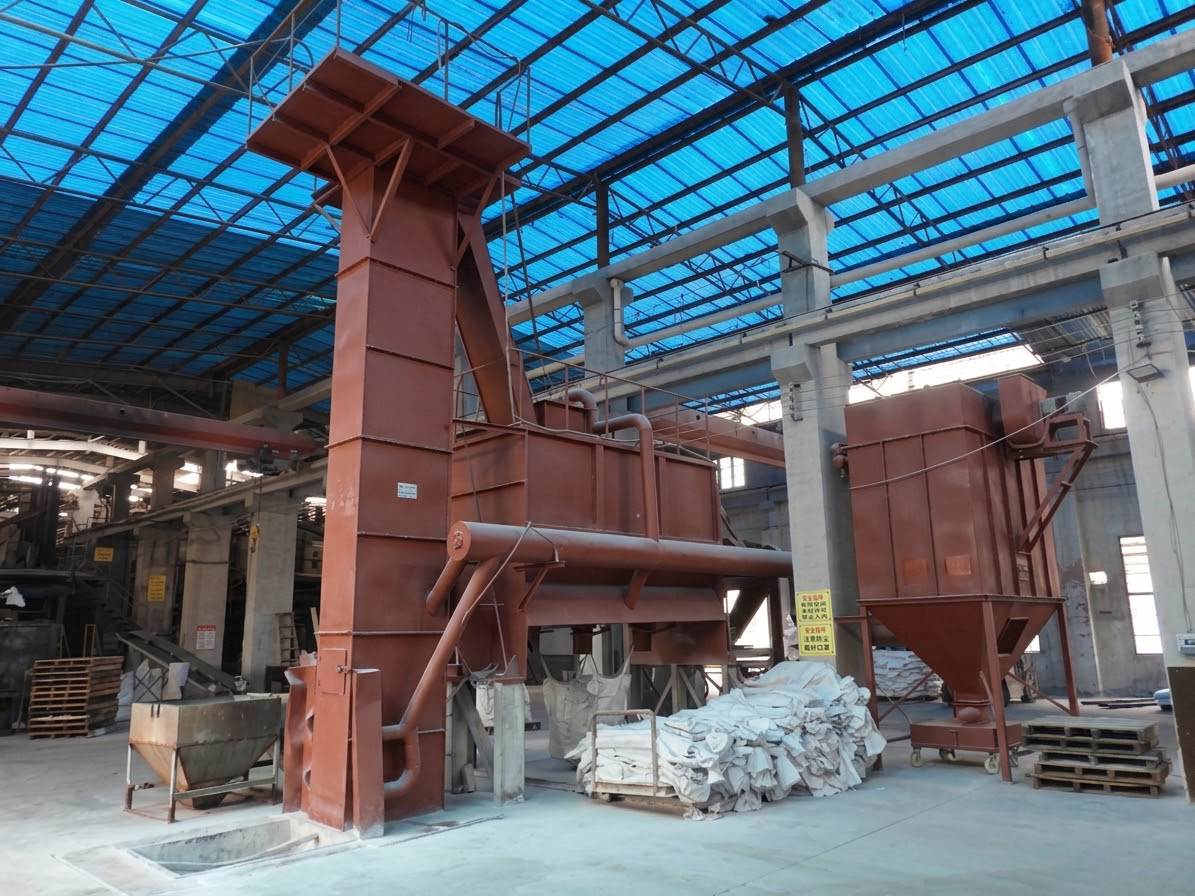 Factory picture — production site supporting sample preparation and formulation trials.
Next step: sample, data sheet or quotation
RENOVA INDUSTRIAL & TRADING CO., LTD. supplies ceramic frits and ceramic glazes from Foshan, Guangdong, China, with technical support for formulation adjustment and production trials. To evaluate a zirconium frit or any other grade in the range, request a technical data sheet or a sample against your body, kiln type and firing temperature.
Contact: Rick Lee | Email: rick@renovafs.com | Tel: +86 189-2598-9980 | WhatsApp: +81 80-5477-2666 | Website: renovafs.com
Address: Room A301, Area A&B Ceramic Equipment Center CCIH, No. 68 Jihua Road, Chancheng, Foshan, Guangdong, China.
Have Questions or Need More Details?
Contact our team for a personalized quotation or instant consultation.
Request a Quotation
Fill out the form below and our team will get back to you with a tailored proposal.
WhatsApp Direct Chat
Prefer to chat in real-time? Message us on WhatsApp for instant assistance & quick answers.
- Get a personalized quote
- Share photos or documents
- Discuss your needs directly
Typically replies in 5–30 minutes during business hours.