
Bespoke by Design: Matching Custom Hotel Furniture to Your Project’s Spatial and Brand Requirements
Custom furniture for five-star hotels succeeds when it is matched to two things: the physical realities of each space and the brand experience the hotel must deliver. For owners, designers, and procurement teams evaluating a luxury hotel custom furniture manufacturer, the core question is not simply “can you make it bespoke,” but “can you engineer, produce, and deliver furniture that fits our project’s unique layout, usage patterns, design language, and schedule?” This article maps the project-adaptation process—from spatial requirements and functional specifications to material selection, compliance, and long-term durability—and explains how a manufacturer like RICHART addresses these demands across guest rooms, public areas, dining venues, and executive floors.
Why Project Adaptation Determines the Success of Five-Star Hotel Furniture
Custom hotel furniture is never designed in isolation. Architectural drawings, interior design concepts, branding standards, operator requirements, and building regulations all converge into a single set of furniture deliverables. A bed frame that looks elegant in a showroom but cannot be maneuvered into a corridor, a lobby sofa that meets the designer’s vision but fails high-traffic durability requirements, or a casegood that does not align with low-formaldehyde emission targets can disrupt the entire FF&E schedule.
Adaptation matters because five-star hotel projects are complex, multi-stakeholder environments. The furniture must serve guests, meet brand standards, support housekeeping efficiency, and survive years of commercial use. The buyer is not purchasing a catalog item; the buyer is commissioning a tailored solution for a specific building, a specific guest profile, and a specific operational model.
Mapping the Gaps: Where Standard Furniture Fails in Hotel Projects
The mismatch between architectural reality and standard dimensions
Hotel interiors are rarely composed of perfectly rectangular spaces with ideal proportions. Sloped ceilings, curved walls, column obstructions, low beams, and irregularly shaped suites create dimensions that standard furniture lines cannot accommodate. Built-in elements, such as headboards, wardrobes, dressing tables, display shelves, and window-seat joinery, must be tailored to each room’s exact geometry. A manufacturer capable of full customization can adjust casegood dimensions, wall-mounted elements, and integrated storage to match the structure without compromising the design language.
The gap between aesthetic intent and operational durability
Five-star aesthetics often involve stone tops, delicate veneers, upholstered panels, and polished metal details. Yet a hotel furniture item must also withstand constant use, luggage impact, cleaning chemicals, and rigorous housekeeping. This is why project adaptation involves not only visual design but also material selection, edge protection, hardware specification, and surface treatment. Durability must be engineered into the piece rather than added as an afterthought.
The gap between brand identity and off-the-shelf styles
International hotel brands develop distinctive design identities. From contemporary and minimalist to classic European or Art Deco, the furniture must express the brand’s positioning while remaining operationally functional. Bespoke furniture for luxury hotels provides the control needed to harmonize furniture with lighting, flooring, wall finishes, and spatial volume.
The RICHART Approach to Full Customization
RICHART, operating as Guangdong Richang Furniture Co., Ltd., is a custom furniture manufacturer based in Zhaoqing, Guangdong Province, China, focusing on loose furniture, fixed furniture, and engineering-support design for four-star and five-star hotels, luxury residences, villas, and large-scale projects. The company was founded in 1990 and operates a 100,000-square-meter facility in the Dawang High-tech Industrial Park. Its production workshops cover woodworking, sanding, painting, assembly, upholstery, and packaging, supported by automated equipment from Italy, Germany, Japan, Taiwan, and China.
Two elements of RICHART’s manufacturing system matter specifically for project adaptation:
- Production modes: RICHART operates in ODM mode, meaning the factory can take a designer’s concept, develop the engineering drawings, and produce finished furniture to specification. This is critical for projects where brand owners and design consultants need manufacturing input during the development phase.
- Customization scope: The factory offers full customization for built-in bedboards, cabinets, wardrobes, dressing tables, display shelves, beds, sofas, writing tables, nightstands, dining tables, stools, coffee tables, lounge armchairs, TV cabinets, benches, and doors. This aligns with the needs of a custom hotel casegoods manufacturer, because casegoods—headboards, wardrobes, desks, and storage units—are often the most geometry-sensitive items in a hotel space.
How RICHART’s Product Categories Map to Hotel Zones
A five-star hotel is not one environment; it is a collection of zones with different functional requirements, traffic intensity, and emotional expectations. Below is a structured mapping of product categories to hotel zones, using RICHART’s product system.
| Hotel Zone | Furniture Category | Product Examples | Adaptation Priorities |
|---|---|---|---|
| Guest rooms | Guest Room Furniture | Headboard, bed frame, nightstand, writing desk, desk chair, wardrobe, dresser, mini bar cabinet, luggage rack, TV cabinet, armchair, coffee table, casegoods | Exact room dimensions, headboard geometry, integrated lighting, storage efficiency, durable finishes, low-maintenance surfaces |
| Suites | Lounge Furniture / Guest Room Furniture | Lounge sofa, armchair, ottoman, coffee table, side table, writing desk, dining table and chairs | Residential comfort, layered lighting zones, mixed-use layouts, premium upholstery and material combinations |
| Lobby and public areas | Public Area Furniture | Reception desk, concierge counter, lobby sofa sets, accent chairs, coffee tables, console tables, decorative cabinets, display pieces | High-traffic durability, first-impression aesthetics, flexible seating arrangements, statement materials such as marble, metal, and stone |
| Lounge and bar | Lounge Furniture / Function Room Furniture | Lounge seating, modular sofas, coffee tables, high tables, bar stools, sideboards, drink cabinets | Space efficiency, social interaction, spill-resistant surfaces, upholstery performance |
| Restaurants | Dining Restaurant Furniture | Dining tables, dining chairs, banquette seating, bar stools, buffet tables, servery tables, private dining room furniture, display cabinets | Dense seating plans, banquet comfort, food-service durability, adjustable configurations, hygienic surfaces |
| Banquet and meeting | Banquet Hall Furniture / Function Room Furniture | Banquet tables, banquet chairs, folding tables and chairs, head tables, stage platforms, podiums, buffets, sofas, lounge seating | Flexible room transformation, stacking and storage, heavy-load durability, acoustic and safety requirements |
| Executive floors | Executive Lounge Furniture | Lounge seating, modular sofas, coffee tables, dining tables and chairs, bar counters, work desks, meeting tables, concierge counters | Premium guest experience, quiet comfort, flexible work-and-relax zones, integrated technology |
| Wine cellar and specialty zones | Wine Cellar Furniture | Wine storage racks, wine cabinets, built-in wine cabinets, tasting tables, bar counters, bar stools, temperature-controlled cabinets, display cabinets | Climate-tolerant materials, glass and metal detailing, storage efficiency, hospitality-grade finish |
This zone-based structure helps procurement teams evaluate a supplier’s breadth. A luxury hotel project rarely needs a single furniture type; it requires a coordinated system of pieces across multiple zones. Suppliers that can manage this scope reduce coordination risk and improve design consistency.
Adapting Guest Room Furniture to Real Room Conditions
Guest rooms are the heart of a hotel’s revenue, and their furniture must balance guest comfort, design expression, housekeeping efficiency, and long-term wear. Adaptations usually begin with the headboard and bed wall, because these define the visual rhythm of the room.
Headboards and bed walls
A headboard in a five-star room may integrate wall panelling, reading lights, electrical outlets, and fabric or leather upholstery. It must align with the structural wall behind it and with the bed position. Custom headboards are built to exact widths and heights, accommodating column offsets or ceiling variations. At RICHART, headboard production draws on in-house upholstery and woodworking, so the leather, fabric, veneer, and trim can be controlled within one manufacturing process.
Nightstands and bed-side integration
Nightstands must fit the bed width, match the headboard design, provide practical storage, and support control panels or charging interfaces. Because the base structure, drawer hardware, and surface finish can all be customized, nightstands can be tailored down to the millimeter and material level.
Wardrobes, dressers, and storage casegoods
Storage is the area where standard furniture most often fails. Hotel rooms may have embedded niches, low ceiling heights, or corner constraints. Custom wardrobes and built-in cabinets can be manufactured to enclose awkward volumes and maximize usable storage. RICHART’s built-in scope includes wardrobes, dressing tables, and display shelves, which are fabricated in the factory and delivered with precise joinery.
Writing desks, TV units, and luggage racks
Standard desks may not match the room’s proportion or the working height preferred by the operator. Custom desks integrate cable management, drawer storage, and surfaces that can tolerate laptops and luggage. TV cabinets and luggage racks can be sized to the room’s traffic path and hardware requirements.
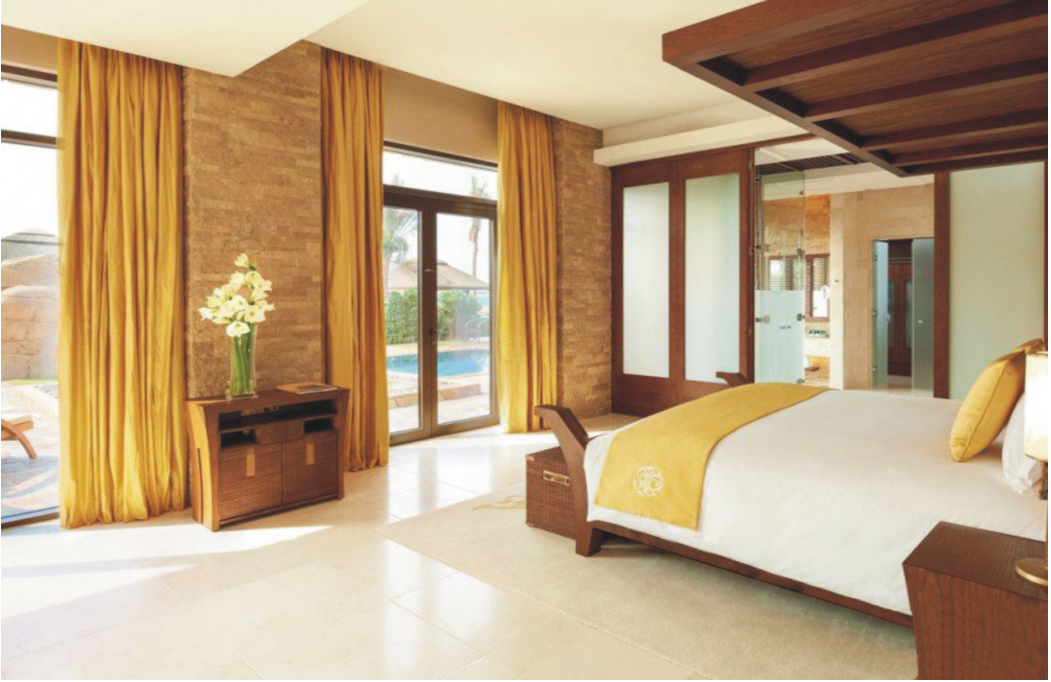
Public Areas and Lounges: Designing for Movement, Atmosphere, and Durability
Public areas operate at a higher intensity than guest rooms. Lobby furniture must create a strong first impression while withstanding constant guest traffic, luggage movement, and cleaning. Lounge seating must support conversation, waiting, dining, and working—often within a few meters of each other.
Reception desks and concierge counters
Reception desks are architectural statements that combine lighting, stone or metal cladding, hidden cable management, and ergonomic staff workstations. They are among the most technical pieces of custom public-area furniture. A manufacturer must be able to produce curved elements, integrate technology, and meet strict sight-line and counter-height specifications.
Lobby and lounge seating systems
Loose and modular seating systems allow hotels to rearrange spaces for daily use, events, or seasonal changes. Custom sofas and armchairs are specified with foam densities, fabric performance, frame construction, and leg materials suited to commercial use. The designer’s visual vocabulary—curvature, scale, upholstery detailing—must survive translation into a manufacturing environment.
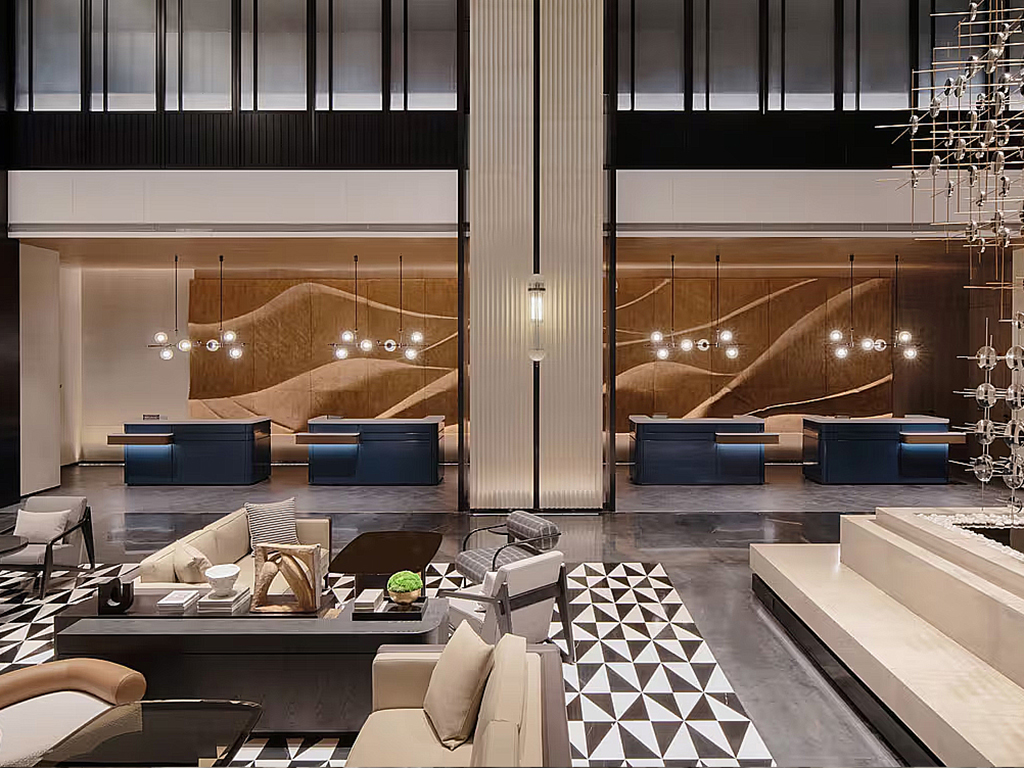
Executive lounges
Executive floors cater to guests who expect a seamless blend of relaxation and productivity. Furniture must support breakfast service, all-day lounging, informal meetings, and quiet work. Modular sofas, work desks, meeting tables, and buffet units are frequently customized to suit the floor’s plan and brand atmosphere.
Dining and Banquet Adaptation: Optimizing Seating Density Without Sacrificing Comfort
Restaurant furniture is measured by a different set of criteria: seating density, service flow, guest turnover, and durability under food-service conditions. A dining chair might look elegant but fail if it is too heavy for staff to move, too wide for the table spacing, or too delicate for daily cleaning.
Restaurant and private dining
Custom dining tables and chairs can be scaled to the restaurant’s footprint, with round, rectangular, or banquette configurations. Booth seating is often manufactured in lengths that fit specific wall zones and integrated with upholstered back panels. Buffet and servery tables need hygienic surfaces, robust frames, and layouts that support guest circulation.
Banquet halls and multi-function rooms
Banquet furniture must support rapid room reconfiguration. Tables and chairs need to be stackable or foldable, yet visually appropriate for high-end events. Stage platforms, podiums, and lecterns must align with audio-visual infrastructure and safety requirements. Custom manufacturing ensures that these operational pieces also align with the hotel’s design standards.
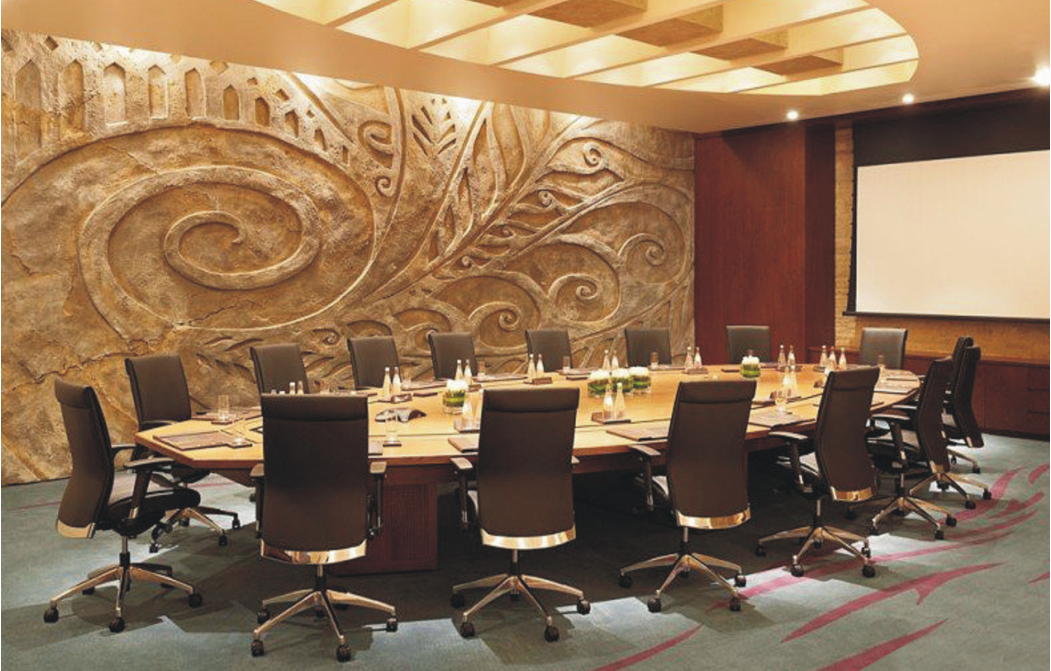
Material Adaptation: Matching Surfaces to Function, Climate, and Brand
Material selection is a decisive step in adapting furniture to a project. RICHART’s product specifications cover a broad material library that includes veneer, leather, stone, metal, paint, solid wood, MDF, plywood, fabric, velvet, glass, marble, oak, walnut, stainless steel, brass, bronze, acrylic, melamine, laminate, and foam. The availability of these materials within a single factory environment simplifies coordination and helps maintain quality consistency.
Performance-driven material mapping
- Guest room casegoods: often specified in veneer, solid wood, or a combination with stone and metal accents, with scratch-resistant and wear-resistant surfaces.
- Lounge and upholstered furniture: selected among fabric, velvet, leather, and high-performance upholstery materials, matched with foam specifications for commercial seating.
- Restaurant and bar areas: marble, stone, stainless steel, and treated wood surfaces support hygiene and frequent cleaning.
- Public areas: high-traffic zones benefit from durable paints, metal accents, and engineered substrates that resist impact and chemical exposure.
For five-star projects, material adaptation also means coordinating finishes with the designer’s sample board. A manufacturer that controls painting, veneer application, metal work, and upholstery in-house can more accurately replicate approved samples and reduce variance across large quantities.
Compliance in Project Adaptation: Fire, Emissions, and Safety Standards
Furniture adaptation for five-star hotels is increasingly defined by compliance specifications. Regulatory requirements vary by market, and procurement teams must verify that custom pieces meet the applicable standards for their project location.
Industry data for 2025 indicates that sustainability specifications in hotel furniture contracts have risen by 45%, with low-VOC finishes and FSC-certified wood becoming standard requirements. In the United States, public and lounge seating is commonly expected to meet ANSI/BIFMA X5.4-2020 (R2025) for durability and safety. In the United Kingdom, upholstered furniture in the hospitality sector often requires a CRIB 5 rating under BS 5852 flammability standards.
RICHART’s production process complies with OHSAS 18001:2007 for occupational health and safety, ISO 14001:2004 for environmental management, and ISO 9001:2008 for quality management. The company has also been recognized with awards including “China Environmental Labeling Product,” “China Environmental Protection Product,” “China Famous Brand,” “Top Ten Hotel Furniture Manufacturer,” “National Work Safety Standardized Enterprise,” and “Industry’s Most Influential Award.”
For buyers, the practical step is to verify project-specific compliance early. Fire-retardant upholstery, low-formaldehyde emission panels, high load capacity, and wear-resistant surfaces are common requirements in luxury hotel specifications. A supplier’s environmental certifications do not automatically guarantee a specific project’s compliance; buyers should request documentation and align specifications during the sampling phase.
From Space Survey to Installation: A Step-by-Step Project Adaptation Process
The following workflow illustrates how a custom furniture manufacturer converts project requirements into delivered furniture.
- Design review and specification: The buyer shares drawings, mood boards, brand standards, and product specifications. The manufacturer reviews dimensions, materials, and finish requirements.
- Engineering and technical development: The factory translates the design into production drawings, considering joinery, structural support, hardware, and surface treatment.
- Material selection and sample development: Materials are selected from the approved library or client-provided references. Samples are produced to confirm finish, color, scale, and construction.
- Costing and commercial proposal: The manufacturer provides pricing based on material, craftsmanship, quantity, and lead time. MOQ at RICHART is 1 unit, which allows even the first sample to be built as a single piece.
- Sample approval: The buyer approves the sample, or the manufacturer adjusts it until it meets the project’s required quality and design intent.
- Production planning: The factory schedules production based on the project timeline. RICHART’s monthly capacity is 10,000 units, with a typical lead time of 30 to 50 days, which supports mid- to large-scale hotel programs.
- Quality control: RICHART applies a 100% test policy, with each product undergoing rigorous quality inspection before packaging.
- Packaging, shipping, and installation: Furniture is packed for shipment and, where contracted, installed on site. After-sales support includes remote technical assistance.
Use Cases: How Customization Adapts to Different Project Types
International resort projects
Resort projects carry high humidity, intense sun exposure, and high guest turnover. Materials and finishes must withstand coastal climates while preserving a relaxed luxury aesthetic. RICHART has supplied products for international projects including Sofitel Dubai The Palm Resort and Spa, where lobby entrances, guest rooms, corridors, meeting rooms, restaurants, and bars required coordinated custom furniture.
Urban flagship hotels
Urban hotels in dense environments require efficient logistics, fire-rated materials, and compact installation plans. Projects such as Conrad Beijing and The Ritz-Carlton Montreal demonstrate how custom furniture is adapted to the spatial precision of an urban building while preserving local design character.
Luxury residential and villa integration
The same engineering and finish standards used in hotel projects also support luxury residences and villas. These projects often demand a higher degree of residential detailing, including built-in wardrobes, library study walls, TV feature walls, and dining areas, as seen in the Shanghai Xinjiangwan C&D Jiangwan Cuijing Villa project.
Renovation and phased FF&E programs
Renovation projects require precise measurement of existing conditions, flexible production batches, and coordination with ongoing hotel operations. Customization allows design continuity while upgrading only the targeted floors or public areas. This is particularly relevant for hotel FF&E custom furniture suppliers, because FF&E programs often involve multiple categories and strict budget phasing.
Comparison: What to Look for in a Project-Adaptive Custom Furniture Manufacturer
| Selection Dimension | What to Verify | Why It Matters for Project Adaptation |
|---|---|---|
| Customization depth | Full customization of built-in and loose furniture, not only fabric or finish changes | Confirms that geometry, joinery, and casegoods can be tailored to your drawings |
| Material breadth | In-house control over wood, veneer, upholstery, metal, stone, and finishes | Speeds up sample development and reduces consistency risk |
| Production capacity | Factories, equipment, workshops, and monthly output | Ensures that large room counts can be produced within hotel project timelines |
| Quality control | Inspection processes and quality management certifications | Protects against defects discovered after installation, when replacement costs are high |
| Compliance and sustainability | Environmental, safety, and flammability documentation relevant to your market | Prevents costly rework or customs/building-code delays |
| Reference projects | Past work with international hotel brands or complex luxury projects | Provides evidence of zone-level execution across guest rooms, public areas, and dining |
| After-sales service | Warranty terms, technical support, and spare-part policies | Helps control maintenance costs over the furniture life cycle |
Note on market context: the global hospitality furniture market was valued at approximately USD 23.8 billion in 2025, with Asia Pacific accounting for a reported 36.4% revenue share. In parallel, over two-thirds of upscale hotels are reported to allocate a dedicated budget for bespoke furnishings. These figures help explain why project adaptation is becoming the norm rather than the exception.
Operational Capabilities That Support Large-Scale Adaptation
Project adaptation is not only about the first sample; it requires disciplined execution across large quantities. A hotel with 300 guest rooms may require multiple pieces per room, plus public-area and dining furniture, resulting in thousands of units. A turnkey hotel furniture solution relies on the manufacturer’s ability to sustain quality, manage materials, and meet delivery dates.
RICHART’s production system
- Factory scale: 100,000 square meters, located in the Dawang Hi-Tech Industrial Development Zone, Sihui County, Zhaoqing City, Guangdong Province, China.
- Workforce: approximately 1000 employees.
- Annual output: 500,000,000 CNY.
- R&D team: 100 people.
- Production capacity: 10,000 units per month.
- Lead time: 30–50 days.
- Export markets: United States, Saudi Arabia, United Arab Emirates, Tanzania, United Kingdom, France, Canada, Australia, and Japan, among others.
- After-sales policy: One-year “Three Guarantees” period for furniture products; six months for spontaneous breakage, mold, or fogging of glass and mirrors; two years for active wood borer infestation on panel materials. Where separate enterprise commitments exist, those commitments prevail.
For a project buyer, these details translate into tangible decisions: whether the factory can commit to your required production window, whether it has the team depth to handle design engineering, and whether the warranty structure matches your maintenance planning.
Budget and Timeline Adaptation in Custom Furniture Projects
Customization is often perceived as expensive and slow, but the cost and timeline behavior depend on how the manufacturing process is structured.
Cost drivers
Key cost drivers include material specification, joinery complexity, upholstery detail, metal and stone work, finish requirements, and quantity. A design that is engineered for manufacturability can achieve the desired visual effect while reducing waste and labor hours. Buyers should ask for alternative specifications during the quotation phase—for example, substituting a particular stone or veneer grade without changing the aesthetic objective.
Timeline drivers
Lead times are influenced by sample approval cycles, material availability, surface finish complexity, and production scheduling. A manufacturer with a 10,000-unit monthly capacity can more easily allocate production lines to a hotel project without creating bottlenecks.
MOQ flexibility
RICHART’s MOQ is 1 unit. For buyers evaluating a new manufacturer, this allows a full prototype to be produced before large-scale commitment. For smaller renovation projects, low MOQ also prevents waste.
Risk Management in the Adaptation Process
Even with strong documentation, custom furniture projects carry risk. Procurement teams can reduce risk by planning around the following points:
- Verifying existing space measurements: For renovation projects, provide accurate as-built drawings; where possible, have the manufacturer’s engineering team confirm critical dimensions.
- Approving samples before mass production: The sample is the contract for quality and design intent. Detailed sample sign-off, including color and finish under the hotel’s lighting, prevents later disputes.
- Confirming compliance deliverables early: Fire-retardant certificates, emission test reports, and finish durability documentation should be agreed upon before production begins.
- Planning installation access: Large casegoods and upholstered pieces must be delivered through actual corridors, elevators, and doorways. Early dialogue between factory and site team reduces installation surprises.
- Holding back spare parts: For long-term maintenance, order spare upholstery, hardware, or finish materials during the original production run to avoid color and batch mismatch.
Frequently Asked Questions
Compliance requirements depend on the project location and product type. In the United States, public and lounge seating is expected to meet ANSI/BIFMA X5.4-2020 (R2025) for durability and safety. In the United Kingdom, upholstered furniture in the hospitality sector typically requires a CRIB 5 rating under BS 5852 flammability standards. Sustainability specifications have also risen, with low-VOC finishes and FSC wood increasingly treated as standard. RICHART’s production process complies with OHSAS 18001:2007, ISO 14001:2004, and ISO 9001:2008. Buyers should confirm project-specific documentation before production.
Yes. RICHART’s product scope covers guest room furniture, suite and lounge furniture, public area furniture, dining restaurant furniture, banquet hall furniture, function room furniture, executive lounge furniture, and wine cellar furniture. The factory produces both loose furniture and fixed furniture, including built-in bedboards, wardrobes, dressing tables, display shelves, doors, and related casegoods. This breadth allows a single manufacturer to coordinate a full custom furniture program across multiple hotel zones.
RICHART’s typical lead time is 30 to 50 days depending on product complexity, material availability, and order volume. Monthly production capacity is 10,000 units. The MOQ is 1 unit, which means buyers can request a first article or sample before committing to full-scale production. Exact timelines should be confirmed during the quotation and sample approval stages.
RICHART’s material range includes veneer, leather, stone, metal, paint, solid wood, MDF, plywood, fabric, velvet, glass, marble, oak, walnut, stainless steel, brass, bronze, acrylic, melamine, laminate, and foam. Material selection is matched to each zone’s function: for example, stone and stainless steel are common in dining and bar areas, while high-performance upholstery materials are used for lounge seating. Customization is fully tailorable based on the project’s design and performance requirements.
Buyers can begin by sharing drawings, design concepts, and brand requirements with RICHART. The engineering and R&D team reviews the project scope and develops samples for approval. Since RICHART operates in ODM mode, it can support projects from concept development through engineering and manufacturing. For a formal project inquiry or catalog reference, the company brochure is available for download below.
Conclusion: Adaptation Is the Difference Between Furniture and a Five-Star Experience
Custom furniture for five-star hotels is not a single product category; it is an adaptation process that connects architecture, brand identity, operational needs, compliance, and guest experience. Buyers who succeed in this process evaluate suppliers not only on sample aesthetics but on engineering depth, material control, production capacity, compliance documentation, and the ability to execute across multiple hotel zones.
RICHART offers a fitting example of a full-customization manufacturer: approximately 1,000 employees, a 100,000-square-meter production base, in-house engineering and R&D, monthly capacity of 10,000 units, and experience supplying furniture to international hotel brands and complex luxury projects. Buyers evaluating a luxury hotel furniture project supplier should request drawings, reference projects, and evidence of manufacturing capability—then make their decision based on how well the supplier adapts to their project’s specific reality.
Need a detailed reference of RICHART’s manufacturing and product capabilities?
Download the company brochure here: RICHART Company Brochure (PDF).
For project inquiries, contact Rainbow Xie at richart2687@gmail.com or WhatsApp +86 13826286822.
Have Questions or Need More Details?
Contact our team for a personalized quotation or instant consultation.
Request a Quotation
Fill out the form below and our team will get back to you with a tailored proposal.
WhatsApp Direct Chat
Prefer to chat in real-time? Message us on WhatsApp for instant assistance & quick answers.
- Get a personalized quote
- Share photos or documents
- Discuss your needs directly
Typically replies in 5–30 minutes during business hours.