
Bespoke or Catalog? A Practical Five-Star Hotel Furniture Comparison Guide
Bespoke or Catalog? A Practical Five-Star Hotel Furniture Comparison Guide
Purchasing decisions for a five-star hotel go beyond surfaces and silhouettes. Every piece of furniture must support the guest journey, survive heavy daily use, satisfy brand standards, and fit the architecture of the property. For procurement teams, the central question is often framed as custom versus standard hotel furniture. This guide provides a buyer's comparison framework for five-star properties, with particular emphasis on durability, design flexibility, lead time, and long-term cost. It also explains what to verify in a custom furniture manufacturer, using the manufacturing capabilities of Guangdong Richang Furniture Co., Ltd., referred to in this guide as RICHART.
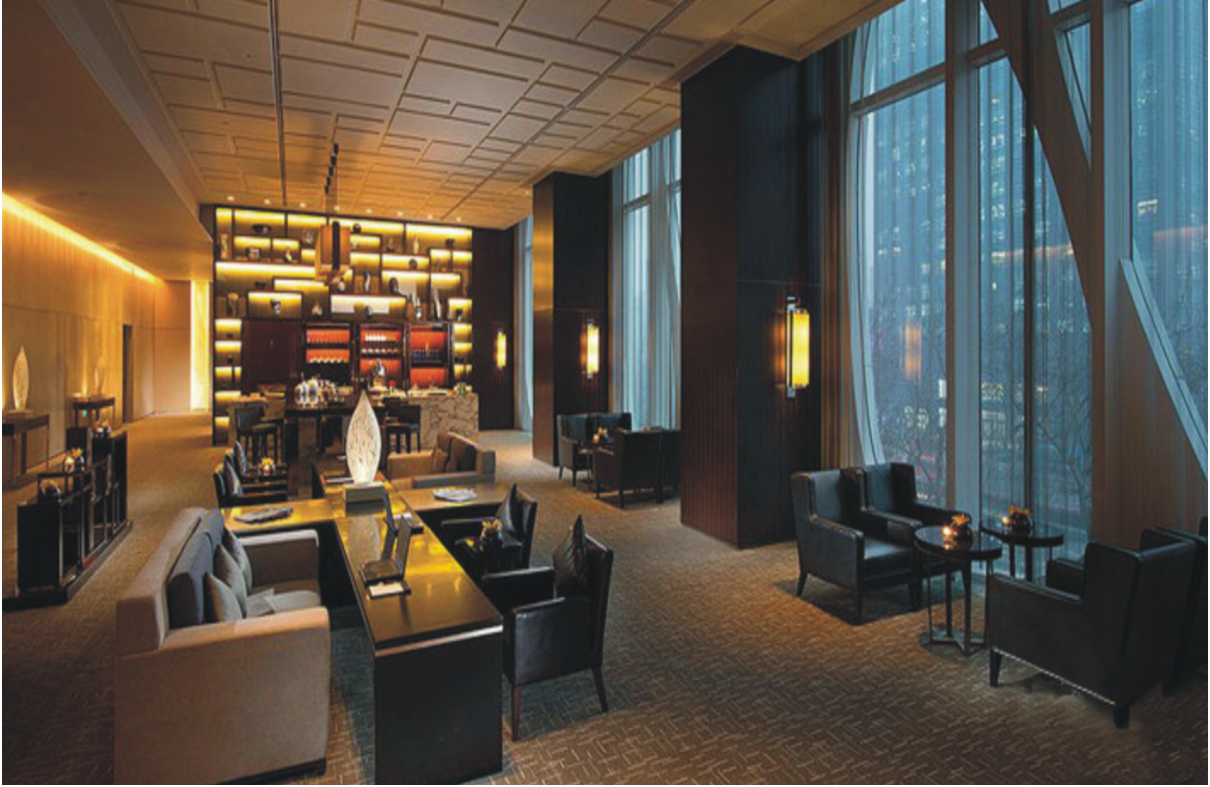
The choice between custom and standard furniture is not an all-or-nothing decision. Standard items can be efficient, especially when a hotel follows repeatable room plans and an existing global design standard. However, five-star projects often rely on custom furniture to express brand identity, solve unusual spatial conditions, and meet higher durability expectations. Procurement teams therefore need a structured way to compare the two routes against project-specific requirements rather than simply choosing whichever option has a lower purchase price.
What ‘Custom’ and ‘Standard’ Mean in Hotel Furniture Sourcing
Custom hotel furniture is designed and manufactured around a specific project brief. It includes loose furniture as well as fixed or built-in furniture. In the context of five-star hotels, custom furniture can include headboards, bed frames, nightstands, writing desks, wardrobes, dressers, lobby sofas, armchairs, banquette seating, reception desks, bar counters, and many other casegoods. RICHART describes its customization approach as full customization and tailored production. Its product system covers guest room furniture, public area furniture, lounge furniture, dining and restaurant furniture, banquet hall furniture, executive lounge furniture, function room furniture, and wine cellar furniture.
Standard hotel furniture, on the other hand, is selected from an existing catalog or an open-line product series. It uses predetermined dimensions, standard construction, and finishes that are already available. Standard furniture can work well in projects where layouts are regular, quantities are large, time is short, or the design brief already matches a manufacturer’s existing range. The main risk is that a catalog piece may not align with the interior design language of a flagship hotel, or it may not be durable enough for continuous commercial use.
For five-star projects, the word 'standard’ should not be interpreted as low quality. Standard commercial furniture can still be made with solid materials and tested finishes. The buyer’s concern should be fit: spatial fit, design fit, performance fit, and replacement fit. Custom furniture attempts to close those gaps by starting from the project rather than from the catalog.
Why Many Five-Star Hotel Projects Turn to Bespoke Furniture
Market evidence shows that upscale hotel buyers increasingly expect a certain level of uniqueness. According to Intel Market Research, over two-thirds of upscale hotels now allocate a dedicated budget for bespoke furnishings, and the average project spend on hotel furniture customization has increased by 31% since 2021. Broader hospitality data also points to expansion. Dataintelo values the global hospitality furniture market at USD 23.8 billion in 2025 and projects it to reach USD 39.6 billion by 2034. Business Research Insights estimates that the luxury hotel furniture market will grow from USD 212.14 billion in 2026 to USD 312.97 billion by 2035. These figures are not identical because they use different definitions and categories, but the direction is consistent: premium hospitality projects are investing more seriously in furniture as a design asset.
For a five-star property, custom furniture is rarely chosen simply for the sake of luxury. It is chosen because hotel design teams need to solve problems that standard catalogs cannot solve. Architecture often creates angled walls, curved front-of-house areas, unusually sized guestrooms, or multi-functional spaces. Custom pieces can be tailored to those exact dimensions. Brand designers may also specify a unique style direction, from modern and minimalist to classic, Art Deco, or neo-classical European. RICHART can execute a wide range of styles because its custom production starts with material selection and engineering rather than an existing catalog.
Another reason is operational resilience. Hotel furniture is used for many hours each day. Guestroom casegoods, lobby seating, and restaurant chairs face different levels of wear. If a room has a headboard wall that is curved or a wardrobe that must be built into an alcove, only custom or fixed furniture can close the installation gap. If a piece is ordered from a catalog without checking the local fire or safety specification, the product may look good visually but fail during procurement review or operation.
Six Decision Dimensions for Procurement Teams
The comparison between custom and standard furniture becomes more practical when procurement teams evaluate six dimensions: design flexibility, durability, compliance, lead time, lifecycle cost, and maintenance or replacement.
1. Design Flexibility
Design flexibility is the first reason most five-star projects consider custom furniture. A bespoke piece can follow a designer’s drawing, adjust to unusual dimensions, and combine materials such as veneer, leather, stone, metal, paint, solid wood, MDF, plywood, fabric, velvet, glass, marble, oak, walnut, stainless steel, brass, bronze, acrylic, melamine, laminate, and foam. Standard furniture is usually limited to existing sizes, frame types, and finish options. For a property with a strong design identity, that limitation can be significant.
2. Durability and Commercial-Grade Performance
Five-star hotel furniture must perform under high-frequency commercial use. Public and lounge seating, for example, may be evaluated under ANSI/BIFMA X5.4-2020 for durability and safety in high-traffic environments in the United States. In the United Kingdom, upholstered hospitality furniture often has to meet the CRIB 5 requirement under BS 5852 for flammability. Custom manufacturing is not automatically compliant, but it can be engineered to meet a specific requirement when the buyer provides the standard. RICHART’s custom furniture production considers scratch-resistant and wear-resistant surface protection, and supports material and structural specifications according to the project.
3. Compliance and Certification
Buyers should always request documented evidence of a manufacturer's quality, environmental, and health-and-safety management systems. RICHART states that its production process complies with OHSAS 18001:2007, ISO 14001:2004, and ISO 9001:2008. The company has also received recognition such as China Environmental Labeling Product, China Famous Brand, and Top Ten Hotel Furniture Manufacturer. These credentials do not replace project-specific testing, but they provide a baseline for evaluating whether the factory can operate to hotel-grade expectations.
4. Lead Time and Project Scheduling
Custom furniture generally requires a longer lead time because it must go through engineering review, sample approval, production, finishing, and inspection before delivery. Standard catalog items can sometimes be delivered faster if they are in stock. However, a custom furniture project can be managed with clear milestones when the supplier has scale and production planning capability. RICHART has a 100,000-square-meter manufacturing facility and an annual production capacity of CNY 500,000,000, which gives its team the ability to coordinate multiple hotel zones and large quantities. The company also emphasizes supply chain analysis and demand forecasting as part of project operations.
5. Total Cost of Ownership, Not Purchase Price
A common mistake in hotel procurement is comparing the initial purchase price of a custom piece to a standard piece without considering the full life cycle. A slightly cheaper standard chair may fail earlier in a high-use restaurant. A poorly fitted wardrobe may cause installation costs. A custom piece may have a higher initial ticket price but can be engineered to match the exact space and specification, reducing rework and early replacement.
Buyers should calculate cost per service year rather than only cost per unit. That calculation should include design review, sample approval, packaging, delivery, installation, spare parts, maintenance, and the possibility that the piece will need to be repaired or replaced multiple times during the life of the hotel.
6. Maintenance, Replacement, and After-Sales Support
When furniture is custom, the drawings and material records become important assets. If a hotel later needs to repair or replace a damaged headboard, table top, or lounge sofa, the original manufacturer can use the archived specification to match the item. Standard products, by contrast, may be reordered more easily only when the same product line remains active. If the model is discontinued, matching becomes difficult. Buyers should ask a custom furniture supplier whether it keeps production records and can support future replenishment orders.
Comparison Table: Custom vs. Standard for Five-Star Hotel Procurement
| Decision Factor | Custom Five-Star Hotel Furniture | Standard or Catalog Hotel Furniture | Action for Procurement Teams |
|---|---|---|---|
| Design fit | Made to spatial and design requirements; full customization and tailored production | Fixed catalog sizes and finishes | Confirm that the manufacturer can produce from drawings and approve samples before mass production |
| Material flexibility | Broad palette including veneer, leather, stone, metal, solid wood, MDF, fabric, velvet, glass, marble, oak, walnut, stainless steel, brass, and bronze | Limited to options already available in the standard range | Request material boards and compare them with the hotel’s design specification |
| Guestroom application | Headboard, bed frame, nightstand, writing desk, wardrobe, dresser, mini bar cabinet, luggage rack, casegoods, and built-in elements | Useful for repeatable room plans and basic specifications | Map every room type and identify which elements touch the guest experience |
| Public-area application | Lounge sofas, armchairs, side tables, coffee tables, reception desks, concierge counters, and display cabinetry | Limited by standard module dimensions and seating layouts | Check circulation paths, sight lines, and high-traffic durability standards |
| Durability and safety | Can be engineered for high-traffic commercial use and surface protection | Compliance depends on the original product specification | Reference standards such as ANSI/BIFMA X5.4-2020 for lounge seating and BS 5852 CRIB 5 where required |
| Compliance traceability | Production can be documented with quality and environmental management systems | Buyer should request test certificates for the exact model | Audit certificates, factory capability, and inspection procedures |
| Lead time | Requires design, sample approval, production, and inspection milestones | Shortest when the product is already available | Build lead time into the project schedule and hold suppliers to sample deadlines |
| Long-term replacement | Can be matched later through archived drawings and material records | Risk of model discontinuation or finish mismatch | Ask how the manufacturer stores specifications and supports spare orders |
Manufacturing Capability Evidence: RICHART
Guangdong Richang Furniture Co., Ltd. was established in 1990 and is located in Dawang High-tech Industrial Park, Zhaoqing City, Guangdong Province, China. The company focuses on the production of high-end movable and fixed furniture for five-star hotels, engineering-supported design, and luxury projects including clubs, mansions, villas, and large-scale design projects. RICHART, the company’s export brand, serves as a custom hospitality furniture manufacturer for international hotel projects.

The company operates a 100,000-square-meter manufacturing facility and employs approximately 1000 staff. Its R&D team consists of 100 engineers. Annual production capacity reaches CNY 500,000,000. The production complex is equipped with workshops for woodworking, sanding, painting, assembly, upholstery, and packaging. It also uses advanced automatic production equipment imported from Italy, Germany, Japan, Taiwan, and China. These capabilities matter to procurement teams because custom hotel furniture projects often involve a large number of SKUs across guestrooms, public areas, and food-and-beverage venues.
RICHART states that it has provided products and services to more than 500 high-star hotels worldwide, and that its global marketing network covers over 20 countries and regions across five continents. Its client references include leading international hotel brands such as St. Regis, InterContinental, W Hotels, The Ritz-Carlton, Hyatt, Park Hyatt, Conrad, Marriott, Shangri-La, Hilton, Renaissance, Sheraton, Westin, Wyndham, Wynn, Banyan Tree, Anantara, and Kempinski, as well as Chinese real estate developers including KWG, Wanda, R&F, Greentown, and Poly. Project images in the company’s published content include Ritz-Carlton Montreal, Conrad Beijing, Sofitel Dubai The Palm Resort & Spa, DoubleTree by Hilton Guangzhou, and The Millennial Hotel in the USA.
Step-by-Step Framework for Evaluating a Custom Furniture Manufacturer
For procurement teams, a supplier’s technical brochure should be only the beginning. The following step-by-step framework helps compare custom manufacturers and reduce the risk of choosing a supplier that cannot execute a five-star hotel scope.
- Audit the factory and production scope. A hotel project may include casegoods, upholstery, metalwork, stone or marble elements, fixed panels, and installation coordination. Confirm that the factory has workshops for woodworking, sanding, painting, assembly, upholstery, and packaging. RICHART’s 100,000-square-meter facility provides an example of a manufacturing base large enough to handle multiple project zones.
- Check engineering and R&D capacity. Custom furniture requires more than cutting and painting. RICHART has an R&D team of 100 engineers, which signals an ability to develop drawings, review structural details, and manage engineering-supported design.
- Ask for hotel-grade project references. The supplier should be able to name international hotel brands and show completed project images. RICHART’s references include Ritz-Carlton, Conrad, Sofitel, DoubleTree, Millennial, and other high-star operators.
- Review quality, environmental, and safety certifications. Look for recognized management-system certificates. RICHART states that its production process complies with OHSAS 18001:2007, ISO 14001:2004, and ISO 9001:2008.
- Clarify the scope of custom and fixed furniture. Many five-star projects need both loose furniture and fixed furniture. If a project will include built-in wardrobes, wall panels, or fixed headboard walls, the supplier should demonstrate experience in engineering and installing these elements.
- Use sample approval to test communication. Before full production, the supplier should provide materials and shop drawings for approval. This is the most practical test of whether the factory can follow design intent, adjust details, and protect brand standards.
- Align delivery, packaging, installation, and after-sales terms. RICHART describes itself as offering end-to-end solutions from design and production to installation. Buyers should still confirm packaging methods for export, delivery terms, installation coordination, and future spare-parts support in writing.
Where Bespoke Value Appears Most Clearly
The value of custom furniture is not identical in every zone of a hotel. The following use cases help buyers decide where a bespoke approach is most important and where standard sourcing may still be acceptable.
Guest Rooms and Suites
Guest rooms and suites are the heart of the guest experience. Bed base and headboard height, wardrobe width, desk position, and luggage rack placement must relate to the actual room dimensions. A standard flat-pack casegoods package may be economical and adequate for certain select-service designs, but a five-star suite usually needs a more intentional approach. Custom guestroom furniture from RICHART includes headboards, bed frames, nightstands, writing desks, desks chairs, wardrobes, dressers, mini bar cabinets, luggage racks, TV cabinets, and casegoods. These items can be produced in materials and finishes selected by the designer.
Lobby and Public Areas
Public areas are the most visible spaces in a hotel. Lobby sofas, armchairs, reception desks, concierge counters, coffee tables, and display cabinetry all influence arrival experience. These pieces are used continuously and must also support staff operations. Custom public-area furniture is particularly valuable when the lobby has high ceilings, curved seating zones, or brand-specific design elements. Because public seating may need to meet commercial durability standards such as ANSI/BIFMA X5.4-2020, buyers should not rely on residential-grade catalog products in these spaces.
Restaurant, Banquet, and Bar Venues
Restaurant and banquet furniture faces heavy load, frequent moving, food service, and rigorous cleaning. Dining tables, dining chairs, booth seating, banquettes, buffet cabinets, bar stools, and service counters may all need custom dimensions and commercial finishes. RICHART’s product categories include dining restaurant furniture and banquet hall furniture, with items such as dining tables, banquet chairs, bar stools, buffet tables, sideboards, and display cabinets. For a property with specialty restaurants, custom tables and seating can be designed to fit specific layouts while still offering adequate structural strength.
Balanced Perspective: When Standard Furniture Still Makes Sense
Although this guide is focused on custom furniture, standard products should not be automatically excluded from a five-star procurement strategy. A standard program can make sense in low-guest-impact areas such as back-of-house offices, storage spaces, meeting rooms with standard dimensions, or rooms that follow a very uniform national brand prototype. Standard products can also speed up renovation schedules when the design intent is simple and the dimensions are already known.
The more important principle is to make the choice visible and testable. Whether you choose custom or standard furniture, the specification should include dimensions, materials, finish, structural requirements, safety standards, durability expectations, warranty terms, and installation conditions. The label ‘custom’ alone does not guarantee quality. The label 'standard’ alone does not guarantee speed. What matters is whether the proposed product is technically appropriate for its location and use in a five-star hotel.
Frequently Asked Questions
What is the difference between custom and standard hotel furniture?
Custom hotel furniture is designed and manufactured to a project-specific brief, using the actual dimensions and design language of the property. Standard hotel furniture is selected from an existing catalog or product range with predetermined sizes and finishes. For five-star projects, custom furniture offers more design flexibility and spatial fit, while standard furniture is more likely to be efficient when the project follows repeatable layouts and a limited specification.
Why do five-star hotels use custom furniture so often?
Five-star hotels use custom furniture to distinguish the guest experience, align furniture with the architecture, and support brand design standards. Market research from Intel Market Research indicates that over two-thirds of upscale hotels now allocate a dedicated budget for bespoke furnishings, with average project spend increasing by 31% since 2021. Custom furniture also helps solve unusual room dimensions and high-traffic performance requirements.
Is custom furniture worth the higher initial cost?
The value of custom furniture depends on its total life-cycle cost, not only its initial purchase price. Custom pieces can be engineered to fit a space exactly, reduce installation rework, and match brand intent. A standard product may have a lower price but can create problems if it does not fit the space or fails earlier under commercial use. Procurement teams should compare durability, maintenance, replacement complexity, and the cost of downtime during renovation.
What should procurement teams verify in a custom furniture manufacturer?
Buyers should verify manufacturing scale, production workshops, R&D and engineering staff, quality and environmental certifications, and previous hotel project references. In the case of RICHART, this includes a 100,000-square-meter facility, approximately 1000 employees, an R&D team of 100 engineers, an annual production capacity of CNY 500,000,000, and project experience with international hotel brands such as The Ritz-Carlton, Conrad, Sofitel, and DoubleTree by Hilton.
Can RICHART provide custom furniture for different areas of an international five-star hotel?
Yes. RICHART produces custom high-end furniture for five-star hotels across guestroom, public area, lounge, dining and restaurant, banquet hall, executive lounge, function room, and wine cellar furniture categories. Its scope includes loose furniture, fixed furniture, and engineering-supported design. Procurement teams can contact RICHART at richart2687@gmail.com or +86 13826286822 to discuss project requirements and request more detailed company information.
Conclusion
Custom and standard hotel furniture each have a place in five-star hotel procurement. The question is not which category is inherently superior. The question is which product best fits the architecture, guest experience, brand identity, commercial durability requirements, and full life-cycle budget of a given property. Bespoke furniture offers undeniable advantages in design flexibility, spatial fit, and brand expression, but it requires a capable supplier with enough engineering depth and manufacturing scale to turn drawings into durable, hotel-ready pieces.
Buyer takeaway: Before deciding between custom and standard, build a clear specification, evaluate total life-cycle cost, inspect the factory or its production evidence, and ask for real hotel project references. A kitchen-table quote cannot tell you whether a manufacturer can handle 500 headboards, a curved lobby sofa, and an international delivery schedule. These decisions should be made with documented capability.
Need a custom furniture comparison for your next five-star hotel project?
RICHART (Guangdong Richang Furniture Co., Ltd.) supplies high-end movable furniture, fixed furniture, and engineering-supported design for luxury hotels and large-scale design projects. Contact RICHART by email at richart2687@gmail.com or by phone/WhatsApp at +86 13826286822.
View the official RICHART website at www.richart-furniture.com or download the company brochure for additional manufacturing and project information.