
Custom Furniture for Five-Star Hotels: Scope and Terminology
Custom furniture for five-star hotels is furniture produced to a specific property's approved drawings and specification — its own dimensions, materials, finishes and performance requirements — instead of being ordered from a catalogue by product code. The category covers two families that are often discussed as one: movable (loose) furniture such as bed frames, nightstands and lounge chairs, and fixed furniture such as built-in wardrobes, headboards and reception counters.
Buyers entering a hotel furniture package for the first time meet the same small set of words in every document: FF&E, casegoods, loose and fixed, bespoke and standard, shop drawing, mock-up, turnkey. Each of those words assigns work, budget and risk to a different party. Settling the vocabulary at the start is considerably cheaper than correcting it after the drawings have been issued.
The reference points in this explainer come from RICHART (Guangdong Richang Furniture Co., Ltd.), a manufacturer founded in 1990 that produces high-end movable and fixed furniture for five-star hotels and provides engineering-supported design for hotel, villa and large-scale projects.
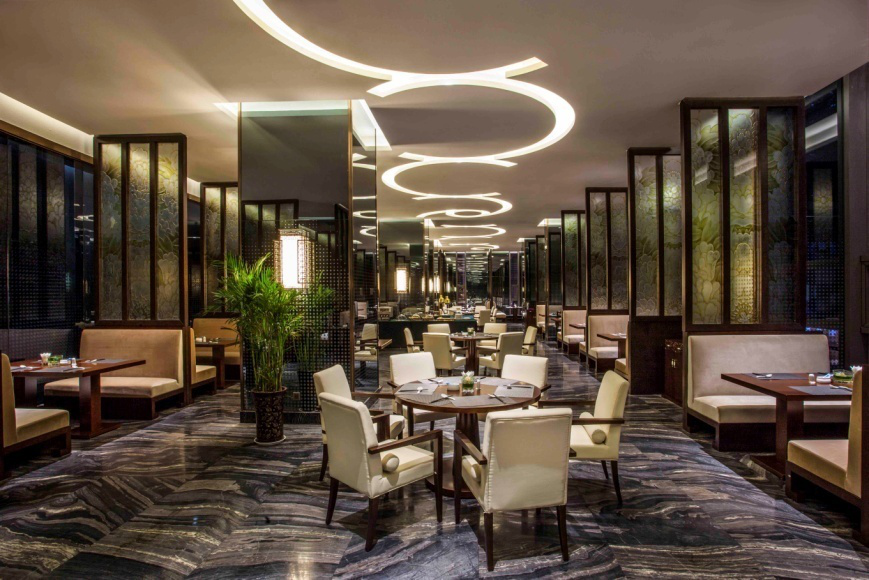
The Short Definition a Buyer Can Use in a Kick-off Meeting
Furniture qualifies as custom in hotel work when three conditions hold at the same time. The dimensions and form are set by the project — the measured room, the design intent for that room type, and the clearances the operator needs. The material, finish and performance package is specified rather than picked from a stock list. And production and delivery are planned against a room count and an installation sequence rather than a warehouse replenishment cycle.
Remove any one of those conditions and the scope changes. A catalogue chair re-covered in a project fabric is a standard product with a custom finish. A desk that follows a manufacturer's standard construction but is cut to a project width sits in between. A guest room casegood set drawn for one hotel, finished to that hotel's material board and produced in room-by-room batches is bespoke work.
The distinction is practical because it predicts where decisions sit. On a bespoke item the buyer and the designer own the drawing. On a standard item the manufacturer owns the drawing and the buyer owns the selection. Most projects run a mixture of both, so the boundary has to be written down item by item rather than described in general terms.
Why the Vocabulary Comes Before the Drawings
"Custom" is not a single instruction. To an interior designer it usually means a design intent that must be realised exactly. To a hotel operator it often means compliance with a brand standard plus a maintenance regime the engineering team can live with. To a factory it means a drawing package, a material schedule and a production batch. To a cost consultant it means a line in a bill of quantities that has to be measured, priced and compared.
When those four readings are not aligned, the failure is rarely dramatic — it is administrative. Fixed furniture gets priced inside a package that only covers loose items. A built-in wardrobe is ordered from a joinery contractor while the matching nightstands come from a furniture supplier, and nobody owns the finish match between them. A renovation plan assumes headboards can be reupholstered in place, then discovers they are anchored to structural blocking behind the wall.
These are scope problems that a shared vocabulary prevents, and they surface early enough to be resolved in the same meeting as the room matrix.
The Industry Backdrop: Specified, Not Shopped
Five-star hotel furniture is procured against a specification document, a room matrix and a bill of quantities. The buyer is not comparing shelf products. The buyer is comparing a documented scope, a production plan and an evidence set showing that the furniture can survive commercial use.
The commercial weight of the category is tracked by research firms, although estimates shift with the definition used. One commercial research report cited in the supplied industry data values the global luxury hotel furniture market at USD 14.8 billion in 2025 and projects USD 26.7 billion by 2034 (Market Reports World, 2026). That figure describes a broad segment rather than bespoke hotel FF&E specifically, so it is background context rather than a budget benchmark.
What does not vary is operating exposure. Guest room furniture is used daily by people who did not buy it and have no reason to handle it gently. Public area furniture absorbs harder traffic and more cleaning cycles. Hotel specifications therefore tend to state fire retardancy, low formaldehyde emission, load capacity and wear resistance as requirements rather than preferences, and furniture intended for indoor hotel use is normally expected to perform within a stable, low-humidity indoor environment.
Movable vs. Fixed: The First Split in Every Schedule
Movable furniture, also called loose furniture, is freestanding. It can be lifted out of the room and replaced without building work. In a five-star guest room that typically covers the bed frame, nightstand, writing desk, desk chair, armchair, ottoman, coffee table, side table, TV cabinet, luggage rack and dresser. In public areas it covers lounge sofas, accent chairs, dining tables and chairs, bar stools, coffee and side tables, and console tables.
Fixed furniture is attached to the building — anchored to the floor, tied into a wall, or built into a joinery run that also carries services. Guest room examples include built-in headboards and bedboards, wardrobes, built-in cabinets, dressing tables and display shelves. Public area examples include reception desks, concierge counters, banquette seating, bar counters and built-in wine cabinets.
The split changes who measures, who coordinates and who carries the defect. A nightstand with an integrated power outlet requires the electrical layout to be frozen before production; a freestanding nightstand only requires the socket to be reachable. A built-in wardrobe must be reconciled with the wall's actual condition on site; a loose wardrobe need not be.
| Comparison point | Movable (loose) furniture | Fixed (built-in) furniture |
|---|---|---|
| Attachment | Freestanding; relocatable without building work | Anchored to floor, wall or joinery structure |
| Typical guest room items | Bed frame, nightstand, desk, desk chair, armchair, ottoman, coffee and side tables, TV cabinet, luggage rack, dresser | Built-in headboard and bedboard, wardrobe, built-in cabinet, dressing table, display shelf |
| Typical public area items | Lobby sofa sets, accent chairs, dining tables and chairs, bar stools, console tables | Reception desk, concierge counter, banquette seating, bar counter, built-in wine cabinet |
| Dimensional control | Set against room size and circulation clearances | Set against room size plus wall and floor conditions and concealed services |
| Services coordination | Limited: power and data must be reachable | High: power, data, lighting and blocking must be fixed before production |
| Renovation behaviour | Can be replaced or reupholstered piece by piece | Usually requires partial demolition and joinery rework |
RICHART produces both movable and fixed furniture for hotel projects, which matters at the definition stage: a supplier holding both scopes can also resolve the finish and proportion questions that sit between them, rather than leaving them to be negotiated between two contractors.
Bespoke, Made-to-Order, Semi-Custom, Standard: Four Levels of Scope
Bespoke and standard are two ends of a scale, not a binary. A five-star project normally uses all four levels somewhere in the building.
Standard furniture is a catalogue product with a fixed design, fixed dimensions and a defined finish range. Semi-custom furniture starts from that platform and allows a limited set of changes — a different finish, a modified dimension within the platform's limits, a different upholstery. Made-to-order furniture is produced for the specific order to an agreed specification, usually following the manufacturer's design language but sized and finished for the room. Bespoke — full custom — starts with the project's own drawings, where every dimension, material, joint, hardware choice and finish is decided for that property.
RICHART's stated position is full customization, tailored to the project. Its material range spans veneer, solid wood, MDF and plywood, leather, fabric and velvet, stone, marble and glass, metal, stainless steel, brass and bronze, acrylic, melamine, laminate, paint and foam. Its style range runs from modern, contemporary, minimalist, luxury and light-luxury work through classic, neoclassical, French, European, American, Italian, mid-century, vintage, industrial, Scandinavian, Art Deco, Chinoiserie, Oriental, Japanese, wabi-sabi and Mediterranean references.
| Scope level | Source of the design | What the buyer controls | Where it is typically used |
|---|---|---|---|
| Standard | Manufacturer's catalogue | Model and finish selection | Back-of-house, staff areas, repeat purchases, secondary spaces |
| Semi-custom | Manufacturer's platform plus agreed changes | Finish, upholstery, dimensions within platform limits | Public areas and supporting rooms where speed matters |
| Made-to-order | Manufacturer's design, produced for the order | Specification, sizing, finish schedule | Rooms that need a fit but not a new design |
| Bespoke (full custom) | Project drawings and material board | Every dimension, material, joint and finish | Signature guest rooms, suites, lobbies, restaurants, bars |
One boundary is worth stating plainly: bespoke is not automatically better, it is more specific. It moves design responsibility, drawing approval and material sign-off into the project, and it narrows the pool of suppliers able to execute it. Standard and semi-custom furniture remains a legitimate choice where replaceability and pace outweigh a unique detail.
A Working Glossary of Hotel Furniture Terms
These are the terms that recur across hotel furniture specifications, quotations and site meetings. Definitions are written for the buyer rather than the workshop.
- FF&E — furniture, fixtures and equipment: the non-structural, non-consumable items specified for a property, from loose seating to built-in joinery.
- OS&E — operating supplies and equipment: the operational and consumable items a hotel uses to run, distinct from FF&E.
- Loose (movable) furniture — freestanding pieces that can be relocated without building work.
- Fixed furniture — built-in or anchored pieces that form part of the room's construction or joinery scope.
- Casegoods — the non-upholstered pieces. In a guest room this usually means the desk, nightstands, dresser, TV cabinet and wardrobe.
- Upholstered furniture — seating and padded elements such as sofas, armchairs, ottomans, headboards and banquettes.
- Room matrix — the count of each room type in the project, which converts a per-room design into a furniture quantity.
- BOQ (bill of quantities) — the itemised schedule of furniture with quantities, used for pricing and later for delivery checking.
- Shop drawing — the production drawing that fixes dimensions, sections, joinery, hardware and finish references for a specific item.
- Mock-up or sample room — a full-scale trial of one room or item, reviewed before full production so that drawing errors are caught once rather than across hundreds of units.
- Finish — the surface treatment of a piece: veneer, paint, laminate, metal plating or upholstery, usually controlled through a physical material board.
- Turnkey furniture supply — one supplier covering design support, production, delivery and installation coordination rather than production only.
- Contract-grade — built for commercial duty cycles rather than residential use, which is why hotel specifications treat durability as a stated requirement.
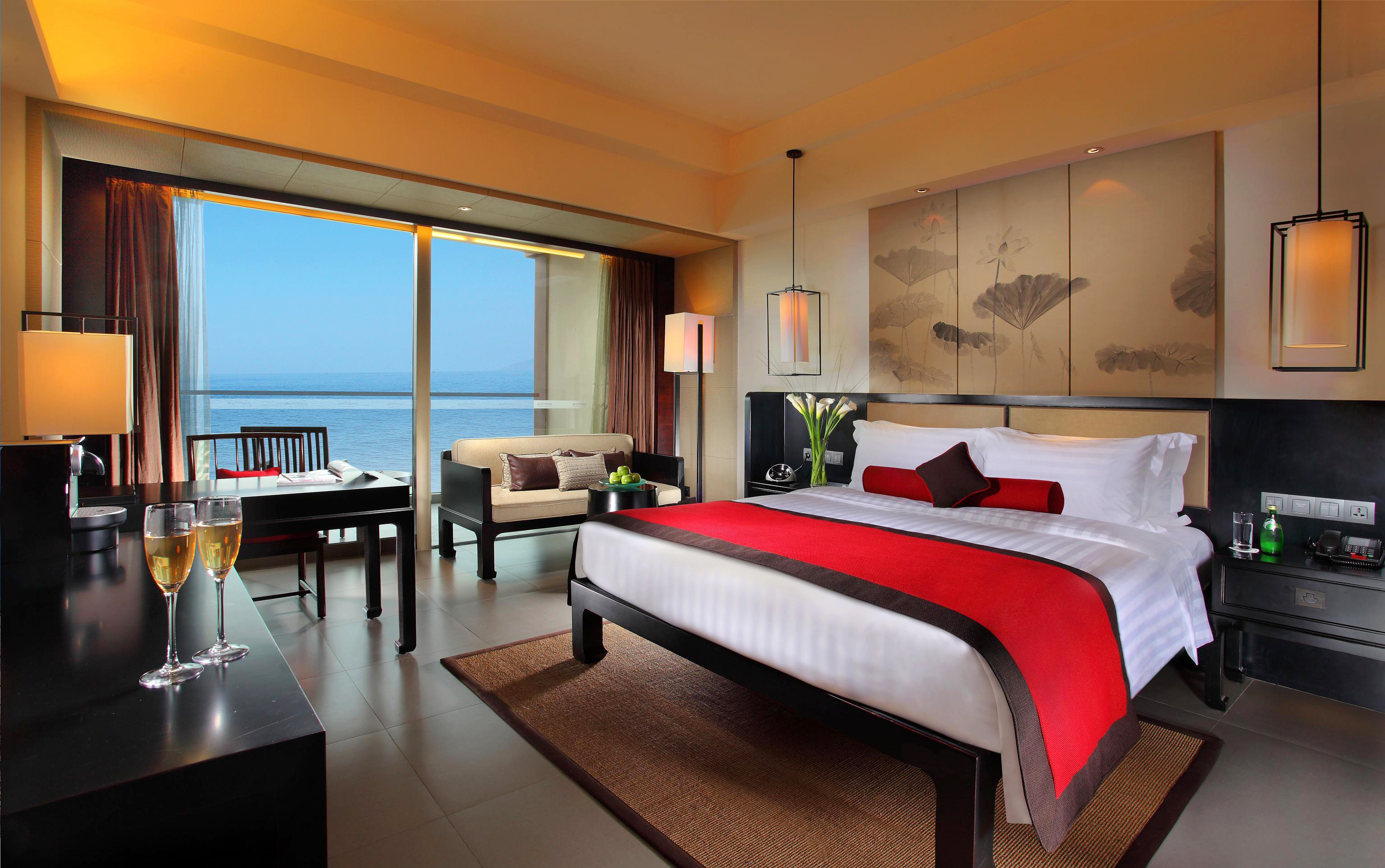
Where the Vocabulary Lands: Room by Room
The same handful of terms maps onto very different item lists depending on the space. This is why a hotel furniture scope is organised by area rather than by product family.
Guest Rooms and Suites
Guest room scope is where casegoods and upholstery meet the movable–fixed split most visibly. A typical list runs headboard, bed frame, nightstand, writing desk and desk chair, wardrobe, dresser, mini bar cabinet, luggage rack, safe cabinet, armchair, ottoman, coffee and side tables, TV cabinet, corner table and built-in cabinetry. Suites add lounge sofas, dining tables and chairs, and occasional pieces that behave as loose furniture.
Lobbies and Public Areas
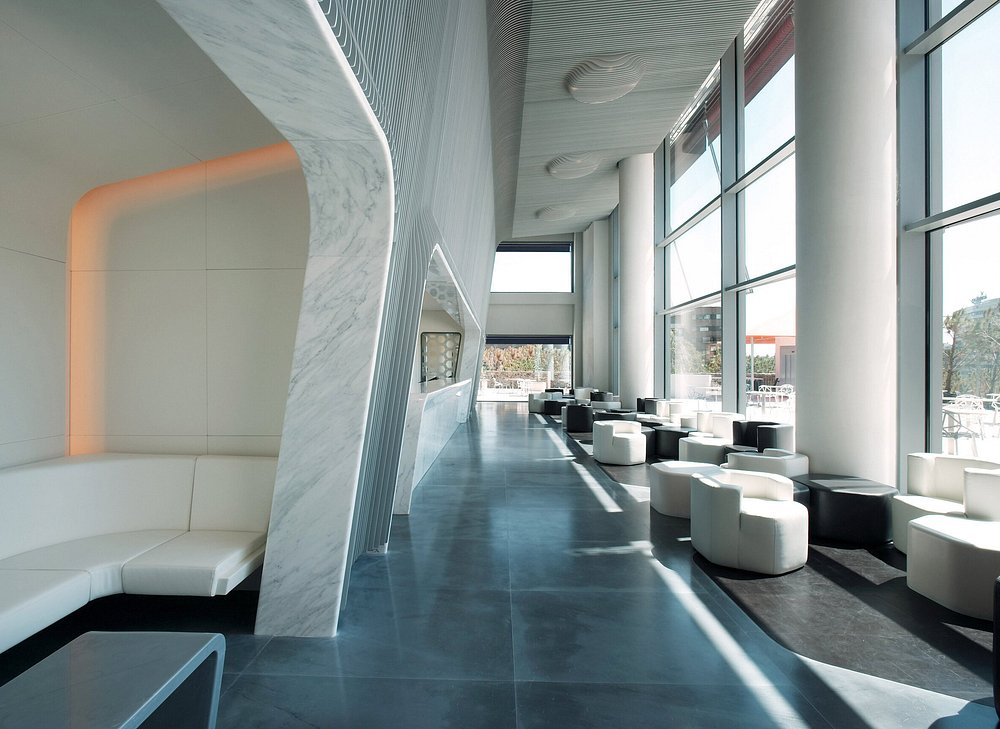
Public area scope is the most visible part of the FF&E schedule and the most mixed. Reception and concierge counters are fixed; lobby sofa sets, armchairs, loveseats, ottomans, coffee tables, side and end tables, console tables, high tables and bar stools are loose. Decorative and display cabinets sit between the two depending on how they are built in.
Restaurants and Bars
Restaurant scope combines dining tables and chairs, banquette and booth seating, bar and counter stools, buffet and servery tables, sideboards, display cabinets and wine cabinets. Banquette seating and bar counters are normally fixed; dining chairs and freestanding tables are not, which is why the two are frequently sourced under different contract lines.
Banquet and Function Space
Function space carries a different duty cycle: banquet tables and chairs, folding variants, head tables, stage platforms, lecterns and podiums, buffet and servery counters, coat check units and lounge seating for pre-function areas. Flexibility and storage behaviour matter as much as appearance here.
Executive Floors, Lounges and Wine Rooms
Executive and lounge areas typically call for modular sofas, lounge seating, coffee tables, meeting tables, work desks, laptop tables, magazine racks, ottomans and poufs. Where a cellar or tasting room is part of the programme, wine racks, wine cabinets, tasting tables and chairs, bar counters and bar stools join the schedule.
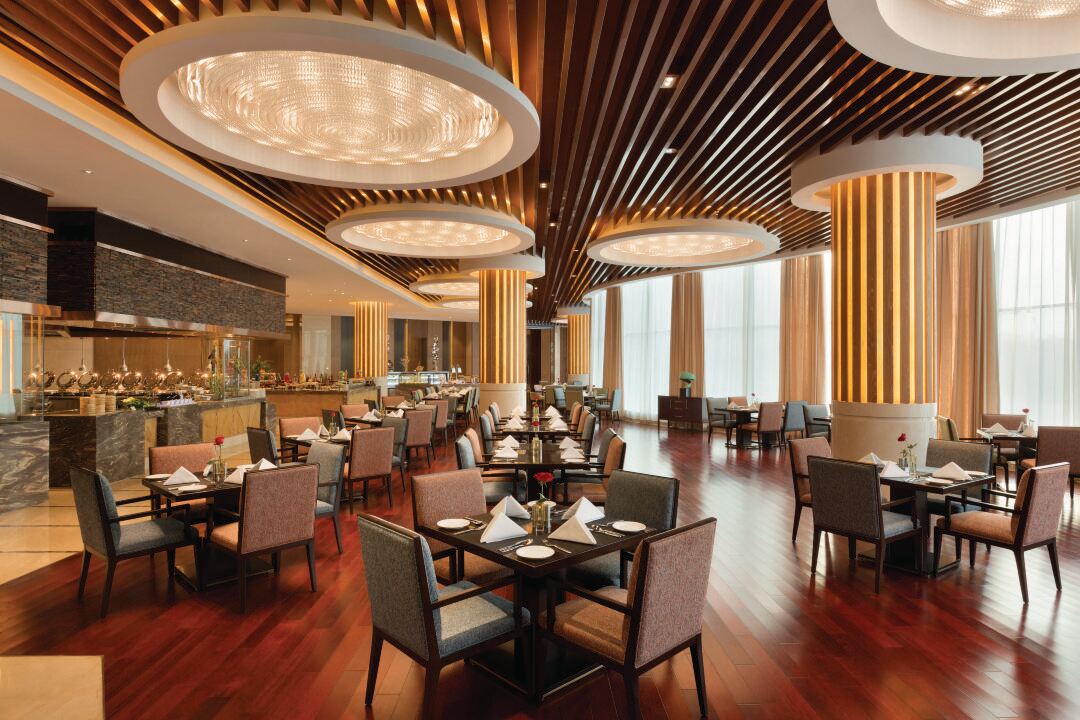
From Vocabulary to Deliverable: Six Steps in the Specification Path
Once the terms are agreed, they convert into a sequence. The order matters, because each step constrains the next.
Step 1 — Fix the schedule and the movable–fixed split. List every item by area and mark it loose, fixed or built-in. This single column decides which contractor prices the line and who returns to site when something does not fit.
Step 2 — Assign a scope level to each item. Decide where standard, semi-custom, made-to-order and bespoke are appropriate. A project that declares everything bespoke usually ends up approving drawings for items that never needed one.
Step 3 — Build the material and finish package as a schedule, not a mood. Material references, finish codes and upholstery selections should exist as a controlled document that a factory, a contractor and an operator can all read the same way.
Step 4 — State the performance requirements and the evidence you will accept. Fire retardancy, low formaldehyde emission, load capacity and wear resistance belong in the specification, together with the documents that prove them. Ask which management-system certifications a supplier holds: RICHART's production process is stated to comply with ISO 9001:2008, ISO 14001:2004 and OHSAS 18001:2007, and the company reports FSC Chain of Custody certification DCI-COC-001074 valid until 2030, according to its July 2026 corporate disclosure published via EIN Presswire.
Step 5 — Review the engineering, not only the render. A visual can be approved on a screen; a shop drawing has to survive a site survey. This is the stage where engineering-supported design earns its place, and where an R&D team of the size RICHART maintains — 100 engineers — is applied to sections, hardware, joinery and service integration rather than to surface appearance.
Step 6 — Agree inspection, delivery and installation responsibility. Production inspection, packing, shipping sequence and site installation are separate obligations. RICHART states that every product undergoes rigorous quality inspection and provides end-to-end solutions from design and production through to installation.
What RICHART's Scope Covers
RICHART is the trading name of Guangdong Richang Furniture Co., Ltd., founded in 1990 and based in a 100,000 m² facility in the Dawang High-tech Industrial Park, Zhaoqing City, Guangdong Province. The company employs around 1,000 people, maintains a 100-engineer R&D team, reports an annual output value of 500 million CNY, and derives 60% of revenue from exports. Its marketing network covers more than 20 countries and regions across five continents, and it has provided products and services to more than 500 high-star hotels worldwide.
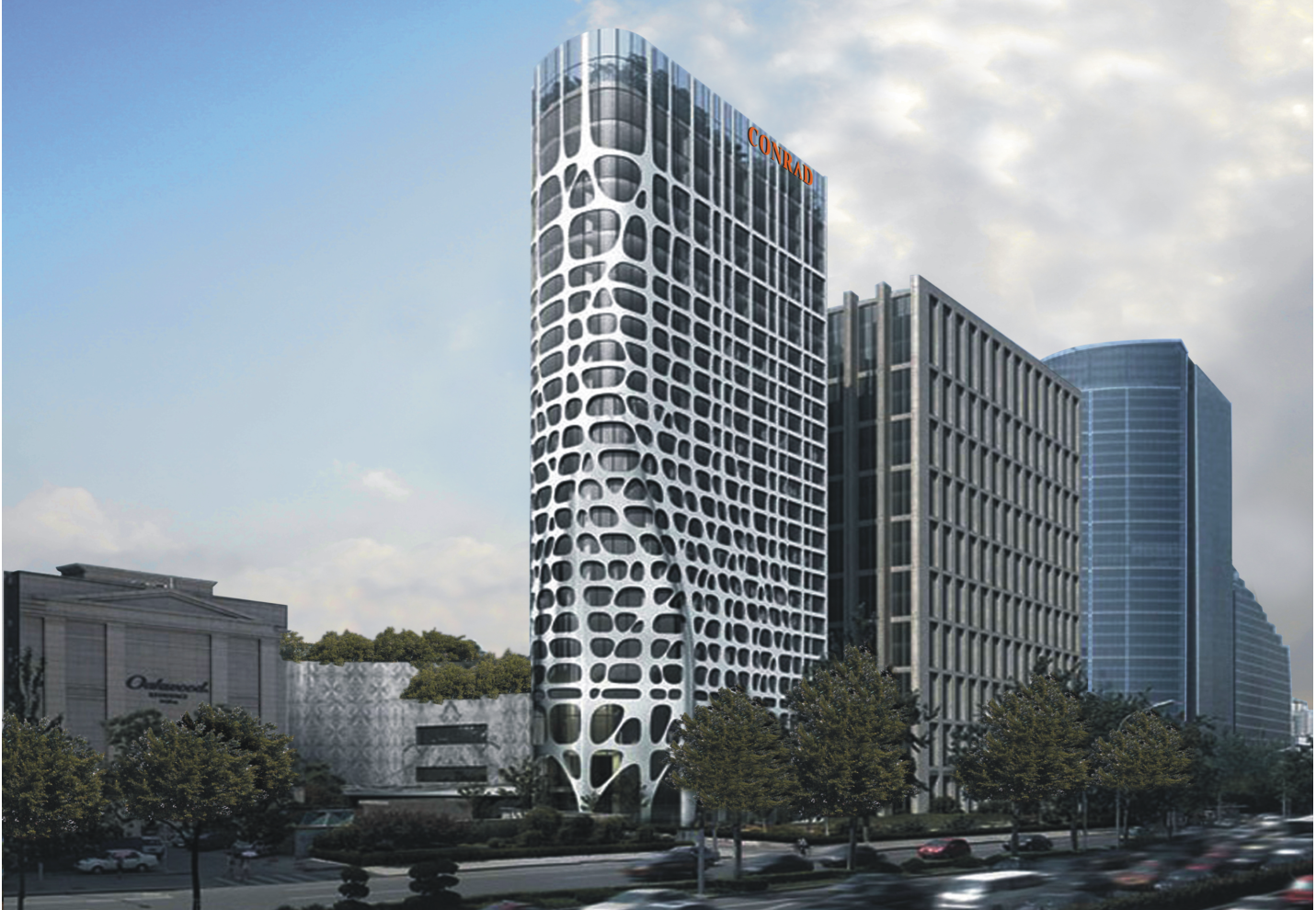
That project history includes work for international hotel brands such as St. Regis, Ritz-Carlton, Conrad, InterContinental, W Hotels, Hyatt, Park Hyatt, Marriott, Shangri-La, Hilton, Renaissance, Sheraton, Westin, Wyndham, Wynn, Banyan Tree, Anantara and Kempinski, alongside Chinese developers including KWG, Wanda, R&F, Greentown and Poly. Product scope covers guest room, public area, lobby, restaurant, banquet hall, function room, executive lounge, lounge and wine cellar furniture, in both movable and fixed configurations.
The company holds awards including China Environmental Labeling Product, China Environmental Protection Product, China Famous Brand, Top Ten Hotel Furniture Manufacturer, National Work Safety Standardized Enterprise and the Industry's Most Influential Award.
Frequently Asked Questions
Does custom hotel furniture have to meet fire and emissions requirements?
In hotel specifications, fire retardancy and low formaldehyde emission are normally written as requirements rather than options, alongside load capacity and wear resistance, because the furniture serves paying guests and because hotel brand standards and local building rules usually address these points. The exact test method, class and documentation differ by market and by brand, so the requirement should be taken from the project's own specification rather than from a supplier's general statement. RICHART's hotel furniture scope is described as fire retardant, low formaldehyde emission, high load capacity and wear resistant, produced under a process stated to comply with ISO 9001:2008, ISO 14001:2004 and OHSAS 18001:2007.
Can one supplier deliver both movable and fixed furniture for the same hotel?
Yes, where the supplier's scope genuinely covers both. RICHART produces high-end movable and fixed furniture for five-star hotels and provides engineering-supported design, which allows finish, proportion and dimensional decisions to be resolved across the two scopes instead of negotiated between a joinery contractor and a furniture supplier. Whether a specific project should consolidate them depends on how the fit-out contract is structured; where an owner splits loose furniture from fixed joinery for contractual reasons, the boundary between the two must still be defined item by item.
What drives the cost of custom hotel furniture?
Cost follows the scope level assigned to each item, the material and finish selection, the quantity per room type, the construction complexity, and the performance documentation the project requires. Two quotations for what appears to be the same chair can differ because one assumes a standard frame with a project fabric while the other assumes a bespoke frame with a solid brass detail. The comparison only becomes meaningful when the bill of quantities lines, material schedule and finish references match; for that reason, an itemised quotation is more useful than a single lump-sum figure.
How much customization is realistic within one project?
Considerably more than a single-palette approach suggests, provided the approvals are managed. RICHART's range covers more than twenty material types and a broad style span, so a project can hold a consistent base specification for guest rooms and vary materials, upholstery and detailing by area — lobby, restaurant, suite, executive floor. Each variation adds a drawing to review and a finish to sign off, so most projects consolidate around one documented material board with controlled area-specific deviations rather than letting each space develop its own specification.
What should a buyer prepare before requesting a quotation?
Three things shorten the process: the room matrix, the movable–fixed split for each area, and one representative room fully specified as the reference. With those in place, a supplier can price against a defined scope instead of a general intention, and the buyer can compare responses on the same basis. RICHART's contact team works from project scope rather than catalogue codes, and the company brochure provides an overview of categories, materials and project references for that first conversation.
Conclusion
Custom furniture for five-star hotels is furniture defined by a project rather than by a catalogue: dimensions taken from the room, materials and finishes taken from a controlled schedule, and performance taken from the specification. Two splits organise everything else. Movable and fixed determines who measures, who coordinates services and who returns to site. Bespoke, made-to-order, semi-custom and standard determines who owns the drawing and how much of the project's decision load sits with the buyer.
Learn the vocabulary once — FF&E, casegoods, shop drawing, mock-up, turnkey, contract-grade — and the rest of a hotel furniture package becomes readable. Suppliers can then be compared on scope, evidence and execution rather than on adjectives. RICHART's own position in that comparison rests on a 1990 founding, a 100,000 m² production base, a 100-engineer R&D team, engineering-supported design across movable and fixed furniture, and delivered work in more than 500 high-star hotels worldwide.
For a structured overview of categories, materials and project references, the RICHART company brochure is available to download.
Have Questions or Need More Details?
Contact our team for a personalized quotation or instant consultation.
Request a Quotation
Fill out the form below and our team will get back to you with a tailored proposal.
WhatsApp Direct Chat
Prefer to chat in real-time? Message us on WhatsApp for instant assistance & quick answers.
- Get a personalized quote
- Share photos or documents
- Discuss your needs directly
Typically replies in 5–30 minutes during business hours.