
Five-Star Hotel Custom Furniture: A Technical Guide to Material & Joinery Parameters
Five-Star Hotel Custom Furniture: A Technical Guide to Material & Joinery Parameters
Custom furniture for five-star hotels is not defined by a mood board. It is defined by a written parameter set — substrate, species, veneer, joint principle, hardware class, filling, finish system and mounting method — agreed before production and then verified at mock-up, during production and before delivery. Put those parameters on paper and acceptance becomes measurable; leave them vague and every snagging meeting becomes an opinion.
This technical guide is written for procurement teams, owner representatives and design managers at the decision stage. It sets out the parameter families that determine whether a piece survives a decade of guest use, compares standard contract furniture with a five-star bespoke specification on cost and lifecycle, and converts design intent into purchasing terms with acceptance criteria that both the factory and the inspector can test.
Problem Definition: The Parameters That Are Never Written Down
Hotel furniture seldom fails because the design was wrong. It fails because the specification was incomplete in precisely the places where cost is saved invisibly. Three failure modes account for most of the disputes that surface after handover: material deformation, surface cracking and fading, and structural loosening.
- Material deformation appears as bowed doors, twisted tops and joints that open over a season. It traces back to core stability and dimensional control during production, not to the visual grade of the face veneer.
- Surface cracking and fading shows first in high-light, high-cleaning areas: reception fronts, restaurant tops, window-facing casegoods. The cause is usually the finish system and its adhesion to the substrate rather than the colour approved at sample stage.
- Structural loosening is a joint and hardware question. A dining chair that creaks after eighteen months of banquet use was not vaguely under-built; a specific connection was selected without accounting for racking load and repeated movement.
The control methods for all three are well established: precision dimensional control, material stability control and surface finish quality control. A manufacturer that runs these as production disciplines — supported by strict raw material inspection, pre-delivery quality inspection, professional installation guidance and after-sales maintenance service — can be held to them contractually. A manufacturer that uses them as brochure language cannot.
The commercial consequence is straightforward. Under-specification is invisible at handover and expensive in year two. When a purchase order states only solid wood, high quality or premium finish, no supplier can be measured against it and no owner representative can reject a unit that technically complies. Fixing this is a documentation decision taken at specification stage, not a negotiation decision taken at snagging.
Industry Background: Why Parameter Discipline Matters More Than It Did
The luxury hotel furniture market is estimated to grow from USD 212.14 billion in 2026 to USD 312.97 billion by 2035 (Business Research Insights), while the broader hospitality furniture market was valued at USD 23.8 billion in 2025 and is projected to reach USD 39.6 billion by 2034 (Dataintelo). Research houses scope the category differently — FF&E-inclusive estimates sit considerably higher — but the direction of travel is consistent across sources.
Two structural shifts make the parameter conversation more urgent than it was five years ago.
- Bespoke has become the default assumption. Over two-thirds of upscale hotels now allocate a dedicated budget for bespoke furnishings, with average project spend increasing by 31% since 2021 (Intel Market Research). When bespoke is standard, differentiation shifts from custom versus catalogue to custom to what specification.
- Sustainability specifications are now contract clauses. Sustainability specifications in hotel furniture contracts rose by 45% in 2025, with low-VOC finishes and FSC wood becoming standard requirements (Intel Market Research). These are verifiable terms, not preferences.
Supply geography matters too. Asia Pacific held a 36.4% revenue share of the hospitality furniture market in 2025 (Dataintelo), which is why so many five-star projects run specification, sampling and production across several time zones. In that configuration the written parameter set, rather than the factory visit, becomes the primary control document.
RICHART — Guangdong Richang Furniture Co., Ltd., founded in 1990 and operating from a 100,000 m² industrial park in Zhaoqing, Guangdong Province, China — manufactures custom loose and fixed furniture for four- and five-star hotels, luxury residences, villas and large-scale projects. The company works under ISO 9001:2008, ISO 14001:2004 and OHSAS 18001:2007, and has supplied products and services to more than 500 high-star hotels worldwide.

Detailed Solution: The Seven Parameter Families
A five-star specification can be organised into seven families. Each family should produce one or more clauses that a factory can build against and an inspector can reject against.
1. Core Substrate and Material Stability
The substrate is the least visible and most consequential parameter. It governs whether a panel stays flat through seasonal humidity swings and whether a veneered face remains bonded over years of cleaning cycles. Specify the core by construction type and by the performance requirement it must meet in the project climate, then require the supplier to declare how stability is controlled in production and at which stages it is measured. This is the point where material stability control is either a documented process or a phrase in a presentation.
2. Wood Species and Veneer
Species selection is a durability and appearance decision; veneer specification is a consistency decision. Define species by its accepted commercial name rather than a trade alias, define the veneer by cut and matching method, and require visual continuity across every unit in the same room type. Three reception panels cut from three different logs will read as a defect even when each panel is individually sound. Where sustainability clauses apply, the FSC status of the timber belongs in this family rather than in a separate environmental annex.
3. Joinery and Structural Connection
Joinery is where five-star and standard construction diverge most sharply, and where structural loosening is either designed out or designed in. Specify the joint principle at every load-bearing connection — not a hardware reference, but the mechanical logic of the joint — and require that joint to be demonstrated on a production unit rather than on a one-off bench sample. Units subject to racking, such as chairs, benches and luggage benches, and units subject to static load, such as credenzas and desk returns, need different answers, and the schedule should say so.
4. Hardware
Hardware is a specification with a lifecycle. Define hardware by duty class for the application — guestroom drawer runners, wardrobe sliding systems, hinges on wardrobe and minibar doors — and state the replacement policy in the same clause. Hardware is also among the most frequent sources of post-opening maintenance calls, which is why it belongs in the technical parameter set rather than only in the bill of quantities.
5. Upholstery, Filling and Flammability
Upholstery carries the requirements that are legally enforceable. Public and lounge seating must meet ANSI/BIFMA X5.4-2020 (R2025) standards for durability and safety in high-traffic commercial environments, and upholstered furniture in the UK hospitality sector requires CRIB 5 rating under BS 5852 flammability standards. Beyond compliance, define filling behaviour and shape retention, seam construction, and the treatment of the deck — the three variables that decide how a banquette looks in year three.
6. Surface Finish
Finish is the parameter most often reduced to a colour chip. It should be specified as a system: preparation, build and topcoat performance, with the performance requirement written against the visible risk of cracking and fading under light and cleaning agents. Surface finish quality control means the factory can show a documented finish schedule per component type, not that the sample looked correct on approval day.
7. Fixed Versus Movable Construction
The same design intent becomes a different product depending on whether it is built in or built loose. Fixed joinery is dimensioned to the opening, sequenced against the structural programme and installed by the factory team or a supervised partner. Movable furniture is dimensioned for handling, protected for transport and replaceable without demolition. Classify each unit before pricing: the decision drives both unit cost and site risk, and it is much harder to revisit after the FF&E package is locked.
Step-by-Step Breakdown: From Design Intent to Acceptance Criteria
- Convert design intent into a parameter schedule. For every unit type in the package, list the seven families and write one testable requirement for each. Anything that cannot be inspected is not yet a parameter.
- Fix the compliance baseline first. Fire performance, structural performance and material sourcing clauses should be settled before aesthetics are finalised, because each can change the construction of the unit.
- Approve through a physical mock-up. Review the mock-up against the schedule, joint by joint and finish by finish, then retain the approved reference piece. That piece becomes the acceptance standard for the whole run.
- Agree the control plan. Confirm with the factory how dimensional control, material stability and finish quality are checked, at which production stages, and who signs off. A supplier working from engineering-supported design should be able to translate drawings into production tolerances without redesigning on the shop floor.
- Inspect before delivery, not on site. Pre-delivery quality inspection is where defects are inexpensive to correct; site defects are costly to correct and impossible to conceal from an opening deadline. Confirm the packing method at the same time, since the packaging workshop is part of the quality chain.
- Plan installation and hand over a maintenance schedule. Professional installation guidance protects the joinery and hardware investment, and a documented after-sales maintenance service turns a one-off delivery into a manageable asset with a known cost profile.
Use Cases: How the Parameter Set Changes by Space
Guestroom casegoods. Wardrobes, minibar units and desk returns are dimension-critical because they meet walls, skirtings and each other. Precision dimensional control dominates, and the fixed-versus-movable decision is usually dictated by the wall build-up rather than by preference.
Lobby and reception. The highest-visibility, highest-abuse joinery in the building. Veneer continuity, finish performance under strong light, and panel flatness matter more here than anywhere else, because a warped reception front is visible from the entrance every hour of the day.
Restaurant and bar seating. Upholstery and structural connection lead. Banquettes and dining chairs absorb racking loads and repeated cleaning, so joint principle, filling behaviour and flammability compliance are the parameters that carry real cost and real maintenance exposure.
Suite packages. The widest mix of fixed and movable pieces within one room. Suites reward a supplier that produces both from a single engineering base, because tolerances and finishes must match across two different build methods.
Public and lounge seating. Durability requirements are explicit rather than implied: seating in high-traffic commercial environments is specified against ANSI/BIFMA X5.4-2020 (R2025), and those test criteria belong in the purchasing terms, not in a capability brochure.
Comparison Table: Standard Contract Furniture Versus a Five-Star Bespoke Specification
The comparison below summarises standard contract furniture against a bespoke five-star specification. It is a decision aid rather than a price list: cost lines move with design complexity, unit mix and quantity.
| Dimension | Standard contract furniture | Five-star bespoke specification |
|---|---|---|
| Material quality | Commodity-grade selection | Superior material quality, selected against the parameter schedule |
| Craftsmanship and durability | Standard construction | Better craftsmanship and durability |
| Design fit | Adapted to the space | Fully customised design and fit |
| Service life | Baseline | Service life extended by 2 times |
| Defect rate | Baseline | Defect rate reduced by over 80% |
| Durable years | Baseline | Durable years extended by 8–10 years |
| Structural stability and durability efficiency | Baseline | 25% higher structural stability and durability efficiency |
| Maintenance requirement | Baseline | 80% less maintenance required |
| Initial cost | Baseline | Initial cost 30% higher |
| Material cost | Baseline | Material cost increased by 120%–150% |
| Total cost of ownership over 8 years | Baseline | Total cost of ownership 50% lower over 8 years |
| Best for | Short-cycle and budget-driven projects | Luxury and star-rated hotels, high-end resorts and villas, boutique and premium hotels |
Parameter checklist for purchasing terms
Use the schedule below to attach a verification point to each parameter family. A clause without a verification point tends to disappear once the factory is under programme pressure.
| Parameter family | Confirm in writing | Verification point |
|---|---|---|
| Core substrate and stability | Core construction; stability control method; climate scope of the project | Raw material inspection record; flatness check at pre-delivery inspection |
| Species and veneer | Species commercial name; veneer cut and matching; continuity across room types; FSC status where required | Approved reference piece; face comparison across the run |
| Joinery | Joint principle at each load-bearing connection; separate logic for racking load and static load | Joinery review on a production unit, not a bench sample |
| Hardware | Duty class per application; replacement policy | Operation test on production units before packing |
| Upholstery and filling | Filling behaviour and recovery; seam construction; deck treatment; BS 5852 CRIB 5 or ANSI/BIFMA X5.4-2020 (R2025) as applicable | Compliance documentation; seam and deck inspection |
| Surface finish | Finish system stages; performance against cracking and fading; low-VOC requirement | Documented finish schedule per component; surface inspection |
| Fixed versus movable | Classification per unit; site sequencing for fixed units; handling protection for movable units | Installation plan; packaging inspection |
| Delivery and after-sales | Pre-delivery inspection scope; installation guidance; maintenance schedule | Pre-delivery inspection report; handover documentation |
FAQ
Which material and finish standards should a five-star specification reference?
A specification should name the standard and the test criteria, not just the intent to comply. For upholstery in the UK hospitality sector, BS 5852 CRIB 5 rating applies. For public and lounge seating in high-traffic commercial environments, ANSI/BIFMA X5.4-2020 (R2025) covers durability and safety. On the materials side, low-VOC finishes and FSC wood have become standard requirements as sustainability specifications in hotel furniture contracts rose by 45% in 2025. Management-system compliance is a separate layer: RICHART operates under ISO 9001:2008, ISO 14001:2004 and OHSAS 18001:2007.
How can a buyer verify joinery and finish capability before awarding the contract?
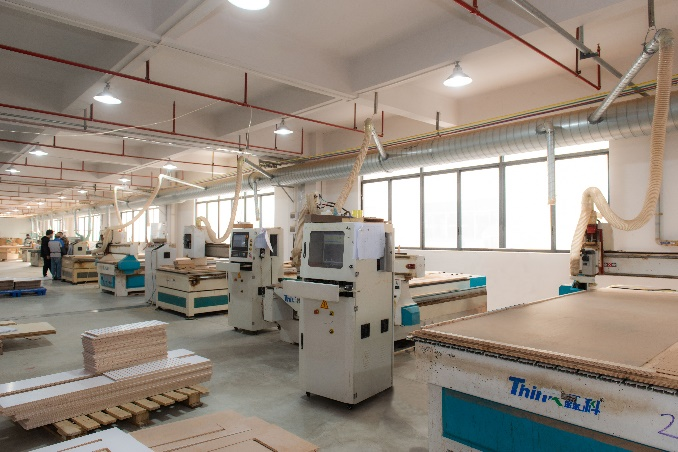
Ask for the workshops that will actually run the order rather than the ones shown in a presentation. RICHART operates woodworking, sanding, painting, assembly, upholstery and packaging workshops within a 100,000 m² facility in Zhaoqing, Guangdong Province, supported by automated production equipment imported from Italy, Germany, Japan and Taiwan. Engineering depth matters as much as machinery: a 100-engineer R&D team is the resource that converts a designer drawing into production tolerances. Project evidence should be comparable in segment and complexity, which for RICHART includes products and services supplied to more than 500 high-star hotels and experience with brands such as St. Regis, The Ritz-Carlton and Hyatt.
What does the upgrade from standard to bespoke specification cost across the lifecycle?
Expect higher capital outlay and lower lifetime cost. Against standard furniture, a bespoke five-star specification carries an initial cost about 30% higher and material cost increased by 120%–150%. In return, service life is extended by 2 times, durable years by 8–10 years, defect rate falls by over 80%, and required maintenance drops by 80%. Total cost of ownership over eight years is 50% lower. The decision therefore turns on the holding period and the brand standard, not on the unit price alone.
What should mock-up and sample approval cover?
The sample is the acceptance reference for the entire run, so it should be reviewed against the parameter schedule rather than against visual memory. That means substrate and edge detail, veneer matching and continuity, the joint principle at a load-bearing connection, hardware operation, seam and deck construction, and the finish system. RICHART supports this stage with strict raw material inspection and pre-delivery quality inspection, so that the approved reference and the delivered batch are measured by the same criteria.
How does specification complexity affect production and delivery planning?
Specification depth determines sequencing. Fixed joinery must be dimensioned to the opening and released in line with the site programme, while movable pieces follow the packing and shipping schedule; both pass through the same workshop flow from woodworking and sanding through painting, assembly, upholstery and packaging. Because the parameter set defines what inspection is looking for, finalising it before production starts prevents acceptance disputes from delaying shipment. Buyers who want to test the specification against real production can request a sample or a project-specific quotation from RICHART, or download the catalogue linked below.
Build the parameter checklist into your next FF&E package
RICHART supplies custom loose and fixed furniture for four- and five-star hotels, luxury residences and large-scale projects, working from engineering-supported design through production, pre-delivery inspection and installation guidance. Use the catalogue to review construction options, or send a unit schedule for a specification review and quotation.
Download the RICHART catalogue (PDF)Conclusion
Five-star hotel furniture is a specification product before it is a design product. The seven parameter families — substrate and stability, species and veneer, joinery, hardware, upholstery and flammability, surface finish, and fixed-versus-movable construction — are the difference between a package that can be inspected and a package that can only be discussed. Each family should carry a written requirement and a verification point, and each should be settled before the mock-up rather than after the first delivery.
The economics support the discipline. A bespoke specification costs about 30% more initially and 120%–150% more in material, but returns 2 times the service life, 8–10 additional durable years, over 80% fewer defects, 80% less maintenance and a total cost of ownership 50% lower over eight years. On a project held for a decade or more, the parameter set is the procurement instrument that protects that return.
RICHART, operated by Guangdong Richang Furniture Co., Ltd., has manufactured to these disciplines since 1990, with a 100-engineer R&D team, a 100,000 m² facility, ISO 9001:2008, ISO 14001:2004 and OHSAS 18001:2007 compliance, and delivery experience across more than 500 high-star hotels in over 20 countries and regions.

Website: www.richart-furniture.com
Email: richart2687@gmail.com
Tel / WhatsApp: +86 13826286822
Address: No. 1, Wende 3rd Street, Dawang Hi-Tech Industrial Development Zone, Sihui County, Zhaoqing City, Guangdong Province, China
Catalogue: Download PDF
Have Questions or Need More Details?
Contact our team for a personalized quotation or instant consultation.
Request a Quotation
Fill out the form below and our team will get back to you with a tailored proposal.
WhatsApp Direct Chat
Prefer to chat in real-time? Message us on WhatsApp for instant assistance & quick answers.
- Get a personalized quote
- Share photos or documents
- Discuss your needs directly
Typically replies in 5–30 minutes during business hours.