
Fixed vs. Movable Furniture for Five-Star Hotels: A Comparison Guide for Custom Procurement
Fixed furniture is built into the building fabric and installed as part of the construction sequence. Movable furniture is freestanding and installed after the space is complete. Five-star hotel projects almost never choose one or the other — they allocate each space between both categories, and the quality of that allocation determines installation risk, durability, design fidelity, lead time and lifecycle cost.
For owners, designers and procurement managers, the fixed-versus-movable question is a sequencing and responsibility question before it is an aesthetic one. Getting it wrong shows up later as site rework, unclear warranty responsibility between the general contractor and the furniture supplier, or a guest room that cannot be refreshed without triggering a hard renovation. This guide compares the two categories against the criteria five-star procurement teams actually use, and explains how an integrated custom manufacturer supports each.
What “Fixed” and “Movable” Mean in Hotel FF&E
In hospitality procurement, custom furniture is normally split into two manufacturing and installation categories, and the split determines how it is specified, produced, delivered and replaced.
- Fixed furniture (also called built-in or joinery furniture) is permanently attached to the building structure or to wall, floor and ceiling surfaces. Typical items include built-in headboards and bed boards, wardrobes, dressers, vanities, wall paneling, built-in cabinets, display shelving, reception and concierge counters, and fixed banquette seating.
- Movable furniture (also called loose furniture) is freestanding and can be relocated, replaced or reupholstered without construction work. Typical items include sofas, armchairs, accent chairs, ottomans, coffee and side tables, dining tables and chairs, bar stools, beds, nightstands, writing desks, desk chairs and casegoods.
Guangdong Richang Furniture Co., Ltd. (RICHART), established in 1990, produces both categories for five-star hotels from its facility in Dawang High-tech Industrial Park, Zhaoqing City, Guangdong Province, China — a position that matters because many suppliers specialize in only one category and force a project into multiple interfaces.
The procurement problem this comparison solves
Three failure modes appear repeatedly on five-star projects when the fixed/movable split is decided late or informally:
- Interface gaps. Built-in elements must be coordinated with structure, MEP rough-in and wall finishes. If the fixed furniture scope is not clearly assigned, installation responsibility fragments between the general contractor and the furniture supplier, and remedial work becomes a commercial argument rather than a technical one.
- Schedule mismatch. Fixed furniture dimensions can only be confirmed after on-site measurement; movable furniture can be produced in parallel with construction and delivered later. Treating both as a single delivery milestone compresses the wrong part of the schedule and usually delays the fixed package.
- Lifecycle mismatch. Built-in elements are tied to the building’s renovation cycle, while loose furniture is refreshed more frequently for brand standards and wear. Mixing both into one specification package makes later refresh planning and budgeting harder.
Each of these is a decision that can be resolved during design development — if procurement and the furniture manufacturer are involved before the FF&E package is frozen.
Industry Background: Why the Decision Matters More Now
Hospitality furniture spending has scaled with the global pipeline, and customization has become the default rather than the exception at the upper tier. That shift pushes the fixed/movable decision earlier in the project timeline.
- The global hotel furniture, fixtures and equipment (FF&E) market was valued at USD 63.1 billion in 2025 (Grand View Research). Estimates differ by scope: Dataintelo values the narrower hospitality furniture segment at USD 23.8 billion in 2025, projected to reach USD 39.6 billion by 2034, while Business Research Insights estimates the luxury hotel furniture market at USD 212.14 billion in 2026, growing to USD 312.97 billion by 2035.
- Over two-thirds of upscale hotels now allocate a dedicated budget line for bespoke furnishings, with average project spend up 31% since 2021 (Intel Market Research).
- Asia Pacific held a 36.4% revenue share of the hospitality furniture market in 2025, supported by construction activity in emerging economies (Dataintelo).
- Sustainability specifications in hotel furniture contracts rose 45% in 2025, with low-VOC finishes and FSC wood increasingly written in as standard requirements (Intel Market Research).
Those estimates should be read as scope-dependent rather than contradictory: the wider figures include full FF&E packages, while the narrower figures cover furniture alone. For a procurement team, the useful takeaway is directional. Bespoke specification is now a budgeted line item rather than an upgrade, and the compliance and sustainability requirements attached to it are tightening.
Two standards recur in upper-tier specifications. Public and lounge seating is commonly specified to ANSI/BIFMA X5.4-2020 (R2025) for durability and safety in high-traffic commercial environments, and upholstered furniture supplied into the UK hospitality sector commonly requires CRIB 5 performance under BS 5852. These requirements fall mainly on movable seating, which absorbs the most guest contact and abuse. Fixed joinery, by contrast, is usually governed through the project fire strategy, substrate build-up and finish specification.
The practical consequence is that the fixed/movable boundary now has to be drawn earlier, because compliance evidence, sample approval and installation sequencing differ between the two categories and cannot be retrofitted into a frozen package.
Six Criteria That Decide Fixed vs. Movable
1. Installation and site sequencing
Fixed furniture is installed after structural work, MEP rough-in and wall finishes, and typically before final finishes such as carpet and decorative lighting. It is measured on site and cannot be fully finalized from drawings alone. Movable furniture is installed after the space is complete and protected, which makes it the last trade in and the easiest to delay without blocking other trades. When a project is schedule-constrained, moving items from fixed to movable scope can reduce critical-path risk — provided the design intent survives the change.
2. Durability and lifecycle
Movable furniture takes the highest-intensity use: seating in lobbies and restaurants, chairs in meeting rooms, casegoods in guest rooms. Built-in elements take less mechanical abuse but are harder and more disruptive to replace, because replacement involves demolition and finishing. This asymmetry usually leads to a simple rule: put high-wear, high-refresh items in the movable category, and reserve fixed scope for elements whose geometry must follow the architecture.
3. Design flexibility and brand standards
Fixed furniture delivers the seamless, architectural look luxury brands use to distinguish their interiors — a continuous headboard wall, an integrated desk and vanity, a reception desk that follows the lobby geometry. Movable furniture delivers the flexibility operators need: seasonal layout changes in restaurants, lobby reconfiguration, and brand-standard refreshes without construction work. RICHART manufactures both, in materials that include veneer, solid wood, oak, walnut, leather, fabric, velvet, marble, stone, metal, stainless steel, brass, bronze, glass, acrylic, paint, MDF, plywood, laminate and foam, and in styles spanning modern, contemporary, minimalist, light luxury, classic, neoclassical, French, Art Deco and Japanese.
4. Lead time and procurement sequencing
Fixed furniture typically carries a longer and more conditional lead time because production cannot be released until site dimensions and interface details are confirmed. Movable furniture can be released earlier against approved drawings and finishes, produced in parallel with construction, and either shipped on completion or held for phased delivery. Procurement teams should therefore split the schedule into two release points rather than one, and should treat site measurement as a formal milestone in the fixed package.
5. Compliance and fire safety
Compliance requirements differ by category. Upholstered movable seating is usually the focus of flammability and durability testing — BS 5852 CRIB 5 in the UK, and ANSI/BIFMA X5.4-2020 (R2025) for public and lounge seating durability in high-traffic commercial environments. Fixed joinery is usually governed by the project fire strategy, substrate and finish specification. Manufacturer-level management systems support both: RICHART’s production process complies with ISO 9001:2008 (quality management system), ISO 14001:2004 (environmental management system) and OHSAS 18001:2007 (occupational health and safety management system).
6. Cost structure and total cost of ownership
Fixed furniture carries cost in material, joinery labor, finishing and site installation hours. Movable furniture carries cost in material, upholstery and finishing, with lower installation labor but higher replacement frequency. A meaningful comparison therefore uses total cost of ownership across the renovation and brand-standard cycles rather than unit price. Hotel furniture applications are also specified for stable indoor conditions — low humidity, low dust and a stable temperature range of approximately 5°C to 50°C — with fire retardant performance, low formaldehyde emission, high load capacity and wear resistance as typical requirements across both categories.
A Seven-Step Allocation Process
- Map the space program. List every room type and public area, and mark which items must follow the architecture (fixed) and which must be relocatable (movable). This produces the first draft of the scope split before any specification is written.
- Confirm the design language. Identify where the brand standard depends on seamless millwork — headboard walls, vanities, reception desks, feature paneling — and where layout flexibility is required by the operator.
- Set the compliance matrix. Assign each item to its governing requirement: flammability and durability testing for upholstered seating, project fire strategy and finish specification for fixed joinery. Writing it into the specification ensures every supplier responds to the same requirement set.
- Split the schedule into two release points. Release movable items against approved drawings and finishes; release fixed items against confirmed site dimensions.
- Agree measurement and mock-up milestones. Fix a site measurement date for the fixed package and a prototype approval date for finishes, upholstery and hardware.
- Define installation and interface responsibility. State who installs, who provides blocking and substrate preparation, who handles final touch-up and adjustment, and who owns warranty for each item.
- Plan the refresh cycle. Decide which items will be replaced or reupholstered during the brand-standard cycle, and keep those in movable scope wherever the design allows.
Use Cases: How the Split Plays Out Space by Space
Lobby and public areas
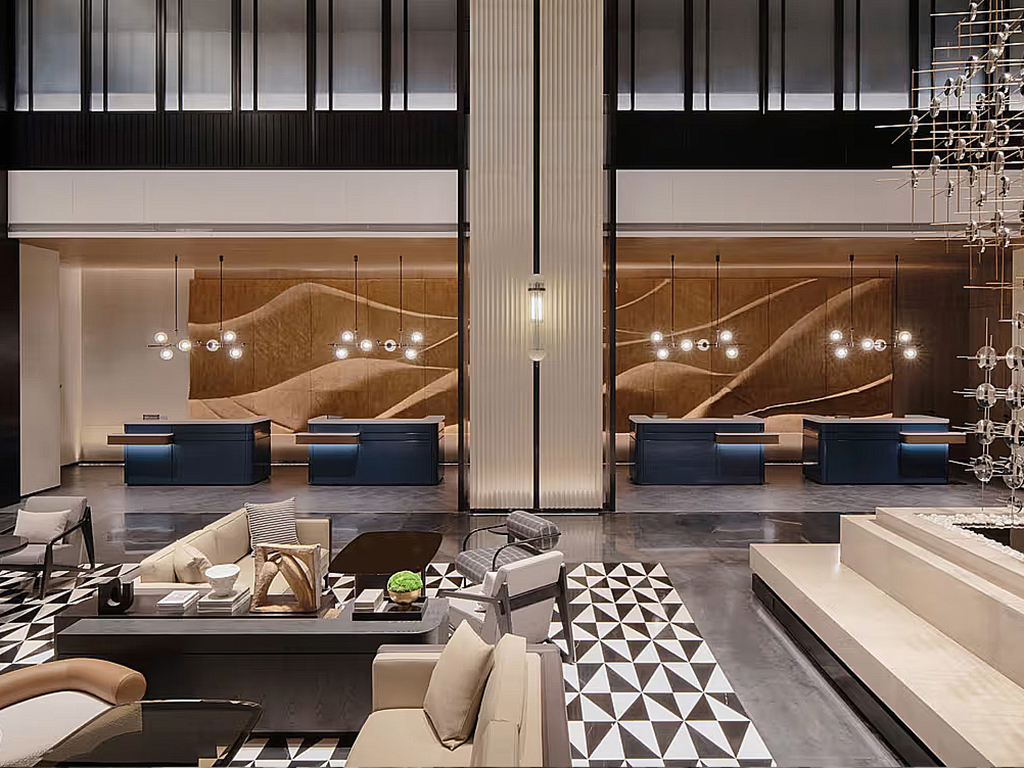
Reception and concierge counters, feature wall paneling and fixed banquettes belong in the fixed package because they follow the architecture and define the arrival experience. Lobby sofas, armchairs, accent chairs, coffee and side tables, console tables and high tables with bar stools belong in the movable package because traffic patterns and layouts change over the life of the hotel. RICHART has delivered lobby and public area furniture for projects including the Sofitel Dubai The Palm Resort & Spa and the Ritz-Carlton Montreal.
Guest rooms
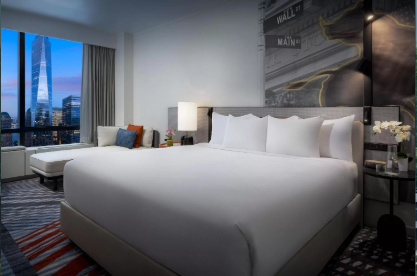
Built-in headboards and bed boards, wardrobes, integrated desks and vanities, and built-in cabinetry are typically fixed. Beds, nightstands, desk chairs, armchairs, ottomans, coffee tables and luggage racks are typically movable. This split lets operators replace soft goods and seating on a faster cycle without touching the joinery. Guest room casegoods and upholstered bedroom furniture from RICHART appear in projects such as Conrad Beijing, DoubleTree by Hilton Guangzhou Huihua and the Millennial Hotel in the United States.
Suites and executive floors
Suites combine both categories at higher specification: fixed paneling and built-in storage define the space, while lounge seating, dining sets and executive floor working and meeting furniture stay movable for flexible use across guests, meetings and private entertaining.
Restaurants, bars and lounges
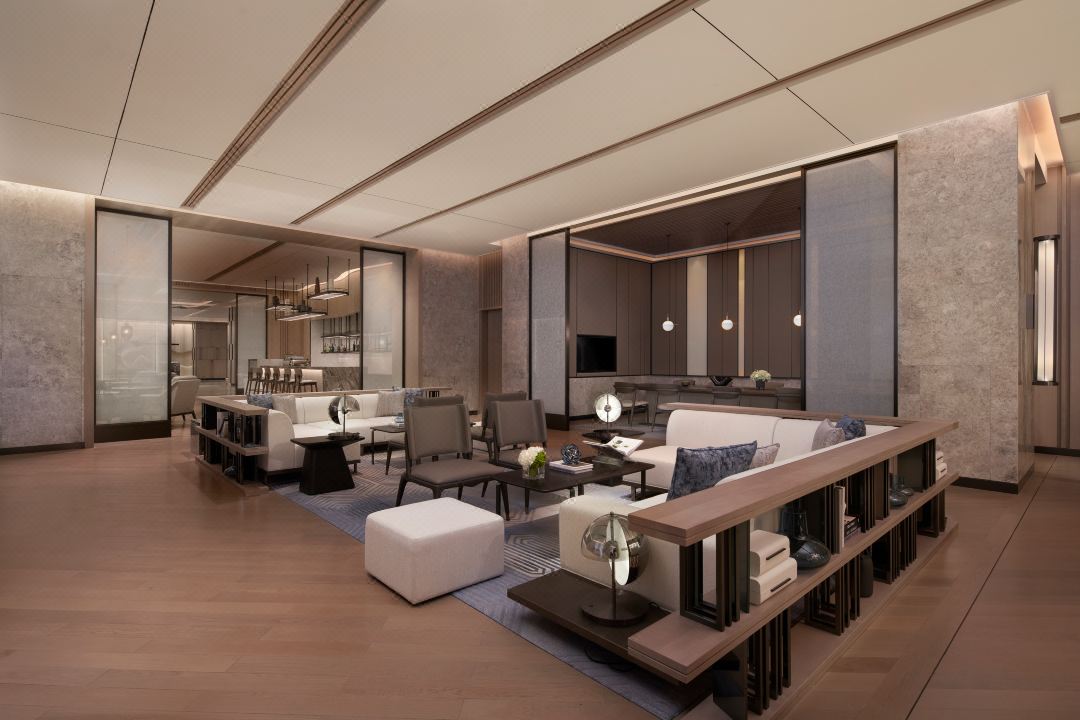
Fixed banquette seating and bar fronts follow the room layout; dining tables and chairs, bar stools, armchairs and side tables stay movable so the operator can change covers and configurations. RICHART’s product range covers restaurant and private dining furniture, bar and wine cellar furniture, and executive lounge and function room furniture.
Banquet and meeting spaces
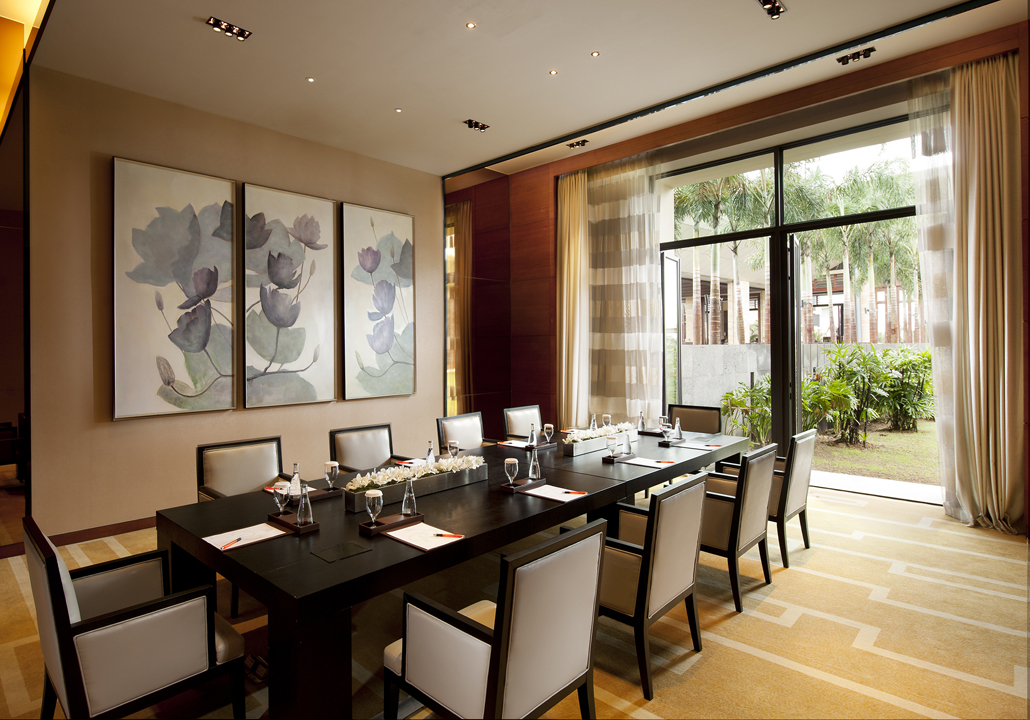
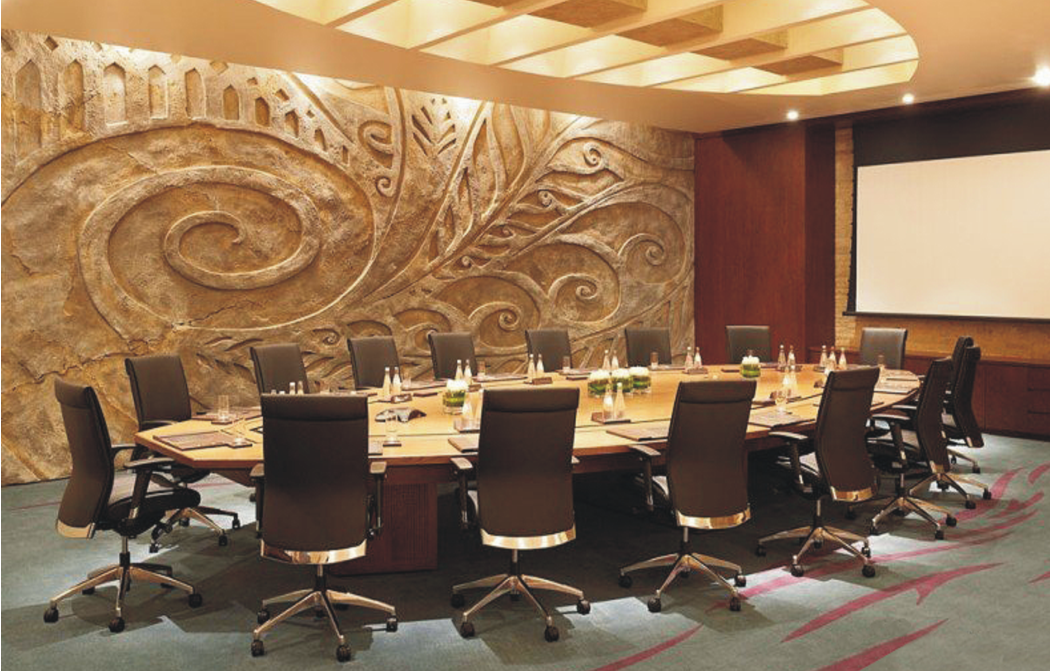
Banquet tables, banquet chairs, stage platforms, lecterns and servery counters are normally movable, since these rooms are reconfigured continuously. Fixed scope is usually limited to built-in wall paneling, bar counters and service joinery.
Fixed vs. Movable Custom Furniture: Side-by-Side Comparison
| Comparison criterion | Fixed (built-in) furniture | Movable (loose) furniture |
|---|---|---|
| Definition | Permanently attached to structure or to wall, floor and ceiling surfaces | Freestanding; relocatable without construction work |
| Typical items | Built-in headboards and bed boards, wardrobes, vanities, wall paneling, reception and concierge counters, built-in cabinets, fixed banquettes | Sofas, armchairs, accent chairs, ottomans, coffee and side tables, dining tables and chairs, bar stools, beds, nightstands, desks, casegoods |
| Installation timing | After structural and MEP rough-in and wall finishes; before final finishes | After the space is complete and protected |
| Production release trigger | Confirmed site dimensions and interface details | Approved drawings, finishes and samples |
| Design role | Seamless architectural continuity and brand-defining geometry | Layout flexibility, comfort and refreshable style |
| Wear exposure | Lower mechanical wear; replacement is disruptive | Highest guest contact and wear; replacement is straightforward |
| Primary compliance focus | Project fire strategy, substrate and finish specification | Flammability and durability testing of upholstered seating, such as BS 5852 CRIB 5 and ANSI/BIFMA X5.4-2020 (R2025) |
| Refresh cycle | Tied to the building renovation cycle | Refreshable independently between renovations |
| Cost driver | Material, joinery labor, finishing and site installation hours | Material, upholstery and finishing; lower installation labor |
| Best suited to | Elements whose geometry must follow the architecture | Elements subject to layout change, heavy wear or brand-standard refresh |
Decision rule: if an element must follow the architecture, or cannot be replaced without demolition, specify it as fixed. If it will be reconfigured, reupholstered or refreshed within the brand-standard cycle, specify it as movable. Everything in between is a coordination decision to be made with the manufacturer before the FF&E package is frozen.
Common Misallocations and Their Corrective Actions
- Fixed scope assigned to the general contractor instead of the furniture manufacturer. Finish consistency between built-in joinery and loose furniture drifts, because two supply chains produce two finishes. Corrective action: place both packages with one manufacturer, or lock a shared finish standard and sample set.
- Movable items specified with fixed-furniture testing assumptions. Upholstered seating is specified to furniture durability and flammability standards, not to joinery-level requirements. Corrective action: build a compliance matrix by item before tendering.
- Single delivery milestone for both packages. Fixed production is blocked on site measurement while movable production is ready to release. Corrective action: split release points and keep movable items warehouseable.
- Everything specified as fixed for visual continuity. The lobby looks right on opening day but cannot be reconfigured, and any refresh triggers construction. Corrective action: keep seating, tables and casegoods movable wherever the design allows.
How RICHART Supports Both Categories
RICHART — Guangdong Richang Furniture Co., Ltd. — is a manufacturer specializing in high-end movable and fixed furniture for five-star hotels, engineering-supported design, and luxury projects including clubs, mansions, villas and large-scale design projects. Founded in 1990, the company is located in Dawang High-tech Industrial Park, Zhaoqing City, Guangdong Province, China, and employs approximately 1,000 staff, including an R&D team of 100 engineers. Its manufacturing facility covers 100,000 square meters, with an annual production capacity of 500,000,000 CNY.
Main products include four-star and five-star hotel furniture, luxury residences, villas and large-scale projects. The company’s global marketing network covers more than 20 countries and regions across five continents, and it has provided products and services to more than 500 high-star hotels worldwide, supplying luxury custom furniture and accessories for international hotel brands such as St. Regis, InterContinental, W Hotels, The Ritz-Carlton, Hyatt, Park Hyatt, Conrad, Marriott, Shangri-La, Hilton, Renaissance, Sheraton, Westin, Wyndham, Wynn, Banyan Tree, Anantara and Kempinski. RICHART’s production process complies with ISO 9001:2008, ISO 14001:2004 and OHSAS 18001:2007.
For procurement teams, the operational value of a single-source manufacturer is interface control: fixed and movable items are produced to the same finish standard, released through one measurement and sample-approval process, and delivered with a single point of responsibility for installation support and after-sales service.
FAQ: Fixed vs. Movable Furniture in Five-Star Hotel Procurement
What fire and durability standards apply to fixed and movable furniture in five-star hotels?
Movable upholstered seating is the main focus of furniture-level testing. Public and lounge seating is commonly specified to ANSI/BIFMA X5.4-2020 (R2025) for durability and safety in high-traffic commercial environments, and upholstered furniture supplied into the UK hospitality sector commonly requires CRIB 5 performance under BS 5852. Fixed joinery is normally governed by the project fire strategy, substrate and finish specification rather than a single furniture standard. At manufacturer level, RICHART’s production process complies with ISO 9001:2008 quality management, ISO 14001:2004 environmental management and OHSAS 18001:2007 occupational health and safety management.
Can one manufacturer deliver both fixed and movable furniture for the same project?
Yes, and it reduces interface risk. RICHART produces both categories for five-star hotels, covering guest room casegoods and built-in elements such as headboards, wardrobes and vanities, as well as movable public area, restaurant, banquet and lounge furniture. Production runs from a 100,000-square-meter facility with approximately 1,000 staff and a 100-engineer R&D team, and the company has supplied more than 500 high-star hotels worldwide.
Which category costs more — fixed or movable furniture?
Neither category is inherently cheaper. Both are driven by material mix, joinery and upholstery complexity, finishing and installation scope. Market context is useful for budgeting: more than two-thirds of upscale hotels now allocate a dedicated budget for bespoke furnishings, and average project spend has increased 31% since 2021 (Intel Market Research). Because fixed furniture is replaced only with construction activity, while movable furniture is refreshed more often, the more useful comparison is total cost of ownership across the renovation and brand-standard cycles rather than unit price.
Can procurement teams review samples or mock-ups before full production?
Sample and mock-up approval is a normal stage in both packages, but the review focus differs. For movable furniture, the discussion centers on frame construction, upholstery, foam and fabric performance. For fixed furniture, it centers on finish matching, edge details, hardware and the interface with the substrate. RICHART supports finish, material and prototype review before production release; sample and mock-up requests can be arranged by contacting richart2687@gmail.com or +86 13826286822.
How do lead times differ, and when should each package be released?
Fixed furniture cannot be fully released until site dimensions and interface details are confirmed, so its schedule is tied to construction progress. Movable furniture can be released earlier against approved drawings and finishes, produced in parallel with construction, and installed after the space is complete. The practical approach is to split the FF&E schedule into two release points — one measurement-driven for fixed items and one approval-driven for movable items — rather than a single combined milestone. To discuss a specific project timeline, request a quotation or arrange samples, contact the RICHART team at richart2687@gmail.com or +86 13826286822.
Next step: scope your fixed and movable packages together
RICHART manufactures high-end movable and fixed furniture for five-star hotels, from guest room casegoods and built-in joinery to lobby, restaurant, banquet and suite furniture. To review a project scope, request a quote, or arrange samples and finish approvals, contact the team directly.
Email: richart2687@gmail.com | Phone / WhatsApp: +86 13826286822 | Website: www.richart-furniture.com
Conclusion
The fixed-versus-movable decision is not a choice between two furniture types; it is a scoping decision that determines installation risk, compliance responsibility, refresh flexibility and lifecycle cost. Elements that must follow the architecture — headboards, wardrobes, vanities, paneling, reception counters — belong in the fixed package, where the priority is measurement accuracy, interface coordination and finish consistency. Elements that will be reconfigured, reupholstered or refreshed — seating, dining sets, coffee and side tables, beds and casegoods — belong in the movable package, where the priority is durability, comfort and replaceability.
Deciding this split during design development, with the manufacturer involved before the FF&E package is frozen, is what keeps a five-star project on schedule and on standard. RICHART produces both categories from a single 100,000-square-meter facility with a 100-engineer R&D team and ISO 9001:2008, ISO 14001:2004 and OHSAS 18001:2007 compliant processes, and has delivered to more than 500 high-star hotels worldwide.
Have Questions or Need More Details?
Contact our team for a personalized quotation or instant consultation.
Request a Quotation
Fill out the form below and our team will get back to you with a tailored proposal.
WhatsApp Direct Chat
Prefer to chat in real-time? Message us on WhatsApp for instant assistance & quick answers.
- Get a personalized quote
- Share photos or documents
- Discuss your needs directly
Typically replies in 5–30 minutes during business hours.