
From Drawing to Delivery: How OEM Hotel Furniture Factories Like RICHART Execute Five-Star Projects
From Drawing to Delivery: How OEM Hotel Furniture Factories Execute Five-Star Projects
When a five-star hotel project moves from concept to construction, the furniture package is rarely bought off a showroom floor. Developers, interior designers, and procurement teams typically need a partner that can turn technical drawings into finished casegoods, upholstered seating, and public-area furniture—within budget and to brand standards. That is where an OEM hotel furniture factory with engineering support becomes the central link.
This article explains how a custom hospitality furniture manufacturer executes a five-star hotel project from drawing to delivery. It focuses on the OEM and ODM capabilities, in-house production processes, quality control, and commercial terms that procurement teams should evaluate before selecting a factory. Examples reference Guangdong Richang Furniture Co., Ltd. (brand: RICHART), a Chinese manufacturer that has supplied custom furniture for international hotel brands for over three decades.
What Is an OEM Hotel Furniture Factory and Why Does It Matter?
An OEM hotel furniture factory manufactures furniture according to a buyer's designs, specifications, and brand standards. Unlike a distributor or trading company, an OEM factory controls the production process directly and can therefore manage materials, finishes, tolerances, and lead times with greater certainty.
For five-star hotel projects, the OEM model matters because hotel furniture is rarely standard. Guestroom layouts differ, interior design concepts differ, and international hotel brands often require specific finishes, dimensions, and safety standards. An OEM factory with in-house engineering can interpret drawings, propose adjustments, and deliver products that match the design intent.
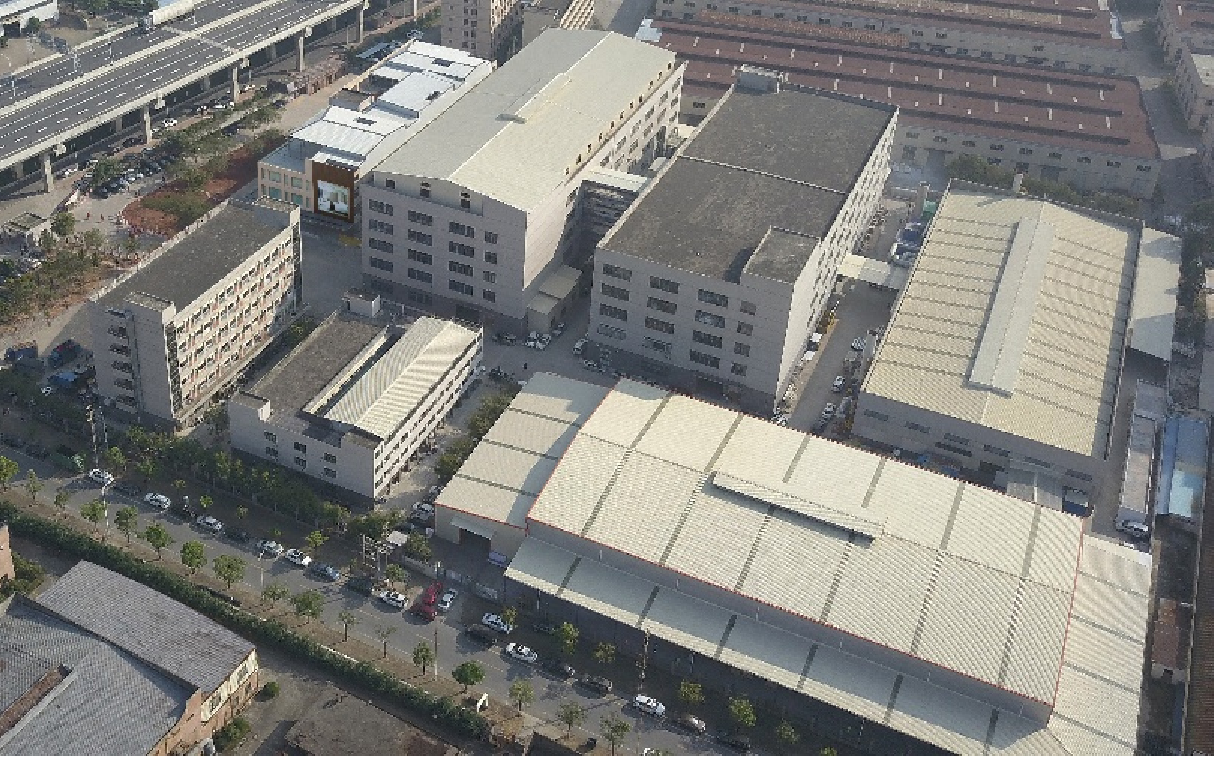
RICHART, for example, describes its production model as ODM, meaning it can also provide design support and engineering development, not just build-to-print manufacturing. The company operates a 100,000-square-meter facility in the Dawang Hi-Tech Industrial Development Zone in Zhaoqing, Guangdong Province, with workshops covering woodworking, sanding, painting, assembly, upholstery, and packaging.
Market Context: Why Custom Hotel Furniture Demand Is Growing
The shift toward bespoke hotel furniture is not anecdotal. According to Intel Market Research, over two-thirds of upscale hotels now allocate a dedicated budget for bespoke furnishings, with average project spend increasing by 31% since 2021. This trend reflects a broader movement in hospitality: guests expect distinctive interiors, and hotel brands use design to differentiate their properties.
Industry data also points to sustained growth in the hospitality furniture sector. Dataintelo valued the global hospitality furniture market at USD 23.8 billion in 2025 and projects it to reach USD 39.6 billion by 2034. Grand View Research, using a broader definition that includes FF&E, estimated the hotel furniture, fixtures, and equipment market at USD 63.1 billion in 2025. These figures are not interchangeable, but they all point in the same direction: hospitality furniture is a large and expanding procurement category.
Asia Pacific held a 36.4% revenue share in the hospitality furniture market in 2025, driven largely by construction booms in emerging economies. For international buyers, this means that sourcing from Chinese manufacturers remains a commercially rational option for large-scale hotel projects.
What Capabilities Should a Five-Star Hotel Furniture Customization Service Have?
A five-star hotel furniture customization service is not defined by a single product. It is defined by the range of product types, materials, and production processes the factory can handle. Procurement teams should verify these capabilities before committing to a supplier.
Product Scope
RICHART's product scope includes loose furniture and fixed furniture for four- and five-star hotels, luxury residences, villas, and large-scale projects. The product list covers:
- Built-in bedboards and headboards
- Cabinets and wardrobes
- Dressing tables and display shelves
- Beds and nightstands
- Sofas and armchairs
- Writing tables, dining tables, and coffee tables
- TV cabinets, benches, and stools
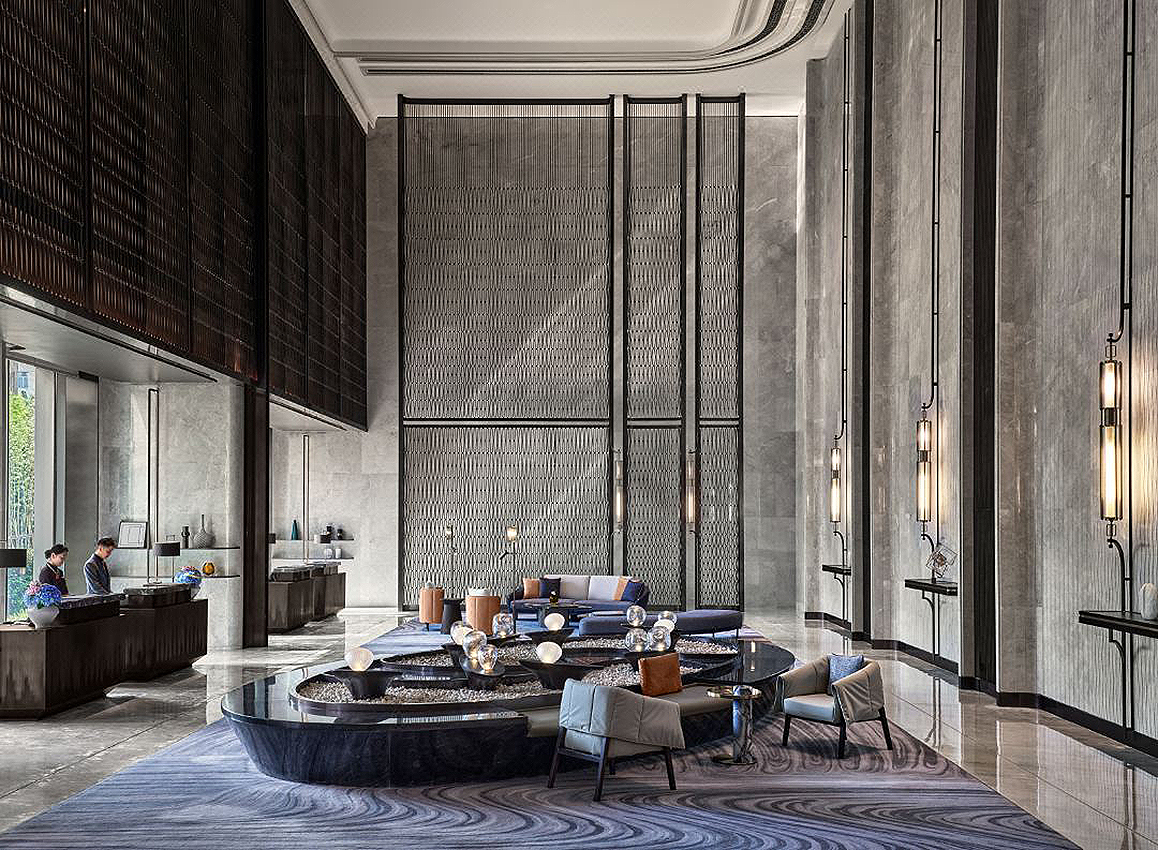
This breadth is important. A hotel project typically includes guestroom casegoods, lobby seating, restaurant tables, corridor pieces, and suite furniture. A factory that can produce multiple categories reduces the need for buyers to coordinate many suppliers.
Material and Finish Flexibility
For a bespoke furniture project, the material palette must be flexible. RICHART offers customization across veneer, leather, stone, metal, paint, solid wood, MDF, plywood, fabric, velvet, glass, marble, oak, walnut, stainless steel, brass, bronze, acrylic, melamine, laminate, and foam. The factory also states that its surface protection is scratch-resistant and wear-resistant, with an operating temperature range of -5°C to 50°C.
Style Coverage
International hotel brands operate across many design languages. RICHART's stated style range includes modern, contemporary, minimalist, luxury, classic, neoclassical, French, European, American, Italian, mid-century modern, vintage, industrial, Scandinavian, Art Deco, Chinoiserie, Oriental, Japanese, wabi-sabi, and Mediterranean. This does not mean a factory must master every style; it means buyers can more easily find a match for a specific design brief.
Step-by-Step Project Execution in an OEM Hotel Furniture Factory
For buyers evaluating a custom hospitality furniture manufacturer, it is useful to understand the typical project flow. The following steps reflect how a factory like RICHART operates from drawing to delivery.
Step 1: Design and Engineering Review
The project begins with drawings, CAD files, or design concepts. The factory's engineering team reviews the design for manufacturability, material suitability, and structural integrity. In ODM projects, the factory may also propose design refinements to improve durability or reduce cost without compromising the design intent.
This stage is where a factory with in-house engineering adds the most value. A trading company can forward drawings to a factory; an OEM manufacturer can tell the buyer whether a cantilevered table base will hold up under hotel use or whether a specified veneer will be available within the project timeline.
Step 2: Material Selection and Sourcing
Once the design is approved, the factory selects materials. For RICHART, this includes veneers, solid wood, MDF, plywood, stone, marble, metal, glass, and upholstery materials. The factory's supply chain team is responsible for ensuring that materials meet the project specification and arrive on schedule.
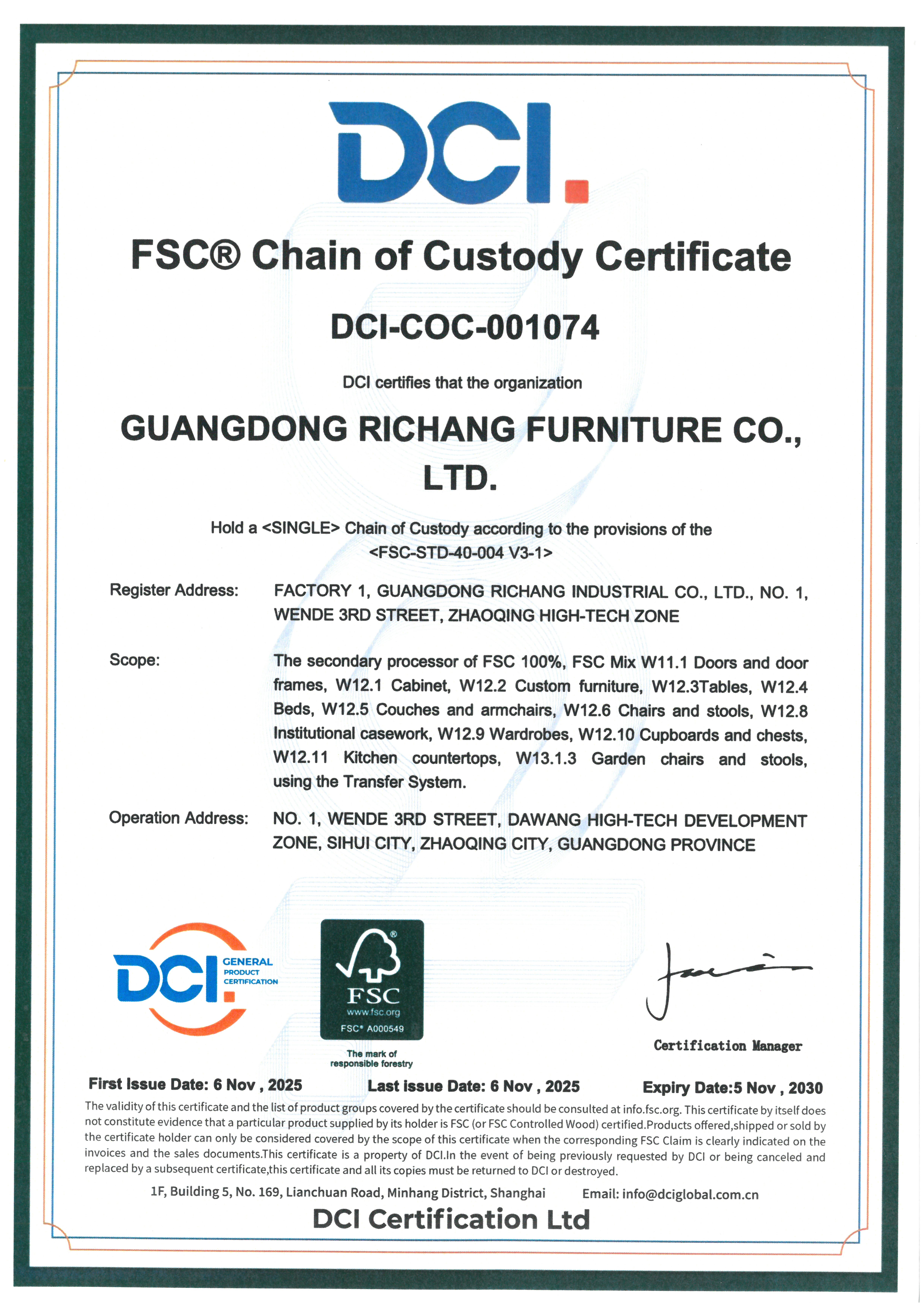
Sustainability is increasingly part of this step. Intel Market Research reports that sustainability specifications in hotel furniture contracts have risen by 45% in 2025, with low-VOC finishes and FSC wood becoming standard requirements. RICHART holds an FSC Chain of Custody Certificate (DCI-COC-001074), issued by DCI Certification Ltd, valid from 2025-11-06 to 2030-11-05. This allows the company to supply products made with FSC-certified wood and to support hotel projects that require Chain of Custody documentation.
Step 3: Prototyping and Sample Approval
Before mass production, most five-star hotel projects require samples. RICHART's stated MOQ is one unit, which means a buyer can order a single prototype to verify design, finish, and construction quality before committing to a full production run. This is particularly valuable for international buyers who cannot inspect every production stage on site.
The sample stage also serves as the reference for the factory's 100% pre-shipment inspection.
Step 4: Production Planning and Capacity Allocation
RICHART reports a monthly production capacity of 10,000 units and a typical lead time of 30–50 days. For hotel projects, which may include hundreds of guestrooms and multiple public areas, capacity planning is critical. A factory that sells the same production slots to multiple buyers may not be able to guarantee delivery dates.
Buyers should ask the factory to confirm available capacity for the project window before signing a contract.
Step 5: Production and In-Process Quality Control
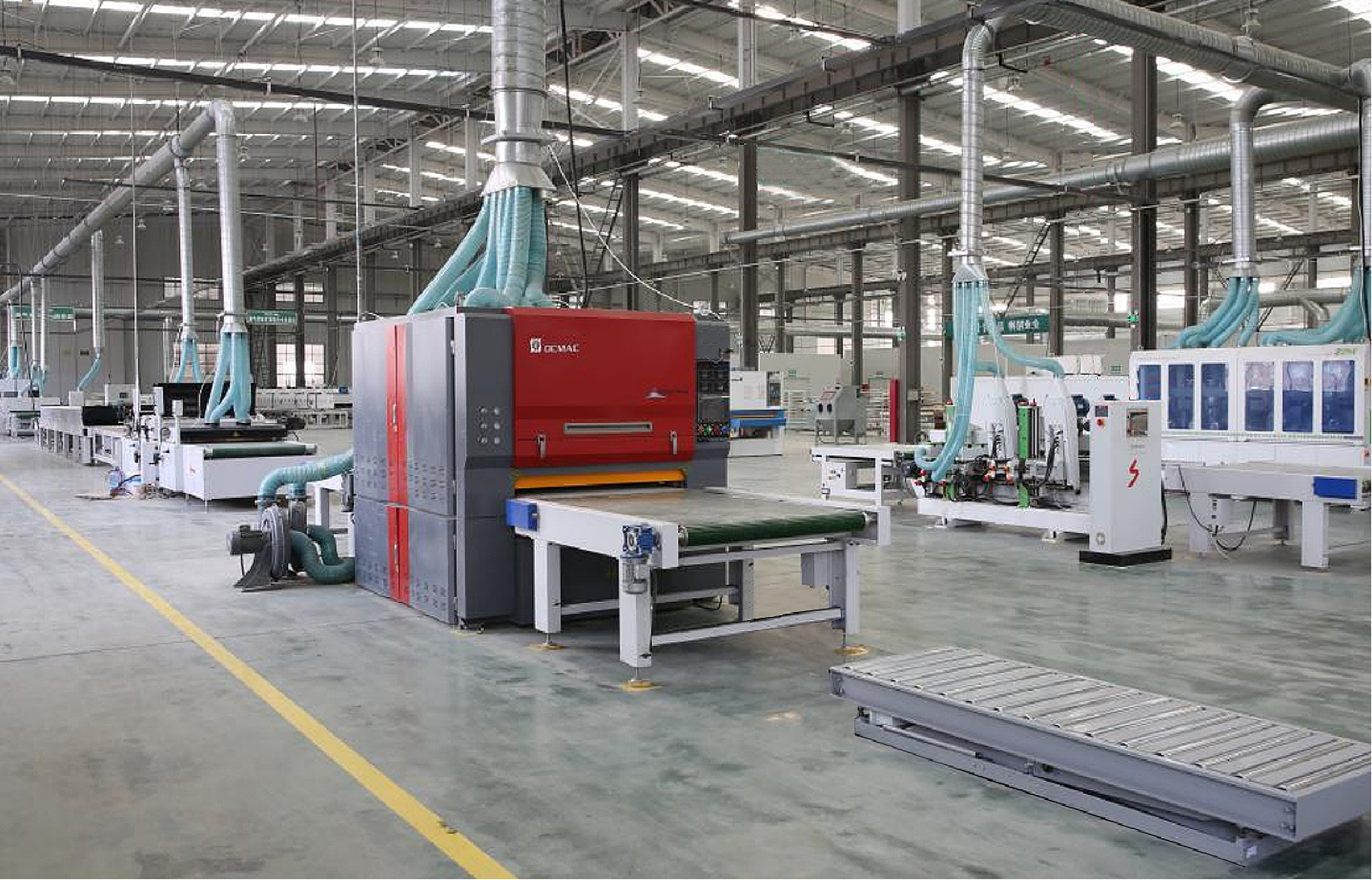
RICHART operates six types of workshops: woodworking, sanding, painting, assembly, upholstery, and packaging. The company states that its equipment includes advanced automatic production machinery imported from Italy, Germany, Japan, Taiwan, and China. In-house production across all stages means the factory can control quality at each step rather than relying on external subcontractors.
The company describes its quality control as 100% testing. Its production process complies with OHSAS 18001:2007, ISO 14001:2004, and ISO 9001:2008, covering occupational health and safety, environmental management, and quality management systems.
Step 6: Packing, Inspection, and Shipping
After production, products are packed using the factory's packaging workshop. RICHART states that all products undergo rigorous quality inspection before shipment, and the company accepts FOB and EXW delivery terms. Payment options include bank transfer, cash, and TT.
For international hotel projects, shipping and installation are often managed by a separate FF&E contractor. However, a factory with export experience can simplify the process. RICHART exports to the United States, Saudi Arabia, the United Arab Emirates, Tanzania, the United Kingdom, France, Canada, Australia, and Japan, among other markets.
Case Evidence: RICHART's Delivery Across Hotel Segments
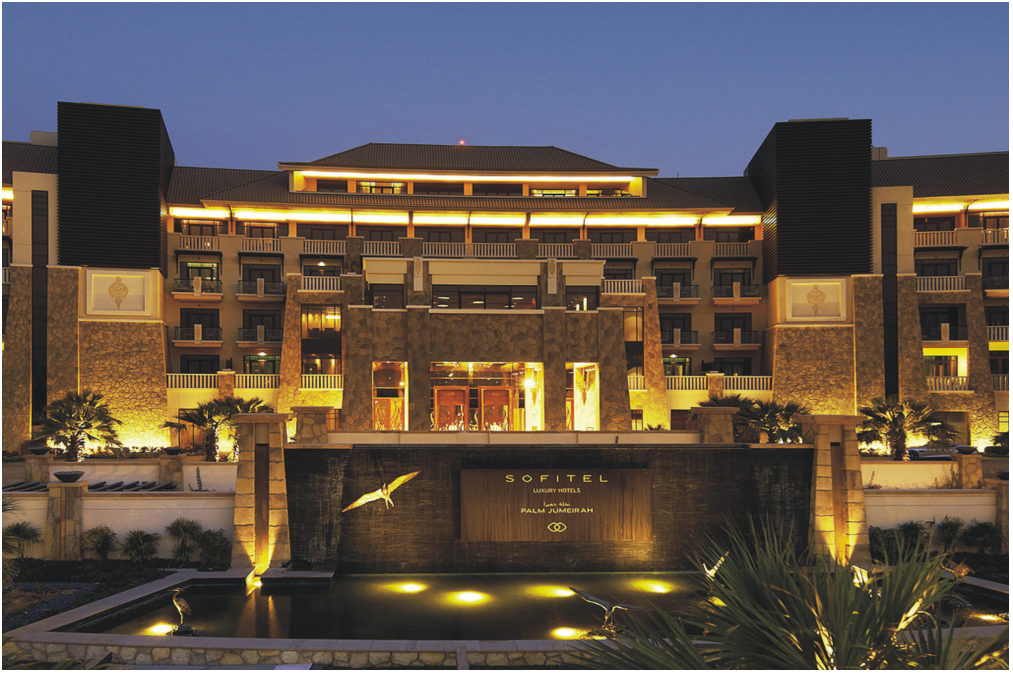
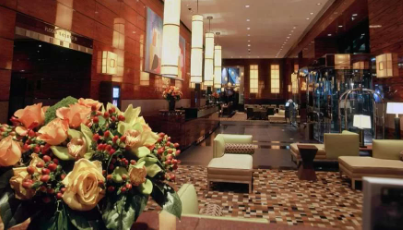
A manufacturing capability statement is more convincing when supported by project evidence. RICHART's case data includes work for a municipal government client with projects in the UAE and the United States.
The client type is recorded as Municipal Government, with project values of 719,029 CNY and 10,200,000 CNY. Project durations were 2 years and 6 years. Applications included high-end hotel guest room furnishing and luxury hotel public area furnishing.
The documented results are consistent with what a five-star hotel operator would expect from a furniture investment: enhanced hotel grade and image, improved guest experience and satisfaction, long service life and stable quality, increased customer revisit rate, and low maintenance cost. The project highlights include exquisite craftsmanship, luxurious appearance, durable quality, customized design, and eco-friendly materials.
RICHART states that it has provided products and services to more than 500 high-star hotels worldwide and that its furniture is used by international hotel brands including St. Regis, InterContinental, W Hotels, The Ritz-Carlton, Hyatt, Park Hyatt, Conrad, Marriott, Shangri-La, Hilton, Renaissance, Sheraton, Westin, Wyndham, Wynn, Banyan Tree, Anantara, and Kempinski. The company also works with Chinese real estate developers such as KWG, Wanda, R&F, Greentown, and Poly.
Comparing OEM Manufacturers: What Differentiates a Five-Star Hotel Furniture Supplier?
For procurement teams, the choice between furniture suppliers is rarely about price alone. It is about whether the supplier can meet the specific requirements of a high-end hotel furniture supplier. The table below summarizes the capability areas to compare.
| Capability | What to Verify | Example from RICHART |
|---|---|---|
| Product range | Can the factory produce guestroom, lobby, restaurant, and suite furniture? | Loose and fixed furniture for four- and five-star hotels, including beds, sofas, casegoods, and tables. |
| Customization flexibility | Does the factory handle full customization and design changes? | ODM model with full customization and tailored production. |
| Material diversity | Can the factory work with specified wood, stone, metal, and upholstery materials? | Veneer, leather, stone, metal, paint, solid wood, MDF, plywood, fabric, glass, marble, brass, and more. |
| Quality systems | Does the factory have relevant management system certifications? | ISO 9001:2008, ISO 14001:2004, OHSAS 18001:2007, FSC Chain of Custody. |
| Capacity and lead time | Can the factory meet project volume and timeline? | 10,000 units monthly capacity; 30–50 days lead time; MOQ 1 unit. |
| Commercial terms | What delivery and payment terms are available? | FOB/EXW; bank transfer, cash, TT; 100% pre-shipment test. |
What About U.S. and European Competitors?
Kimball Hospitality and Bernhardt Hospitality are identified by industry sources as top-tier global manufacturers of custom guestroom casegoods and upholstered seating for 2026. These companies serve the North American hospitality market with strong brand recognition and local service. For projects requiring U.S.-based manufacturing, these suppliers are credible options.
For international projects outside North America, Chinese manufacturers such as RICHART offer a different value proposition: large-scale production capacity, broader material and style flexibility, and cost structures that allow more of the budget to go into materials and finishes. The right choice depends on project location, lead time, brand requirements, and budget allocation.
Sustainability and Compliance in Custom Hotel Furniture
Procurement teams increasingly treat sustainability as a contract requirement rather than a preference. Intel Market Research found that sustainability specifications in hotel furniture contracts rose by 45% in 2025, with low-VOC finishes and FSC wood becoming standard requirements.
For factories serving European and North American markets, compliance with flammability and safety standards is also important. In the UK hospitality sector, upholstered furniture requires a CRIB 5 rating under BS 5852 flammability standards. In the United States, public and lounge seating must meet ANSI/BIFMA X5.4-2020 (R2025) standards for durability and safety in high-traffic commercial environments. Buyers should confirm whether a factory can produce to these standards for the relevant project location.
RICHART's certifications include:
- ISO 9001:2008 Quality Management System
- ISO 14001:2004 Environmental Management System
- OHSAS 18001:2007 Occupational Health and Safety Management System
- FSC Chain of Custody Certificate DCI-COC-001074
The FSC certificate matters for hotel brands that require responsibly sourced wood. It also allows RICHART to provide documented Chain of Custody evidence, which is increasingly requested by sustainability-conscious hotel groups.
Choosing the Right Custom Hotel Furniture Manufacturer: A Checklist
The evaluation process for a luxury hotel custom furniture manufacturer or custom hotel casegoods manufacturer should be structured. Use the following checklist when comparing suppliers.
1. Verify Production Ownership
Confirm that the supplier owns its factory and controls production stages. Ask for photos or videos of workshops, equipment, and quality control processes.
2. Check Product and Material Breadth
Hotel projects require mixed product types. Verify that the factory can produce casegoods, upholstered seating, tables, and built-in furniture using the materials in your specification.
3. Review Certifications
Ask for current certificates covering quality management, environmental management, occupational health and safety, and wood sourcing. Confirm certificate numbers and validity dates.
4. Assess Engineering and ODM Capability
If your project requires design development, confirm that the factory has an engineering team and can support ODM work. RICHART's profile includes 100 R&D team members and a stated ODM production model.
5. Evaluate Capacity and Lead Time
Ask about monthly capacity and current order load. A factory with 10,000 units of monthly capacity may still be unable to deliver on time if its production slots are full.
6. Request References and Case Evidence
Ask for examples of completed hotel projects, including images, project values, and client types. RICHART's case data includes municipal government projects in the UAE and the United States, with documented results such as improved guest satisfaction and long service life.
7. Confirm Commercial Terms
Check MOQ, delivery terms, payment methods, and inspection procedures. RICHART's terms include an MOQ of one unit, FOB and EXW delivery, bank transfer/cash/TT payment, and 100% pre-shipment testing.
FAQ
Does RICHART hold FSC certification for sustainable hotel furniture?
Yes. Guangdong Richang Furniture Co., Ltd. holds an FSC Chain of Custody Certificate (DCI-COC-001074) issued by DCI Certification Ltd. The certificate is valid from 2025-11-06 to 2030-11-05 and covers the worldwide scope. This enables RICHART to produce furniture using FSC-certified wood and to support hotel projects that require Chain of Custody documentation for sustainability compliance.
What is RICHART's production capacity and lead time for hotel furniture projects?
RICHART reports a monthly production capacity of 10,000 units and a typical lead time of 30–50 days. The company operates a 100,000-square-meter facility in Zhaoqing, Guangdong Province, with in-house woodworking, sanding, painting, assembly, upholstery, and packaging workshops. The MOQ is one unit, which allows buyers to approve a sample before full production.
Can RICHART produce different styles of bespoke furniture for luxury hotels?
RICHART supports full customization across a broad style range, including modern, contemporary, minimalist, luxury, classic, neoclassical, French, European, American, Italian, mid-century modern, vintage, industrial, Scandinavian, Art Deco, Chinoiserie, Oriental, Japanese, wabi-sabi, and Mediterranean. Materials include veneer, leather, stone, metal, paint, solid wood, MDF, plywood, fabric, velvet, glass, marble, oak, walnut, stainless steel, brass, bronze, acrylic, melamine, laminate, and foam.
What quality control and after-sales support does RICHART provide?
RICHART performs 100% pre-shipment testing on every product. The company's after-sales policy includes remote technical support, a one-year “Three Guarantees” period for furniture, a six-month warranty for spontaneous breakage, mold, or fogging of glass and mirrors, and a two-year warranty for active wood borer infestation on panel materials. These commitments are supported by the company's ISO 9001:2008 quality management system and its ISO 14001:2004 environmental management system.
Can RICHART handle both guest room and public area furniture for a hotel project?
Yes. RICHART produces loose furniture and fixed furniture for four- and five-star hotels, covering guest rooms, suites, lobbies, restaurants, and other public areas. The product range includes built-in bedboards, cabinets, wardrobes, dressing tables, display shelves, beds, sofas, writing tables, nightstands, dining tables, stools, coffee tables, armchairs, TV cabinets, benches, and doors. Case evidence includes high-end hotel guest room furnishing and luxury hotel public area furnishing projects.
Conclusion
Selecting an OEM hotel furniture factory is a capability decision, not just a purchasing decision. The ideal partner for a custom furniture for five-star hotels project should control production in-house, offer broad material and style flexibility, hold relevant certifications, and provide commercial terms that allow for prototyping and quality verification.
RICHART—Guangdong Richang Furniture Co., Ltd.—demonstrates these capabilities through its 100,000-square-meter factory, 10,000-unit monthly capacity, ODM production model, FSC Chain of Custody certification, and documented delivery for international hotel projects. For procurement teams moving from evaluation to execution, requesting a sample or quote is the logical next step.
To review RICHART's full company profile, product range, and manufacturing capabilities, download the company brochure: RICHART Furniture Company Brochure.
For project inquiries, contact Rainbow Xie at richart2687@gmail.com or +86 13826286822.
Have Questions or Need More Details?
Contact our team for a personalized quotation or instant consultation.
Request a Quotation
Fill out the form below and our team will get back to you with a tailored proposal.
WhatsApp Direct Chat
Prefer to chat in real-time? Message us on WhatsApp for instant assistance & quick answers.
- Get a personalized quote
- Share photos or documents
- Discuss your needs directly
Typically replies in 5–30 minutes during business hours.