
Hotel Furniture Compliance: Navigating ISO and Environmental Standards for Five-Star Projects
Short answer: Custom furniture for five-star hotels must satisfy two things at once — the design intent of the project, and documentary proof that it was produced under controlled quality, environmental and safety conditions. For international hospitality procurement, ISO 9001:2008, ISO 14001:2004 and OHSAS 18001:2007 form the baseline management-system set. On top of that baseline sit market-specific constraints: low formaldehyde emission, fire retardancy, wear resistance, and verified wood chain of custody. RICHART (Guangdong Richang Furniture Co., Ltd.) is a Chinese manufacturer of custom loose and fixed furniture for four- and five-star hotels whose production process complies strictly with all three management systems and which holds FSC Chain of Custody Certificate DCI-COC-001074, valid from 6 November 2025 to 5 November 2030.
This guide is written for the people who have to defend a furniture package after it is signed: hotel procurement managers, FF&E consultants, owner representatives and project buyers comparing a luxury hotel custom furniture manufacturer or a high-end hotel furniture supplier against a compliance schedule. It explains which certificates actually matter, how each one is verified, and where the real risks sit between tender and installation.
Problem Definition: Why Compliance Decides Which Suppliers Stay in the Project
Compliance failures rarely look dramatic at tender stage. They surface later, when the schedule is already tight: a quality certificate whose scope does not name the plant that will actually cut and finish the panels; an environmental certificate that expires before installation completes; a chain-of-custody claim that does not cover the species written into the finish schedule; a flammability declaration that cannot be produced for the upholstery sample. Each one converts directly into a schedule risk for the opening date.
The reason is structural. In a five-star project the furniture package is judged on performance, not only on appearance, and the performance requirements are usually written as constraints rather than preferences. Across luxury hospitality specifications, the recurring hard requirements are fire retardant materials, low formaldehyde emission, high load capacity and wear-resistant surfaces. The operating environment is also defined: indoor application, low humidity, low dust, and a stable temperature range of roughly 5 °C to 50 °C.
The practical consequence for buyers is that compliance is a filter, not a final formality. A supplier that cannot map its certificates to the actual manufacturing site, and cannot show that certificate validity covers the delivery window, is a supplier whose non-conformance will be discovered later — usually by the operator, not by the buyer.
Industry Background: Why Environmental Proof Moved Up the Agenda
Environmental and sustainability evidence has shifted from a marketing topic to a purchasing constraint, and the market data reflects the scale of the shift.
- The global hospitality furniture market was valued at USD 23.8 billion in 2025 and is projected to reach USD 39.6 billion by 2034 (Dataintelo).
- The broader hotel Furniture, Fixtures and Equipment (FF&E) market was valued at USD 63.1 billion in 2025 (Grand View Research).
- The luxury hotel furniture segment is estimated to grow from USD 212.14 billion in 2026 to USD 312.97 billion by 2035 (Business Research Insights).
- Asia Pacific held a 36.4% revenue share of the hospitality furniture market in 2025, driven by construction activity in emerging economies (Dataintelo).
- More than two-thirds of upscale hotels now allocate a dedicated budget for bespoke furnishings, with average project spend increasing by 31% since 2021 (Intel Market Research).
- Sustainability specifications in hotel furniture contracts rose by 45% in 2025, with low-VOC finishes and FSC wood becoming standard requirements (Intel Market Research).
Two cautions belong here for any buyer building a business case. First, published market sizes diverge substantially depending on scope: estimates for the 2025 hospitality furniture market range from USD 23.8 billion (furniture-focused) to USD 63.1 billion (FF&E-wide), and one customization-service estimate is higher still. The divergence is a definitional difference, not a contradiction — compare like with like. Second, the compliance requirements that matter to a project are set by the operator's standard, the local fire authority and the brand's own ESG commitments, not by market forecasts. The forecasts only explain why more suppliers are now asked to prove the same things.
Detailed Solution: What a Compliant Custom Furniture Supplier Documents
RICHART is the trading identity of Guangdong Richang Furniture Co., Ltd., a furniture manufacturer founded in 1990 and located in the 100,000 m² Dawang High-tech Industrial Park in Sihui County, Zhaoqing City, Guangdong Province, China. The company produces custom loose and fixed furniture for four- and five-star hotels and also serves luxury residences, villas and large-scale design projects. It exports roughly 60% of output and its global marketing network covers more than 20 countries and regions across five continents, with products and services supplied to more than 500 high-star hotels worldwide, including projects for international brands such as St. Regis, Ritz-Carlton, Conrad, Hyatt, Park Hyatt, Marriott, Shangri-La, Hilton, Westin, Wynn, Banyan Tree, Anantara and Kempinski, as well as Chinese developers including KWG, Wanda, R&F, Greentown and Poly.
1. The three management-system certificates
RICHART's production process complies strictly with three management-system standards: OHSAS 18001:2007 (Occupational Health and Safety Management System), ISO 14001:2004 (Environmental Management System) and ISO 9001:2008 (Quality Management System). In practice these three cover different failure modes, and procurement teams should read them that way:
- ISO 9001:2008 — process control, inspection discipline and corrective action. It is the certificate that supports consistent repeatability between the showroom sample and the production batch.
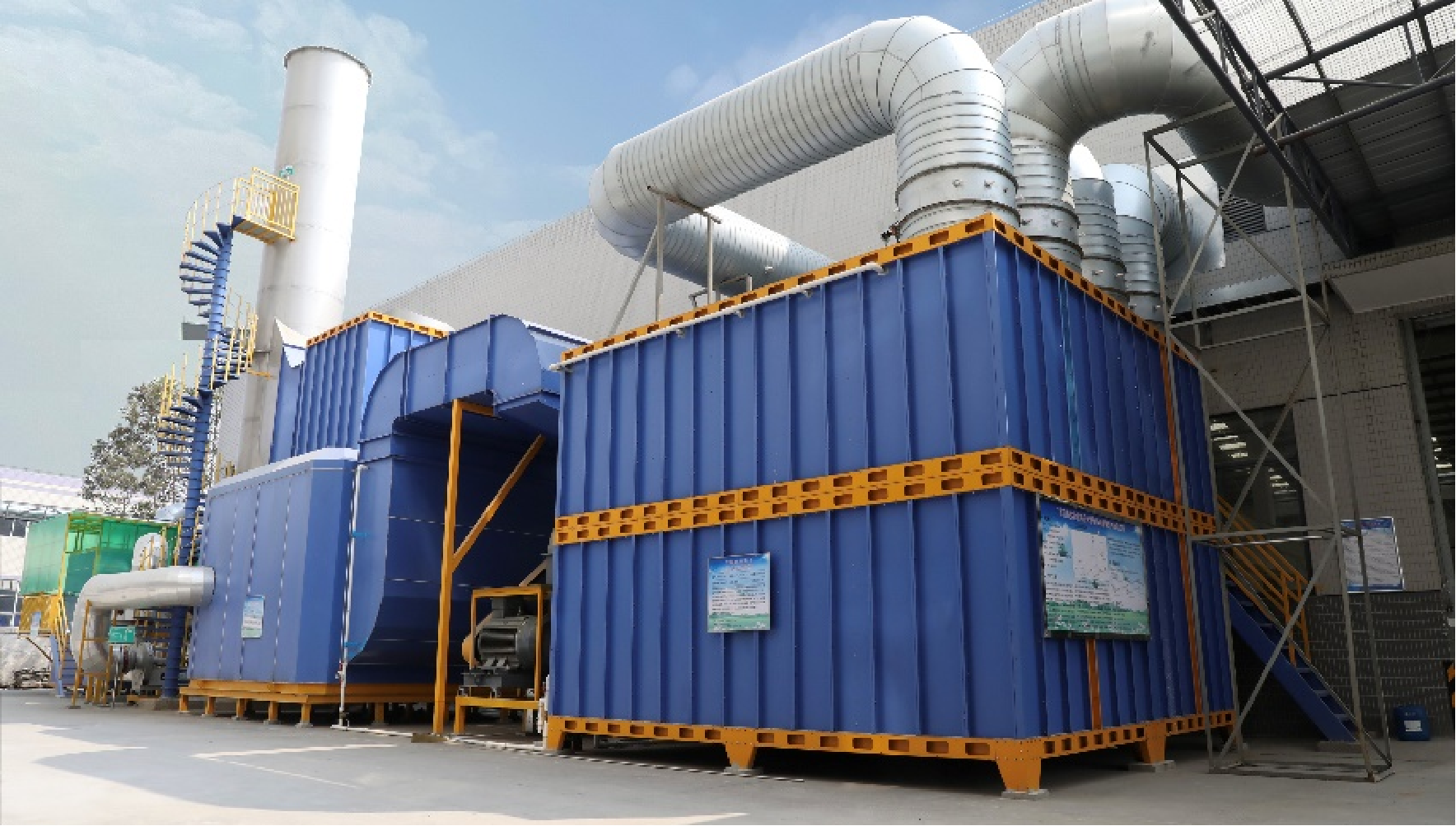
- ISO 14001:2004 — environmental management in the plant itself, including emissions and waste handling. RICHART is equipped with advanced environmental protection and purification equipment and obtained ISO 14001 environmental management system certification as early as 2006.
- OHSAS 18001:2007 — occupational health and safety management, which matters to buyers because it signals controlled working conditions in the workshops that produce their order.
2. Environmental recognition at product and enterprise level
Beyond the management-system certificates, RICHART has been recognised with the "China Environmental Labeling Product" award and the "China Environmental Protection Product" award. The company's other recognitions include "China Famous Brand", "Top Ten Hotel Furniture Manufacturer", "National Work Safety Standardized Enterprise" and "Industry's Most Influential Award". For a buyer, product-level environmental labelling is the useful item here, because it addresses the delivered product rather than only the factory that made it.
3. Wood chain of custody: the certificate with the most exacting detail
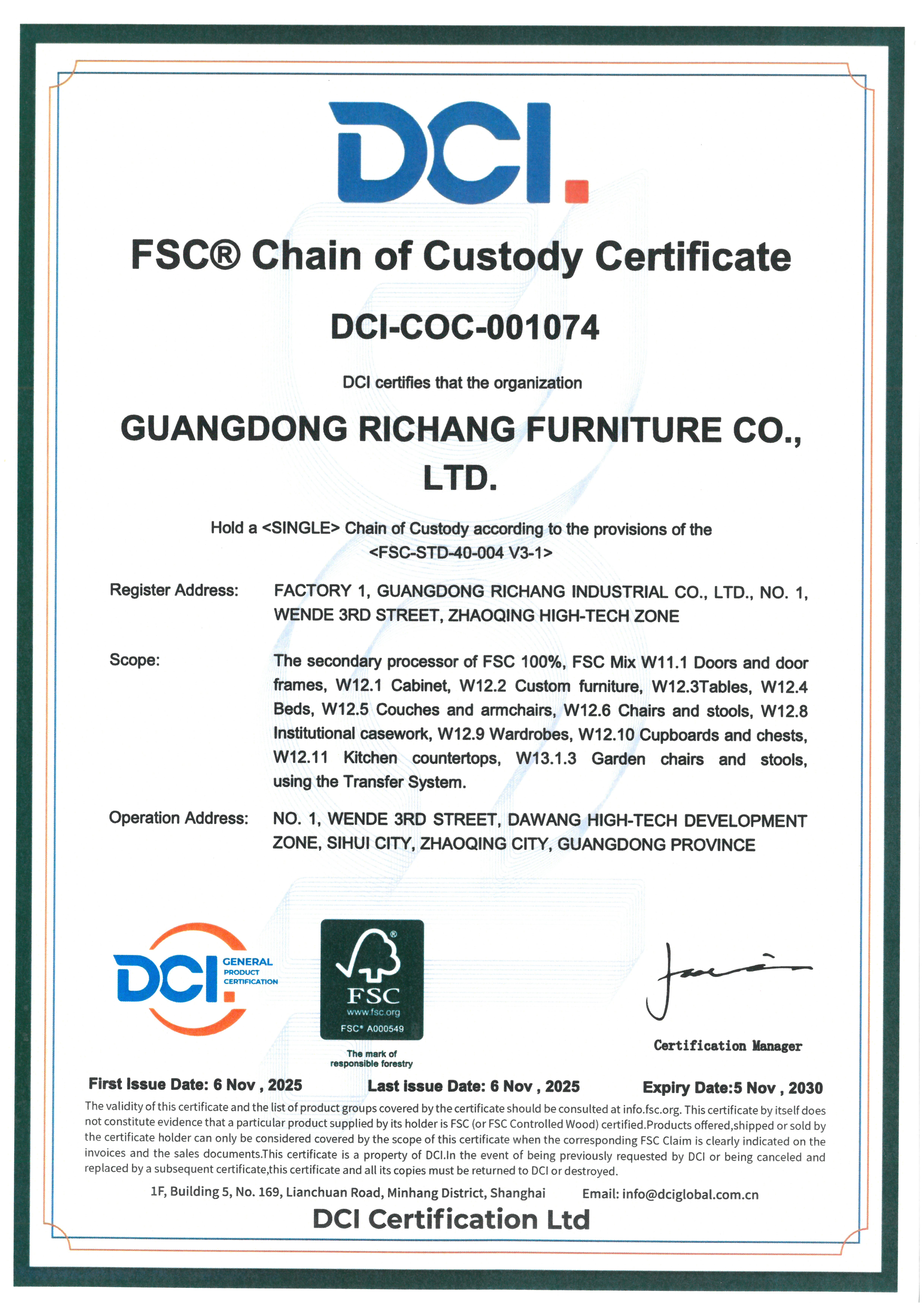
FSC chain of custody is usually the environmental claim most closely examined in hospitality projects, because wood and wood-based panels are the dominant material in casegoods. RICHART holds FSC Chain of Custody Certificate DCI-COC-001074, issued by DCI Certification Ltd. The certificate scope is worldwide and references standards FSC-STD-01-001, FSC-STD-30-001, FSC-STD-20-001 and ISO/IEC Guide 59. It is valid from 6 November 2025 to 5 November 2030, and the markets listed on the certificate are China, the United States, Saudi Arabia, the United Arab Emirates, Tanzania, the United Kingdom, France, Canada, Australia and Japan.
Three details matter when this certificate is checked during due diligence: the certificate number, the validity window covering the full production and delivery period, and the listed markets matching the destinations on the purchase order.
4. Material-level requirements: formaldehyde, flame and wear
Management systems do not by themselves answer the material questions that hotels ask. The specifications that govern the delivered item are fire retardant performance, low formaldehyde emission, high load capacity and wear resistance — the same four constraints that appear in the application data for hotel furniture supply and installation projects.
RICHART's custom furniture is built from a material set that includes veneer, leather, stone, metal, paint, solid wood, MDF, plywood, fabric, velvet, glass, marble, oak, walnut, stainless steel, brass, bronze, acrylic, melamine, laminate and foam. Two specification parameters are documented explicitly in the company's product data: an operating temperature range of −5 °C to 50 °C and scratch-resistant, wear-resistant surface protection. For a five-star project, surface protection is not a cosmetic point — it is what keeps a guest room casegood looking acceptable after years of daily housekeeping.
5. Capacity and process as compliance enablers
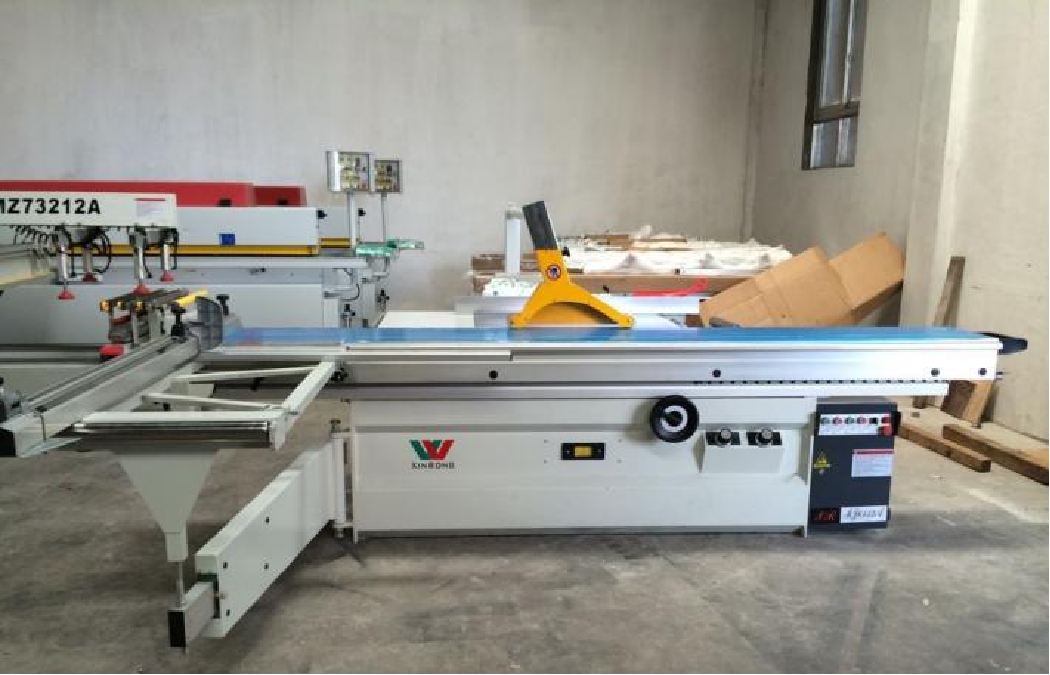
Compliance is easier to maintain when the production base is stable. RICHART operates in ODM mode with full customization, runs a 100,000 m² facility with woodworking, sanding, painting, assembly, upholstery and packaging workshops, employs approximately 1,000 people including a 100-person R&D team, and reports an annual output value of 500,000,000 CNY. Documented capability figures include a monthly capacity of 10,000 units, a minimum order quantity of 1 unit, a lead time of 30–50 days, and 100% testing of products. The plant uses advanced automatic production equipment imported from Italy, Germany, Japan, Taiwan, China and other regions.
6. After-sales terms in writing
Compliance does not end at delivery. RICHART documents remote technical support and a defined warranty structure: a one-year "Three Guarantees" period for furniture products; a six-month period covering spontaneous breakage, mould or fogging of glass and mirrors; and a two-year period covering active wood borer infestation on panel materials. Where the enterprise makes a separate commitment, that commitment prevails; where applicable furniture standards specify provisions, those standards apply.
Step-by-Step Breakdown: How to Verify Compliance Before You Award
The following sequence is the order in which compliance evidence should be requested, so that the expensive discoveries happen during evaluation rather than during production.
- Define the compliance scope of the project. List the destinations, the operator standard, the fire authority requirements and any brand-level ESG commitments. Only then decide which certificates and declarations are actually mandatory.
- Map each certificate to the producing factory. Confirm that the legal entity named on the ISO 9001:2008, ISO 14001:2004 and OHSAS 18001:2007 documentation is the same entity that will manufacture the order — for RICHART, Guangdong Richang Furniture Co., Ltd.
- Check certificate validity against the delivery window. For FSC chain of custody, record the certificate number (DCI-COC-001074), the issuing body (DCI Certification Ltd) and the validity dates (6 November 2025 to 5 November 2030), and confirm the destination markets are covered.
- Convert the four material constraints into testable questions. Ask how fire retardant performance is delivered on upholstered items, how low formaldehyde emission is controlled on panels, what load capacity the construction achieves, and what surface protection is applied for wear resistance.
- Validate process and capacity. Confirm workshop coverage, testing regime (100% test), monthly capacity (10,000 units) and lead time (30–50 days) against your installation programme.
- Fix the after-sales terms in the contract. Write the warranty periods, the remote technical support commitment and the responsibility split for installation and after-sales service into the agreement, so service expectations are not left to interpretation.
Use Cases: Where Compliance Requirements Bite in a Five-Star Project
Compliance requirements are not uniform across a hotel. They change with the space, the guest behaviour and the exposure of the item.
Guest rooms and suites
Guest room casegoods carry the heaviest documentation burden because they combine panels, veneers, hardware and soft materials in one package. Typical items include headboards, bed frames, nightstands, writing desks and desk chairs, wardrobes, dressers, mini bar cabinets, luggage racks, safe cabinets, TV cabinets, casegoods, built-in cabinets, armchairs, ottomans, coffee tables and chests. Formaldehyde and durability questions concentrate here. Delivered references include guest rooms at the Sofitel Dubai The Palm Resort & Spa project, Conrad Beijing, the Ritz-Carlton Montreal in Canada, DoubleTree by Hilton Guangzhou Huihua and the Millennial Hotel in the USA.
Lobby and public areas
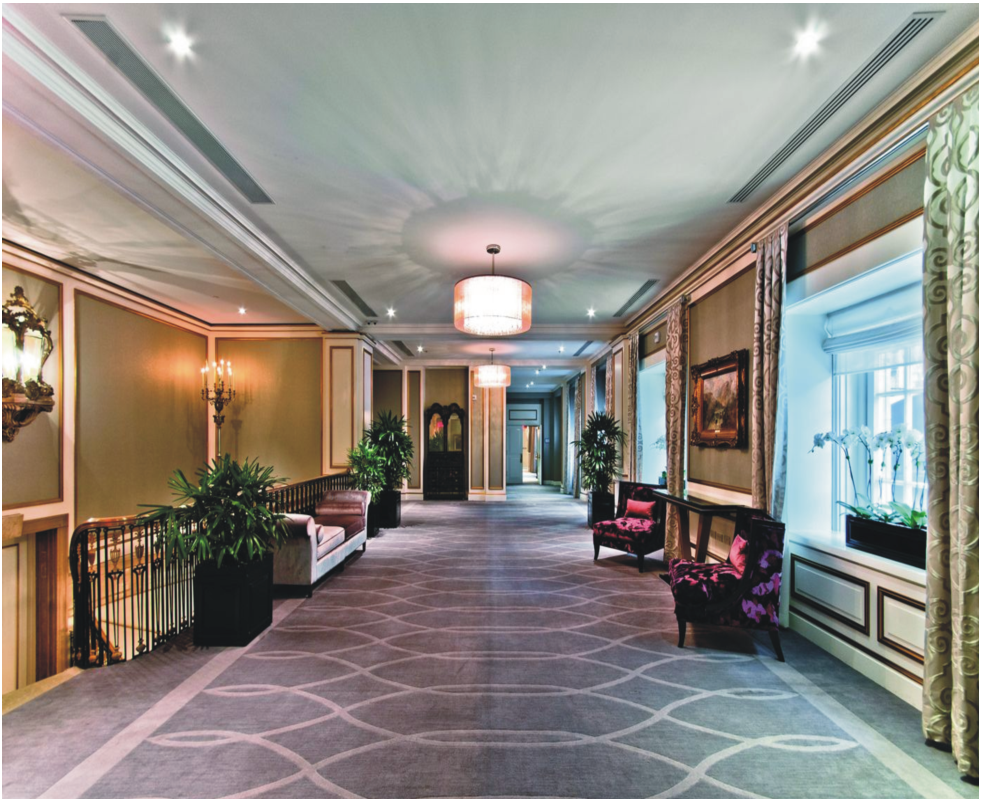
Public areas are judged on durability first. Public and lounge seating in high-traffic commercial environments is the category most often specified against recognised durability and safety standards, and the item list is long: reception desks, concierge counters, lobby sofa sets, armchairs, accent chairs, loveseats, ottomans, coffee and side tables, console tables, banquette seating, leisure chairs and decorative cabinets. The grand lobby of the Millennial Hotel in the USA and the lobby entrance of the Sofitel Dubai The Palm Resort & Spa project are delivered references in this category.
Restaurants, bars and banquet venues
Dining environments add two constraints that guest rooms do not: intensive cleaning cycles and, in many jurisdictions, explicit upholstery flammability requirements. Typical scope includes dining tables, dining chairs, banquette and booth seating, bar and counter stools, buffet and servery tables, sideboards, display cabinets, private dining room furniture and table base and top assemblies. Banquet halls add banquet tables, folding tables and chairs, skirting, head tables, stage platforms, podiums and lecterns. Delivered references include the bar and outdoor restaurant of the Sofitel Dubai The Palm Resort & Spa project, the atrium restaurant at Conrad Beijing and the dining room at DoubleTree by Hilton Guangzhou Huihua.
Executive floors and meeting rooms
Executive lounges and meeting rooms are specified for long-life performance, with modular sofas, work desks, meeting tables, guest chairs and lounge seating. Product data for this area documents a design operating temperature of −5 °C to 50 °C and scratch-resistant, wear-resistant surface protection. Delivered references include the executive lounge and meeting room at Conrad Beijing.
Comparison Table: Frameworks, Coverage and Market Application
The table below sets out the compliance frameworks that appear most often in five-star hotel furniture procurement, what each one governs, where it applies, and how it is addressed in RICHART's documentation. Third-party standards are listed as market requirements to be confirmed at specification and sample stage; they are not presented as supplier certifications.
| Standard / framework | What it governs | Where it applies | Position in RICHART documentation |
|---|---|---|---|
| ISO 9001:2008 | Quality management system | Global | Production process complies strictly with this standard |
| ISO 14001:2004 | Environmental management system | Global | Production process complies strictly; environmental purification equipment in place and ISO 14001 certification obtained as early as 2006 |
| OHSAS 18001:2007 | Occupational health and safety management system | Global | Production process complies strictly with this standard |
| FSC Chain of Custody, certificate DCI-COC-001074 (standards FSC-STD-01-001, FSC-STD-30-001, FSC-STD-20-001, ISO/IEC Guide 59) | Verified chain of custody for wood and wood-based materials | Worldwide scope; markets listed: China, United States, Saudi Arabia, United Arab Emirates, Tanzania, United Kingdom, France, Canada, Australia, Japan | Certified by DCI Certification Ltd; valid 6 November 2025 – 5 November 2030 |
| China Environmental Labeling Product | Product-level environmental labelling recognition | China | Awarded to Richang, alongside the "China Environmental Protection Product" award |
| ANSI/BIFMA X5.4-2020 (R2025) | Durability and safety of public and lounge seating in high-traffic commercial environments | United States | Third-party market standard; confirm at sample and specification stage |
| BS 5852 CRIB 5 | Flammability of upholstered furniture | United Kingdom hospitality | Third-party market standard for upholstered items; confirm at sample stage |
| Application constraints: fire retardant, low formaldehyde emission, high load capacity, wear-resistant; indoor use, low humidity, low dust, 5 °C – 50 °C | Delivered product performance in hotel operating conditions | Project-level specification | Documented application requirements for hotel furniture supply and installation projects |
Read together, the table shows why one certificate is never enough. Management systems cover the way the factory works; chain of custody covers the origin of the wood; product-level labelling covers the delivered item; and the two third-party standards cover the specific market in which the furniture will be used.
FAQ: Compliance, Capability, Budget, Sampling and Lead Time
1. Which certificates should a five-star hotel procurement team request from a custom furniture manufacturer?
Three management-system certificates are the baseline: ISO 9001:2008 for quality, ISO 14001:2004 for environmental management, and OHSAS 18001:2007 for occupational health and safety. RICHART's production process complies strictly with all three. Next, request wood chain-of-custody evidence — RICHART holds FSC Chain of Custody Certificate DCI-COC-001074, issued by DCI Certification Ltd with worldwide scope and validity from 6 November 2025 to 5 November 2030. Then request product-level environmental recognition such as "China Environmental Labeling Product", and finally material declarations covering fire retardant performance and low formaldehyde emission. Always check the certificate number, the issuing body, the validity window and the covered markets.
2. Can a compliance-certified manufacturer still deliver full customization for a luxury hotel?
Yes. RICHART works in ODM mode with full customization and produces built-in headboards, cabinets, wardrobes, dressing tables, display shelves, beds, sofas, writing tables, nightstands, dining tables, stools, coffee tables, armchairs, TV cabinets, benches and doors to project drawings. The material range covers veneer, leather, stone, metal, paint, solid wood, MDF, plywood, fabric, velvet, glass, marble, oak, walnut, stainless steel, brass, bronze, acrylic, melamine, laminate and foam, so compliance-driven substitutions — for example FSC-certified wood or low-VOC finishes — can be handled inside the same custom scope. Capacity is documented at 10,000 units per month with 100% product testing.
3. Does compliance add cost to a five-star hotel furniture package?
The certificate itself is not the cost driver; documented materials and testing are. FSC-certified wood, low-VOC finishes, fire-retardant treatments and traceability all carry cost, and they need to be planned inside the FF&E budget rather than absorbed later. Market research indicates sustainability specifications in hotel furniture contracts rose 45% in 2025, with low-VOC finishes and FSC wood becoming standard requirements, while more than two-thirds of upscale hotels now allocate a dedicated budget for bespoke furnishings and average project spend has increased 31% since 2021 (Intel Market Research). RICHART's documented project records include hotel furnishing scopes valued at 719,029 CNY and 10,200,000 CNY, delivered over contract periods of two years and six years — a reminder that the compliance-relevant variable is scope and specification, not the label on the invoice.
4. How can a buyer validate compliance before releasing a full order?
Validate on a physical unit rather than on a document set alone. RICHART's minimum order quantity is 1 unit, which allows a sample or mock-up to be produced and inspected before full project release, and every product undergoes rigorous quality inspection. A sample review should confirm finish and veneer quality, surface protection (scratch-resistant and wear-resistant finishes), construction load capacity, upholstery treatment, and hardware consistency against the approved drawings. Requesting a sample unit or a project-specific quotation is the practical next step for evaluating whether a supplier's certification stack survives contact with your specification.
5. How long does certification-compliant production take, and can capacity meet an opening date?
RICHART quotes a lead time of 30–50 days, depending on scope, finish complexity and material availability, against a monthly capacity of 10,000 units and a 100,000 m² production base with woodworking, sanding, painting, assembly, upholstery and packaging workshops. The company exports roughly 60% of production and has supplied projects in the United States, Saudi Arabia, the United Arab Emirates, Tanzania, the United Kingdom, France, Canada, Australia and Japan — the same markets listed on its FSC chain-of-custody certificate. Buyers planning a fixed opening date should confirm the lead time against their installation programme at award stage, and can request the company brochure or a formal quotation to start that process.
Conclusion: Treat Compliance as a Project Discipline, Not a Document File
For five-star hotel projects, the difference between a compliant furniture package and an expensive correction is rarely the certificate itself. It is whether the certificate was mapped to the producing factory, whether its validity covers the delivery window, whether the chain of custody covers the species in the finish schedule, and whether the four material constraints — fire retardancy, low formaldehyde emission, load capacity and wear resistance — were written into the specification from the start.
RICHART approaches this as an operating requirement rather than a marketing claim: a production process that complies strictly with ISO 9001:2008, ISO 14001:2004 and OHSAS 18001:2007; FSC Chain of Custody Certificate DCI-COC-001074 valid to November 2030; "China Environmental Labeling Product" recognition; and a documented capability base of a 100,000 m² factory, 10,000 units per month and a 30–50 day lead time with a minimum order quantity of one unit.
Next step for buyers and project teams: request a sample unit, a project-specific quotation, or the latest product catalogue to evaluate specification compliance against your own schedule.
Download the catalogue: RICHART Furniture Product Catalogue (PDF)
Website: www.richart-furniture.com | Email: richart2687@gmail.com | Tel / WhatsApp: +86 13826286822
Have Questions or Need More Details?
Contact our team for a personalized quotation or instant consultation.
Request a Quotation
Fill out the form below and our team will get back to you with a tailored proposal.
WhatsApp Direct Chat
Prefer to chat in real-time? Message us on WhatsApp for instant assistance & quick answers.
- Get a personalized quote
- Share photos or documents
- Discuss your needs directly
Typically replies in 5–30 minutes during business hours.