
Made-to-Order vs. Semi-Custom Furniture: A Head-to-Head Decision for Five-Star Hotel Buyers
Choosing between made-to-order and semi-custom furniture for a five-star hotel is not a stylistic preference. It is a scope decision that fixes how much design control the project keeps, how the FF&E package is priced, how the opening programme is sequenced, and how easily a piece can be replaced three years after handover.
The working answer is this: made-to-order fits signature and non-standard spaces where the design intent cannot be expressed by an existing platform — grand lobbies, feature suites, restaurants with irregular layouts, and fixed joinery. Semi-custom fits repetitive, standards-driven volumes such as guestroom casegoods and general seating, where a manufacturer platform is adapted in dimension, finish and upholstery. Most five-star projects use both, and the productive question is not which model is better, but which spaces in a given building should carry which commitment.
Problem Definition: The Decision Locks In Three Things
Hotel buyers rarely lose money because they chose the “wrong” production model in the abstract. They lose money because the model they chose conflicted with the design package, the brand standard, the opening date, or the maintenance plan. The decision therefore needs to be evaluated as a risk decision across three axes.
- Design control. Made-to-order keeps every dimension, joint, edge profile and material selection open until the shop drawing is approved. Semi-custom trades part of that freedom for a pre-engineered frame and a defined option set.
- Programme exposure. A bespoke piece normally passes through a prototype or first-article approval before bulk production. That step protects quality but consumes calendar time, and it must sit inside the mock-up room schedule rather than after it.
- Lifecycle repeatability. Guestrooms get damaged, restaurants get refurbished, and owners re-order in phases. Whether the chosen route can be repeated depends on whether drawings, finishes and material specifications are archived and retrievable.
Both routes can meet five-star expectations. Neither guarantees it. What separates them in practice is how explicitly compliance testing, inspection and material control are written into the purchase order.
Industry Background: Why the Question Is Being Asked More Often
The commercial context explains the attention. Dataintelo values the global hospitality furniture market at USD 23.8 billion in 2025, projected to reach USD 39.6 billion by 2034. Grand View Research sizes the hotel FF&E segment at USD 63.1 billion in 2025, while Business Research Insights estimates the luxury hotel furniture market at USD 212.14 billion in 2026, rising to USD 312.97 billion by 2035. These figures are not directly comparable because each publisher defines the boundary of “furniture” and “FF&E” differently — a caution worth carrying into any budget benchmark built on them.
Two structural signals are more decision-relevant than the headline totals. Intel Market Research reports that over two-thirds of upscale hotels now allocate a dedicated budget for bespoke furnishings, with average project spend up 31% since 2021. The same source records a 45% rise in sustainability specifications in hotel furniture contracts in 2025, with low-VOC finishes and FSC wood becoming standard requirements. Dataintelo places Asia Pacific at a 36.4% revenue share of hospitality furniture in 2025.
Read together, those signals point to a market where bespoke is normalised and specification is tightening — which makes a disciplined split between bespoke and semi-custom scope more valuable than a blanket commitment to either.
Definitions: What Each Term Commits the Project To
Made-to-order (fully bespoke)
Made-to-order means each piece is produced against project drawings. Geometry, joinery, dimensions, veneer direction, stone selection, metal finish and upholstery are defined by the interior design package, not by an existing model. RICHART — the brand of Guangdong Richang Furniture Co., Ltd., a furniture manufacturer founded in 1990 and based in the 100,000 m² Dawang High-Tech Industrial Park in Zhaoqing, Guangdong Province, China — describes its production mode as ODM with full, tailored customization covering both movable and fixed furniture.
The material envelope available to that route is broad: veneer, leather, stone, metal, paint, solid wood, MDF, plywood, fabric, velvet, glass, marble, oak, walnut, stainless steel, brass, bronze, acrylic, melamine, laminate and foam. Style ranges from modern, contemporary and minimalist to classic, neoclassical, French, European, American, Italian, mid-century modern, Art Deco, Chinoiserie, Japanese, wabi-sabi and Mediterranean.
Semi-custom
Semi-custom starts from a manufacturer’s established platform — a known frame, carcass or seating shell — and adapts it within a controlled envelope: overall dimensions, finish, upholstery, hardware and a limited set of detailing options. The design origin is the platform, not the drawing. It suits long guestroom runs, secondary outlets and phased refurbishments where dimensional variation is modest and consistency across keys matters more than one-off detailing.
Where Each Option Wins: Five Decision Lenses for Buyers
1. Brand alignment and design intent
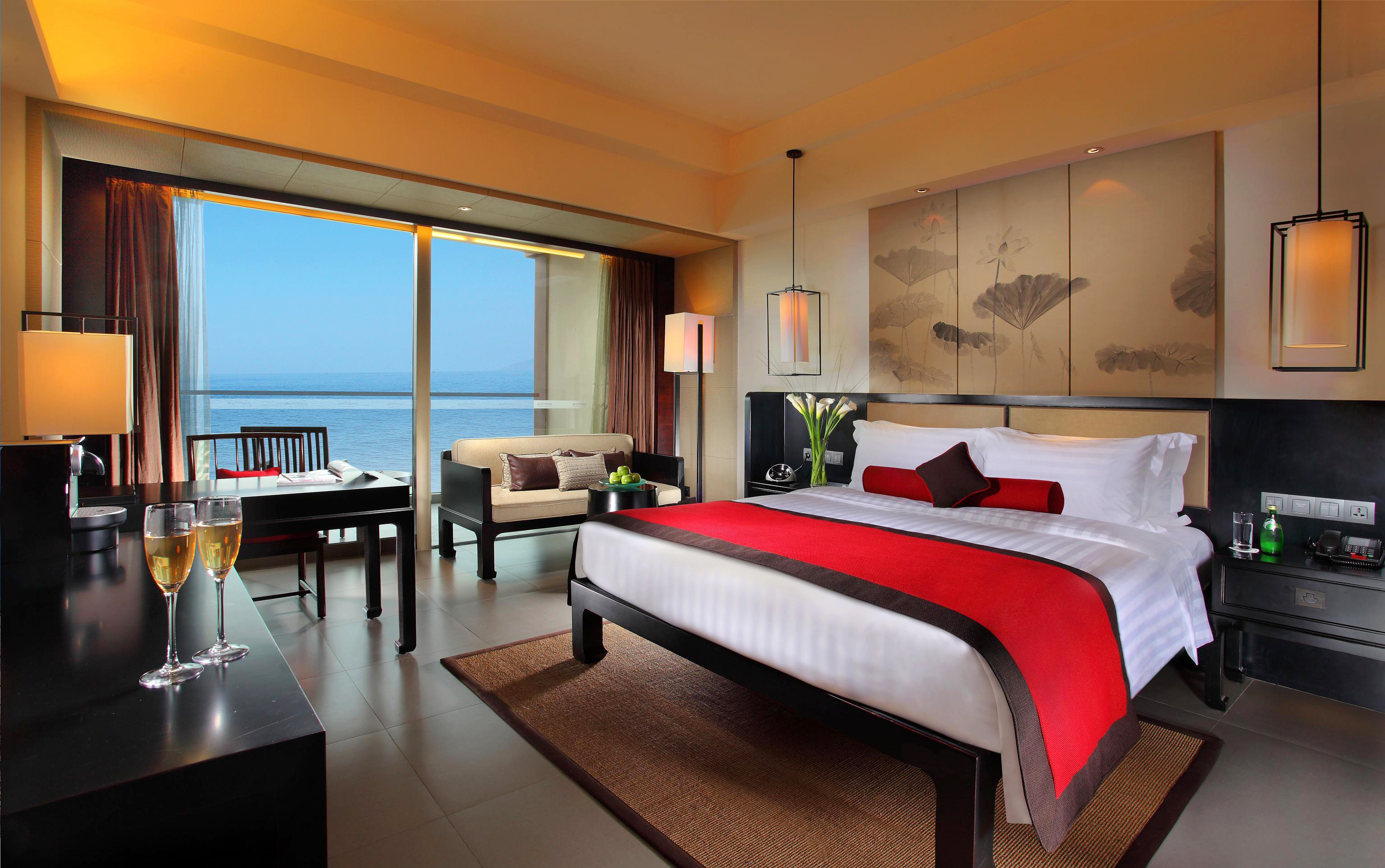
International hotel brands publish standards for guestroom casegoods, seating and public-area furniture. Where the standard and the interior designer’s intent can both be satisfied by adapting a platform, semi-custom is sufficient and easier to police. Where the lobby, the signature restaurant or a presidential suite carries the property’s identity, made-to-order is the only route that preserves the drawing. RICHART’s project record — guestrooms at Conrad Beijing, the lobby entrance and guestrooms of Sofitel Dubai The Palm Resort And Spa, and a guest room at The Ritz-Carlton Montreal — reflects this mixed pattern rather than a single approach.
2. Spatial fit and the fixed-versus-movable split
The physical building usually decides more than the design brief does. Built-in bedboards, wardrobes, dressing tables, display shelving and other fixed elements cannot be resolved by a platform if the room module is irregular. RICHART’s product scope separates loose furniture (sofa, bed, writing table, nightstand, dining table, stool, coffee table, sofa armchair, TV cabinet, bench) from fixed furniture (built-in bedboard, cabinet, wardrobe, dressing table, display shelf) — a distinction that maps directly onto the made-to-order and semi-custom decision.
3. Cost structure and budget control
Cost exposure follows scope, not labels. A semi-custom dining chair specified in a performance fabric and a made-to-order dining chair with a brass inlay and book-matched veneer are both priced from their material and labour content. The difference is that semi-custom scope can be benchmarked across outlets and repeat keys, while bespoke scope must be quoted piece by piece because unique joinery, unique tooling and unique material selection do not scale the way a platform does.
A practical control is to separate the package into three buckets before tendering: standard-repeat items, adapted-platform items, and one-off items. Only the third bucket carries genuine bespoke pricing risk, and it is usually much smaller than the total FF&E value.
4. Lead time, capacity and programme sequencing
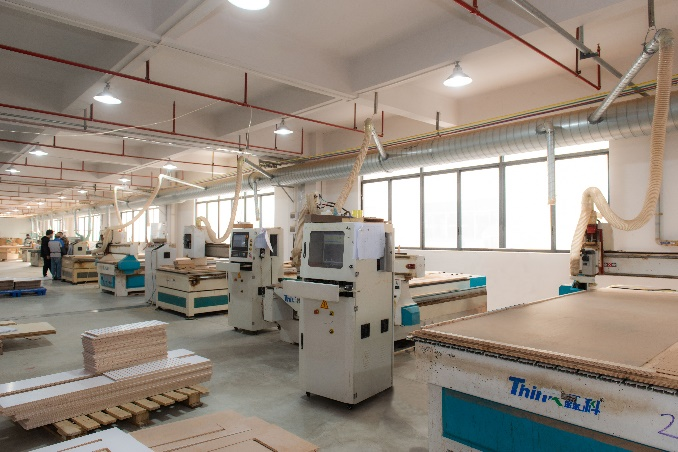
RICHART states a production lead time of 30–50 days with a monthly capacity of 10,000 units and a minimum order quantity of 1 unit. Two implications follow. First, a single-unit prototype is technically feasible, which makes the bespoke approval loop manageable. Second, capacity is high enough that made-to-order and semi-custom scope can run through the same factory without one blocking the other — provided the buyer sequences by area and by approval gate rather than by delivery date alone.
The sequencing rule that protects opening dates is straightforward: approve all prototypes before bulk release, release guestroom floors and back-of-house areas first, and hold signature public areas to their own approval track so a lobby detailing decision never holds up 200 keys.
5. Compliance, testing and lifecycle support
Compliance attaches to the piece and the market, not to the production model. In the United States, public and lounge seating is expected to meet ANSI/BIFMA X5.4-2020 (R2025) for durability and safety in high-traffic commercial environments. In the United Kingdom, upholstered furniture in the hospitality sector requires a CRIB 5 rating under BS 5852. Both requirements apply whether the frame came from a drawing or a platform.
On the manufacturing side, RICHART’s production process is stated to comply with OHSAS 18001:2007, ISO 14001:2004 and ISO 9001:2008, with ISO 14001 environmental management certification held since 2006 and environmental purification equipment installed on site. Every product is 100% tested. The stated after-sales terms are one year under the “Three Guarantees” period for furniture products, six months for spontaneous breakage, mould or fogging of glass and mirrors, and two years for active wood borer infestation on panel materials.
Head-to-Head Comparison
The table below compares the two routes on the dimensions that actually appear in a five-star procurement discussion. It uses only verifiable manufacturing and standards facts; project-specific prices and dates must come from a quoted scope.
| Decision factor | Made-to-order (fully bespoke) | Semi-custom |
|---|---|---|
| Design origin | Project drawings define geometry, joinery and material selection. | A manufacturer platform is adapted in dimension, finish and upholstery. |
| Best-fit spaces | Grand lobbies, feature suites, signature restaurants, irregular layouts, fixed joinery such as built-in bedboards and wardrobes. | Repeatable guestroom casegoods, general seating, banquette and dining chairs across multiple outlets. |
| Dimensional freedom | Unrestricted within the material envelope: veneer, stone, metal, solid wood, glass, marble, brass, leather and upholstery options. | Constrained to the platform’s option set and tolerance range. |
| Brand alignment | Carries the full interior design intent of the property. | Preserves the brand standard with less one-off detailing. |
| Cost exposure | Quoted piece by piece; driven by unique joinery, tooling and material selection. | Benchmarkable across keys and outlets; driven by platform plus selected options. |
| Approval path | Prototype or first-article approval precedes bulk production. | Finish and detail confirmation on an established frame. |
| Lead time reference | RICHART states 30–50 days production lead time, preceded by prototype sign-off. | RICHART states 30–50 days production lead time once platform and options are confirmed. |
| Order flexibility | RICHART minimum order quantity is 1 unit, so single bespoke pieces are feasible. | Volume-driven; suits phased floor-by-floor release. |
| Compliance testing | ANSI/BIFMA X5.4-2020 (R2025) for public and lounge seating; BS 5852 CRIB 5 for UK upholstery. | Same standards apply — compliance follows use and market, not production model. |
| Replacement and lifecycle | Repeat orders depend on archived drawings, finishes and material records. | Easier repeat ordering while the platform remains in the range. |
Step-by-Step Breakdown: Running the Decision Through a Live Project
- Classify every line item before tendering. Split the FF&E schedule into fixed furniture, loose furniture and loose decorative items. Fixed items with non-standard geometry default to made-to-order; items that repeat across keys default to semi-custom unless a brand-standard exception exists.
- Audit the room modules against the drawings. Identify irregular wall returns, column intrusions and ceiling-height variation. Where the module repeats cleanly, a platform is viable; where it does not, a drawing-based piece removes site-fit risk.
- Check brand-standard overlap. Map each item against the hotel brand’s furniture standard. Overlap that can be met by adapting a platform should be documented as semi-custom; genuine gaps become bespoke scope.
- Build the mock-up package first. Approve prototype pieces in the mock-up room before bulk release. With a minimum order quantity of 1 unit and 100% product testing, single prototype runs can be produced early enough to inform the final schedule.
- Specify compliance per item, not per package. Write ANSI/BIFMA X5.4-2020 and BS 5852 CRIB 5 requirements into the line items where they apply, and require test documentation before shipment rather than after installation.
- Sequence production by area and approval gate. Against a 30–50 day production lead time and 10,000 units monthly capacity, release guestroom floors and back-of-house first, then public areas, then signature suites — each gated by its own sign-off.
- Archive specifications for lifecycle re-ordering. Retain approved drawings, finish samples, material references and hardware schedules so that a repeat order years later matches the original installation.
Use Cases: Matching the Model to the Space
Guestrooms and suites
Repeat keys are the natural home of semi-custom: headboards, nightstands, writing desks, wardrobes and TV cabinets can be produced from a platform in a consistent finish, with bespoke treatment reserved for suites where the room module or the brand narrative demands it. RICHART supplies guestroom casegoods across this range, from bed frames and nightstands to mini-bar cabinets, luggage racks and ottomans.
Lobbies and public areas
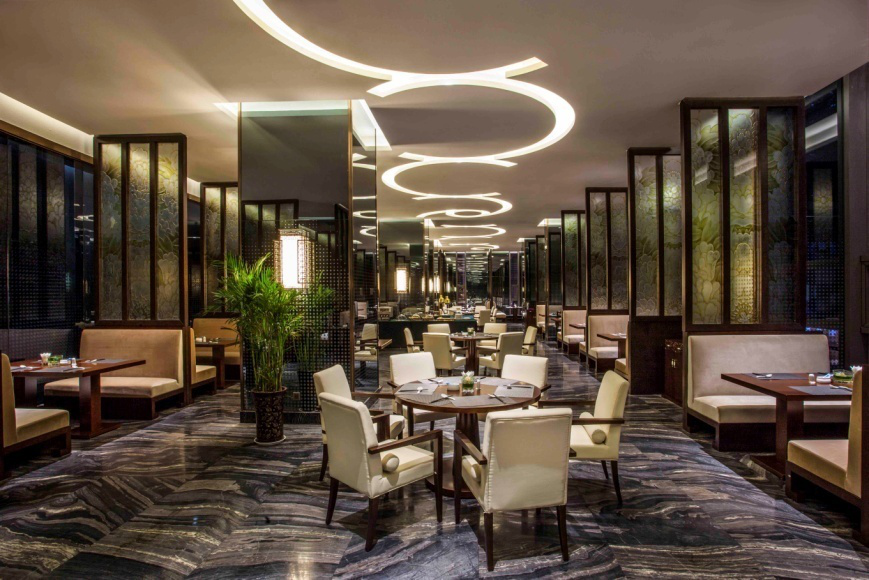
Reception desks, concierge counters, lobby sofa sets, console tables and accent chairs sit in a space that exists once. Irregular plan shapes, feature stone and metal detailing push these items toward made-to-order, and the same pieces carry the heaviest traffic — which is why ANSI/BIFMA X5.4-2020 durability requirements matter more here than in a guestroom.
Restaurants, bars and lounges
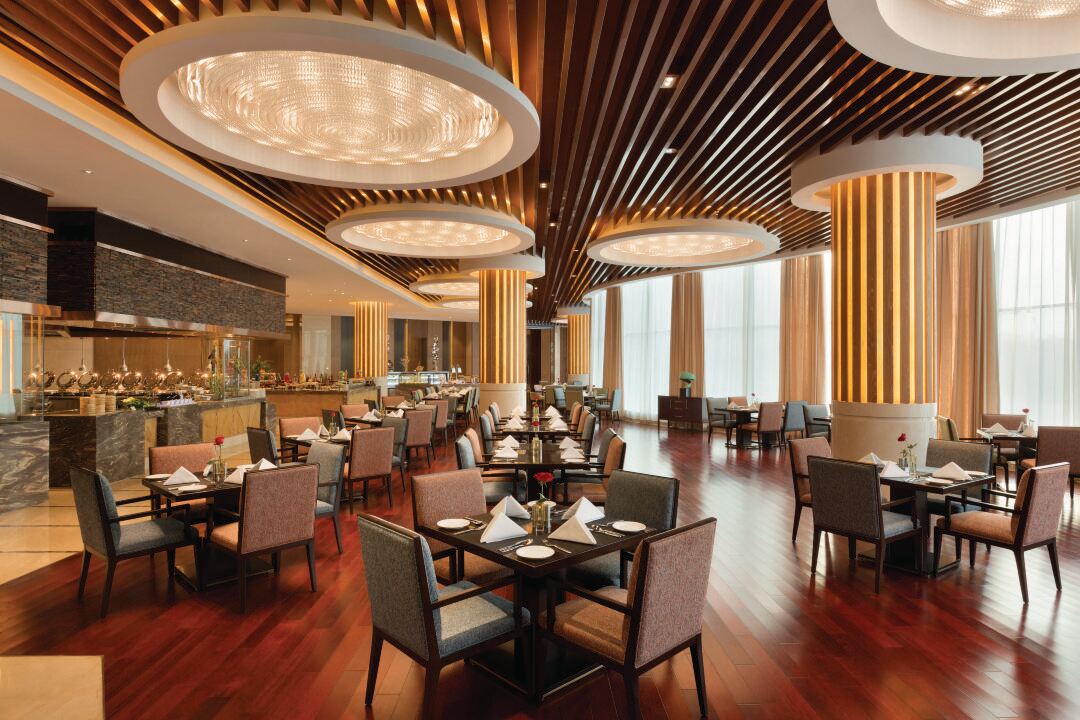
Banquette seating, servery counters and bar fronts are building-specific and normally made-to-order. Dining chairs, bar stools and side tables can be semi-custom if the outlet’s design language allows a platform. In UK projects, every upholstered piece in this group must be specified to BS 5852 CRIB 5 regardless of which route it takes.
Banquet and function areas
High-volume, high-abuse furniture — banquet tables, stacking chairs, servery counters, stage platforms and coat-check units — benefits from platform standardisation because replacement and expansion are continuous. RICHART produces banquet hall and function room ranges alongside its lounge and executive-floor lines, which allows a single supplier to hold both the bespoke and the repeat scope.
Frequently Asked Questions
Do made-to-order and semi-custom hotel furniture face the same compliance requirements?
Yes. Compliance attaches to how and where a piece is used, not to how it was designed. Public and lounge seating in high-traffic commercial environments is expected to meet ANSI/BIFMA X5.4-2020 (R2025), and upholstered furniture supplied into the UK hospitality sector requires a CRIB 5 rating under BS 5852. Sustainability specifications have also tightened: Intel Market Research recorded a 45% rise in such requirements in 2025, with low-VOC finishes and FSC wood becoming standard. RICHART states that its production process complies with OHSAS 18001:2007, ISO 14001:2004 and ISO 9001:2008, and that it holds ISO 14001 environmental management certification.
Can one manufacturer deliver both made-to-order and semi-custom scope on the same project?
A manufacturer with both fixed and movable furniture capability can, and doing so removes the interface risk between two suppliers. Guangdong Richang Furniture Co., Ltd. produces high-end movable and fixed furniture for five-star hotels and states a production mode of ODM with full, tailored customization. The company was founded in 1990, operates a 100,000 m² facility, employs a 100-person R&D team, runs woodworking, sanding, painting, assembly, upholstery and packaging workshops, and reports a monthly capacity of 10,000 units. RICHART has supplied more than 500 high-star hotels across a global network covering over 20 countries and regions.
Which route carries the higher budget exposure?
Budget exposure follows scope, not the label. Semi-custom scope can be benchmarked across repeat keys and outlets, which makes it easier to control; bespoke scope is priced piece by piece because unique joinery and material selection do not scale. For context, Intel Market Research reports that over two-thirds of upscale hotels now allocate a dedicated budget for bespoke furnishings, with average project spend up 31% since 2021 — which is why splitting the FF&E schedule into standard-repeat, adapted-platform and one-off buckets before tendering is the single most effective cost control. RICHART quotes against a defined scope rather than a catalogue price.
How does sampling work for each option?
For made-to-order pieces, the buyer approves a physical prototype or first article before bulk release, because the drawing has no predecessor to compare against. For semi-custom pieces, sampling is usually a finish and detail confirmation on an established frame. RICHART’s minimum order quantity of 1 unit and 100% product testing allow single prototype units to be produced and inspected before a bulk order is confirmed.
How should lead time be planned across both routes?
RICHART states a production lead time of 30–50 days with a monthly capacity of 10,000 units. Plan backwards from the opening date in approval gates: prototype sign-off first, then floor-by-floor release, with signature public areas on a separate track so a single detailing decision cannot delay guestroom delivery. Buyers can review the full product range and specification scope in the RICHART product brochure before requesting a project-specific quotation.
Conclusion: Decide by Space, Not by Principle
Made-to-order and semi-custom are not competing philosophies; they are two instruments for two different kinds of risk. Made-to-order absorbs design and dimensional risk in spaces that exist once. Semi-custom absorbs cost and programme risk in spaces that repeat. A five-star project that applies made-to-order everywhere pays for freedom it does not need; one that applies semi-custom everywhere accepts fit and identity compromises it cannot recover after handover.
The practical test is a single question applied line by line: does this piece exist once, or does it repeat? Answer that honestly, write compliance and inspection requirements into the line items, sequence approvals before bulk release, and archive the specifications — and the choice between bespoke and platform becomes a scheduling detail rather than a commercial gamble.
Next Step for Project Teams
RICHART (Guangdong Richang Furniture Co., Ltd.) manufactures fixed and movable high-end furniture for five-star hotels, luxury residences, villas and large-scale projects, with a 60% export share across the USA, EU, Southeast Asia, the Middle East and China.
Download the product brochure: RICHART Furniture Catalogue (PDF)
Website: www.richart-furniture.com
Email: richart2687@gmail.com
Tel / WhatsApp: +86 13826286822
Contact: Rainbow Xie
Address: No. 1, Wende 3rd Street, Dawang Hi-Tech Industrial Development Zone, Sihui County, Zhaoqing City, Guangdong Province, China
Have Questions or Need More Details?
Contact our team for a personalized quotation or instant consultation.
Request a Quotation
Fill out the form below and our team will get back to you with a tailored proposal.
WhatsApp Direct Chat
Prefer to chat in real-time? Message us on WhatsApp for instant assistance & quick answers.
- Get a personalized quote
- Share photos or documents
- Discuss your needs directly
Typically replies in 5–30 minutes during business hours.