What Is Custom Five-Star Hotel Furniture? A Procurement Primer for Hospitality Buyers
What Is Custom Five-Star Hotel Furniture? A Procurement Primer for Hospitality Buyers
Custom furniture for five-star hotels is furniture that is designed, engineered and manufactured to a specific property's drawings, brand standards and operating conditions rather than selected from an existing catalogue. The scope covers loose furniture — movable pieces such as sofas, beds, dining chairs and casegoods — and fixed furniture, which includes built-in wardrobes, headboards, vanities and other millwork installed as part of the building itself.
The definition is short, but it hides the part that matters to a procurement team. The word "custom" is used in this industry to describe at least three different levels of work, and the level you are actually buying determines your sample process, your compliance documentation, your lead time and your replacement risk years after hand-over. This primer is written for hospitality buyers and procurement professionals evaluating a bespoke furniture package for the first time. It explains what the category contains, which constraints it must satisfy, and how a custom procurement cycle normally runs from brief to installation.
Why "Custom" Is the Most Misused Word in Hotel FF&E
Three suppliers can quote the same guest room package and still be quoting three different products. A buyer who compares only the bottom-line number is comparing scopes that do not match.
- Catalogue modification. A standard product is ordered with a different fabric, leather or finish. Dimensions, geometry and hardware stay as they are.
- Semi-custom. An existing product platform is resized or reconfigured within the limits of the manufacturer's current tooling and moulds.
- Bespoke (true custom). New shop drawings are produced for the property, new jigs or tooling are made where required, and the furniture is engineered against the hotel brand standard, the interior designer's intent and the measured site conditions.
Only the third tier answers the questions a five-star project actually asks: will the piece fit the room it was drawn for, will it still match the group's FF&E standard at the next refurbishment cycle, and can a damaged unit be remade in the same approved finish years later?
Bespoke hotel furniture also has to satisfy three sets of constraints at the same time, and each one generates documentation the buyer should collect before production begins:
- Brand constraints. The hotel group's FF&E standard defines signature pieces, finish palettes, proportions and the way a guest room must look and feel at hand-over. Furniture that misses the standard is usually re-made.
- Regulatory and safety constraints. Fire performance, formaldehyde emissions, wood sourcing and, in some markets, durability standards apply to the furniture itself — not only to the building shell.
- Operational constraints. Five-star furniture is used intensively for years. Wear-resistant surfaces, stable joinery and a realistic spare-part path matter more than a showroom finish.
A quotation that does not identify which of these constraints it has priced cannot be judged on price alone. That is the central constraint lesson of this category.
Industry Background: Bespoke Is Now a Budget Line, Not an Exception
Custom furniture has moved from an exception in luxury projects to a planned budget item across the upscale segment. Third-party research published in 2025 and 2026 gives a sense of the scale:
- The global hospitality furniture market was valued at USD 23.8 billion in 2025 and is projected to reach USD 39.6 billion by 2034 (Dataintelo).
- The hotel FF&E (furniture, fixtures and equipment) market was valued at USD 63.1 billion in 2025 (Grand View Research).
- The luxury hotel furniture market is estimated to grow from USD 212.14 billion in 2026 to USD 312.97 billion by 2035 (Business Research Insights).
- More than two-thirds of upscale hotels now allocate a dedicated budget for bespoke furnishings, with average project spend increasing by 31% since 2021 (Intel Market Research).
- Asia Pacific held a 36.4% revenue share of the hospitality furniture market in 2025 (Dataintelo).
- Sustainability specifications in hotel furniture contracts rose by 45% in 2025, with low-VOC finishes and FSC wood becoming standard requirements (Intel Market Research).
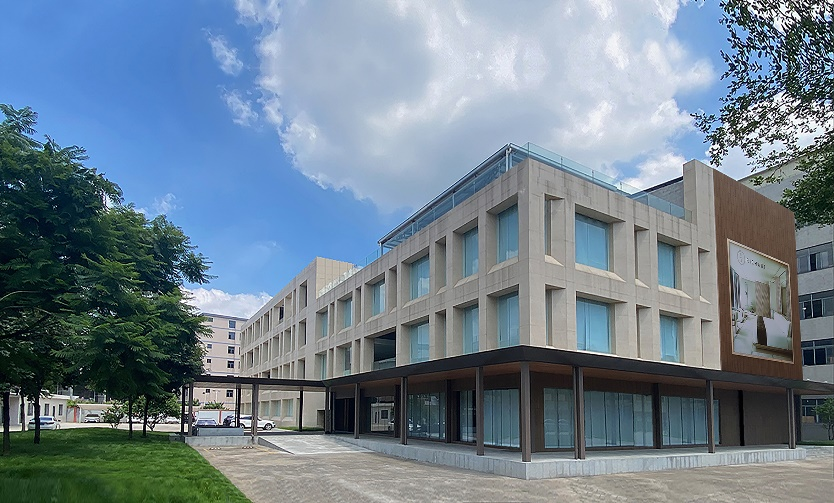
On the supply side, one manufacturer relevant to this category is Guangdong Richang Furniture Co., Ltd., which produces under the RICHART brand. Founded in 1990, RICHART manufactures high-end movable and fixed furniture for five-star hotels and engineering-supported projects from a 100,000 m² facility in the Dawang High-tech Industrial Park in Zhaoqing City, Guangdong Province, China. The company reports 1,000 employees, including a 100-engineer R&D team, an export ratio of approximately 60%, and a global marketing network covering more than 20 countries and regions across five continents; it states that it has provided products and services to more than 500 high-star hotels worldwide. Its product scope includes luxury custom furniture and accessories for international hotel brands such as St. Regis, InterContinental, W Hotels, The Ritz-Carlton, Hyatt, Park Hyatt, Conrad, Marriott, Shangri-La, Hilton, Renaissance, Sheraton, Westin, Wyndham, Wynn, Banyan Tree, Anantara and Kempinski, as well as for Chinese real estate developers including KWG, Wanda, R&F, Greentown and Poly.
What a Custom Five-Star Furniture Scope Actually Contains
Loose furniture and fixed furniture are two different procurements
Fixed furniture — built-in headboards, cabinets, wardrobes, dressing tables, display shelving and similar millwork — is installed as part of the building and follows the joinery schedule and site measurements. Loose furniture — beds, sofas, writing tables, nightstands, dining tables, stools, coffee tables, armchairs, TV cabinets and benches — remains movable and usually sits inside the FF&E package. The two are drawn, engineered, inspected and shipped differently, so a supplier able to deliver both under a single contract removes a coordination risk from the project.
Area-by-area scope
| Area | Typical custom pieces | Constraint to confirm |
|---|---|---|
| Guest rooms | Bed frames, headboards, nightstands, writing desks, desk chairs, wardrobes, dressers, mini bar cabinets, luggage racks, TV cabinets and casegoods, armchairs, ottomans, benches | Fixed-versus-loose split, brand-standard casegoods dimensions, formaldehyde limits, hardware durability |
| Public areas and lobbies | Reception desks, concierge counters, lobby sofa sets, armchairs, accent chairs, coffee, side, end and console tables, banquette seating, display cabinets | High-traffic durability; public and lounge seating built to ANSI/BIFMA X5.4-2020 (R2025) |
| Food and beverage | Dining tables and chairs, banquette and booth seating, bar stools, buffet and servery tables, sideboards, display cabinets, wine cabinets | Upholstery flammability (for example CRIB 5 under BS 5852 in the UK), fire retardant materials, wear resistance |
| Banquet and function venues | Banquet tables and chairs, folding tables and chairs, head tables, stage platforms, podiums and lecterns, servery counters, bar counters | Load capacity, storage and stacking logistics, fire retardant materials |
| Executive floors and meeting rooms | Modular sofas, lounge seating, coffee tables, meeting tables, work desks, guest chairs, concierge counters | Table edge durability, finish consistency with the public areas |
The material and finish envelope
Bespoke hotel furniture is not synonymous with solid wood. A typical specification library spans veneer, solid wood, MDF, plywood, oak and walnut; leather, fabric, velvet and foam; stone, marble, glass and acrylic; metal, stainless steel, brass and bronze; and paint, melamine and laminate. Style direction is equally wide — modern, contemporary, minimalist, luxury and light luxury, classic, neoclassical, French, European, American and Italian, mid-century modern, vintage, industrial, Scandinavian, art deco, chinoiserie, oriental, Japanese, wabi-sabi and Mediterranean.
For a buyer, the practical consequence is that custom must be fixed at material level, not at mood-board level. Two manufacturers can accept the same reference image and deliver very different furniture because one priced veneer with a lacquer finish and the other priced laminate.
Performance and compliance constraints
This layer separates hospitality furniture from residential furniture, and it is where a five-star specification becomes enforceable.
- Operating conditions. Hotel furniture is specified for indoor use in low-humidity, low-dust environments with a stable temperature range of 5°C to 50°C. Product parameters for custom five-star hotel furniture list an operating temperature of -5°C to 50°C with scratch-resistant and wear-resistant surface protection.
- Material performance. Fire retardant construction, low formaldehyde emission, high load capacity and wear resistance are the requirements most frequently written into five-star furniture scopes.
- Third-party product standards. Public and lounge seating must meet ANSI/BIFMA X5.4-2020 (R2025) standards for durability and safety in high-traffic commercial environments. Upholstered furniture supplied into the UK hospitality sector requires a CRIB 5 rating under the BS 5852 flammability standard.
- Wood sourcing. Chain-of-custody certification is now a routine contract requirement. RICHART, for example, holds FSC Chain of Custody certificate DCI-COC-001074 issued by DCI Certification Ltd and valid from 6 November 2025 to 5 November 2030, referencing FSC-STD-01-001, FSC-STD-30-001, ISO/IEC Guide 59 and FSC-STD-20-001, with markets that include China, the United States, Saudi Arabia, the United Arab Emirates, Tanzania, the United Kingdom, France, Canada, Australia and Japan.
- Management systems. ISO 9001:2008 for quality management, ISO 14001:2004 for environmental management and OHSAS 18001:2007 for occupational health and safety sit behind the production process, supported in RICHART's case by environmental protection and purification equipment and by product recognitions such as China Environmental Labeling Product.

Step-by-Step: The Custom Procurement Cycle From Brief to Installation
1. Define the brand standard and the scope of supply
Start from the hotel group's FF&E standard and a room-by-room schedule, then separate fixed furniture from loose furniture. The output is a scope document that names every piece, quantity, area and finish family, so later quotations can be compared line by line instead of in total.
2. Review design intent and shop drawings
The interior designer's intent is translated into shop drawings with real dimensions, joinery details, hardware and material call-outs. This is the stage where a supplier proves whether it is engineering the project or re-labelling a catalogue item. Where an existing drawing cannot be built as shown, the change should be documented and approved rather than absorbed silently.
3. Approve materials and finishes
Material boards and finish samples are approved against the standard, covering veneer, paint, leather, fabric and metal finishes. For wood elements, confirm chain-of-custody documentation at the same time; establishing FSC coverage after production is far more difficult.
4. Build and approve the prototype
A prototype — or first-article sample — is built and inspected before mass production. This is the lowest-cost point in the entire project to correct a proportion, a joint or an upholstery detail. Manufacturers working with a low minimum order quantity make this stage practical: RICHART states a minimum order quantity of 1 unit, which allows a single piece to be produced and reviewed on its own.
5. Verify compliance documentation
Before production release, collect the certificate numbers, issuing bodies, validity dates and market scope for every compliance claim in the specification — fire performance, formaldehyde emission, wood sourcing and management systems. A logo on a brochure is not a document.
6. Produce and inspect
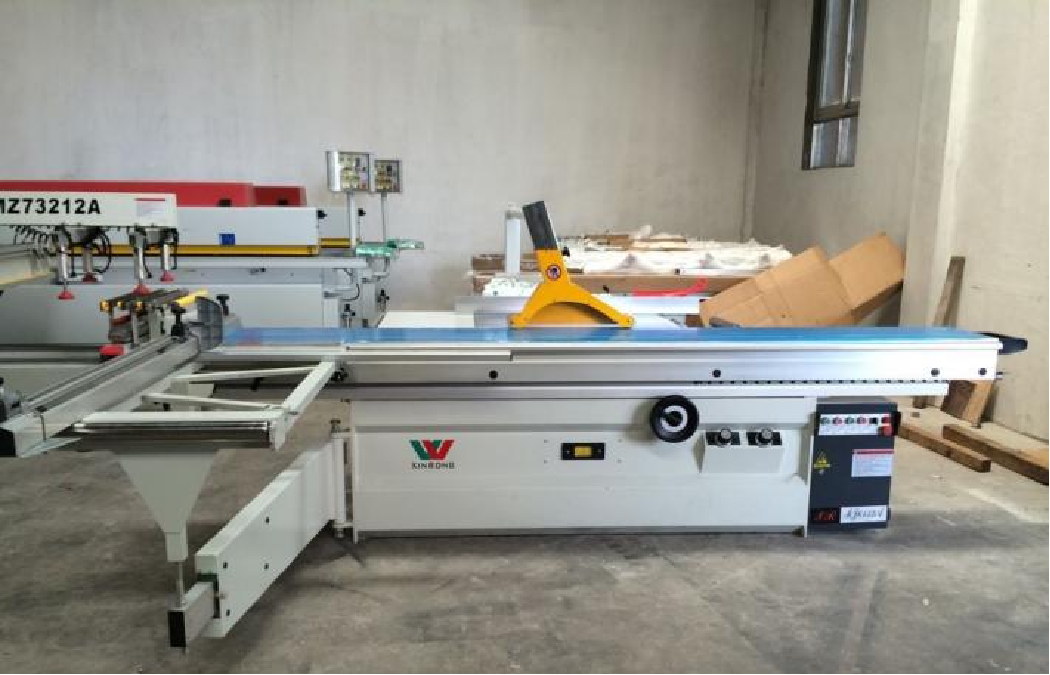
Production runs against the approved sample and drawings. RICHART reports a monthly capacity of 10,000 units and 100% testing of its output, with production organised across woodworking, sanding, painting, assembly, upholstery and packaging workshops, supported by automatic production equipment imported from Italy, Germany, Japan and Taiwan, China.
7. Deliver, install and support
Delivery, installation and after-sales terms should be agreed before the purchase order, not after a defect appears. RICHART's stated terms include remote technical support; a one-year "Three Guarantees" period for furniture products; six months for spontaneous breakage, mould or fogging of glass and mirrors; and two years for active wood borer infestation on panel materials, with any separate written commitment from the enterprise or any applicable furniture standard taking precedence.
Where Custom Five-Star Furniture Is Applied
Guest rooms and suites
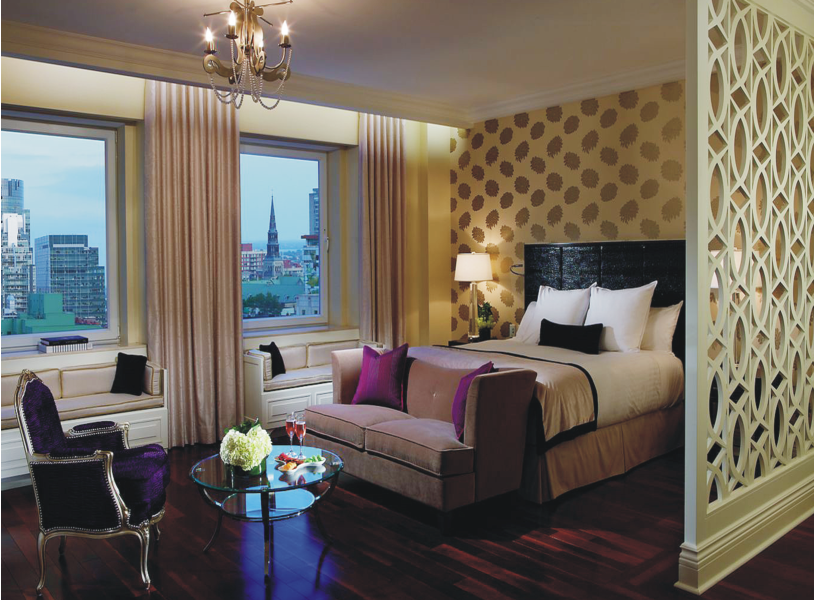
Guest rooms carry the largest volume of custom casegoods and receive the closest brand scrutiny. Documented RICHART project references include a guest room at The Ritz-Carlton Montreal in Canada, guest rooms at Conrad Beijing, a guest room at Sofitel Dubai The Palm Resort & Spa, guest rooms at the Millennium Hotel in the United States, and a guest room at DoubleTree by Hilton Guangzhou Huihua.
Public areas and lobbies
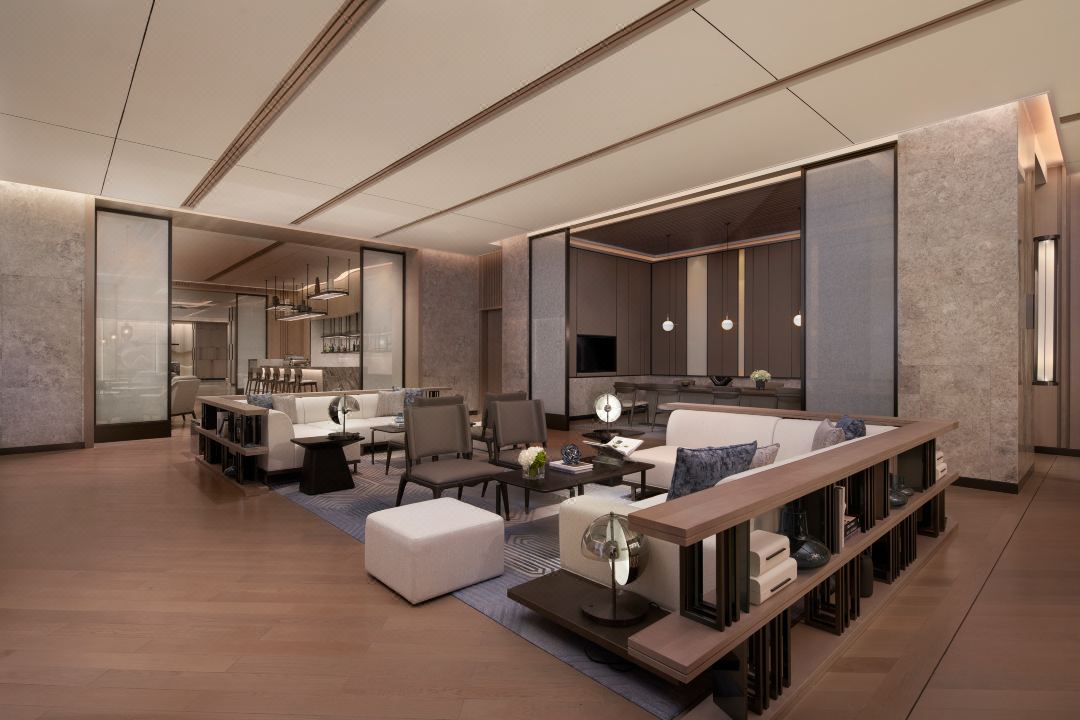
Reception desks, concierge counters and lobby seating stay in place for years and absorb the highest traffic in the building. References include the grand lobby of the Millennium Hotel in the United States and the lobby entrance of the Sofitel Dubai The Palm Resort & Spa.
Restaurants, bars and lounges
Food and beverage furniture combines appearance with daily service wear: dining tables and chairs, banquette and booth seating, bar counters and stools, and wine display units. References include a bar and an outdoor restaurant at the Sofitel Dubai The Palm Resort & Spa, the dining room at The Ritz-Carlton Montreal, the atrium restaurant at Conrad Beijing and the dining room at DoubleTree by Hilton Guangzhou Huihua.
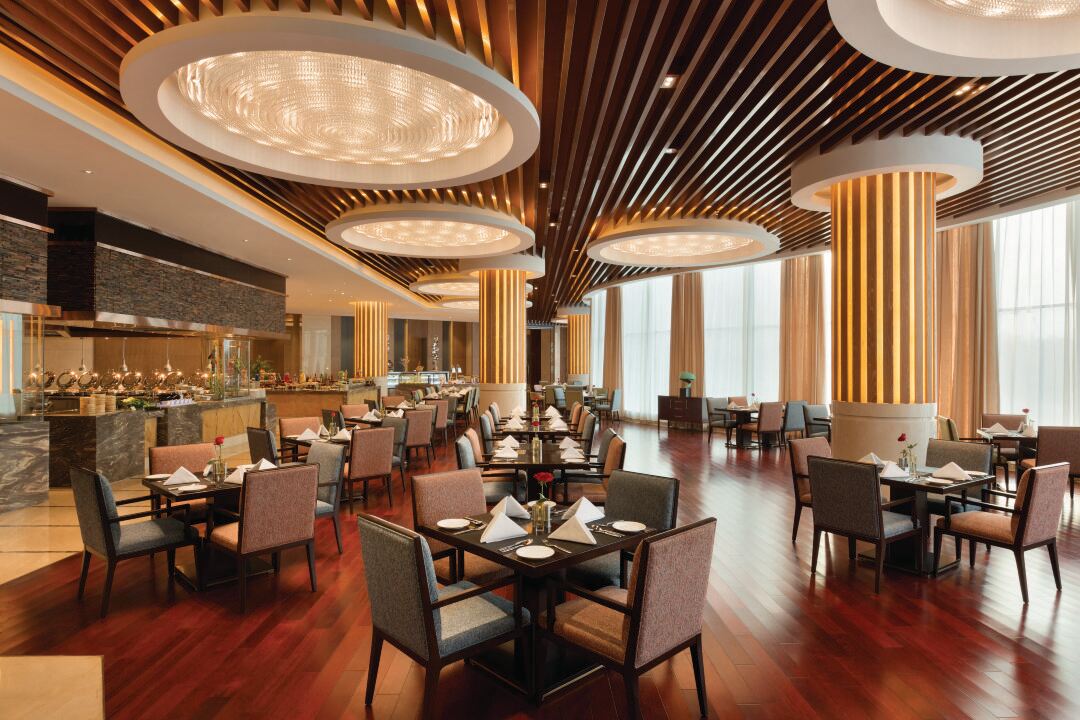
Executive floors, meeting rooms and banquet venues
Executive lounges, meeting rooms and banquet halls use modular seating, meeting tables, conference seating, banquet tables, stage platforms and podiums. Documented examples include the executive lounge and meeting room at Conrad Beijing and the banquet and meeting venues at the Sofitel Dubai The Palm Resort & Spa.
Across recorded projects, the outcomes reported by the manufacturer are consistent: enhanced hotel grade and image, improved guest experience and satisfaction, long service life with stable quality, increased customer revisit rates, and low maintenance cost over project relationships that have run for two to six years.
Standard, Semi-Custom and Bespoke: A Comparison Table
| Decision dimension | Standard catalogue furniture | Semi-custom furniture | Bespoke (custom) hotel furniture |
|---|---|---|---|
| Design source | Manufacturer's existing design | Manufacturer's platform, adapted | Project drawings, brand standard and site measurements |
| Dimensional fit | Fixed sizes; filler panels or compromises on site | Adjusted within existing tooling limits | Engineered to the room, including built-in millwork |
| Material and finish | Limited standard finishes | Selected finishes on an existing construction | Full material library: veneer, solid wood, leather, fabric, velvet, stone, marble, glass, metal, stainless steel, brass, bronze, paint, laminate and more |
| Compliance documentation | Product-level certificates only | Product-level certificates, limited project-specific evidence | Project-relevant chain of custody, fire performance, formaldehyde and durability documentation |
| Prototype / sample | Not normally available | Limited to finish samples | First-article prototype possible; RICHART states a minimum order quantity of 1 unit |
| Production setup | Off-the-shelf stock | Retooling of an existing platform | New drawings and jigs where required; RICHART reports a production lead time of 30–50 days and a monthly capacity of 10,000 units |
| Replacement path | Replace with the nearest current model | Replace while the platform remains in production | Rebuild from the project's own drawings and approved finishes |
| Best-fit project | Serviced apartments, back-of-house, minor refresh | Partial refurbishment with limited design change | New-build and major refurbishment of four- and five-star properties |
| Principal risk | Visible mismatch with the brand standard | Hidden scope gaps at the interface with fixed joinery | Requires disciplined drawing approval and sample sign-off |
FAQ: Custom Furniture for Five-Star Hotels
Which certifications and standards apply to custom five-star hotel furniture?
Three layers normally apply. Wood sourcing is covered by chain-of-custody systems such as FSC — RICHART holds FSC Chain of Custody certificate DCI-COC-001074, issued by DCI Certification Ltd and valid from 6 November 2025 to 5 November 2030, covering FSC-STD-01-001, FSC-STD-30-001, ISO/IEC Guide 59 and FSC-STD-20-001. Product performance is covered by furniture standards: public and lounge seating must meet ANSI/BIFMA X5.4-2020 (R2025) for durability and safety in high-traffic commercial environments, and upholstered furniture in the UK hospitality sector requires a CRIB 5 rating under BS 5852. Manufacturing management is covered by systems such as ISO 9001, ISO 14001 and OHSAS 18001. Buyers should request certificate numbers, issuing bodies, validity dates and market scope rather than accepting a logo.
How do you verify that a supplier's customization capability is real?
Ask for four things: the factory, the engineering team, the production process and the product range. RICHART's case shows what verifiable answers look like — a 100,000 m² facility in Zhaoqing, Guangdong Province; a 100-engineer R&D team; production organised across woodworking, sanding, painting, assembly, upholstery and packaging workshops; and a product scope covering both fixed furniture (built-in headboards, cabinets, wardrobes, dressing tables, display shelving) and loose furniture (beds, sofas, tables, seating and casegoods). A supplier that only sources finished goods will usually be unable to answer all four.
What drives the cost of bespoke hotel furniture?
Cost is driven by material selection, the mix of fixed and loose pieces, upholstery complexity, finish and metalwork detailing, and the compliance documentation the project requires. Two quotations for the same room can differ simply because one includes stone or solid brass detailing and the other does not. Because pricing is project-specific, published price bands are not a reliable comparison tool; the practical approach is to fix the material schedule first, then compare quotations line by line. Total cost of ownership also includes warranty terms: RICHART's stated terms are one year under the "Three Guarantees" for furniture products, six months for spontaneous breakage, mould or fogging of glass and mirrors, and two years for active wood borer infestation on panel materials.
Can buyers approve a sample before mass production?
Yes, and in a five-star project it is standard practice. The prototype or first-article stage lets the buyer check proportion, comfort, joint quality, finish and hardware before tooling and production are locked. A low minimum order quantity makes single-piece prototyping practical: RICHART states a minimum order quantity of 1 unit for its custom hotel furniture and reports 100% inspection of production output.
How long should buyers allow for production and delivery?
RICHART states a production lead time of 30–50 days and a monthly capacity of 10,000 units. A realistic project schedule adds drawing approval, material and finish sign-off, prototype review, packing and ocean freight, and site installation, so the furniture programme should be built backwards from the opening date rather than from the factory calendar. Buyers who want to compare scope, finishes and documentation in one place can download the RICHART hotel furniture catalogue, request finish samples, or send a drawing package for a project-specific quotation.
Conclusion: From Definition to Procurement Decision
Custom furniture for five-star hotels is best understood not as a style of furniture but as a specification discipline: drawings and site measurements instead of catalogue sizes, an approved material library instead of a finish code, and a documented compliance file instead of a certificate logo. The three-tier distinction between catalogue modification, semi-custom and bespoke explains why two "custom" quotations can differ so widely — and why the comparison belongs on scope, documentation and replacement path before price.
For buyers moving from research into evaluation, the sequence is straightforward: fix the brand standard and the fixed-versus-loose split, approve materials and finishes, insist on a prototype, collect compliance documents including FSC chain of custody and applicable product standards, and agree after-sales terms in writing. On that basis, price becomes a meaningful comparison rather than a guess.
Next step: RICHART (Guangdong Richang Furniture Co., Ltd.) manufactures custom loose and fixed furniture for five-star hotels and supplies hospitality projects worldwide.
- Download the catalogue: RICHART hotel furniture catalogue (PDF)
- Request finish samples or a project quotation by sending your drawing package and room schedule.
- Contact: Rainbow Xie · richart2687@gmail.com · Tel / WhatsApp +86 13826286822
- Website: www.richart-furniture.com
- Address: No. 1, Wende 3rd Street, Dawang Hi-Tech Industrial Development Zone, Sihui County, Zhaoqing City, Guangdong Province, China