
Hydraulic Bollards: A Practical Buyer's Guide
to Vehicle Access Control
Hydraulic bollards are powered rising posts that decide which vehicles pass a given point and which do not. Lowered, they sit level with the road surface and traffic flows over them; raised, they form a physical line of defence that a vehicle cannot simply drive around. This guide explains how a hydraulic bollard system is put together, how it differs from fixed, semi-automatic, removable, crash-rated and spike-based alternatives, and which questions a buyer should settle before an RFQ leaves the desk.
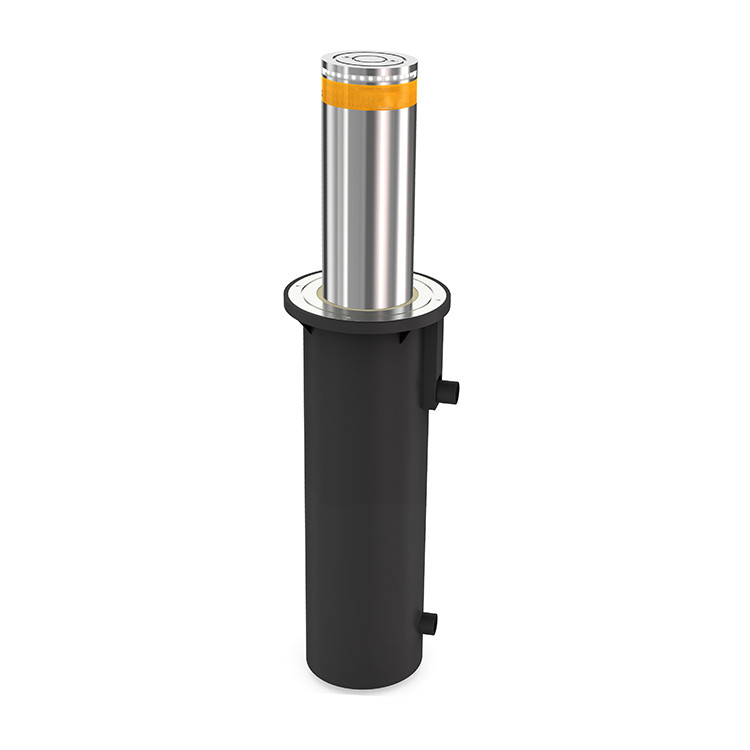
RICJ LB-101 automatic bollard — the hydraulic automatic model in the RICJ range, supplied with integrated LED lighting and an IP68 protection rating.
What Counts as a Hydraulic Bollard
A bollard is a short, stout post used to control or block vehicle movement. The word covers everything from a welded steel post set into concrete to a powered cylinder that disappears into the ground on command. What separates the categories is not appearance but drive method, foundation design and the control layer behind it.
A hydraulic bollard belongs to the powered group. The post is raised and lowered by a hydraulic drive unit, which is why these models are listed as hydraulic automatic bollards rather than as electromechanical or battery-powered automatic units. In the RICJ catalogue, for example, the LB-101 is classified under the hydraulic automatic bollard category, supplied at 220V with integrated LED lighting, an IP68 protection rating and a stated operating temperature range of −45°C to +75°C. Those three details — drive type, power supply and protection class — are the ones that most often decide whether a model suits a given site.
Hydraulic bollards are frequently confused with three neighbouring product families, and the confusion costs money at quotation stage:
- Semi-automatic rising bollards use a gas spring to assist manual lifting and need no power at all. The RICJ LB-102 is an example: 304 stainless steel, 6mm wall thickness, 600mm blocking height, 219mm blocking diameter, key control, 58kg, with the same −45°C to +75°C operating range.
- Fixed and static bollards are passive. They never move, so they protect a building line or demarcate a perimeter but cannot open for a delivery vehicle.
- Road blockers and tyre killers are separate families again. Road blockers are listed separately in the RICJ range from bollards, and tyre killers work on a spike-and-reset principle rather than a rising post.
The practical consequence is simple: if a site needs to alternate between open and closed access many times a day, a passive bollard is the wrong tool, and a semi-automatic post may become an operational burden. If a site only needs to close a lane occasionally, a powered hydraulic post may be more machinery than the job requires.
The Problem a Powered Bollard Solves
Every controlled vehicle entrance runs into the same contradiction. The site must admit authorised vehicles quickly and refuse unauthorised ones convincingly, using the same piece of ground. A boom barrier resolves the first half of that problem and fails the second: it signals refusal but does not physically prevent it. A gate does better but needs swing or slide clearance, and it can be climbed or rammed.
A rising bollard resolves the contradiction because the barrier is not present when access is permitted. There is no arm to lift, no leaf to swing, no track to keep clear. The roadway is simply roadway until the posts rise. That is why powered bollards appear wherever traffic volume and security expectation are both high: airport perimeters, government and public infrastructure, commercial property entrances, industrial facilities, ports and logistics sites.
The RICJ application data describes exactly this operating pattern — high-frequency vehicle entrances, restricted areas, pedestrian zones, commercial entrances, industrial perimeters and airport perimeters, running on 24-hour automatic lifting and lowering. The same data is candid about the boundary condition: temperature, snow load, drainage and foundation conditions require site confirmation rather than assumption.
Industry Background: Why the Powered Segment Keeps Growing
The commercial case for powered access control is visible in the market data. The global automated barriers and bollards market was estimated at USD 22.73 billion in 2025 and is projected to reach USD 27.39 billion by 2030, according to Mordor Intelligence. Within the retractable category, automatic retractable bollards generated the highest revenue, with a 52% share in 2025, on the same source.
Two forces sit behind that split. The first is labour: an entrance that opens automatically needs fewer staff hours per vehicle movement than one that is opened by hand. The second is liability. Where a site carries a credible vehicle-impact risk, the specification conversation shifts from “does it block the road?” to “what evidence proves it blocks the road?” — and evidence is where crash-rating standards enter the picture.
ASTM F2656/F2656M is a standard test method for crash testing vehicle security barriers, and it establishes a penetration rating for perimeter barriers subjected to vehicle impact. Its designations carry two pieces of information. The vehicle and speed class appears as M30, M40 or M50, corresponding to 30, 40 and 50 mph. The penetration result is graded by dynamic penetration distance: P1 at no more than 1 metre, P2 from 1.01 to 7 metres, P3 from 7.01 to 30 metres, and P4 at 30 metres or greater. The P-band figures come from a secondary guide to the standard and should be checked against the current ASTM edition before they are written into a contract.
What that means for a buyer is narrower than it first appears. A standard describes a test method. It does not certify any particular product. A supplier can hold ISO 9001 certification, state CE conformity, and keep documented crash and safety test results on file — all three are true of RICJ — and still, the only document that proves performance for a specific model is the test report naming that model, its configuration, the impact condition and the laboratory. Treat a rating label without a report as a claim, not evidence.
Trade classification matters too, at least for import planning. Steel bollards entering the United States fall under HTSUS 7326.90.8588, per a U.S. Customs and Border Protection ruling. Accurate classification keeps duty estimates and customs paperwork from becoming a late-stage surprise.
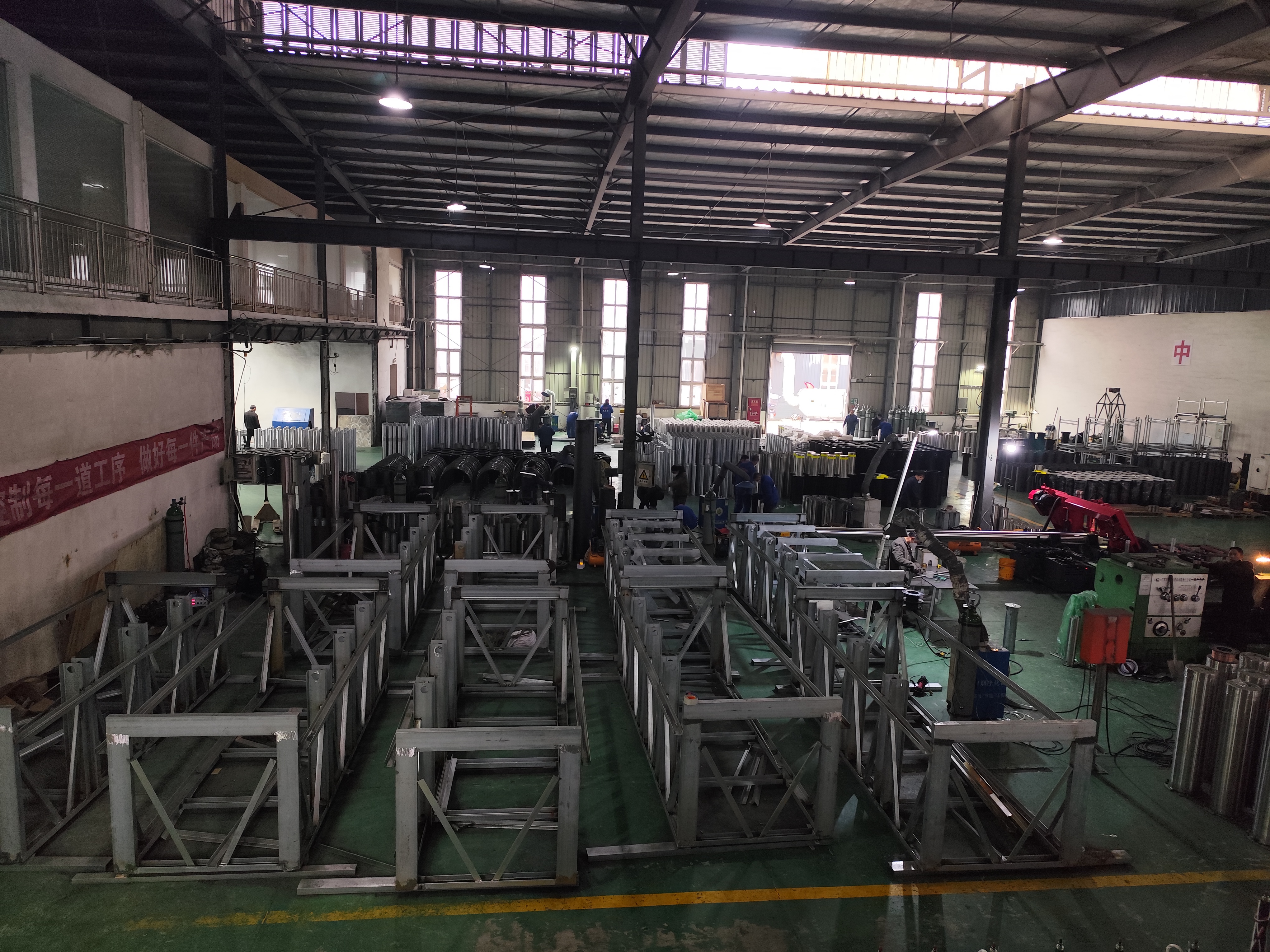
Overall view of the factory — Chengdu Ruisijie Intelligent Technology Co., Ltd. operates a 15,150 m² facility with approximately 280 staff.
How a Hydraulic Bollard System Is Built
Understanding the assembly helps a buyer ask better questions. A powered bollard installation has four layers, and each one is a separate specification decision.
1. The post and the foundation sleeve
The visible post is only part of the article. Below grade sits a mounting sleeve that receives the post when it retracts. On the LB-102 semi-automatic model, for comparison, the embedded sleeve is specified as D325×T3mm at a depth of 800mm, with a D380×T10mm flange — figures that show how much of the product is actually underground. Sleeve diameter, wall thickness and embedment depth determine whether the finished installation stays vertical under repeated traffic and whether water can drain away from the mechanism.
Removable bollards use a lighter version of the same idea. The RICJ lockable removable post is described as having built-in mounting hardware and an internal locking mechanism, so the receiver stays in the ground while the post is lifted out when access is needed.
2. The drive and the operating envelope
Drive type decides power requirements and failure behaviour. Hydraulic automatic units such as the LB-101 run on a 220V supply; semi-automatic units such as the LB-102 rely on a gas spring and a key, and need no electricity at all. Neither is universally better. A hydraulic post suits an entrance that must open and close repeatedly under remote or automated command; a gas-spring post suits a driveway opened a few times a day by the person using it.
The environmental envelope is stated explicitly in the catalogue and should be read as a hard constraint. The LB-101 and LB-102 are both listed for −45°C to +75°C operation, and the LB-101 carries an IP68 rating for water and dust ingress, with integrated LED lighting for visibility at night. A site that exceeds these conditions is a site that needs a different specification, not a hopeful purchase order.
3. Materials and finish
Material selection is the buyer's main lever against corrosion. RICJ lists 304 stainless steel, 316 stainless steel, 201 stainless steel, carbon steel, galvanised steel and aluminium as available materials across its custom and catalogue products. The LB-101 and LB-102 posts are specified in 304 or 316 stainless steel, while carbon steel components are finished with black powder coating on the LB-102. Diameter and length options vary by product family — the LB-101 is specified at 219mm diameter with OEM alternatives of 168mm and 273mm, and the fold-down bollard range lists diameters of 76mm, 89mm, 114mm, 133mm and 159mm with lengths from 600mm to 1500mm or custom.
4. The control layer
A hydraulic bollard is only as useful as the system that tells it when to move. RICJ application documentation lists RFID, licence plate recognition (LPR), remote control, access control systems, control cabinets, foundations and site wiring as matched equipment, with the exact configuration depending on the project design. That list is a warning as much as a menu: the control layer is where most integration problems appear, because it sits between the bollard supplier, the access control vendor and whoever commissions the site.
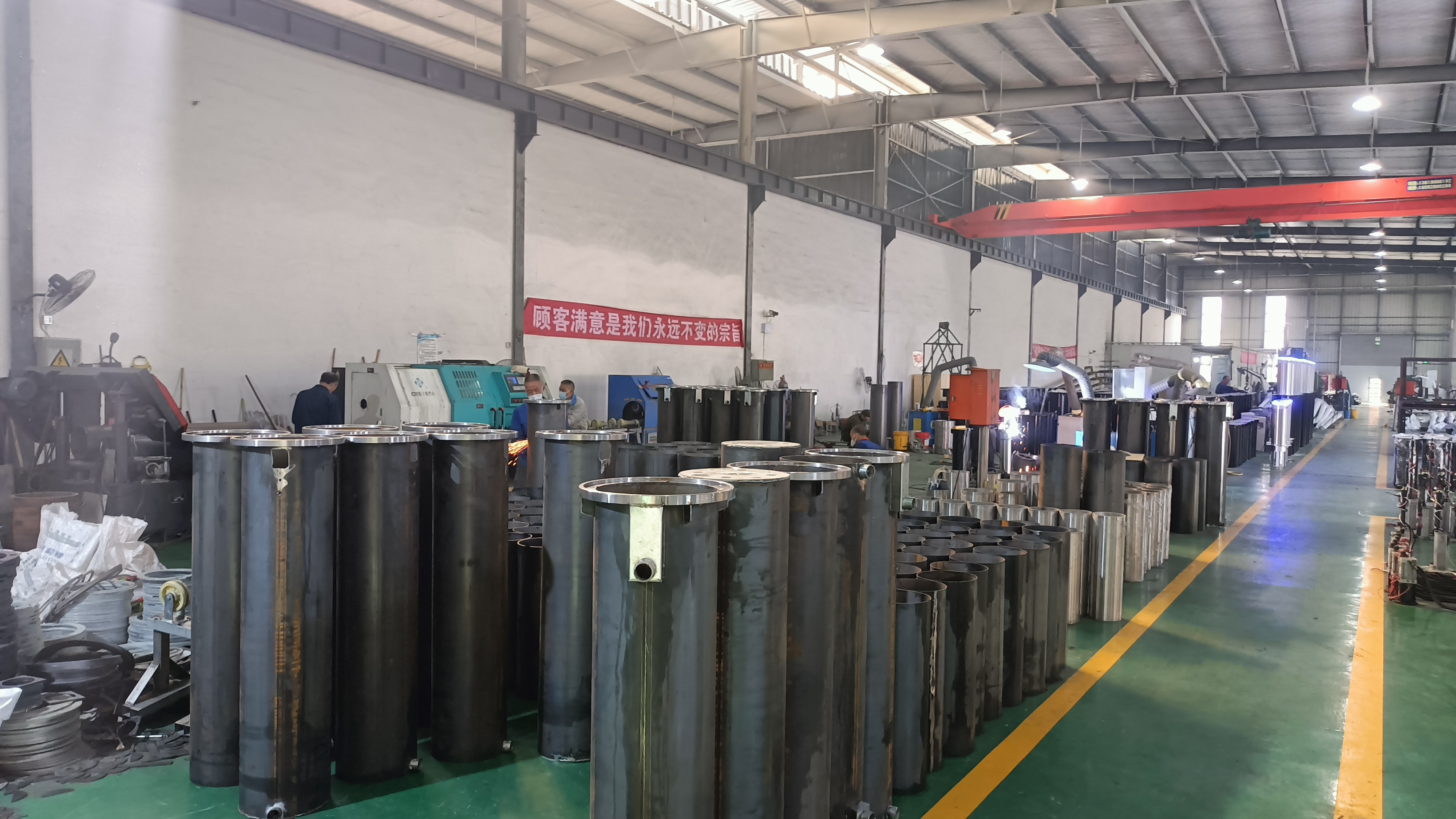
Product assembly site — finished equipment undergoes functional testing before delivery, under a documented ISO 9001 quality system.
Step-by-Step: Specifying a Hydraulic Bollard Project
The sequence below reflects how a security bollard project is actually narrowed down. Skipping a step does not remove the decision, it only moves it later, when changing it costs more.
- Define the threat and the protected zone. Decide what the bollard line is protecting — a pedestrian concourse, a building façade, a service yard, a VIP entrance — and what vehicle class must be stopped. RICJ project guidance asks buyers to assess vehicle threat level and protected area first, because those two answers set the required rating, spacing and depth.
- Confirm the site conditions. Installation depth, drainage, climate and foundation condition all need confirmation before the order. Coastal and sub-zero environments are explicitly called out as conditions that change the specification rather than merely the price.
- Choose the type and drive. Automatic hydraulic for high-frequency, remotely controlled entrances; semi-automatic gas spring where power is unavailable or access is occasional; fixed bollards for permanent building protection; removable or fold-down posts where the post must disappear for a period; road blockers and tyre killers where a different blocking principle is required.
- Plan the control layer. Match the bollard to the access control system before the concrete is poured: RFID readers, LPR cameras, remote fobs, loop detectors, control cabinet position and cable routes. Confirm compatibility in writing.
- Agree documentation and compliance. For each market, identify the applicable requirements separately — conformity marking, electrical safety, EMC, machinery rules, local installation rules — and request the certificate and the model-specific test report rather than a summary sheet.
- Plan installation, commissioning and maintenance. Ask who commissions the system, what drawings are supplied, and what the routine inspection interval should be. Then agree the maintenance routine while the site is still accessible.
Comparing Bollard Types
The table below compares the families that appear in the RICJ catalogue. It describes how each type operates and where it typically fits; it is not a ranking, and a project may combine several types in one layout.
| Type | How it operates | Typical fit | What to check before ordering |
|---|---|---|---|
| Hydraulic automatic bollard (e.g. LB-101) | Powered rising post, 220V supply, integrated LED lighting, IP68, −45°C to +75°C | High-frequency entrances: government and public infrastructure, airports, commercial and industrial sites, parking areas | Foundation and drainage, power availability, control-system compatibility, model-specific test documentation |
| Semi-automatic rising bollard (e.g. LB-102) | Gas-spring assisted manual lift and lower, key control, no power required, 58kg | Driveways, parking areas, commercial entrances, private properties, restricted access points | Who operates it and how often; manual handling at each movement |
| Fixed / static bollard | Passive, permanently installed | Building protection, perimeter demarcation, pedestrian separation | Layout and spacing; no flexibility once installed |
| Removable bollard | Post lifts out of a receiver, built-in mounting hardware, internal locking mechanism | Access points that must open occasionally for maintenance or deliveries | Storage of removed posts, lock security, receiver condition |
| Fold-down bollard | Post folds down and locks; listed lengths 600–1500mm or custom | Parking control and property entrances | Manual operation; hinge and lock wear |
| Road blocker | Listed as a separate powered family in the RICJ range | Entrance layouts requiring a blocking element across the roadway | Configuration is project-specific; confirm with the factory |
| Tyre killer | Spike-based unit with a reset mechanism | Entry points where spike-based control is specified | Regular cleaning and reset checks; drainage |
| Crash-rated / high-security bollard | Bollard supplied against a defined impact requirement, with documented test results | Critical infrastructure and hostile vehicle mitigation (HVM) projects | The test report must name the exact model and configuration |
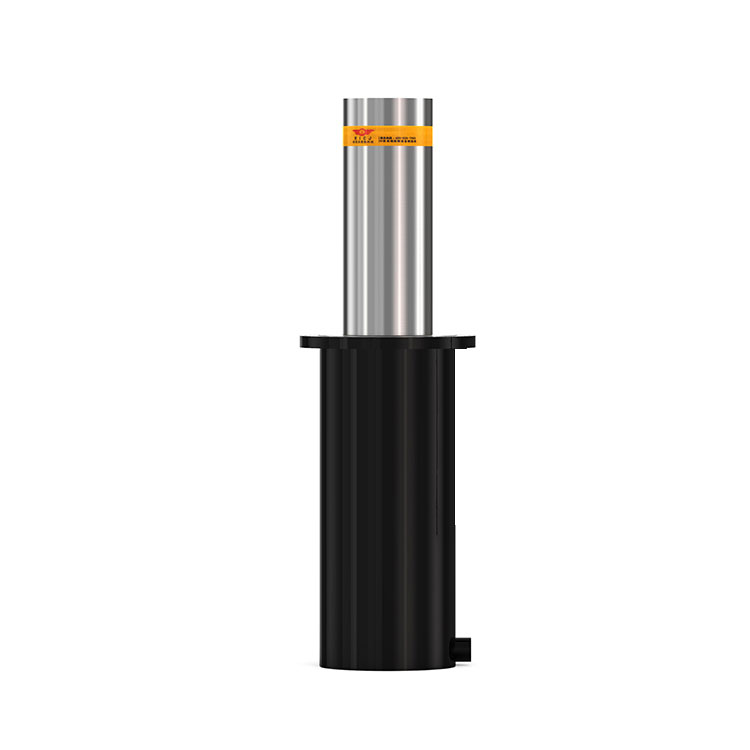
RICJ LB-102 semi-automatic rising bollard — 304 stainless steel, 6mm wall, 600mm blocking height, gas-spring operation with key control.
Where Hydraulic Bollards Fit
Application fit is less about industry labels and more about traffic pattern. A site that admits hundreds of vehicles a day through a supervised entrance is a different problem from one that opens a service gate twice a week.
Airports, ports and transport infrastructure
Airport perimeters combine high vehicle frequency with a credible impact threat, which is the combination powered bollards are built for. RICJ has contributed to landmark infrastructure projects including Chengdu Tianfu International Airport, and describes practical experience in anti-terrorism, hostile vehicle mitigation and vehicle access protection.
Government buildings and public spaces
Public entrances must remain welcoming to pedestrians while being closed to vehicles. Rising bollards support that dual requirement because the roadway is unobstructed when the posts are down, and pedestrian zones can be separated without a permanent barrier line.
Commercial property and industrial facilities
Commercial entrances, industrial perimeters and parking areas use powered bollards to keep unauthorised vehicles out of service yards and loading zones, and to reserve forecourt space. Industrial sites often pair bollards with existing access control, which makes the control-layer decision the critical one.
Schools, residential sites and property management
Lower-threat applications focus on pedestrian protection and unauthorised parking rather than vehicle impact. Here the semi-automatic and removable families often make more economic sense, because the operating frequency does not justify a powered unit.
Energy infrastructure and high-security sites
Critical infrastructure projects specify against a defined threat level and expect documented evidence. This is the segment where the difference between a crash-rated product and a product described as heavy-duty matters most.
Limits, Climate and Maintenance: What Buyers Underestimate
A powered bollard is outdoor mechanical equipment, and it behaves like outdoor mechanical equipment. Three failure paths deserve attention during specification rather than after commissioning.
Coastal and rainy environments
Salt, chloride exposure, prolonged humidity and poor foundation drainage are the documented triggers for corrosion and operational problems. The primary risks are corrosion of metal components, water ingress into internal parts, and drainage-related operating faults. Material choice (316 stainless rather than 304 where chloride exposure is significant), improved drainage design and waterproof components are the stated mitigations — but drainage is a civil works decision, not a product option, and it has to be settled before the sleeve goes into the ground.
Underground components
On retractable designs, the heavy-duty mounting sleeve is generally not the part that fails. The internal locking mechanism, the water path and the debris path are. Maintenance access is designed in: the top cover can be removed by loosening screws to reach the locking mechanism or other internal components. Documented triggers for maintenance include frequent long-term operation, water or debris entering the housing, poor drainage, and vehicle impact or abnormal external force.
Spike-based units
Tyre killers depend on spike movement and a reset mechanism. Dirt build-up, moisture, mechanical wear or incomplete resetting can affect that movement, so routine cleaning, inspection and reset checks belong in the maintenance schedule from day one. Proper installation and regular inspection are what keep repeated vehicle passes from turning into jammed or damaged spikes.
None of this argues against powered bollards. It argues for choosing a supplier who will talk about maintenance during the quotation, not after the invoice.
Working With a Manufacturer
Buyers researching bollard manufacturers in China are usually trying to answer one question: is this an actual factory or a trading desk? The signals worth checking are specific and verifiable.
Chengdu Ruisijie Intelligent Technology Co., Ltd. (RICJ) is a China-based manufacturer and supplier of vehicle access control bollards, established in 2007 and operating through its official website cdricj.com. The company runs a 15,150 m² facility with approximately 280 staff, including 41 R&D engineers, and reports annual production capacity of around 10,000 units. It is ISO 9001 certified, recognised as a 5-Star Supplier on Alibaba.com, uses high-strength carbon steel, stainless steel and premium core components under systematic material inspection, production monitoring and full-process quality control, and states that finished equipment undergoes functional testing before delivery.
Its product range covers automatic and semi-automatic rising bollards, fixed and static bollards, manual retractable bollards, removable bollards, fold-down bollards, hydraulic road blockers, tyre killers and custom security bollards. Approximately 90% of production is exported, with major markets in MEA, EU and SEA. The company supplies through factory-direct supply and professional B2B services to distributors, engineering contractors, system integrators and project owners, and supports OEM/ODM customisation of dimensions, materials, appearance and functional configurations.
For international projects, the practical support package matters as much as the hardware: English technical documentation, installation manuals, wiring diagrams, customs documentation, and remote assistance by phone, email or video. On installation, RICJ does not send engineers on site as a standard service; it supplies manuals, CAD files and wiring diagrams with remote guidance through installation and commissioning, and on-site supervision can be arranged as a paid option for large projects. Standard models are typically ready in 7–15 days, with custom designs prioritised against the project timeline, and samples, flexible MOQ and framework pricing are available for recurring deliveries.
Frequently Asked Questions
1. What certifications and test documentation should I verify when sourcing bollards from China?
Check three things separately: the quality management certification, the conformity marking for your market, and the model-specific test report. RICJ is ISO 9001 certified, states that its products are certified to CE, and keeps documented crash and safety test results, with functional testing of finished equipment before delivery. Because a crash standard describes a test method rather than a product, the report you accept should name the exact model and configuration being quoted, together with the impact condition and the issuing laboratory. A rating label on a brochure is a claim; the report is the evidence.
2. Can hydraulic bollards be customised to a project's dimensions and materials?
Yes. RICJ supports OEM/ODM customisation of product dimensions, materials, appearance and functional configurations. Available materials include 304 stainless steel, 316 stainless steel, 201 stainless steel, carbon steel, galvanised steel and aluminium. The LB-101 automatic bollard is specified at 219mm diameter with OEM alternatives of 168mm and 273mm, and its minimum order quantity is 10 pieces. Customisation requests should state the site conditions and target-market requirements alongside the drawing, because those determine which materials and ratings are appropriate.
3. How is a hydraulic bollard project priced?
Pricing is quoted per project rather than from a fixed list. RICJ asks buyers to provide the material, size, design and quantity required so that the quotation matches the specification, and offers project pricing, FOB shipping options and payment terms for bulk orders. Because the control layer, foundation work and installation are usually outside the product price, compare quotations on a like-for-like scope: state whether the price covers the post and drive unit only, or also the control cabinet, detection devices and commissioning support.
4. Can I evaluate a sample before placing a bulk order?
Yes. Samples, flexible MOQ and framework pricing are offered for project evaluation and recurring deliveries. A sample is most useful when it is checked against the specification you intend to order — material grade, wall thickness, finish, diameter and height — rather than assessed on appearance alone. For powered models, ask for the wiring diagram and control interface details with the sample so the integration can be reviewed before the bulk order is confirmed.
5. What is the lead time for bulk or custom orders?
Standard models are typically ready in 7–15 days because RICJ manages its own production line. Custom technical designs are prioritised to meet the project timeline, so the schedule should be agreed at order confirmation with the site's installation date in view. If you are working to a fixed opening date, share it early and request the production schedule in writing — and remember that the bollard delivery date is only one line in the programme, alongside foundation works and control-system commissioning.
Next Step
If you are narrowing a specification, start with the documents rather than the price list. The RICJ product brochure covers the full range — automatic and semi-automatic bollards, fixed, removable and fold-down posts, road blockers and tyre killers — with model references and configuration options.
Download the brochure: RICJ product catalogue (PDF)
For a sample request, a project quotation or a technical question, contact the team directly:
Email: ricjli@cdricj.com | sales@cdricj.com
Tel / WhatsApp: +86 181-2186-2967 (Joy)
Website: www.cdricj.com
Address: No.389, Section 3, East Third Ring Road, Pengzhou Industrial Park, Chengdu, Sichuan, China.
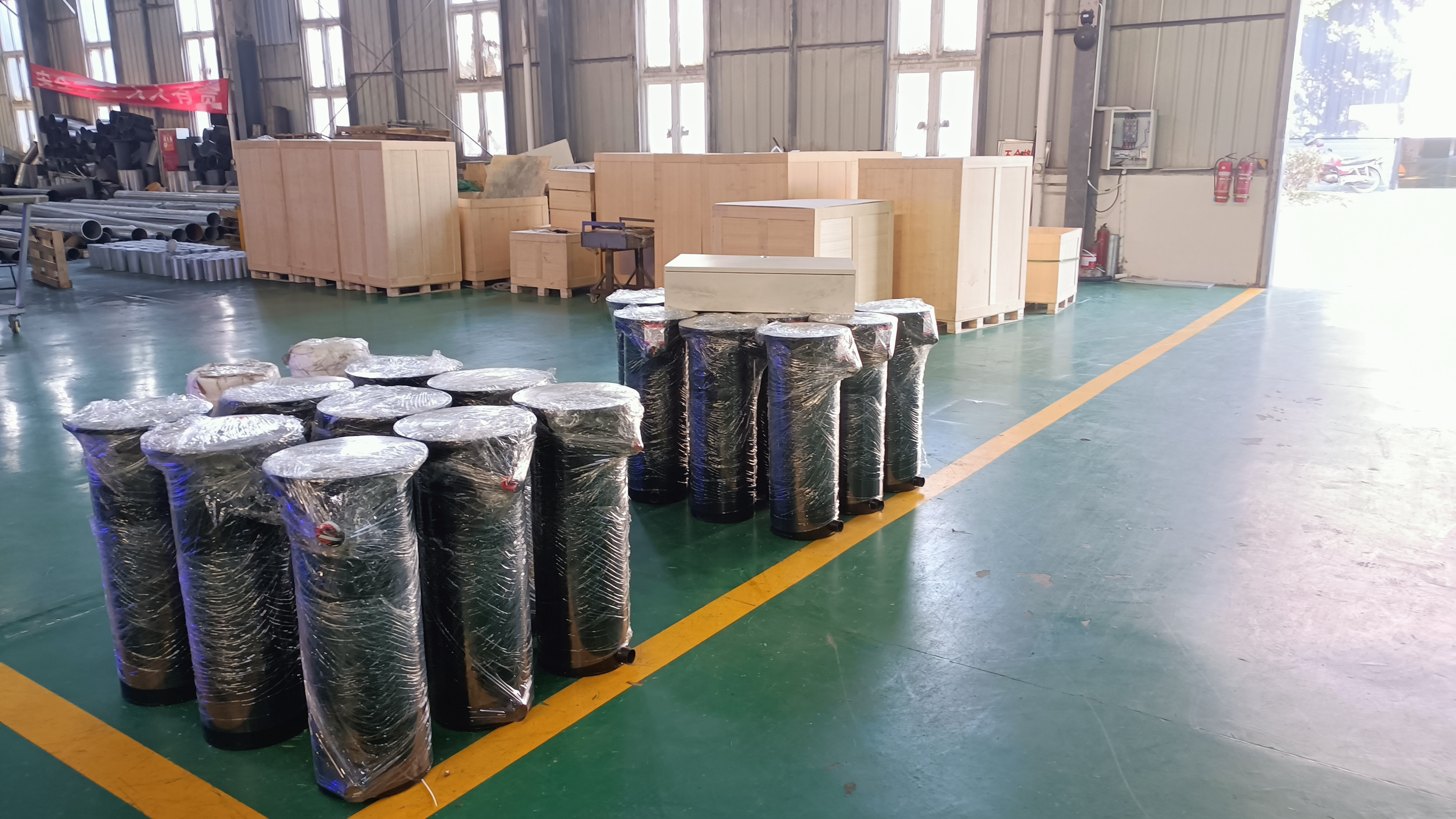
Product packaging and shipping in progress — approximately 90% of RICJ production is exported, with major markets in MEA, EU and SEA.
Conclusion
Hydraulic bollards solve a specific problem: controlling a vehicle entrance that must stay open to traffic for most of the day and closed to the wrong vehicle instantly. Choosing one is less about picking a post and more about matching four layers — post and sleeve, drive and operating envelope, material and finish, and control system — to a site that has been honestly assessed for threat level, drainage, climate and foundation conditions.
Three findings are worth carrying into the next conversation with any supplier. First, the market is shifting toward automated access, with automatic retractable bollards holding 52% of the retractable category in 2025. Second, crash ratings such as ASTM F2656 M30/M40/M50 with P1–P4 penetration bands describe a test method, so the only valid proof is a report naming your model. Third, maintenance is designed in or left out at specification stage — coastal exposure, drainage and underground components decide service life far more than the finish on the visible post.
Settle those points in writing, and the quotation you receive will describe a system you can actually install, commission and keep working.
Have Questions or Need More Details?
Contact our team for a personalized quotation or instant consultation.
Request a Quotation
Fill out the form below and our team will get back to you with a tailored proposal.
WhatsApp Direct Chat
Prefer to chat in real-time? Message us on WhatsApp for instant assistance & quick answers.
- Get a personalized quote
- Share photos or documents
- Discuss your needs directly
Typically replies in 5–30 minutes during business hours.