
Heat Resistant Silicone Glove: A Buyer's Discovery Guide
Heat Resistant Silicone Glove: What Buyers Need to Know Before Sourcing
A heat resistant silicone glove is a protective glove built with a silicone outer shell over a heat-insulated lining, so a worker can handle hot components, hot surfaces or open flames while keeping a secure grip. The number in front of most model names — 350, 500 or 1,000 — refers to the maximum temperature the manufacturer rates that glove for, which is why discovery-stage buyers typically meet three separate temperature classes in the same catalogue.
RISTA Heat Resistant Silicone Glove is the heat-protection line of RISTA, a Chinese functional hand protection manufacturer established in 1998 that also produces cut resistant, impact, general purpose and chemical resistant gloves. The line covers three models — TF350, TF-500 and T-1000 — and that three-tier structure is the practical starting point for anyone comparing heat resistant silicone gloves for food processing, metal heat treatment, foundry work, or glass and metallurgical operations.
At a glance: three temperature classes (TF350 up to 350 °C, TF-500 up to 500 °C, T-1000 up to 1,000 °C); silicone shell with cotton, acrylic, fleece/cotton or aramid/cotton linings depending on model; 32 cm length across the range; textured slip-resistant palm; extended by cut resistant (RCC-02-C309), impact (RCI-02-C803), chemical resistant (RCG-02-G301) and general purpose (RGW-03-W272) gloves when the hazard is not purely thermal.
Why heat protection decisions go wrong before a glove is even chosen
Temperature is the first number buyers look at, and it is rarely the whole problem. A glove that survives 1,000 °C of radiant heat may still fail in daily use if the contact is a wet, oily cast part that slips out of the palm, or if the liner is so stiff that the operator removes the glove between tasks. In practice, five variables decide whether a heat resistant silicone glove works on a given line:
- Heat source type — direct contact with a hot solid, open flame, hot liquid, steam, or radiant heat from a furnace opening.
- Contact duration — a brief transfer of a part differs from continuous holding at the same temperature.
- Grip conditions — dry, wet, oily, dusty, or contaminated with food residue.
- Dexterity requirement — whether the task needs fingertip control inside a hot zone.
- Evidence requirement — whether the buyer needs certificates and test reports, not only a temperature claim.
A second source of confusion is terminology. A silicone glove, a silicone-coated glove and an aramid or palm-reinforced heat glove are different constructions, and they behave differently in flexibility, cleanability and grip. RISTA positions its silicone range as providing more stable high-temperature protection than ordinary liquid silicone gloves, and describes the glove surface as inherently dust-repellent and easy to clean because the property comes from the core material and manufacturing process rather than a surface treatment.
Industry background: what is changing in the heat resistant glove market
Demand for heat protection is growing alongside industrial thermal processing. TrendX Insights projects the global heat resistant glove market to grow from USD 559.20 million in 2025 to USD 977.30 million by 2034. That growth is not evenly distributed: the applications that drive specification complexity — metal heat treatment, foundries, kilns and refractory handling, high-temperature equipment maintenance — are exactly the applications where a generic temperature claim is least useful.
On the compliance side, EN 407:2020 is the European standard for protective gloves against thermal risks (heat and/or fire), published by the European Committee for Standardization. It gives buyers a shared vocabulary for comparing contact-heat performance instead of comparing marketing numbers. In parallel, buyers increasingly request the full document set — EU-type examination, production quality assurance, and third-party test reports — before approving a supplier.
A third shift concerns construction transparency. Extremely high temperature ratings are usually achieved by combining silicone with other thermal-barrier materials rather than by silicone alone, so a buyer evaluating a 1,000 °C claim should ask which part of the glove provides the barrier, what the liner is, and what finished-glove testing supports the rating. This is a verification question, not a criticism of any specific product.
The RISTA heat resistant silicone glove range in detail
The RISTA range is organised as three temperature tiers rather than as one universal glove. All three models share a 32 cm length and a textured, slip-resistant palm surface; they differ in shell specification, lining material, rated temperature range and intended application.
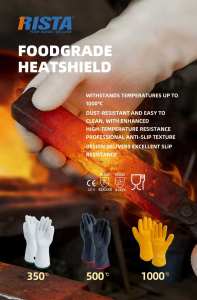
TF350 — the food-grade 350 °C glove
TF350 uses a food-grade silicone shell with a cotton, acrylic or aramid liner and is rated from −40 °C to 350 °C. It is the model RISTA assigns to commercial kitchens, food processing and baking, BBQ and outdoor cooking, oven and catering equipment, and light industrial heat processing. Its food-grade shell is the reason it appears in food-contact workflows rather than in foundry work.
TF-500 — the 500 °C industrial glove
TF-500 keeps the silicone shell but moves to a fleece/cotton heat-insulated lining and is rated from −40 °C to 500 °C. RISTA specifies it for industrial ovens and heating equipment, metal heat treatment and processing, and specialised thermal processing, and states that it can contact open flames and hot metals. For a heat treatment line handling jigs, fixtures and formed parts, this is the tier where the conversation usually starts.
T-1000 — the extreme-temperature 1,000 °C glove
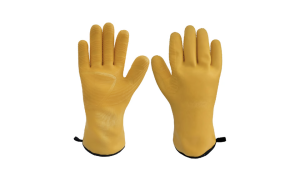
T-1000 uses an aramid/cotton heat-insulated lining and is rated from −70 °C to 1,000 °C, with a slip-resistant textured palm and a stated ability to contact open flames and hot metal directly. RISTA assigns it to specialised thermal processing, foundries and metal processing, industrial kilns and refractory materials, and high-temperature equipment manufacturing and maintenance. RISTA also states that suitability for a particular heat source and working condition must be established by relevant finished-glove test results — a qualification worth keeping in the specification file.
Design details that matter on the floor
Three design choices separate this type of silicone glove from a plain heat mitt in daily use. First, the glove is described as inherently dust-repellent and easy to clean because the non-stick surface comes from the core material and manufacturing process rather than a coating — relevant in bakeries and food processing where cleaning time is a running cost. Second, the hand shape is customised to follow the natural curve of the hand. Third, RISTA describes the silicone construction as more flexible and softer than traditional industrial high-temperature gloves such as Kevlar, aramid or palm-reinforced types, with the aim of reducing hand fatigue during continuous shifts.

350 °C, 500 °C or 1,000 °C: how to read a temperature rating
A rated temperature range describes the envelope the manufacturer publishes for the glove, not a guarantee for every possible exposure. RISTA publishes three envelopes: −40 °C to 350 °C for TF350, −40 °C to 500 °C for TF-500, and −70 °C to 1,000 °C for T-1000. Two practical consequences follow.
The upper number tells you which tier to investigate. If a task involves an oven door, a baking tray or a grill, the 350 °C class is the relevant starting point. If it involves hot metal fixtures and industrial ovens, the 500 °C class is. If it involves molten-adjacent work, kilns, refractories or foundry handling, the 1,000 °C class is. Moving up a tier is not automatically better: a heavier extreme-temperature glove can cost dexterity that a food operation needs.
The lower number matters more than most buyers expect. All three models carry sub-zero ratings, which is relevant wherever a glove moves between hot and cold handling in the same shift, and for cold-chain and freezer environments adjacent to cooking or thermal processing lines.
The final step is confirming the rating against the actual task with finished-glove test data. The rating tells you the class; the test result tells you whether that class applies to your heat source.
Step-by-step: choosing a heat resistant silicone glove
A workable selection sequence for an awareness-to-research stage buyer looks like this.
- Step 1 — Write down the thermal exposure. Heat source type, measured or estimated surface temperature, contact duration, and whether open flame, hot liquid or steam is present.
- Step 2 — Pick the temperature tier. 350 °C class for food, baking, kitchen and light industrial heat work; 500 °C class for industrial ovens and metal heat treatment; 1,000 °C class for foundries, kilns, refractory materials and high-temperature equipment maintenance.
- Step 3 — Match the liner to the shift length. Cotton, acrylic, fleece/cotton and aramid/cotton linings are all listed across the range; the choice affects insulation and how the glove feels after several hours.
- Step 4 — Check the grip condition. The textured palm is the anti-slip feature; confirm performance expectations for wet, oily or dusty parts during the trial.
- Step 5 — Confirm the compliance file. RISTA gloves are certified under the EU PPE Regulation (EU) 2016/425 through EU-type examination (Module B) and production quality assurance (Module D), with EN 407 covering heat protection, EN 388 covering mechanical and cut protection, and EN ISO 374-1 covering chemical protection. FDA and REACH documentation apply where relevant, and certificates and third-party test reports are available on request.
- Step 6 — Confirm the commercial setup. RISTA supports OEM/ODM work covering material and coating selection, colour and size, liner gauge, coating coverage and surface texture, grip pattern, impact and anti-vibration features, cuff design, logo printing and private label, custom packaging, and product testing and compliance support. The minimum order quantity is 6,000 pairs for normal gloves.
Use cases: where heat resistant silicone gloves earn their place
Food processing, bakery and BBQ
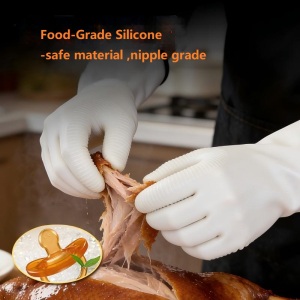
In food-contact work the requirement is simultaneous: heat resistance, a washable surface and a grip that works on trays and racks. TF350 is the RISTA model for this cluster, covering commercial kitchens, food processing and baking, BBQ and outdoor cooking, oven and catering equipment, and light industrial heat processing. The food-grade silicone shell is the specification point procurement teams usually need in writing.
Metal heat treatment and industrial ovens
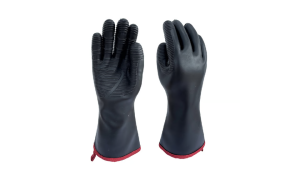
Heat treatment lines, industrial ovens and heating equipment present contact with hot metal plus repeated handling of jigs and fixtures. TF-500, rated to 500 °C with a fleece/cotton lining and a stated ability to contact open flames and hot metals, is the model RISTA specifies for metal heat treatment and processing, industrial ovens and heating equipment, and specialised thermal processing.
Metallurgical, foundry and glass-melting environments
Extreme heat work rarely arrives alone. RISTA describes high-temperature processing environments as combining metallurgy and heat treatment with glass and metal handling, and pairs the glove with an apron, sleeves, shoe covers, goggles and a helmet rather than treating hand protection as a standalone item. Where radiant heat and flame contact dominate, T-1000 is the tier to evaluate; where molten splash and mechanical hazards overlap, the glove decision should be made together with the rest of the PPE set.
When heat is not the only hazard
Many thermal processes also involve sharp edges, chemicals or impact. RISTA covers these with separate lines rather than by overloading one glove: the cut resistant glove RCC-02-C309 (Level C cut protection, 13-gauge polyester/glass fiber, patented nitrile hybrid triple coating, 35 cm cuff), the impact glove RCI-02-C803 (15-gauge aramid/steel, bonded TPR back-of-hand protection, Level E cut, 30 cm cuff, EU Type-Examined PPE with Module D certificate), the chemical resistant glove RCG-02-G301 (18-gauge nylon, nitrile hybrid triple coating, three chemicals certified out of 18 under EN ISO 374:2016, 30 cm cuff) and the general-purpose HPT thermal glove RGW-03-W272 (PVC, nylon and acrylic construction, not a silicone heat-resistant glove).
Comparison tables
The first table compares the three heat resistant silicone glove models on published specifications. The second maps RISTA glove families to the dominant hazard, which is the faster route when a buyer is not yet sure that heat is the primary risk.
| Model | Rated temperature range | Shell / lining | Length | Palm | Stated applications |
|---|---|---|---|---|---|
| TF350 | −40 °C to 350 °C | Food-grade silicone shell; cotton, acrylic or aramid liner | 32 cm | Textured, slip-resistant | Food processing and baking, commercial kitchens, BBQ and outdoor cooking, oven and catering equipment, light industrial heat processing |
| TF-500 | −40 °C to 500 °C | Silicone shell; fleece/cotton heat-insulated lining | 32 cm | Textured; contact with open flames and hot metals stated | Industrial ovens and heating equipment, metal heat treatment and processing, specialised thermal processing |
| T-1000 | −70 °C to 1,000 °C | Silicone shell; aramid/cotton heat-insulated lining | 32 cm | Slip-resistant textured; direct contact with open flames and hot metal stated | Foundries and metal processing, industrial kilns and refractory materials, high-temperature equipment manufacturing and maintenance, specialised thermal processing |
| Dominant hazard | RISTA model | Published protection reference |
|---|---|---|
| Hot surfaces, hot components, open flame | Heat Resistant Silicone glove — TF350 / TF-500 / T-1000 | EN 407 heat protection; rated 350 °C, 500 °C and 1,000 °C by model |
| Sharp metal, glass, burrs | Cut Resistant glove RCC-02-C309 | EN 388 mechanical and cut protection; Level C cut protection |
| Chemical splash, oils and grease | Chemical Resistant glove RCG-02-G301 | EN ISO 374-1; three chemicals certified out of 18 under EN ISO 374:2016 |
| Impact plus cut exposure | Impact glove RCI-02-C803 | Level E cut protection; bonded TPR back-of-hand impact protection; Module D certificate |
China heat resistant silicone glove manufacturers: what to verify
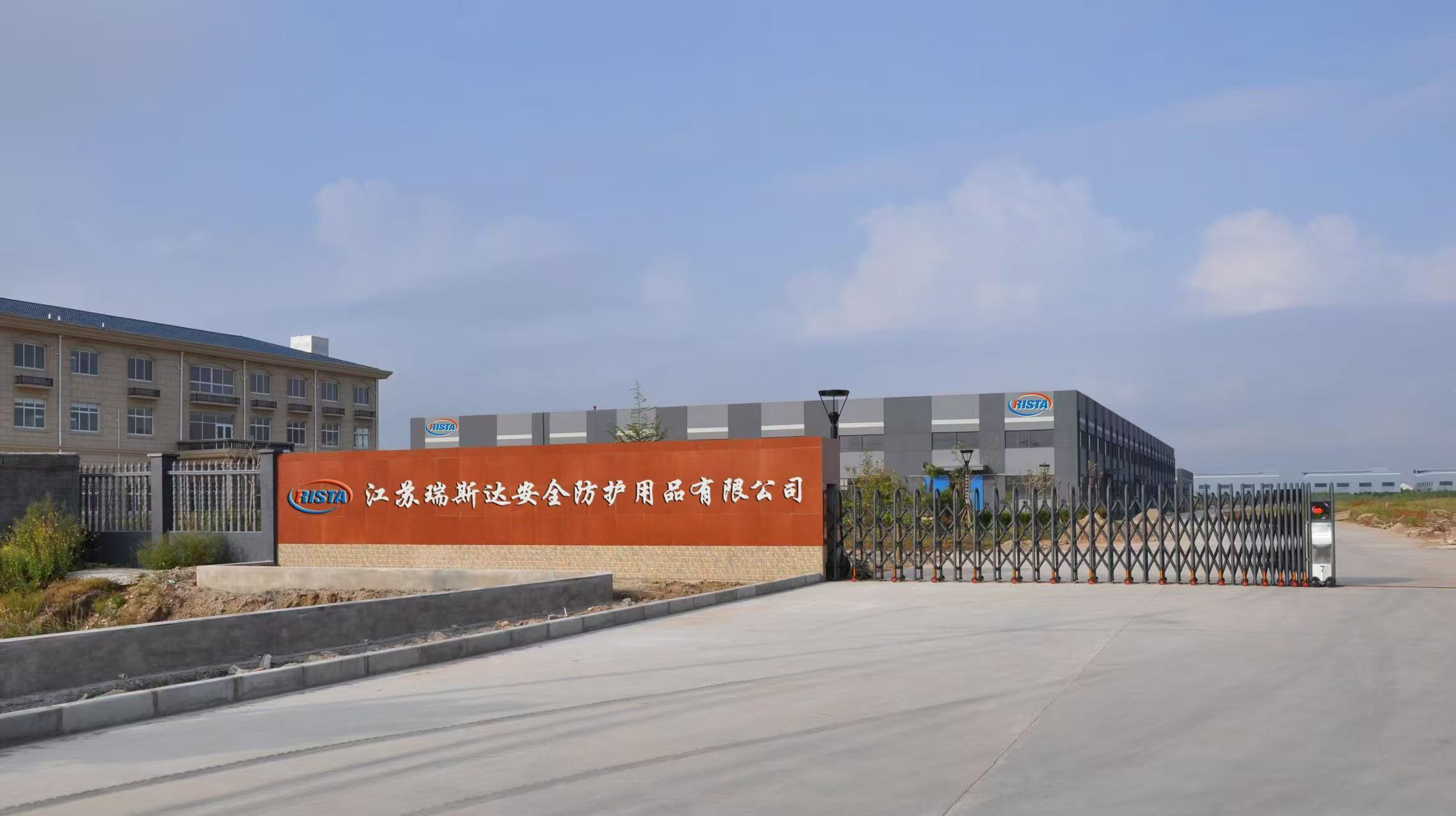
China is a major source of heat resistant silicone gloves, and the practical difference between suppliers shows up in verifiable operating facts rather than in catalogue adjectives. RISTA is a useful reference case because its figures are published and checkable.
- Operating history and scale — founded in 1998; 66,600 ㎡ factory; 200+ employees; annual output of 20,000,000 pairs; 15 R&D engineers and more than 70 international and domestic patents.
- Export track record — a 90% export ratio, with main markets in North America, the EU, Japan and South America, and exports to 50+ countries. The company describes itself as a strategic partner to numerous global brands in Europe, the US and Japan.
- Management systems — ISO 9001, ISO 14001, ISO 45001, SA8000, Sedex, WRAP and SMETA.
- Product compliance — Module B, Module C2 and Module D under the EU PPE framework, plus FDA and REACH documentation.
- Social and environmental accountability — new energy facilities in production, carbon management aligned with the SBTi framework, and qualified supplier status with UNICEF.
- Customisation depth — OEM/ODM across materials, coatings, sizes, liner gauge, grip pattern, cuffs, logo and packaging, with a 6,000-pair minimum order quantity for normal gloves.
For a buyer at the research stage, the checklist translates into four document requests: the EU-type examination and Module D certificates, the EN 407 test report for the specific heat model, the liner and material specification in writing, and a factory profile that matches the claimed capacity.
Frequently asked questions
Are RISTA heat resistant silicone gloves CE certified, and which standards apply?
Yes. RISTA protective gloves are certified under the EU PPE Regulation (EU) 2016/425 through EU-type examination (Module B) and production quality assurance (Module D). Heat protection is assessed against EN 407, mechanical and cut protection against EN 388, and chemical protection against EN ISO 374-1. FDA and REACH documentation apply where relevant, and official certificates and third-party test reports are available on request.
What is the highest temperature a heat resistant silicone glove from RISTA can handle?
RISTA publishes three temperature classes: TF350 from −40 °C to 350 °C, TF-500 from −40 °C to 500 °C, and T-1000 from −70 °C to 1,000 °C. TF-500 and T-1000 are described as suitable for contact with open flames and hot metals. Because real exposure depends on the heat source, contact time and load, RISTA states that suitability for a particular heat source and working condition must be established by relevant finished-glove test results.
Which glove should I choose for hot surfaces versus sharp or chemical hazards?
Match the glove to the dominant hazard. For hot surfaces, use the heat resistant silicone range — TF350 for food processing, baking, commercial kitchens and light industrial heat work, TF-500 for industrial ovens, metal heat treatment and specialised thermal processing, and T-1000 for foundries, kilns, refractory materials and high-temperature equipment maintenance. For sharp metal and glass, the cut resistant glove RCC-02-C309 provides Level C cut protection under EN 388. For chemical handling, RCG-02-G301 is tested to EN ISO 374-1. For combined impact and cut exposure, RCI-02-C803 offers Level E cut protection with bonded TPR back-of-hand impact protection.
Does RISTA support OEM/ODM orders, and what is the minimum order quantity?
Yes. RISTA offers material and coating selection, colour and size, liner gauge, coating coverage and surface texture, grip pattern, impact and anti-vibration features, cuff design, logo printing and private label, custom packaging, and product testing and compliance support. The minimum order quantity is 6,000 pairs for normal gloves, and logo printing and custom packaging are standard OEM services.
How do I request a sample or a quotation for a heat resistant silicone glove?
Sample and quotation requests for the RISTA heat resistant silicone glove range are handled by the RISTA sales team at sales@ristash.com or on WhatsApp at +86-13761866824. Certificates and third-party test reports can be requested together with the quotation, and the full product brochure is available from the download link below.
Conclusion: start from the heat source, not the number
A heat resistant silicone glove is only as good as the match between its rated class and the actual thermal exposure. The RISTA range makes that match explicit by splitting the line into three tiers — TF350 for food-grade 350 °C work, TF-500 for 500 °C industrial and metal heat treatment duty, and T-1000 for 1,000 °C foundry, kiln and refractory applications — and by extending the same hand protection platform into cut, chemical, impact and general purpose gloves when heat is only one of several hazards. Buyers who start from the heat source, then confirm liner, grip and compliance documents, end up with a specification that survives an audit rather than a catalogue claim.
Next step: review the full RISTA protective glove range, download the product brochure, or send your heat source, contact time and target temperature to the RISTA team for a model recommendation and quotation.
Download RISTA Brochure (PDF)Ask on WhatsApp
Email: sales@ristash.com | Tel / WhatsApp: +86-13761866824 | Website: www.ristash.com
Marketing Center: RM608, No.1505 Lianhang Rd, Minhang District, Shanghai, China
Factory: No.128 Mingzhu RD, Binhai Industrial Park, Qidong, Jiangsu, China
Have Questions or Need More Details?
Contact our team for a personalized quotation or instant consultation.
Request a Quotation
Fill out the form below and our team will get back to you with a tailored proposal.
WhatsApp Direct Chat
Prefer to chat in real-time? Message us on WhatsApp for instant assistance & quick answers.
- Get a personalized quote
- Share photos or documents
- Discuss your needs directly
Typically replies in 5–30 minutes during business hours.