
Heat Resistant Silicone Glove: A Buyer's Guide to Temperature Ratings, Construction and Industrial Use
A heat resistant silicone glove is a hand protection product built around a silicone shell, usually combined with a textile insulation lining, and rated to a defined contact-temperature range. RISTA, a Chinese functional hand protection manufacturer established in 1998, produces the TF350, TF-500 and T-1000 silicone glove lines covering 350°C, 500°C and 1000°C temperature grades. This guide explains how those grades differ, how they are constructed and how industrial buyers should evaluate them before sourcing.
What Is a Heat Resistant Silicone Glove?
Definition: A heat resistant silicone glove is a protective glove whose outer shell is made of silicone, with a heat-insulating lining of cotton, fleece, acrylic or aramid on the inside. The silicone shell provides contact-heat resistance, slip resistance and easy cleaning, while the liner limits heat transfer to the wearer's hand.
Silicone is used in this category because it stays flexible at high surface temperatures and does not behave like leather or untreated cotton when exposed to hot objects. In RISTA's range, the shell material is silicone and the liner options extend to cotton, acrylic or aramid depending on the model. Model TF350 uses a food-grade silicone shell with a cotton, acrylic or aramid liner. TF-500 and T-1000 are industrial silicone-coated heat glove types with aramid or cotton-fleece thermal linings.
Two naming patterns commonly create confusion in procurement. First, the term "silicone glove" is applied both to coated work gloves and to genuine high-temperature silicone gloves; TF-500 and T-1000 are listed as high-temperature liquid silicone glove types, while RISTA's RGW-03-W272 is a PVC-coated thermal glove and is not a silicone heat-resistant glove. Second, the temperature claims on catalogues describe the glove's rated resistance range, not a guarantee that a wearer can hold an object at that temperature indefinitely. Contact time, object mass and heat source type all affect real protection, which is why finished-glove testing matters.
The Problem: Why Temperature Labels Alone Do Not Tell Buyers Enough
Most sourcing conversations about heat resistant silicone gloves start and end with a number. Buyers ask for a 350°C glove or a 500°C glove, and suppliers quote a temperature. That number is necessary, but it is not sufficient.
A rated temperature range describes the boundary of the glove's tested or declared resistance. What a safety manager actually needs to know includes: how long the hand will be in contact with the hot object, whether the heat is dry contact, steam or radiant, whether the glove will be gripped around hot metal or used with wet or oily surfaces, and whether food contact is involved. A glove that performs well around a bakery oven may not be the right choice for a foundry handling cast parts, even if the catalogues state similar temperatures.
The second problem is construction transparency. The outer silicone shell contributes heat resistance and grip, but the liner determines much of the insulation. A silicone glove with a thin cotton lining and a silicone glove with an aramid heat-insulated lining are not interchangeable at the same temperature. Buyers therefore need to compare, at minimum, outer material, liner type, glove length and the stated resistance range.
Industry Background: Where Silicone Heat Gloves Fit
Heat resistant silicone gloves sit inside the wider industrial safety glove market and inside the heat protection glove category specifically. According to TrendX Insights, the global heat resistant glove market is projected to grow from USD 559.20 million in 2025 to USD 977.30 million by 2034 (source: TrendX Insights, Heat Resistant Glove Market Analysis, 2026–2034). Demand is concentrated in industrial environments where workers handle hot workpieces, hot equipment surfaces or hot food contact surfaces.
The main application clusters in RISTA's product documentation are:
- Food processing, commercial kitchens, baking, BBQ and outdoor cooking, oven and catering equipment, and light industrial heat processing — typically served by the 350°C food-grade silicone grade.
- Industrial ovens and heating equipment, metal heat treatment and processing, and specialized thermal processing — typically served by the 500°C grade.
- Foundries and metal processing, industrial kilns and refractory materials, and high-temperature equipment manufacturing and maintenance — the scenarios assigned to the 1000°C grade.
A second industry factor is regulatory. In Europe, heat protective gloves are covered by EN 407:2020, the standard for protective gloves against thermal risks (heat and/or fire). EN 407 defines test methods and performance levels for properties including resistance to flammability, contact heat, convective heat, radiant heat, small splashes of molten metal and large quantities of molten metal. Buyers specifying silicone heat gloves for EU-bound projects should expect the supplier to state how the finished glove is tested, not only the raw-material temperature limit.
Detailed Solution: How RISTA Heat Resistant Silicone Gloves Are Built
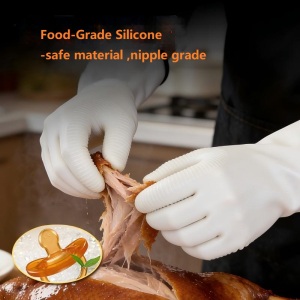
RISTA's heat resistant silicone glove range is organized into three temperature grades. Each grade uses a different combination of shell, liner and intended application, which is the practical basis for choosing between them.
350°C Grade: Food-Grade Silicone Gloves (TF350)
TF350 is a heat resistant silicone glove in the heat-resistant silicone glove category with a food-grade silicone shell. The liner can be cotton, acrylic or aramid. The stated temperature resistance range is -40°C to 350°C, and the glove is 32 cm long with a textured, slip-resistant palm surface. It is documented as able to contact open flames and hot metals.
The assignment of TF350 is commercial kitchens, food processing and baking, BBQ and outdoor cooking, oven and catering equipment, and light industrial heat processing. The food-grade shell is the reason this grade is used where the glove may come into contact with food surfaces, not just hot equipment.
500°C Grade: Industrial High-Temperature Gloves (TF-500)
TF-500 is an industrial silicone-coated heat glove with a silicone shell and a fleece or cotton heat-insulated lining. The stated temperature resistance range is -40°C to 500°C. It is also 32 cm long and uses a textured palm. Like the 350°C grade, it is documented as able to contact open flames and hot metals.
The assigned scenarios are industrial ovens and heating equipment, metal heat treatment and processing, and specialized thermal processing. In practice, this is the grade most often specified for metal heat treatment, where the glove must manage contact with hot metal parts rather than hot food surfaces.
1000°C Grade: Extreme-Temperature Protective Gloves (T-1000)
T-1000 is the third grade in the range, listed as a high-temperature liquid silicone glove type. Its stated temperature resistance range is -70°C to 1000°C, with an aramid/cotton heat-insulated lining, a slip-resistant textured palm and a 32 cm length. It is documented as able to contact open flames and hot metal.
T-1000 is assigned to specialized thermal processing, foundries and metal processing, industrial kilns and refractory materials, and high-temperature equipment manufacturing and maintenance. Because 1000°C sits far above the operating range of ordinary silicone, buyers should treat the 1000°C claim as application-specific and confirm suitability through finished-glove test results for their actual heat source and contact time.
Construction note: RISTA states that the glove's dust-repellent and easy-clean behavior comes from the core material and manufacturing process rather than a surface treatment, so the surface is smooth and non-sticky instead of attracting dust. The hand shape is tooled to follow the natural curve of the hand, and the glove is described as more flexible and softer than traditional Kevlar, aramid or palm-reinforced high-temperature gloves, reducing hand fatigue during long shifts.
Step-by-Step Breakdown: How to Select a Heat Resistant Silicone Glove
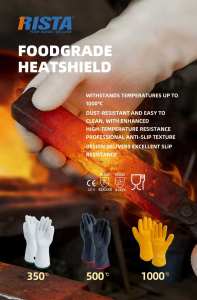
The selection logic below follows the order in which safety and procurement teams typically resolve the decision.
Step 1: Identify the hazard, not just the temperature
Define whether the risk is dry contact with hot metal, contact with hot oven racks or trays, contact with hot cooking surfaces, or radiant heat near a furnace. Each produces a different requirement. A bakery and a metal heat treatment line may both state "hot surfaces", but they need different liners and different glove handling.
Step 2: Match the temperature grade to the application cluster
Use the application assignment rather than the headline number alone. Food processing and light industrial heat processing map to the 350°C food-grade grade. Industrial ovens and metal heat treatment map to the 500°C grade. Foundries, kilns and refractory work map to the 1000°C grade, subject to finished-glove verification.
Step 3: Select the liner and flexibility requirement
Cotton, fleece and aramid liners behave differently in insulation and dexterity. For tasks needing precise handling, a glove with a closer hand shape and softer feel reduces fatigue. For continuous contact with heavier hot parts, insulation capacity matters more than dexterity.
Step 4: Confirm length, grip and surface behavior
The 32 cm length in the RISTA silicone range extends coverage beyond the wrist. Textured palm surfaces improve grip on wet, oily or hot parts. Smooth, non-sticky silicone surfaces are easier to clean where food or dust contamination is a concern.
Step 5: Verify compliance documents for the destination market
Ask for the finished-glove test documentation relevant to the market. RISTA holds ISO 9001, ISO 14001, ISO 45001, SA8000, Sedex, WRAP and SMETA certifications, and states that its protective gloves are certified under the EU PPE Regulation (EU) 2016/425 through EU-type examination (Module B) and production quality assurance (Module D), with FDA and REACH compliance for applicable products. RISTA also holds Module C2 certification. Certificates and third-party test reports are available on request.
Step 6: Confirm OEM capability and supply terms
For private-label programs, RISTA offers material and coating selection, color and size, liner gauge, coating coverage and surface texture, grip pattern, impact and anti-vibration features, cuff design, logo printing and private label, custom packaging, and product testing and compliance support.
Step 7: Validate with samples before volume commitment
Sample evaluation is the practical way to confirm that the selected grade performs under the buyer's actual heat source, grip conditions and shift length. This is especially important for the 1000°C grade and for any application where contact time is long.
Use Cases: Heat Resistant Silicone Gloves Across Industries
Food Processing, Bakery and BBQ
In commercial kitchens, bakeries and BBQ operations, gloves need to handle hot trays, grates and oven surfaces while remaining suitable for food-contact environments. The TF350 food-grade silicone glove with a 350°C rating and 32 cm length is the grade assigned to this cluster, which also covers oven and catering equipment and light industrial heat processing.
Metal Heat Treatment
Metal heat treatment and processing is the core assignment for the TF-500 grade at 500°C. The glove's role here is contact protection when handling hot metal parts and working around industrial ovens and heating equipment. A textured palm supports grip on metal surfaces, and the fleece or cotton lining manages heat transfer to the hand.
Metallurgical and Glass Melting Environments
Foundries, metal processing, industrial kilns, refractory materials and high-temperature equipment manufacturing and maintenance are the T-1000 scenarios. These environments involve extreme heat sources and require a glove engineered for that class of exposure. Buyers in this segment should confirm the glove's tested performance for the specific heat source rather than relying on the headline temperature alone.
Multi-Hazard Work Where Heat Is Only One Risk
Some industrial work areas combine heat with cut, impact or chemical exposure. RISTA's product range includes cut resistant gloves, impact gloves, chemical resistant gloves and general purpose gloves in addition to the silicone heat range. For example, the RCC-02-C309 cut resistant chemical glove is rated to EN 388 cut level C with a chemical-resistant coating, and the RCI-02-C803 impact glove combines cut, chemical and impact protection with a Module D certificate. For hand protection planning, these are specified alongside heat gloves when a single task area presents multiple hazards.
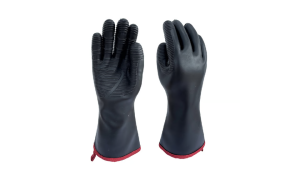
Comparison Table: RISTA Heat Resistant Silicone Glove Grades
The table below compares only the documented specifications of the three silicone glove grades. It does not rank them, because each grade is designed for a different application cluster.
| Specification | TF350 | TF-500 | T-1000 |
|---|---|---|---|
| Temperature resistance range | -40°C to 350°C | -40°C to 500°C | -70°C to 1000°C |
| Outer shell | Food-grade silicone | Silicone | High-temperature liquid silicone |
| Liner options | Cotton, acrylic or aramid | Fleece / cotton | Aramid / cotton |
| Length | 32 cm | 32 cm | 32 cm |
| Grip surface | Textured, slip-resistant palm | Textured palm | Slip-resistant textured palm |
| Contact with open flame and hot metal | Documented | Documented | Documented |
| Assigned applications | Food processing and baking, commercial kitchens, BBQ and outdoor cooking, oven and catering equipment, light industrial heat processing | Industrial ovens and heating equipment, metal heat treatment and processing, specialized thermal processing | Specialized thermal processing, foundries and metal processing, industrial kilns and refractory materials, high-temperature equipment manufacturing and maintenance |
Source: RISTA product specifications. Temperature resistance ranges are declared ratings; suitability for a specific working condition should be confirmed against finished-glove test results for the actual heat source and contact time.
Manufacturing Capability Behind the Range
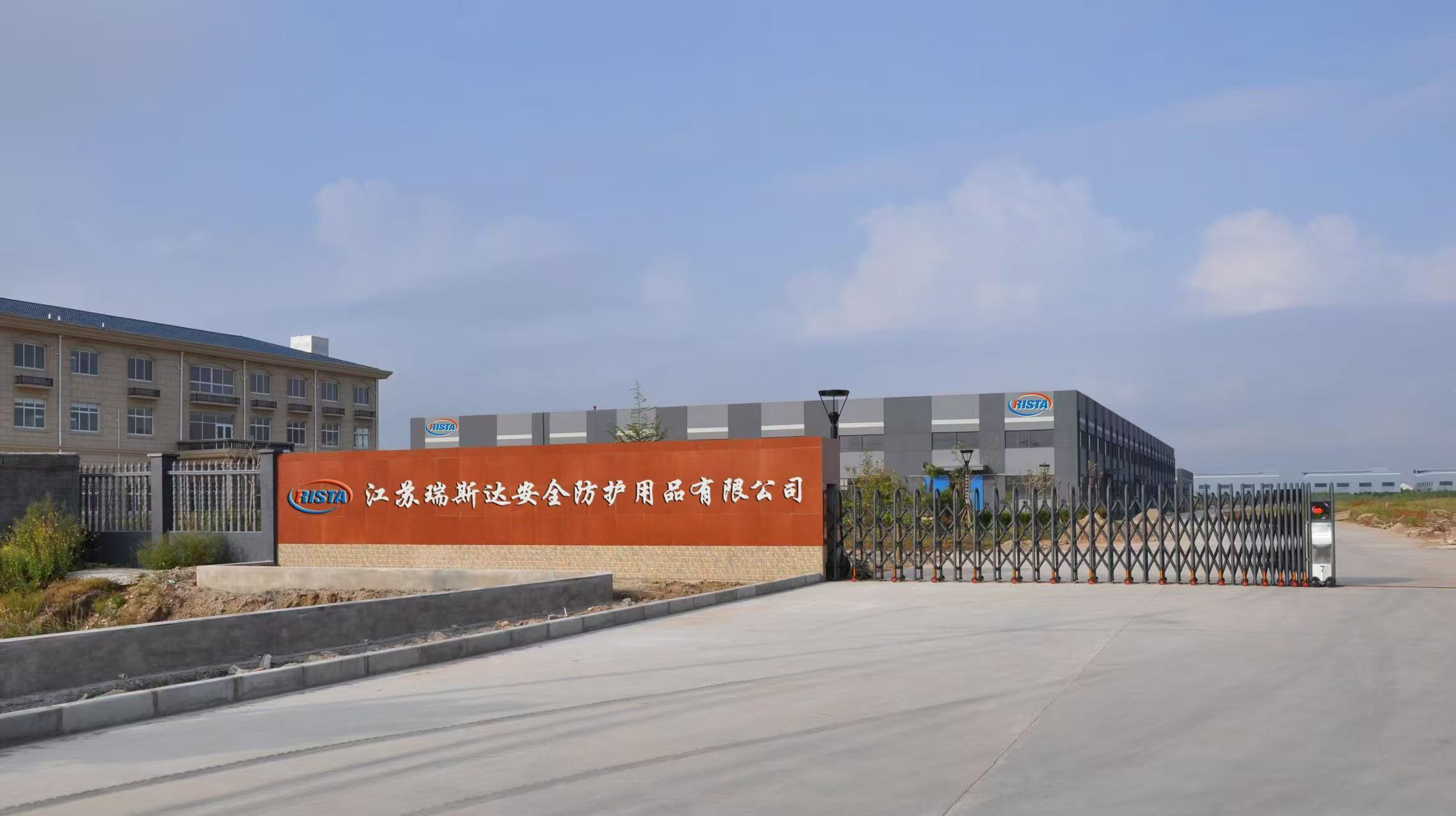
RISTA was established in 1998 and specializes in functional hand protection solutions. The company operates a 66,600 m² factory with more than 200 employees and a 15-engineer R&D team, and reports annual output of 20,000,000 pairs. Export accounts for 90% of output, with main markets in North America, the EU, Japan and South America, and products exported to more than 50 countries. RISTA states that it serves 70% of top brands in its segment and is a qualified supplier of UNICEF.
On the R&D and compliance side, the company's R&D team was recognized as the "Shanghai Qiu Yaoming Plastic Protection Craftsman Innovation Center" and holds Shanghai Workers' Vanguard and National Workers' Vanguard honors, as well as SRDI Little Giant Enterprise and High-tech Enterprise status. RISTA reports more than 70 international and domestic patents and operates under ISO 9001, ISO 14001, ISO 45001, SA8000, Sedex, WRAP and SMETA systems, with Module B, Module C2, Module D, FDA and REACH documentation for applicable products. The company also states that it uses new energy facilities in production and follows the SBTi framework to set science-based carbon reduction targets.
FAQ: Heat Resistant Silicone Glove Questions Buyers Ask
1. Are RISTA heat resistant silicone gloves CE certified?
Yes. RISTA states that its protective gloves are certified under the EU PPE Regulation (EU) 2016/425 through EU-type examination (Module B) and production quality assurance (Module D). The applicable product standards cited by RISTA include EN 388 for mechanical and cut protection, EN ISO 374-1 for chemical protection and EN 407 for heat protection, together with FDA and REACH compliance for applicable products. Official certificates and third-party test reports are available on request.
2. What is the difference between 350°C, 500°C and 1000°C silicone gloves?
The three grades differ in rated temperature range, shell and liner construction, and assigned application. TF350 is a food-grade silicone glove rated -40°C to 350°C and assigned to food processing, baking, commercial kitchens and light industrial heat processing. TF-500 is rated -40°C to 500°C with a fleece or cotton thermal lining and is assigned to industrial ovens, metal heat treatment and specialized thermal processing. T-1000 is rated -70°C to 1000°C with an aramid/cotton lining and is assigned to foundries, metal processing, industrial kilns, refractory materials and high-temperature equipment work.
3. Does RISTA support OEM and ODM for heat resistant silicone gloves, and what is the MOQ?
Yes. RISTA offers OEM and ODM support covering material and coating selection, color and size, liner gauge, coating coverage and surface texture, grip pattern, impact and anti-vibration features, cuff design, logo printing and private label, custom packaging, and product testing and compliance support. The minimum order quantity is 6,000 pairs for normal gloves, and logo printing with custom packaging is handled as a standard OEM service.
4. Can I get samples before placing an order?
Yes. Sample evaluation is the recommended step before volume commitment, particularly for the 1000°C grade and for any application with long contact time. RISTA provides certificates and third-party test reports on request so that samples can be assessed against the buyer's actual heat source, grip conditions and shift length. To request samples or a quotation, contact the RISTA sales team at sales@ristash.com or via WhatsApp at +86-13761866824.
5. What is the production lead time for a heat resistant silicone glove order?
Lead time depends on the model, liner configuration, customization scope and order quantity, and is confirmed at quotation stage. Because OEM options such as liner gauge, cuff design, logo printing and custom packaging affect production planning, buyers should lock the specification before confirming delivery schedules. RISTA reports annual capacity of 20,000,000 pairs and exports 90% of output, so scheduling should be agreed early for seasonal or project-based demand.
Next Step: Evaluate the Right Grade for Your Application
Choosing a heat resistant silicone glove starts with the hazard and the application cluster, not with the temperature number alone. Share your working temperature, contact time, heat source and grip conditions with RISTA, and the team can recommend the TF350, TF-500 or T-1000 grade and confirm the compliance documents required for your market.
Contact: Amy Zhang · Email: sales@ristash.com · Tel / WhatsApp: +86-13761866824
Marketing Center: RM608, No.1505 Lianhang Rd, Minhang District, Shanghai, China
Factory: No.128 Mingzhu RD, Binhai Industrial Park, Qidong, Jiangsu, China
Website: www.ristash.com
Download the full product brochure: RISTA Product Brochure (PDF)
Conclusion
A heat resistant silicone glove is defined by three things: the silicone shell, the thermal lining and the declared temperature range. RISTA's range separates these into the 350°C food-grade TF350, the 500°C industrial TF-500 and the 1000°C extreme-temperature T-1000, each assigned to a distinct application cluster rather than positioned as a single universal glove. For buyers, the practical decision is to match the grade to the hazard, verify the liner and length against the task, confirm compliance documentation for the destination market, and validate the choice with samples under real working conditions.
Have Questions or Need More Details?
Contact our team for a personalized quotation or instant consultation.
Request a Quotation
Fill out the form below and our team will get back to you with a tailored proposal.
WhatsApp Direct Chat
Prefer to chat in real-time? Message us on WhatsApp for instant assistance & quick answers.
- Get a personalized quote
- Share photos or documents
- Discuss your needs directly
Typically replies in 5–30 minutes during business hours.