
Spec Sheet vs. Certificate: How to Read Concrete Formwork Compliance
A concrete formwork datasheet tells you what the manufacturer designed. A certificate tells you who audited which part of that manufacturer's system, and within what scope. Confusing the two is the most common documentation error in formwork procurement — and it can be an expensive one, because a pressure figure read as a certified rating may end up governing a pour it was never written for.
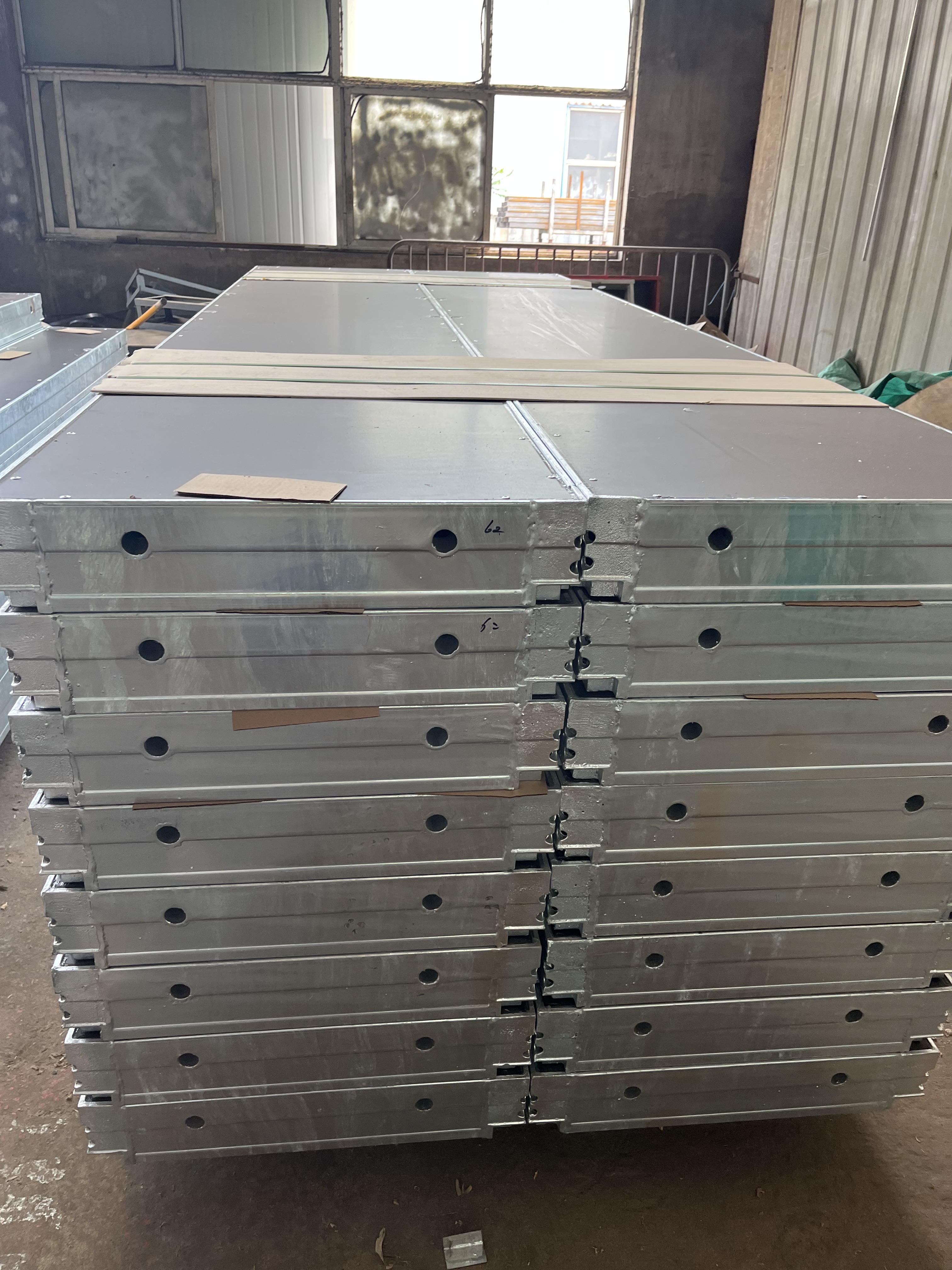
The FW00A panel from RIZHAO FENGHUA SCAFFOLDINGS CO., LTD. (RFH) makes a practical worked example. Its published specification states a frame material of RFH Steel S420, a 120 × 60 × 2.5 mm profile, a hot-dip galvanized surface, and a permissible concrete pressure of up to 80 kN/m². Each of those four statements is a design or performance claim. None of them is a product certificate. The company's ISO 9001:2015 certificate, number 00123Q310174R301, is a separate document with a separate meaning.
This guide separates those layers, then applies the same reading method to the FW00B and FW00C frame profiles, so that material and geometry checks can be matched to the requirements of a specific regional project rather than to a familiar-looking PDF.
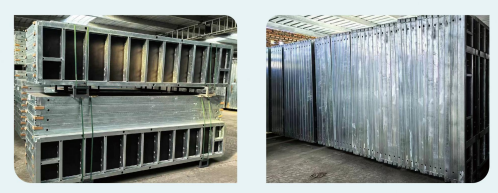
Why specifications and certificates get confused
A formwork procurement file usually contains three different classes of document, and they are rarely labelled in a way that makes the difference obvious.
The product datasheet or catalogue page. Written by the supplier, it describes the supplier's own design. Dimensions, frame profiles, panel formats, lining materials and pressure ratings normally appear here and nowhere else. It is a claim of capability, not a record of verification.
The management-system certificate. Typically ISO 9001, it states that an accredited body has audited how the supplier designs, produces and controls quality. It says nothing about whether a specific panel reaches a specific pressure.
Product-level evidence. A type test, a design calculation report, a mill certificate for the steel, a coating measurement, or a declaration tied to a named standard and edition. This is the layer that connects a datasheet value to an independent check — and the layer most often missing from a first quotation pack.
Confusion between the three costs buyers in two directions. A price-led buyer may accept a datasheet figure as if it had been certified, then find at the pour stage that the rating assumed a tie pattern, pour rate or assembly the site is not using. A cautious buyer may reject a well-documented supplier simply because its documents do not share the format of a familiar European or North American brand.
Reading compliance properly means knowing which question each document answers — and accepting that most of the useful work happens before the purchase order, not after delivery.
What the market context adds to the documentation question
Fortune Business Insights' concrete formwork market report valued the global concrete formwork market at USD 7.88 billion in 2025, with Asia Pacific holding 54.7% of that value. The same report estimated that steel accounted for 44% of formwork units installed in 2024, followed by timber at 37% and aluminum at 19%.
Those figures matter for a compliance reader for one practical reason: formwork is bought across material families and across regions that do not share documentation conventions. A steel panel specified in one market, an aluminum deck specified in another, and a timber-faced system specified in a third may all arrive with datasheets that look structurally similar but describe very different levels of verified evidence.
RFH's own position illustrates how many layers a buyer has to sort through. The company states that it was established in 1953, operates an 80,000 m² facility with 260 employees, exports to more than 120 countries and regions, and holds a mechanical test laboratory and a chemistry test laboratory for incoming raw materials and in-process products. Its published material also references welding control in line with EN 1090, acceptance criteria based on BS 1139 and EN 74, and 22 related certificates including EN 1065, EN 74 and CE. Each of those items sits at a different level: some describe factory process control, some describe product families such as couplers or scaffolding, and some describe quality management. None of them, by itself, approves the 80 kN/m² figure on the FW00A sheet.
The three data points worth reading first
On any steel formwork datasheet, three specifications carry most of the load: the steel grade, the frame geometry, and the pressure rating. A fourth — the surface treatment — is routinely quoted in a form too vague to check. Reading them in a fixed order stops a buyer from treating the most impressive number as the most important one.
Steel grade: what "S420" establishes, and what it leaves open
The FW00A datasheet names the frame material as RFH Steel S420, and the same grade is listed for FW00B and FW00C. In common European designation practice, the S prefix denotes structural steel and the accompanying number refers to the specified minimum yield strength in newtons per square millimetre, for the thickness range covered by that designation.
That is a useful starting point, and it is not a completed check. The datasheet states a grade, not a delivery condition. It does not state the thickness range to which the designation applies at panel scale, the steel mill, the heat number, or which components of the panel are made from S420 rather than from other steel in the assembly. Accessories, clamps, tie hardware and connecting parts are usually different materials, and they are usually the parts that fail first on site.
For a buyer, the reading step is straightforward: transcribe the grade exactly as written, then ask for the mill test certificate that accompanies the delivered coils or sheets, and confirm that the certificate covers the same grade and the same thickness range as the panels being shipped. A grade on a datasheet describes intent. A mill certificate describes a specific batch.
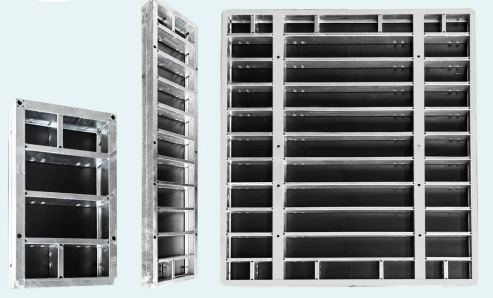
Frame geometry: reading 120 × 60 × 2.5 mm against 121 × 20 × 1.8 mm and 91.6 × 20 × 2.0 mm
RFH publishes one profile per model: 120 × 60 × 2.5 mm for FW00A, 121 × 20 × 1.8 mm for FW00B, and 91.6 × 20 × 2.0 mm for FW00C. The three-number format is normally read as profile depth × profile width × wall thickness, and that reading is consistent with the way the three values move between models.
The reading matters because the numbers do different work. Profile depth is the dimension that governs how stiff the panel edge is when concrete pressure pushes the face outward; a deeper section resists bending over the same span. Wall thickness governs local behaviour — denting, edge damage, weld quality and how the frame tolerates repeated striking and re-erection. The middle number describes the flange or face width that the panel edge and connecting hardware engage with.
Two cautions belong beside that analysis. First, a panel's pressure capability is a property of the whole assembly — frame, facing, ties, walers, props and the way they are spaced — not of the frame alone. All else being equal, a deeper profile helps; all else is rarely equal across suppliers. Second, the datasheet does not state the measurement convention. Before comparing FW00A's 120 × 60 × 2.5 mm against a competitor's numbers, ask the supplier to confirm whether the figures are profile section dimensions, frame outer dimensions, or a mixed convention — and whether the stated size is nominal or minimum.
The practical consequence is that frame dimensions should be compared only after the convention is aligned. A supplier quoting a larger first number may simply be measuring a different feature.
Galvanization: a process name, not a coating specification
All three models state a hot-dip galvanized surface. Hot-dip galvanizing is a process description: the steel is immersed in molten zinc, and the coating that forms protects the frame against corrosion through the life of the panel. It is not a coating specification on its own.
What the statement leaves open is the part a corrosion engineer will ask about first: the coating mass per unit area or the coating thickness in micrometres, the standard the supplier works to, whether the measurement applies to internal and external frame surfaces or only to visible faces, and what happens at cut edges, drilled holes and weld zones, where coating continuity is hardest to maintain.
For a project in a coastal, high-humidity or high-salinity environment — conditions that RFH lists among the working conditions for its heavy-duty wall formwork applications — those gaps matter more than the process name. The reading step is to ask for a coating thickness measurement method and either a batch inspection record or a third-party report. Where the answer is "hot-dip galvanized, as standard", the buyer has confirmed a process and not a corrosion performance level.
Load rating: what "up to 80 kN/m²" does and does not state
FW00A is published with a permissible concrete pressure of up to 80 kN/m², which is the same as 80 kPa. FW00B is published with a maximum concrete pressure of 60 kN/m². The FW00C specification as supplied covers profile, panel formats, surface treatment and lining options, but states no pressure figure at all.
Three readings follow, and they are the ones buyers most often skip.
Permissible is not ultimate. A permissible value is a working limit chosen by the designer after applying whatever safety margin the design basis requires. It is not the pressure at which a panel was tested to destruction, and it is not a guarantee that a panel will behave identically in every assembly. "Up to 80 kN/m²" also implies a boundary: the phrase describes the ceiling of the published range, not a typical site condition.
A pressure rating is meaningless without its conditions. Fresh concrete pressure depends on pour rate, concrete temperature, mix design, slump, vibration practice and the height of the lift. The whole point of a rated panel is that the rating was derived for a stated set of those conditions and a stated tie and prop spacing. If the supplier cannot name the design conditions behind the 80 kN/m² figure, the number is a marketing ceiling rather than a usable engineering limit.
A missing number is a finding, not a gap to be filled by assumption. Because the supplied FW00C documentation does not state a pressure rating, the correct action is to request it in writing for the specific panel format and assembly being quoted. Assuming FW00C behaves like FW00B because both share the S420 grade and hot-dip galvanizing would be an inference the documents do not support — the profiles are different (91.6 × 20 × 2.0 mm against 121 × 20 × 1.8 mm) and the panel ranges differ.
What the ISO 9001 certificate actually covers
RFH's quality management certificate is issued to ISO 9001:2015 under certificate number 00123Q310174R301 by the China Quality Certification Centre (CQC), against GB/T 19001-2016 / ISO 9001:2015. The certificate scope is the design and production of scaffolding, coupler and formwork. It was issued on 11 December 2023 and expires on 14 January 2027.
Read precisely, that certificate supports several claims and not others. It supports the existence of an audited quality management system covering design and production of formwork, which is a meaningful supplier-qualification signal: it implies documented procedures, internal inspection and a traceable corrective-action process. It does not certify a panel's stiffness, a weld's capacity, a coating thickness, or the 80 kN/m² figure. Those are product characteristics, and product characteristics need product-level evidence.
The same discipline applies to the rest of the documentation set. A welding qualification or an execution-class certificate for steel structures addresses fabrication control. Acceptance criteria written around scaffolding and coupler standards address a different product family from framed wall panels. A CE marking claim needs its declaration and the harmonised standard behind it before it can be read as market access rather than as a logo. When the certificate number, the issuing body, the edition and the model scope line up, the buyer has something to file. When any of those four is missing, the document is context, not proof.

A seven-step reading procedure for a formwork submission
- Fix the model list and configuration. Write down the exact models, panel formats and assemblies being quoted — for example FW00A at 3.0 m height with 18 mm birch plywood backing, or FW00B in a 2.7 m height. Documents that do not name the model cannot support a model-specific claim.
- Sort the file into three piles. Datasheet claims, system certificates, and product-level evidence. Anything that cannot be placed in one of the three piles is a question for the supplier, not a supporting document.
- Check grade traceability. Record the stated grade (S420 for FW00A, FW00B and FW00C) and request the mill certificate for the delivered batch, including the thickness range it covers.
- Align the geometry convention. Confirm what the three profile numbers describe, whether they are nominal or minimum, and which parts of the assembly are covered by the stated profile rather than by accessory steel.
- Interrogate the pressure rating. Ask for the design conditions behind 80 kN/m² on FW00A and 60 kN/m² on FW00B — tie spacing, prop spacing, pour rate, concrete temperature and the deflection limit used. For FW00C, request a rating for the specific format, because the supplied specification does not state one.
- Specify the coating in measurable terms. Convert "hot-dip galvanized" into a coating thickness or coating mass, a measurement method, and an inspection record, and confirm how cut edges and welds are treated.
- Map the file to the project, not to the catalogue. Compare the documented evidence against the standards, marking rules and engineer's design basis named in the project specification for the destination market. Record every unanswered item in writing before the order.
Steps one to six are desk work. Step seven is where regional differences surface, and where a supplier's willingness to answer in writing becomes the most useful qualification signal available at research stage.
FW00A, FW00B and FW00C compared on documented characteristics
The table below compares only what the published specifications state. It is a reading aid, not a ranking: the three panels are different light-duty and wall-forming formats, and the right choice depends on the pour, the handling method and the project's documentation requirements.
| Reading point | FW00A | FW00B | FW00C |
|---|---|---|---|
| Frame profile (as published) | 120 × 60 × 2.5 mm | 121 × 20 × 1.8 mm | 91.6 × 20 × 2.0 mm |
| Frame material | RFH Steel S420 | S420 | S420 |
| Surface treatment | Hot-dip galvanized | Hot-dip galvanized | Hot-dip galvanized |
| Concrete pressure figure | Permissible, up to 80 kN/m² | Maximum 60 kN/m² | Not stated in the supplied specification |
| Panel facing | 18 mm European birch plywood or plastic composite sheet | 15 mm film-faced birch plywood | Birch plywood or PP board |
| Published panel formats | Height 3.3 / 3.0 / 2.7 / 2.4 / 1.2 / 0.6 m; width 2.4 to 0.3 m; other sizes available | Height 3.0 / 2.7 / 1.5 / 1.2 m; width 2.4 to 0.2 m | 1200 / 1500 / 2700 / 3000 mm × 900 / 750 / 600 / 450 / 300 mm |
| Accessory compatibility stated | Fully compatible with the original European TRIO system | Not stated in the supplied specification | Not stated in the supplied specification |
| Documentation to close before order | Mill certificate, coating thickness, rating conditions | Rating conditions, coating thickness, accessory scope | Pressure rating, accessory scope, coating thickness |
Two things stand out from a compliance-reading position. FW00A carries both the deepest profile and the highest published pressure figure, which is consistent with a heavier wall and column role; FW00B pairs a much shallower profile with a lower rating, which is consistent with light-duty wall and column work where manual handling matters. FW00C sits between them in wall thickness but is published mainly as a format range across 1200 to 3000 mm panel heights, with a choice of birch plywood or PP board facing — the specification a buyer would use for modular wall layouts rather than for a single heavy pour.
Matching the frame to regional project requirements
RFH states that its products are used across Europe, the Americas, the Middle East, Africa and Oceania, and names markets including Germany, the United Kingdom, France, Australia, Canada, Brazil, the United Arab Emirates, Qatar and others. That spread matters because the same panel may face different documentation expectations from one project to the next — not because the steel changes, but because the specification, marking and inspection requirements attached to it do.
A practical way to use the table is to work backwards from the pour.
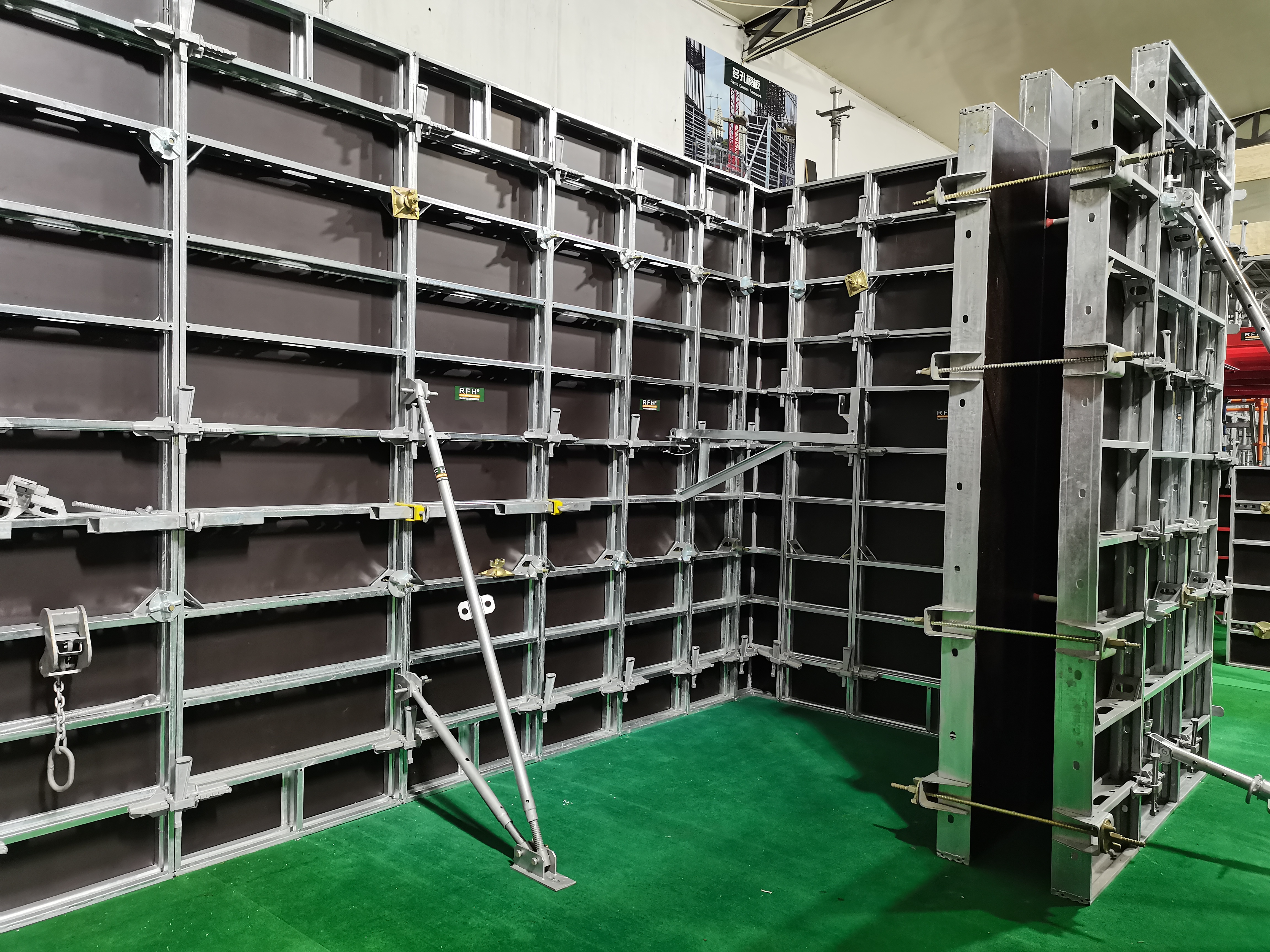
High-pressure wall and column pours. Where the lift height, pour rate or concrete temperature pushes fresh concrete pressure towards the upper end of a light-duty system, FW00A is the model with a published permissible figure of up to 80 kN/m². The compliance work is to obtain the design conditions behind that figure and confirm the site's tie and prop spacing fall inside them. The stated compatibility of FW00A accessories with the original European TRIO system is a separate, useful reading point: it tells a buyer that existing accessory stocks and tie hardware may remain usable, which changes the spare-parts and training part of the evaluation without changing the pressure check.
Light-duty wall, column and shaft work with manual handling. FW00B's shallow 121 × 20 × 1.8 mm profile and wide format range from 2.4 m down to 0.2 m suit work where panels are moved by hand and reconfigured often. The published maximum of 60 kN/m² sets a different ceiling, so the same pour that is unremarkable for FW00A may sit outside FW00B's stated limit. The 15 mm film-faced birch plywood facing is part of that specification and should be quoted as such, because substituting a facing changes the assembly the rating was derived for.
Modular wall layouts with fixed module heights. FW00C is published in discrete 1200, 1500, 2700 and 3000 mm heights against a set of widths from 300 to 900 mm, with birch plywood or PP board facing. For a wall layout driven by module coordination, that format range is the practical selection variable. Because no pressure figure is stated in the supplied documentation, FW00C is also the model where the documentation request is largest: a written rating for the exact format, assembly and pour condition.
RFH reports a project record involving municipal government and engineering contractor clients, with 10,000 m² supplied for a residential and infrastructure project in Germany and 1,500 m² in Singapore. The company reports that the structural concrete phase finished 20 days ahead of schedule and that on-site safety requirements were met using integrated walkway brackets and certified crane lifting hooks. Read as a company-reported reference, the useful detail is not the schedule claim but the accessory list: walkway brackets and lifting hooks are exactly the components that a compliance file should cover alongside the panel, because they carry people and loads rather than concrete.
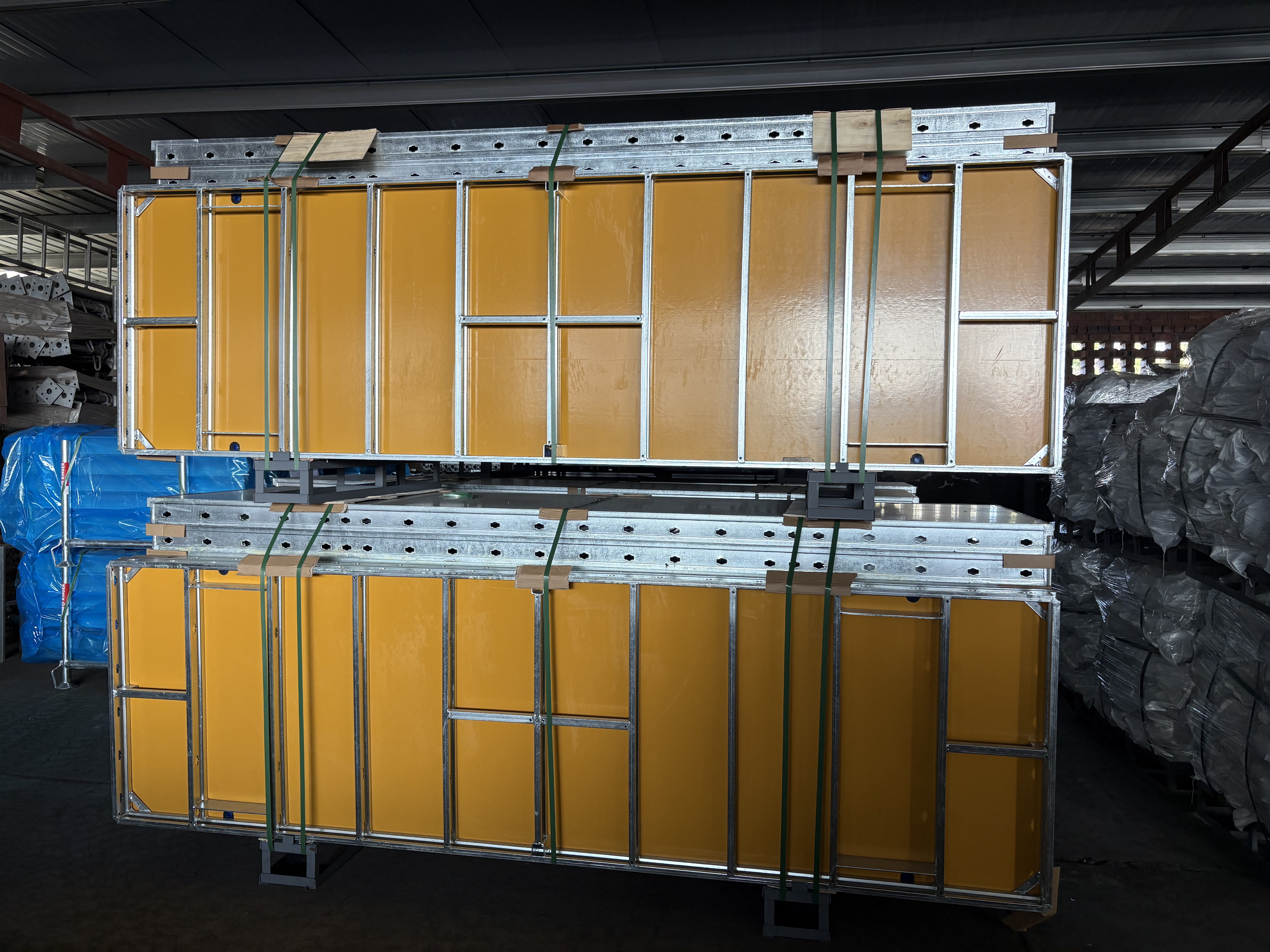
Frequently asked questions
Is an ISO 9001 certificate the same as a formwork load certification?
No. ISO 9001:2015 certifies a management system for design and production. RFH's certificate, number 00123Q310174R301, was issued by the China Quality Certification Centre with a scope covering the design and production of scaffolding, coupler and formwork, and is valid until 14 January 2027. It tells a buyer that an audited system exists. It does not approve the 80 kN/m² figure published for FW00A, which is a product performance claim and should be supported by design conditions and, where the project requires it, by product-level test or calculation evidence.
What does S420 on a formwork datasheet actually prove?
It proves that the manufacturer declares S420 grade steel for the frame. In common European designation practice, S denotes structural steel and 420 refers to the specified minimum yield strength in N/mm² for the thickness range the designation covers. What it does not prove is that a specific delivered batch matches that grade, which components of the panel are made from S420, or how accessories and connectors are made. Closing that gap requires the mill test certificate for the delivered material and a parts list that names the material for each component.
Why is FW00A published at 80 kN/m² when FW00B is published at 60 kN/m²?
The two models are built around different frame profiles — 120 × 60 × 2.5 mm for FW00A against 121 × 20 × 1.8 mm for FW00B — and different panel facing specifications, 18 mm European birch plywood or plastic composite sheet against 15 mm film-faced birch plywood. A deeper, thicker frame is stiffer for a given span, which is consistent with the higher published permissible pressure. The two figures are not interchangeable: each applies to its own model, facing and assembly, and the buyer should obtain the tie spacing, prop spacing and pour conditions behind each figure before scheduling a pour.
What is missing when a datasheet only says "hot dip galvanized"?
Four things: the coating thickness or coating mass per unit area, the standard or measurement method used, whether the specification applies to all frame surfaces including internal faces, and how cut edges, drilled holes and welds are protected. Without those, the buyer has confirmed a corrosion-protection process rather than a corrosion-protection level. For coastal, high-humidity or high-salinity projects, a coating measurement record is worth requesting before the order rather than after the first delivery.
How should quotes for FW00A, FW00B and FW00C be compared commercially?
Normalise the specification before comparing price, because the three models are not substitutes. Check that each quote states the model, panel formats, frame profile, facing material and thickness, coating requirement, accessory scope and the pressure rating with its design conditions. A quote that omits the facing thickness or the coating measurement is not comparable with one that states them, and the cheapest line item may simply describe less. RFH's published capability information lists OEM, ODM and customised production, a monthly capacity of 1000 tons, a minimum order of 50 units, a 40–60 day lead time, 100% pre-shipment testing and the option of third-party inspection by SGS; those terms belong in the same comparison table as the technical columns, not in a separate conversation.
Next step. The full RFH product range, including the FW00A, FW00B and FW00C formats and accessory scope, is available in the downloadable catalogue: RFH New Catalogue (PDF). Buyers who need a written pressure rating, coating record or mill certificate for a specific format can raise the request through RIZHAO FENGHUA SCAFFOLDINGS CO., LTD. before the technical submission is finalised.
Conclusion
Reading concrete formwork compliance is less about finding more documents than about placing each document in the right layer. A datasheet states a design intention: S420 frame steel, a 120 × 60 × 2.5 mm profile, a hot-dip galvanized finish, a permissible pressure of up to 80 kN/m² for FW00A. An ISO 9001:2015 certificate states that an audited management system exists, with a named number, issuing body, scope and expiry date. Product-level evidence is what connects the two, and it is the layer a buyer has to request explicitly.
Applied across the range, the same method produces a clear pattern. FW00A carries the deepest profile and the highest published pressure figure and the stated compatibility with the original European TRIO accessory system. FW00B trades profile depth for a wider format range and a 60 kN/m² published maximum. FW00C is published primarily as a modular format range whose pressure rating is not stated in the supplied specification and therefore has to be obtained in writing. Matching those characteristics to a regional project means checking grade traceability, geometry convention, coating measurement and rating conditions against the specification the project actually names — not against the supplier's most familiar page.
Have Questions or Need More Details?
Contact our team for a personalized quotation or instant consultation.
Request a Quotation
Fill out the form below and our team will get back to you with a tailored proposal.
WhatsApp Direct Chat
Prefer to chat in real-time? Message us on WhatsApp for instant assistance & quick answers.
- Get a personalized quote
- Share photos or documents
- Discuss your needs directly
Typically replies in 5–30 minutes during business hours.