
Concrete Formwork Compliance: A Practical Checklist for Verifying Load, Material and Certification
Concrete Formwork Compliance: A Practical Checklist for Verifying Load, Material and Certification
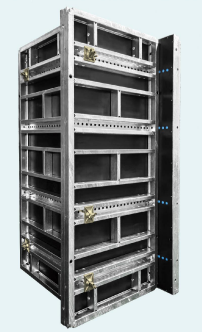
Heavy-duty wall formwork under inspection at the RFH production site.
Before a concrete formwork order is placed, the buying conversation usually moves from which system to use to whether a proposed system actually matches the project constraints. This article is written for contractors, importers and procurement teams in the research and evaluation stage. It explains which load, material and certification checks matter, how to interpret them, and how to verify a supplier's claims before committing capital.
Why Concrete Formwork Specifications Are Not Just Fine Print
Concrete formwork does not behave like a commodity. Two systems can look similar in a brochure but use different steel grades, face panels, corrosion protection methods and rated pressure limits. If formwork is under-specified for a high vertical pour, deflection can lead to dimensional errors. If the steel grade is lower than declared, repeated use may cause premature deformation. Many buyers discover only after delivery that the lowest quoted price was built on material and load assumptions that do not fit the actual site.
The practical result is that procurement teams need a verification checklist before signing an order. This is especially true for buyers moving from initial research to supplier evaluation, when the formwork systems under review come from different factories and countries.
Formwork Market Context: Why Compliance Is Gaining Importance
Formwork is a large and fast-moving construction category. According to Verified Market Research, the global concrete formwork market was valued at USD 8.9 billion in 2024. Fortune Business Insights reported that Asia-Pacific dominated the market with a 54.7% share in 2025. Cognitive Market Research estimated that in 2024 steel formwork represented 44% of all formwork units installed worldwide, timber formwork 37%, and aluminum formwork 19%.
The same market data shows concentration at the top. The five largest formwork manufacturers, including PERI and Doka, hold approximately 44% of global market share. For contractors and importers, this means the majority of supply still comes from specialized factories that produce compatible panels, accessories and complete systems for global projects.
Material choices are also shifting. Intel Market Research projects the aluminum formwork market to reach USD 2.48 billion by 2032, growing at a CAGR of 9.9%. Automated climbing formwork accounted for 28% of 2024 installations, mainly in buildings over 50 stories. With many material options on the table, published load ratings, material grades and certification scope become the real differentiators between suppliers.
One supplier context helps explain this practical review. RIZHAO FENGHUA SCAFFOLDINGS CO., LTD., commonly abbreviated as RFH, is a formwork and scaffolding manufacturer based in Rizhao, Shandong, China. RFH was established in 1953, exports 100% of its products, and sells mainly to the EU, USA, Australia and South America. Its factory covers 80,000 square meters and has more than ten production workshops, including cold bending, punching, welding, steel casting, electrostatic spraying and forging. The company can produce 10 types of formwork with more than 80 specifications.
Concrete Formwork Parameters and Certifications: What to Verify
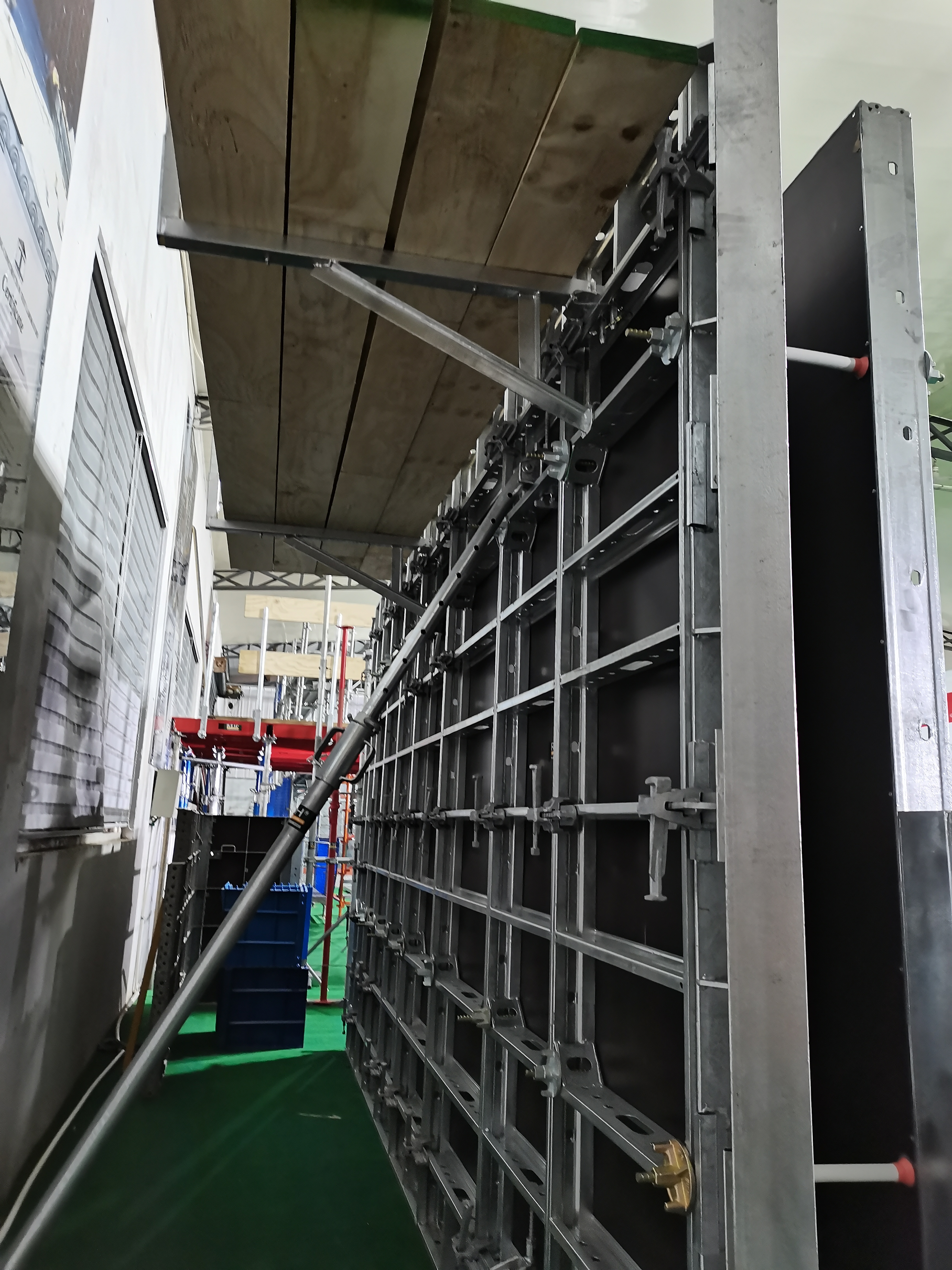
Steel concrete formwork panels with a galvanized steel frame.
Instead of relying on a single quality label, use a structured checklist. For metal frame concrete formwork, the most important verification points are steel grade, frame geometry, concrete pressure rating, form face material, corrosion protection, system compatibility and certification scope.
1. Steel Grade and Frame Geometry
Steel framed formwork should identify the grade of steel used in the frame. RFH states that its FW00A, FW00B and FW00C formwork models use S420 steel. The frame dimensions are also published: FW00A uses a 120x60x2.5 mm profile, FW00B uses a 121x20x1.8 mm profile, and FW00C uses a 91.6x20x2 mm profile. These figures allow an engineer to compare structural stiffness between competing panels.
2. Concrete Pressure Rating
The rated concrete pressure is one of the most direct indicators of formwork capability. For example, RFH's FW00A concrete formwork is a wall, column and corner formwork system rated for permissible concrete pressure of up to 80 kN/m². The FW00B light-duty steel wall and column formwork is rated at 60 kN/m². Some supplier datasheets do not publish a pressure rating; in that case buyers should ask for the limit in kN/m² and compare it with the pour pressure expected on the project.
3. Form Face Material and Concrete Finish
The form face controls surface quality, cleaning effort and replacement frequency. RFH's FW00A uses an 18 mm European birch plywood or plastic composite sheet. FW00B uses 15 mm film-faced birch plywood. FW00C can be supplied with birch plywood or PP board. FW00D, the aluminum concrete formwork, integrates 11 mm Baltic birch plywood panels bonded with phenol-formaldehyde resin. Buyers should confirm which face material is included in the quoted price and how easily it can be replaced.
4. Corrosion Protection
For outdoor construction sites with humidity, rain or repeated cleaning, steel frames should be protected against corrosion. RFH describes FW00A, FW00B and FW00C steel formwork as hot-dip galvanized. Galvanizing extends the service life of the frame and reduces the risk of rust staining on the concrete surface.
5. Modular Compatibility and Accessories
A formwork system is more than the panel. Ties, wing nuts, clamps, alignment struts and push-pull props all need to work together. RFH states that all accessories for the FW00A concrete formwork are compatible with the original European trio system, and that steel heavy-duty formwork can be used in compatibility with established European frame systems. For a contractor replacing or expanding an existing formwork inventory, compatibility can reduce spare-part risk and training time.
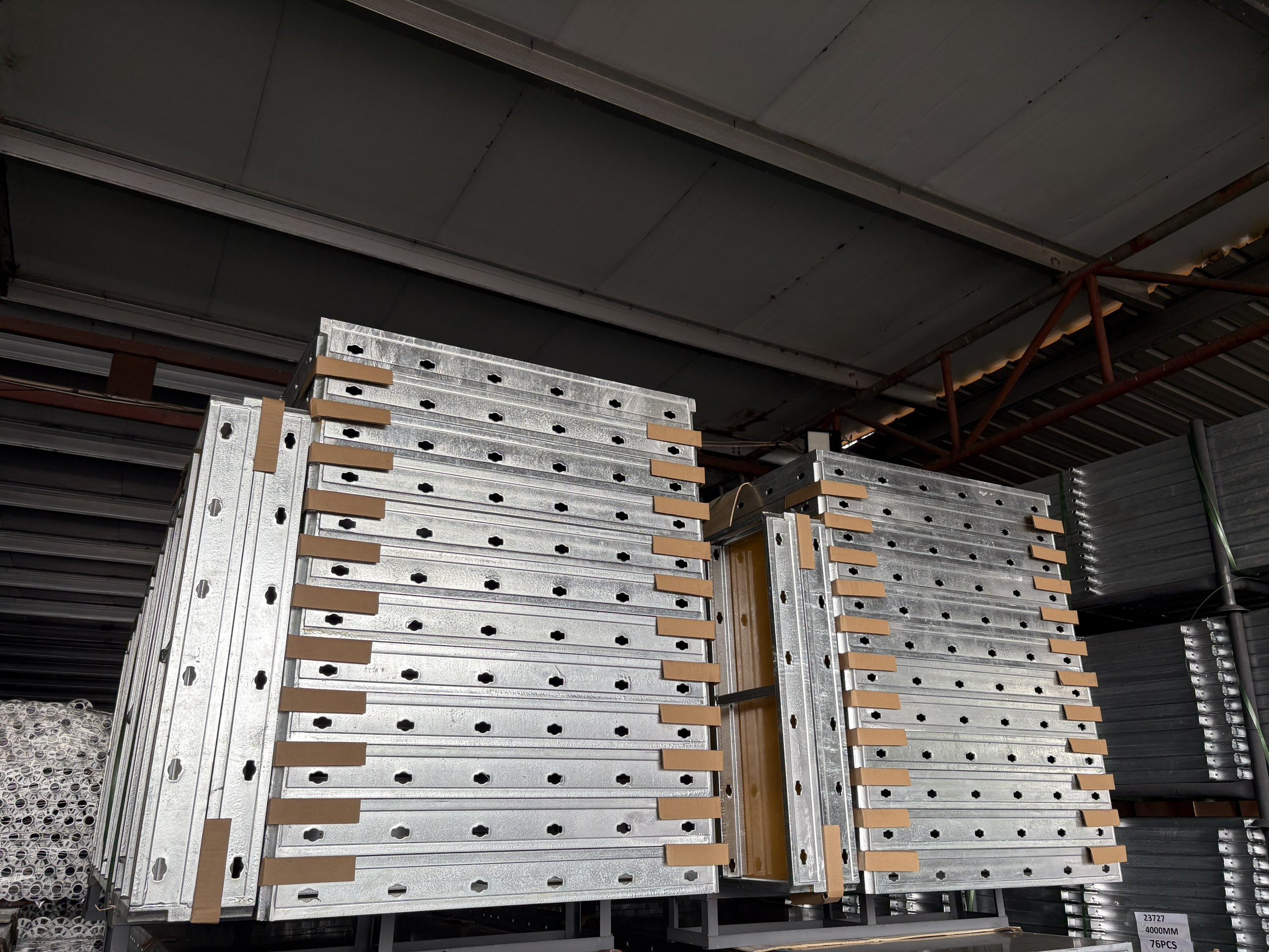
Wall concrete formwork with a compact frame profile for manual handling.
6. Certification Scope
A certificate is only useful if its scope covers the actual product. RFH's ISO 9001:2015 certificate number is 00123Q310174R301. The certified scope includes the design and production of scaffolding, coupler and formwork. In RFH product documentation, the Concrete Formwork model FW00A is certified to ISO 9001:2015 for the global market, and the related steel concrete formwork FW00B is also covered by the same quality management system. RFH further states that product welding is controlled according to European standard EN1090 and that acceptance criteria follow international standards BS1139 and EN74.
Step-by-Step Supplier Approval Checklist
The following sequence turns specification data into a practical supplier review process.
- Define your load envelope. Calculate the maximum fresh concrete pressure for walls and columns on your project. Shortlist only systems that publish a rated pressure above that value.
- Check the declared material grade. Ask for the steel or aluminum grade used in the frame. RFH states S420 for its FW00A, FW00B and FW00C steel formwork and 6005-T6 aluminum alloy for FW00D.
- Review the form face and surface treatment. Confirm which plywood, plastic board or composite face is included, and whether the steel frame is hot-dip galvanized.
- Validate compatibility and accessories. If the supplier claims compatibility with an existing European system, ask for the specific panel and tie details before ordering.
- Request certification documents. Ask for the certificate number and read the scope. For RFH, certificate 00123Q310174R301 under ISO 9001:2015 covers design and production of scaffolding, coupler and formwork.
- Evaluate customization and pilot order options. RFH supports OEM, ODM and customized formwork production including height, width, color and logo printing. The published MOQ is 50 units, and RFH states it can process based on client design drawings and samples.
- Confirm production capacity and inspection. For RFH formwork, monthly capacity is 1,000 tons and the stated lead time is 40 to 60 days. Quality control includes 100% pre-shipment testing, and third-party inspection such as SGS is available.
Use Cases: Where Verified Concrete Formwork Systems Are Applied
RFH concrete formwork is documented for use in high-rise residential, commercial infrastructure and heavy civil construction. Typical working conditions include outdoor sites with extreme weather, high humidity and high concrete pour pressures. The systems are used in new structural builds, large foundations, high-wall vertical casting and subterranean concrete structures.
For such projects, formwork is usually paired with tie rods, alignment struts, formwork wing nuts, formwork clamps, push-pull shores, crane hooks and concrete vibrators. Heavy-duty steel panels such as FW00A are often crane-assisted for large wall segments, while lighter panels can be handled manually for smaller or irregular areas.
One documented RFH case involved supply of concrete formwork for residential and infrastructure projects in Germany and Singapore. RFH references deliveries of approximately 10,000 m² for Germany and 1,500 m² for Singapore in this cooperation. The client relationship extended over 10 years, and the structural concrete phase was completed 20 days ahead of schedule, reducing crane rental and labor costs. On-site safety requirements were met with integrated walkway brackets and certified crane lifting hooks.
RFH production workshop with automated and semi-automated lines.
Comparison Table: RFH Concrete Formwork Models
| Model | Product Type | Frame and Material | Published Load Rating | Form Face | Corrosion Protection |
|---|---|---|---|---|---|
| FW00A | Wall, column and corner formwork | S420 steel; 120x60x2.5 mm profile | Up to 80 kN/m² | 18 mm European birch plywood or plastic composite sheet | Hot-dip galvanized |
| FW00B | Light-duty steel wall and column formwork | S420 steel; 121x20x1.8 mm profile | 60 kN/m² | 15 mm film-faced birch plywood | Hot-dip galvanized |
| FW00C | Concrete wall formwork with birch plywood or PP board | S420 steel; 91.6x20x2 mm profile | Not listed in the supplied product data | Birch plywood or PP board | Hot-dip galvanized |
| FW00D | Aluminum shutter and adjustable aluminum shutter | Aerospace-grade 6005-T6 aluminum alloy frame | Not listed in the supplied product data | 11 mm Baltic birch plywood bonded with phenol-formaldehyde resin | Aluminum frame; no steel galvanizing required |
FW00D product documentation emphasizes crane-free handling. A 180x120 cm aluminum panel covers 2.16 m² and weighs less than 34 kg. The larger 180x180 cm panel covers 3.24 m². For projects with repetitive slab cycles, assembly and stripping times are estimated at 0.20 to 0.40 hours per m², supporting efficient floor-to-floor cycles.
FAQ
1. Which certificates should a concrete formwork supplier provide for export projects?
At minimum, check that the ISO 9001 certificate scope covers design and production of formwork. For RIZHAO FENGHUA SCAFFOLDINGS CO., LTD., the ISO 9001:2015 certificate number 00123Q310174R301 covers scaffolding, coupler and formwork for the global market. RFH also states that product welding is controlled according to EN1090 and that acceptance criteria follow BS1139 and EN74. For European projects, EN 12812 is a relevant falsework design standard; for US projects, ASTM C1074 provides a method for estimating concrete strength before formwork removal.
2. What is the difference between heavy-duty and light-duty steel formwork?
RFH FW00A is a heavy-duty concrete formwork for wall, column and corner forming. It uses an S420 steel frame with a 120x60x2.5 mm profile and is rated up to 80 kN/m². FW00B is a light-duty steel wall and column formwork with an S420 frame measuring 121x20x1.8 mm and a 60 kN/m² rating. In general, light-duty panels suit moderate pours and hand-set operations, while heavy-duty panels are chosen when concrete pressure is high or when repetitive crane-assisted cycles demand stronger frames and longer reuse.
3. What price ranges should buyers expect for steel and aluminum concrete formwork?
Based on 2024 market benchmarks cited in the Formwork System Market Analysis, steel formwork for large projects typically ranges from USD 25 to USD 60 per square meter. Aluminum formwork systems typically range from USD 40 to USD 75 per square meter. Timber formwork rental is estimated at USD 10 to USD 25 per square meter, and plastic or modular formwork systems are estimated at USD 20 to USD 50 per square meter. These ranges are benchmarks; final quotes depend on face materials, accessories, volume, surface treatment and delivery terms.
4. Can I order custom sizes or evaluate a small quantity before a full concrete formwork purchase?
RFH supports OEM, ODM and customized production for concrete formwork, including changes to height, width, color and logo printing. The company states that it can process orders based on client design drawings and samples. The published MOQ is 50 units, which makes pilot quantities practical for project-based evaluation before committing to a complete wall or slab forming package.
5. What is the typical production capacity and lead time for RFH concrete formwork?
RFH's monthly capacity for formwork production is 1,000 tons. The stated lead time is 40 to 60 days after order confirmation. Quality control includes 100% pre-shipment testing, and third-party inspection such as SGS can be arranged. Because custom sizes, colors and export documentation can affect scheduling, the lead time should be confirmed with the RFH export team at the quotation stage.
Next step for your concrete formwork evaluation: download the current RFH catalogue, or contact RFH at fenghuaf@bdchina.com / WhatsApp +86 158-9899-7661. The RFH team can provide certificate copies, model specifications, project references and a quotation for the sizes and load ratings your project requires.
Conclusion
Concrete formwork compliance becomes manageable when procurement teams know which numbers to compare. Define the pressure requirement. Check steel grade and frame profile. Confirm the form face material and hot-dip galvanizing. Verify that the quality certificate actually covers formwork design and production. Then move from documentation to samples and pilot batches.
RFH's concrete formwork range covers heavy-duty steel, light-duty steel, wall formwork and aluminum formwork systems, with load ratings and technical details stated for each major model. RFH's long manufacturing history, export-focused production base and ISO 9001-certified process make it a useful reference point when evaluating formwork suppliers for demanding markets.
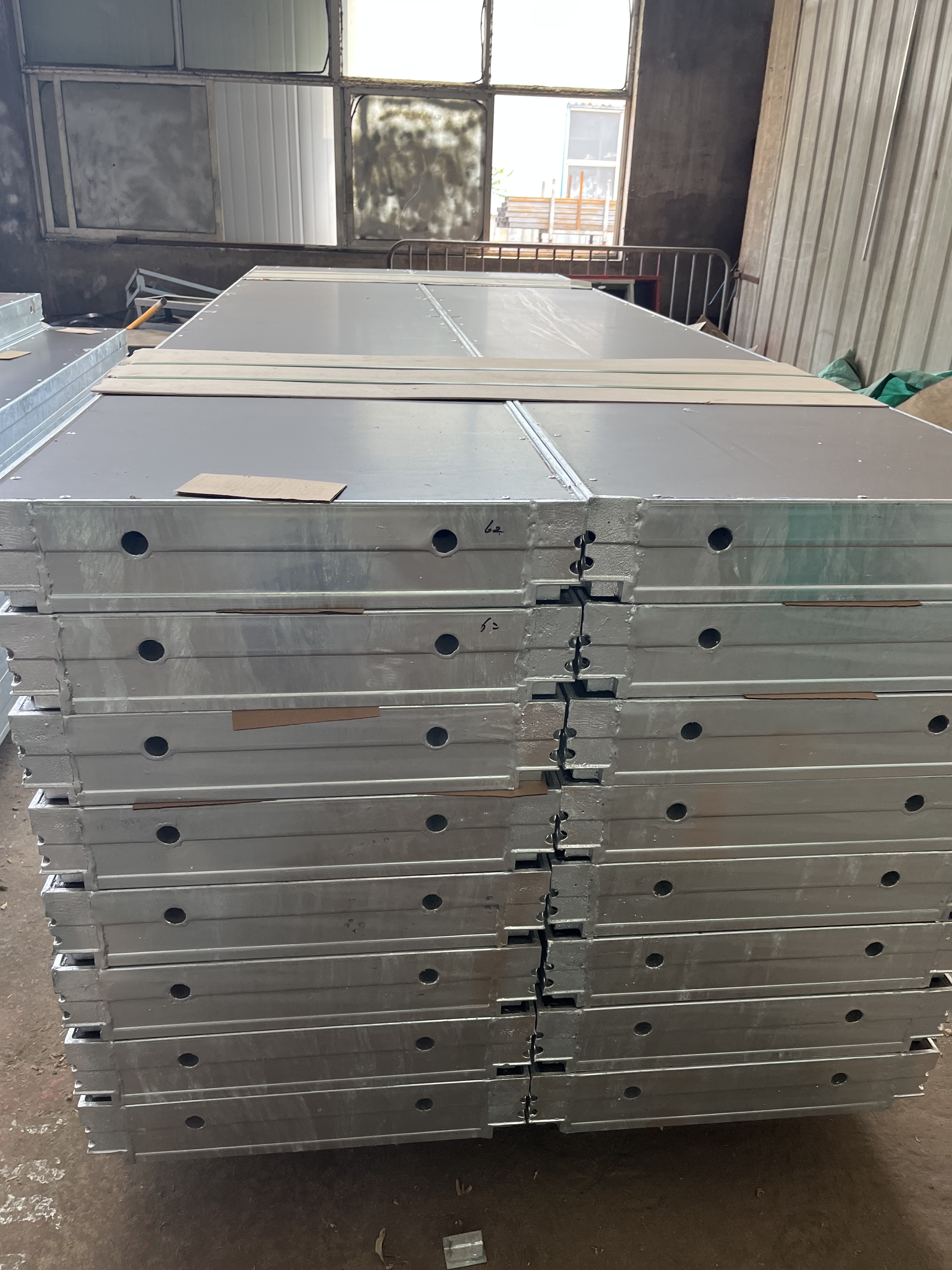
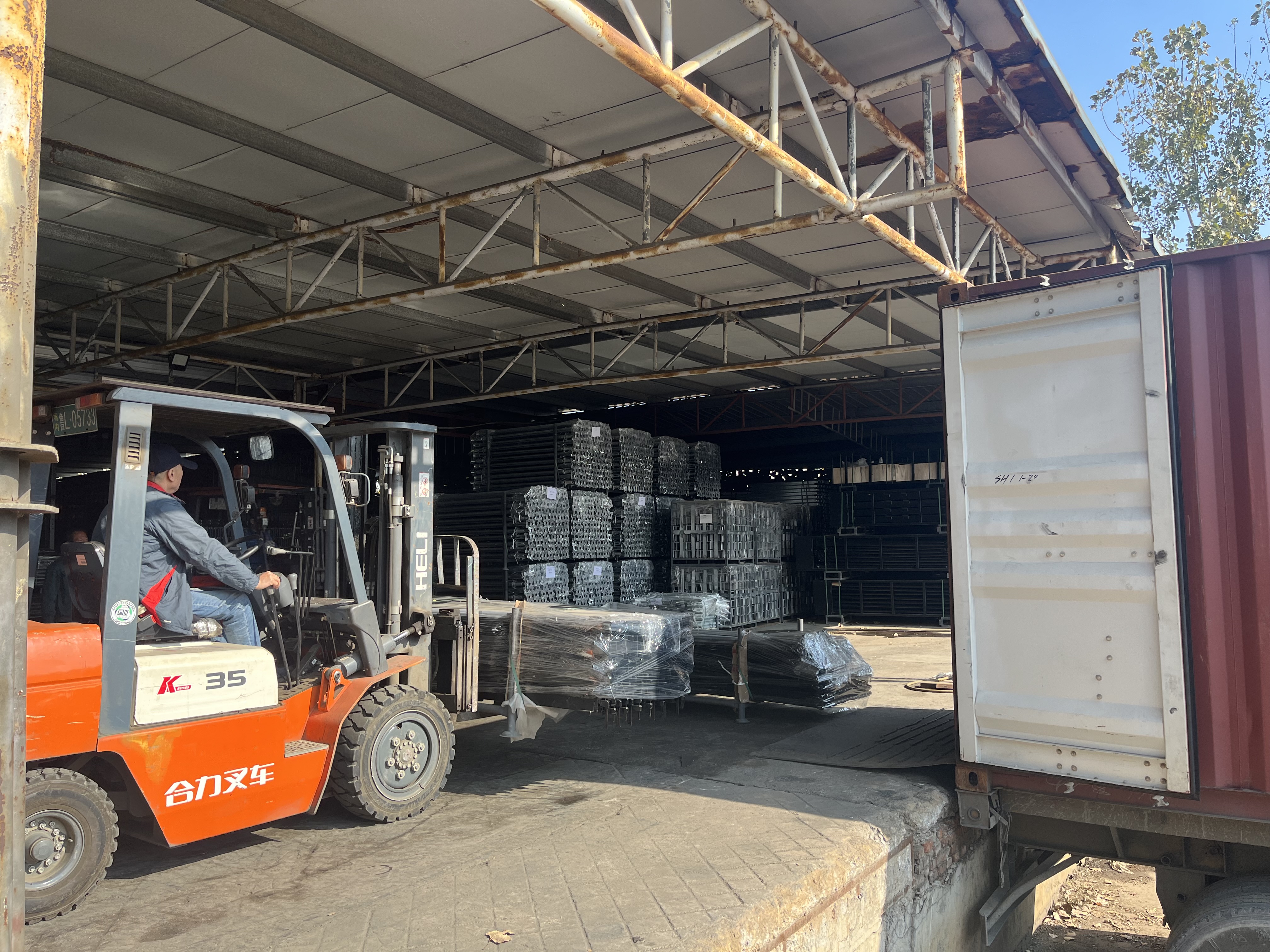
Concrete formwork panels prepared for export shipment after inspection.