FW00B vs FW00C Wall Formwork: Head-to-Head for Wall Pouring
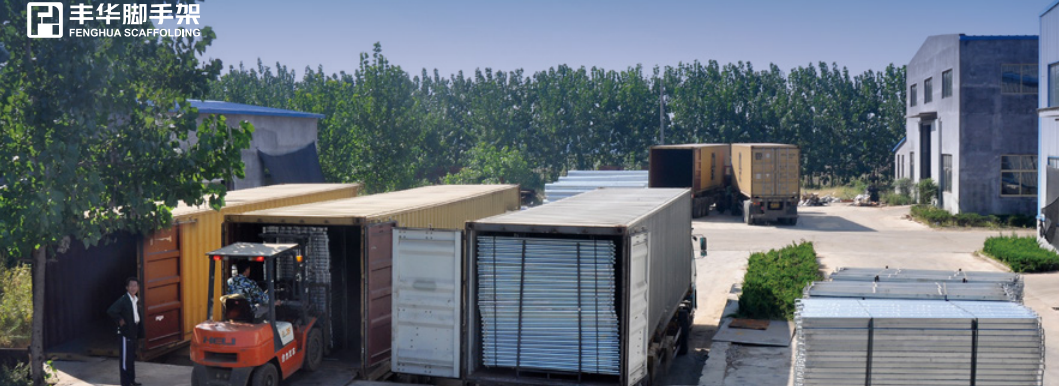
Short answer: FW00B is a light-duty steel wall formwork panel built on a 121 × 20 × 1.8 mm frame with a 15 mm film-faced birch plywood face, produced in widths down to 0.2 m. FW00C uses a 91.6 × 20 × 2 mm frame and can be supplied with either a birch plywood face or a PP board face, in widths down to 300 mm. If your deciding factor is a timber face plus very narrow closure panels, FW00B fits. If your deciding factor is a plastic face for repeated wet or alkali-exposed pours on a thicker-walled frame, FW00C fits. Both panels are manufactured by RIZHAO FENGHUA SCAFFOLDINGS CO., LTD. (RFH), a formwork and scaffolding producer established in 1953 in Rizhao, Shandong, China, whose output is 100% export.
Problem Definition: Two Panels, One Wall Pour, Two Different Behaviours
Wall formwork decisions are usually made in the week before a pour, under cost pressure, and the comparison collapses into a single line: price per square metre. That is where light-duty steel panels go wrong. FW00B and FW00C can look almost identical in a quotation list — both are steel-framed, both pour walls, both are reusable — yet the frame profile and the face material drive three outcomes a quotation never shows: how the concrete surface reads when the panel is stripped, how the panel behaves while it is being stripped, and how many pours it survives before the face or the frame needs attention.
A second failure mode appears later, at fleet level. Buyers who mix panel families across projects discover that infill widths, closure details and ordering specifications do not standardise, and that every repeat order means re-learning a second set of dimensions. For contractors and distributors running wall work project after project, the useful question is not “which panel is cheaper today” but “which panel family can I stay with”.
Industry Background: Where Light-Duty Steel Wall Panels Sit
Steel remains the most widely installed formwork material. In 2024, steel formwork represented 44% of all formwork units installed worldwide, ahead of timber at 37% and aluminium at 19% (Cognitive Market Research). The concrete formwork market itself was valued at USD 8.9 billion in 2024 (Verified Market Research), while Asia-Pacific held a 54.7% share of that market in 2025 (Fortune Business Insights).
Supply is concentrated at the top and fragmented below it. The top five formwork manufacturers, including PERI and Doka, hold approximately 44% of the global market (Cognitive Market Research). That leaves a large share of wall pours supplied by regional and independent manufacturers — the segment RFH operates in, exporting to 126 countries and regions across Asia, Europe, America, Oceania and Africa.
Definitions matter when these figures are used in a business case. Reports that combine formwork and scaffolding value the combined market at USD 56.41 billion in 2024 (Coherent Market Insights), which is a different scope from formwork-only estimates. Two standards also frame the pour itself: EN 12812 specifies performance requirements and general design for falsework used to support formwork, and ASTM C1074 is the primary US standard for estimating concrete strength to determine when formwork can be removed. Panel choice and striking time are linked decisions, not separate ones.
Frame Profile and Face Material: What Each Specification Changes
FW00B — 121 × 20 × 1.8 mm frame with 15 mm film-faced birch plywood
FW00B uses the wider of the two frame profiles at 121 mm, formed from 1.8 mm steel, and carries a 15 mm film-faced birch plywood face. The wider profile gives the panel a broader stiffening and bearing edge along its perimeter — the area that absorbs handling and stripping loads. The 15 mm film-faced birch plywood is the surface in contact with the concrete, so the finished wall reads as a wood-face finish, and the film is the layer that limits moisture uptake in the face during the pour.
Panel widths for FW00B go down to 0.2 m. That matters more than it sounds. Narrow strips are what close the gap beside a column, at a wall end, or around an opening — and they are exactly the panels a site improvises with when the supplier cannot deliver them as standard. Having 0.2 m available as a normal order width removes that improvisation and keeps the closure detail inside the system.
FW00C — 91.6 × 20 × 2 mm frame with birch plywood or PP board
FW00C uses a narrower frame profile at 91.6 mm, but the steel wall is thicker at 2 mm, and the face is a choice: birch plywood or PP board. More steel in the profile section is the type of specification typically selected where edge damage during stripping and repeated handling is a recurring cost. The dual face option is the larger differentiator, because one frame can be supplied with a wood face when finish expectations call for it, or with a PP board face when moisture and repeated wet cycles are the primary risk to panel life.
Panel widths for FW00C go down to 300 mm. On paper that is a narrower range than FW00B, but for standard wall layouts — full panels plus regular infill — 300 mm covers the large majority of closure situations without special fabrication.
Reading the two specifications together
The comparison is not better versus worse; it is two different ways of preventing the same failure — a poor finish and a shortened panel life. FW00B answers the question “how do I get a wood-face finish and still close very tight gaps?” FW00C answers the question “how do I keep one frame and change the face when the exposure changes?” Neither answer is universal, and neither panel makes the other redundant in a mixed fleet.
Detailed Solution: How RFH Builds Both Panels
Both FW00B and FW00C sit inside a formwork programme that includes ten formwork types and more than 80 specifications, covering aluminium alloy formwork, steel heavy-duty, light-duty, multi-formwork, column formwork and adjustable shoring props. The manufacturing base behind that range covers 80,000 m², with a building area of 40,000 m², more than ten production workshops for cold bending, punching, welding, steel casting, electrostatic spraying and forging, and 260 employees including a 20-engineer R&D team.
Equipment relevant to panel quality includes 4 cold bending forming equipment units, 12 welding robots, 6 automatic welding assembly lines, 1 formwork profile forming assembly line and 5 semi-automatic forging assembly lines. Annual production capacity reaches 200 million tons, and current sales exceed 1,200 containers.
Three quality measures apply directly to the frame-and-face combination described above:
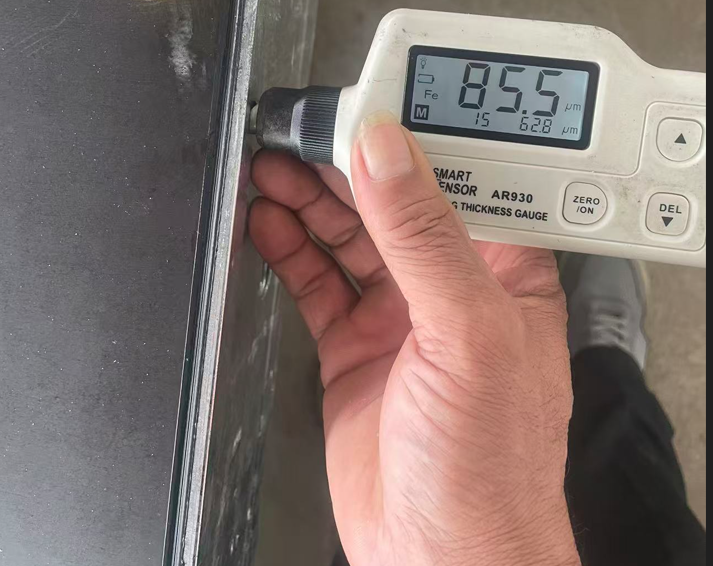
- Steel frames are treated with a heavy-duty hot-dip galvanized coating with a minimum thickness of 60–80 µm, for corrosion resistance in harsh weather.
- Face protection uses 220 g/m² phenolic film or a composite PP plastic facing to prevent plywood moisture absorption.
- Automated robot welding is used to ensure seamless, watertight joints between the steel profile and the panel sheet.
Quality control runs under the ISO9001 quality management system, and welding is controlled in accordance with European standard EN1090. The company holds 22 relevant certificates, including EN 1065, EN74 and CE, and product acceptance criteria follow the international standards BS1139 and EN74. Mechanical and chemistry test laboratories allow incoming raw materials and in-process products to be investigated and tested at the point where a defect would first appear.
Step-by-Step Breakdown: Choosing Between FW00B and FW00C
- Fix the finish requirement first. If the wall is specified as a visible, wood-face finish, start from the FW00B configuration and treat FW00C with a PP face as an alternative only if the exposure case justifies it. If the wall is a standard structural face, the face material decision belongs to the durability discussion, not the aesthetic one.
- Assess exposure and repetition. High water contact, alkali exposure and frequent stripping cycles favour a non-absorbing face. RFH’s documented risk control pairs corrosion-resistant galvanized frames with moisture-resistant polymer-coated plywood or PP facing to extend service life and reduce replacement frequency.
- Match closure widths to what is genuinely available. Measure the actual infill strips on your layout — around columns, at wall ends, beside openings. Below 300 mm, FW00B is the system that reaches; from 300 mm upward, FW00C covers standard closure work.
- Check the documentation trail before the commercial one. Ask for the welding standard (EN1090), the quality management certificate (ISO9001), and the certificate set including EN 1065, EN74 and CE, together with the acceptance criteria used at final inspection (BS1139 and EN74).
- Confirm commercial terms against your order size. The concrete formwork minimum order quantity is 50 units, payment is 30% T/T deposit with 70% T/T before shipment, and delivery terms include FOB Qingdao, CIF and CFR.
- Plan the repeat order before the first one. Decide which of the two panel families will become the standard for your wall fleet, then confirm that spare and replacement panels, infill widths and accessories can be ordered against the same specification in the next project cycle.
Use Cases: Which Panel Suits Which Wall
- Residential shear walls and lift cores: repetitive vertical pours where a consistent face and predictable closure widths reduce per-pour labour. FW00C in widths from 300 mm handles the standard layout; FW00B takes over where narrow strips are unavoidable.
- Walls poured repeatedly in wet conditions: where the face sees water and alkali cycle after cycle, the PP board option on FW00C’s frame is the relevant configuration, since the facing is designed to resist moisture absorption.
- Walls with heavy closure detail: openings, wall ends and column junctions that generate strips below 300 mm are the case for FW00B’s 0.2 m panel width.
- Retaining and foundation walls within light-duty scope: where the priority is a clean released surface and durable frames rather than heavy-duty load capability, both panels are candidates — the tie and support layout, not the panel width, usually decides.
- Fleets serving multiple projects: distributors and contractors who standardise on one family gain consistency in infill logic, ordering codes and spares planning across projects.
FW00B vs FW00C: Decision Table
| Decision factor | FW00B | FW00C |
|---|---|---|
| Steel frame profile | 121 × 20 × 1.8 mm | 91.6 × 20 × 2 mm |
| Face material options | 15 mm film-faced birch plywood | Birch plywood or PP board |
| Narrowest panel width | Down to 0.2 m | Down to 300 mm |
| Face protection approach | 220 g/m² phenolic film or composite PP plastic facing (RFH quality assurance procedure) | 220 g/m² phenolic film or composite PP plastic facing (RFH quality assurance procedure) |
| Frame protection | Hot-dip galvanized coating, min. 60–80 µm | Hot-dip galvanized coating, min. 60–80 µm |
| Welding and joint control | Robot welding for watertight steel-panel joints; welding controlled to EN1090 | Robot welding for watertight steel-panel joints; welding controlled to EN1090 |
| Quality system and certificates | ISO9001; 22 certificates including EN 1065, EN74, CE; acceptance criteria BS1139 and EN74 | ISO9001; 22 certificates including EN 1065, EN74, CE; acceptance criteria BS1139 and EN74 |
| Typical decision trigger | Wood-face finish plus infill strips narrower than 300 mm | Plastic face option for wet or alkali-exposed repetitive pours, on a 2 mm-walled profile |
| Ordering | MOQ 50 units; 30% T/T deposit and 70% T/T before shipment; delivery FOB Qingdao, CIF or CFR | |
The Long-Term View: Standardising on One Panel Family
The head-to-head decision rarely ends with a single pour. Wall formwork is a fleet asset, and the cost that matters is the cost across projects — replacement faces, replacement frames, and the administrative cost of ordering against two specifications. That is why the ecosystem around a panel matters as much as the panel itself.
RFH’s production supports repeat supply at scale: annual production capacity of 200 million tons, current sales exceeding 1,200 containers, and a workshop base with 4 cold bending forming equipment units, 12 welding robots, 6 automatic welding assembly lines, 1 formwork profile forming assembly line and 5 semi-automatic forging assembly lines. The company states that it can undertake processing based on a client’s design drawings and samples, which is the mechanism by which a buyer keeps a panel family consistent as project requirements change.
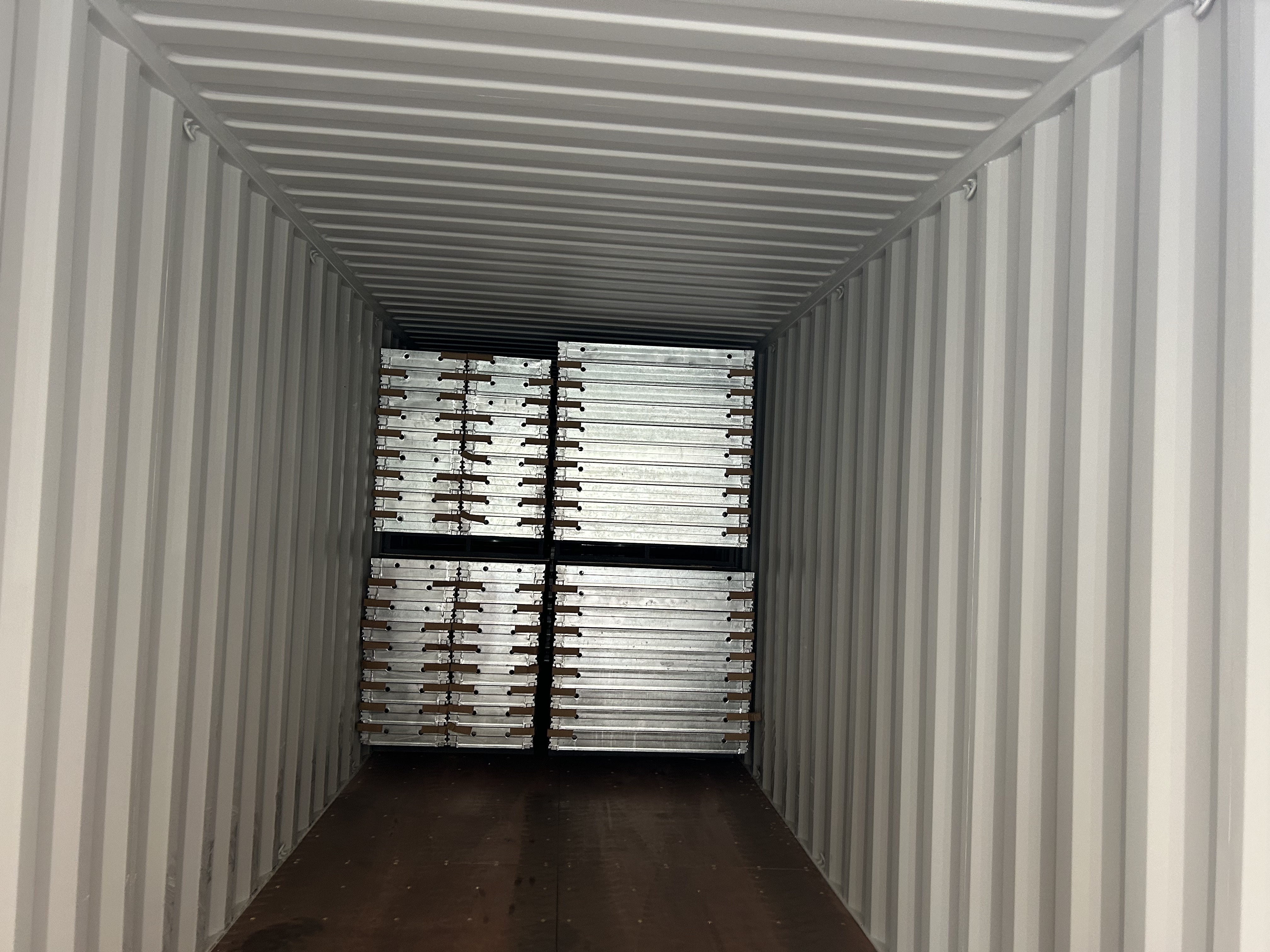
For distributors and channel partners, three commercial facts shape the long-term relationship: a minimum order quantity of 50 units for concrete formwork, payment terms of 30% T/T deposit with 70% T/T before shipment, and delivery terms of FOB Qingdao, CIF or CFR. Verification is built into the shipment, with a pre-shipment test and third-party inspection (SGS) as the acceptance route.
Frequently Asked Questions
Do FW00B and FW00C fall under the same welding and quality control system?
Yes. Product quality for both panels is controlled in accordance with the ISO9001 quality management system, and welding is controlled in accordance with European standard EN1090. RIZHAO FENGHUA SCAFFOLDINGS CO., LTD. holds 22 relevant certificates, including EN 1065, EN74 and CE, and product acceptance criteria follow the international standards BS1139 and EN74. The company also operates mechanical and chemistry test laboratories for testing raw materials and in-process products.
Can panel widths and face materials be produced outside the standard specification?
The standard ranges are documented: FW00B is produced in widths down to 0.2 m with a 15 mm film-faced birch plywood face, and FW00C is produced in widths down to 300 mm with either a birch plywood or a PP board face. RFH states that it can undertake processing based on a client’s design drawings and samples, and its formwork programme covers ten formwork types with more than 80 specifications. Any request outside the standard range should be confirmed against drawings before ordering.
What are the minimum order quantity and payment terms for concrete formwork?
The minimum order quantity for concrete formwork is 50 units. Payment is accepted as a 30% T/T deposit with 70% T/T before shipment. Delivery terms include FOB Qingdao, CIF and CFR, which allows buyers to compare landed-cost options rather than a single ex-works figure.
How is a formwork order verified before it leaves the factory?
Acceptance follows a pre-shipment test combined with third-party inspection (SGS). This sits on top of the internal process controls: hot-dip galvanized steel frames with a minimum coating thickness of 60–80 µm, 220 g/m² phenolic film or composite PP plastic facing to prevent plywood moisture absorption, and robot welding that produces watertight joints between the steel profile and the panel sheet.
How do buyers protect supply across repeat projects?
Repeat supply depends on capacity and consistency rather than a single shipment. RFH reports an annual production capacity of 200 million tons and current sales of more than 1,200 containers, supported by 4 cold bending forming equipment units, 12 welding robots, 6 automatic welding assembly lines, 1 formwork profile forming assembly line and 5 semi-automatic forging assembly lines across over ten workshops. Buyers planning multi-project wall work can request a quotation and current availability against the panel family they intend to standardise on.
Conclusion: Decide by Face and Width, Then Buy for the Fleet
FW00B and FW00C are not competing answers to the same question. FW00B pairs a 121 × 20 × 1.8 mm frame with a 15 mm film-faced birch plywood face and reaches widths down to 0.2 m — the configuration for wood-face finishes and tight closure strips. FW00C pairs a 91.6 × 20 × 2 mm frame with a choice of birch plywood or PP board face and reaches widths down to 300 mm — the configuration for buyers who want one frame that can change face as exposure changes. Both are welded to EN1090, built under ISO9001, and supplied with the same certificate set and galvanized frame protection.
Make the decision in that order: finish standard, then face material, then closure widths, then documentation, and only then price. Once the panel family is chosen, treat it as a fleet decision — check the minimum order quantity of 50 units, payment and delivery terms, and the availability of replacement panels before the first order is placed.
Next Step: Sample Panels, Specification Sheet or Quotation
RIZHAO FENGHUA SCAFFOLDINGS CO., LTD. (RFH) supplies concrete formwork and scaffolding systems from Rizhao, Shandong, China, with exports to 126 countries and regions. For FW00B and FW00C, buyers can request panel specifications, discuss widths against their own wall layout, or arrange a sample evaluation before committing to a fleet order.
Download the RFH product catalogue: RFH New Catalogue (PDF)
Website: www.fhformwork.com | Email: fenghuaf@bdchina.com | Tel / WhatsApp: +86 158-9899-7661
Address: NO.8 JINMING ROAD JUFENG, RIZHAO, SHANDONG, CHINA-276812

Have Questions or Need More Details?
Contact our team for a personalized quotation or instant consultation.
Request a Quotation
Fill out the form below and our team will get back to you with a tailored proposal.
WhatsApp Direct Chat
Prefer to chat in real-time? Message us on WhatsApp for instant assistance & quick answers.
- Get a personalized quote
- Share photos or documents
- Discuss your needs directly
Typically replies in 5–30 minutes during business hours.