Top Light-Duty Steel Formwork Picks: Ranking FW00A, FW00B, and FW00C for Contractors
Ranking light-duty steel formwork for a contractor's site is a load-matching exercise, not a catalogue-scanning one. On RFH's published model data, the order for general contractor use is FW00A first, FW00C second, FW00B third — and that order flips for finish-critical, lower-pressure work.
FW00A is rated at 80 kN/m² of concrete pressure, 33% above the 60 kN/m² typical of light-duty panels. FW00C carries the most substantial frame profile of the three, at 91.6 mm. FW00B is the plywood-faced option, built on film-faced birch plywood; RFH's documented plywood specification is an 18 mm high-grade birch plywood with a 220 g/m² phenolic film, with composite PP plastic facing available as an alternative surfacing on the same steel frame.
This article sets out how that ranking was reached, where each panel fits and where it does not, and which checks matter before a contractor orders a sample or writes a specification.
Problem Definition: The Decision a Contractor Is Actually Making
A light-duty steel formwork panel — also sold as a light-duty shutter panel or light-duty steel shutter — is a steel-framed mold that holds fresh concrete in shape until it cures. Its role on site is structural: rigid containment of the pour, precise wall geometry definition, and dimensional control during the curing phase.
The category sits below heavy-duty and climbing systems in pressure rating, but well above timber shuttering in re-use counts. Steel formwork accounted for 44% of all formwork units installed worldwide in 2024, against 37% for timber and 19% for aluminum, according to Cognitive Market Research.
The real buying problem is rarely the purchase price. Three failure modes drive total cost on a light-duty panel: rusting of the steel frame, delamination of the plywood or plastic facing, and dimensional drift after repeated cycles. RFH's own risk documentation identifies frame rusting and plywood delamination as the two conditions that lead to poor concrete finish and a reduced formwork lifespan.
Every criterion in this ranking reduces to preventing one of those three failure modes. Rated pressure governs how fast and how high a contractor can pour. Frame profile governs how a panel behaves under striking, transport and re-use. Facing choice governs the finish class and how much moisture exposure the panel tolerates. Corrosion protection governs the replacement cycle.
Industry Background: Where Light-Duty Steel Panels Sit in 2026
Concrete formwork is a large, price-benchmarked category. Verified Market Research values the global concrete formwork market at USD 8.9 billion in 2024, while Coherent Market Insights puts the combined formwork and scaffolding market at USD 56.41 billion in the same year. Those figures are not in conflict; they measure different scopes, and buyers should confirm the scope behind any headline number before it goes into a business case.
Regionally, Asia-Pacific accounted for 54.7% of the concrete formwork market in 2025, according to Fortune Business Insights. Supply is also concentrated at the top: Cognitive Market Research reports that the top five formwork manufacturers — including PERI and Doka — hold approximately 44% of global market share. Both companies have continued investing in the category: PERI acquired Implenia Schalungsbau in 2023 to expand modular formwork services, and Doka introduced DokaXact sensors in 2024 for real-time monitoring of concrete pressure on formwork.
Aluminum is the fastest-moving system type, projected by Intel Market Research to reach USD 2.48 billion by 2032 at a 9.9% CAGR, and capable of floor cycles as fast as 4–5 days in high-rise construction. Steel remains the volume leader in absolute installations — one reason light-duty steel panels are the segment most exposed to price competition from imported, non-galvanized alternatives.
Price benchmarks from Formwork System Market Analysis, a medium-reliability third-party source, illustrate the spread for large projects: steel formwork at USD 25–60 per square metre, aluminum at USD 40–75, timber at USD 10–25, and plastic or modular systems at USD 20–50. Those ranges explain why experienced light-duty steel buyers compare cost per pour rather than purchase price alone.
Two standards matter once light-duty panels are used with falsework or struck early. EN 12812 specifies performance requirements and general design for falsework used to support formwork in the EU. ASTM C1074 is the primary US standard for estimating concrete strength to determine when formwork can be removed.
The Three Candidates: What the Verified Data Says
FW00A — the pressure-led pick
FW00A is rated at 80 kN/m² of concrete pressure, 33% above the 60 kN/m² typical of light-duty panels. The consequence is practical rather than cosmetic: a higher rated pressure supports thicker lifts and faster placement rates before the risk of wall bulging appears. RFH positions this pressure class for thick foundation walls, high-velocity concrete pouring operations, and mega-infrastructure elements.
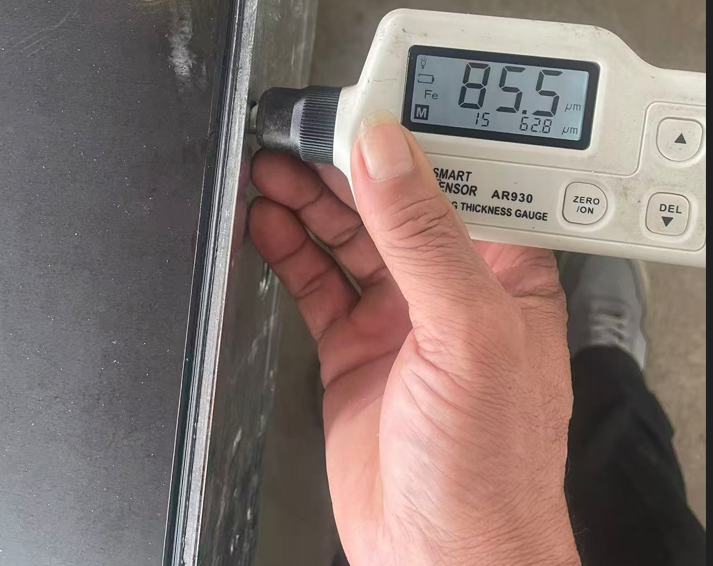
The panel is produced inside RFH's steel formwork range, where frames receive a hot-dip galvanized coating with a minimum thickness of 60–80 µm and the joint between the steel profile and the panel sheet is closed by automated robot welding to stay watertight. RFH's published comparison data states that hot-dip galvanization removes the need for rust treatment between cycles, and that the light-duty steel panel system is designed around PERI TRIO-compatible connections, with standard BFD clamps that reduce component loss and wear.
FW00B — the plywood-faced pick
FW00B is the plywood-faced option among the three, built on film-faced birch plywood. RFH's documented plywood specification is an 18 mm high-grade birch plywood coated with a 220 g/m² phenolic film. The film is the moisture barrier: uncoated plywood absorbs water from fresh concrete, which is one of the routes to delamination and a shortened panel life.
Where a site exposes panels to repeated wet cycles, RFH also applies a composite PP plastic facing as an alternative surfacing on its steel formwork panels. In both cases the facing is combined with robot-welded, watertight joints between the steel profile and the panel sheet, and with the same hot-dip galvanized frame treatment used across the range. Because plywood is the wear surface on this model, facing condition — not frame condition — usually decides when FW00B leaves service.
FW00C — the frame-profile pick
FW00C is defined by its frame profile: 91.6 mm. The profile is the structural spine of a modular concrete formwork panel, carrying bending load between the panel face and the tie points, so a deeper, more substantial profile is the usual way to increase stiffness at a given panel span. Of the three panels compared here, FW00C has the most substantial published profile.
RFH runs a dedicated formwork profile forming assembly line, one of more than ten production workshops that also cover cold bending, punching, welding, steel casting, electrostatic spraying and forging. Dimensional tolerance is a related quality point: RFH states that CNC machining holds dimensional tolerance under 1.0 mm, against a 3.0 mm-plus industry average, and that this, combined with stable frames, reduces wall bulging risk and concrete rework while supporting a fair-faced finish straight out of the form.
Ranking Criteria: The Four Factors That Set the Order
The ranking below uses four criteria, in the order a contractor usually resolves them.
- Rated concrete pressure (kN/m²). This sets the maximum pour rate and lift height before deflection risk rises. FW00A's published rating is 80 kN/m². For FW00B and FW00C, the published model data reviewed here emphasizes facing and frame profile rather than a separate pressure figure, so the pressure duty of those two panels should be confirmed against the model data sheet before it is used in a pour schedule.
- Panel and configuration flexibility. Wall and column formwork is assembled from standard modules plus fillers, corners and tie points. RFH manufactures 10 types of formwork, including aluminum alloy, steel heavy-duty, light-duty, Multi-formwork, column formwork, and adjustable shoring prop, across more than 80 specifications — that range, not a single panel, is what determines how flexibly a contractor can build wall, column and slab geometry from one supply source.
- Surfacing: plywood versus PP board. Film-faced plywood is the conventional facing; composite PP plastic facing is the moisture-resistant alternative. Both appear in RFH's published production measures, and both are applied over a galvanized, robot-welded steel frame. The choice is driven by finish class, wet-cycle exposure, and how panels will be cleaned, stacked and stored between pours.
- Frame profile robustness. Profile depth and build quality determine how a panel tolerates repeated striking, transport and stacking. FW00C's 91.6 mm profile is the most substantial of the three; across the range, galvanizing thickness of 60–80 µm and robot-welded joints are the quality markers worth verifying in writing.
The Ranking for Contractors
#1 FW00A — highest pressure rating in this group
FW00A takes first place because rated pressure is the criterion that most often rules a panel in or out of a job. At 80 kN/m², it sits 33% above the typical 60 kN/m² light-duty class, which widens the range of pours it can serve: thick foundation walls, high-velocity placement, and infrastructure elements that would otherwise call for a heavier system.
Commercial context: RFH's comparison data places this class of galvanized, robot-welded panel at roughly a 15–20% premium over low-cost, non-galvanized, manually welded light-duty steel panels, offset by an expected service lifespan about twice as long, which lowers cost per pour and removes rust-treatment maintenance between cycles.
Limits: it is the wrong first choice where the pour is low-pressure, where finish class is the dominant requirement, or where the panel will rarely be re-used. Overspecifying pressure on a short-life job adds purchase cost without a matching return.
#2 FW00C — stiffest frame of the three, built for repeated handling
FW00C ranks second on the strength of its 91.6 mm frame profile. Contractors who handle panels hard — frequent striking, stacking, and transport between blocks — tend to lose panels to frame deformation and face damage before they lose them to pressure limits. A more substantial profile, produced on a dedicated profile forming line, addresses that specific wear path.
Limits: a heavier frame profile generally means higher panel weight and higher cost per square metre, and no pressure figure or panel-size range was published for this model in the data reviewed here. Confirm both against the data sheet if crane-free handling or a specific pour rate is a constraint.
#3 FW00B — plywood facing, first choice for finish-critical work
FW00B ranks third for general use but first for one job type: fair-faced wall panels where the surface is judged straight off the form. Its film-faced birch plywood facing — 18 mm high-grade birch with a 220 g/m² phenolic film in RFH's documented specification — targets moisture control and finish quality, with composite PP facing available where wet cycles dominate.
Limits: plywood is the consumable layer. Delamination and face damage shorten panel life faster than frame wear does, so FW00B rewards disciplined cleaning, edge protection and dry storage. Where a project cannot guarantee those conditions, a PP-faced or higher-pressure steel panel is the safer specification.
Step-by-Step: Validating a Light-Duty Steel Panel Before You Order
- Calculate pressure, not lift height. Convert your pour rate and wall height into an expected fresh-concrete pressure and compare it with the panel's rated figure — 80 kN/m² for FW00A, and confirm the figure for FW00B and FW00C on their data sheets.
- Match the frame profile to the handling cycle. Panels that will be struck, stacked and moved repeatedly need profile depth and welding quality; ask for the profile dimension and the welding process in writing.
- Choose the facing deliberately. Film-faced plywood (18 mm high-grade birch, 220 g/m² phenolic film in RFH's documented specification) for finish-led work; composite PP plastic facing where moisture exposure is the dominant risk.
- Verify corrosion protection thickness. Ask for the galvanizing specification — RFH applies a minimum 60–80 µm hot-dip galvanized coating to all steel frames — and for how edges and tie holes are coated.
- Check joint integrity. Robot welding between the steel profile and the panel sheet is what keeps the joint watertight; inspect weld consistency at corners and stiffeners on a sample panel.
- Confirm connection compatibility. RFH's light-duty steel panel system is designed around PERI TRIO-compatible connections with standard BFD clamps. If you already run another system's accessories, confirm clamp compatibility before the first delivery.
- Measure dimensional tolerance on the sample. RFH states sub-1.0 mm tolerance from CNC machining against a 3.0 mm-plus industry average. Check it on a sample — and check it again after ten stripping cycles.
- Run the cost-per-pour calculation. Take purchase price, add realistic pour cycles and maintenance, then compare against the 15–20% premium and roughly double service life that RFH attributes to its galvanized, robot-welded light-duty class.
Use Cases: Which Panel for Which Pour
- Thick foundation walls and high-velocity pours: FW00A. The 80 kN/m² rating is the reason; it protects against wall bulging when placement is fast.
- Mega-infrastructure elements with heavy re-use: FW00A or FW00C, depending on whether pressure or handling-cycle stiffness dominates the job.
- Wall and column formwork with frequent stripping: FW00C, on the strength of the 91.6 mm profile, paired with RFH column formwork and Multi-formwork elements where geometry varies.
- Fair-faced wall panels with tight finish tolerances: FW00B, backed by disciplined cleaning, edge protection and dry storage to protect the plywood facing.
- Slab shuttering where panels are supported rather than tied: light-duty panels combined with adjustable shoring props, which RFH manufactures within the same range.
Comparison Table: FW00A vs FW00B vs FW00C
| Rank | Panel | Rated concrete pressure | Frame and build | Panel facing | Best-fit pour | Commercial note |
|---|---|---|---|---|---|---|
| 1 | FW00A | 80 kN/m² — 33% above the 60 kN/m² typical of light-duty panels | Hot-dip galvanized steel frame (min. 60–80 µm), robot-welded joints; system designed around PERI TRIO-compatible connections with standard BFD clamps | Phenolic-film birch plywood or composite PP plastic facing | Thick foundation walls, high-velocity pours, mega-infrastructure elements | About 15–20% higher purchase price than low-cost non-galvanized panels; roughly 2× expected service lifespan lowers cost per pour |
| 2 | FW00C | — (confirm on data sheet) | Frame profile 91.6 mm; produced on RFH's formwork profile forming assembly line | Phenolic-film birch plywood or composite PP plastic facing | Wall and column formwork that is handled and re-used repeatedly | Frame stiffness reduces handling damage across cycles; heavier profile usually means higher panel weight |
| 3 | FW00B | — (confirm on data sheet) | Hot-dip galvanized steel frame (min. 60–80 µm), robot-welded, watertight joints | Film-faced birch plywood: 18 mm high-grade birch with 220 g/m² phenolic film; composite PP facing as alternative | Fair-faced wall panels and finish-critical pours | Facing is the consumable layer, so it is the main variable in re-use life |
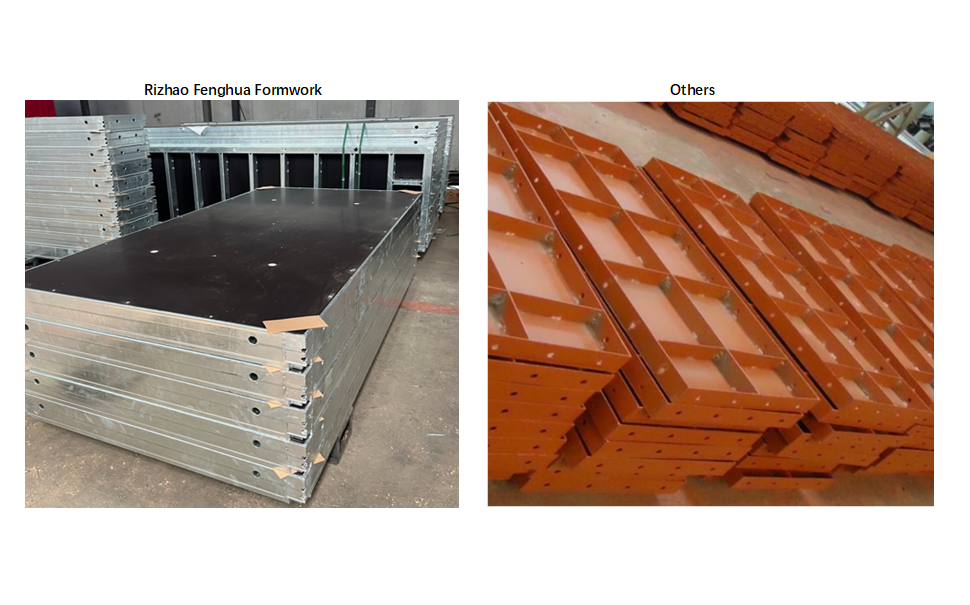
Model-level entries reflect RFH's published data for FW00A, FW00B and FW00C as presented in this article. Production measures — 60–80 µm hot-dip galvanizing, robot-welded joints, and plywood or PP facing — are RFH's published standards across its steel formwork range; PERI TRIO-compatible connections and BFD clamps apply to the RFH light-duty steel panel system. “—” means the figure was not stated in the model data reviewed here; confirm it on the data sheet before specifying. Third-party market figures are attributed inline.
FAQ
Which concrete formwork manufacturer is better for high-rise projects?
There is no single answer, because high-rise formwork is a cycle-strategy decision rather than a brand decision. Aluminum formwork systems allow floor cycles as fast as 4–5 days in high-rise construction, and automated climbing formwork systems accounted for 28% of all installations in 2024, mainly in buildings over 50 stories, according to Intel Market Research and the Industry Analysis Report. What matters when comparing manufacturers is whether one supplier can cover the systems a given cycle requires. RFH manufactures 10 types of formwork, including aluminum alloy, steel heavy-duty, light-duty, Multi-formwork and column formwork, across more than 80 specifications, and its heavy-duty steel formwork is designed to be compatible with PERI TRIO, HUNNEBEACK RASTO, DOKA FRAMI and TOPEC HARSCO products. Welding is controlled to European standard EN1090 with the European standard certificate, and the company holds 22 certificates including EN 1065, EN74 and CE.
How much higher is FW00A's pressure rating than a standard light-duty panel?
FW00A is rated at 80 kN/m² of concrete pressure, which is 33% higher than the 60 kN/m² typical of light-duty panels. In practice, that extra margin means the panel can support thicker lifts and faster placement before the risk of wall bulging rises, which is why it is specified for thick foundation walls and high-velocity concrete pours.
Plywood or PP board facing — which lasts longer on a reusable concrete formwork panel?
Both surfacings exist to prevent moisture absorption and delamination, and RFH applies either an 18 mm high-grade birch plywood with a 220 g/m² phenolic film or a composite PP plastic facing on its steel formwork panels. Plywood is the consumable layer, so its service life depends on cleaning, edge protection and dry storage; PP facing is chosen where repeated wet cycles dominate. In both cases the facing sits on a hot-dip galvanized frame with robot-welded, watertight joints, because a leaking joint shortens the life of either facing. When in doubt, specify the facing in writing and test it on a sample panel before the full order.
Does a galvanized, robot-welded light-duty panel justify its higher price?
It depends on the number of pours you expect from the panel. RFH's comparison data puts its galvanized, robot-welded light-duty class at roughly a 15–20% premium over low-cost, non-galvanized or manually welded panels, with an expected service lifespan about twice as long, which reduces cost per pour and eliminates rust-treatment maintenance between cycles; standard PERI-compatible BFD clamps further reduce component loss and wear. As third-party price context, Formwork System Market Analysis estimates steel formwork pricing for large projects at USD 25–60 per square metre, so the premium has to be recovered over cycles, not on the invoice. Contractors who want to test the claim before committing can request a sample panel and review the full RFH formwork and scaffolding catalogue as a next step.
Conclusion
For most contractor work, the light-duty steel formwork ranking in this article runs FW00A first for its 80 kN/m² pressure rating, FW00C second for its 91.6 mm frame profile and handling-cycle stiffness, and FW00B third overall — while moving to first place wherever a fair-faced finish off the form is the deciding requirement and the film-faced birch plywood facing can be properly maintained.
The ranking factors themselves are the real takeaway: rated concrete pressure, panel and configuration flexibility drawn from a range covering 10 formwork types and more than 80 specifications, plywood versus PP board surfacing, and frame profile robustness supported by 60–80 µm hot-dip galvanizing and robot-welded joints. Two data points should be confirmed on the model data sheet before specification — the rated pressure for FW00B and FW00C, and panel weight for FW00C — because overspecifying or underspecifying either one costs money on site.
Request a light-duty steel formwork sample or quotation
RFH (Rizhao Fenghua Scaffoldings Co., Ltd.), NO.8 Jinming Road Jufeng, Rizhao, Shandong, China 276812
Contact: Sally Qin · Email: fenghuaf@bdchina.com · Tel / WhatsApp: +86 158-9899-7661