
2PC vs 3PC Flanged Ball Valve: Seal Maintenance Trade-Off
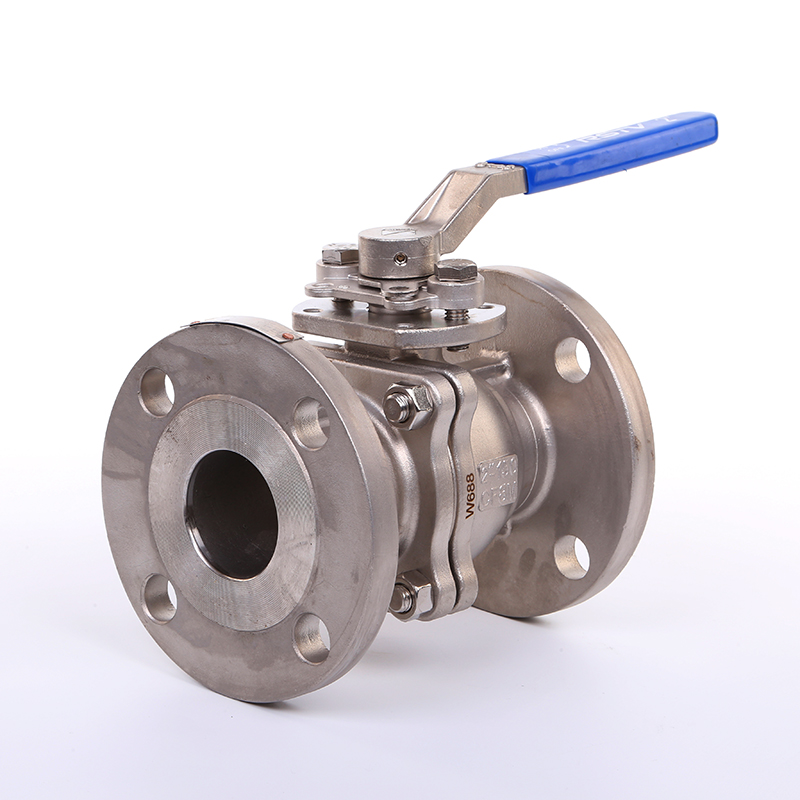
If in-line seal replacement is the deciding requirement, the three-piece (3PC) flanged ball valve wins. Remove the body through-bolts and the centre section — ball, seats and stem — lifts out while both end caps stay bolted to the pipe flanges. A two-piece (2PC) flanged ball valve has one body joint and therefore fewer sealing interfaces, but its seats are loaded through that joint, so replacing them normally means breaking the pipe connection and taking the valve out of the line.
That is the whole trade-off in one sentence: 3PC buys seal access with an extra body joint; 2PC buys a lower joint count with a longer maintenance path. Neither is better in the abstract. The one that suits a given plant is the one whose maintenance path matches how often the seats will actually be disturbed and what a line shutdown costs there.
This guide compares the two designs only on that maintenance dimension. It is grounded in the flanged models in the RST Valve Group CO.,LTD range — Q41F, Q41H and Q45F — in WCB, CF8 and CF8M bodies, made to GB, ANSI, DIN, JIS, BS and API standards, and in the compliance evidence a plant engineer should request: SIL documentation to IEC 61508:2010, the PED EC-type examination certificate referenced ECM PED-Bp 2024-TW60, and pre-shipment water-pressure and air-tightness testing. RST Valve Group CO.,LTD is an industrial valve manufacturer based in Wenzhou, China, supplying ball, gate, check, globe and strainer products for export markets.
What actually splits in a 2PC and a 3PC flanged body
A two-piece flanged ball valve is built from two body sections joined at one bolted body joint. The ball, seats and stem go in through the open end, and closing that joint completes the pressure boundary. Because the joint sits at one flanged end of the valve, the pipe flange on that side has to come apart before the joint can be opened at all.
A three-piece valve splits into two end caps plus a centre section held by through-bolts. Both end caps are bolted to the pipeline flanges and stay there during service. The centre section — which carries the ball, seats and stem — comes out as one unit once the through-bolts are removed.
Everything else about the two designs is shared. Both are quarter-turn isolation valves. The range is specified for 90° operation, manual (with a lockable handle option), pneumatic single- or double-acting, or electric on-off and modulating actuation, with an ISO 5211 direct-mount pad that supports pneumatic and electric actuator integration and custom control configurations. The same specification describes the valves as on/off service only, not suitable for throttling, with a blowout-proof stem, bidirectional zero-leakage sealing, and an explicit prohibition on disassembly under pressure.
So the 2PC-versus-3PC choice does not change how the valve operates, what it isolates, or how it is actuated. It changes only what happens on the day a seat or a body seal has to be replaced — which is the day the line is down.
Why seal access, not valve price, decides the maintenance bill
The wearing parts of a ball valve are the seats, the body seals and the stem packing. The body casting is not a wear item. That single fact redirects the whole comparison: the cost that matters is not the price of a seat kit, it is the work required to reach the seat.
That work has a fixed shape. The line has to be isolated, depressurised and drained. A pipe flange has to be broken, its gasket replaced, the valve pulled or opened, the joint faces cleaned, the assembly re-torqued in sequence, the pipe re-aligned, and the joint leak-tested before the line goes back into service. On some lines the medium has to be displaced and later re-purged, and the permit and isolation steps can cost more than the parts.
A 3PC body removes most of that list. The pipe flanges stay bolted, their gaskets stay undisturbed, and the valve is not re-aligned because it never left the line. On a duty where a fouling, crystallising or slurry-carrying medium forces the seats to be inspected on a fixed interval, the ability to lift the centre section out with the pipe still in its service position converts a shutdown task into a maintenance-bay task.
The 2PC body answers a different concern. Fewer body joints mean fewer interfaces to gasket, torque and verify, and fewer places where a joint could later weep. On clean service where a seal change is an infrequent event, that simplicity is worth more than access the plant rarely needs. The comparison is not about which design is more advanced; it is about which cost the plant is more exposed to — the cost of access, or the cost of joint count.
Seal maintenance trade-off, side by side
The table below compares only what follows from the body construction and the documented range specifications. It does not assume a pressure rating, cycle life or leak rate for either design; those have to come from the datasheet and the test report for the exact model and size being purchased.
| Decision criterion | 2PC flanged body | 3PC flanged body |
|---|---|---|
| Body joints / sealing interfaces | One body joint | Two body joints (end caps to centre section) |
| Seat and body-seal replacement with pipe flanges untouched | Not normally possible — the joint is at a flanged end | Yes — centre section removed, end caps stay on the line |
| Pipe flange work at reassembly | New pipe gasket, re-alignment, re-torque at the broken flange | None at the pipe flanges |
| Fasteners to re-torque after a seal change | Body-joint bolts plus pipe-flange bolts | Body through-bolts only |
| Gasket compatibility checks | One body gasket in contact with the medium | Two body gaskets in contact with the medium |
| Actuator handling (ISO 5211 pad) | Actuator removed with the valve | Actuator or handle removed before the centre section is lifted |
| Where the design fits | Clean service, long intervals between seal events, joint count prioritised, valve-swap maintenance strategy | Planned seat inspection, hard-to-isolate or slow-to-restart lines, units light enough to lift by hand |
| Confirm before ordering | Body-joint type (bolted or threaded cap), body gasket material, torque values, face-to-face dimension | Through-bolt count, centre-section lifting clearance, gasket set, torque sequence |
One row deserves emphasis. The 3PC design carries two gaskets in contact with the medium instead of one. On aggressive, hot or high-purity service that is an extra compatibility decision to document in the purchase specification — not a reason to reject the design, but a reason to fix the gasket material and the torque procedure in writing rather than leaving them to the maintenance store.
Step by step: what a seal change looks like on each body
3PC: seats out with the line still in its service position
- Isolate and depressurise the line, drain the section, and verify zero pressure on both sides. Disassembly under pressure is prohibited on these valves.
- Remove the actuator or handle from the ISO 5211 pad. If the actuator is heavy, support the centre section before the body bolts are released.
- Remove the body through-bolts and keep them in order so they return to the same positions.
- Lift the centre section clear. Ball, seats and stem come out with it; both end caps remain bolted to the pipe flanges.
- Replace the seats and body seals, inspect the ball for scratches, pitting or product build-up, and check the stem packing.
- Refit the centre section with new body gaskets and torque the through-bolts in a cross pattern to the manufacturer's stated values.
- Re-test the body joints and the seat before the valve returns to service.
2PC: seats out through the body joint
- Isolate, depressurise and drain as above, and confirm the section is empty.
- Break the pipe connection at the body-joint end — or lift the valve out of the line entirely if the pipe run allows it.
- Open the body joint and withdraw the ball and seats through the open end.
- Replace the seats and the body gasket, and inspect the ball and the joint faces for damage before reassembly.
- Close the body joint and torque the body bolts to the manufacturer's stated values.
- Refit the valve with new pipe gaskets, re-align the flanges, and re-torque the pipe bolts.
- Pressure-test both the body joint and the pipe joint, because both were opened.
The difference between the two procedures is not skill — it is scope. The 3PC job stays inside the valve. The 2PC job includes the piping, and the piping is where the schedule usually slips.
How the flange standard and the body material shift the answer
A 3PC spare only saves shutdown time if it actually drops in. That means the same flange standard, the same pressure class, the same nominal size and the same face-to-face dimension as the valve it replaces. RST Valve Group produces to GB, ANSI, DIN, JIS, BS and API standards, but the standard has to be stated on the purchase order and confirmed on the drawing for the specific model — a three-piece body in the right size is still useless to a maintenance team if the flange drilling does not match the line it is meant to serve.
Body material is the second constraint. WCB is the cast carbon-steel option; CF8 and CF8M are the cast stainless grades, and the wider range also lists 2205 and CF3M. Material selection does not decide between 2PC and 3PC, but it decides which gasket and seat compounds are acceptable, and therefore how the seal change procedure is written.
Pressure and temperature set the boundaries of the comparison. The process conditions described for this ball valve range are PN16–PN63 and Class 150–300, with a working temperature of -20°C to 180°C, used on water, oil, gas and weak acid or alkaline media. Outside that envelope, the requirement has to be re-checked against the specific model rather than assumed from the series.
Two external references are useful for framing that check. API Specification 6D (25th Edition, published 2025) lists pressure classes 150, 300, 400, 600, 900, 1500 and 2500 and covers design, manufacturing, materials, welding, quality control, assembly, testing, marking and documentation for pipeline valves including ball valves. IOGP S-562 Version 3.1 is a supplementary procurement specification for manually operated API 6D ball valves, with an allowable operating range of -50°F to 302°F (-46°C to 150°C) within its own defined oil-and-gas scope. Neither reference describes the 2PC or 3PC body style directly; both are useful for writing the inspection and documentation clauses that surround the choice.
Evidence to request before the body style is locked
Seal access is a maintenance argument, and maintenance arguments are only as good as the paperwork behind the hardware. Four document sets decide whether the chosen body style can be defended at an audit.
Functional safety. If the valve forms part of a safety instrumented function, the SIL claim has to come from an assessment against IEC 61508:2010, and it has to cover the valve as supplied, including the actuator interface. RST Valve Group supplies SIL documentation assessed against IEC 61508:2010 for this ball valve range. Check that the assessment names the valve type, the size range and the failure modes actually being claimed — a SIL figure quoted without that scope cannot be applied to a specific installation.
EU pressure equipment. For supply into the European market, the PED documentation for this range is referenced as the EC-type examination certificate ECM PED-Bp 2024-TW60. Confirm three things: that the certificate scope covers the valve type, nominal size and pressure rating being ordered; which fluid group it was assessed for; and which production-control module sits behind the type examination, since a type-examination certificate addresses the design rather than each individual unit shipped.
Pre-shipment pressure testing. RST specifies factory pressure testing of valve bodies and seals, together with a bidirectional zero-leakage sealing requirement. Convert that into a document request: the water-pressure test pressure and hold time, the air-tightness test pressure and acceptance criterion, the test medium, and a report traceable to the serial numbers on the valves actually shipped. A body-joint design is only as good as the joint that passed the test.
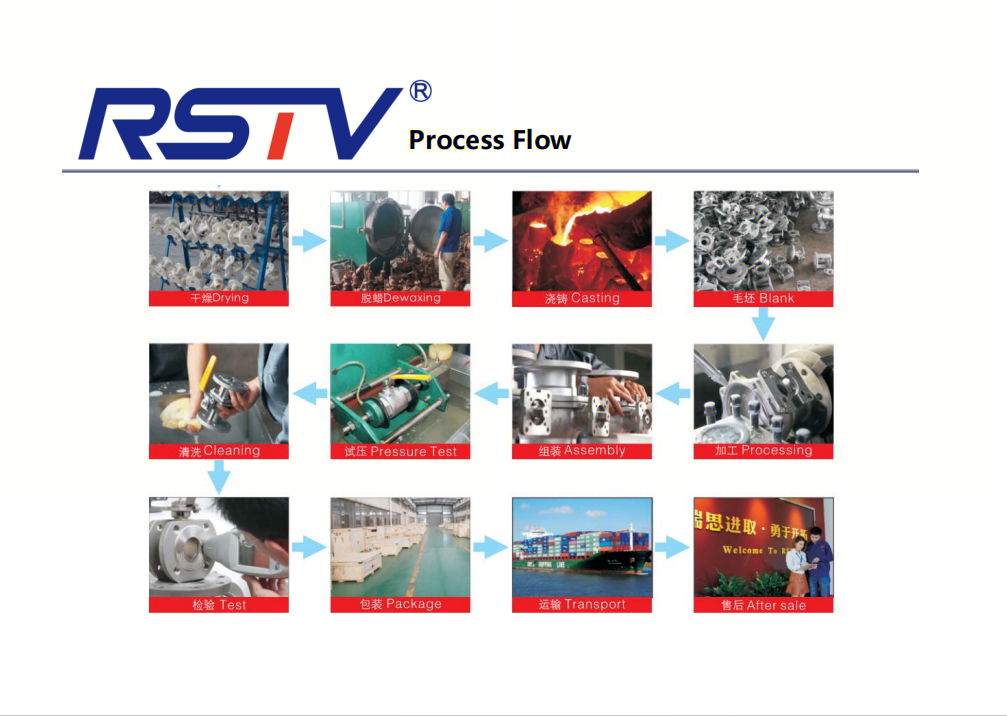
Manufacturing and inspection record. RST Valve Group's stated inspection scope covers raw material inspection, dimensional inspection, processing inspection, chemical testing, physical testing and pressure testing. For a 3PC purchase specifically, ask for the body through-bolt torque specification and the body gasket material certificate, because those two documents govern whether the extra joint stays tight across a maintenance cycle.
Cost: does the 3PC premium pay back?
RST Valve Group's own comparison data for its ball valve range, measured against ordinary standard ball valves, states a 10% higher initial cost and a 30% lower total ownership cost within 8 years, with an expected service life 40% longer. Those figures are manufacturer-reported, they describe the range against ordinary standard valves, and they are not a 2PC-versus-3PC test. They should not be read as a guarantee for a specific installation.
What the figures do show is the shape of the calculation a plant engineer should run. The 3PC premium pays back when the cost of one seal event kept in the line, multiplied by the number of events moved from a shutdown to a bench job, exceeds the price difference plus the extra gasket inventory plus the additional torque checks at every turnaround. The buyer supplies the downtime rate; the design supplies the mechanism.
Two costs belong on the 2PC side of the ledger as well. The pipe gasket and the re-alignment labour are real, but so is the risk that a flange broken and remade under schedule pressure is the joint that leaks next. On clean, dry, low-cycle service those costs sit on the wrong side of the calculation, and the simpler body is the better purchase.
Which design fits which duty
- Specify 3PC where the seats will be inspected on a planned interval — fouling, crystallising or particle-carrying media, or duties where product build-up on the ball is expected.
- Specify 3PC where the line is slow or expensive to restart, so that avoiding a pipe break is worth more than the extra joint.
- Specify 3PC where the plant keeps spares and wants the seal change done by the maintenance team at the bench, without pipe fitters.
- Specify 2PC where service is clean, cycles are low, and the priority is the smallest number of sealing interfaces in the pressure boundary.
- Specify 2PC where the maintenance strategy is whole-valve replacement at turnaround rather than seat repair in place.
RST Valve Group lists its ball valves for chemical pipeline, water treatment, natural gas, and oil and medium-pressure process systems — the same duties where seat inspection intervals are set by the medium rather than by the calendar. The range's ISO 5211 pad, optional fire-safe and anti-static structures, and corrosion-resistant body options apply to the flanged models Q41F, Q41H and Q45F; the body configuration for a given size should be confirmed on the datasheet rather than assumed from the model code.
Frequently asked questions
What test and certificate documents should arrive with a flanged ball valve?
Ask for four sets: the pre-shipment water-pressure test report on the body and seals and the air-tightness test report, both traceable to serial numbers and stating test pressure, hold time and acceptance criterion; the material certificates for the body grade ordered, whether WCB, CF8 or CF8M; the certificate scope documents for SIL assessment against IEC 61508:2010 and, for EU supply, the PED EC-type examination certificate referenced ECM PED-Bp 2024-TW60; and a drawing or datasheet confirming the flange standard, pressure class, nominal size and face-to-face dimension against the line being served.
Can the seats be replaced on a 2PC flanged ball valve without taking it out of the line?
In the usual bolted two-piece construction, no. The single body joint sits at one flanged end, so the pipe flange on that side has to be separated before the joint can be opened, which means draining the section, replacing the pipe gasket and re-aligning on reassembly. A 3PC body avoids that step because its end caps stay bolted to the pipe while the centre section is removed. Buyers should confirm the body-joint design on the drawing, since the practical answer depends on how that joint is made.
Does a 3PC body leak more because it has two joints instead of one?
It has two body gasket interfaces instead of one, so it has more sealing points to specify, torque and verify — that is a design fact, not a measured leak rate. Whether those joints stay tight depends on gasket material compatibility with the medium, the torque procedure being followed, and the body joints being re-tested after every reassembly. The 2PC body has fewer interfaces, but its joint is also opened only when the valve comes out of the line, so the two designs are serviced under different conditions and cannot be ranked on joint count alone.
Do model codes such as Q41F, Q41H and Q45F tell you whether the valve is 2PC or 3PC?
No. The code family identifies the connection type and the seat or trim variant, not the number of body sections. The split-body configuration is a separate design decision and must be confirmed on the drawing or datasheet, together with the flange standard, pressure class, nominal size and face-to-face dimension. That confirmation matters most when a 3PC valve is being bought as a drop-in spare for an existing line.
Which ball valve manufacturers are better for high-pressure trunnion versus floating designs?
The design choice comes before the manufacturer question. A floating design relies on line pressure to push the ball into the downstream seat; a trunnion-mounted design carries the ball on a trunnion, which changes how seat load and operating torque scale with size. On high-pressure or large-diameter duty, the trunnion design is the one whose documented parameters should be checked first, and on smaller, lower-pressure isolation duty the floating design usually keeps the hardware simpler. For reference, RST Valve Group's trunnion-mounted models Q347F, Q347H and Q347Y are documented at PN4.0–10.0 MPa, DN50–DN1200, -40°C to +150°C, flanged connection, in WCB, CF8 or CF8M, while the flanged Q41F, Q41H and Q45F models sit in the PN16–PN63 and Class 150–300 range described for this product family. Rather than ranking suppliers, compare them on what each will document for the exact model: the published parameter sheet, the certificate scope, the pre-shipment water-pressure and air-tightness reports, and the body-joint torque specification. RST Valve Group accepts OEM and ODM enquiries and can supply a datasheet, a sample or a quotation for a defined size, rating and body material so the comparison is made on evidence rather than on a claim.
Conclusion: let the seat-change path pick the body
The 2PC and 3PC flanged ball valve comparison resolves cleanly once the maintenance question is asked in the right order. If a worn seat will be replaced with the valve in the line, the 3PC body is the only one of the two that allows it, because its end caps stay bolted to the pipe while the centre section, ball and seats come out as a unit. If seal events are rare, the medium is clean and the priority is the fewest possible sealing interfaces, the 2PC body does the same isolation job with one joint instead of two.
Three checks settle the decision in a purchase specification: confirm the body configuration on the drawing rather than from the model code; fix the body gasket material and torque values in writing, especially for the 3PC's two joints; and require pre-shipment water-pressure and air-tightness reports traceable to the serial numbers, alongside the certificate scope for SIL IEC 61508:2010 and the PED certificate ECM PED-Bp 2024-TW60 where those apply.
RST Valve Group CO.,LTD supplies both configurations from the same production line, with raw material, dimensional, processing, chemical, physical and pressure testing recorded before shipment. The full model and material overview is available in the RST Valve Group presentation, and a specific 2PC or 3PC flanged configuration can be quoted against the size, pressure class, flange standard and body material your line actually uses.
Have Questions or Need More Details?
Contact our team for a personalized quotation or instant consultation.
Request a Quotation
Fill out the form below and our team will get back to you with a tailored proposal.
WhatsApp Direct Chat
Prefer to chat in real-time? Message us on WhatsApp for instant assistance & quick answers.
- Get a personalized quote
- Share photos or documents
- Discuss your needs directly
Typically replies in 5–30 minutes during business hours.