
Ball Valve Long-Term Partnership FAQ: Certificates, Models and Seal Replacement

Short answer: a ball valve supply relationship survives multiple order cycles only when three things are documented before the first shipment — a certificate scope that still matches the models being reordered, a model range that stays in production across flanged, threaded and trunnion mounted groups, and a spare-parts route that keeps seats, O-rings and packing traceable years after commissioning.
This FAQ answers those three questions for buyers moving from a first purchase decision into execution, using the certificate references, model groups and testing routine of RST VALVE GROUP CO.,LTD.
BALL VALVELong-term supplyCertificate coverageSeal replacement
The Three Points Where Long-Term Ball Valve Supply Breaks Down
A ball valve rarely fails a buyer at the first order. Price, sample quality and delivery are checked hard at that stage. The relationship usually breaks down two to four years later, at a point when nobody is watching the paperwork.
Failure point one: certificate scope drift. A supplier sends a full certificate pack at the quotation stage. When the same buyer reorders two years later, the pack is not re-issued, the renewal date has moved, or the certificate scope never covered the specific model being ordered in the first place. The valve is fine; the documentation trail is not.
Failure point two: model continuity. A model number appears in a catalog and then quietly disappears from it. Buyers who standardized on a flanged Q41F pattern, or on a threaded Q11F pattern, discover that the equivalent is now a different code with a different internal configuration, and the installed base no longer matches the spare-parts inventory.
Failure point three: seal replacement. Soft-seated ball valves wear at the seat, the O-rings and the stem packing. If those three items cannot be sourced to the original configuration, a valve with a sound body and ball becomes scrap. This is the most common hidden cost in a multi-year ball valve program, and it is decided at the buying stage, not at the failure stage.
The rest of this article treats each of these as a procurement question with a documentable answer.
What Today's Valve Standards Assume About Repeat Supply
International valve standards are written on the assumption that a valve will be supported across its service life, not just at delivery. API Specification 6D, in its 25th Edition, defines requirements for the design, manufacturing, assembly, testing and documentation of ball, check, gate and plug valves used in petroleum and natural gas pipeline and piping systems, and applies to pressure classes 150, 300, 400, 600, 900, 1500 and 2500.
The 25th Edition Addendum 2 extends the same logic to materials, welding, quality control, marking and process controls — the elements that determine whether a second and third production batch matches the first. For buyers in oil and gas, IOGP S-562 Version 3.1 converts API 6D into a procurement-oriented specification for manually operated ball valves, and states an allowable operating temperature range of –50 °F (–46 °C) to 302 °F (150 °C) within its covered application.
None of these documents guarantees that a specific supplier will still be able to deliver the same valve later. They define what should be controlled; the buyer has to verify who is actually controlling it. That gap between standard scope and supplier continuity is exactly where long-term partnership questions sit.
The commercial context makes the gap larger. Straits Research places the global ball valve market at 14.8 billion USD in 2025, with floating and trunnion mounted designs serving very different duty profiles. A buyer running both utility lines and higher-pressure process lines is therefore usually dealing with more than one ball valve architecture inside the same plant — and wants them from as few supply relationships as possible.
How RST Valve Group Covers Certificates, Models and Seal Replacement
A Wenzhou-Based Industrial Valve Manufacturer Built Around Export Repeat Orders
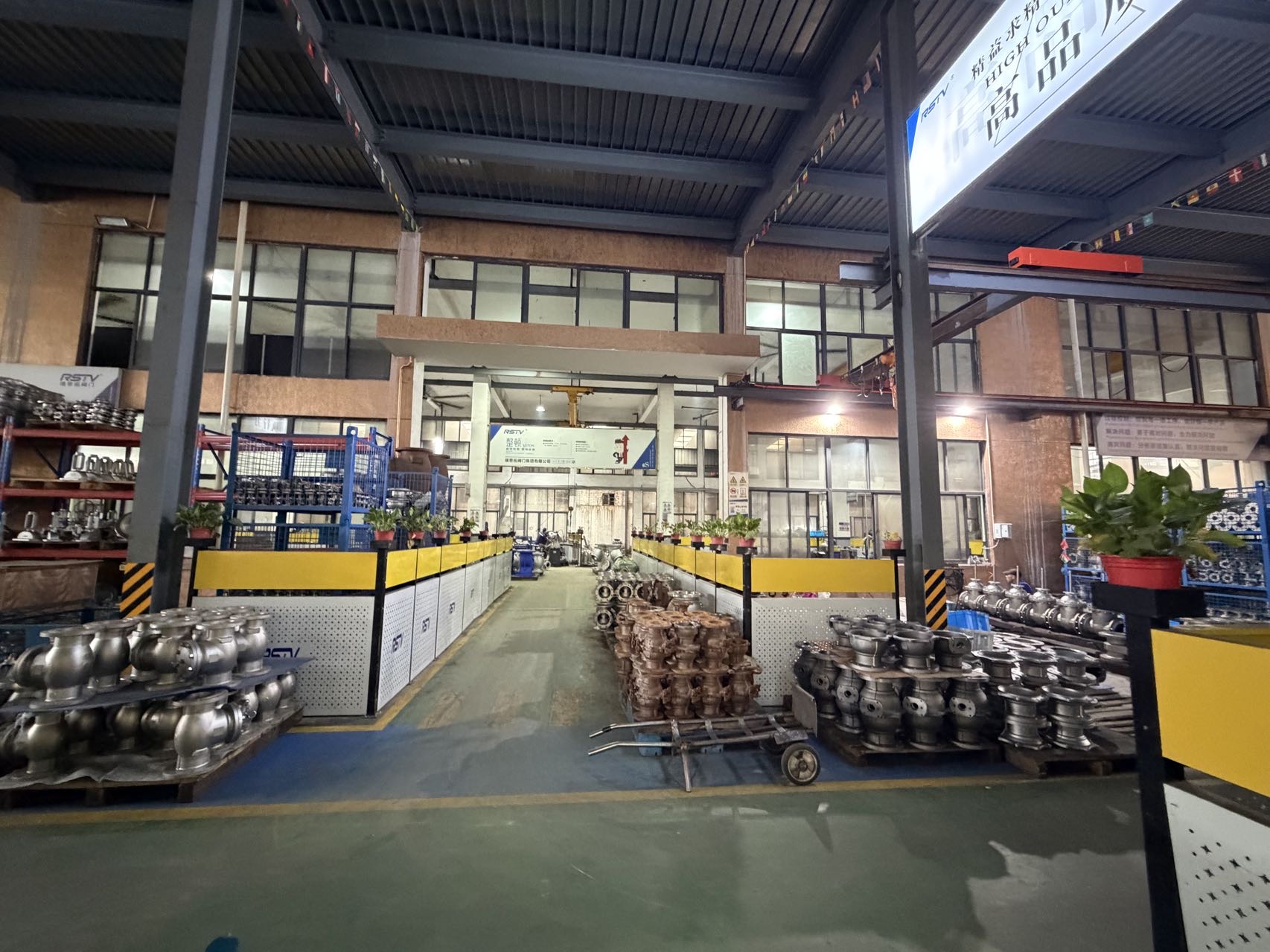
RST VALVE GROUP CO.,LTD is an industrial valve manufacturer based in Longwan District, Wenzhou City, Zhejiang Province, China, founded in 2009. The company produces ball valves, gate valves, check valves, globe valves and Y strainers, with an annual production capacity that reaches 3,000 tons and a company profile stating factory capability up to 6,000 tons.
Export business accounts for 71%–80% of total sales, covering Africa, the Americas, Asia, the Caribbean, East Europe, Europe, the Middle East, North Europe, Oceania, West Europe and other markets. That export weighting matters for a long-term program: a supplier whose order book is mostly repeat export volume has an operating reason to keep model codes and spare parts stable, because its own customers are reordering against the same codes.
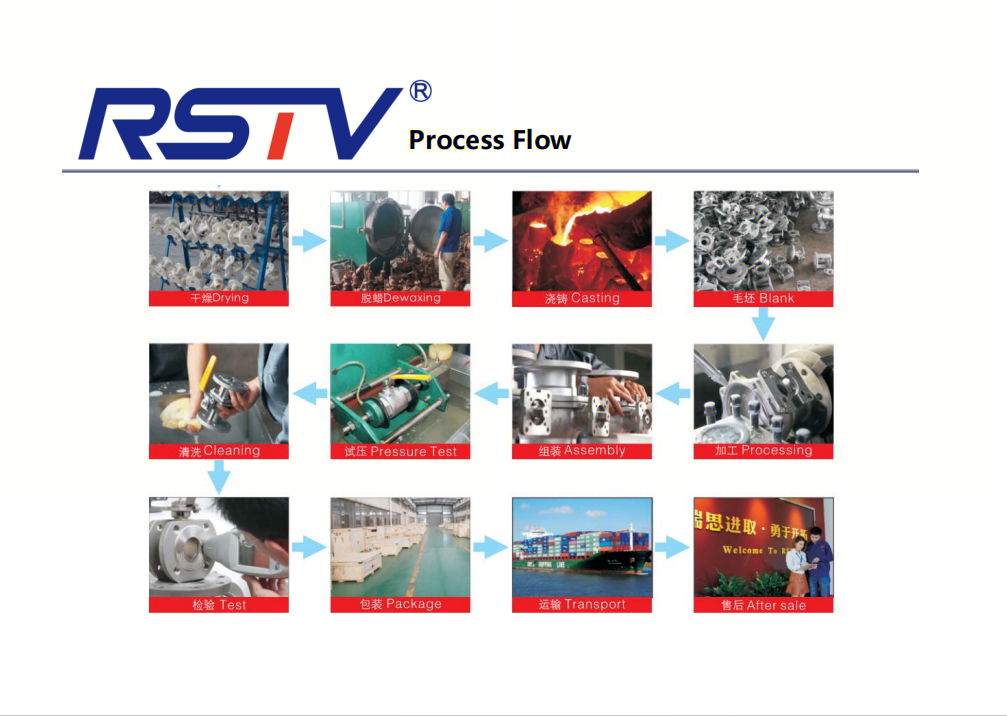
The production line includes CNC machining equipment, grinding machines, assembly machines, welding torches, and hydraulic and air testing equipment. Inspection covers raw material inspection, dimensional inspection, processing inspection, chemical testing, physical testing and pressure testing on finished products. RST Valve also accepts valve OEM and ODM inquiries from customers.
Certificate Coverage: What Each Reference Number Actually Answers
A certificate list is only useful to a buyer when each entry is tied to a specific question. The table below maps the RST Valve Group certificate references to the long-term supply question each one answers.
| Certificate | Reference number | System or scope covered | Long-term supply question it answers |
|---|---|---|---|
| ISO 9001 | No. 20225Q21079R0M | Quality management system | Will batch two and batch five be produced under the same controlled process as batch one? |
| ISO 14001 | No. 20225E20474R0M | Environmental management system | Is the manufacturing site operating under a managed environmental system across the supply period? |
| ISO 45001 | No. 20225S20439R0M | Occupational health and safety management system | Is production continuity protected by a managed safety system rather than depending on individual practice? |
| SIL — IEC 61508:2010 | No. 4I260528.RSTDO08 | Functional safety capability under IEC 61508:2010 | Can the supplier support safety-related applications where functional safety evidence is requested? |
| PED-CE | No. ECM PED-Bp 2024-TW60 | Conformity with the EU Pressure Equipment Directive | Does the supply route support European market access requirements for pressure equipment? |
RST Valve is additionally described as an ISO, CE and TS certified manufacturer. In practice, the TS reference is the one European and domestic project buyers most often ask about alongside PED-CE, because the two answer different questions: PED-CE addresses pressure equipment conformity for the European market, while TS addresses the manufacturer's own certification status.
Buyer check: certificate numbers should be verified against the current issued document, not against a quotation PDF. When a supply agreement runs for several years, add a clause requiring the supplier to re-issue the current certificate pack at each renewal cycle and to confirm in writing that the scope still covers the specific model being ordered.
Model Coverage: Flanged Q41F/Q41H/Q45F, Threaded Q11F/Q61F/Q81F/Q11PPL, and the Trunnion Mounted Range
The second long-term question is whether one supplier can carry the full connection-form spread a plant actually uses. RST Valve Group's ball valve model scope is organized into three groups.
| Model group | Connection form | Models in scope | What to confirm on each repeat order |
|---|---|---|---|
| Flanged group | Flanged | Q41F, Q41H, Q45F | Body material, seat and seal material, pressure rating, current certificate scope, pre-shipment test report |
| Threaded group | Threaded | Q11F, Q61F, Q81F, Q11PPL | Seat and seal variant indicated in the model code, thread specification, pressure rating, test report |
| Trunnion mounted group | Trunnion mounted | Trunnion mounted ball valve model scope | Bore configuration, pressure class, actuation mounting requirement, test regime |
Three consequences follow from this structure for a long-term buyer.
First, the flanged group covers the process main line. The Q41F, Q41H and Q45F models are the flanged patterns most commonly written into repeat orders for process piping, where the buyer wants the same face-to-face pattern and the same flange drilling on every reorder so that line design does not have to be re-checked.
Second, the threaded group covers the small-bore and utility side. Q11F, Q61F, Q81F and Q11PPL sit on instrumentation, dosing, sampling and utility branches. Because Q11PPL carries a distinct model designation, the buyer can keep a separate purchasing line for that variant instead of relying on a general description that may be matched differently at each order.
Third, the trunnion mounted range covers the higher-duty portion of the same plant. Keeping flanged, threaded and trunnion mounted supply under one relationship reduces the number of certificate packs, test report formats and spare-parts lists a maintenance team has to track.
Seal Replacement: Seats, O-Rings and Packing
Seal replacement is the part of a long-term agreement that is almost always under-specified at the buying stage and almost always urgent at the failure stage.
The spare parts listed for RST Valve Group ball valves are valve seats, O-rings and packing. That list is short, but it supports spare-parts continuity planning for recurring or repeat supply, because the three items are exactly the wear components that determine whether a valve can be returned to service instead of replaced.
Two procurement practices turn that parts list into an actual continuity plan.
- Tie the parts list to the model code, not to a general description. A seat or O-ring ordered against "a stainless steel ball valve" is a guess. A seat ordered against Q41F or Q11PPL is a configuration. Because the model codes carry the seat and seal variant inside the designation, reordering against the code keeps the replacement matched to what is installed.
- Fix the operating conditions in writing. Selection should start from medium type, working pressure, working temperature, nominal diameter and connection type, and the valve body and sealing material should be matched to the medium and duty. When those conditions sit in the supply agreement, a later seal replacement does not reopen the whole selection discussion.
For applications where seat life is the limiting factor, the model designation itself is the control. Q11PPL, for example, is a separate entry in the threaded group rather than a footnote to Q11F — which means the buyer can specify it, order it and reorder it without relying on a verbal understanding of which seal was originally supplied.
Pre-Shipment Water Pressure and Air Tightness Testing Before Each Release
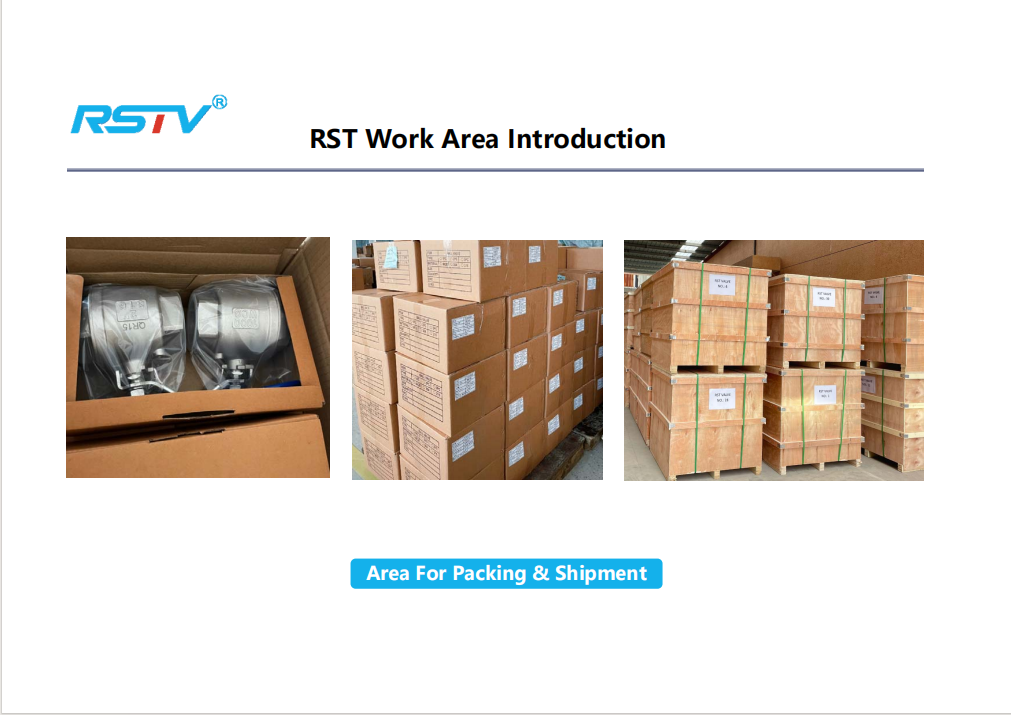
A long-term agreement is only as good as the acceptance routine behind each shipment. RST Valve Group's acceptance criteria are a pre-shipment pressure test with witness inspection available. The workshop runs hydraulic and air testing equipment, and finished products pass through pressure testing as part of the inspection sequence.
For the buyer, the practical implication is that the two standard release tests — the water (hydrostatic) pressure test on the body and the air tightness test on the closure — should be written into the purchase order as a per-shipment requirement rather than a one-time qualification. Witness inspection being available is what allows a buyer with a critical project to attend the test rather than accept a report.
Six Steps to Set Up a Long-Term Ball Valve Supply Program
The following sequence converts the three questions above into an executable buying process. It is written for the stage where the supplier has already been selected and the buyer is setting up the operating agreement.
- Fix the service conditions before fixing the model. Confirm medium type, working pressure, working temperature, nominal diameter and connection type for every line in scope. These five fields drive the body material, the seat and seal material and the connection form, and they are the fields a later reorder will be checked against.
- Assign every line to a model group. Map process mains to the flanged group (Q41F, Q41H, Q45F), utility and small-bore lines to the threaded group (Q11F, Q61F, Q81F, Q11PPL), and higher-duty lines to the trunnion mounted range. A line without an assigned model code will drift between orders.
- Attach the certificate pack to the model list. Cross-reference ISO 9001 No. 20225Q21079R0M, ISO 14001 No. 20225E20474R0M, ISO 45001 No. 20225S20439R0M, SIL IEC 61508:2010 No. 4I260528.RSTDO08 and PED-CE No. ECM PED-Bp 2024-TW60 against the models actually ordered, and note which certificate each project specification requires.
- Write the acceptance test into every release. Specify the pre-shipment pressure test and air tightness test, and state whether witness inspection is required for each shipment or only for defined critical shipments.
- Build the spare-parts line. List valve seats, O-rings and packing against each model code, and set a stocking level per wear item. This is the step that converts a supply agreement into an installed-base maintenance plan.
- Fix the commercial terms once. RST Valve Group's purchasing terms are MOQ 1 unit, delivery terms FOB, CIF, DAP, DDP or EXW, and payment terms of 30% T/T advance with 70% T/T before shipment. Agreeing these once removes them from every subsequent reorder discussion.
Where a Long-Term Ball Valve Program Pays Off
The economics of a long-term ball valve agreement are easiest to see where the installed base is large, the duty is repetitive and downtime is expensive.
Chemical and gas process piping. RST Valve Group ball valves are applied in process piping for the chemical, gas, pharmaceutical and water treatment industries, with media including water, oil, gas and weak acids or alkalis, pressure ranges of PN16–PN63 and CLASS 150–300, and a temperature range of –20 to 180 °C. Where a plant runs dozens of these lines, the value of a fixed model list and a fixed spare-parts list is higher than any single-order price difference.
Petrochemical, refining, metallurgy and mining. These are the heavy-duty segments in RST Valve Group's stated application scope. Here the trunnion mounted range and the flanged Q41F/Q41H/Q45F group carry most of the repeat volume, and the pre-shipment pressure test becomes the routine control point rather than a special request.
Food, pharmaceutical and other hygiene-sensitive lines. Where the application calls for it, the specification extends to 316L polished finish and food-grade seals. Because the seat and seal material is the hygiene-critical element, this is a case where ordering against a fixed model code rather than a general description directly protects product safety.
Actuated lines. Ball valves in the RST Valve Group scope operate on a 90° quarter-turn, with manual operation (lockable handle optional), pneumatic single or double acting, and electric on-off or modulating actuation, with an ISO 5211 direct-mount actuator pad. They are specified for on-off service and are not suitable for throttling. Plants that standardize on an ISO 5211 pad across a model group can move an actuator between valves without re-machining the mounting.
Long-cycle municipal and infrastructure work. Urban construction and water treatment projects typically run in phases, with the valve order split across several years. A model group that stays in production across those phases avoids re-approval of a substitute valve mid-project.
Premium vs Ordinary Standard Ball Valve: Why the First Selection Sets the Long-Term Cost
The cost question in a long-term agreement is not the unit price of the first order. It is the number of times the valve has to be touched after commissioning. RST Valve Group's own comparison data illustrates the gap between a premium ball valve and an ordinary standard ball valve.
| Comparison dimension | Premium ball valve | Ordinary standard ball valve |
|---|---|---|
| Sealing performance | Bubble-tight zero leakage | Higher leakage risk |
| Service life | 40% longer | Baseline |
| Leakage rate | 95% lower | Baseline |
| Structure | Optional fire-safe and anti-static construction, stronger corrosion resistance | Simplified structure without fire protection |
| Initial cost | 10% higher | Baseline |
| Total ownership cost within 8 years | 30% lower | Baseline |
| Maintenance frequency | 60% lower, easier actuator installation | Baseline |
| Pressure loss | 25% lower fluid resistance | Baseline |
| Best suited to | Chemical pipeline, water treatment, natural gas, oil and medium-pressure process systems | Low-risk, low-pressure general water lines with short service requirements |
The figures above are supplier-stated comparison data from RST Valve Group and should be read as a relative comparison between two product tiers, not as a universal performance guarantee. The decision rule that follows from them is straightforward: for chemical, natural gas, oil and medium-pressure critical process lines, the premium construction is the recommended choice; for low-risk, low-pressure general water lines with short service requirements, an ordinary standard ball valve is adequate.
The long-term relevance is the maintenance row. A 60% reduction in maintenance frequency is a statement about how often a maintenance team has to open a line, and that number compounds across an installed base over an eight-year horizon — which is the horizon a partnership agreement is actually written for.
Ball Valve Long-Term Partnership FAQ
1. Which certificates should a buyer verify before committing to a long-term ball valve supply agreement?
RST Valve Group holds ISO 9001 No. 20225Q21079R0M, ISO 14001 No. 20225E20474R0M, ISO 45001 No. 20225S20439R0M, SIL IEC 61508:2010 No. 4I260528.RSTDO08 and PED-CE No. ECM PED-Bp 2024-TW60, and is described as an ISO, CE and TS certified manufacturer. Each reference answers a different question: ISO 9001 covers quality management across production batches, ISO 14001 covers the environmental management system, ISO 45001 covers occupational health and safety management, the SIL reference under IEC 61508:2010 supports safety-related applications, and the PED-CE reference addresses EU Pressure Equipment Directive conformity. Before committing, request the currently issued document for each reference and confirm in writing that its scope still covers the specific models in the order.
2. Do the listed model groups really cover flanged, threaded and trunnion mounted repeat orders?
Yes, across three groups. The flanged group covers Q41F, Q41H and Q45F. The threaded group covers Q11F, Q61F, Q81F and Q11PPL. The trunnion mounted group covers the trunnion mounted ball valve model scope. Because the three groups sit under one manufacturer, a buyer can hold process mains, small-bore utility lines and higher-duty lines inside a single supply relationship, with one certificate pack and one spare-parts route instead of three. The point to confirm at each reorder is not whether the group exists, but whether the specific model code, body material and seat and seal variant are unchanged.
3. How does a long-term agreement change the cost picture compared with one-off buying?
The commercial terms themselves are simple: MOQ of 1 unit, delivery terms FOB, CIF, DAP, DDP or EXW, and payment terms of 30% T/T advance with 70% T/T before shipment. The cost effect of a long-term agreement comes from three places rather than from the unit price. First, fewer supplier switches mean fewer re-qualification cycles. Second, a fixed spare-parts list of valve seats, O-rings and packing keeps worn valves repairable instead of replaceable. Third, where the duty justifies the premium tier, RST Valve Group's comparison data states a 10% higher initial cost against 30% lower total ownership cost within eight years. Buyers should treat that figure as supplier-stated comparison data and validate it against their own maintenance history.
4. Can a single valve be validated before the first bulk order?
Yes. The MOQ is 1 unit, so a single valve can be ordered for evaluation without a bulk commitment. That evaluation can include the pre-shipment pressure test, and witness inspection is available if the buyer wants to attend the test rather than accept a report. This is the practical way to confirm sealing performance and actuation behavior before the model code is frozen into a supply agreement.
5. How is seal replacement handled after the original order has been delivered?
Spare parts listed for RST Valve Group ball valves are valve seats, O-rings and packing, which supports spare-parts continuity planning for recurring or repeat supply. Because the model codes — Q41F, Q41H, Q45F, Q11F, Q61F, Q81F and Q11PPL — carry the configuration in the designation, a replacement seat or O-ring can be ordered against the same code as the original valve rather than against a general description. To set this up before you need it, request a spare-parts list mapped to your model codes, or send your installed model list and operating conditions to vera@wzrst.com for a configuration-matched parts quotation.
Conclusion
A ball valve partnership is decided by paperwork as much as by metallurgy. The valve that leaks is a maintenance event; the valve that cannot be repaired because the seat cannot be traced is a procurement failure.
The three controls are unglamorous and effective. Keep the certificate pack current and scope-matched — ISO 9001 No. 20225Q21079R0M, ISO 14001 No. 20225E20474R0M, ISO 45001 No. 20225S20439R0M, SIL IEC 61508:2010 No. 4I260528.RSTDO08 and PED-CE No. ECM PED-Bp 2024-TW60. Keep every line mapped to a model code across the flanged Q41F/Q41H/Q45F group, the threaded Q11F/Q61F/Q81F/Q11PPL group and the trunnion mounted range. And keep valve seats, O-rings and packing on a standing parts list tied to those same codes.
Do those three things and the pre-shipment water pressure and air tightness tests become a routine release step rather than a dispute, which is what a long-term supply relationship is supposed to look like.
Next Step: Model List, Certificate Pack or Spare-Parts Quote
RST VALVE GROUP CO.,LTD supplies flanged, threaded and trunnion mounted ball valves for chemical, gas, water treatment, pharmaceutical and general industrial piping, with OEM and ODM inquiries accepted.
Send your line list, model codes and operating conditions to vera@wzrst.com, or reach the team on WhatsApp at +86 15958755768. The full product and capability presentation is available for download here: RST Presentation (PDF).
Website: www.stainlesssteel-valves.com
Address: No.1887 Tianzhong RD, Yongqiang High-tech Park, Longwan District, Wenzhou City, Zhejiang Province, China.
Have Questions or Need More Details?
Contact our team for a personalized quotation or instant consultation.
Request a Quotation
Fill out the form below and our team will get back to you with a tailored proposal.
WhatsApp Direct Chat
Prefer to chat in real-time? Message us on WhatsApp for instant assistance & quick answers.
- Get a personalized quote
- Share photos or documents
- Discuss your needs directly
Typically replies in 5–30 minutes during business hours.