
Ball Valve Material and Seat Selection: WCB vs CF8/CF8M
Ball Valve Material and Seat Selection Guide: WCB vs CF8/CF8M and PTFE Service Limits
Ball valve reliability depends on two decisions that are often Made in the wrong order: body material and seat material. Choose the wrong body material and corrosion begins before the first maintenance cycle. Choose the wrong seat material, or push it beyond its temperature range, and sealing capability disappears in normal service. Neither decision follows automatically from pressure class or nominal diameter.
This guide compares the three body materials used across RST VALVE GROUP CO.,LTD's flanged, threaded, and trunnion-mounted ball valve series: WCB carbon steel, CF8 (304) stainless steel, and CF8M (316) stainless steel. It then explains why PTFE seats define a -20°C to 180°C continuous service window, how 1000–2000 WOG threaded ratings and PN4.0–10.0 MPa trunnion ratings translate into application envelopes, and how split-body construction (2PC and 3PC) changes maintenance planning. The material discussion begins with the medium and temperature—not with the pipe schedule.
The Cost of Selecting Body and Seat Material by Pressure Class Alone
Material failures rarely surface at commissioning. They surface months or years later, when a carbon steel body has pitted through in chloride service, or a PTFE seat has hardened beyond recovery at 200°C.
The decision sequence that prevents this is straightforward: identify the medium, establish the temperature, then select body and seat. Yet in many RFQs the order runs backward. The document specifies 'DN50 ball valve, PN16, flanged' and omits medium and temperature. The supplier quotes the lowest-cost compliant option, often a WCB body with PTFE seats. If the medium is cooling water, that valve is adequate. If the medium is sodium hypochlorite, the same valve will fail within the first quarter.
The consequences scale with the application. On a non-critical utility line, premature body corrosion is a maintenance inconvenience. On a chemical reactor feed line, a body with through-wall pits becomes a leak and a process safety event. On a food processing line, a seat material that degrades at operating temperature introduces contamination risk. Material selection therefore deserves attention proportionate to the cost of failure, not proportionate to the valve's unit price.
Where These Material Choices Appear in Industrial Service
RST VALVE GROUP CO.,LTD, established in 2009 in Wenzhou, Zhejiang Province, China, manufactures industrial valves—ball, gate, check, globe, and Y strainer—for petrochemical, petroleum refining, chemical, nuclear power, metallurgy, mining, medical, food, national defense, military, and urban construction applications. The company operates a 20,000 m² manufacturing facility with approximately 430 employees and a 5-person R&D team, producing about 3,000 tons of valves annually. Export markets span Africa, the Americas, Asia, the Caribbean, Europe, the Middle East, and Oceania.
The material challenge emerges from that breadth. A single processing site may contain lines carrying dry hydrocarbon gas (compatible with WCB), weak chemical streams (requiring CF8), chloride-bearing solutions (requiring CF8M), and utility water (WCB acceptable). The same valve family—flanged, threaded, or trunnion-mounted—must support three or more material combinations at one facility.
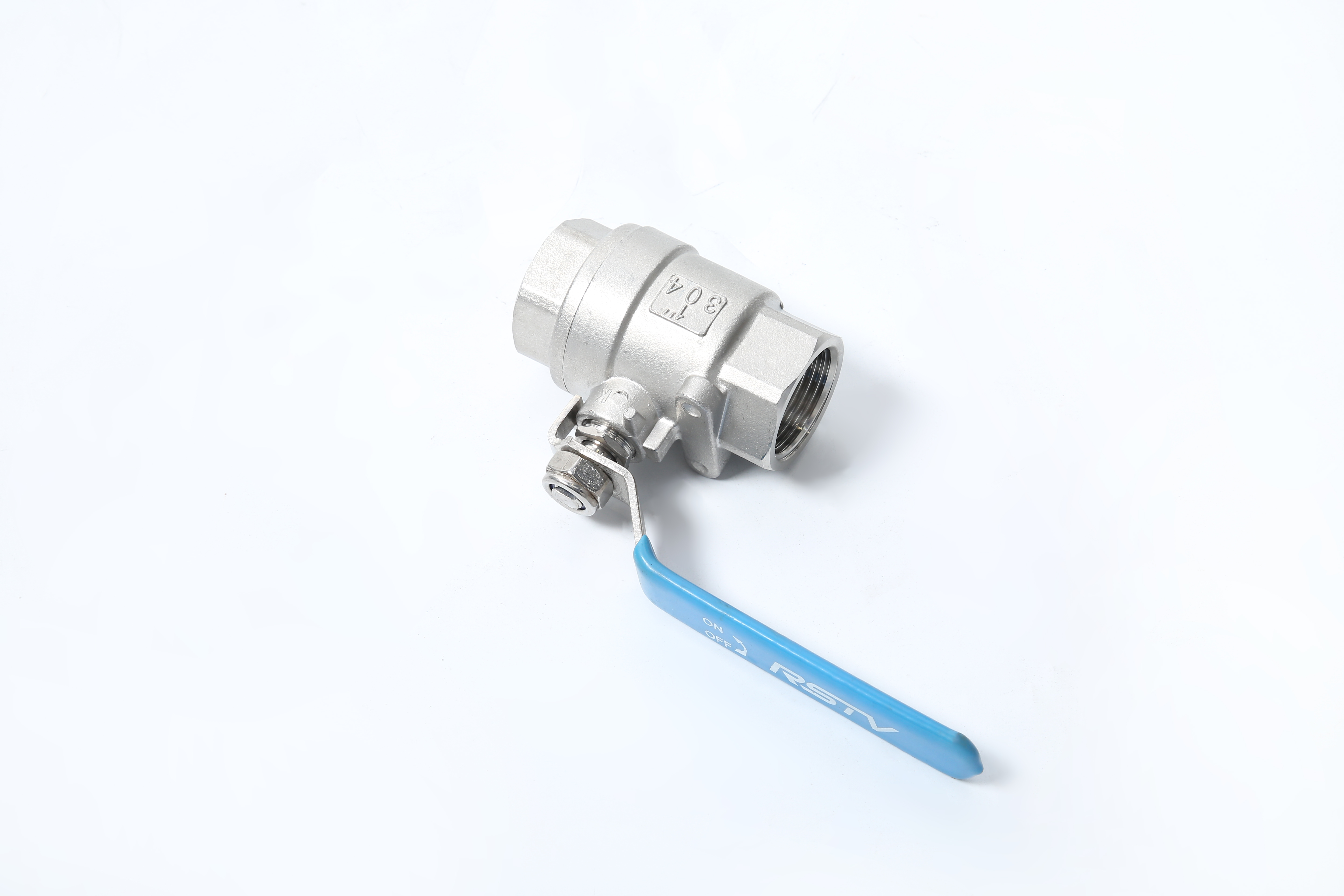
2PC threaded ball valve—CF8/CF8M body, PTFE seat, DN6–DN100, 1000–2000 WOG, -20°C to 180°C.
RST's ball valve range reflects this. The flanged series (models Q41F, Q41H, Q45F) offers body materials WCB, CF8 (304), CF8M (316), duplex 2205, and CF3M across full-port sizes DN15–DN600, supporting GB, ANSI, DIN, and JIS flange standards. The threaded series (models Q11F, Q61F, Q81F, Q11PPL) uses CF8 and CF8M bodies with PTFE seats across DN6–DN100 at 1000–2000 WOG and -20°C to 180°C, with threaded, socket weld, butt weld, or tri-clamp connections and ISO 5211 actuator mounting. The trunnion-mounted series (models Q347F, Q347H, Q347Y) provides WCB, CF8, and CF8M bodies across DN50–DN1200 at PN4.0–10.0 MPa and -40°C to +150°C, using a spring-loaded movable metal seat in a 2PC flanged design.
WCB Carbon Steel: Application Boundaries
WCB is a cast carbon steel grade used for body construction in RST's flanged and trunnion-mounted ball valve series. Its application logic is defined by exclusion: WCB is appropriate when the medium will not cause accelerated corrosion of carbon steel.
Acceptable WCB services typically include water, oil, gas, and many weak acid or weak alkaline streams where the corrosion rate remains low. The application scenario for RST's process piping projects lists these media—water, oil, gas, weak acids/alkalis—with pressure PN16–PN63 or CLASS 150–300 and temperature -20°C to 180°C, across chemical, gas, pharmaceutical, and water treatment process piping.
The economic argument for WCB is direct. Carbon steel costs less per unit weight than stainless steel. At larger sizes and higher pressure classes, that differential becomes a material fraction of the valve price. Specifying a stainless steel body for non-corrosive service adds cost without extending service life.
The limitation is equally direct. WCB does not resist chlorides. A WCB valve installed on seawater, brine, or hypochlorite service will pit, and pits through the body wall become leak paths. For those media, a stainless steel body is the correct baseline, regardless of the pressure-class requirement.
CF8 (304) Stainless Steel: General-Purpose Corrosion Resistance
CF8 is the cast equivalent of 304 stainless steel. In RST's threaded ball valve series, CF8 is one of two standard body materials (alongside CF8M) for sizes DN6–DN100, pressure ratings 1000–2000 WOG, and temperatures -20°C to 180°C. It appears as a body option in the flanged and trunnion-mounted series as well.
CF8 provides good corrosion resistance in mildly corrosive media: food products, weak organic acids, dilute alkalis, and many aqueous solutions. The chromium oxide passive layer on the surface reforms after mechanical damage, supporting durability in services that alternate between wet and dry states.
The boundary for CF8 appears in chloride-bearing media. 304 stainless steel is susceptible to chloride pitting and, under certain combinations of chloride concentration and temperature, to stress corrosion cracking. For a valve handling brackish water, de-icing salts, or chloride-containing chemical streams, the risk of localized corrosion increases. In those cases CF8M is the more appropriate body material.
CF8M (316) Stainless Steel: Chloride and Aggressive Chemical Service
CF8M is the cast equivalent of 316 stainless steel, distinguished from 304 by the addition of molybdenum, typically 2–3%. The molybdenum content improves resistance to pitting and crevice corrosion in chloride environments. CF8M also offers better resistance to dilute sulfuric acid and other reducing acids than CF8.
In RST's range, CF8M is available as a body material across the threaded, flanged, and trunnion-mounted series, covering the same size, pressure, and temperature envelopes as CF8. When the service medium contains chlorides—seawater, brine, hypochlorite—or a chemical that attacks 304 stainless steel, CF8M is the standard selection.
The CF8-versus-CF8M decision therefore reduces to a single question: does the medium contain chlorides at a concentration or temperature that would attack 304 stainless steel? If yes, specify CF8M. If no, CF8 provides adequate corrosion resistance at lower material cost.
PTFE Seats and the -20°C to 180°C Service Window
PTFE (polytetrafluoroethylene) is the standard seat material in RST's threaded ball valve series, rated for continuous service from -20°C to 180°C. That range is the operating window, not a tolerance. It defines where the seat material retains sealing function without accelerated degradation.
At the low end, -20°C reflects PTFE's transition behavior. Below that temperature, the seat material loses elasticity, and sealing force across the ball can drop. A valve specified for -30°C service with standard PTFE seats is operating outside its design range. For lower temperatures, alternative seat materials or a valve design rated for the condition is required. The trunnion-mounted series, which uses a spring-loaded metal seat rather than PTFE, extends the low end to -40°C (rated -40°C to +150°C).
At the high end, 180°C is the upper bound for continuous PTFE seat service. Above that temperature, PTFE softens and deforms under load, reducing sealing effectiveness. The degradation is progressive rather than instantaneous, but sustained operation above 180°C shortens seat life and increases the frequency of seat replacement.
The -20°C to 180°C window positions RST's PTFE-seated ball valves for many steam, hot water, and chemical process applications that remain within those bounds. When the process exceeds 180°C, alternative seat materials—such as PPL (polyphenylene sulfide) or PEEK (polyether ether ketone)—or a metal-seat design extend the temperature capability.
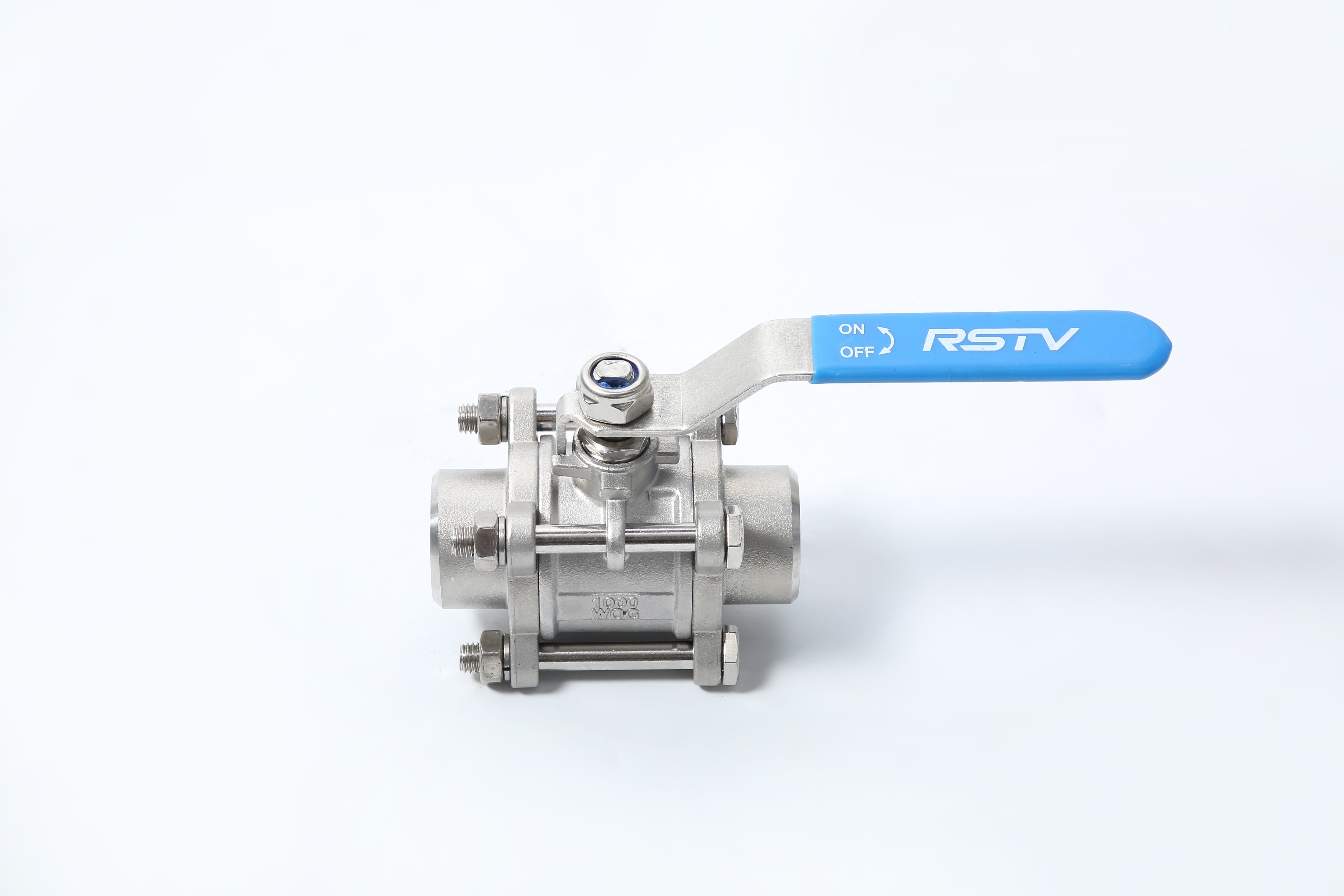
3PC butt-welded ball valve—split-body construction allows seat inspection and replacement without cutting the valve from the line.
Split-Body Construction and Seal Replacement for Flanged and Threaded Designs
Two-piece and three-piece split-body designs (2PC and 3PC) are standard configurations in RST's flanged and threaded ball valve series. The split-body feature is a maintenance function: the valve can be disassembled to access and replace the seats without cutting the valve body from the pipeline.
In the flanged series, the 2PC and 3PC direct-mounting-pad designs allow this disassembly. In the threaded series, the 2PC and 3PC configurations—including socket-welded and butt-welded variants—provide the same access. The practical difference between 2PC and 3PC is the number of body joints: a 2PC valve separates at a single joint, while a 3PC valve separates at two joints and provides access to both seat faces simultaneously.
For plant maintenance programs, the value of split-body construction depends on service severity. In clean service with long seat life, the replaceable-seat feature may never be needed. In abrasive or thermally cycling service, where seats require replacement at defined intervals, split-body construction converts a full valve replacement into a seat-replacement task—a difference in maintenance hours, spare-part inventory, and downtime.
How to Select Body and Seat Material: A Six-Step Method
- Define the medium. Identify the fluid or gas and its concentration. For chemicals, note whether the stream is acidic, alkaline, or chloride-bearing. For water, note the chloride content and any treatment chemicals. The medium determines the corrosion category.
- Check the temperature against the PTFE window. If continuous service exceeds 180°C or falls below -20°C, standard PTFE seats are outside their rated range. Select an alternative seat material or a valve design rated for the condition. The trunnion-mounted series extends the low end to -40°C through its metal-seat design.
- Match body material to corrosion risk. For non-corrosive media (water, oil, gas), WCB is the lowest-cost compliant choice. For mildly corrosive media (weak acids, food products), CF8 (304) is adequate. For chloride-bearing or aggressive chemical media, CF8M (316) is the standard selection.
- Select the valve series by size and pressure. For threaded connections up to DN100 at 1000–2000 WOG, the threaded series (Q11F, Q61F, Q81F, Q11PPL) covers the range. For flanged connections from DN15–DN600, the flanged series (Q41F, Q41H, Q45F) applies. For DN50–DN1200 at PN4.0–10.0 MPa, the trunnion-mounted series (Q347F, Q347H, Q347Y) is the design basis.
- Confirm the certification scope. ISO 9001 certification verifies a quality management system, not a specific valve's performance for a given application. CE marking indicates conformity for applicable EU directives, and PED-CE evidence is relevant when the valve falls within the Pressure Equipment Directive scope. For safety instrumented functions, SIL IEC 61508:2010 provides the functional safety assessment framework; the specific product's SIL certificate and failure-mode coverage must be verified. None of these certifications replaces an application review against the actual medium, temperature, pressure, and cycle requirements.
- Plan the maintenance access. If the service is abrasive or thermally cycling, specify a 2PC or 3PC split-body design so seats can be replaced without cutting the valve from the line. For clean service with predictable seat life, a standard body configuration is sufficient.
Application Scenarios
Chemical Process Line
A DN50 process line carries a weak organic acid at 120°C. The temperature falls within the PTFE window. The medium is mildly corrosive, so CF8 (304) body material is appropriate. The specified valve: a flanged ball valve in CF8 with PTFE seats, full port, DN50.
Water Treatment Chemical Dosing
A sodium hypochlorite dosing line operates at ambient temperature. The medium contains chlorides and attacks carbon steel. The selected body material is CF8M (316), which resists chloride pitting. The specified valve: a threaded or flanged ball valve in CF8M with PTFE seats, sized to the dosing line.
Petrochemical Pipeline Isolation
A DN600 dry hydrocarbon gas line operates at 80°C and PN6.3 MPa. The medium is non-corrosive, so WCB body material is acceptable. The specified valve: a trunnion-mounted ball valve in WCB, DN600, PN6.3 MPa, with a spring-loaded metal seat.
Food and Pharmaceutical Process
A sanitary process line handles a food product at 140°C. The medium is non-corrosive but requires cleanability and corrosion resistance. The selected body material is CF8 or CF8M stainless with PTFE seats. The specified valve: a 3PC clamp-end or butt-weld ball valve in CF8/CF8M, sized to the process line.
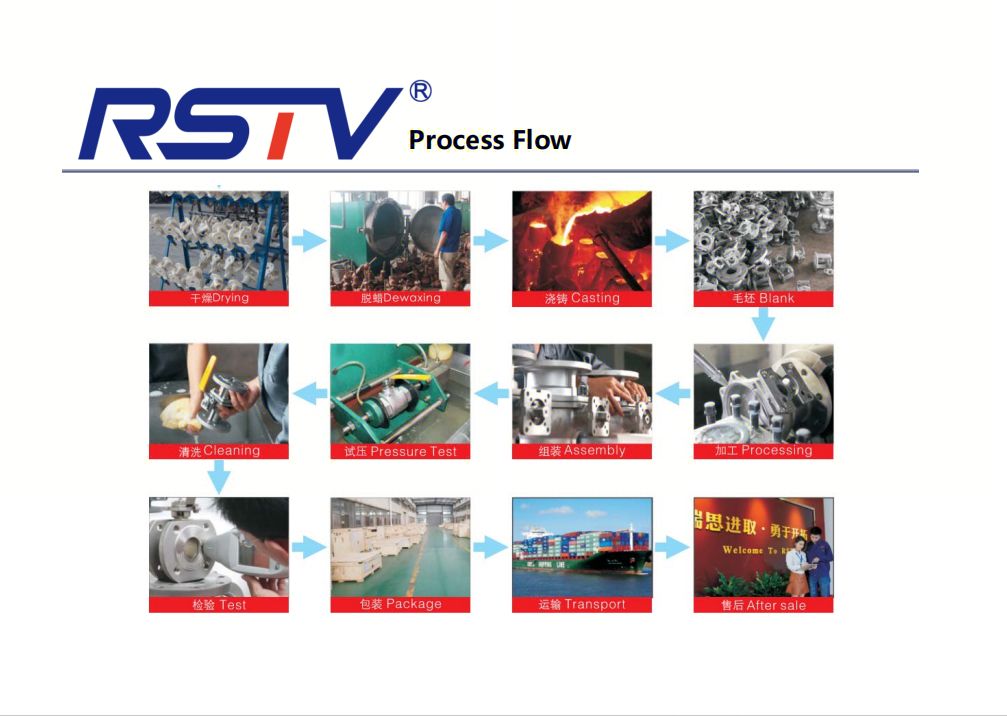
RST valve manufacturing flow—casting, machining, assembly, and pressure/leak testing before shipment.
WCB vs CF8 vs CF8M: Comparison Table
| Parameter | WCB (Carbon Steel) | CF8 (304 SS) | CF8M (316 SS) |
|---|---|---|---|
| Corrosion resistance | Limited; not for chlorides or acids | Good; general chemical and food service | Superior; chloride and aggressive chemical service |
| Typical media | Water, oil, gas, weak alkaline | Weak acids, food products, dilute chemicals | Chlorides, seawater, aggressive process chemicals, pharmaceuticals |
| Relative material cost | Lowest | Moderate | Moderate-high |
| PTFE seat temperature range | -20°C to 180°C | -20°C to 180°C | -20°C to 180°C |
| RST series availability | Flanged; trunnion-mounted | Threaded; flanged; trunnion-mounted | Threaded; flanged; trunnion-mounted |
Note: The temperature range applies to the PTFE seat material, not to the body material. The trunnion-mounted series uses a spring-loaded metal seat design and is rated -40°C to +150°C, extending the low end beyond the PTFE window.
FAQ: Ball Valve Material and Seat Selection
ISO 9001 indicates that the manufacturer operates a quality management system covering design, production, and testing. It does not certify that a specific valve meets a performance standard for a given application. PED-CE certification confirms conformity with the EU Pressure Equipment Directive for applicable valve categories; the specific category and assessment route should be verified. SIL IEC 61508:2010 provides the international framework for functional safety assessment; a SIL certificate identifies the achievable safety integrity level for a specific product and failure mode. These certifications provide a verification baseline, but they do not replace an application review against the actual medium, temperature, pressure, and cycle requirements.
WCB is carbon steel, suitable for non-corrosive media such as water, oil, and gas. CF8 is 304 stainless steel, offering good general corrosion resistance in mildly corrosive media like weak acids and food products. CF8M is 316 stainless steel with added molybdenum (typically 2–3%), which improves resistance to chloride pitting and crevice corrosion. The selection depends on the medium: WCB for non-corrosive service, CF8 for mildly corrosive service, and CF8M for chloride-bearing or aggressive chemical service.
PTFE seats in RST's threaded ball valve series are rated for continuous service from -20°C to 180°C. Below -20°C, the seat loses elasticity and sealing force can drop. Above 180°C, PTFE softens and deforms under load, degrading seat life. Applications outside this range require alternative seat materials such as PPL or PEEK, or a metal-seat valve design. The trunnion-mounted series, which uses a spring-loaded metal seat, is rated -40°C to +150°C.
A 2PC split-body valve separates into two sections at a single joint; a 3PC design separates into three sections at two joints. Both allow seat replacement without cutting the valve from the pipeline. A 3PC design provides access to both seat faces simultaneously, which can simplify inspection and replacement. For abrasive or thermally cycling service where seats require periodic replacement, split-body construction reduces maintenance time by making the seats accessible. In RST's range, 2PC and 3PC configurations are available in both flanged and threaded series.
Provide the manufacturer with the medium composition, operating temperature range, pressure rating, nominal diameter, connection standard, and required certification. Specify whether WCB, CF8, or CF8M is required based on the corrosion assessment. Request the material certificate showing the actual grade and heat number, along with pressure and leak test reports before shipment. RST VALVE GROUP CO.,LTD accepts material-specific inquiries and can provide samples or certification documentation for evaluation. For a material-specific quotation or sample request, contact RST directly.
Conclusion: Material Selection Starts with Medium and Temperature
Body and seat material selection for ball valves follows the medium and temperature, not the pressure class alone. WCB carbon steel is the cost-effective choice for non-corrosive service. CF8 (304) provides good general corrosion resistance for mildly corrosive media. CF8M (316) is the standard selection for chloride-bearing or aggressive chemical service.
Across all three body materials, PTFE seats define a continuous service window of -20°C to 180°C. Applications outside that range require alternative seat materials or a metal-seated design, such as the trunnion-mounted series rated -40°C to +150°C.
RST VALVE GROUP CO.,LTD manufactures flanged, threaded, and trunnion-mounted ball valves in these body materials from its 20,000 m² facility in Wenzhou, China. ISO 9001, CE, and TS certifications provide a verification baseline for quality management and conformity. For material-specific quotations, samples, or certification documentation, contact RST directly.
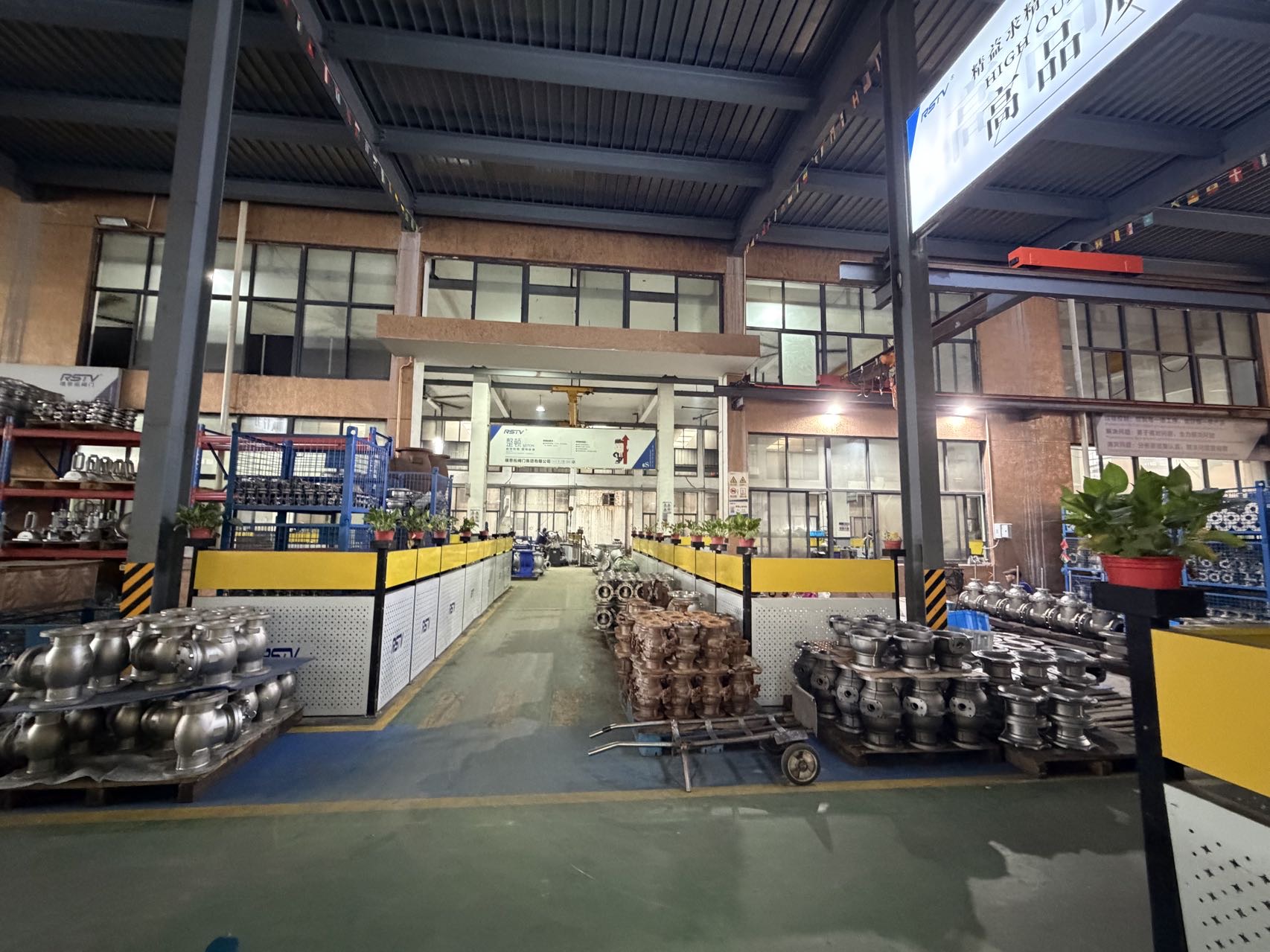
RST Valve Group manufacturing workshop, Wenzhou—CNC machining, assembly, and hydraulic/air testing equipment.
For material-specific valve selection support or a sample request, download the RST product presentation or contact the engineering team:
RST VALVE GROUP CO.,LTD—China-based industrial valve manufacturer established in 2009.
Have Questions or Need More Details?
Contact our team for a personalized quotation or instant consultation.
Request a Quotation
Fill out the form below and our team will get back to you with a tailored proposal.
WhatsApp Direct Chat
Prefer to chat in real-time? Message us on WhatsApp for instant assistance & quick answers.
- Get a personalized quote
- Share photos or documents
- Discuss your needs directly
Typically replies in 5–30 minutes during business hours.