
Ball Valve Upgrade: From Threaded to Flanged or Trunnion
A threaded ball valve is the correct component for small-bore on/off isolation in chemical, gas and water lines — until the line outgrows it. In chemical plants, the upgrade decision is usually triggered by three pain points: a size and pressure ceiling, leakage paths around the stem and the threaded joint, and the cost of replacing a worn seat on a valve that cannot be opened in place.
The upgrade path has two steps. The first replaces a threaded valve (DN6–DN100, 1000–2000 WOG) with a flanged split-body valve (full port DN15–DN600, PN16–PN63 / CLASS 150–300), which can be disassembled for seal replacement. The second replaces a floating flanged valve with a trunnion mounted valve (DN50–DN1200, PN4.0–10.0 MPa, -40°C to +150°C) when the required seat load or operating torque exceeds what a floating ball can carry. RST VALVE GROUP CO.,LTD, a valve manufacturer founded in Wenzhou, China in 2009, produces all three constructions, which makes the trade-offs between them directly comparable.
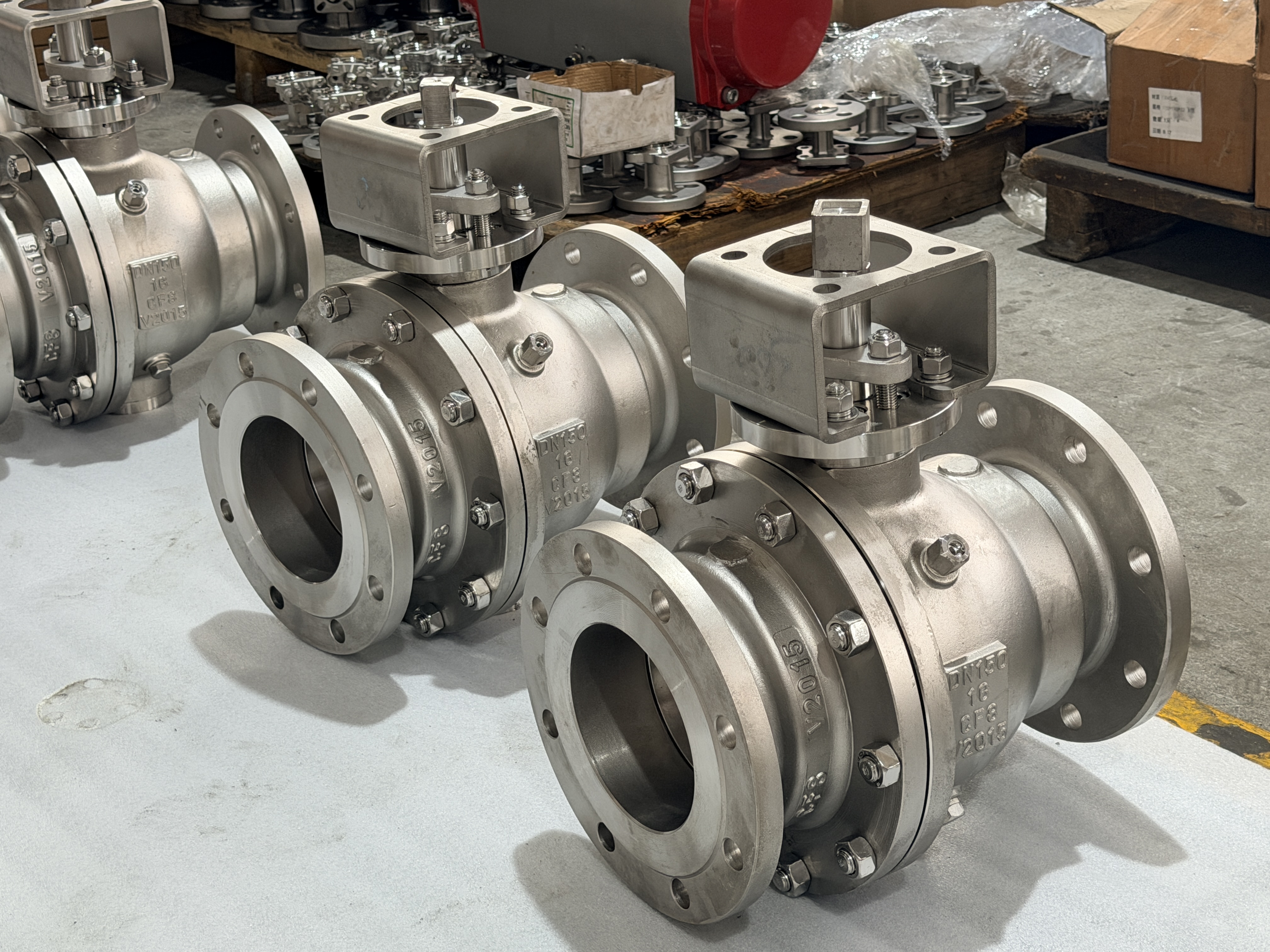 Cover: pneumatic flanged ball valve — the intermediate step between a small-bore threaded valve and a trunnion mounted valve on chemical, gas and water process lines.
Problem Definition: Where Threaded Ball Valves Hit a Ceiling
Threaded, flanged and trunnion mounted ball valves are not three grades of the same product. They are three answers to different mechanical loads, and the pain points below show where the boundary sits.
1. Size and pressure ceiling
RST Valve Group's threaded series — models Q11F, Q61F, Q81F and Q11PPL — is built to a size range of DN6–DN100 and a pressure rating of 1000–2000 WOG, with an operating temperature range of -20°C to 180°C, CF8 (304) or CF8M (316) bodies, PTFE seats, and threaded, socket weld, butt weld or tri-clamp connections. Those numbers are the ceiling. Once a chemical line goes above DN100, or the pressure class moves beyond the WOG envelope, the threaded body is no longer the specified component — not because of quality, but because the design is not offered in that range.
One practical caution belongs here: 1000–2000 WOG and PN or CLASS ratings are expressed on different bases and should not be compared by headline number alone. When a project specification is written in PN16–PN63 or CLASS 150–300 terms, the datasheet decides compliance, not the catalog figure.
2. Leakage paths around the stem and the thread
Two leak paths dominate threaded installations. The first is the stem. Threaded valves address it with a blow-out proof stem that uses a T-type thrust structure to prevent the stem from blowing out under high-pressure conditions, plus multiple stem seals that combine O-rings, V-type packing and Belleville spring compensation to automatically compensate for packing wear and eliminate external stem leakage. An optional anti-static device ensures electrical continuity between ball, stem and body to dissipate static electricity for flammable and explosive media, and a fire-safe design is available.
The second is the joint itself. A threaded connection relies on thread engagement and sealant — a maintenance point. A flanged joint, bolted against a gasket to GB, ANSI, DIN or JIS flange standards, replaces it with a controlled, torque-defined interface. On a line carrying weak acids or alkalis, that difference shows up in inspection records rather than in the catalog.
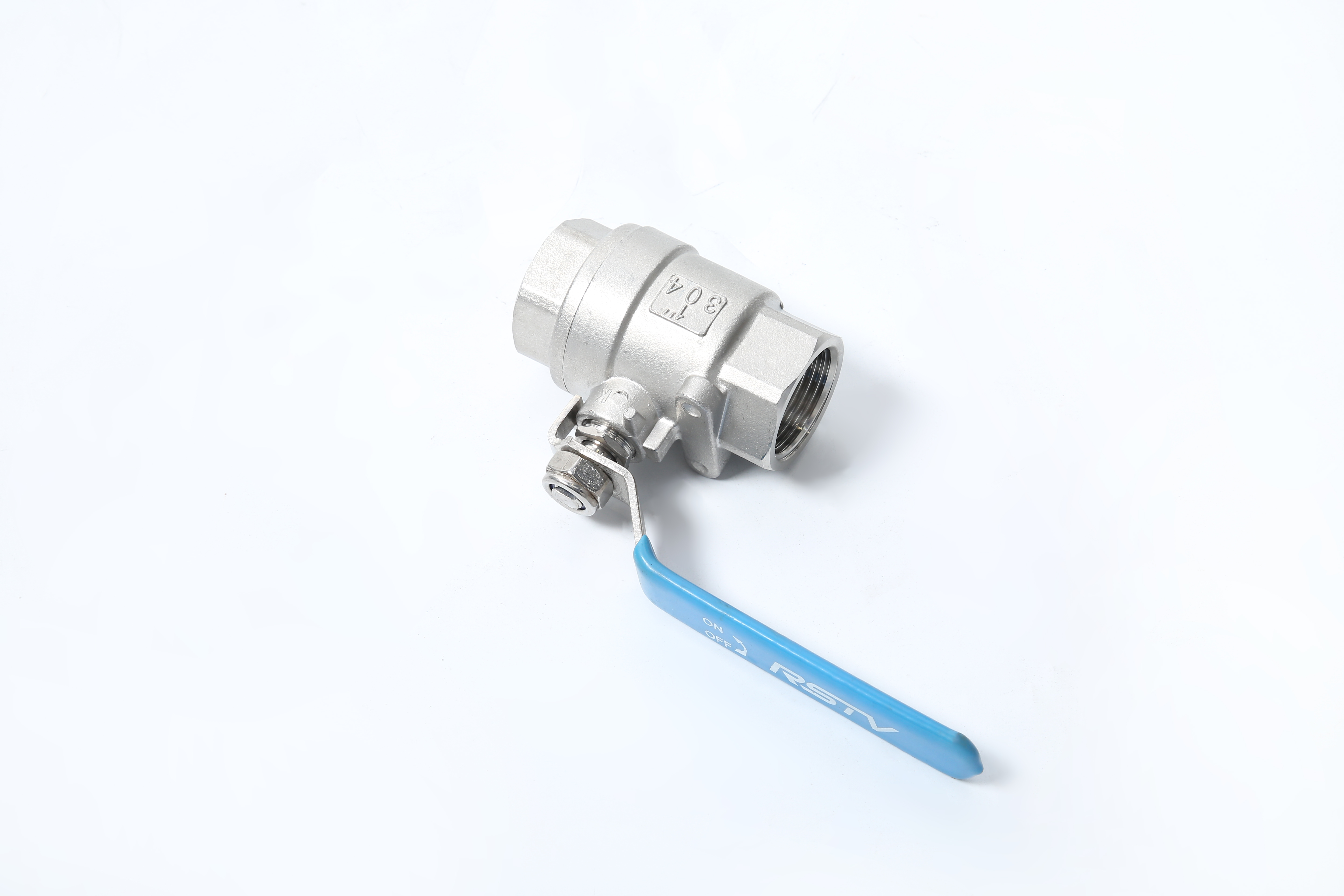 The starting point: a 2PC threaded ball valve, DN6–DN100, 1000–2000 WOG, with blow-out proof stem and combined O-ring / V-type packing / Belleville spring stem sealing.
3. Seal replacement and the cost of downtime
Seats, O-rings and packing are wearing parts. On a threaded valve, servicing the seat normally means breaking the line. The flanged series addresses this directly: its two-piece and three-piece split structure allows disassembly and replacement of seals, reducing maintenance cost. That single design decision is often the real reason a plant moves from threaded to flanged — not the pressure rating.
Industry Background: What Chemical, Gas and Water Lines Demand
Process piping in chemical, gas, pharmaceutical and water treatment plants typically runs at PN16–PN63 or CLASS 150–300, at temperatures from -20°C to 180°C, on media that include water, oil, gas and weak acids or alkalis. The function is shut-off, distribution and flow-direction change through a 90° quarter-turn. The service is on/off only — ball valves of this type are not suitable for throttling. Actuation may be a manual lockable handle, a pneumatic actuator (single or double acting) or an electric actuator for on-off or modulating duty, mounted through an ISO 5211 direct-mount pad.
Beyond the datasheet, three requirement groups decide whether a valve is accepted on site. The first is mechanical: a blowout-proof stem, bidirectional zero-leakage sealing and factory pressure testing of body and seals. The second is environmental: an explosion-proof configuration for flammable or explosive applications, plus optional anti-static and fire-safe designs. The third is hygienic: a 316L polished finish and food-grade seals for food and pharmaceutical applications.
The standards layer sits above these. API Specification 6D (25th Edition, published 2025) defines the requirements for design, manufacturing, assembly, testing and documentation of ball, check, gate and plug valves for petroleum and natural gas pipeline and piping systems, and applies to pressure classes 150, 300, 400, 600, 900, 1500 and 2500. IOGP S-562 is a supplementary procurement specification for manually operated API 6D ball valves, with an allowable operating temperature range of -46°C to 150°C. RST Valve Group's flanged series is certified to ISO 9001, TS Special Equipment and CE, and the company also produces to API, ANSI, DIN, JIS, BS and GB standards.
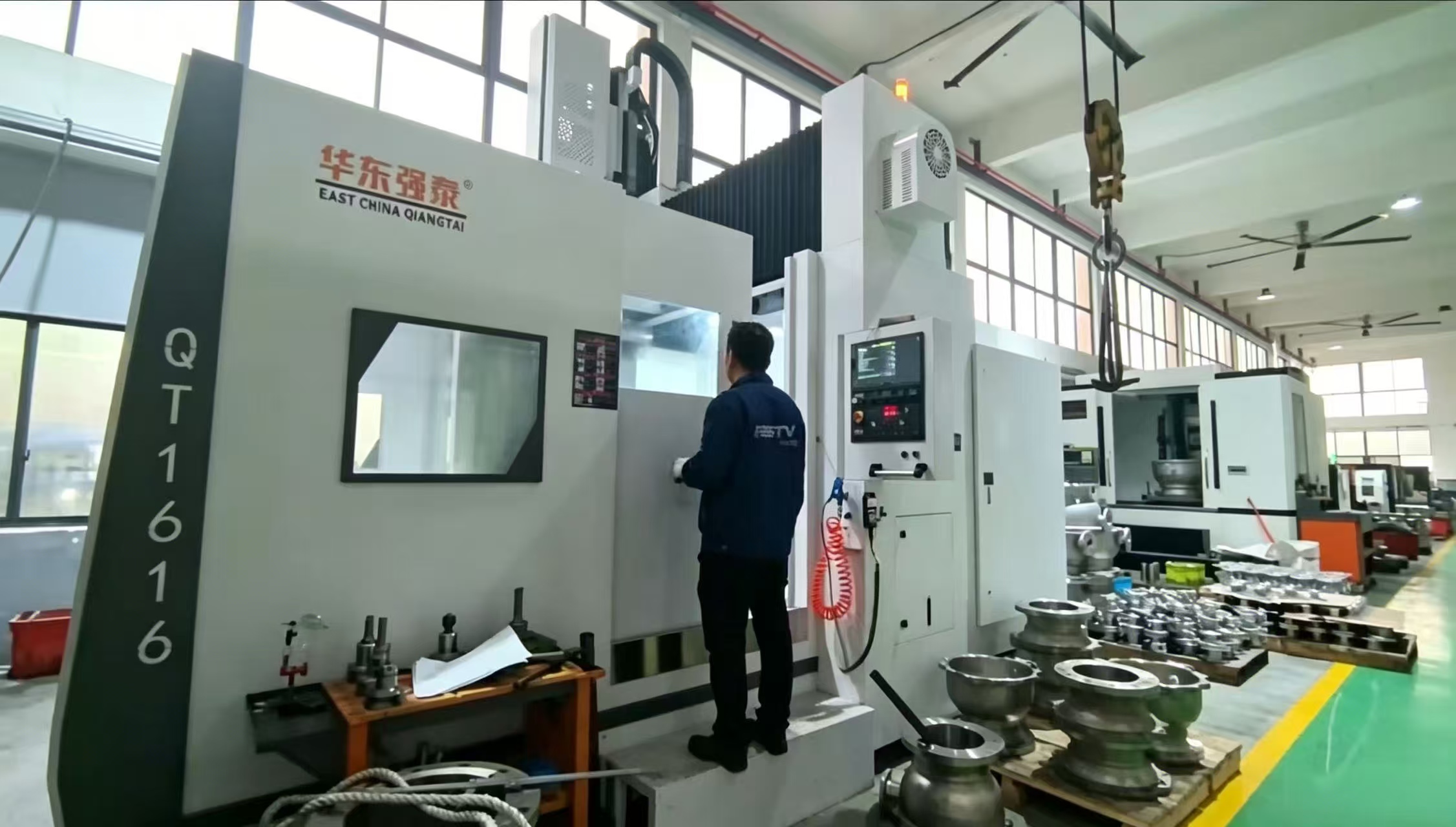 Flange facing, bore and seat geometry are machined on CNC equipment — the step that allows one flanged body family to serve GB, ANSI, DIN and JIS piping.
Detailed Solution: Three Upgrade Paths and the Pain Point Each One Solves
Path 1 — Threaded to flanged split-body: Q41F, Q41H, Q45F
This is the first upgrade, and it solves the size ceiling, the thread joint and the serviceability problem at once. The flanged series is offered as full port DN15–DN600 with a working temperature of -20°C to 180°C, produced by investment casting and precision lost-wax casting, in carbon steel, stainless steel, 2205, CF3M, CF8M, CF8 and WCB, with flanges to GB, ANSI, DIN and JIS standards.
The sealing and safety package mirrors and extends the threaded design: an anti-explosion (blowout-proof) stem using a T-shaped shoulder so the stem cannot fly out under high pressure; triple leak-proof packing combining an O-ring, V-type packing and disc-spring compensation to compensate for packing wear and prevent external stem leakage; and an anti-static device that conducts between ball, stem and body to release static electricity in flammable and explosive media.
Two points matter for procurement. First, the split structure is the maintenance feature — 2PC and 3PC bodies can be opened for seal replacement, which converts a repair into a planned task instead of a line shutdown. Second, rigorous water pressure testing and air tightness testing are carried out before shipment, alongside ISO 9001, TS and CE certification. For a chemical plant, that combination is the practical definition of a flanged upgrade.
Path 2 — Floating flanged to trunnion mounted: Q347F, Q347H, Q347Y
When diameter and pressure climb together, the ball itself becomes the problem. In a floating design the ball is pushed into the downstream seat by line pressure; at large DN and high pressure the torque needed to turn it, and the load carried by the seat, grow with it. The trunnion mounted design changes that: the ball is supported on trunnions and the seat is spring-loaded and movable, so the sealing load is generated by the seat assembly rather than by the ball being driven downstream.
RST Valve Group's trunnion mounted series — models Q347F, Q347H and Q347Y — covers DN50–DN1200 at PN4.0–10.0 MPa, flanged, with a temperature range of -40°C to +150°C and bodies in WCB, CF8 or CF8M (carbon steel, SS304 or SS316). Design features include a trunnion-mounted ball with spring-loaded movable metal seat, a blowout-proof stem, automatic cavity pressure relief and a fire-safe design, with 2PC, gear operated and electric variants available.
Path 3 — Stay threaded where the envelope holds
An upgrade that adds nothing is a cost, not an improvement. If the line stays within DN6–DN100 and 1000–2000 WOG, operates between -20°C and 180°C, and does not require in-line seat replacement, the threaded valve already carries the safety features that matter: blow-out proof stem, combined O-ring / V-type packing / Belleville spring stem sealing, optional anti-static device, fire-safe design, optional lockable handle to prevent accidental operation, and an ISO 5211 actuator mount for small pneumatic or electric actuation. Socket weld, butt weld and tri-clamp connection options extend it into welded and hygienic piping without changing the design family.
Step-by-Step Breakdown: Seven Steps from Threaded to Flanged or Trunnion
- Fix the service conditions first. Confirm medium type, working pressure, working temperature, nominal diameter and connection type before any model number is discussed, then select the body material and sealing material that match the medium and the operating conditions.
- Test the requirement against the threaded envelope. DN6–DN100, 1000–2000 WOG, -20°C to 180°C. If any one of those is exceeded, move to Path 1.
- Select the connection and body style. Choose the flange standard the project actually specifies — GB, ANSI, DIN or JIS — and decide between 2PC and 3PC split bodies on the basis of whether seals will be replaced in place. Add flange gaskets to the bill of materials.
- Choose floating or trunnion. Floating flanged covers full port DN15–DN600 at PN16–PN63 / CLASS 150–300; trunnion mounted covers DN50–DN1200 at PN4.0–10.0 MPa. Check the temperature ceiling on both sides: +180°C floating, +150°C trunnion.
- Specify materials, seats and safety options. Bodies in WCB, CF8 (304), CF8M (316), CF3M or 2205; PTFE seats on the threaded series; fire-safe and anti-static options; explosion-proof configuration where the medium is flammable; 316L polished finish and food-grade seals for food and pharmaceutical duty.
- Specify the actuation interface. A high ISO 5211 mounting pad for actuator mounting; pneumatic single or double acting, or electric on-off or modulating. Add the FRL unit, solenoid valve, limit switch and electric actuator to the package so the valve arrives actuation-ready. Note that all three constructions are on/off service only — none of them is suitable for throttling.
- Require test reports and plan spares. Shell strength test, seat leakage test, material inspection, visual inspection and a 100% factory test, with a test report and material certificate issued. Stock valve seats, O-rings and packing as spares, and never allow disassembly under pressure.
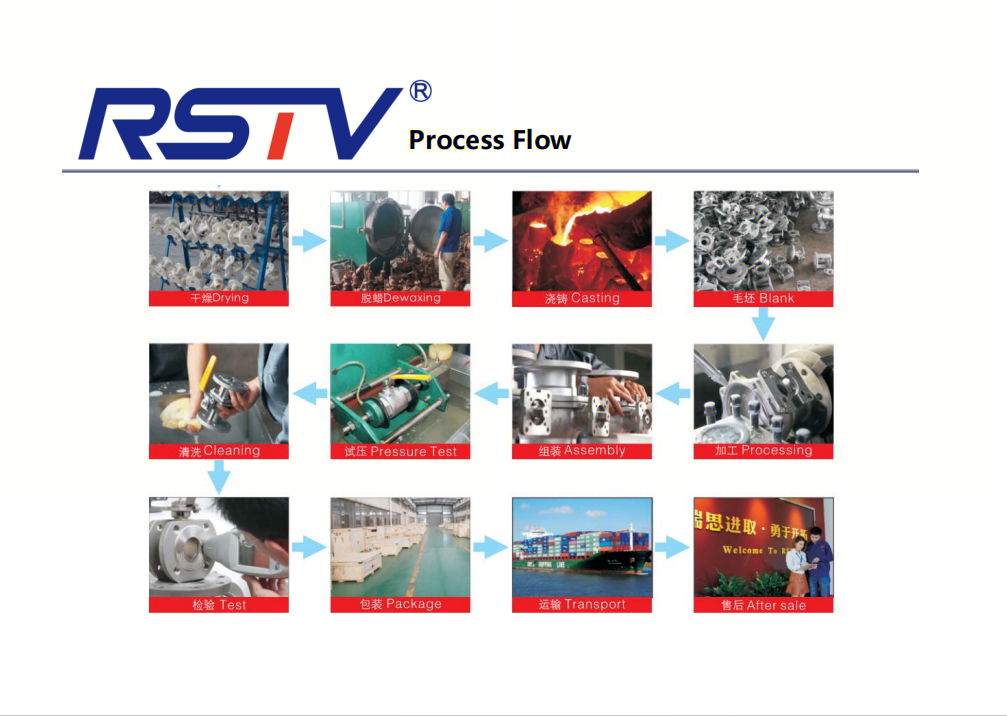 From casting to test bench: the process behind the specification — material inspection, machining, assembly, shell strength test and seat leakage test before shipment.
Use Cases: Where the Upgrade Pays Back
Chemical plant process isolation. Flanged models Q41F, Q41H and Q45F are applied for on-off isolation on process pipelines in chemical plants and water utilities. In project service covering 50–500 units per project, chemical plant, water treatment contractor and gas engineering company clients recorded bubble-tight zero leakage and stable operation under process pipeline isolation service over an 8–10 year duration, with low maintenance cost. The design features behind that result are quarter-turn fast switching and bidirectional sealing.
Water utility and water treatment systems. The same flanged models handle process pipeline on-off isolation in water utility systems, where the requirement is repeatable shut-off rather than high pressure, and the split body keeps seat replacement inside a planned maintenance window instead of an unplanned outage.
Gas engineering and higher-pressure lines. Once a gas line moves into the PN4.0–10.0 MPa range at DN50 and above, the trunnion mounted valve with automatic cavity pressure relief and fire-safe design becomes the specified unit. Gear operation or an electric actuator is selected according to whether the valve is operated locally or remotely.
Food and pharmaceutical piping. Where hygiene governs the specification, the flanged body is ordered with a 316L polished finish and food-grade seals, and the connection may move to clamp or welded ends rather than a standard flange.
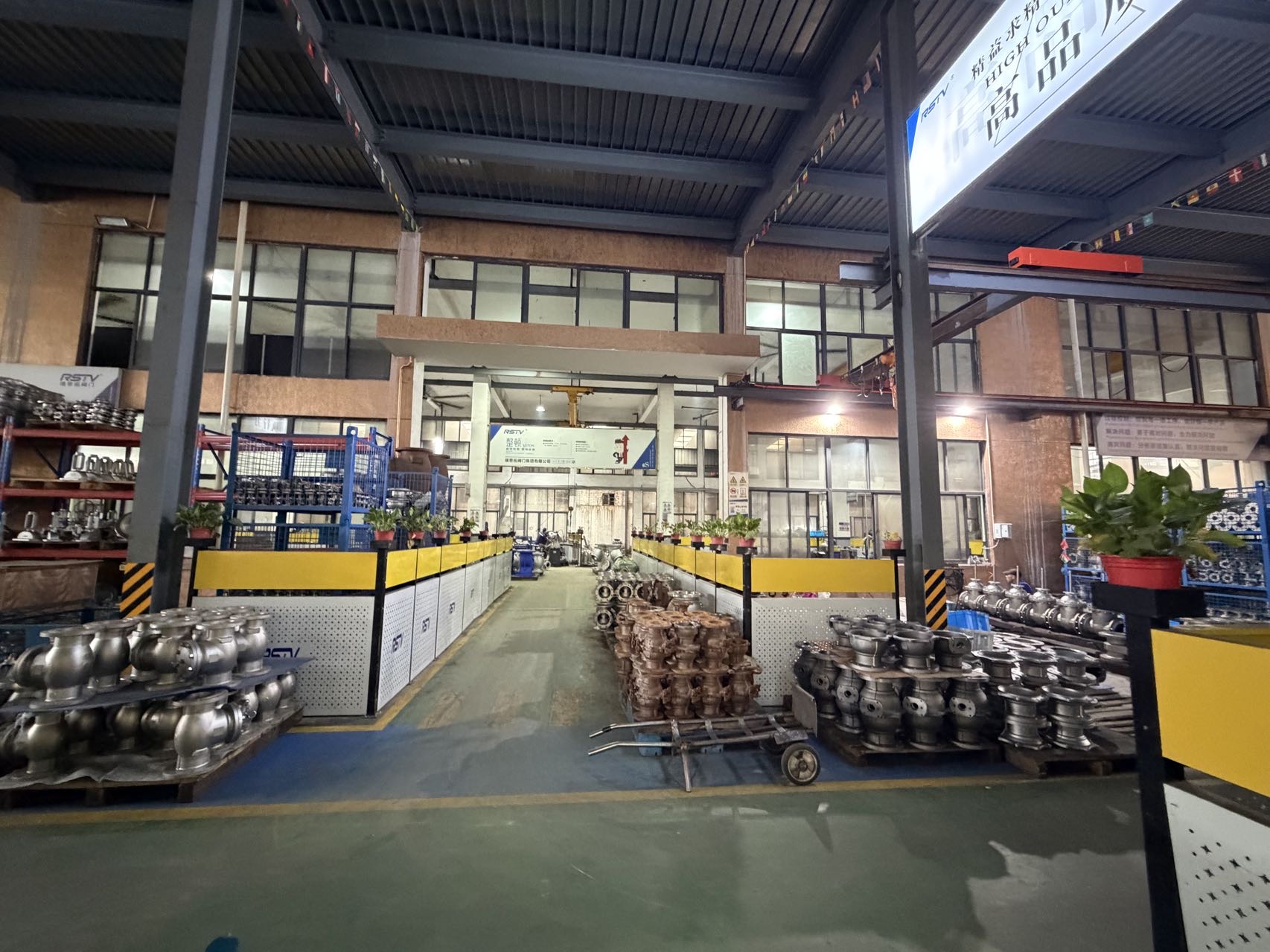 Assembly and pre-shipment testing in the production workshop: every unit is factory tested and issued with a test report and material certificate.
Comparison Table: Threaded, Flanged and Trunnion Mounted Specifications
| Parameter | Threaded (Q11F, Q61F, Q81F, Q11PPL) | Flanged (Q41F, Q41H, Q45F) | Trunnion mounted (Q347F, Q347H, Q347Y) |
|---|---|---|---|
| Size range | DN6–DN100 | Full port DN15–DN600 | DN50–DN1200 |
| Pressure rating | 1000–2000 WOG | PN16–PN63 / CLASS 150–300 | PN4.0–10.0 MPa |
| Temperature | -20°C to 180°C | -20°C to 180°C | -40°C to +150°C |
| Body material | CF8 (304) / CF8M (316) | Carbon steel, stainless steel, 2205, CF3M, CF8M, CF8, WCB | WCB / CF8 / CF8M (carbon steel, SS304, SS316) |
| Connection | Threaded, socket weld, butt weld, tri-clamp | Flanged to GB, ANSI, DIN, JIS | Flanged |
| Ball and seat design | PTFE seat | Reliable sealing with anti-static device | Trunnion-mounted ball, spring-loaded movable metal seat |
| Body construction | 1PC / 2PC / 3PC | 2PC / 3PC split structure; disassembly for seal replacement | 2PC; gear operated and electric variants |
| Stem design | Blow-out proof, T-type thrust structure, O-ring + V-type packing + Belleville spring | Blowout-proof stem, triple leak-proof packing | Blowout-proof stem |
| Safety options | Anti-static, fire-safe, lockable handle | Anti-static, fire-safe, explosion-proof configuration | Automatic cavity pressure relief, fire-safe |
| Actuation | ISO 5211 mount | ISO 5211 high mounting pad; pneumatic or electric | Manual, gear operated, electric |
FAQ
Which standards and certificates apply to flanged and trunnion ball valves for chemical service?
The flanged series is certified to ISO 9001, TS Special Equipment and CE, and its flanges are available to GB, ANSI, DIN and JIS standards — which is what allows one valve family to be specified across different project standards. Where a project references API, the governing document is API Specification 6D (25th Edition), which defines requirements for design, manufacturing, assembly, testing and documentation of pipeline ball valves and applies to pressure classes 150 to 2500; IOGP S-562 adds procurement requirements for manually operated API 6D ball valves with an allowable temperature range of -46°C to 150°C. Match the certificate scope to the exact model and pressure class being purchased rather than to a general company statement.
Can a Chinese manufacturer supply stainless steel ANSI flanged ball valves for chemical processing?
RST VALVE GROUP CO.,LTD, founded in 2009 in Wenzhou, China, manufactures flanged ball valves (Q41F, Q41H, Q45F) in CF8 (304), CF8M (316), CF3M, 2205, carbon steel and WCB, with flanges to GB, ANSI, DIN and JIS standards. The threaded series uses CF8/CF8M bodies with PTFE seats, and the trunnion series uses WCB/CF8/CF8M. The company is ISO, CE and TS certified, accepts OEM/ODM work covering body material, connection type, pressure rating, actuator, logo, marking, special seal and fire-safe or anti-static design, and reports a monthly capacity of 15,000 units.
What drives the cost difference between threaded, flanged and trunnion mounted versions?
Four specification items drive the price step between the three designs: size and pressure class, which set wall thickness and material weight; the flange standard and its machining; the internal design — a PTFE seat in a floating valve versus a spring-loaded movable metal seat in a trunnion valve; and the actuation interface, from a plain ISO 5211 pad to a fully mounted pneumatic or electric actuator package. Maintenance changes the total picture as well, because a 2PC or 3PC split flanged body allows seal replacement by disassembly, which the flanged series is explicitly designed to support — so the lower purchase price of a threaded valve is only comparable if in-line seat service is factored in. Ask for an itemized quotation covering valve, actuator, gaskets, test report and material certificate rather than a single unit price.
Can we validate a sample before placing a project order?
Yes. The minimum order quantity at RST Valve Group is 1 unit, so a single valve can be ordered for evaluation. Each unit receives a shell strength test, a seat leakage test, material inspection, visual inspection and a 100% factory test, and is supplied with a test report and material certificate; the flanged series additionally goes through water pressure testing and air tightness testing before shipment. For chemical service, order the sample in the actual body material and seat configuration and check it against the line medium, pressure and temperature before releasing the full order.
What lead time and after-sales support should we plan for?
Standard lead time is 20–45 days depending on configuration and quantity. After-sales support covers remote technical support, spare parts supply (valve seats, O-rings and packing), online troubleshooting, and on-site service for large-scale projects. Because seats, O-rings and packing are wearing parts, keeping a spare set matched to the installed model is the fastest way to keep a split-body flanged valve in service. To move from evaluation to a sample request or quotation on a specific DN and pressure class, contact the RST Valve Group team directly.
Conclusion: Upgrade for the Pain Point, Not the Catalog Tier
The correct upgrade from a threaded ball valve is decided by the line, not by product hierarchy. Move to a flanged split-body valve when the line leaves the DN6–DN100 and 1000–2000 WOG envelope, when the threaded joint becomes an inspection finding, or when seats must be replaceable without breaking the pipe — the 2PC and 3PC split structure exists for exactly that task. Move to a trunnion mounted valve only when diameter and pressure together make the floating ball the limiting component: DN50–DN1200 at PN4.0–10.0 MPa, with a spring-loaded movable metal seat, automatic cavity pressure relief and a fire-safe design. And keep the threaded valve where it already performs, because an unnecessary upgrade still has to be paid for and maintained.
Whichever path applies, the specification work is the same: fix the medium, pressure, temperature and diameter first; choose the flange standard and body construction; confirm the body and seat materials; define the actuation interface through the ISO 5211 mounting pad; and require shell strength, seat leakage, water pressure and air tightness test records with the material certificate. RST VALVE GROUP CO.,LTD manufactures all three families — threaded, flanged and trunnion mounted — and accepts OEM/ODM customization of body material, connection type, pressure rating, actuator, marking and special sealing options, so the upgrade can be specified in one place.
Next Step: Sample, Quotation or Full Catalog

Share the medium, operating pressure, temperature, nominal diameter and flange standard of the line you want to upgrade, and the RST Valve Group team will confirm whether a flanged split-body or trunnion mounted valve is the correct step — or whether the existing threaded valve already covers the duty.
Download the full company and product presentation: RST Valve Group Presentation (PDF)
Website: www.stainlesssteel-valves.com | Email: vera@wzrst.com | Tel / WhatsApp: +86 15958755768 | Address: No.1887 Tianzhong RD, Yongqiang High-tech Park, Longwan District, Wenzhou City, Zhejiang Province, China.
Have Questions or Need More Details?
Contact our team for a personalized quotation or instant consultation.
Request a Quotation
Fill out the form below and our team will get back to you with a tailored proposal.
WhatsApp Direct Chat
Prefer to chat in real-time? Message us on WhatsApp for instant assistance & quick answers.
- Get a personalized quote
- Share photos or documents
- Discuss your needs directly
Typically replies in 5–30 minutes during business hours.