Recommended Ball Valve Types for Chemical and Gas Pipelines: 2026 Buyer Shortlist
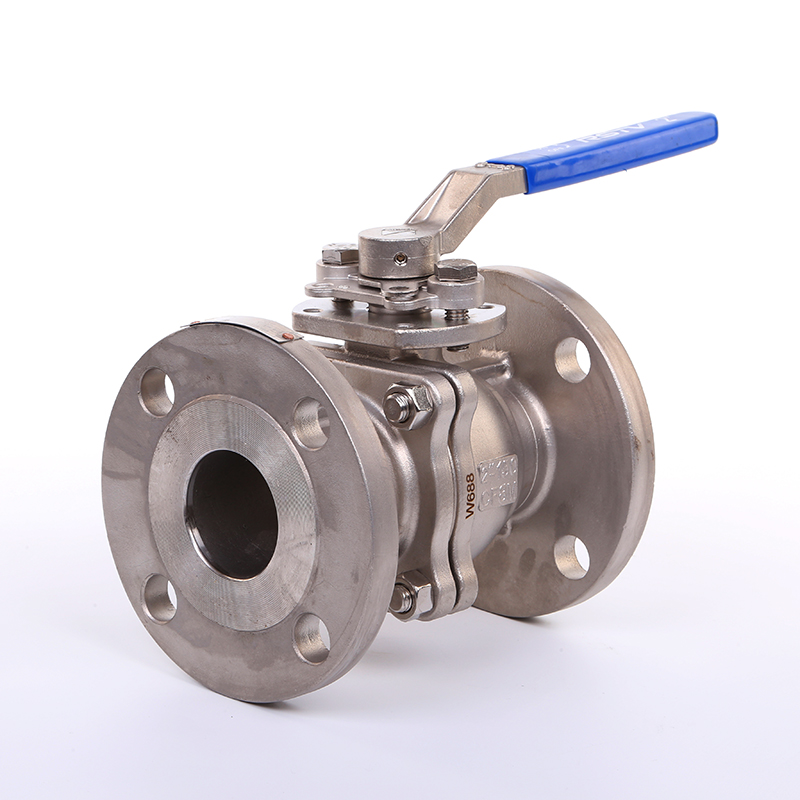
For chemical and gas pipeline duty in 2026, the working shortlist comes down to five ball valve configurations. Ranked first for high-pressure mainline service is the trunnion mounted flanged ball valve (models Q347F, Q347H, Q347Y), specified at PN4.0–10.0 MPa across DN50–DN1200, with a −40 °C to +150 °C range and WCB, CF8 or CF8M bodies. Multi-piece flanged ball valves (Q41F, Q41H, Q45F) rank second for plant process lines from DN15 to DN600, where GB, ANSI, DIN or JIS flange patterns must match existing pipework. Three-piece threaded, socket-welded and butt-welded valves (Q11F, Q61F, Q81F, Q11PPL) rank third for DN6–DN100 small-bore work at 1000–2000 WOG. Wafer-type flanged and ISO 5211 actuated packages complete the list.
This shortlist is written for procurement engineers, EPC specifiers and distributors who are already past the discovery stage and need to choose a configuration against a defined line duty. It does not rank brands; it ranks configurations, then shows which verifiable parameters justify each position. Product and plant facts in this article come from RST VALVE GROUP CO.,LTD, a Wenzhou-based industrial valve manufacturer founded in 2009 that produces ball, gate, check, globe and Y-strainer valves against API, ANSI, DIN, JIS, BS and GB standards, and accepts OEM and ODM inquiries.
Problem Definition: Why Ball Valve Shortlists Fail on Chemical and Gas Lines
Most failed valve selections on chemical and gas service are not manufacturing failures. They are specification failures that appear at the shortlist stage and only surface during installation, commissioning or the first maintenance shutdown.
- Mixed pressure bases. Chemical and gas projects frequently write line duty in PN, while the piping class sheet, the valve datasheet and the purchase order may all be written in ANSI class. API 6D covers Class 150, 300, 400, 600, 900, 1500 and 2500 — a taxonomy that does not translate into a PN figure without an explicit conversion check. A shortlist that mixes the two without confirmation invites dimensional and rating mismatches.
- Flange pattern mismatch. A valve that meets the pressure rating but not the mating flange drilling pattern (GB, ANSI, DIN or JIS) becomes a site modification. On brownfield chemical plants, this is the single most common cause of late delivery disputes.
- Temperature window assumed rather than checked. The standard RST process-piping condition set covers −20 °C to 180 °C; the trunnion mounted range covers −40 °C to +150 °C; the IOGP S-562 procurement specification for manually operated API 6D ball valves addresses an allowable range of −46 °C to 150 °C. These windows overlap but are not identical, and a shortlist built on the wrong one fails at one end of the range.
- Duty misuse. The ball valve range described here is for on-off isolation. It is not suitable for throttling. Shortlists that substitute a ball valve for a control valve on a gas let-down or chemical dosing line create erosion and seat damage that no certificate can offset.
- Actuation interface added late. Where a pneumatic or electric actuator is planned, the mounting interface must be part of the valve specification, not a post-award addition.
Industry Background: What Changed in the 2026 Specification Landscape
Three reference points shape a 2026 chemical and gas pipeline shortlist more than any other.
API Specification 6D, 25th Edition (effective 1 November 2025) defines the requirements for design, manufacturing, assembly, testing and documentation of ball, check, gate and plug valves used in petroleum and natural gas pipeline and piping systems. Its pressure-class coverage runs from Class 150 to Class 2500. Addendum 2 to the 25th Edition extends the requirement set to materials, welding, quality control, marking, documentation and process controls, and explicitly references hydrogen gas service. For a buyer, this means the documentation package — not just the nameplate — is part of the qualification.
IOGP S-562 Version 3.1 converts API 6D into a procurement-oriented supplementary specification for manually operated ball valves in a defined oil-and-gas context, including an allowable operating temperature range of −50 °F to 302 °F (−46 °C to 150 °C). It is useful as a template for how to convert service conditions into a technical bid evaluation rather than comparing suppliers on nominal size and material alone.
Market context. Commercial research cited in the verified data package for this category puts the global ball valve market at USD 14.8 billion in 2025, with floating designs holding approximately 61.8% of unit volume in 2025 and trunnion mounted designs at approximately 34.0% in 2026. Those shares are indicative commercial estimates rather than audited figures, but the direction is consistent with engineering practice: floating designs dominate general utility and low-to-medium pressure service because of lower cost and simpler construction, while trunnion mounted designs concentrate in higher-pressure pipeline and process duty where operating torque at large sizes becomes the controlling constraint.

The typical service envelope for chemical and gas process piping in this category is: media covering water, oil, gas and weak acids or alkalis; pressure from PN16 to PN63 and Class 150 to 300; temperature from −20 °C to 180 °C; quarter-turn operation by manual lever, pneumatic single or double acting actuator, or electric on-off or modulating actuator. Anything outside that envelope should trigger a separate engineering review rather than a like-for-like substitution inside the shortlist.
Detailed Solution: The 2026 Ball Valve Shortlist, Ranked
The five configurations below are ranked by fit for chemical and gas pipeline duty, using six comparison metrics: verified size coverage, verified pressure basis, verified temperature window, body material options, connection and flange standard coverage, and actuation readiness. Rank reflects suitability for the stated duty, not overall product quality.
Trunnion Mounted Flanged Ball Valve — Q347F, Q347H, Q347Y
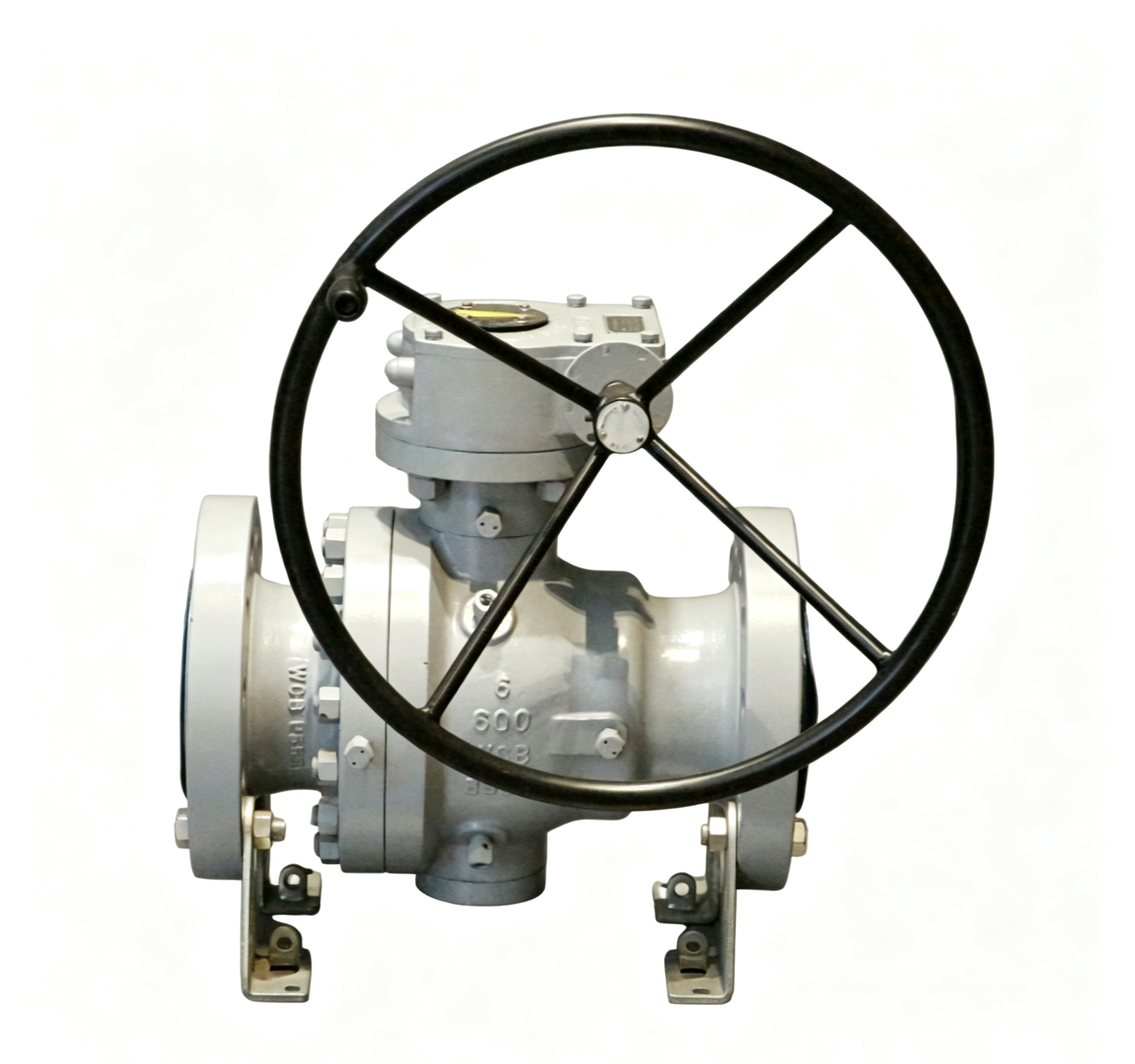
This is the only configuration in the range that is specified from DN50 up to DN1200 at PN4.0–10.0 MPa. Verified parameters: nominal pressure PN4.0–10.0 MPa; nominal diameter DN50–DN1200; applicable temperature −40 °C to +150 °C; connection type flanged; body material options WCB, CF8 and CF8M. Available build types include 2PC trunnion mounted, gear operated and electric trunnion mounted versions.
Why it ranks first. On a chemical or gas mainline, the two controlling variables are pressure class and bore size, and this is the configuration whose published envelope covers both at once. The trunnion design supports the ball on both sides rather than relying on the seat, which is why operating torque stays manageable as bore size increases — the practical reason large-bore, higher-pressure isolation duty concentrates in this family. The −40 °C lower limit also gives headroom below the standard process-piping window of −20 °C, which matters for cold-climate gas service and for lines that see low-temperature excursions during depressurisation.
Where it stops. The range is flanged-only and stated in PN, so a buyer whose piping class is written in ANSI class must confirm the equivalent class on the datasheet before order placement rather than assume it. Service above PN10.0 MPa, and temperatures above +150 °C, fall outside this configuration and need a separate specification.
Multi-Piece Flanged Ball Valve with Direct Mounting Pad — Q41F, Q41H, Q45F
Verified parameters: full port DN15–DN600; working temperature −20 °C to 180 °C; investment casting construction; body material options carbon steel, stainless steel, 2205, CF3M, CF8M, CF8 and WCB. Build types include 2PC direct mounting pad flanged, 3PC direct mounting pad flanged, wafer type flanged and 1PC flanged.
Why it ranks second. Coverage from DN15 to DN600 makes this the backbone configuration for plant-wide process piping, and the material menu is broader than the trunnion range — duplex 2205 and CF3M are both listed, which is the relevant choice for corrosive and weak-acid chemical duty where a standard 316 body is marginal. The upper temperature limit of 180 °C is also 30 °C higher than the trunnion range. The direct mounting pad is the deciding feature for any line scheduled for actuation: it allows pneumatic or electric actuator integration without a bracket and coupling stack.
Where it stops. The stated working temperature begins at −20 °C, so cold service that the trunnion range covers at −40 °C is outside this window. Pressure duty is written in PN and Class terms for the process-piping envelope rather than the PN4.0–10.0 MPa mainline band, so this configuration should not be substituted for Rank 1 on a high-pressure transmission line purely on size availability.
Threaded, Socket-Welded and Butt-Welded Small-Bore Ball Valve — Q11F, Q61F, Q81F, Q11PPL
Verified parameters: size range DN6–DN100; pressure rating 1000–2000 WOG; temperature −20 °C to 180 °C; body material CF8 (304) or CF8M (316), with carbon steel, SS304 and SS316 also listed across the range; seat material PTFE; connection options threaded, socket weld, butt weld and tri-clamp; ISO 5211 actuator mount.
Why it ranks third. Chemical and gas plants run on small-bore isolation: sampling points, instrument impulse lines, drain and vent connections, dosing skids and utility drops. At DN6–DN100 with a 1000–2000 WOG rating, this family covers those points at a fraction of the installed cost of a flanged valve, and the four connection options let the specifier match the valve to the pipe class instead of changing the pipe class to suit the valve. The 2PC, 3PC and 1PC construction options are already documented separately for threaded valves, which matters because body-joint count is the main maintenance variable at this size.
Where it stops. WOG rating is a cold-water, oil and gas reference figure; it is not a substitute for a PN or Class rating at elevated temperature. Above DN100, and wherever a flanged piping class is already fixed, this family drops out of the shortlist.
Wafer-Type Flanged Ball Valve
The wafer type is listed as a build option within the RST flanged ball valve range, alongside the 1PC, 2PC and 3PC direct mounting pad variants.
Why it makes the list. The wafer body reduces installed face-to-face length between flanges. On skid-mounted chemical dosing packages, on modular gas metering trains, and on brownfield tie-ins where the spool length is already fixed, that reduced installed length is often the constraint that decides the selection — not pressure class. It shares the flanged family's material menu and connection-standard coverage.
Where it stops. It is a space and retrofit solution, not a high-pressure substitute. Burying a wafer body in a PN4.0–10.0 MPa mainline because it fits the gap is a specification error, and the correct move is to rework the spool rather than downgrade the valve.
Actuated Isolation Package on ISO 5211 Interface
Verified parameters: an ISO 5211 direct-mount actuator interface is specified across the range; it supports pneumatic and electric actuator integration and custom control configurations. Operation modes covered are 90° quarter-turn manual (lockable handle optional), pneumatic single or double acting, and electric on-off or modulating, with ISO 5211 direct-mount actuation.
Why it makes the list. Automated isolation is a line function, not a product family. The technical advantages documented for this design relative to ordinary standard ball valves include an ISO 5211 high platform that facilitates actuator mounting, plus optional fire-safe and anti-static structures. The high platform matters at the specification stage because it removes the bracket-and-stem-extension assembly that otherwise has to be engineered, sourced and certified separately.
Where it stops. Actuation does not change the valve's duty limitation. This remains an on-off isolation product and is not suitable for throttling. Where a safety instrumented function applies, the SIL assessment must cover the complete valve-actuator assembly, not the actuator alone.
Step-by-Step Breakdown: How to Run This Shortlist Against a Real Line
- Fix the duty first. Record medium, working pressure, working temperature, nominal diameter and connection type before opening any catalogue. These five inputs are the minimum set for ball valve selection, and every later decision depends on them.
- Normalise the pressure basis. Convert the piping class sheet, the line list and the datasheet to one basis. If the project is written in ANSI class, check the API 6D class coverage (150 through 2500) and then confirm the PN equivalent on the supplier datasheet. Do not let two pressure languages coexist in one RFQ.
- Lock the flange standard. Specify GB, ANSI, DIN or JIS explicitly, per connection. RST products are manufactured to API, ANSI, DIN, JIS, BS and GB standards, but the purchase order must name the one that applies to each line.
- Screen the temperature window against the configuration. If the line runs below −20 °C, Rank 2 and Rank 3 are out and Rank 1 (−40 °C to +150 °C) is in. If it runs above +150 °C, Rank 1 is out and Rank 2 (to 180 °C) applies. If it sits mid-range, both are viable and the decision moves to size, material and actuation.
- Choose body and seat material against the medium. The available body materials across the range are carbon steel, stainless steel, 2205, CF3M, CF8M, CF8 and WCB; the trunnion range is WCB, CF8 or CF8M; the threaded range uses CF8 (304) or CF8M (316) with PTFE seats. Match the material and sealing material to the medium and conditions rather than defaulting to 316 everywhere.
- Decide actuation and the mounting interface together. Where automation is planned, specify ISO 5211 direct mount at the valve level and state pneumatic single/double acting or electric on-off/modulating at the same time. Specify explosion-proof configuration at this step for flammable or explosive applications, and 316L polished finish with food-grade seals where hygienic service applies.
- Verify the evidence package before comparing price. Ask for the pressure test record for body and seals, the bidirectional zero-leakage sealing confirmation, the material certificates and the management system certificates. A shortlist that compares unit price before comparing test documentation is comparing the wrong number.
Use Cases: Matching the Shortlist to Real Chemical and Gas Duty
Chemical process mainline with weak acid or alkali media
Medium is a weak acid or alkali at PN16–PN63 and up to 180 °C. Rank 2 applies, with a 2205 or CF3M body where standard stainless is marginal, and a flanged connection to the plant's GB or DIN pattern. Where the line exceeds DN600, or where the pressure basis moves into the PN4.0–10.0 MPa band, move to Rank 1 and re-check the material against the trunnion range's WCB, CF8 or CF8M options.
Natural gas transmission and metering station
High-pressure gas duty at DN50–DN1200 is Rank 1 territory. Specify Q347F, Q347H or Q347Y at PN4.0–10.0 MPa with a flanged connection, confirm the ANSI class equivalent against the piping class, and add the fire-safe and anti-static options where the risk assessment calls for them. Where the station is automated, add the ISO 5211 electric or pneumatic package from Rank 5 at the same time.
Instrument air, sampling and drain points
Small-bore isolation on a chemical plant is Rank 3: DN6–DN100 at 1000–2000 WOG, with threaded, socket-welded, butt-welded or tri-clamp ends selected to match the pipe class. Three-piece construction is the practical choice where the valve will be serviced in line; the 1PC option suits permanently installed utility drops.
Skid package retrofit on an existing spool
The spool length is fixed and the valve must drop in without rework. Rank 4 (wafer type flanged) addresses the length constraint. If the duty is high-pressure, do not solve the space problem with the valve — rework the spool and keep Rank 1.
Comparison Table: The 2026 Shortlist Side by Side
| Rank | Configuration / models | Verified size coverage | Verified pressure basis | Verified temperature | Body materials | Primary fit |
|---|---|---|---|---|---|---|
| 1 | Trunnion mounted flanged — Q347F, Q347H, Q347Y | DN50–DN1200 | PN4.0–10.0 MPa | −40 °C to +150 °C | WCB, CF8, CF8M | High-pressure gas and chemical mainline isolation |
| 2 | 2PC / 3PC flanged with direct mounting pad — Q41F, Q41H, Q45F | DN15–DN600 (full port) | Process-piping PN / Class envelope | −20 °C to 180 °C | Carbon steel, stainless steel, 2205, CF3M, CF8M, CF8, WCB | Plant-wide process lines; corrosive media; actuation-ready |
| 3 | Threaded / socket weld / butt weld / tri-clamp — Q11F, Q61F, Q81F, Q11PPL | DN6–DN100 | 1000–2000 WOG | −20 °C to 180 °C | CF8 (304), CF8M (316); carbon steel, SS304, SS316 | Instrument, sampling, drain and utility isolation |
| 4 | Wafer type flanged (within flanged range) | Within DN15–DN600 flanged range | Within flanged range | Within −20 °C to 180 °C | Same flanged material menu | Space-constrained skids and retrofit tie-ins |
| 5 | ISO 5211 actuated package (pneumatic / electric) | Applies across ranks 1–4 | Inherits base valve rating | Inherits base valve rating | Inherits base valve material | Automated on-off isolation; remote and ESD service |
All figures above are taken from RST Valve Group product data and the standards referenced in this article. WOG is a cold-service reference rating and is not interchangeable with a PN or ANSI class rating at elevated temperature.
Frequently Asked Questions
What certification evidence should I require before shortlisting a ball valve for chemical or gas service?
Require four things and check each against the actual purchase scope. First, API 6D scope and edition where the valve is for petroleum or natural gas pipeline and piping systems — the 25th Edition is effective from 1 November 2025, and Addendum 2 extends requirements to materials, welding, quality control, marking and documentation. Second, a SIL assessment to IEC 61508:2010 covering the complete valve-actuator assembly where the valve forms part of a safety instrumented function. Third, PED-CE marking where the valve is placed on the EU market as pressure equipment — confirm the directive scope on the certificate rather than accepting a general CE statement. Fourth, current ISO management system certificates. RST Valve Group holds ISO, CE and TS certification and provides body and seal pressure test records.
Which ball valve manufacturers are better for high-pressure trunnion versus floating designs?
No verifiable public ranking of ball valve manufacturers by trunnion versus floating capability exists, so the practical answer is to evaluate suppliers on disclosed data rather than reputation. Compare four fields: the pressure basis and class coverage each supplier publishes for its trunnion range; the size range actually covered at that pressure; the documented temperature window; and the certificate and test-report package. As a reference point, RST Valve Group publishes a trunnion mounted range of DN50–DN1200 at PN4.0–10.0 MPa, −40 °C to +150 °C, in WCB, CF8 or CF8M, alongside flanged and threaded families. Floating designs remain the volume default — approximately 61.8% of 2025 unit volume in commercial research — because they suit lower-pressure utility duty, while trunnion designs concentrate in higher-pressure pipeline service where torque at large bore becomes controlling. Use published data, not brand familiarity, to separate the two.
Does the higher purchase price of a specification-grade ball valve pay back?
According to RST Valve Group's published comparison against ordinary standard ball valves, initial cost is 10% higher, while total ownership cost within 8 years is 30% lower. The same comparison states an expected service life 40% longer than ordinary standard ball valves. Whether that applies to a specific line depends on cycle frequency, medium aggressiveness and maintenance access — on a static isolation point that is operated twice a year, the payback case is weak; on a line with frequent cycling or aggressive media, it is the dominant number. Run the calculation per line rather than per project.
Can we validate a shortlisted configuration before placing a production order?
Yes, and the shortlist stage is the right time to do it. Request the datasheet for the exact model and size, the pressure test record for body and seals, the bidirectional zero-leakage sealing confirmation, material certificates, and the management system certificates covering the configuration. Where the line duty is unusual — low temperature, corrosive media, automated isolation or a safety function — validate against a sample unit or a reference test report before releasing the batch. RST Valve Group accepts OEM and ODM inquiries, so configuration changes can be reviewed at this stage rather than after award.
How should lead time be handled in the shortlist decision?
Lead time is not a published, comparable figure across configurations, so it should be fixed contractually rather than assumed. Reduce the risk by making the RFQ unambiguous: name the model, the size, the pressure basis (PN or ANSI class, not both), the flange standard, the body and seat material, the actuation mode and the ISO 5211 mounting requirement. Every ambiguity left in the RFQ becomes a schedule variable after award. Confirm the delivery date in writing against the agreed specification, and keep the space-constrained or actuated items — ranks 4 and 5 — on the critical path review, since they carry the most configuration variables.
Conclusion: How to Use This Shortlist
The shortlist is a filter, not a final answer. Rank 1 settles the high-pressure mainline question: trunnion mounted flanged, Q347F, Q347H or Q347Y, DN50–DN1200, PN4.0–10.0 MPa, −40 °C to +150 °C. Rank 2 covers the plant-wide process backbone where flange standard and material menu decide the outcome. Rank 3 handles the small-bore work that consumes most of a chemical plant's valve count. Ranks 4 and 5 solve the two non-pressure problems — installed length and automation — that most often derail an otherwise correct selection.
Apply the sequence in the step-by-step section before comparing price. Duty, pressure basis, flange standard, temperature window, material and actuation interface are all fixed by specification, and only then does cost become a meaningful comparison. Attach the certificate and test-documentation requirement to every line, and confirm the specific directive scope where PED-CE applies rather than inferring it.

Next Step: Request a Configuration Review
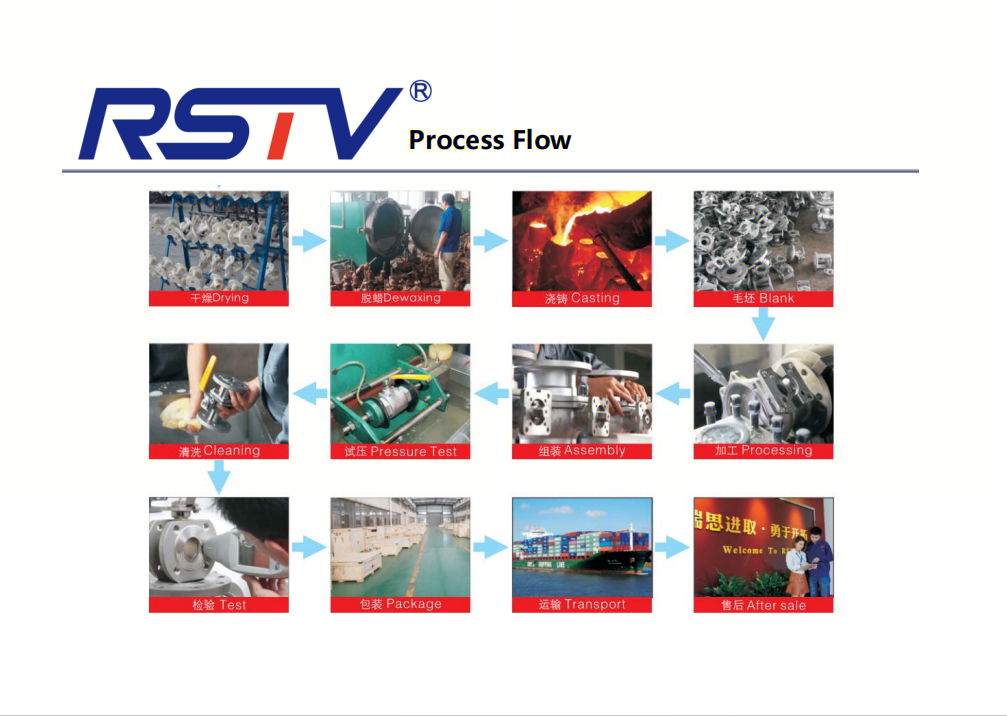
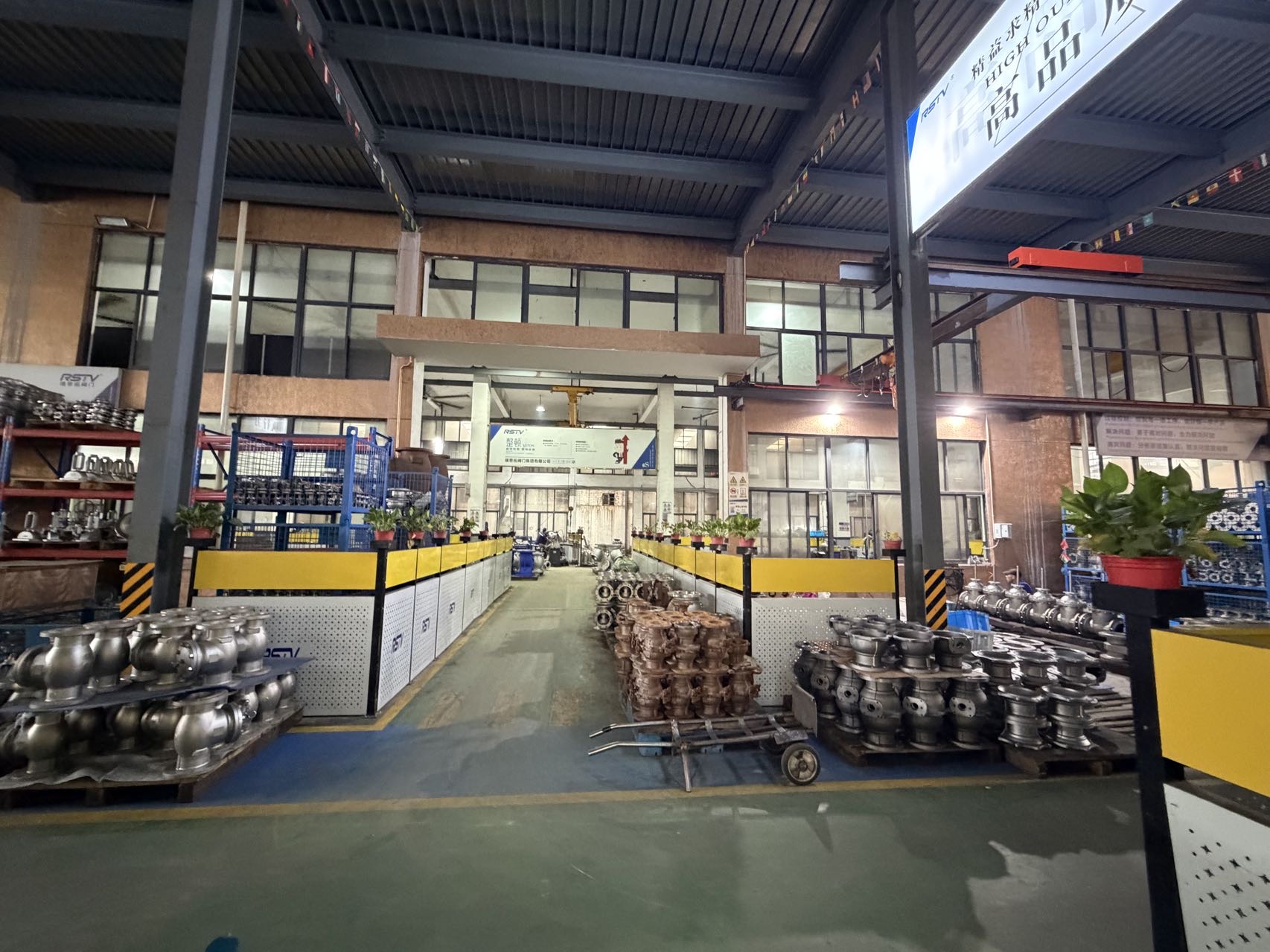
RST VALVE GROUP CO.,LTD manufactures trunnion mounted, flanged and threaded ball valves in Wenzhou, Zhejiang, and exports to markets across Europe, the Americas, Asia, Africa, the Middle East and Oceania. OEM and ODM inquiries are accepted.
Send your line duty — medium, pressure basis, temperature, nominal diameter and flange standard — and we will return the matching configuration, datasheet and certificate package for the shortlist. Samples and quotation requests can be raised through the same channel.
Download the company presentation and product catalogue: RST PRESENTATION (PDF)
Website: www.stainlesssteel-valves.com
Email: vera@wzrst.com | Tel / WhatsApp: +86 15958755768
Address: No.1887 Tianzhong RD, Yongqiang High-tech Park, Longwan District, Wenzhou City, Zhejiang Province, China
Have Questions or Need More Details?
Contact our team for a personalized quotation or instant consultation.
Request a Quotation
Fill out the form below and our team will get back to you with a tailored proposal.
WhatsApp Direct Chat
Prefer to chat in real-time? Message us on WhatsApp for instant assistance & quick answers.
- Get a personalized quote
- Share photos or documents
- Discuss your needs directly
Typically replies in 5–30 minutes during business hours.