
Trunnion Ball Valves: High-Pressure Isolation, DN50–DN1200
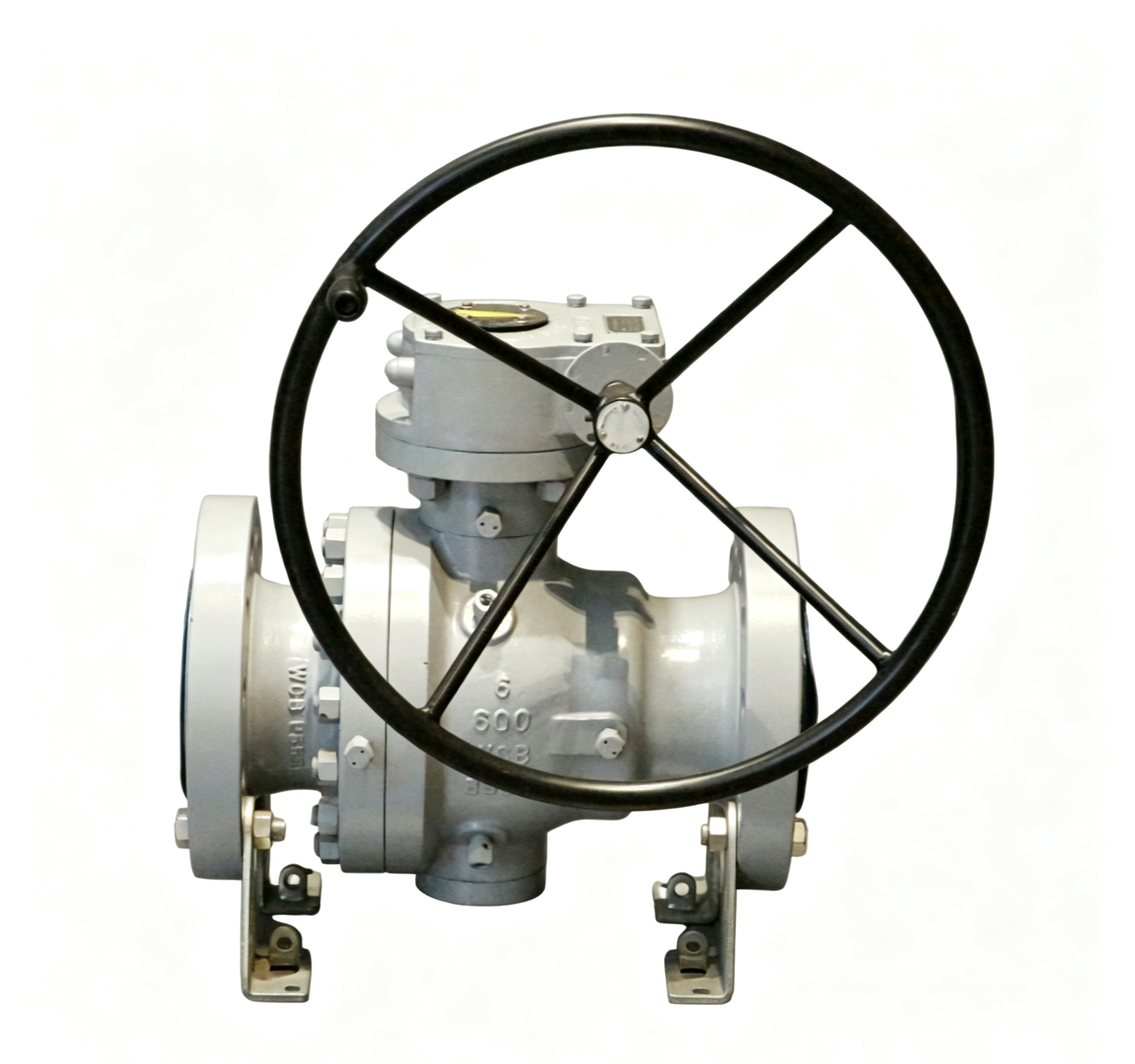
High-pressure pipeline isolation is a shut-off duty, not a flow-control duty. The valve holds the pressure boundary completely closed, or it does not. Everything a project team decides about a trunnion mounted ball valve — body configuration, material, actuation, testing evidence — is ultimately judged against that single requirement, at the largest diameter and the highest differential pressure the line will ever see.
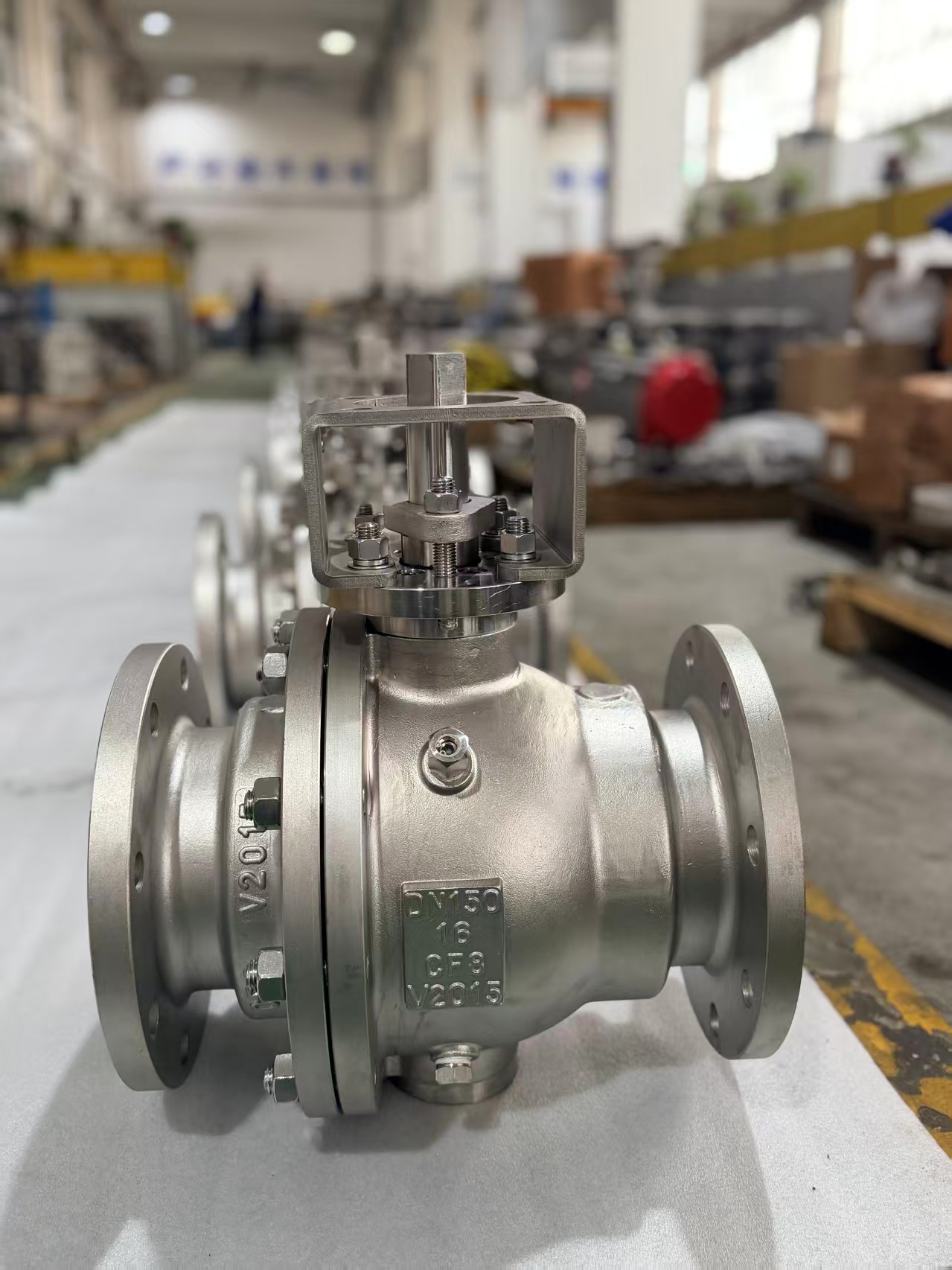
This guide explains how to adapt a trunnion mounted ball valve to that duty. The reference product is the RST Valve Group CO.,LTD trunnion mounted ball valve range, published as models Q347F, Q347H and Q347Y with nominal diameter DN50–DN1200, nominal pressure PN4.0–10.0 MPa, an applicable temperature range of -40 °C to +150 °C, flanged connections and body materials WCB / CF8 / CF8M (carbon steel / SS304 / SS316). The range is offered in 2PC, gear operated and electric configurations.
RST Valve Group is an industrial valve manufacturer founded in Wenzhou, China, in 2009, producing ball, gate, check, globe and strainer valves for petrochemical, refining, chemical, power, metallurgy, mining and water-related applications, and accepting OEM and ODM enquiries. Its published trunnion data, testing regime and certification set are the factual basis for the checks below; where a project requirement goes beyond those published facts, the guide marks it as something to confirm in the quotation rather than assume.
What High-Pressure Isolation Actually Demands
Four physical demands separate an isolation valve from a general-purpose valve. A project team that tests a supplier against these four, rather than against a catalogue headline, will usually separate the suitable bid from the unsuitable one.
- Pressure containment of the body and stem. The shell must hold the design pressure without permanent deformation, and the stem must stay in the valve under the same pressure. This is why a blowout-proof stem is a design requirement rather than a feature: an unsupported stem is a pressure-boundary failure waiting for the right differential.
- Seat sealing against differential pressure. The seat must seal in both directions and keep sealing after cycles, thermal movement and pressure fluctuation. A spring-loaded, movable metal seat maintains contact as components move, instead of relying on a single static interference.
- Operating torque the actuation can deliver. As diameter and differential pressure rise, the torque needed to rotate a ball grows quickly. If the specified actuator or gearbox cannot deliver that torque with margin, the valve will not fully seat — it will look closed and still pass.
- Behaviour during excursions. Trapped cavity pressure, fire exposure and line transients all act on an isolation valve that is sitting closed for long periods. Automatic cavity pressure relief and a fire-safe design address that condition directly.
One operating rule follows from all four: this is quarter-turn, 90° on-off service. A ball valve held part-open to regulate flow is being used outside its intended duty, and RST's published application data specifies on-off service only and not throttling. For pressure reduction or flow regulation, the correct decision is a separate control valve in series, not a partially open isolation valve.
How the Trunnion Design Responds
The difference between a floating and a trunnion mounted ball valve is mechanical, and it matters most exactly where this guide applies. In a floating design the ball is carried by the two seats, and line pressure pushes the ball downstream into the seat. In a trunnion mounted design the ball is anchored by a trunnion at the top and bottom, so it rotates in position rather than being driven into the seat by the medium. The seats are loaded by their own spring preload and by pressure, and the ball's position is fixed by the trunnion bearings.
The practical consequence is that at large nominal diameters and high differential pressures, the trunnion arrangement keeps the sealing load and the operating torque within a range that a gearbox or actuator can actually manage, and it stops the ball from being forced into the seat. That is why the trunnion design is the natural adaptation for pipeline isolation rather than for small utility lines.
The published RST trunnion construction adds four supporting characteristics to that base mechanism:
- Spring-loaded, movable metal seat — maintains seat contact as the assembly moves under pressure and temperature change.
- Blowout-proof stem design — the stem is retained so that line pressure cannot eject it.
- Automatic cavity pressure relief — pressure trapped in the body cavity between the seats is relieved rather than left to load the closure.
- Fire-safe design — the valve is designed to retain sealing performance in a fire condition, which is a standard expectation for hydrocarbon isolation service.
Actuation is not fixed. The range is published with multiple actuation options, and the three documented configurations — 2PC, gear operated and electric — cover manual isolation with torque multiplication, and remote or automated isolation respectively.
Industry Background: Which Standard Governs the Specification
High-pressure pipeline valves are bought against a standard, and the standard defines the design, manufacturing, testing and documentation obligations. Two documents are directly relevant to a ball valve isolation package.
API Specification 6D, 25th Edition defines the requirements for the design, manufacturing, assembly, testing and documentation of ball, check, gate and plug valves used in petroleum and natural gas pipeline and piping systems (American Petroleum Institute, edition dated 1 November 2025). The edition identified for this guide covers pressure classes 150, 300, 400, 600, 900, 1500 and 2500. API Specification 6D, 25th Edition, Addendum 2 (2024) extends the documented requirement areas to materials, welding, quality control, marking, documentation and process controls, and addresses hydrogen gas service.
IOGP S-562, Version 3.1 (2024) is a supplementary procurement specification for manually operated ball valves procured in accordance with API 6D, and specifies an allowable operating temperature range of -46 °C to 150 °C within the context it covers (International Association of Oil & Gas Producers). It exists because a design standard alone does not answer every procurement question; a supplementary specification converts the standard into bid-evaluable requirements.
A conversion warning that saves rework. API 6D uses Class ratings (150 to 2500); the RST trunnion range is published on a metric nominal-pressure scale of PN4.0–10.0 MPa. These are different classification systems, and a PN value should not be converted into a Class by arithmetic assumption. Where a project specification is written in API 6D Class terms, state the governing standard and Class in the RFQ and require the supplier to confirm the design and test basis in writing for the exact model and size. Treat API 6D, IOGP S-562 and the PN envelope as three separate statements until the supplier confirms how they map onto the ordered valve.
The Verified Product Envelope
Before adapting anything, fix the envelope. The following values are the published data for the RST trunnion mounted ball valve range and are the limits within which an adaptation can be discussed.
| Parameter | Published value |
|---|---|
| Models | Q347F, Q347H, Q347Y |
| Configurations | 2PC trunnion mounted; gear operated; electric |
| Nominal pressure | PN4.0–10.0 MPa |
| Nominal diameter | DN50–DN1200 |
| Applicable temperature | -40 °C to +150 °C |
| Connection type | Flanged |
| Body material | WCB / CF8 / CF8M (carbon steel / SS304 / SS316) |
| Design features | Trunnion-mounted ball; spring-loaded movable metal seat; blowout-proof stem; automatic cavity pressure relief; fire-safe design; multiple actuation options |
Read this table as a product family envelope, not as a promise about every individual size. A DN1200 valve at the top of the pressure range is a different engineering object from a DN50 valve at the bottom, and the project team should require the size-specific rating in the datasheet and on the nameplate.
Step-by-Step: Adapting the Valve to a Project
The sequence below runs from duty definition to documentation release. Each step produces something the next step depends on, which is why reordering them usually produces a valve that fits the purchase order but not the pipeline.
Step 1 — Define the isolation boundary, not just the line
State what the valve isolates, from what, and under which condition: maximum operating pressure, design pressure, maximum and minimum operating temperature, medium and phase, and whether the isolation is a routine operation or an emergency action. Also state whether the valve is normally open or normally closed, because a valve that sits closed for months accumulates cavity pressure and thermal cycling differently from one that is cycled daily.
Step 2 — Map the conditions onto the published envelope
Compare the design conditions with PN4.0–10.0 MPa, DN50–DN1200 and -40 °C to +150 °C. Where the duty sits near a boundary — particularly near the upper temperature limit, where the allowable pressure for a given size typically falls below the nominal rating — request the size-specific pressure/temperature confirmation rather than accepting the headline nominal pressure.
Step 3 — Confirm size and bore configuration
Nominal diameter follows from the pipeline, but bore configuration does not follow automatically. The published trunnion data specifies DN50–DN1200 without a bore designation, so whether a full-port or a reduced-port ball is supplied must be stated explicitly in the RFQ and confirmed on the datasheet. A reduced-port valve changes pressure drop and pigging behaviour; a full-port valve changes cost and seat load. Neither is a default.
Step 4 — Select body material against the medium
WCB, CF8 and CF8M are all published for this range, which makes material selection a project decision rather than a stock decision. The documented service media for RST's flanged process isolation applications are water, oil, gas and weak acids/alkalis, across chemical, gas, pharmaceutical and water treatment process piping. Use that as the starting frame: match the body and trim to the actual medium, and where the medium falls outside that described service — strong acids, chlorides at elevated temperature, hydrogen service — the correct action is to raise it as a separate engineering question with the supplier, not to select the most corrosion-resistant grade by default.
Step 5 — Choose body configuration and actuation together
The 2PC split-body configuration gives access to the internal components for maintenance, which matters on large valves where replacement rather than repair is expensive. Gear operation multiplies operator torque and suits large diameters where manual quarter-turn effort would otherwise exceed what an operator should apply. Electric actuation suits remote, automated or interlocked isolation. Because actuation affects torque margin, choose it with the size, not after it — and confirm the actuator mounting interface for the selected frame size in the datasheet.
The trunnion range is published with multiple actuation options. For RST's flanged and threaded ball valve ranges, the documented actuator interface is an ISO 5211 high mounting pad, and an explosion-proof configuration is required for flammable or explosive applications. Where the same plant standard applies to the trunnion package, state that requirement in the RFQ so it is engineered in rather than added later.
Step 6 — Fix the test and documentation package
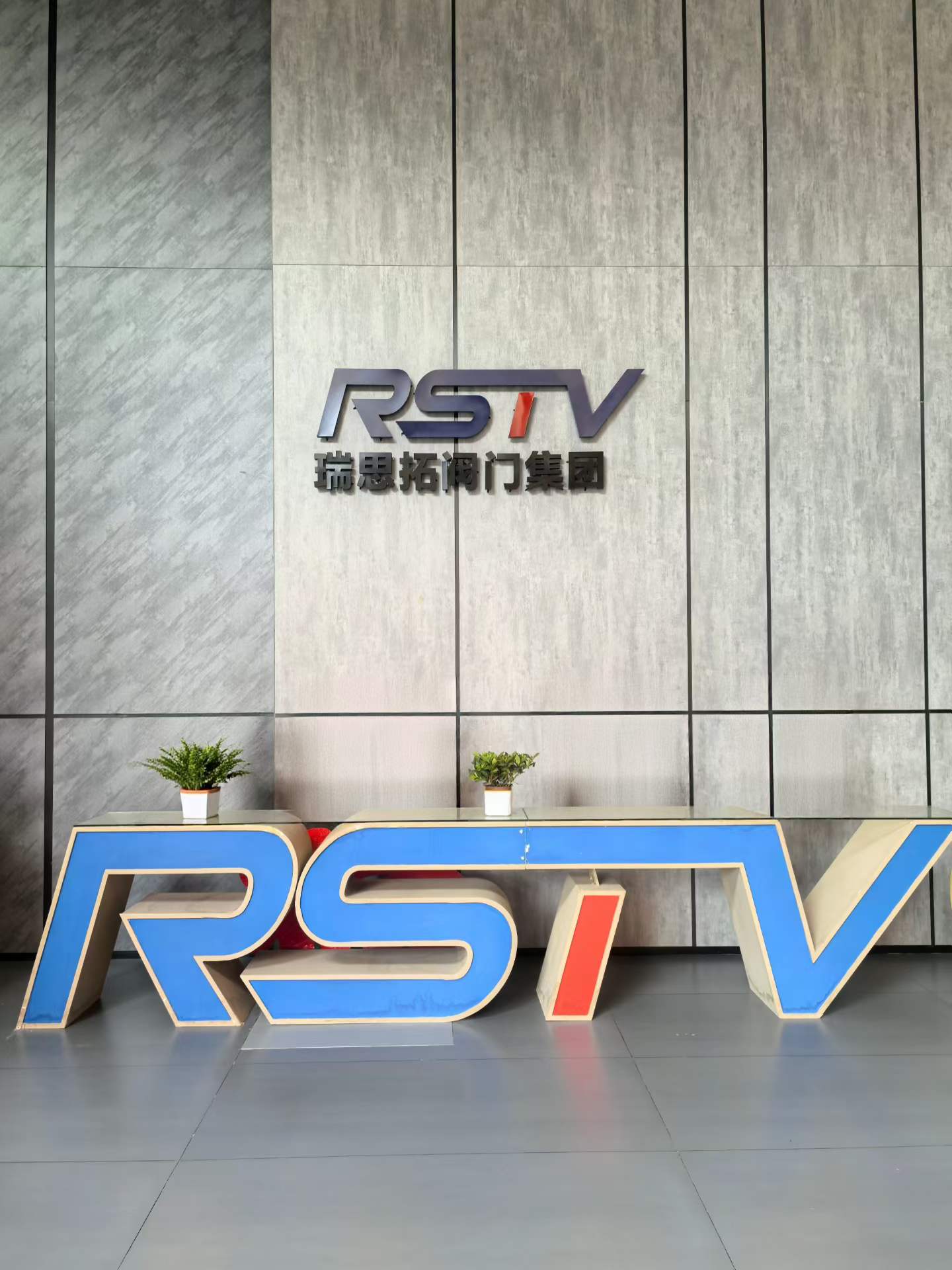
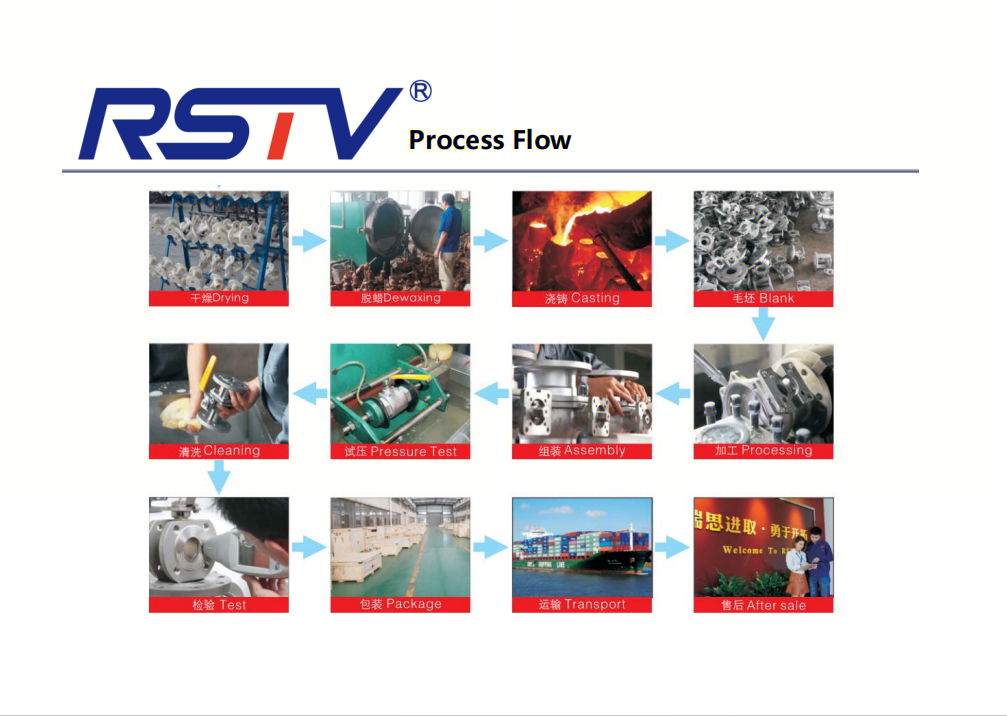
Specify the tests, not just the standard. RST's documented quality control for ball valve production covers shell strength testing, seat leakage testing, material inspection and visual inspection, with 100% factory testing and a test report and material certificate supplied with the shipment. For an isolation package, those two documents are the evidence that the valve you received is the valve you specified.
Step 7 — Plan the lifecycle before the order
Isolation valves are long-life items, and the maintenance plan determines what must be purchased with them. Seats, O-rings and packing are the wear components. RST documents spare parts supply alongside remote technical support, online troubleshooting and on-site service for large-scale projects — an arrangement that matters most on large-diameter valves, where a single seat replacement can dominate the cost of an unplanned shutdown.
Use-Case Fit: Where This Configuration Belongs
The trunnion range is documented for petrochemical industry, petroleum refining, liquid cooling, nuclear power, chemical industry, metallurgy, mining, medical industry, food industry, national defense, military and urban construction applications. That list is broad, so it is more useful to describe the fit by duty pattern.
Process pipeline isolation in chemical and petrochemical plants. The valve is closed for long periods between campaigns and must hold a positive seal on demand. Spring-loaded movable metal seats, cavity relief and a fire-safe design address that pattern directly, and the WCB / CF8 / CF8M choice covers the water, oil, gas and weak acid/alkali media documented for these installations.
Gas engineering and utility systems. The documented application for RST's flanged process isolation valves is on-off isolation in chemical, gas and water utility systems. Recorded results for that range include bubble-tight zero leakage and stable operation in process pipeline isolation service, with chemical plant, water treatment contractor and gas engineering company clients using the valves in project quantities of 50–500 units. That evidence belongs to the flanged range (models Q41F, Q41H, Q45F); it is cited here as isolation-duty evidence in the same industries, not as a trunnion field record.
Large-diameter lines where manual operation is impractical. Above a certain size, the gear-operated configuration becomes the practical choice, and at the largest diameters gear operation is the difference between a valve that can be isolated by one operator and one that cannot.
Where this valve does not fit. Three boundaries are worth stating plainly. It is not a throttling device — on-off service only. It is not a substitute for a control valve in a pressure-reduction station. And the published temperature limit of +150 °C excludes high-temperature service, so a project with a higher design temperature needs a different conversation with the supplier before the enquiry, not after the bid.
Comparison: Trunnion, Flanged and Threaded Within One Range
Adaptation decisions are easier when the alternatives come from the same manufacturer, because the comparison then reflects real product boundaries rather than marketing positioning. The table compares the three published RST ball valve ranges on their documented data.
| Attribute | Trunnion mounted (Q347F/Q347H/Q347Y) | Flanged (Q41F/Q41H/Q45F) | Threaded (Q11F/Q61F/Q81F/Q11PPL) |
|---|---|---|---|
| Size range | DN50–DN1200 | Full port DN15–DN600 | DN6–DN100 |
| Pressure rating | PN4.0–10.0 MPa | PN16–PN63 / CLASS 150–300 | 1000–2000 WOG |
| Temperature | -40 °C to +150 °C | -20 °C to +180 °C | -20 °C to +180 °C |
| Connection | Flanged | Flanged (GB, ANSI, DIN, JIS supported) | Threaded, socket weld, butt weld, tri-clamp |
| Body material | WCB / CF8 / CF8M | Carbon steel, stainless steel, 2205, CF3M, CF8M, CF8, WCB | CF8 (304) / CF8M (316), PTFE seat |
| Documented notes | Trunnion-mounted ball; spring-loaded movable metal seat; blowout-proof stem; cavity relief; fire-safe design; multiple actuation options | On-off service only, not for throttling; ISO 5211 high mounting pad; anti-static device; explosion-proof configuration for flammable media; precision lost-wax casting | Blow-out proof stem with T-type thrust structure; multiple stem seals; optional anti-static and lockable handle; ISO 5211 actuator mount |
The reading rule is simple. Move to the trunnion range when diameter or differential pressure makes ball stability and torque the controlling problem. Stay with the flanged range when the line is smaller and the pressure class is moderate. The threaded range serves small lines where a weld, thread or clamp connection is the practical interface — not high-pressure pipeline isolation.
Documentation Evidence and What It Proves
Certification is often discussed as a single yes/no answer, which it is not. Each document answers a different question, and a project reviewer should know which question each one answers.
- SIL certification under IEC 61508:2010 Parts 1–7. IEC 61508 is the functional-safety standard covering safety-related electrical, electronic and programmable electronic systems across their lifecycle, and Parts 1–7 address the technical and application requirements. An SIL certificate supports the use of the product within a safety-related application. It does not, by itself, demonstrate that a complete safety instrumented function achieves a given SIL — that depends on the whole loop, including sensors, logic and final elements.
- PED-CE certificate ECM PED-Bp 2024-TW60. This is the European Pressure Equipment Directive conformity certification, and the certificate number is the traceability reference a buyer quotes when verifying scope with the certificate body. Quoting the number rather than the phrase 'CE certified' is what makes the claim checkable.
- ISO 9001, ISO 14001 and ISO 45001. These are management-system certifications for quality, environmental and occupational health and safety management respectively. They indicate that the manufacturer operates certified systems; they do not certify a specific valve's pressure rating.
- Test report and material certificate. These are the documents that speak about the actual delivered valve: shell strength and seat leakage results from the 100% factory test, and material traceability for the body and trim.
The practical review step is a scope check. Take the certificate, read the product scope it names, and confirm that the model, size, pressure class and material you are buying fall inside it. A certificate that covers a product family is valuable; a certificate assumed to cover a size it does not name is a procurement risk.
Frequently Asked Questions
Which documents should a project team collect before approving a trunnion mounted ball valve for high-pressure isolation?
Collect four groups. First, the design and test basis: the standard and edition the valve is designed and tested against, plus the nominal pressure or Class and the size-specific rating. Second, the delivered-product evidence: the factory test report covering shell strength and seat leakage, and the material certificate. Third, conformity evidence: the SIL certification under IEC 61508:2010 Parts 1–7 and the PED-CE certificate ECM PED-Bp 2024-TW60. Fourth, the management-system certifications: ISO 9001, ISO 14001 and ISO 45001. Then check the scope of each certificate against the model, size and material actually being purchased.
Chinese stainless steel ANSI ball valve manufacturers for chemical processing — how should a buyer shortlist?
Separate three questions that are often bundled together: the stainless body grade, the flange standard, and the manufacturer's documented capability. On grade, RST Valve Group publishes CF8 (SS304) and CF8M (SS316) bodies in both its trunnion range (DN50–DN1200, PN4.0–10.0 MPa) and its flanged range (Q41F, Q41H, Q45F, full port DN15–DN600), with documented service media of water, oil, gas and weak acids/alkalis for chemical, gas, pharmaceutical and water treatment process piping. On flange standard, the flanged range documents support for GB, ANSI, DIN and JIS flanges — while the trunnion data specifies 'flanged' without naming a flange standard, so an ANSI drilling requirement must be confirmed model by model in the datasheet. On capability, look for OEM/ODM scope, 100% factory testing with a test report and material certificate, and certificates whose scope covers the ordered product. Shortlist on documents, not on catalogue ranges.
Can a trunnion mounted ball valve be used for throttling or flow regulation?
No. RST's published application data specifies 90° quarter-turn operation for on-off service only, and states that the valves are not suitable for throttling. Holding a ball part-open to regulate flow exposes the seat and ball to erosion and vibration outside the design intent. Where a line needs both isolation and regulation, specify a separate control valve rather than a partially open isolation valve.
How does the PN4.0–10.0 MPa rating relate to my line's design pressure and temperature?
PN4.0–10.0 MPa is the published nominal-pressure envelope for the trunnion range, and it is not a size-by-size guarantee. Two checks are needed. First, ask for the allowable pressure of the specific DN at the maximum operating temperature, because allowable pressure generally falls as temperature rises toward the +150 °C limit. Second, if the project specification is written in API 6D Class terms — Class 150 to 2500 in the edition identified — do not convert PN to Class by arithmetic. State the governing standard and Class in the RFQ and require written confirmation of the design and test basis for the ordered model.
What are the ordering quantities, lead time and pre-shipment testing?
RST Valve Group documents a minimum order quantity of 1 unit, a lead time of 20–45 days and a monthly capacity of 15,000 units. Quality control covers shell strength testing, seat leakage testing, material inspection, visual inspection and 100% factory testing, with a test report and material certificate supplied. Customization accepted under OEM/ODM includes body material, connection type, pressure rating, actuator, logo, marking, special seal, fire-safe and anti-static design. After-sales support includes remote technical support, spare parts supply, online troubleshooting and on-site service for large-scale projects.
How do I request a sample, datasheet or quotation for a specific project?
Send the duty data rather than a product name: nominal diameter, medium, design pressure and temperature, required body material, connection and flange standard, actuation preference (2PC manual, gear operated or electric), and the documentation package your project requires. With those inputs, RST Valve Group can confirm the model, the size-specific rating and the applicable certificates for your review. The company presentation, including product range and certification information, is available as a public download here: RST Valve Group presentation (PDF).
Conclusion
Adapting a trunnion mounted ball valve to high-pressure pipeline isolation is a sequence of confirmations, not a single selection. Fix the isolation duty and the design conditions; map them onto the published DN50–DN1200 and PN4.0–10.0 MPa envelope and confirm the size-specific rating at temperature; state bore, body material (WCB, CF8 or CF8M), body configuration and actuation explicitly; and close the loop with a test report, a material certificate and certificates whose scope names the product you bought.
The trunnion design earns its place in that sequence because it keeps the ball anchored, the seat loaded and the operating torque manageable as diameter and differential pressure rise — with a blowout-proof stem, automatic cavity pressure relief and a fire-safe design supporting the pressure boundary. Keep the valve to its on-off duty, treat PN and API 6D Class as separate statements until the supplier confirms the mapping, and the isolation package will hold the line rather than hold up the project.
Next step: send your line data — diameter, medium, design pressure and temperature, body material and actuation preference — to the RST Valve Group technical team for a model confirmation and documentation package review.
Company profile and product range: RST VALVE GROUP CO.,LTD | Catalog download: RST presentation (PDF)
Have Questions or Need More Details?
Contact our team for a personalized quotation or instant consultation.
Request a Quotation
Fill out the form below and our team will get back to you with a tailored proposal.
WhatsApp Direct Chat
Prefer to chat in real-time? Message us on WhatsApp for instant assistance & quick answers.
- Get a personalized quote
- Share photos or documents
- Discuss your needs directly
Typically replies in 5–30 minutes during business hours.