
Trunnion Mounted Ball Valve in High-Pressure Gas Pipelines
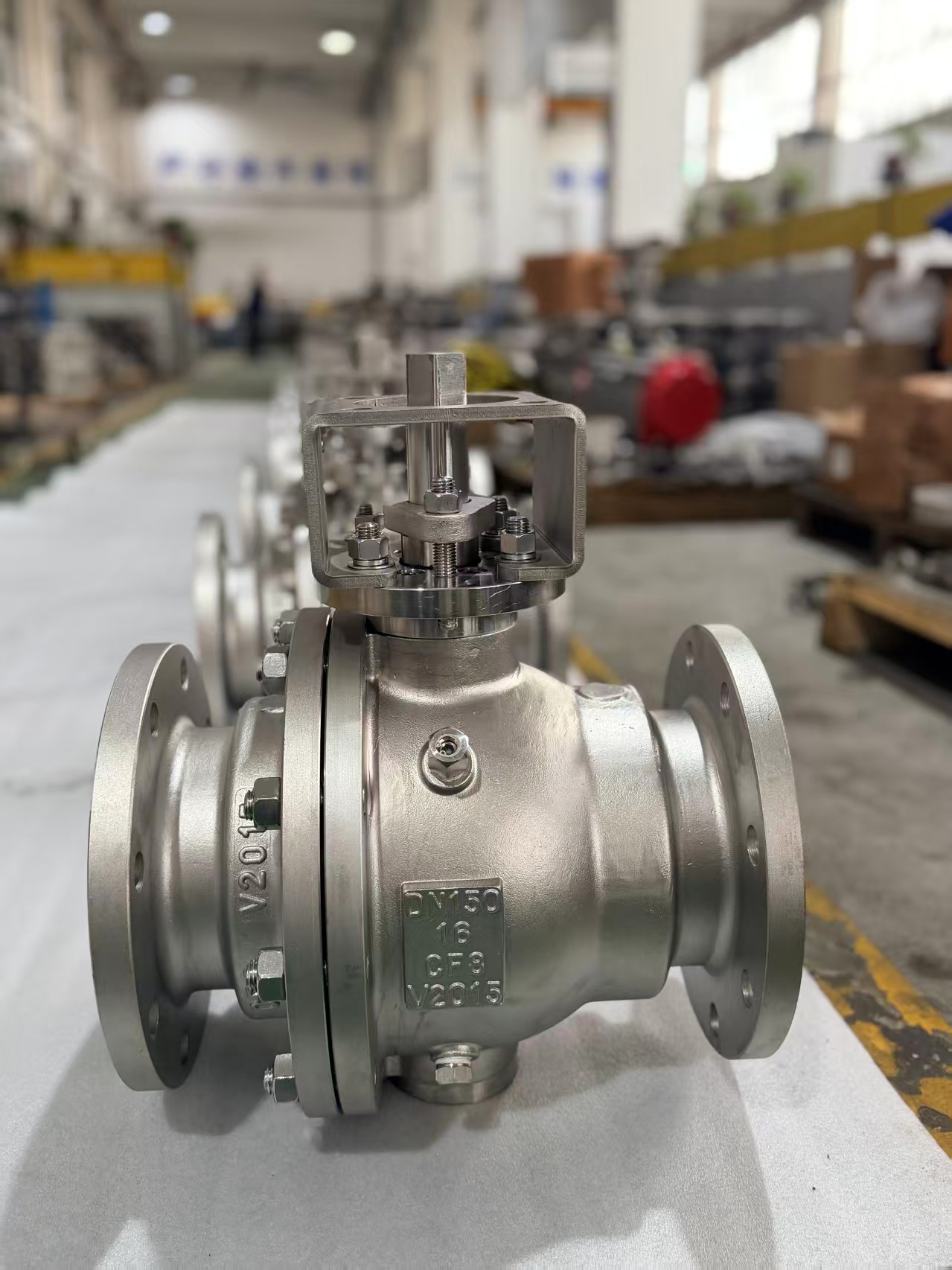
Short answer: a trunnion mounted ball valve is the isolation valve type used on high-pressure gas pipelines because the ball is supported by a top and bottom trunnion instead of resting on the seats. The support takes the pressure load, the spring-loaded movable metal seat keeps sealing contact, and operating torque stays inside manual gearbox limits as bore increases. For the pipeline projects described here, the matching product from RST VALVE GROUP CO.,LTD is the 2PC trunnion mounted ball valve in models Q347F, Q347H and Q347Y: flanged, DN50–DN1200, PN4.0–10.0 MPa, −40 °C to +150 °C, in WCB, CF8 or CF8M bodies, with gear or electric operation.
RST VALVE GROUP CO.,LTD is a China-based industrial valve manufacturer established in 2009 in Wenzhou City, Zhejiang Province. The company designs, manufactures, sells and services industrial valves — ball valves, gate valves, check valves, globe valves and Y strainers — and holds ISO, CE and TS certification as a manufacturer. Its trunnion mounted range is the subject of this guide.
The page is written for the working stage where a project engineer or buyer already knows the line size and design pressure, and now has to decide the body architecture, the actuation method, the flange standard and the document package. Each of those four decisions is treated separately below, because each one has a different failure mode.
Why High-Pressure Gas Line Isolation Is a Design Problem
Isolating a high-pressure gas line is not the same problem as isolating a water line of the same diameter. Four conditions separate the two, and all four push the specification towards a trunnion design instead of a floating ball design.
1. The load path across the ball
In a floating ball valve the ball is pushed downstream by line pressure and pressed against the downstream seat. That arrangement is simple and works well at moderate pressure and moderate bore, which is why floating designs dominate general utility duty. As bore and pressure rise, the same mechanism turns into a mechanical penalty: the seat carries the thrust, and the torque needed to rotate the ball climbs with it.
A trunnion mounted ball valve removes that penalty. The ball is fixed between two trunnion bearings, so line pressure is transferred into the body through the trunnions rather than through the seat. The spring-loaded, movable metal seat is then free to do only the job it is good at — maintaining sealing contact — without absorbing the full thrust of the line.
2. Torque at large bore
A valve that cannot be operated by the specified method is not an isolation point. Gear operation converts a high torque requirement into a manageable number of handwheel turns, which is why large-bore trunnion valves are normally supplied gear operated. Where the line is remote, buried or part of an automated sequence, electric actuation replaces the gearbox.
3. Trapped pressure in the body cavity
A ball valve traps the volume of gas that sits between the ball and the body wall. On a high-pressure gas line that trapped volume is a stored energy problem at both ends of the operating envelope. Automatic cavity pressure relief is the design answer: the cavity is allowed to relieve into the upstream side rather than being held at full differential.
4. Fire exposure and stem ejection
Gas pipeline valves sit in locations where an external fire is a design case, not an accident scenario to be ignored. Two features matter: a fire-safe design that keeps a sealing element in place after the primary seat material is lost, and a blowout-proof stem that cannot be ejected by internal pressure. Both are stated features of the RST trunnion mounted range.
Industry Background: What Governs the Specification Now
The technical argument for a trunnion design has not changed much. What has changed is the paperwork around it: pipeline projects increasingly buy against a published standard edition plus a supplementary procurement specification, and the supplier's ability to answer that document set decides the award as much as the valve itself.
API Specification 6D as the base document
API Specification 6D defines the requirements for the design, manufacturing, assembly, testing and documentation of ball, check, gate and plug valves for application in pipeline and piping systems in the petroleum and natural gas industries. The 25th Edition is the current edition identified for pipeline valves. The same specification covers pressure classes 150, 300, 400, 600, 900, 1500 and 2500, which is the classification language a gas pipeline specification will normally use rather than PN.
API Specification 6D 25th Edition Addendum 2 extends the requirement set across design, manufacturing, materials, welding, quality control, assembly, testing, marking, documentation and process controls. For a buyer this matters in one practical way: a supplier that quotes to the edition but manufactures to an older controlled drawing set will usually fail the documentation review, not the pressure test.
IOGP S-562 as the procurement layer
IOGP S-562 Version 3.1 is a supplementary procurement specification for ball valves used with API Specification 6D, and as identified it applies to manually operated ball valves. It states an allowable operating temperature range of −50 °F (−46 °C) to 302 °F (150 °C) for the covered application.
Two observations follow for anyone specifying a trunnion valve. First, the upper bound of 150 °C coincides exactly with the +150 °C upper limit of the RST trunnion range, so high-temperature gas service is aligned. Second, the −46 °C low-temperature figure in S-562 sits below the −40 °C figure published for the RST trunnion range. A project that adopts S-562 without adjustment therefore needs an engineering conversation about seat and body material for service colder than −40 °C rather than an assumption that the standard valve covers it.
Because S-562 as identified is written for manually operated valves, a gear-operated trunnion valve is the configuration that lines up most directly with it. Electrically actuated units bring in a separate set of requirements, and the project specification should state which document governs them.
SIL and CE as supporting compliance evidence
Where the valve forms part of a safety instrumented function, gas pipeline specifications commonly reference IEC 61508:2010 and ask for a SIL capability statement. SIL is generally assessed against a defined safety function and a defined configuration, not against a product family in the abstract. The practical request is therefore narrow and specific: a SIL assessment or certificate that names the exact model, size and actuation arrangement being purchased.
For EU-bound projects, CE marking is the entry condition. RST VALVE GROUP CO.,LTD is an ISO, CE and TS certified manufacturer, and CE conformity for pressure equipment is assessed under the EU Pressure Equipment Directive. The check that catches problems is not whether a CE certificate exists, but whether its scope covers the ordered size, pressure class and body material — a certificate for a small-bore stainless valve does not automatically cover a DN1200 carbon steel unit.
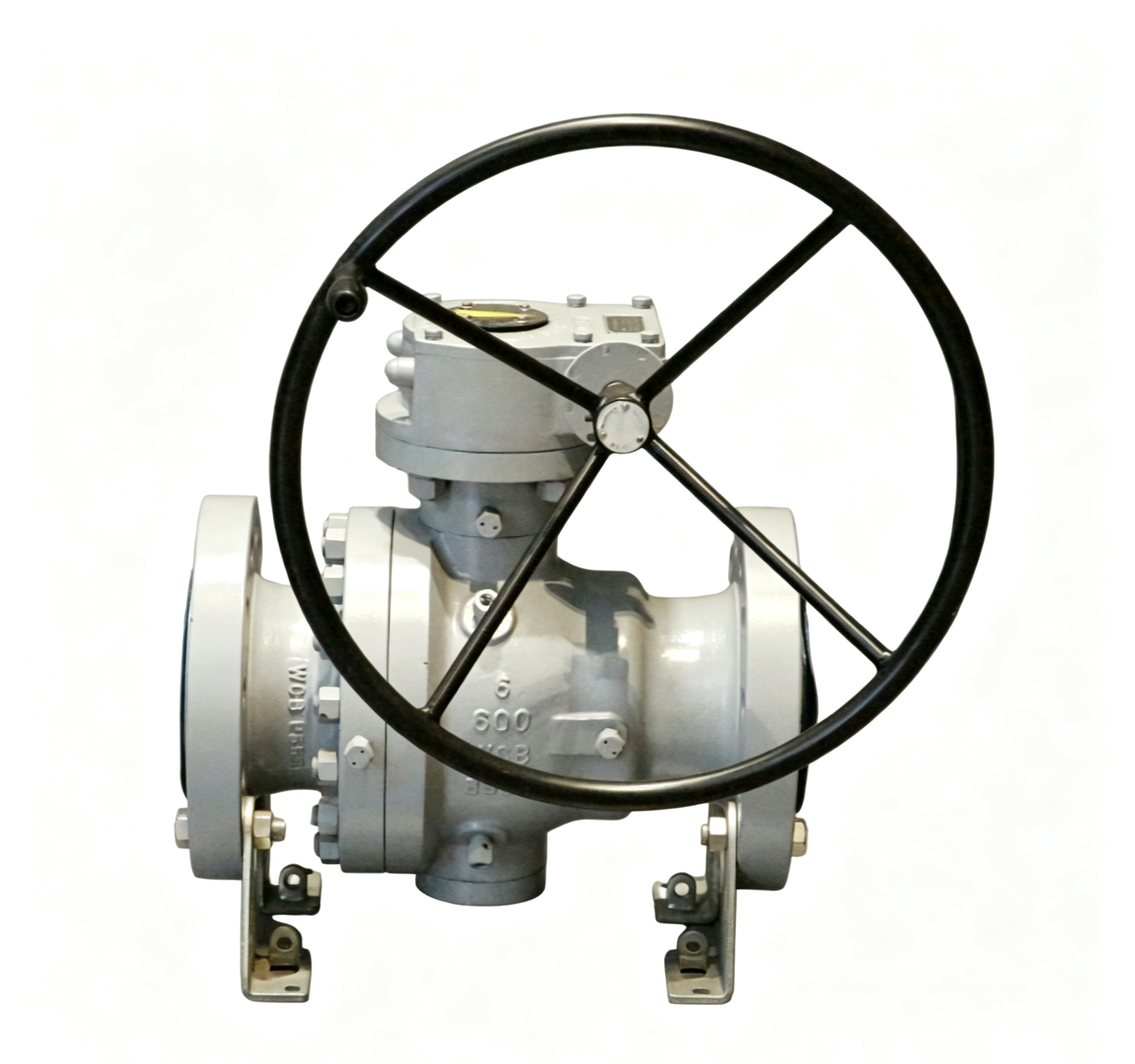
The 2PC Trunnion Mounted Ball Valve as the Pipeline Isolation Answer
The product configuration that answers the four problems above is a two-piece trunnion mounted ball valve with a bolted body joint, a spring-loaded movable metal seat, and flanged ends. Each element of that description exists for a reason.
Two-piece body architecture
The 2PC construction splits the body into a main body and an end closure, bolted together on the pipeline axis. Compared with a fully welded body it allows the ball, seat and seals to be reached for inspection and replacement without cutting the valve out of the line, and compared with a three-piece body it uses fewer joints on a large-bore high-pressure casting. On a gas pipeline where the valve may need intervention after a seat leak, that access is an operational decision rather than a manufacturing preference.
Spring-loaded movable metal seat
The seat is metal and spring loaded, so it stays in contact with the ball as pressure and temperature move the components. The spring compensates for the small movements that a rigid seat cannot follow, and the metal seating surface avoids the temperature ceiling that soft seats impose. The design intent is bidirectional sealing: the valve holds in either flow direction and relieves cavity overpressure into the upstream side.
Safety features that are stated, not implied
- Fire-safe design — the valve is intended to retain sealing capability after fire exposure.
- Automatic cavity pressure relief — trapped body cavity pressure is relieved instead of being held at full differential.
- Blowout-proof stem — the stem cannot be ejected by internal line pressure.
- Multiple actuation options — the valve is supplied gear operated, electric actuated, or in other configurations.
Operation: gear or electric
Gear operation is the default for pipeline isolation because it needs no power supply at the valve and no instrument air, and it keeps the actuator outside the electrical classification boundary. Electric operation is selected where the valve is part of a remotely controlled station, where a defined open/close sequence must be repeatable, or where the valve sits in a location an operator cannot reach quickly. The choice is a station design decision, and it changes both the valve cost and the document package.
Connection: flanged ends and standard choice
The trunnion mounted range is flanged. Flanged ends match the majority of gas pipeline isolation points, allow the valve to be removed for service, and let a project hold a single gasket and bolting standard across the station. RST valve products are manufactured in accordance with API, ANSI, DIN, JIS, BS and GB standards, and the flanged ball valve range supports GB, ANSI, DIN and JIS flange standards, so the flange drilling can be aligned to whatever the pipeline specification calls for rather than forcing a spool-piece adaptor.
Materials: WCB, CF8, CF8M
Body options are WCB carbon steel, CF8 (304) and CF8M (316) stainless steel, with carbon steel, SS304 and SS316 also offered as material options. Dry, sweet gas transmission duty normally points to WCB on cost. Wet, sour or chemically contaminated gas, and any service where corrosion allowance calculation is uncertain, points towards the stainless grades. The material choice has a direct effect on the CE and PED scope check described earlier, because conformity is assessed per material group.
Specifying the Valve: A Seven-Step Breakdown
The sequence below is the order in which the specification should be fixed. Changing a later step after an earlier one is settled is what usually forces a redesign.
- Fix the line data first. Confirm medium, design pressure, design temperature, nominal diameter and connection type before choosing a valve. These five items decide everything downstream.
- Confirm the valve sits inside the published envelope. For the RST trunnion range the envelope is DN50–DN1200, PN4.0–10.0 MPa and −40 °C to +150 °C. Where a project condition falls outside one of those limits — the −46 °C case discussed above, for example — raise it before quotation rather than after.
- Translate the pressure requirement into the standard's class language. API 6D works in Classes 150 to 2500. Confirm which class your PN4.0–10.0 MPa requirement maps to using the applicable rating tables, and state both in the RFQ so there is no interpretation gap between buyer and supplier.
- Select body and trim material against the gas composition. WCB for dry, sweet service; CF8 or CF8M where corrosion resistance is required. Record the reason for the choice in the project file, because that record is what a conformity assessment will ask for.
- Decide the actuation method. Gear operation for local manual isolation, electric actuation for remote or automated stations. Confirm which procurement document governs actuated units, since IOGP S-562 as identified addresses manually operated valves.
- Fix the flange standard and drilling. Choose between GB, ANSI, DIN and JIS at specification stage and put the standard on the datasheet line item. A flange that is dimensionally close but not to the named standard is a site problem, not a factory problem.
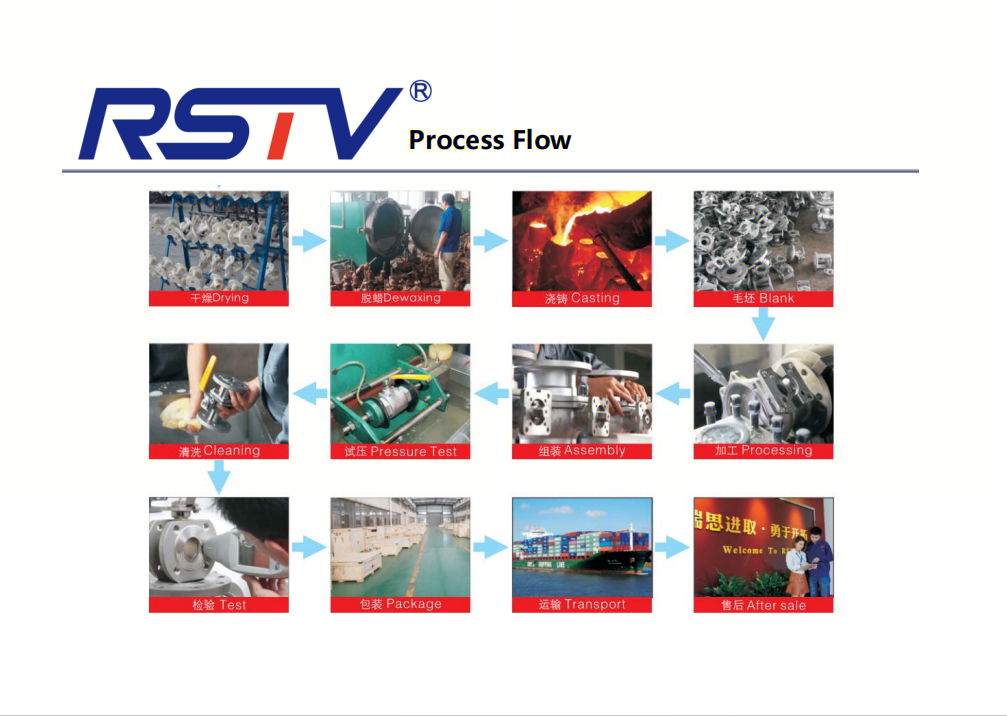
- Assemble the document package before the order. Standard edition and certificate, CE/PED scope, SIL assessment where a safety function applies, fire-safe documentation, material certificates and the factory pressure test report. RST inspection covers raw material inspection, dimensional inspection, processing inspection, chemical testing, physical testing and pressure testing, which is the set of records a pipeline buyer will normally request.
Where These Valves Fit: Use Cases
The trunnion mounted range is designed for pipeline projects and is used across the industries below. The list is drawn from the published application scope rather than from a general market claim.
- High-pressure gas pipeline isolation — mainline block valves, station isolation and sectioning points where the valve is normally open and must close reliably on demand.
- Petrochemical and petroleum refining — process and utility isolation on high-pressure hydrocarbon service, including feed, product and relief headers.
- Chemical plants — isolation of gas and liquid process lines where the body and trim material must match the fluid rather than a generic standard.
- Liquid cooling and nuclear power — cooling and auxiliary circuits where a positive shut-off and a documented design basis are both required.
- Metallurgy and mining — gas and utility isolation in heavy industrial environments where the valve is exposed to dust, vibration and infrequent operation.
- Medical, food, national defense, military and urban construction — the wider industrial scope in which the same body architecture is used with appropriate materials and cleaning.
Outside that scope, smaller-bore utility and instrument lines are usually served by other ranges rather than by a trunnion valve. RST produces threaded ball valves in DN6–DN100 and 1000–2000 WOG, and a flanged floating-type range in DN15–DN600, and these are the realistic alternatives to compare against for low-pressure service.

Comparison: Trunnion Mounted Against the Other RST Ball Valve Ranges
The table below compares only the parameters published for each range. Where a figure is not part of the standard range data it is marked for confirmation at RFQ rather than estimated.
| Parameter | Trunnion mounted (Q347F / Q347H / Q347Y) | Flanged floating-type range (Q41F / Q41H / Q45F) | Threaded range (Q11F / Q61F / Q81F / Q11PPL) |
|---|---|---|---|
| Ball support and seat | Trunnion mounted ball; spring-loaded, movable metal seat | 2PC / 3PC direct mounting pad, wafer type and 1PC flanged designs | 1PC, 2PC and 3PC threaded, socket weld and butt weld designs |
| Nominal diameter | DN50–DN1200 | DN15–DN600 (full port) | DN6–DN100 |
| Pressure | PN4.0–10.0 MPa | Not stated in the standard range data — confirm per order | 1000–2000 WOG |
| Temperature | −40 °C to +150 °C | −20 °C to +180 °C | −20 °C to 180 °C |
| Connection | Flanged | Flanged; GB, ANSI, DIN and JIS supported | Threaded, socket weld, butt weld, tri-clamp |
| Body material | WCB / CF8 / CF8M | Carbon steel (WCB), CF8 (304), CF8M (316), 2205, CF3M | CF8 (304) / CF8M (316) |
| Actuation | Gear operated, electric, multiple options | Pneumatic actuated configuration available | ISO 5211 actuator mount |
| Role in a gas project | High-pressure pipeline isolation — this guide's subject | Process and utility isolation at moderate size and pressure | Small-bore utility and instrument isolation |
The second table maps the compliance references discussed earlier onto what a buyer should actually request. It is a document checklist, not a performance ranking.
| Reference | What it governs | What to request from the supplier |
|---|---|---|
| API Specification 6D (25th Edition) | Design, manufacturing, assembly, testing and documentation of pipeline ball valves; pressure classes 150–2500 | Certificate or monogram statement naming the edition and the ordered pressure class |
| API 6D 25th Edition Addendum 2 | Materials, welding, quality control, marking, documentation and process controls | Written confirmation the ordered lot is built to the current edition plus addendum |
| IOGP S-562 Version 3.1 | Supplementary procurement requirements for manually operated API 6D ball valves; allowable operating temperature −46 °C to 150 °C | Project-specific compliance statement, plus temperature confirmation if service goes below −40 °C |
| IEC 61508:2010 (SIL) | Functional safety of a safety instrumented function | SIL assessment naming the exact model, size and actuation arrangement |
| EU Pressure Equipment Directive (CE) | EU conformity of pressure equipment | Declaration of conformity with scope covering the ordered size, class and material |
| Fire-safe design | Sealing capability retained after fire exposure | Fire-safe documentation for the specific design, not for the product family |
| Factory pressure test | Body and seat tightness before shipment | Per-unit test report issued with the delivery documents |
Frequently Asked Questions
What standards should a trunnion mounted ball valve meet for a high-pressure gas pipeline?
API Specification 6D defines the design, manufacturing, assembly, testing and documentation requirements for pipeline ball valves and covers Classes 150 to 2500. IOGP S-562 Version 3.1 adds procurement-level requirements for manually operated API 6D ball valves and states an allowable operating temperature of −46 °C to 150 °C. Where the valve is part of a safety instrumented function, project specifications reference IEC 61508:2010 and ask for a SIL assessment; for EU projects, CE conformity is assessed under the Pressure Equipment Directive and its scope must match the ordered size, class and material. Request each document by name, with the exact model and configuration written into it.
Does the RST trunnion mounted range cover DN1200 at PN10.0 MPa?
The published range is DN50–DN1200 and PN4.0–10.0 MPa, with an applicable temperature range of −40 °C to +150 °C, in WCB, CF8 or CF8M bodies. Those figures describe the boundaries of the range as a whole; they are not a statement that every size and pressure combination is standard. Confirm the specific DN and PN combination at RFQ stage, together with the flange standard and the actuation method, so the quotation and the certificate cover the same configuration.
What should buyers check when comparing China ball valve manufacturers for trunnion mounted valves?
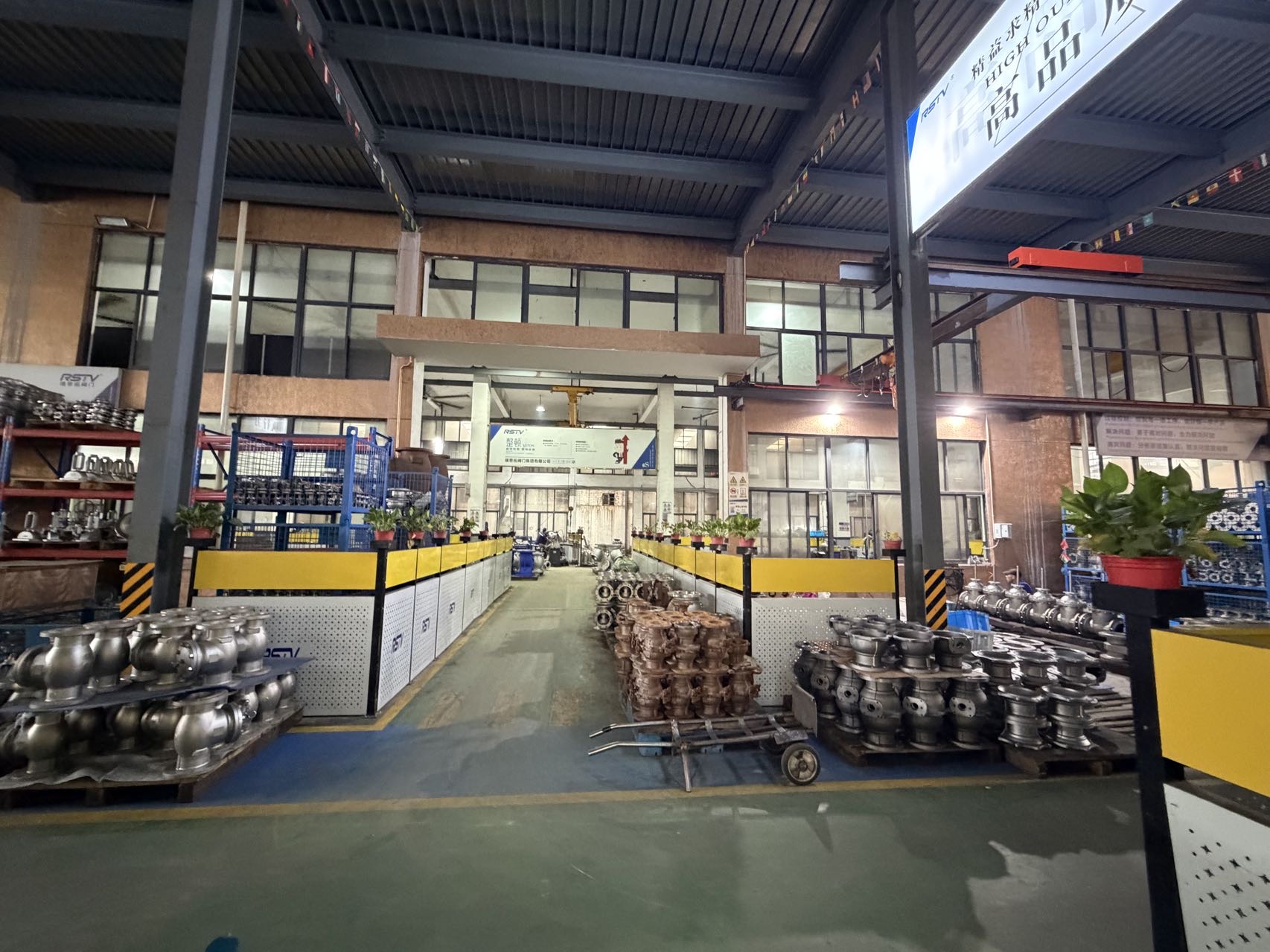
Compare published ranges side by side, then test the claims. Useful checkpoints are the model designation and body architecture, the standard edition the factory builds to, the scope of the CE and ISO certificates, the availability of per-unit pressure test reports, and the actuation options offered. RST VALVE GROUP CO.,LTD was established in 2009 in Wenzhou City, Zhejiang Province, holds ISO, CE and TS certification, manufactures in accordance with API, ANSI, DIN, JIS, BS and GB standards, operates a 20,000 m² facility with approximately 430 staff and a 5-engineer R&D team, and accepts OEM and ODM enquiries. Treat manufacturer pages as a discovery tool and verify against certificates and test records.
Can a sample and test documentation be requested before a pipeline order?
Yes, and for a pipeline project the documentation is usually the more valuable part of the request. Inspection at RST covers raw material inspection, dimensional inspection, processing inspection, chemical testing, physical testing and pressure testing, and finished valves are pressure tested on body and seals before shipment. A sample request should therefore be paired with a document request: material certificates, dimensional record, pressure test report, and the certificate that establishes the standard the unit was built to.
How do I move from a specification to a quotation?
Send the five line data items — medium, design pressure, design temperature, nominal diameter and connection type — plus the required standard and class, the body material, the actuation method, the flange standard and the quantity. With that set, a configuration can be quoted against the published range without a round of clarification. The RST contact for technical and commercial enquiries is Vera at vera@wzrst.com.
Conclusion
A high-pressure gas pipeline needs an isolation valve whose seat is not asked to carry the line thrust, whose cavity can relieve, whose stem cannot eject, and whose document package survives a project review. The 2PC trunnion mounted ball valve in models Q347F, Q347H and Q347Y meets the mechanical side of that brief within DN50–DN1200, PN4.0–10.0 MPa and −40 °C to +150 °C, with flanged ends, WCB/CF8/CF8M bodies, spring-loaded movable metal seats, automatic cavity pressure relief, blowout-proof stems and a fire-safe design, in gear-operated or electric configurations.
The compliance side needs the same discipline. API 6D 25th Edition and its Addendum 2 set the manufacturing and documentation baseline, IOGP S-562 Version 3.1 sets the procurement baseline for manually operated ball valves, IEC 61508:2010 governs the SIL statement where a safety function applies, and the CE conformity scope under the Pressure Equipment Directive must match the size, class and material actually ordered. Two boundary items deserve attention before an order is placed: the −46 °C low-temperature figure in S-562 sits below the −40 °C range figure for this valve, and actuated units fall under a different procurement document than manually operated ones.
Next step: sample, drawing or quotation
RST VALVE GROUP CO.,LTD supplies the trunnion mounted ball valve range described in this guide from Wenzhou, Zhejiang, China. To request a sample, a dimensional drawing, a test report or a project quotation, send the line data and the required standard to vera@wzrst.com or reach the team on WhatsApp at +86 15958755768.
Product range and capability overview: www.stainlesssteel-valves.com
Company catalogue (PDF, open access): RST Presentation & Catalogue

Have Questions or Need More Details?
Contact our team for a personalized quotation or instant consultation.
Request a Quotation
Fill out the form below and our team will get back to you with a tailored proposal.
WhatsApp Direct Chat
Prefer to chat in real-time? Message us on WhatsApp for instant assistance & quick answers.
- Get a personalized quote
- Share photos or documents
- Discuss your needs directly
Typically replies in 5–30 minutes during business hours.