Custom Packaging Solutions: HDPE vs. PET Bottle Comparison Guide
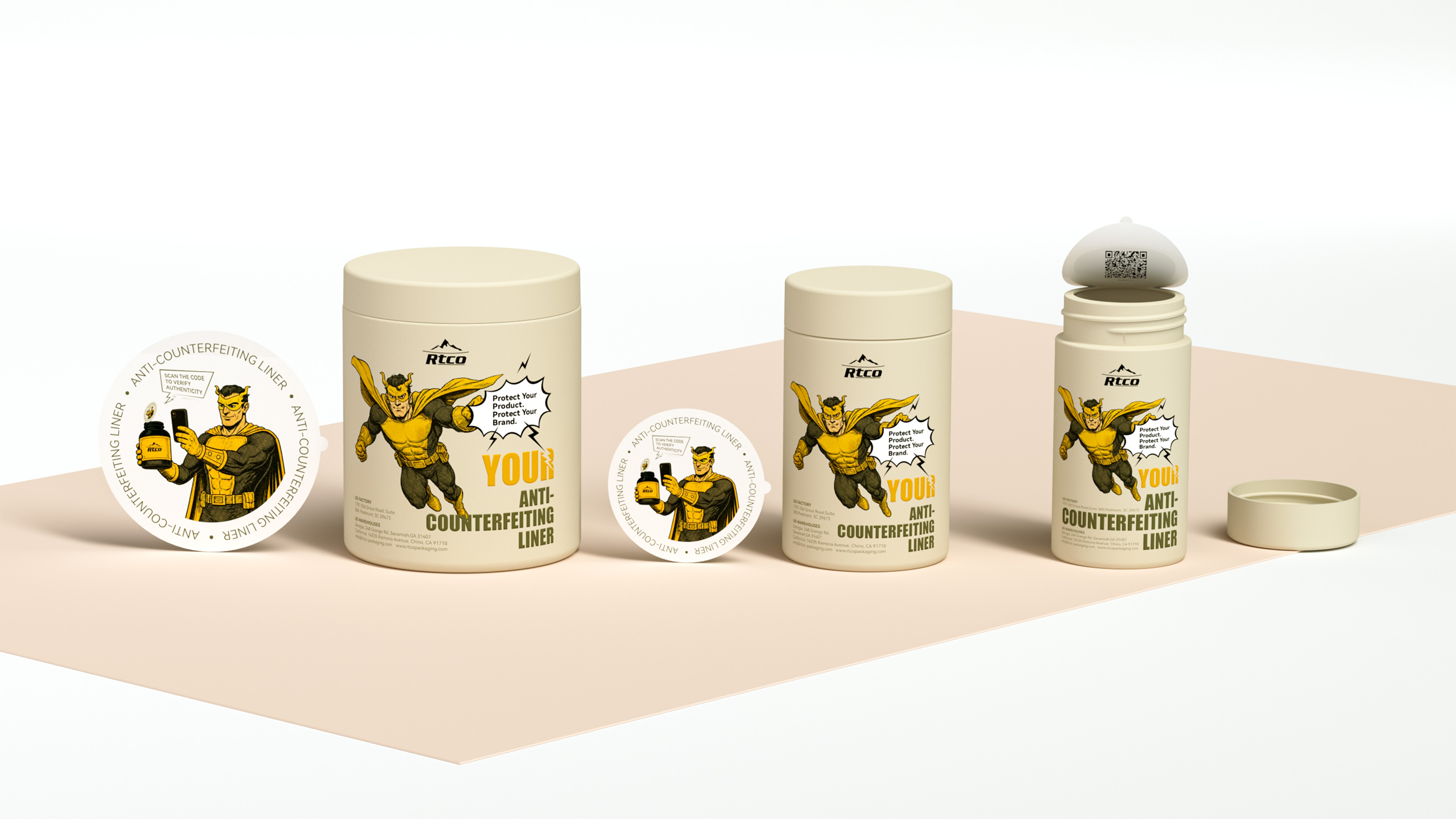
HDPE bottle formats in 6oz, 10oz and 20oz with anti-counterfeiting liner — one substrate choice inside a wider custom packaging solutions decision.
Choosing between HDPE and PET is one of the first structural decisions in a supplement or sports nutrition packaging project, and one of the few that is genuinely expensive to reverse. The practical answer: HDPE is generally the better default for powders, tablets and high-dose capsule fills, where opacity and moisture protection matter more than shelf visibility, while PET is generally the better fit where clarity, gloss, gummies or liquids drive the purchase decision. In both cases the bottle alone is rarely the real decision. The real decision is the fit of the whole system — closure, scoop, liner, decoration route, compliance documentation, filling-line compatibility, and where the finished inventory physically sits.
RTCO PAK PTE. LTD. (RTCO) is a packaging manufacturer founded in 2007 that produces food-grade HDPE, PET and PP containers, caps and closures, scoops, liners and surface finishes for supplement, sports nutrition and health & beauty brands. RTCO integrates manufacturing across Asia and the United States, with a US production facility in Piedmont, South Carolina and warehouses in Savannah, Georgia and Chino, California. This comparison is written for brand owners, procurement managers and packaging engineers who are at Research-to-Evaluation stage and need a decision they can defend internally — not only a lower unit price.
Short answer
- Powders, tablets and high-dose capsules → HDPE, generally.
- Gummies, liquids and clarity-led shelf presence → PET, generally.
- Both substrates: fill capacity 60ml–6000ml, FDA-compliant food-grade material with optional PCR, and matched caps, closures, scoops and liners.
- The tie-breakers are closure system, scoop size, liner, decoration route, certificate set, and Asia-versus-US inventory placement.
Problem definition: why the HDPE vs. PET question gets answered at the wrong level
Most RFQs compare bottles. Most project delays are not bottle failures — they are system failures that surface after tooling is cut and artwork is approved. The recurring risk patterns are consistent enough to plan for:
- Material chosen before format. A substrate decision taken before fill weight, product form and dosing method are locked in usually gets revisited — often after tooling.
- Scoop and closure treated as accessories. A scoop is a dosing device with a defined measuring capacity, and a cap is a sealing and dispensing component. They belong to the same engineering problem as the bottle.
- Decoration route decided after tooling. Adding a soft-touch coating, vacuum metallization or an embossed logo late in the project can force re-approval of surface treatment, curing and handling.
- Liner and compliance paperwork treated as the last step. Liner selection interacts with product protection and, where brand protection is a requirement, with anti-counterfeiting design.
- Freight and inventory handled as a separate project. A unit-price advantage on the bottle can disappear once the same inventory has to travel a long distance to reach the filler.
The rest of this guide addresses each of those levels in order, then reduces the decision to a seven-step sequence and a single comparison table.
Industry background
The material question deserves a structured answer because the category is large and still expanding. According to Precedence Research, the global dietary supplement packaging market was valued at USD 12.7 billion in 2024 and is projected to reach USD 23.1 billion by 2034, a CAGR of 6.1%. The same source estimates that plastic accounted for approximately 58.3% of dietary supplement packaging material share in 2024, which is why the HDPE-versus-PET choice sits at the centre of most packaging projects rather than at the edges.
North America is the dominant demand region. Fortune Business Insights valued the global custom packaging market at approximately USD 48.17 billion in 2025, with North America holding a 40.09% share; Grand View Research estimates the same 2025 market at USD 39.7 billion, so buyers should treat the figure as a range rather than a precise number. Regional pull is also visible in finished-product demand: Grand View Research estimated the US sports nutrition market at USD 29.42 billion in 2024, growing to USD 55.51 billion by 2033. Traceability is moving in the same direction — Grand View Research reported that smart packaging in North America, including RFID and QR integration for traceability, held a revenue share of approximately 42% in 2023.
Two regulatory anchors matter when the finished product is a nutraceutical sold into the United States. Child-resistant packaging for supplements is governed by the Poison Prevention Packaging Act (PPPA) and the ASTM D3475 standard, as described by the U.S. Consumer Product Safety Commission. Food-contact suitability, meanwhile, is documented through the manufacturer's certification set — a buyer-verifiable artifact rather than a marketing claim.
Read together, these signals explain why the material decision cannot be optimised in isolation: demand is concentrated where the shelf is, while a large share of packaging capacity sits where the manufacturing is. That gap is a supply chain design problem, not a chemistry problem.
Detailed solution: build the material decision on six layers
1. The substrate layer
RTCO manufactures containers from FDA-compliant food-grade HDPE, PET and PP, with optional PCR (post-consumer recycled) material, and states compliance with FDA and EU food safety standards. Bottles across the range support a fill capacity of 60ml–6000ml, a body diameter of 40–200mm and a height of 60–325mm, so the substrate conversation can be held at the correct fill volume instead of at a single reference SKU.
In practice, HDPE is commonly selected for opaque, high-fill powder and solid-dose formats, and PET is commonly selected where the product benefits from being seen — clear or tinted containers for gummies, liquids and visually differentiated premium ranges. Neither statement is a claim about quality tiers; both materials run inside the same quality and certification system.
2. The format layer
The RTCO product line includes wide-mouth protein powder jars, pre-workout/BCAA bottles, dual-chamber supplement bottles, capsule & tablet bottles, and flip-cap scoop bottles, plus packer bottles, gallon bottles and sample tubes. This range matters to the HDPE-versus-PET decision because format usually determines substrate more reliably than the reverse: a wide-mouth powder jar and a clarity-driven gummy bottle are not interchangeable even when both are moulded from food-grade plastic.
3. The closure, scoop and liner layer
Bottle geometry only becomes a packaging solution once the delivery system is resolved. Caps across the range cover a diameter of 20–200mm and a height of 10–40mm; scoops cover a measuring capacity of 0.3cc–8oz. That scope allows a program to match a 60cc scoop to a wide-mouth powder jar, or a flip-cap closure to a gummy bottle, without mixing suppliers and inheriting a fit problem. Liners are specified as part of the same system and include an anti-counterfeiting liner option for brands that need a verifiable seal.
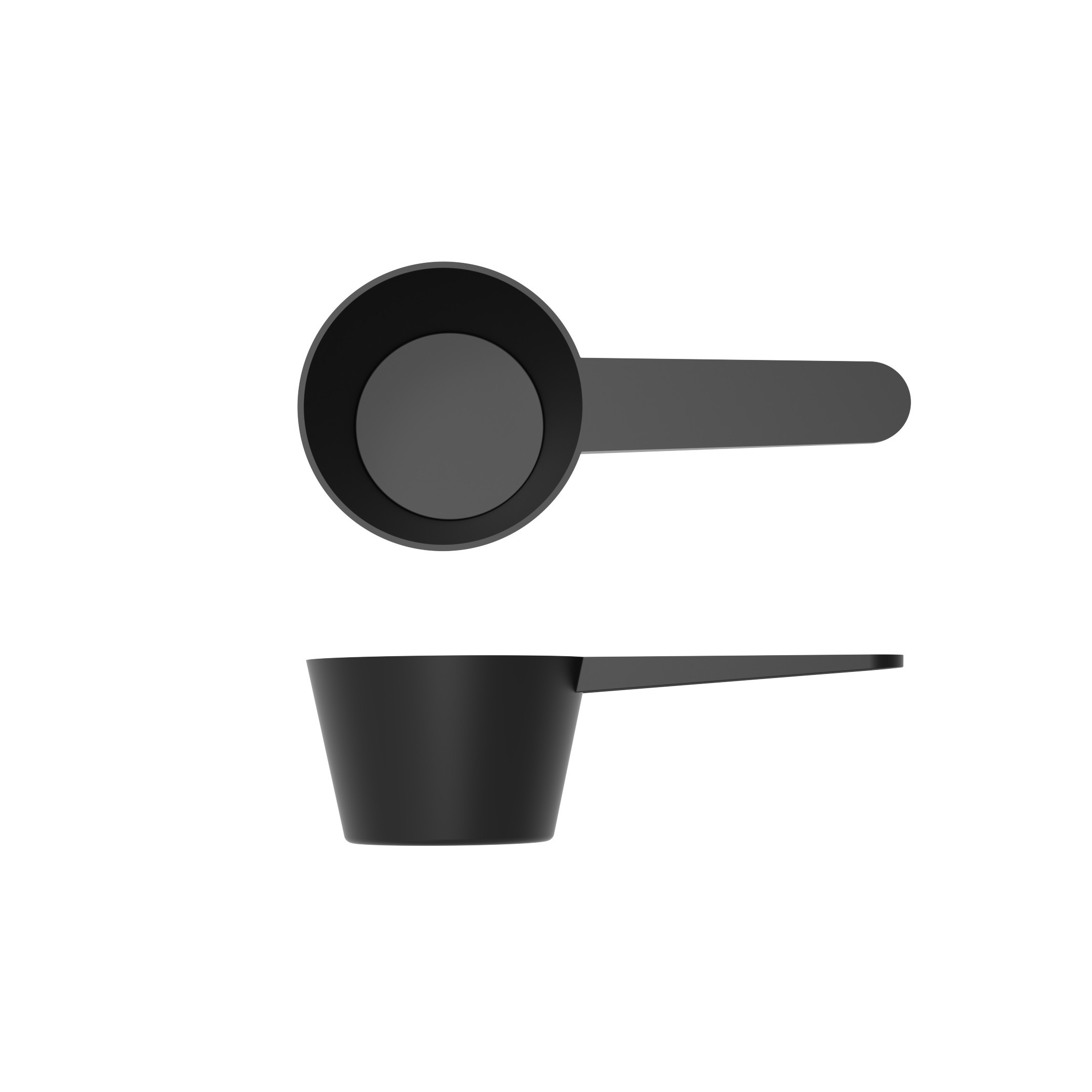
Measuring scoops from 0.3cc to 8oz are specified together with the bottle, not added afterwards.
4. The finish layer
Both HDPE and PET accept RTCO's decorative routes: soft-touch coating, UV coating, silk screen, 3D printing and labeling, plus an embossed logo and custom closures. Vacuum metallization and soft-touch finishes are applied to HDPE and PET containers, which is why the finish decision should follow the substrate decision but precede artwork lock — the same visual concept can require a different process path on a different substrate.
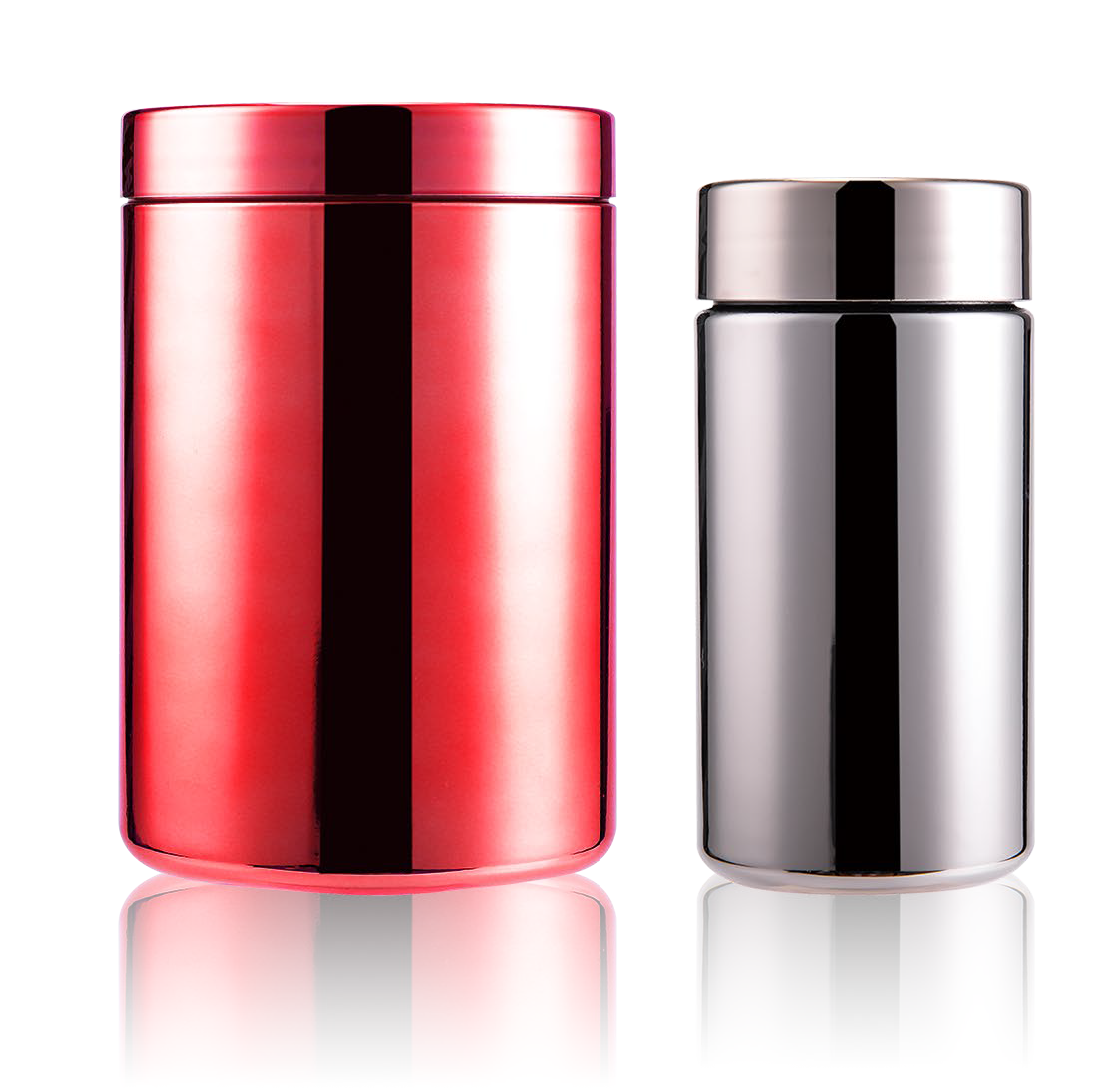
Vacuum metallization produces chrome-like finishes on HDPE and PET containers.
5. The compliance layer
RTCO's plastic packaging products hold a documented certification set that a buyer can verify by certificate number:
- ISO 9001:2015 (certificate no. 05126Q00928R153, NOA Testing & Certification Group Ltd.) for manufacturing of food-grade plastic packaging containers.
- ISO 14001:2015 (no. NOA2408227) and ISO 45001:2018 (no. NOA2408228), NOA Testing & Certification Group Ltd.
- ISO 15378:2017 GMP for primary packaging materials for medicinal products (no. HBPCER20260088, Intertek Testing Services).
- BRCGS Global Standard Packaging Materials Issue 7 (no. C0860130-BRC2, NSF Certification, LLC).
- Global Recycled Standard Version 4.0 (no. TRC-GRS-222421-00, TÜV Rheinland (China) Ltd.) for recycled content.
- HACCP Management System V1.0 (no. 331HACCP2600024, Ti Certification (Shanghai) Co., Ltd.) for food-contact plastic containers and closures.
- SA8000:2014 social accountability (no. BM-CN-20240906, Benchmarks Co., Ltd.).
Quality control covers dust-free manufacturing, third-party testing support, food-grade testing processes and pre-shipment inspections.
6. The supply chain layer
This is the layer that most often decides the comparison, and it is why this guide frames the choice as total supply chain fit. RTCO operates a manufacturing facility of 68,000 m² with approximately 200 employees, a 40-engineer R&D team, monthly capacity of 80,000,000 units and annual output of 1,000,000,000 units; exports account for 97% of output, primarily to North America. Manufacturing is integrated across Asia and the United States, with US production in Piedmont, South Carolina and warehousing in Savannah, Georgia and Chino, California, supported by warehousing, fulfilment and last-mile logistics coordination. The practical consequence for a brand comparing HDPE with PET is that two proposals can carry near-identical bottle parameters and still differ substantially in inventory geography, replenishment rhythm and landed cost.
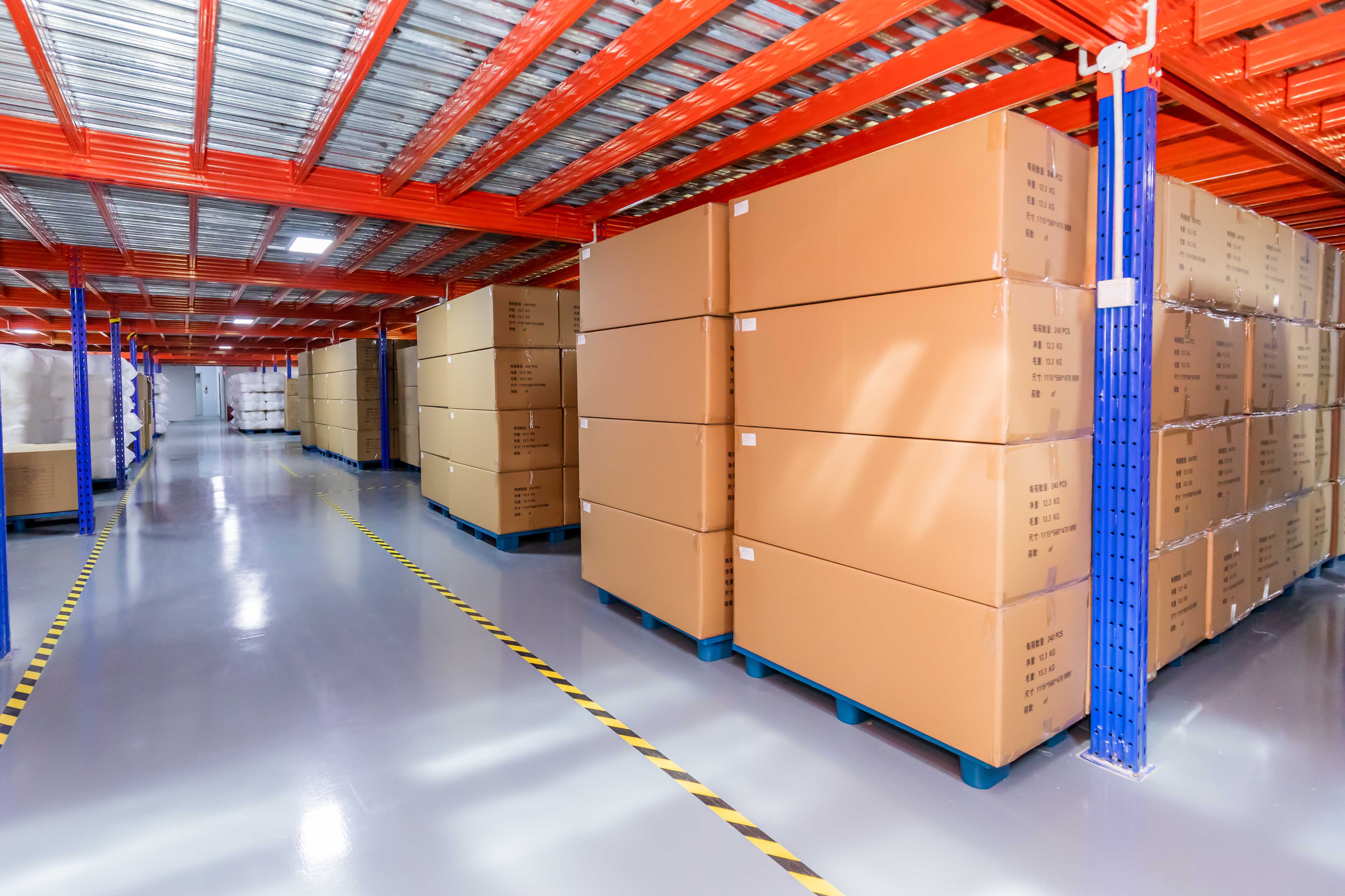
Inventory geography — Asia production plus US warehousing — is part of the material decision, not a separate logistics project.
Step-by-step breakdown: seven steps from format to landed inventory
- Lock the product format and fill weight. Powder, tablet, capsule, gummy or liquid — plus target fill within the 60ml–6000ml band. Substrate debates shorten dramatically once this is fixed.
- Define the dosing and closure system. Decide whether the consumer needs a scoop (0.3cc–8oz range), a flip-cap, a disc-top, a dispensing structure or a child-resistant closure. Where the US market requires child resistance, reference the PPPA and ASTM D3475 framework early.
- Screen the substrate against the shelf strategy. Opacity and product protection on one side; clarity and gloss on the other. If visibility is the differentiator, PET is usually the starting point. If the product is a bulk powder or a solid-dose fill, HDPE is usually the starting point.
- Choose the decoration route after the substrate. Soft-touch coating, UV coating, silk screen, 3D printing, labeling, embossed logo, bicolor and vacuum metallization each carry different process implications.
- Specify liner and compliance documentation together. Match the liner to the product and to brand-protection needs, and assemble the certificate set — including GRS v4.0 where recycled content is claimed.
- Validate with a prototype and a trial order. RTCO follows an end-to-end workflow of consultation, feasibility, prototype, mould, pilot and mass production, with a Three-One Service reference model of 1-day design, roughly one month of tooling and roughly one week of production.
- Plan inventory geography and lead time. Standard lead time is 30–45 days, with MOQs typically 10,000 to 30,000 units per SKU. Decide how much inventory should sit in Asia and how much in the United States before the first purchase order, not after it.

Caps from 20–200mm diameter and 10–40mm height are specified as one matched system with the bottle.
Use cases: matching format to substrate
Protein powders and mass gainers
Large-format, high-fill powder is the classic HDPE application: a wide-mouth protein powder jar, a matched 60cc-class scoop, and a closure that keeps the scoop accessible between servings. The bottle range supports up to 6000ml, allowing a single substrate decision to cover a full powder line rather than one SKU.
Tablets and capsules
Solid-dose formats are usually opaque HDPE bottle programs, particularly where child resistance applies; the range includes capsule & tablet bottles and a one-touch CRC bottle option. Where a brand wants the fill visible on shelf, the same program can be reviewed in PET instead — the decision then becomes a shelf-positioning decision rather than a technical one.
Gummies
Gummies are the clearest PET case in the category. The product is the marketing asset, so a clear or tinted container with a flip-cap closure does work an opaque bottle cannot; the range includes flip-cap bottles intended for gummy formats, and bicolor PET options for differentiated shelf presence.
Liquids, gels and liquid concentrates
Liquid formats generally follow the clarity logic of gummies, with dispensing behaviour added to the specification. This is where structural innovation earns its place — the range includes a double-layer elevator dispensing bottle, a twin-dose bottle and a rotating pill case, all of which change the dosing experience rather than only the appearance.
Dosing-convenience and sample formats
Flip-top, disc-top and press-to-open closures, plus sample tubes, are relevant when a brand is testing a new flavour or launching a trial SKU. Sample tubes and trial orders below the standard MOQ make it possible to validate a substrate choice before a full tooling commitment.

Bicolor PET: the clarity-led route for gummy, liquid and premium supplement formats.
HDPE vs. PET comparison table
| Decision factor | HDPE container | PET container |
|---|---|---|
| Typical shelf role | Opaque or matte finishes; supports soft-touch coating, embossed logo and vacuum metallization | Clear, tinted or bicolor appearance; supports high-gloss, chrome (vacuum metallization) and 3D printing routes |
| Most common product fits | Wide-mouth protein powder jars, capsule & tablet bottles, flip-cap scoop bottles | Gummy bottles, liquid and liquid-concentrate bottles, clarity-led premium SKUs |
| Fill capacity supported | 60ml–6000ml | 60ml–6000ml |
| Body dimensions supported | Diameter 40–200mm; height 60–325mm | Diameter 40–200mm; height 60–325mm |
| Closure compatibility | PP caps, 20–200mm diameter and 10–40mm height; flip-cap, disc-top and one-touch CRC options in range | Same closure range |
| Scoop compatibility | Measuring scoops 0.3cc–8oz, including 60cc-class scoop | Same scoop range |
| Recycled content | Optional PCR material; Global Recycled Standard v4.0 (TRC-GRS-222421-00) | Optional PCR material; Global Recycled Standard v4.0 (TRC-GRS-222421-00) |
| Food-contact compliance | FDA-compliant food-grade material; ISO 9001:2015 (05126Q00928R153), BRCGS Issue 7 (C0860130-BRC2), HACCP V1.0 (331HACCP2600024), ISO 15378:2017 (HBPCER20260088) | Same certification scope covering plastic bottles and containers |
| Supply chain fit | Asia + US manufacturing; US facility in Piedmont, SC; warehouses in Savannah, GA and Chino, CA; lead time 30–45 days | Same supply model — substrate choice does not change inventory geography |
| Decision trigger | Product protection, opacity and bulk-fill priorities | Product visibility, gloss and consumer-facing differentiation priorities |
FAQ
Are RTCO HDPE and PET supplement bottles FDA-compliant?
Yes. The container range is produced from FDA-compliant food-grade HDPE, PET and PP, and the manufacturer states compliance with FDA and EU food safety standards. Supporting documentation includes ISO 9001:2015 (certificate no. 05126Q00928R153, issued by NOA Testing & Certification Group Ltd.) for manufacturing of food-grade plastic packaging containers, BRCGS Global Standard Packaging Materials Issue 7 (certificate no. C0860130-BRC2, issued by NSF Certification, LLC), HACCP Management System V1.0 (certificate no. 331HACCP2600024, issued by Ti Certification (Shanghai) Co., Ltd.) for food-contact plastic containers and closures, and ISO 15378:2017 GMP for primary packaging materials for medicinal products (certificate no. HBPCER20260088, issued by Intertek Testing Services).
Can one supplier deliver both HDPE and PET formats with matched caps, scoops and liners?
RTCO manufactures HDPE and PET bottles with a fill capacity range of 60ml–6000ml, body diameter of 40–200mm and height of 60–325mm, together with caps from 20–200mm diameter and 10–40mm height and scoops from 0.3cc to 8oz. Closures, scoops and liners are specified as one matched system, including an anti-counterfeiting liner option. Tooling and decoration are handled in-house, supported by a 40-engineer R&D team and monthly production capacity of 80,000,000 units.
What drives program cost differences between HDPE and PET, and what are the minimum order quantities?
Cost is driven less by the substrate name than by the number of operations attached to it: custom tooling, decoration steps (soft-touch coating, UV coating, silk screen, 3D printing, labeling, vacuum metallization), closure and scoop complexity, liner type, PCR material selection, and whether inventory is held in Asia or in the United States. MOQ is typically 10,000 to 30,000 units per SKU, and first trial orders below the standard MOQ are supported so a new product can be validated before scale-up.
How can a brand validate the HDPE versus PET decision before mass production?
Through the sample and pilot route. RTCO follows an end-to-end workflow of consultation, feasibility, prototype, mould, pilot and mass production, with a Three-One Service reference model of 1-day design, roughly one month of tooling and roughly one week of production. A brand can therefore test fill weight, scoop dosing, closure feel, decoration appearance and liner performance on a trial order before committing to a full production run.
What lead times and North American support should buyers plan for?
Standard production lead time is 30–45 days, with the Three-One Service model used as a reference for design, tooling and production sequencing. Because RTCO integrates manufacturing across Asia and the United States — with a US production facility in Piedmont, South Carolina and warehouses in Savannah, Georgia and Chino, California — brands selling into North America can position part of their inventory closer to the point of fill and sale. To start a project, request a sample set or a quote at rtcopackaging.com, or download the sports nutrition packaging catalogue from the link at the end of this article.
Conclusion
For a brand at Evaluation stage, the sequence that works is: fix the format and the dosing system first, then let the substrate fall out of that decision. HDPE and PET are not competing quality tiers — they are two routes through the same certified manufacturing system, and the differentiator is how well each route matches the product, the shelf and the delivery schedule. What separates a workable program from an expensive one sits in the layers around the bottle: a matched scoop and closure, the right liner, a decoration route chosen before artwork lock, a certificate set the buyer can verify, and inventory positioned close enough to the point of fill to be useful. Because RTCO integrates manufacturing across Asia and the United States and holds warehousing in Savannah, Georgia and Chino, California, one project can combine Asian production scale with North American replenishment instead of treating them as alternatives.
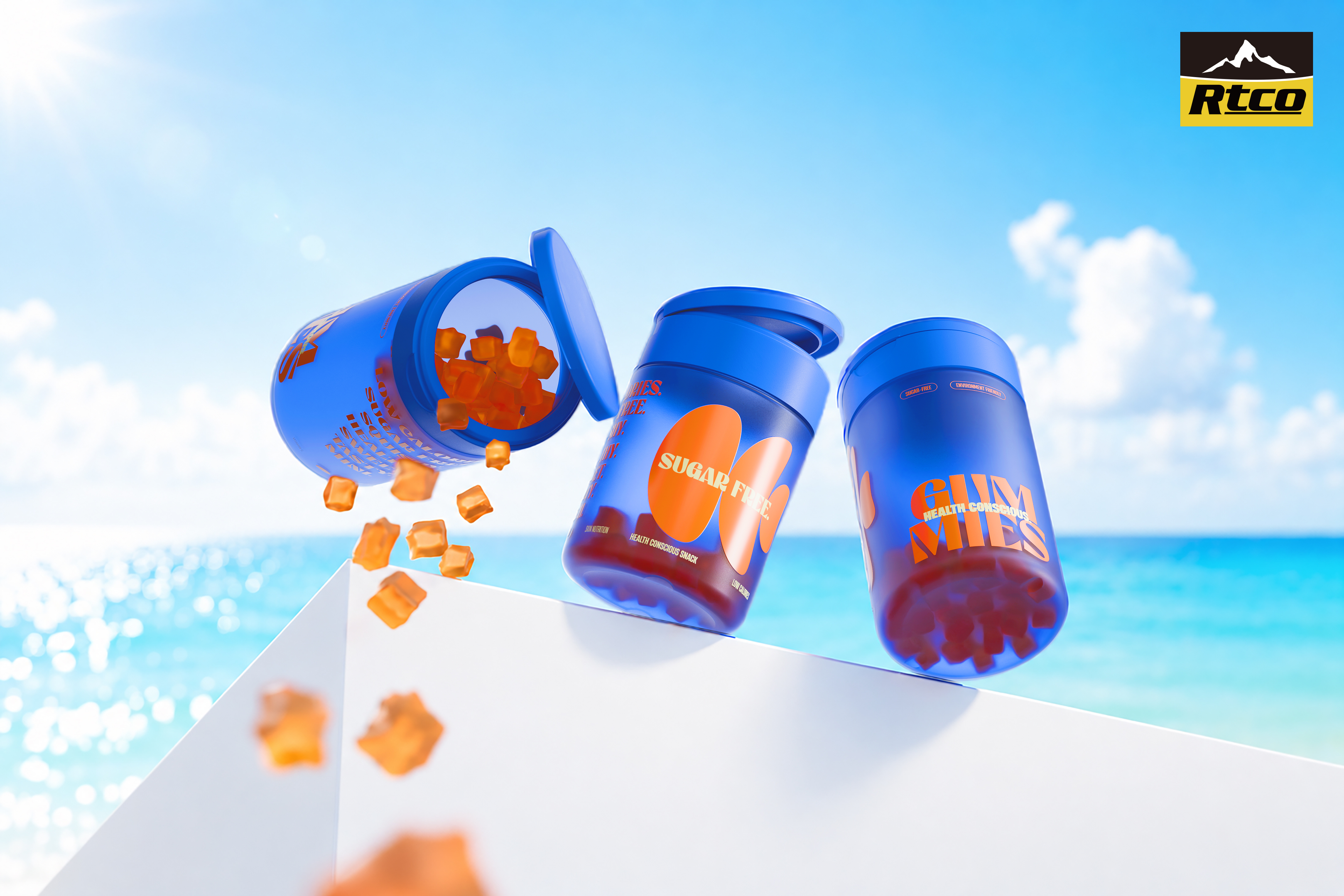
Next step: validate your HDPE vs. PET decision with a sample
Request a sample set or a project quote and specify bottle capacity, closure type, scoop size, liner and preferred finish. The sports nutrition packaging catalogue is available for download: RTCO Sports Nutrition Packaging Catalogue (PDF).
Contact: Penny | Email: info@rtco-packaging.com | WhatsApp: +86-13564840969 | Tel: +86 186-4781-3962 | US phone: 864-781-3962
Website: www.rtcopackaging.com | US Factory: 1701 Old Grove Road, Suite 300, Piedmont, SC 29673 | Warehouses: Savannah, GA and Chino, CA
Have Questions or Need More Details?
Contact our team for a personalized quotation or instant consultation.
Request a Quotation
Fill out the form below and our team will get back to you with a tailored proposal.
WhatsApp Direct Chat
Prefer to chat in real-time? Message us on WhatsApp for instant assistance & quick answers.
- Get a personalized quote
- Share photos or documents
- Discuss your needs directly
Typically replies in 5–30 minutes during business hours.