Custom Packaging Solutions With Verified Compliance: What Supplement Brands Should Demand
Custom Packaging Solutions With Verified Compliance: What Supplement Brands Should Demand
The supplement industry now operates in a stricter regulatory environment, and packaging is no longer just a container. Custom packaging solutions must simultaneously meet food-contact safety rules, child-resistance regulations, environmental expectations, and brand objectives. The commercial risk of choosing packaging purely on aesthetics has increased. This guide explains what "custom" should include when procurement, compliance, and brand teams evaluate a packaging partner.
Buyers researching supplement packaging in 2026 are asking more targeted questions: Does the supplier hold verifiable food-safety and quality certifications? Are recycled materials available? Can the supplier support North American fillers, warehouses, and distribution? These questions are not about preference; they are now core purchasing criteria.
For supplement and sports nutrition brands, verified compliance is becoming the strongest differentiator in custom packaging. A package that meets regulatory standards and is supported by independently issued certifications reduces supply chain risk and protects brand reputation.
What Are Custom Packaging Solutions in the Supplement Industry?
Custom packaging solutions for supplements refer to plastic bottles, jars, caps, closures, scoops, liners, and surface finishes designed around a specific product format and brand identity. They include capacity selection, material choice, structural engineering, decoration, and compatibility with filling equipment.
A complete custom packaging solution in 2026 goes beyond visual design. It covers workable dimensions, functional features, regulatory-compliant materials, and a supply chain capable of delivering consistent volume.
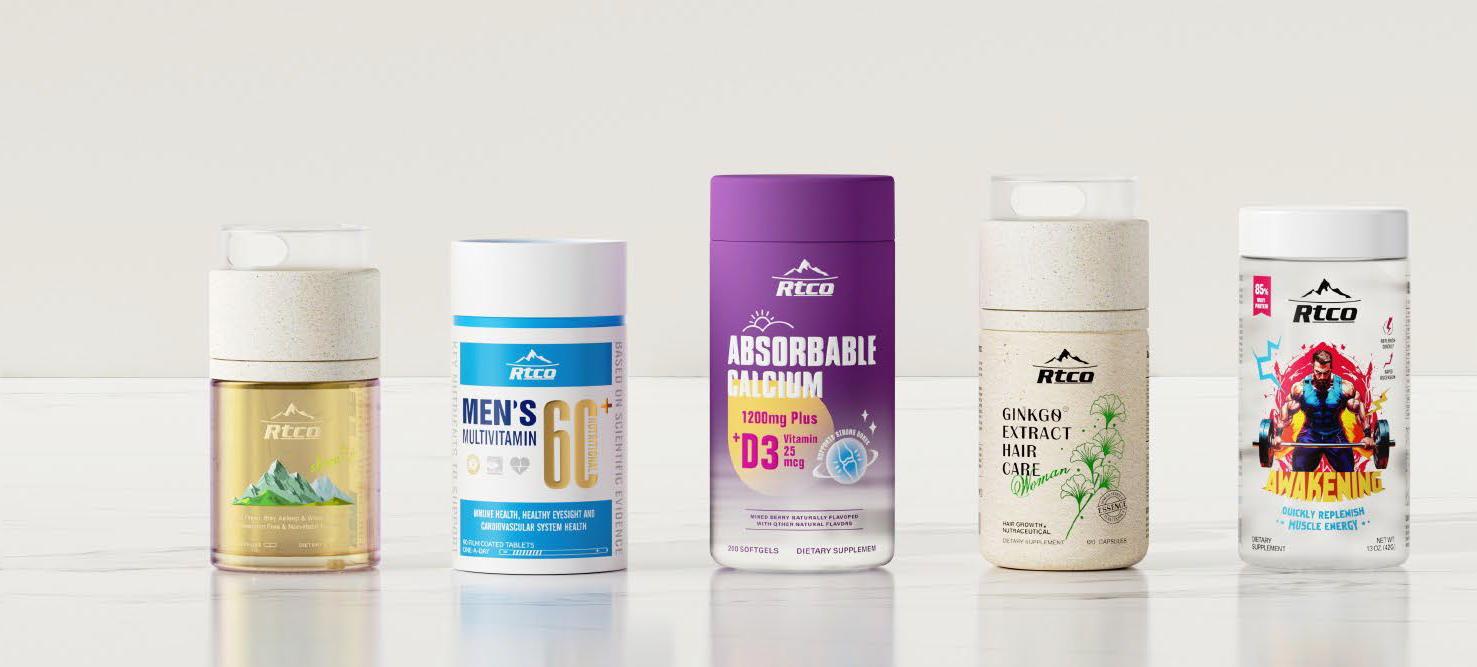
Common custom formats in the supplement and sports nutrition space include wide-mouth protein powder jars, pre-workout and BCAA bottles, dual-chamber supplement bottles, capsule and tablet bottles, and flip-cap scoop bottles. These formats exist because different product densities, dosages, and consumer habits require different container engineering.
Plastic remains the dominant material in dietary supplement packaging, accounting for about 58.3% of global market share in 2024. This is not surprising: plastics offer barrier performance, durability, lightweight logistics, and design flexibility that many alternative materials still cannot match at scale. HDPE, PET, and PP, all food-contact materials, remain the core building blocks of custom supplement packaging.
Why the Custom Packaging Market Is Growing
The global custom packaging market is not a niche segment anymore. It was valued at approximately USD 48.17 billion in 2025, with North America contributing 40.09% of the market. Custom packaging has become a strategic tool for brands seeking differentiation rather than an add-on cost.
The dietary supplement packaging market reflects the same trajectory: it was valued at USD 12.7 billion in 2024 and is projected to reach USD 23.1 billion by 2034, a CAGR of 6.1%. Sports nutrition is driving a meaningful portion of this demand. The U.S. sports nutrition market alone was estimated at USD 29.42 billion in 2024, with a projection of USD 55.51 billion by 2033.
These figures explain why more brands are treating packaging development as an early-stage priority. Shelf competition is growing. Consumers encounter more supplement SKUs than ever before, and packaging often decides first engagement.
There is a second, less visible driver: operational pressure. Brands are looking for packaging partners who can handle complex global logistics, regional warehousing, and regulatory alignment. The problem is no longer just "find a bottle supplier." It is "build a packaging supply chain that supports the brand across markets."
The Problem: Vague Claims vs. Evidence in Custom Packaging
Many brands are discovering that packaging terminology varies widely across suppliers. "Custom" can mean a stock bottle with a private-label logo, but it can also mean a bottle engineered from the resin level for a specific product and filling line.
Another widespread issue is marketing-led compliance. Some suppliers claim compliance without providing certification numbers, issuing bodies, or expiration dates. In a regulated industry, unverified compliance claims can create serious liabilities for brand owners.
A third problem is fragmented supply chains. A brand may buy bottles from one supplier, caps from a second, scoops from a third, and then arrange decoration and warehousing separately. Each transition adds risk: dimensional mismatches, contamination handling differences, inconsistent color, and unpredictable lead times.
The challenge for supplement brands is not finding suppliers that claim to offer custom packaging. It is recognizing the difference between a one-stop integrated solution and a group of parts that a supplier merely resells.
What a Verified Custom Packaging Solution Looks Like
A verified custom packaging solution can be evaluated at three levels: materials and safety, quality and management systems, and supply chain capability.
Materials and Food-Contact Compliance
The foundation of any supplement package is the material. Food-grade HDPE, PET, and PP are the most common materials because they meet strict food-contact safety expectations and perform reliably across filling, storage, and transport.
In the United States, child-resistant packaging for supplements and nutraceuticals is governed by the Poison Prevention Packaging Act (PPPA), with testing standards outlined in ASTM D3475. A packaging partner should be able to explain how their closures and containers can support these requirements. That does not mean every supplement cap must be child-resistant, but the supplier should know the standard and have appropriate cap options.
Recycled content is becoming a procurement requirement, not just a brand message. Global Recycled Standard (GRS) certification provides traceability for recycled materials. A 2025 GRS Version 4.0 certification from a credible body means the supplier has been independently checked for recycled material traceability and responsible production.
Quality, Safety, and Social Responsibility Certifications
Certifications are verifiable signals. Some of the most relevant standards for custom supplement packaging include:
| Certification | Standard | What It Covers |
|---|---|---|
| ISO 9001:2015 | Quality Management | Manufacturing of food-grade plastic packaging containers |
| ISO 14001:2015 | Environmental Management | Plastic packaging containers for food and cosmetic applications |
| ISO 45001:2018 | Occupational Health & Safety | Plastic packaging for supplements |
| ISO 15378:2017 | GMP for Primary Packaging | Primary packaging materials for medicinal products |
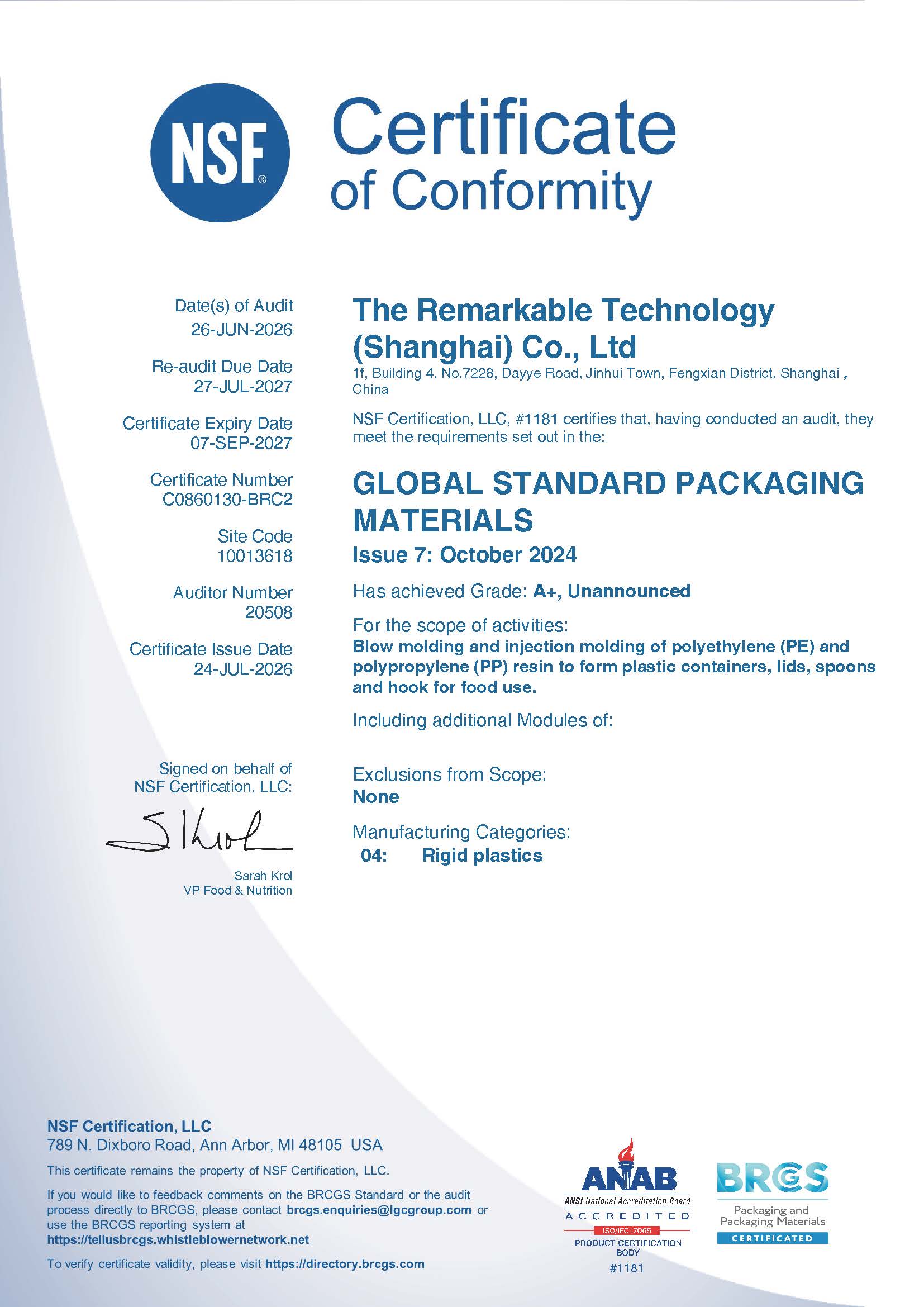
| BRCGS Issue 7 | Packaging Safety | Global food packaging safety management |
| GRS Version 4.0 | Recycled Content | Recycled plastic product traceability |
| HACCP V1.0 | Food Safety | Food-contact plastic containers and closures |
| SA8000:2014 | Social Accountability | Ethical manufacturing conditions |
What do these certifications mean in practical procurement terms?
ISO 9001:2015 provides confidence in consistent production quality. ISO 14001:2015 shows the supplier manages environmental impact. ISO 45001:2018 demonstrates attention to worker safety. ISO 15378:2017 applies GMP thinking to primary packaging, which is highly relevant for regulated supplement and pharmaceutical-adjacent products. BRCGS Packaging Materials Issue 7 is a globally recognized packaging safety standard. HACCP focuses on hazard analysis in food-contact manufacturing. SA8000:2014 signals socially responsible operations.
A supplier carrying multiple certifications is not automatically the right partner. But when those certifications are current, issued by recognized bodies, and aligned with the products being purchased, they provide a strong evidence base for decision-making.
Customization and Engineering Capability
Real custom packaging requires more than surface-level decoration. A credible partner should support customization of materials, bottle shape, capacity, colors, surface finishes, engraved logo design, closures, scoops, and structural engineering. Rapid custom mold development is often the factor that separates custom packaging projects from catalog-based buying.
For example, RTCO positions itself around in-house packaging design, engineering development, and advanced manufacturing. That means the supplier is not merely reselling bottles; it is designing and producing them from resin to finished package. For brands entering private label or OEM/ODM projects, this integrated model reduces coordination friction and accelerates development.
Custom packaging also includes premium finish options. Soft-touch coating, UV coating, silk-screen printing, 3D printing, labeling, and specialty decorative technologies are now common in supplement packaging. These finishes affect brand perception, consumer experience, and cost. A good partner should explain trade-offs, not just say "yes" to every request.
Supply Chain and Fulfillment
Custom packaging is not complete until the product reaches the filler or the consumer market. For brands selling in North America, warehousing and fulfillment support has moved to the center of supplier evaluation.
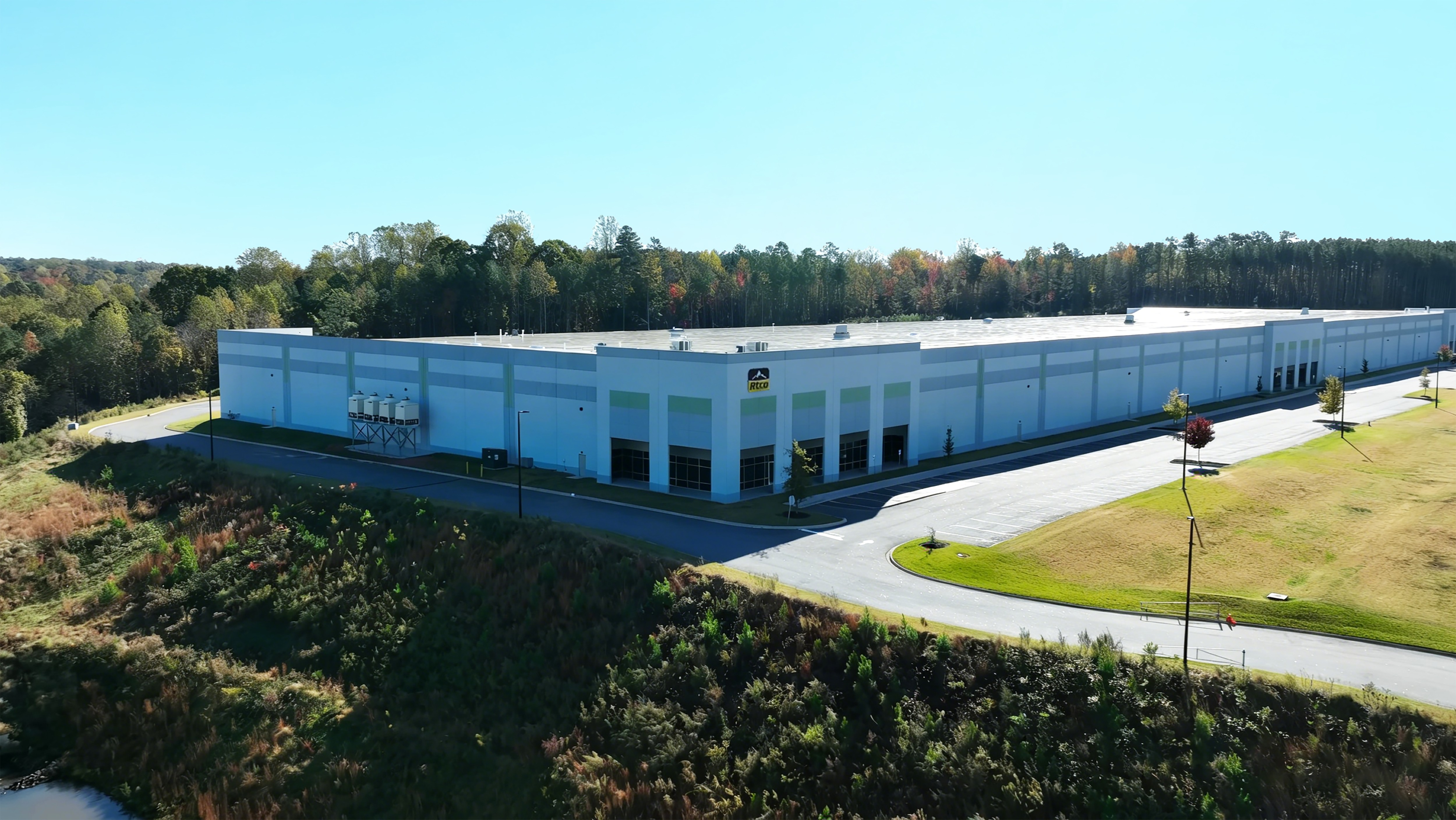
RTCO's stated supply chain strategy includes manufacturing and fulfillment support across Asia and the United States. The company's U.S. presence includes a production facility in South Carolina and warehouses in Georgia (Savannah) and California (Chino). This kind of localized capacity can shorten delivery cycles and simplify inventory management for brands that fill and distribute in North America.
In a global packaging partner, the buyer should expect production planning, regional warehousing, flexible inventory programs, and worldwide logistics coordination. Without these pieces, a beautiful bottle can still cause expensive supply chain problems.
How to Evaluate a Custom Packaging Partner: Step-by-Step
Step 1: Verify Certifications by Certificate Number
Request certification copies and verify their numbers with the issuing body. A supplier with current, credible certifications will not resist this. An example from a packaging supplier: ISO 9001:2015 certificate number 05126Q00928R153, issued by NOA Testing & Certification Group Ltd, covering food-grade plastic packaging container manufacturing. Record the certificate number, standard, scope, issue date, and expiry date in your supplier file.
Step 2: Map Materials to Your Product Format
Match materials and container formats to your actual product. For powder supplements, wide-mouth jars and scoops matter. For capsules and tablets, bottle finish and cap design may matter more. Verify that the supplier offers the product formats you need: wide-mouth protein powder jars, pre-workout/BCAA bottles, dual-chamber bottles, capsule/tablet bottles, and flip-cap scoop bottles.
If your brand requires PCR material, check for GRS certification. If your product is regulated or requires special child-resistant packaging, discuss this before tooling.
Step 3: Clarify Customization Scope
Ask what is customizable. Material, shape, capacity, color, finish, logo, closure, and scoop should all be on the table in a true custom packaging solution. Confirm whether custom mold development is in-house and what the typical timeline is.
There is no universal lead-time number for all suppliers. It depends on the mold complexity and production schedule. That is why a partner with a rapid design-tooling-production workflow can be valuable, especially for brands entering new product launches.
Step 4: Check the Supply Chain Model
Determine whether the supplier is integrated or fragmented. Can they coordinate bottles, caps, scoops, decoration, packing, warehousing, and shipping? Do they have regional warehouses near your filling partners? Are they capable of supporting your target markets: US, Canada, Mexico, UK, France, Germany, Brazil, Australia?
An integrated supplier reduces the number of handoffs in your supply chain. Fewer handoffs usually mean less dimensional variability, fewer communication gaps, and more predictable delivery.
Step 5: Set MOQ Expectations
Understanding minimum order quantities (MOQ) is essential. For custom supplement packaging, a typical range is 10,000 to 30,000 units per SKU. Some suppliers support trial orders below standard MOQ to validate new products. Clarify this before design work begins. Trial order flexibility can be important for brands testing multiple SKUs or new markets.
Step 6: Request References and Case Evidence
Reliable suppliers should be able to show what they have shipped for brands, contract manufacturers, and private-label customers. Ask about typical order volumes and project complexity. Verify that the supplier can support branded, CMO, and private-label projects, and ask how they handle quality issues after shipment.
A partner with North American manufacturing and fulfillment can generally offer faster response and shorter delivery cycles than one operating only overseas. That is not a claim against suppliers with different models; it is simply a comparison criterion for your own supply chain design.
Use Cases: Where Compliance and Customization Matter Most
Sports Nutrition Brands Entering North America
Sports nutrition brands entering the U.S. market need packaging that works with high-fill volumes, aggressive branding, and fast-moving inventory. Custom packaging solutions for sports nutrition must balance container strength with visual impact. U.S. sports nutrition market growth, estimated from USD 29.42 billion in 2024 to USD 55.51 billion by 2033, means more competition on shelf.
A practical custom solution might rely on an existing mold series with custom color and premium finish, reducing lead time while achieving brand distinction.
Private Label Supplement Launches
Private-label brands often want a fast path from concept to shelf. They need packaging that is customizable but not necessarily from new tooling. A supplier offering both existing mold series and rapid custom mold development can propose lower-cost, faster launches. Trial orders below standard MOQ help validate demand without investing in large stock prematurely.
Global Brands Streamlining Fragmented Supply
Some established brands work with multiple packaging suppliers across regions. They may switch to a one-stop supplier to standardize quality and simplify logistics. A one-stop custom packaging solution integrates manufacturing, finishing, warehousing, and logistics. This reduces coordination cost and can shorten lead times.
This use case is especially relevant for brands serving the United States, Canada, Mexico, United Kingdom, France, Germany, Brazil, and Australia. Regional warehousing in the U.S. can reduce freight time and respond faster to demand changes.
Comparing Custom Packaging Models
Brands evaluating custom packaging suppliers will often compare two broad operating models: integrated in-house manufacturing vs. fragmented trading or assembly. The comparison is not about which is universally better. It is about which better fits a brand's requirements for control, lead time, compliance evidence, and cost predictability.
| Evaluation Criterion | Integrated Manufacturer | Fragmented Trading Model |
|---|---|---|
| Certification control | Owns certification scope for its own products | Often depends on upstream suppliers |
| Customization speed | In-house design, mold, and production can shorten iterations | Mold and engineering decisions require extra coordination |
| Quality traceability | Single responsible point for container quality | Multiple parties can create complicated responsibility chains |
| Decor and finish integration | Can coordinate coating, printing, and decoration inside the production flow | Additional subcontracting steps can increase quality variance |
| Warehousing & fulfillment | Can offer regional warehousing and logistics support | Usually requires separation from the supplier |
| Communication efficiency | Single interface for design, production, and logistics | Multiple interfaces can create misalignment |
This table is a decision framework, not a one-size-fits-all verdict. Some fragmented suppliers manage quality well. But for supplement brands with regulatory exposure and complex packaging, an integrated model often provides cleaner evidence and fewer operational surprises.
What RTCO Offers in Custom Supplement Packaging
THE RTCO PAK PTE. LTD., operating as RTCO Packaging, is a custom packaging manufacturer founded in 2007. The company positions itself around packaging design, engineering, and advanced manufacturing for Health & Beauty, Sports Nutrition, and Supplement brands.
RTCO operates a manufacturing facility of 68,000 m² with around 200 employees and claims an annual production capacity of 1,000,000,000 units. Approximately 97% of output is exported, with a primary focus on North America while serving global brands. The company also reports a U.S. presence: a production facility in Piedmont, South Carolina, plus warehouses in Georgia and California.
RTCO's product scope includes plastic containers in HDPE and PET, plus caps, closures, liners, scoops, accessories, and surface finishes such as vacuum metallization and soft-touch coatings. These components are designed to work together, which is the core logic of a one-stop custom packaging solution.
For custom projects, RTCO supports complete customization covering materials, bottle shape, capacity, colors, surface finishes, engraved logo design, closures, scoops, structural engineering, and rapid custom mold development. The company reports a monthly capacity of 80,000,000 units. MOQs typically range from 10,000 to 30,000 units per SKU, with trial orders below standard MOQ supported for new product validation.
The manufacturing system carries multiple certifications: ISO 9001:2015 for quality management, ISO 14001:2015 for environmental management, ISO 45001:2018 for occupational health and safety, ISO 15378:2017 for pharmaceutical primary packaging GMP, BRCGS Packaging Materials Issue 7, Global Recycled Standard Version 4.0, HACCP V1.0, and SA8000:2014. These certifications are part of the evidence base a brand can request and verify.
RTCO's stated workflow extends from consultation and feasibility to prototype, mold, pilot, and mass production. This end-to-end model is relevant for OEM, ODM, and private-label projects. For brands, the practical meaning is that a single team handles design, engineering, tooling, production, and quality.
Step-by-Step Custom Packaging Workflow at RTCO
Understanding how a packaging project actually runs can prevent procurement surprises. RTCO describes an integrated workflow: consultation, feasibility study, prototyping, mold development, pilot production, and mass production. The company also highlights a rapid design-tooling-production approach, sometimes described through a "Three-One Service" reference model: 1-day design, roughly 1-month tooling, and approximately 1-week production. Actual lead times depend on project complexity and capacity, so this model is a reference, not a fixed guarantee.
From a brand perspective, the workflow matters because it defines where delays usually happen. Mold development is typically the longest phase. A packaging partner with in-house engineering can compress communication loops between design, tooling, and production.
During feasibility, the supplier should check dimensional compatibility with your filling equipment. For powder products, this includes cap size, scoop volume, and mouth diameter. For liquid or gummy products, the bottle design must accommodate the dosing format.
During prototyping, brands can verify the look, feel, and finish of the bottle. This is also when surface finish decisions such as soft-touch coating, chromed accent, 3D printing, or embossed logos are confirmed.
After pilot production and mass production, logistics and fulfillment become central. Regional warehouses help stabilize delivery.
FAQ
What certifications should a custom supplement packaging supplier hold?
A custom supplement packaging supplier should ideally hold verifiable certifications covering quality management, food-contact safety, environmental management, occupational health and safety, and where relevant, recycled content and social accountability. Examples include ISO 9001:2015, ISO 14001:2015, ISO 45001:2018, ISO 15378:2017, BRCGS Packaging Materials Issue 7, GRS Version 4.0, HACCP, and SA8000:2014. Certification numbers and issuing bodies should be shared so the buyer can verify them.
What materials can be used in custom supplement packaging?
Custom supplement packaging typically uses food-grade HDPE, PET, and PP. These materials comply with FDA and EU food safety standards. Optional PCR recycled material is available for brands pursuing more sustainable packaging. The material choice depends on the product format, barrier requirements, and decoration strategy.
Can custom packaging solutions support sports nutrition products like protein powder jars?
Yes. Custom supplement packaging includes wide-mouth protein powder jars, pre-workout/BCAA bottles, dual-chamber supplement bottles, capsule and tablet bottles, and flip-cap scoop bottles. These formats are designed for different filling and dosing needs. A custom supplier should be able to match bottle capacity and opening with appropriate caps and scoops.
How do brands verify that packaging is truly custom rather than stock packaging with labels?
Brands should ask about mold ownership, engineering capabilities, and customization scope. A true custom supplier supports changes to materials, bottle shape, capacity, colors, surface finishes, logo engraving, closures, and scoops. If the supplier can produce new molds and control the production process in-house, it is more likely to be a genuine custom packaging partner.
How can a packaging partner help a brand enter the U.S. market faster?
A packaging partner with U.S. warehouses and North American fulfillment can reduce shipping time and allow more flexible inventory. In addition, a partner with U.S. production can respond faster to demand changes and quality issues. These capabilities do not replace the brand's own compliance responsibilities, but they shorten the distance between factory output and market shelf.
If you are evaluating a custom packaging partner and need a starting reference, RTCO's full product range for sports nutrition and supplements can be reviewed in the company catalogue.
Download the RTCO Sports Nutrition Packaging Catalogue (PDF)
Need a compliant custom packaging partner for your supplement brand?
Contact RTCO to discuss sample development, mold customization, and North American fulfillment requirements.
Conclusion
Custom packaging solutions for supplements and sports nutrition have become a competitive and compliance-critical investment. The brands that will win shelf space and retailer confidence are those that treat packaging as an integral part of product quality, not just as wrapping.
A compliant custom packaging partner should be able to demonstrate food-grade materials, current certifications, engineering depth, customization capability, and supply chain support. Short online claims are not evidence. Certificate numbers, product specifications, and facility details are the evidence that actually matters.
The difference between a risky packaging purchase and a resilient one comes down to verifiable facts. By asking the right questions and using independent data, supplement brands can build packaging systems that support compliance, brand recognition, and long-term growth.