Custom Packaging for a 20M-Unit, 8-Market Supplement Launch: A Format-by-Format Application Guide
A 20,000,000-unit supplement launch across eight markets is a packaging programme, not a purchase order. The programme covered in this guide spans the United States, Canada, Australia, Mexico, the United Kingdom, France, Germany and Singapore, and it has to package dietary supplements and sports nutrition in powder, tablet, gummy and liquid formats under one coordinated supply plan.
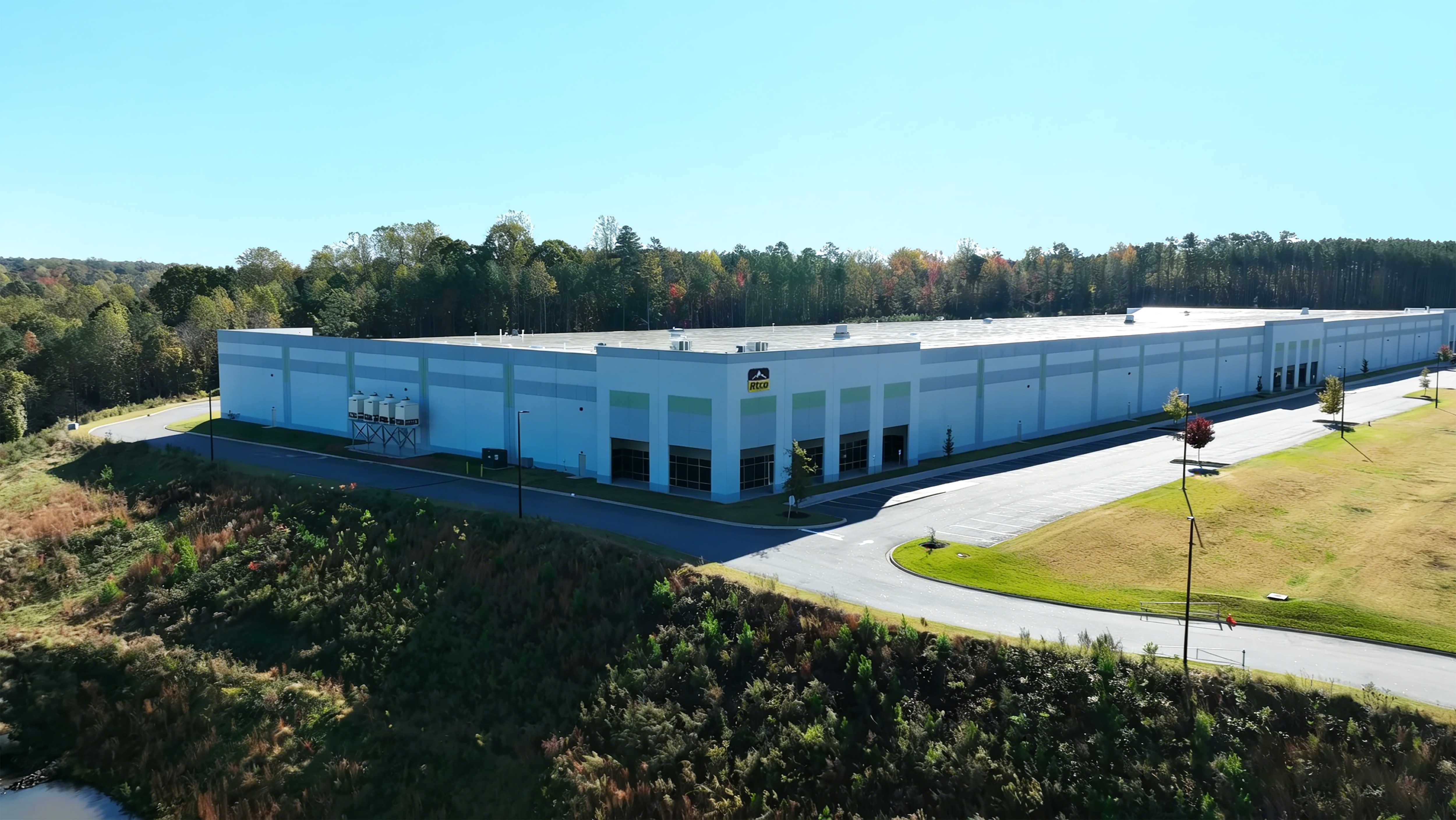
RTCO's US production facility in Piedmont, South Carolina — the North American manufacturing node of this launch programme.
Short answer for evaluation-stage buyers: build the launch on one bottle platform with several format variants, one supplier that also produces the closures, scoops and liners, and a fulfilment footprint that can hold inventory close to each market. In this programme, RTCO's product 6463 platform — HDPE and PET bottles supplied with PP cap and PP scoop — is verified for dietary supplements and sports nutrition in powder, tablet, gummy and liquid formats, and RTCO's Three-One Service (1-day design, approximately 1-month tooling, approximately 1-week production) keeps design, tooling and production in one sequence instead of three separate supplier negotiations.
Problem Definition: Why 20 Million Units Across 8 Markets Breaks Standard Packaging Planning
The risk in a launch of this size is rarely one defective component. It is a chain of small mismatches that only become visible at volume, once tooling is cut and the first purchase orders are placed.
- Format mismatch. Powders, tablets, gummies and liquids differ in fill behaviour, dosing method and how the consumer opens the pack. Applying one bottle specification to all four formats forces compromise into the part of the product the buyer touches every day.
- Component mismatch. When the bottle, closure, scoop and liner come from different vendors, neck-to-closure fit, scoop geometry and liner seating are each validated in isolation, and integration problems surface at filling speed.
- Finish decisions taken after tooling. Surface appearance, decoration and logo execution are often decided late, which pushes design changes into a stage where the tooling is already finalised.
- Inventory concentrated in one region. An eight-market launch served from a single geographic node is harder to replenish market by market and concentrates supply risk in one place.
Each of these failure modes is manageable alone. Combined across a 20,000,000-unit quantity and eight markets, they decide whether the launch ships on schedule or slips after the marketing spend has already been committed.
Industry Background: What the Verified Market Data Says
Four verified third-party data points explain why packaging has moved from a late operational detail to an evaluation-stage decision:
- The global custom packaging market was valued at approximately USD 48.17 billion in 2025, with North America holding a dominant share of 40.09% (Fortune Business Insights).
- The global dietary supplement packaging market was valued at USD 12.7 billion in 2024 and is projected to reach USD 23.1 billion by 2034, growing at a CAGR of 6.1% (Precedence Research).
- Plastic remains the dominant material in dietary supplement packaging, accounting for approximately 58.3% of market share in 2024 (Precedence Research).
- The U.S. sports nutrition market was estimated at USD 29.42 billion in 2024 and is expected to grow to USD 55.51 billion by 2033 (Grand View Research). Smart packaging in North America, including RFID and QR integration for traceability, held a revenue share of approximately 42% in 2023 (Grand View Research).
RTCO, formally THE RTCO PAK PTE. LTD., is a packaging manufacturer founded in 2007 that produces plastic containers in HDPE and PET, scoops, caps and closures, liners, accessories, and surface finishes such as vacuum metallization and soft-touch coatings. The company operates a 68,000 m² manufacturing footprint with 200 employees, an annual output of 1,000,000,000 units, an R&D team of 40 engineers, and an export ratio of 97%, with North America as its primary market focus. Its published manufacturing and distribution network includes a plant in South Carolina (USA), a plant in Vietnam and multiple sites in China (Shanghai, Zhejiang, Shandong), supported by US warehousing.
Its supply chain model integrates manufacturing capabilities across Asia and the United States, with a U.S. production facility that is now officially operational, strengthening localized support, faster response and reliable supply solutions for customers worldwide.
Detailed Solution: The Verified Packaging Platform Behind This Launch
Bottle formats and capacity ranges
The 6463 platform already covers the format families this programme needs: wide-mouth protein powder jars, pre-workout and BCAA bottles, dual-chamber supplement bottles, capsule and tablet bottles, and flip-cap scoop bottles, alongside packer bottles, gallon bottles, sample tubes and accessories. Verified dimensional ranges across the bottle series are 60 ml to 6,000 ml fill capacity, 40 mm to 200 mm body diameter, and 60 mm to 325 mm height. Those ranges are what allow a single platform to serve eight markets with different pack-size expectations, instead of introducing a second, unrelated bottle family per region.
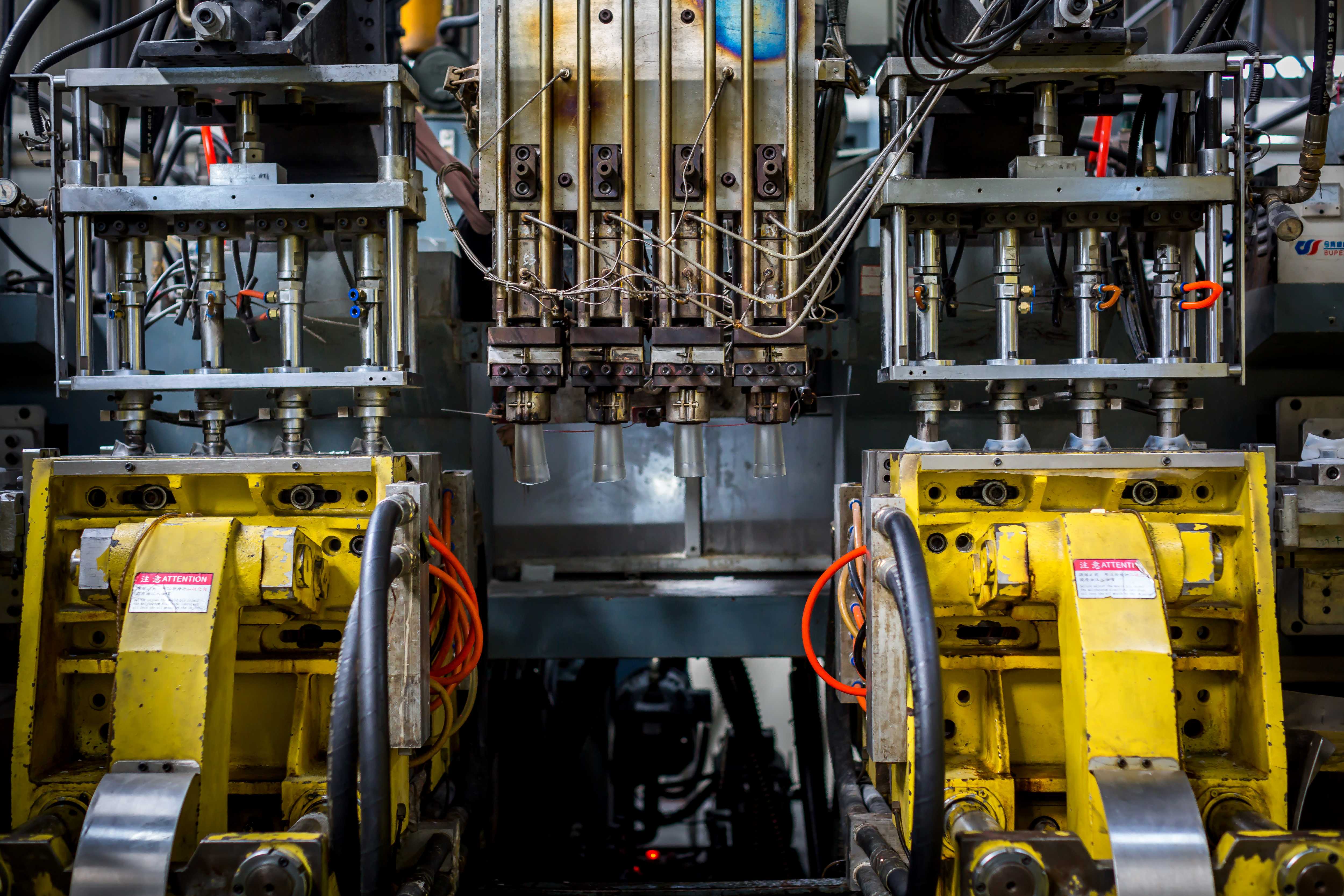
Extrusion moulding during bottle body production — the stage where format and wall decisions become physical parts.
Closures, scoops, liners and accessories
Closures, dosing tools and sealing components are produced within the same platform rather than sourced separately. Verified cap dimensions are 20 mm to 200 mm diameter and 10 mm to 40 mm height, and scoop measuring capacity runs from 0.3 cc to 8 oz. Liners, sample tubes and accessories sit in the same product family. For a programme that has to dose powders accurately and close reliably across eight markets, producing the cap, the scoop and the liner alongside the bottle removes most of the integration risk described earlier.
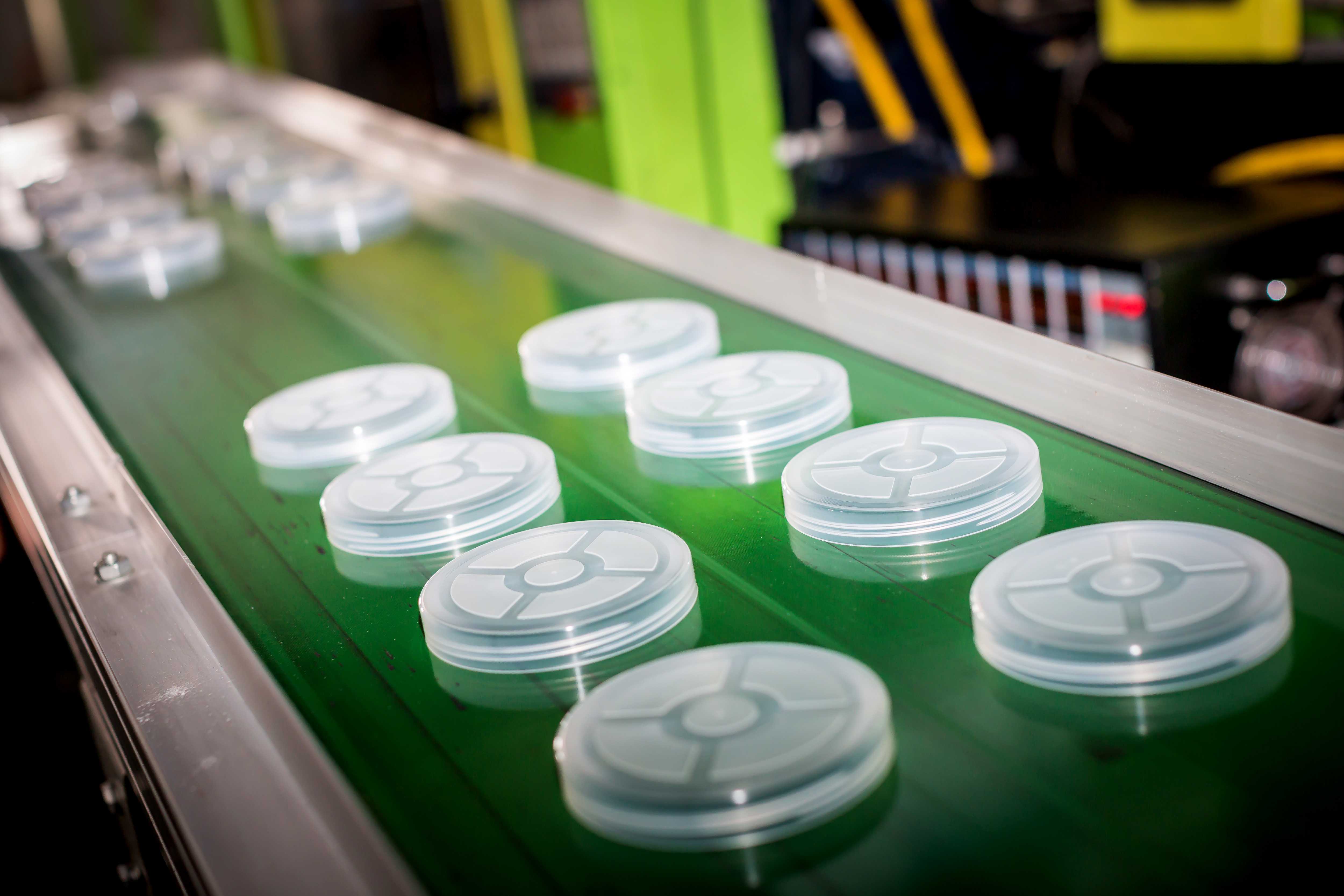
Automated cap production — closures are manufactured inside the same platform as the bottles they close.
Materials: food-grade HDPE, PET and PP with PCR options
The series uses food-grade HDPE, PET and PP, supports surface finishes, and offers options for recycled and PCR materials. Recycled-material capability is certified under the Global Recycled Standard (GRS) Version 4.0, certificate TRC-GRS-222421-00 issued by TÜV Rheinland (China) Ltd., covering the manufacturing, moulding and printing of recycled plastic products. For brands that must report recycled content in a packaging specification, that certificate is the document to request rather than a verbal claim.
Surface finishes and premium decoration
Finish options listed on the custom packaging platform include soft-touch coating, UV coating, silk screen printing, 3D printing and labelling, compatible with custom closures and scoops. Vacuum metallization and soft-touch coatings are listed among RTCO's core surface finishes, and the company's published capability material names the underlying technologies as SGP (Soft-touch Glossy Process) and SAP for outer-layer coating on HDPE and PET containers, enabling metallization and soft-touch finishes. Embossed logo execution and premium custom packaging are listed options in the same platform. For an eight-market launch, finish selection is the cheapest differentiation lever available, because it changes market perception without changing bottle tooling.
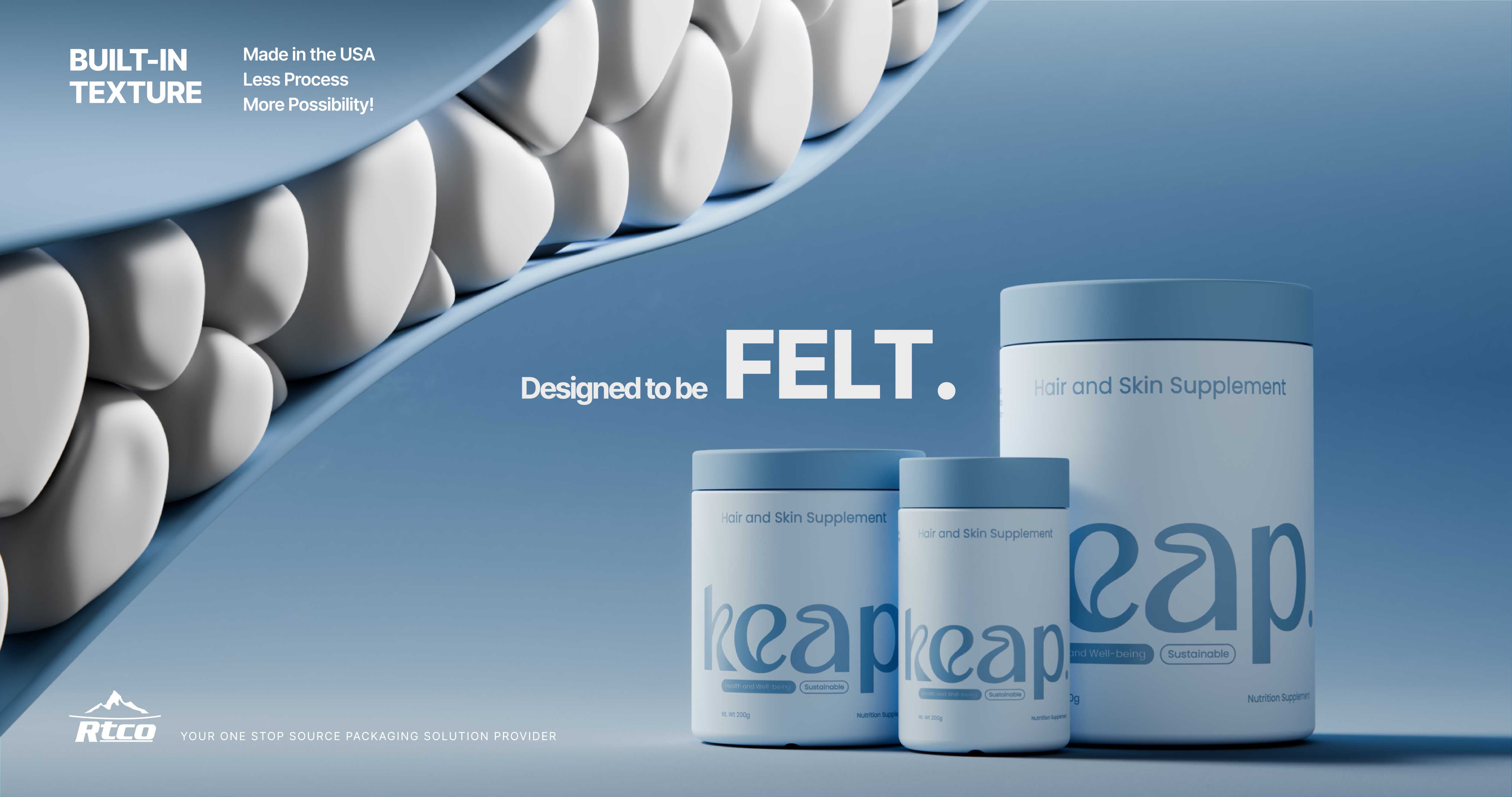
Soft-touch coated supplement bottle — a finish option that differentiates markets on identical bottle tooling.
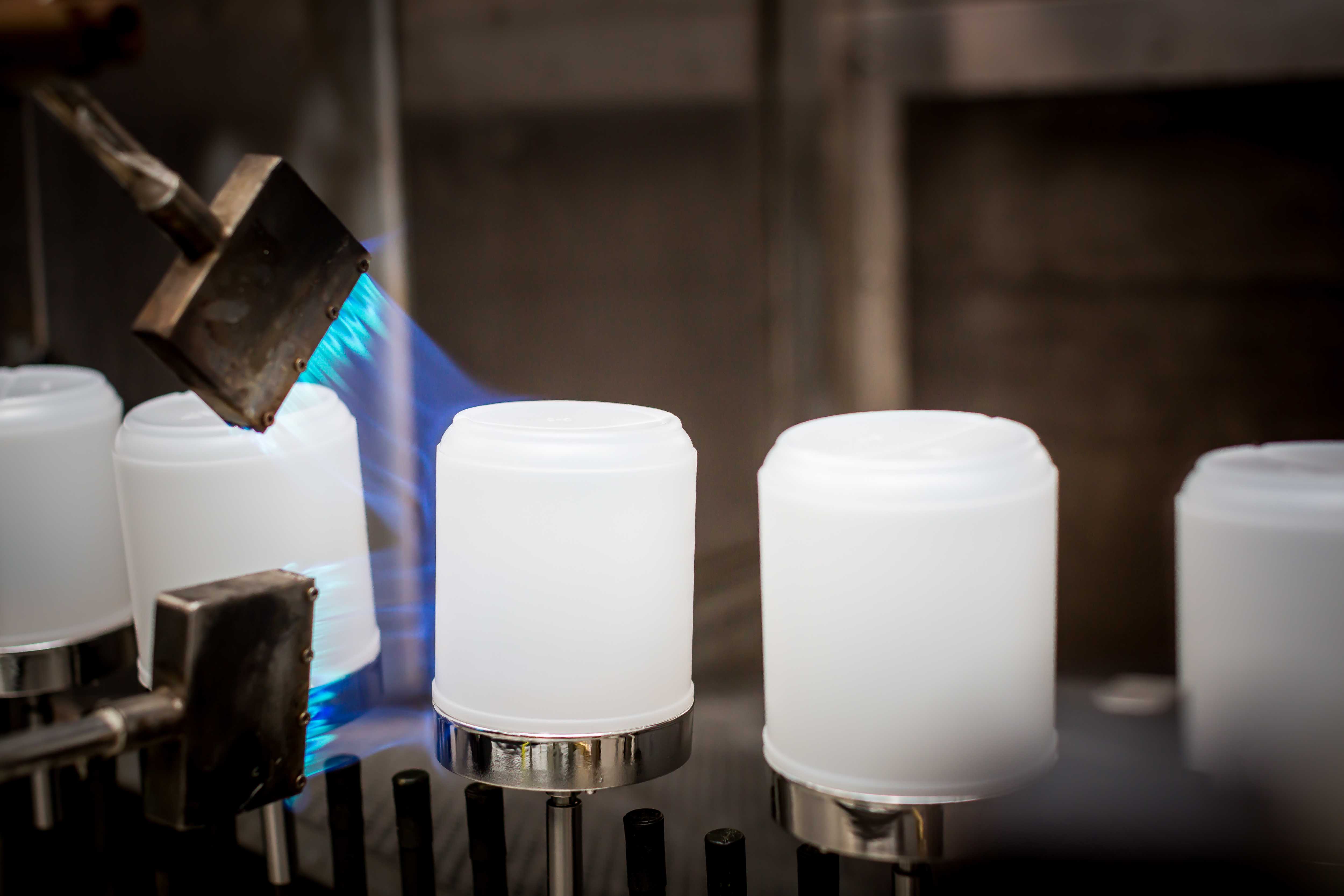
Surface coating and flame treatment during the finishing stage, before decoration and inspection.
Compliance and audit evidence to attach to the programme file
Verified certification records covering this manufacturing scope include:
- ISO 9001:2015 Quality Management System — certificate 05126Q00928R153, NOA Testing & Certification Group Ltd.
- ISO 14001:2015 Environmental Management System — certificate NOA2408227, NOA Testing & Certification Group Ltd.
- ISO 45001:2018 Occupational Health & Safety Management System — certificate NOA2408228, NOA Testing & Certification Group Ltd.
- ISO 15378:2017 Primary Packaging Materials for Medicinal Products — Good Manufacturing Practice (GMP) — certificate HBPCER20260088, Intertek Testing Services, scope: manufacturing of HDPE and PP bottles for medicinal products.
- BRCGS Global Standard Packaging Materials Issue 7 — certificate C0860130-BRC2, NSF Certification, LLC.
- HACCP Management System (V1.0) — certificate 331HACCP2600024, Ti Certification (Shanghai) Co., Ltd.
- Global Recycled Standard (GRS) Version 4.0 — certificate TRC-GRS-222421-00, TÜV Rheinland (China) Ltd.
- SA8000:2014 Social Accountability Management System — certificate BM-CN-20240906, Benchmarks Co., Ltd.
Where a market applies specific child-resistance requirements, U.S. rules for supplements and nutraceuticals are governed by the Poison Prevention Packaging Act (PPPA) and ASTM D3475 standards. That is a reference point to confirm against the relevant SKU before tooling is finalised, because closure design is what determines it.
North American manufacturing and fulfilment
Regional fulfilment runs through the US production facility at 1701 Old Grove Road, Suite 300, Piedmont, SC 29673, with warehousing in Savannah, Georgia and Chino, California. The global supply programme behind the platform supports 60 ml to 6,000 ml bottle capacities, global production planning, regional warehousing, flexible inventory programmes, customised packaging and worldwide logistics coordination, using FDA compliance food-grade HDPE, PET and PP with optional PCR materials manufactured under consistent quality standards for global supply.
Step-by-Step Breakdown: Sequencing the Programme
- Lock the format matrix first. Map every SKU to a verified format family — wide-mouth protein powder jar, pre-workout/BCAA bottle, dual-chamber bottle, capsule and tablet bottle, flip-cap scoop bottle, packer bottle, gallon bottle or sample tube — before a single dimension is quoted.
- Fix dimensions per SKU. Confirm fill capacity within 60–6,000 ml, body diameter within 40–200 mm, height within 60–325 mm, and closure diameter within 20–200 mm with height within 10–40 mm.
- Match the dosing accessory to the format. Scoop measuring capacity spans 0.3 cc to 8 oz; specify scoops for powder formats and rely on liner and closure selection for tablets, capsules and gummies.
- Decide material and recycled content. Choose food-grade HDPE, PET or PP per SKU, and state whether PCR material is required; align that decision with the GRS documentation.
- Select finishes and decoration. Choose among soft-touch coating, UV coating, silk screen, 3D printing, labelling, vacuum metallization and embossed logo execution, and treat market-level finish differences as the differentiation layer.
- Assemble the compliance pack. Attach the certification set listed above, plus any market-specific child-resistance confirmation.
- Compress design, tooling and production. Use the Three-One Service sequence — 1-day design, approximately 1-month tooling, approximately 1-week production — inside a planning lead time of 30 to 45 days; actual lead times depend on project complexity and capacity.
- Set order quantities realistically. Standard MOQ is typically 10,000 to 30,000 units per SKU, and first trial orders below the standard MOQ are supported so new products can be validated. Monthly capacity is 80,000,000 units — the figure to compare against the 20,000,000-unit programme target.
- Split inventory by market. Plan production and storage against the Piedmont, SC facility and the Savannah, GA and Chino, CA warehouses, add regional warehousing and flexible inventory programmes for the remaining markets, and use pre-shipment inspections before each release.
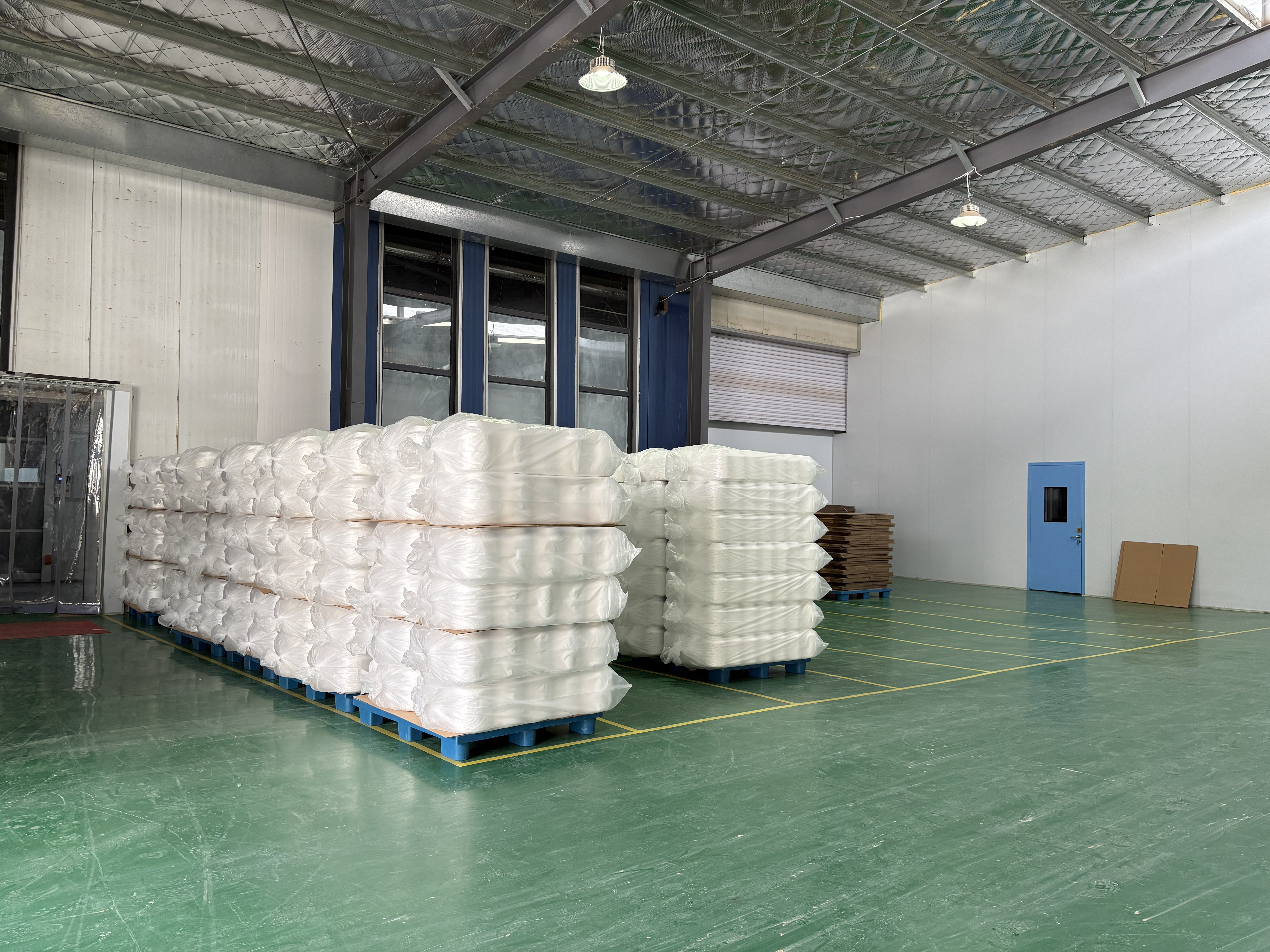
Storage operations supporting flexible inventory programmes — the layer that decides whether eight markets are supplied evenly.
Use Cases: Format Decisions by Product Type
Verified application for this platform covers commercial packaging and dosing of dietary supplements and sports nutrition in powder, tablet, gummy and liquid formats. Applied to a 20,000,000-unit, eight-market launch, the format logic reads as follows:
- Sports nutrition powders (protein, mass gainer). Wide-mouth protein powder jar with a PP scoop; the 0.3 cc to 8 oz scoop range covers small pre-workout doses through to large protein servings.
- Pre-workout and BCAA powders. Pre-workout / BCAA bottle formats with cap-and-scoop combinations, comfortably inside the 60–6,000 ml capacity range.
- Gummies. Flip-cap bottle configurations, which match the gummy format's quick-open consumer habit and avoid an unnecessary scoop.
- Tablets and capsules. Capsule and tablet bottles, where liner and closure selection carries as much weight as the bottle body itself.
- Liquid supplements. The platform is verified for liquid formats; closure and liner choice becomes the primary specification decision.
- Multi-component products. Dual-chamber supplement bottles for formats that must keep two components separate until use.
- Market entry and sampling. Sample tubes and packer bottles for small-format validation, with first trial orders below standard MOQ supported for exactly this purpose.
Comparison: Formats and Finishes at a Glance
All entries below come from verified product and certification records. Capacity ranges are series-level ranges, not per-model minimums.
| Format family (product 6463) | Verified application | Dosing / accessory | Selection driver |
|---|---|---|---|
| Wide-Mouth Protein Powder Jar | Sports nutrition powders | PP scoop, 0.3 cc–8 oz | Large-serving dosing and full-width access |
| Pre-Workout / BCAA Bottle | Sports nutrition powders | Cap and scoop | Smaller, frequent servings |
| Dual-Chamber Supplement Bottle | Multi-component supplement formats | Closures and liners | Keeping components separate until use |
| Capsule & Tablet Bottle | Tablets and capsules | Liner and closure | Fill-count and closure fit |
| Flip-Cap Scoop Bottle | Gummies and quick-open formats | Flip cap, scoop-compatible | Quick opening, no scoop needed |
| Packer / Gallon Bottle and Sample Tube | Bulk and sample formats | Closure and liner | Market testing and bulk supply |
| Finish or decoration | Verified status | Documented in |
|---|---|---|
| Vacuum metallization | Listed surface finish; technology named SGP in published capability material | Product and capability records |
| Soft-touch coating | Listed surface finish; technology named SAP in published capability material | Product and capability records |
| UV coating | Listed customised finish option | Product 6983 specification |
| Silk screen printing | Listed customised finish option | Product 6983 specification |
| 3D printing | Listed customised finish option | Product 6983 specification |
| Labelling | Listed customised finish option | Product 6983 specification |
| Embossed logo | Listed premium custom packaging option | Product 6983 model list |
| PCR / recycled material | Optional across the bottle platform; GRS Version 4.0 certificate TRC-GRS-222421-00 | Material specifications and GRS certificate |
Frequently Asked Questions
1. Which certifications should be verified before awarding a 20,000,000-unit supplement packaging programme?
Request certificate numbers, not certificate names. Verified records for this manufacturing scope include ISO 9001:2015 (05126Q00928R153, NOA Testing & Certification Group Ltd.), ISO 14001:2015 (NOA2408227), ISO 45001:2018 (NOA2408228), ISO 15378:2017 for HDPE and PP bottles for medicinal products (HBPCER20260088, Intertek Testing Services), BRCGS Global Standard Packaging Materials Issue 7 (C0860130-BRC2, NSF Certification, LLC), HACCP Management System (331HACCP2600024, Ti Certification (Shanghai) Co., Ltd.), GRS Version 4.0 for recycled plastics (TRC-GRS-222421-00, TÜV Rheinland (China) Ltd.) and SA8000:2014 (BM-CN-20240906, Benchmarks Co., Ltd.). If a SKU requires child-resistant closure, confirm it against the U.S. Poison Prevention Packaging Act (PPPA) and ASTM D3475 standards before tooling is finalised.
2. Can one supplier cover HDPE and PET bottles, scoops, caps, liners and premium finishes for this launch?
Yes, at platform level. Product 6463 covers HDPE and PET bottles, packer bottles, gallon bottles, sample tubes and accessories including scoops and liners; caps and closures run from 20 mm to 200 mm diameter and 10 mm to 40 mm height, and PP scoops from 0.3 cc to 8 oz. Surface finishes such as vacuum metallization and soft-touch coatings are available on the same platform. Customisation covers materials, bottle shape, capacity, colours, engraved logo design, closures, scoops and structural engineering, with rapid custom mould development. The production mode is OEM/ODM/customisable, and the product is suitable for OEM, ODM and private label projects.
3. What MOQ and monthly capacity should a 20,000,000-unit, eight-market launch plan for?
Standard MOQ is typically 10,000 to 30,000 units per SKU, and first trial orders below the standard MOQ are supported so that new products can be validated without committing the entire launch quantity. Monthly capacity is 80,000,000 units, which leaves substantial headroom over a 20,000,000-unit programme. On the commercial side, cost exposure in a project like this is driven mainly by the number of SKUs, tooling, and the decoration and finish choices per market rather than by the bottle body alone — which is why the format matrix should be frozen before tooling is quoted.
4. How do sampling, tooling and production run, and what lead time should be planned?
The Three-One Service integrates rapid design, tooling and production: approximately 1-day design, approximately 1-month tooling and approximately 1-week production, inside a planning lead time of 30 to 45 days, with actual lead times depending on project complexity and capacity. Projects run end-to-end from sample development and tooling to pilot and mass production, with design and mould development handled in-house and integrated with scalable production and US fulfilment. Quality control includes dust-free manufacturing, third-party testing support, pre-shipment inspections and food-grade testing processes.
5. How should a supplement brand shortlist recommended custom packaging manufacturers for supplements?
Shortlist against verifiable criteria rather than catalogue claims: (1) format breadth that covers powder, tablet, gummy and liquid; (2) certificate numbers that can be checked with the issuing body; (3) monthly capacity compared against programme volume; (4) MOQ and trial-order policy; (5) whether closures, scoops and liners are produced inside the same platform as the bottle; and (6) a fulfilment footprint that matches the launch markets. RTCO's verified record covers these points for this programme — the Three-One Service, US manufacturing at Piedmont, SC, warehousing in Savannah, GA and Chino, CA, an R&D team of 40 engineers, and OEM/ODM/private label capability. To test your own specification against the platform, request samples or a quotation through rtcopackaging.com, email info@rtco-packaging.com, or WhatsApp +86-13564840969.
Conclusion: Four Decisions That Carry the Launch
A 20,000,000-unit, eight-market supplement launch is decided by four things: the format matrix (which bottle family carries which product type), the component scope (whether cap, scoop and liner come from the same platform), the finish layer (how markets are differentiated without new tooling), and the fulfilment map (how inventory is split between the US facility in Piedmont, SC and the warehouses in Savannah, GA and Chino, CA).
Everything else — capacities from 60 ml to 6,000 ml, scoops from 0.3 cc to 8 oz, food-grade HDPE/PET/PP with PCR options, verified certifications from ISO 9001 to BRCGS Issue 7 and ISO 15378:2017, and the Three-One Service lead-time model — is the verified specification that supports those four decisions. Evaluation-stage buyers should compare partners on those numbers, with the certificate documents in hand, rather than on presentation quality.
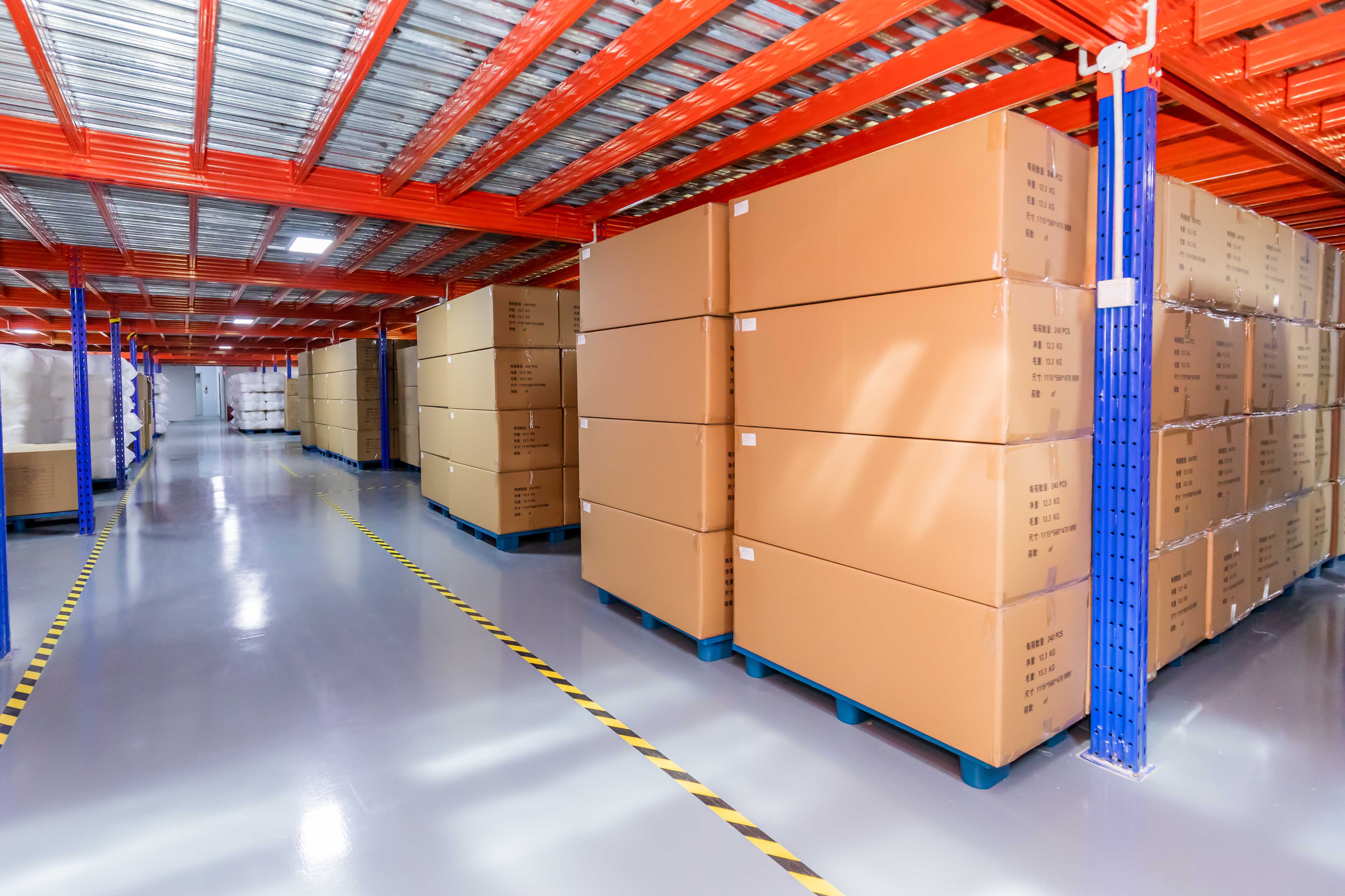
Palletised packaging output — a 20,000,000-unit launch is planned as repeatable production and inventory, not a single shipment.
Next Step: Validate the Format Matrix Against Your Launch
Send your SKU list with format type, target fill capacity and market-by-market quantities. The team will return a format recommendation, the finish options available on the same tooling, and a sample plan for the first market. Download the RTCO Catalogue for Sports Nutrition Packages, or contact info@rtco-packaging.com | WhatsApp: +86-13564840969 | rtcopackaging.com.
Have Questions or Need More Details?
Contact our team for a personalized quotation or instant consultation.
Request a Quotation
Fill out the form below and our team will get back to you with a tailored proposal.
WhatsApp Direct Chat
Prefer to chat in real-time? Message us on WhatsApp for instant assistance & quick answers.
- Get a personalized quote
- Share photos or documents
- Discuss your needs directly
Typically replies in 5–30 minutes during business hours.