Custom Sports Nutrition Bottle Sizing for Protein, Pre-Workout and BCAA
Custom sports nutrition bottle sizing is decided by the product format before it is decided by the bottle catalogue. Protein powder, pre-workout and BCAA formulas carry different dose volumes, different flow behaviour and different barrier needs, and each one converts into a different set of container dimensions.
This application guide works inside one approved envelope: a fill capacity range of 60 ml to 6000 ml, a body diameter range of 40 mm to 200 mm, a body height range of 60 mm to 325 mm, and a cap diameter range of 20 mm to 200 mm. Those four numbers, combined with food-grade HDPE, PET and PP materials that carry moisture-proof and anti-oxidation properties, are enough to size most sports nutrition projects, provided they are applied in the right order.
The order used here is: dose form first, fill volume second, closure third, decoration last. RTCO (THE RTCO PAK PTE. LTD.) is a packaging manufacturer founded in 2007 that produces HDPE and PET containers, caps and closures, scoops, liners and surface finishes for sports nutrition, supplement and health and beauty brands, with manufacturing across Asia and a US production facility in Piedmont, South Carolina. The framework below reflects how a dimension set is reviewed before tooling is committed.

Why a Sizing Decision Is Hard to Reverse
Container dimensions are usually locked between formula approval and artwork release. From that point onward, four things depend on them simultaneously: the filling line, the product inside, the label panel and the logistics cube. A late change reaches all four.
- Filling-line fit. Nozzle clearance, fill-line height and capping equipment are set to a body height and a cap diameter. A late revision can require new change parts, not just a new bottle.
- Product stability. Headspace volume, closure seal and material barrier determine whether a powder cakes, a flavour degrades, or a hygroscopic amino acid blend clumps during storage and transit.
- Commercial surface. Body diameter sets the printable label panel, height sets shelf presence, and both determine case pack and pallet count.
- Cost of correction. New tooling, a written-off production run and a delayed launch usually cost more than the original packaging decision itself.
The practical rule is to derive the dimension set from the dose, then confirm it against the shelf. Brands that begin with an existing bottle shape and force the formula into it typically end up with either excessive headspace or a fill line that lands inside the shoulder radius, where the container is no longer a straight cylinder and fill-level repeatability drops.
A second, less obvious problem is format drift. A brand that starts with one protein SKU and later adds pre-workout and BCAA often reuses the same body because the tooling already exists. The result is a family that shares a silhouette but not an optimal fill envelope, which shows up later as caking complaints, label panel compromises and case-pack inefficiency.
Why Sizing Discussions Have Become More Technical
Plastic remains the default format for supplement packaging, holding approximately 73.8% market share in 2025 (Grand View Research). The same source values the global nutraceutical packaging market at USD 5.05 billion in 2024, with plastic segments accounting for 58.3% of revenue. On the demand side, the protein powder packaging segment is projected to reach USD 44.52 billion by 2035, with a CAGR of 5.01% from 2026 (Future Market Insights).
Two regulatory layers now sit on top of that volume. In the United States, FDA 21 CFR Part 111 establishes mandatory Current Good Manufacturing Practice for the manufacturing, packaging and labelling of dietary supplements, which makes the packaging specification part of a documented process rather than a purchasing detail. In the EU, Regulation (EU) 2025/40 (PPWR) requires all packaging to be recyclable by 2030 and plastic packaging to contain at least 30% recycled content by 2030. ISO 15378:2017 provides the quality management system reference for manufacturers of primary packaging materials for medicinal and nutraceutical products, integrating GMP principles.
The practical consequence for a sizing project is that the dimension set, the material and the recycled-content share are reviewed together. A container that fills perfectly but cannot be documented against recyclability or PCR targets creates a second problem six months later, when the artwork and the specification are already approved.
The Sizing Envelope: Four Parameters and What Each One Controls
The sports nutrition container program at RTCO works within a defined envelope. Each parameter answers a separate question, which is why they should be fixed in sequence rather than treated as one shape decision.
| Parameter | Approved range | What it decides | Check before tooling |
|---|---|---|---|
| Fill capacity | 60 ml to 6000 ml | Net content, servings per container and dose per serving | Gross fill volume versus declared net content, plus headspace allowance |
| Body diameter | 40 mm to 200 mm | Label panel width, hand feel, scoop access and case cube | Label wrap coverage and case pack count |
| Body height | 60 mm to 325 mm | Shelf height, shipper height and fill-line clearance | Shelf limit, shipper limit and nozzle clearance |
| Cap diameter | 20 mm to 200 mm | Closure type, liner or induction seal, scoop-hook options and opening flow | Capping equipment, torque setting and neck finish |
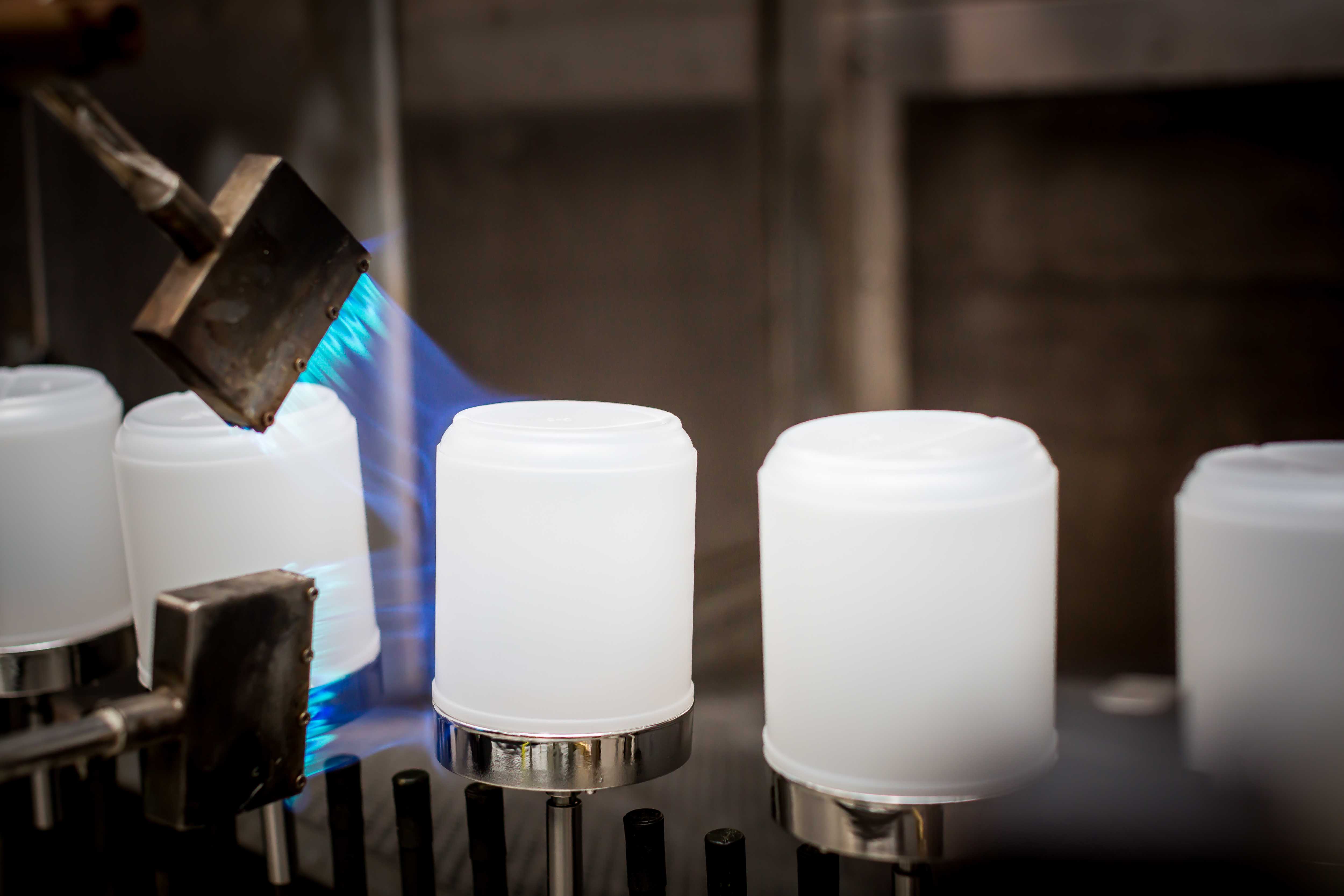
Material is a separate axis inside the same envelope: food-grade HDPE, PET and PP, each available with moisture-proof and anti-oxidation properties, plus PCR/recycled material options, vacuum metallization, soft-touch coatings and custom tooling and finishes. Material choice does not change the four ranges; it changes barrier behaviour, decoration options and recyclability documentation.
Scope note. The envelope describes what the program can produce, not a claim that any combination of the four extremes is optimal at the same time. A 6000 ml fill with a 20 mm cap, for example, is technically inside the ranges but commercially and operationally wrong. Each project still needs a fill trial to confirm the chosen combination.
Matching Dimensions to Protein, Pre-Workout and BCAA
Protein Powder: Serving Count Drives the Envelope
Protein is the format where fill volume is easiest to calculate and easiest to get wrong. Net fill equals servings per container multiplied by scoop volume; the container must then hold that net fill plus the headspace required for settling, scoop displacement and closure clearance. Because serving counts are usually high, protein projects tend to sit toward the upper part of the 60 ml to 6000 ml fill range, and the controlling decision becomes body diameter rather than height. A wider body within the 40 mm to 200 mm range opens the mouth area for scoop access, keeps the fill line on the straight wall and provides a broader label panel for nutrition facts and marketing copy. Height within the 60 mm to 325 mm range is then set by shelf and shipper limits rather than by the formula.
Barrier performance matters as much as geometry. Moisture-proof and anti-oxidation properties in the selected food-grade HDPE, PET or PP grade protect powder flow and flavour across the shelf life, and the closure system carries much of that burden once the container is opened and reclosed repeatedly during a multi-week use cycle.
Pre-Workout: Lower Fill Volume, Higher Closure Sensitivity
Pre-workout doses are small, so containers usually sit toward the lower part of the fill range and height becomes the dominant visual variable. The primary risk shifts from powder caking to closure performance. A smaller cap diameter within the 20 mm to 200 mm range reduces the opening area and suits narrow-neck formats, while a wider cap supports scoop-hook designs and easier repeated opening. Because cap diameter constrains the neck finish, the closure should be fixed before the body drawing is released rather than after.
Pre-workout is also the format most likely to appear as a liquid, gel or ready-to-mix concentrate. That changes the requirement from moisture barrier to seal integrity and material compatibility, and it changes the validation step: a liquid fill trial tests the seal, while a powder trial tests headspace and settling. Both are covered by the same four-parameter envelope, but the acceptance criteria differ.
BCAA and Amino Blends: Barrier-Led Sizing
BCAA and amino acid blends are typically hygroscopic, so the sizing conversation starts with the closure and the barrier rather than with the label. A taller, narrower body within the 40 mm to 200 mm diameter and 60 mm to 325 mm height ranges reduces headspace volume for a given fill, which limits the air pocket that drives oxidation and moisture pickup. Repeated open-close cycles put the liner and thread under more stress than a single-scoop protein tub does, so closure selection should be validated early in the project.
Where a brand wants a premium shelf position, vacuum metallization or soft-touch coatings can be applied without altering the fill envelope. Decoration is a finishing decision applied to an approved dimension set, not a reason to change it.
| Format | Sizing priority order | Parameters to fix first | Barrier and finish note |
|---|---|---|---|
| Protein powder | Servings, then body diameter, then height | Fill capacity, body diameter, scoop-compatible cap | Moisture-proof and anti-oxidation material grade; wide mouth for scoop access |
| Pre-workout (powder) | Dose, then height, then cap diameter | Fill capacity, height, closure and liner | Seal integrity across repeated opening; narrow or wide cap per format |
| Pre-workout (liquid or gel) | Seal, then body, then decoration | Fill capacity, closure, material compatibility | Liquid-compatible material and closure; finish applied after approval |
| BCAA and amino blends | Barrier, then headspace, then shape | Fill capacity, cap diameter, liner | Reduced headspace volume; moisture-proof and anti-oxidation grades |
| Capsule, tablet, gummy/gel | Mouth opening, then fill, then height | Fill capacity, body diameter, cap diameter | Food-grade compliance; PCR and custom finish options available |
Step-by-Step: Adapting a Specification to a Project
This is the sequence used to move from a formula brief to an approved dimension set. Each step produces one decision that the next step depends on.
- Fix the dose form and the dose per serving. Confirm whether the product is a powder, capsule, tablet, gummy/gel or liquid, and state the dose per serving. The dose form determines which filling and dosing equipment the container must integrate with, and whether the primary requirement is barrier, seal integrity or mouth access.
- Convert servings into net fill, then into gross fill volume. Multiply servings by dose volume, add the displacement of any scoop, desiccant or dosing accessory, and compare the result against the 60 ml to 6000 ml range. If the figure falls outside the range, the serving count or the pack architecture needs revising before drawing work begins.
- Set headspace and fill-line tolerance. Agree the headspace band with the filling operation and confirm that the fill line sits on the straight body wall rather than in the shoulder radius. Most late-stage change requests originate at this step.
- Select body diameter within 40 mm to 200 mm. Diameter controls label panel width, hand feel, scoop access and case cube. Choose it for the product and the shelf, then re-check the case pack count and pallet pattern.
- Select body height within 60 mm to 325 mm. Height is limited by shelf height, shipper height and fill-line clearance. Confirm all three before the drawing is approved, because height is the parameter most often adjusted late to fit a retail set.
- Select cap diameter within 20 mm to 200 mm and lock the closure system. Cap diameter ties to neck finish, liner or induction seal, scoop-hook options and capping equipment. Caps, liners and scoops are supporting components of the same packaging system and should be specified together with the body rather than sourced afterwards.
- Set material, barrier and finish, then run the validation gate. Choose food-grade HDPE, PET or PP with the required moisture-proof and anti-oxidation properties, decide on PCR content and decoration, and then validate through sample approval, a fill trial on the actual line, pre-shipment inspection and third-party testing where required.
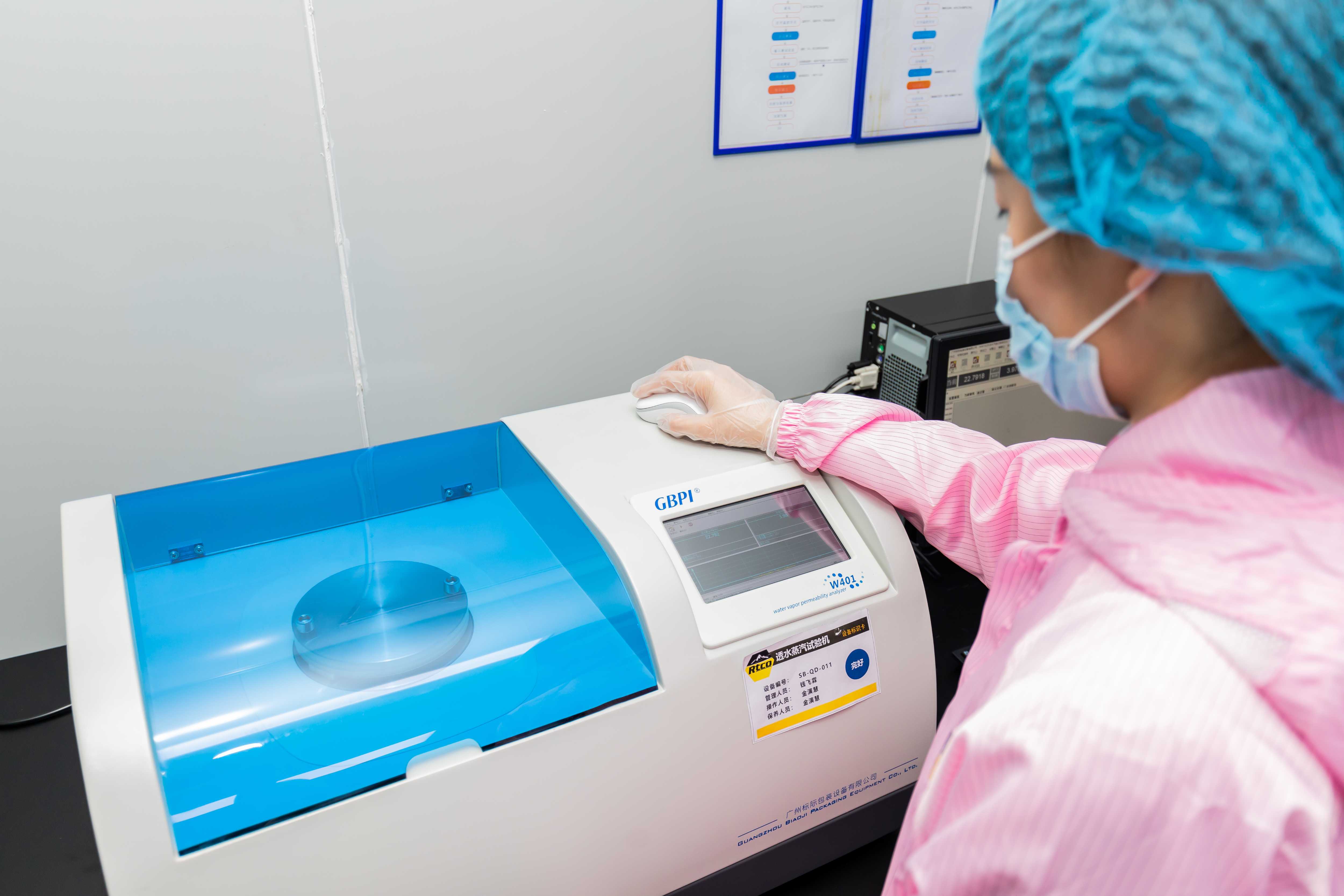
Under an integrated model, the design stage runs to roughly one day, tooling to about one month and production to about one week. That compression is what makes it practical to iterate on a dimension set before committing to a full production run, instead of discovering a headspace problem at the first commercial fill.

Use Cases: Where the Envelope Meets Real Projects
Entry and trial sizes. A brand testing a new market or a new flavour begins at the lower end of the 60 ml to 6000 ml fill range. At small volumes, cap diameter relative to body diameter becomes the main design variable, because a wide cap on a small body consumes the label panel and reduces printable area.
Multi-serving protein tubs for retail. High serving counts push the project toward the upper part of the fill range. Body diameter is chosen for scoop access and label panel, height for shelf and shipper limits, and the cap typically carries a scoop-hook or similar dosing accessory.
Pre-workout with a large-mouth closure. Low fill volumes combined with a wide cap diameter produce a short, wide unit that reads well on shelf but demands close attention to lid torque and liner fit, since the opening is large relative to the fill.
Capsule, tablet and gummy lines. The same four parameters apply, but the mouth opening and closure become the first decision, because dosing is by count rather than by scoop. Food-grade compliance, PCR/recycled material options and custom finishes carry over unchanged.
Private-label and distributor programs. A distributor running several brands across the United States, Canada, Mexico, Great Britain, France, Germany, Brazil or Australia needs one dimension set that satisfies multiple label formats and, increasingly, the recyclability and recycled-content expectations set out by Regulation (EU) 2025/40 for EU placement. Standardising the body diameter across a family reduces artwork rework and simplifies case packing.
Comparing Supply Models When a Dimension Changes
A sizing revision is a coordination problem as much as an engineering one. When design, tooling, moulding, finishing and logistics sit with separate vendors, every dimension change crosses multiple handoffs and each handoff adds both time and interpretation risk.
| Comparison point | Integrated turnkey model (RTCO) | Traditional fragmented supply chain |
|---|---|---|
| Scope | Design, tooling, manufacturing, finishing and logistics handled by one coordinated partner | Standard plastic container production, with design, engineering, customization and supply coordination managed separately |
| Lead time | Overall project lead time shortened by 30% to 50% | Sequential handoffs between separate vendors |
| Total cost | Total end-to-end comprehensive cost reduced by 15% to 30% | Cost accumulates across separate design, tooling, finishing and freight arrangements |
| Management load | Less management workload and lower supply chain complexity through one integrated workflow | Brand team coordinates each stage and resolves conflicts between vendors |
| Best suited to | Brands that need rapid launches, North American fulfilment and short lead times | Brands seeking standard stock bottles or simple packaging solutions with limited customization |
Traditional suppliers remain appropriate for brands using standard stock bottles with limited customization. The integrated model matters most when a dimension set has to change between formats, for example when one brand runs protein, pre-workout and BCAA across a shared shelf family and needs the bodies, caps and scoops to stay consistent while the fill volumes differ.
Frequently Asked Questions
Which certifications should be confirmed before a custom bottle dimension is approved?
Quality and safety frameworks such as BRCGS, HACCP and ISO 9001 apply to the program and should be confirmed at the same time as the dimension set, not afterwards. ISO 15378:2017 is the quality management system reference for manufacturers of primary packaging materials for medicinal and nutraceutical products and integrates GMP principles. For the US market, packaging falls within the documented process requirements of FDA 21 CFR Part 111 Current Good Manufacturing Practice for dietary supplements. For EU placement, Regulation (EU) 2025/40 requires packaging to be recyclable by 2030 and plastic packaging to contain at least 30% recycled content by 2030. Confirming certificate scope and PCR availability early matters because a later material substitution can change both the compliance position and the decoration route.
Can one supplier provide the caps, liners and scoops that a new dimension set requires?
Yes, when the container is specified as a system rather than as a body alone. The program covers multiple cap types, liners and scoops as supporting components, and supports integration with common filling equipment and production lines. Containers are designed for packaging and dosing of powder, capsule, tablet, gummy/gel and liquid products, and can include food-grade compliance, PCR/recycled material options, vacuum metallization, soft-touch coatings and custom tooling and finishes. RTCO supports this work with an engineering team of 40, manufacturing across Asia and a US production facility in Piedmont, South Carolina.
What order quantities and payment terms apply when bottle dimensions change?
MOQ is typically 10,000 to 30,000 pcs depending on the product, and first trial orders below the standard MOQ are available on request. Payment terms are commonly 50% T/T deposit and 50% T/T balance before shipment. Delivery terms support EXW, FOB, CIF and DDU, with sea, air and international express options. Where a project moves to an integrated model covering design, tooling, manufacturing, finishing and logistics, total end-to-end comprehensive cost is reduced by 15% to 30% in the comparison set, which matters most when a dimension change forces new tooling.
How is a new bottle size validated before full production?
Validation runs through sample approval, pre-shipment inspection and contractual acceptance criteria, with third-party testing available where required. In practice this means approving a physical sample at the agreed fill volume and cap diameter, running a fill trial on the production line, and confirming headspace and closure torque before the full run. Design typically takes about one day, moulding about one month and production about one week, so a revision window exists before tooling is finalised and before a full production quantity is committed.
How long does a sizing change take, and how can lead time be protected?
Lead time is shortened by 30% to 50% when design, tooling, manufacturing, finishing and logistics sit with one partner instead of across separate vendors, because dimension revisions no longer cross multiple handoffs. Capacity supports this: monthly production capacity is 80,000,000 units and annual output is 1,000,000,000 units, from a 68,000 m² factory with 200 employees. For North American programs, local fulfilment is supported by the US production facility at 1701 Old Grove Road, Suite 300, Piedmont, SC 29673, together with warehouses in Savannah, Georgia and Chino, California. To start a dimension review, send the dose form, servings per container and target market to info@rtco-packaging.com and request a sizing assessment and sample quote.
Conclusion: Size the Format, Then the Bottle
Sports nutrition bottle sizing becomes straightforward once it is treated as a conversion from product format into four parameters rather than as a choice from a catalogue. Dose form and servings per container produce a gross fill volume; the fill volume and the filling line produce a body diameter and height; the format and the reclosure behaviour produce a cap diameter. All of it is then checked against the approved envelope of 60 ml to 6000 ml fill capacity, 40 mm to 200 mm body diameter, 60 mm to 325 mm body height and 20 mm to 200 mm cap diameter, in food-grade HDPE, PET or PP with moisture-proof and anti-oxidation properties.
The decision that separates a clean launch from a late correction is sequencing. Fix the closure before the body drawing, fix the headspace before the artwork, and validate with a physical sample and a line trial before tooling is committed. Where certifications such as BRCGS, HACCP and ISO 9001, recyclability under Regulation (EU) 2025/40 or cGMP expectations under FDA 21 CFR Part 111 apply, they belong in the same review as the dimension set rather than in a separate compliance cycle.
Next step: RTCO reviews sizing briefs against the format, the fill volume and the target market, then returns a dimension recommendation with matching caps, liners and scoops. Brands planning a protein, pre-workout or BCAA launch can request a sample and a quotation, or download the sports nutrition packaging catalogue for the full container and closure range.
Catalogue: RTCO Sports Nutrition Packaging Catalogue (PDF) | Website: rtcopackaging.com | Email: info@rtco-packaging.com | WhatsApp: +86-13564840969
Have Questions or Need More Details?
Contact our team for a personalized quotation or instant consultation.
Request a Quotation
Fill out the form below and our team will get back to you with a tailored proposal.
WhatsApp Direct Chat
Prefer to chat in real-time? Message us on WhatsApp for instant assistance & quick answers.
- Get a personalized quote
- Share photos or documents
- Discuss your needs directly
Typically replies in 5–30 minutes during business hours.