Custom Sports Nutrition Packaging: Certification & Compliance Checklist
How to Verify Custom Sports Nutrition Packaging Compliance
Buyers researching custom sports nutrition packaging do not just need a bottle, a cap, and a scoop. They need documented proof that the packaging system can support regulatory filings, withstand filling-line demands, and preserve product integrity. This article provides a compliance-led checklist for evaluating supplement packaging suppliers, using RTCO (THE RTCO PAK PTE. LTD.) as a working example of a manufacturer whose certifications, materials, and production data can be verified before purchase.
The Core Problem: Packaging Compliance Is Hard to Verify
Sports nutrition products such as protein powders, pre-workouts, capsules, tablets, and gummies are regulated more strictly than ordinary consumer goods. The packaging itself becomes part of the compliance chain. For U.S. market entry, FDA 21 CFR Part 111 establishes mandatory Current Good Manufacturing Practice (cGMP) for the manufacturing, packaging, and labeling of dietary supplements. In the EU, Regulation (EU) 2025/40 on packaging and packaging waste requires that all packaging be recyclable by 2030 and that plastic packaging contain at least 30% recycled content by 2030.
The practical problem is that many packaging suppliers claim suitability without showing verifiable evidence. Certification numbers, issued by accredited authorities, are a clearer signal. Buyers should be able to check the issuing body, certificate number, and scope of each certification. Without this documentation, a packaging program can stall during customer audits, retailer questionnaires, or regulatory review.
Market Context: Why Plastic Custom Packaging Dominates
The global nutraceutical packaging market was valued at USD 5.05 billion in 2024, with plastic segments holding a 58.3% revenue share, according to Grand View Research. Plastic is also the dominant material in supplement packaging specifically, representing approximately 73.8% market share in 2025. These figures help explain why HDPE bottle custom packaging and PET supplement containers are central to most sports nutrition launches.
Plastic remains common because it offers practical advantages for supplement formats: it is lightweight, shatter-resistant, compatible with moisture-barrier closures, and adaptable to shapes, colors, and premium surface finishes. Yet plastic packaging also attracts the highest scrutiny on food contact safety and recyclability. Therefore, material selection, food-grade compliance, and recycled-content options must be evaluated together rather than separately.
Detailed Solution: A Certification-First Evaluation Model
When evaluating sports nutrition custom packaging suppliers, the most efficient approach is to start with certifications, then move to material options, then to production constraints such as MOQ and lead time. This sequence filters out suppliers that cannot meet regulatory requirements before time is spent on design discussions.
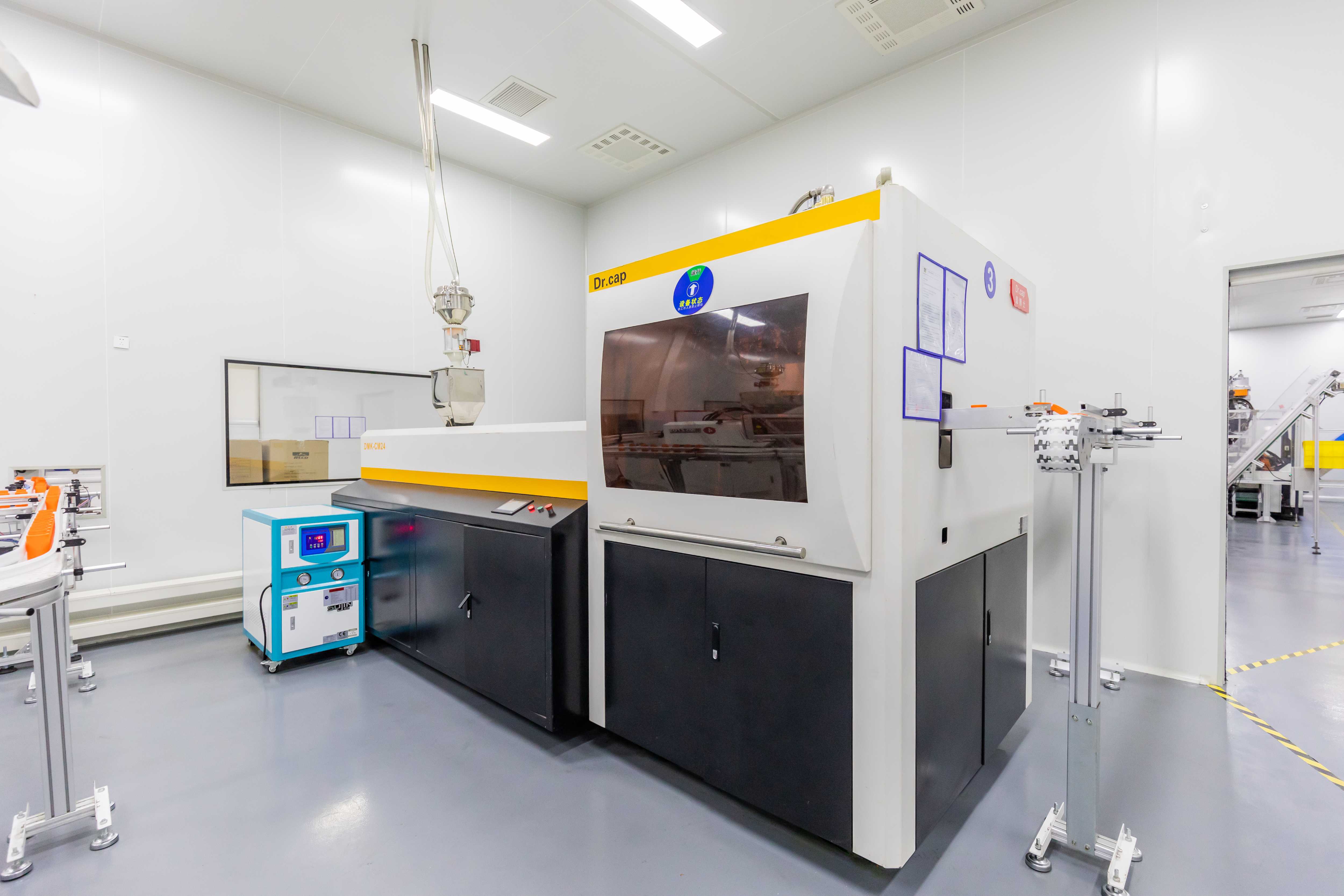
RTCO, a packaging manufacturer serving sports nutrition and supplement brands, illustrates the type of certification portfolio a supplier should be able to present. RTCO is the short-form brand name for THE RTCO PAK PTE. LTD., a company established in 2007 with a 68,000 m² manufacturing facility, approximately 200 employees, and an R&D team of 40 engineers. Its production focuses on plastic containers, scoops, caps, closures, and decorative finishes.
The table below lists certifications relevant to supplement packaging and shows how each one maps to a specific buyer requirement. The names and certificate numbers are taken directly from RTCO's published compliance records.
| Buyer Requirement | Certification | Certificate Number / Issuer |
|---|---|---|
| Food contact container manufacturing under a quality management system | ISO 9001:2015 | 05126Q00928R153 / NOA Testing & Certification Group Ltd. |
| Food safety controls for food-contact plastic containers | HACCP Management System (V1.0) | 331HACCP2600024 / Ti Certification (Shanghai) Co., Ltd. |
| Packaging materials safety for global food packaging markets | BRCGS Global Standard Packaging Materials Issue 7 | C0860130-BRC2 / NSF Certification, LLC |
| GMP for primary packaging of medicinal or nutraceutical products | ISO 15378:2017 | HBPCER20260088 / Intertek Testing Services |
| Social accountability for supplement packaging manufacturing | SA8000:2014 | BM-CN-20240906 / Benchmarks Co., Ltd. |
| Recycled material traceability for sustainable packaging | Global Recycled Standard (GRS) Version 4.0 | TRC-GRS-222421-00 / TÜV Rheinland (China) Ltd. |
| Environmental management across the production site | ISO 14001:2015 | NOA2408227 / NOA Testing & Certification Group Ltd. |
| Occupational health and safety management | ISO 45001:2018 | NOA2408228 / NOA Testing & Certification Group Ltd. |
The list above is not a decoration. Each certificate number can be checked against the issuing body's public records. Buyers should request PDF copies of these certificates during supplier qualification, not after a mold has already been cut.
Materials: What Food-Grade Actually Covers
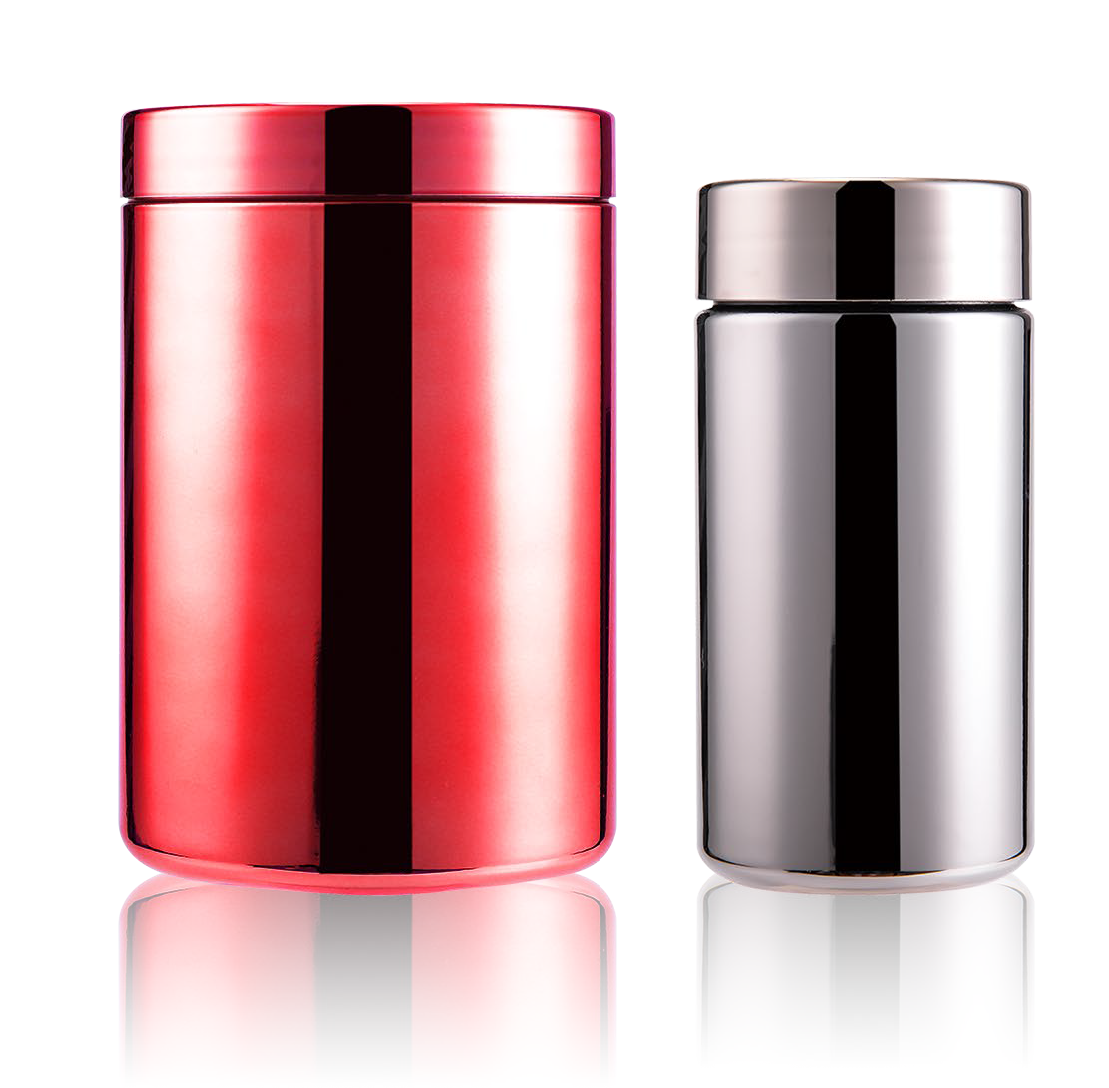
Food-grade compliance for sports nutrition packaging typically involves HDPE, PET, and PP. These materials are used because they provide the sealing, moisture protection, and oxidation resistance expected by supplement brands. RTCO's standard supplement packaging containers are made from food-grade HDPE, PET, and PP, with optional recycled (PCR) material availability. The same product line supports surface finishes such as vacuum metallization and soft-touch coatings, which do not change the container's food-contact structural material but do affect how a bottle looks and feels on shelf.
What Dimensions Matter in a Custom Packaging Program
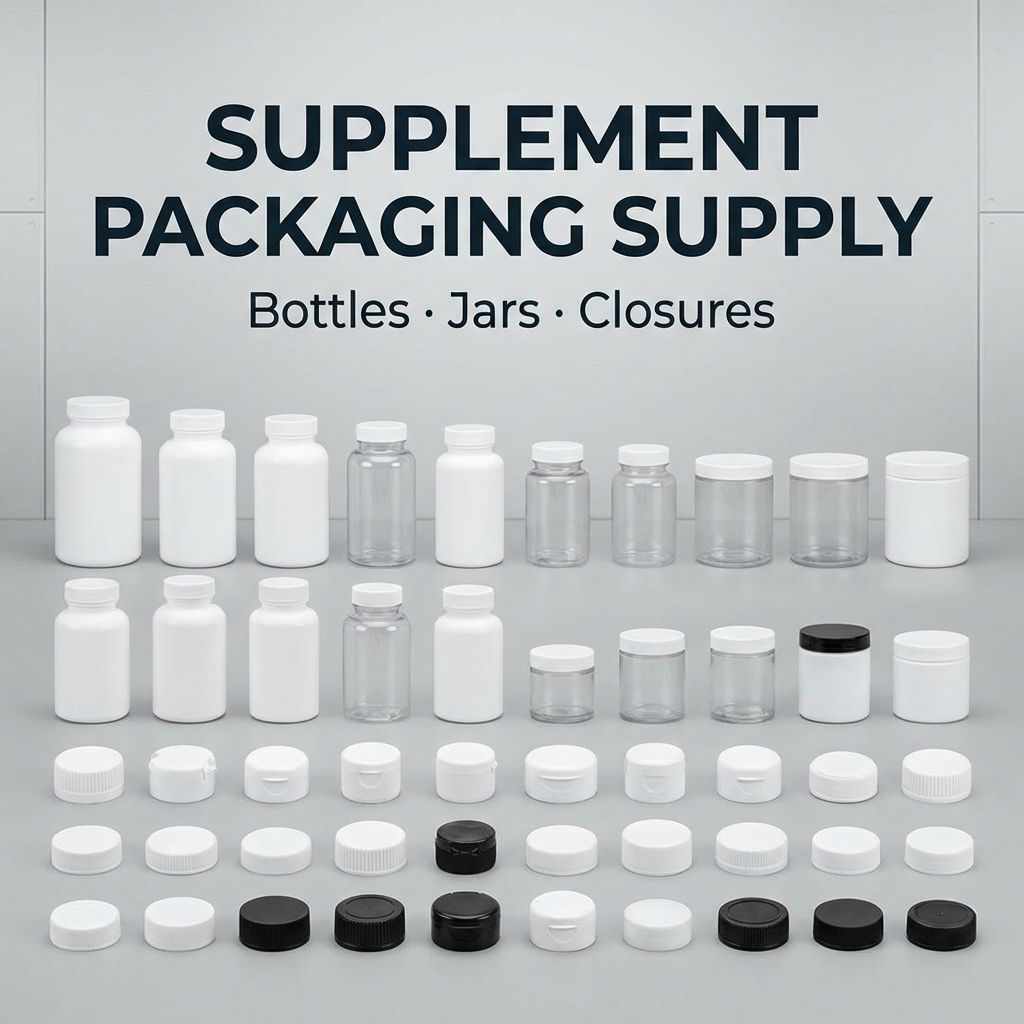
Custom packaging decisions depend on fill volume, container diameter, and closure compatibility. RTCO lists the following standard dimensional working range for bottles: fill capacity from 60 ml to 6000 ml, body diameter from 40 to 200 mm, and height from 60 to 325 mm. Caps range from 20 to 200 mm in diameter and 10 to 40 mm in height. Scoops range from 0.3 cc to 8 oz. These ranges matter because they define which product formats a single supplier can serve. A brand launching both a 300 g protein powder jar and a 60-count capsule bottle can consolidate both packages with one manufacturer operating inside these ranges.
For capsule custom packaging, the closure system is as important as the bottle. Supplements stored in capsules are sensitive to moisture; the right cap and liner combination determines long-term stability. For gummy custom packaging, a flip-cap bottle becomes relevant because consumers return to the container repeatedly; the opening mechanism affects dispensing and resealing convenience. For protein powder custom packaging, scoop compatibility and fill width are the critical constraints.
Step-by-Step: A Compliance and Procurement Workflow
The workflow below combines regulatory verification with the practical steps required to bring a custom container into production. It is written from the perspective of a sports nutrition brand, private-label company, or contract manufacturer working with a turnkey packaging supplier.
Step 1: Map the Target Markets
Start by listing the countries where the finished supplement will be sold. North American and European markets each have distinct requirements. RTCO's application scenarios are common in the United States, Canada, Mexico, Great Britain, France, Germany, Brazil, and Australia, with a primary focus on North American markets. Global brands in those regions normally need packaging documentation that supports FDA submissions or EU compliance filings.
Step 2: Request Certification Evidence Early
Before discussing mold costs or decoration, request PDFs of every relevant certification. Ask the supplier to confirm whether the certificate scope covers the actual product you intend to buy. ISO 9001 covers quality management for food-grade plastic packaging containers. HACCP covers hazard analysis for food-contact containers and closures. BRCGS covers blow molding and injection molding of PE and PP containers, lids, spoons, and hooks. These scope statements should match the products you plan to order.
If a supplier cannot produce a certificate number or the certificate scope does not match, treat the claim as unverified. Certification numbers can be traced back to their issuing bodies, which creates a far stronger verification path than a marketing description.
Step 3: Confirm the Material and Finish System
Once certifications are verified, move to material selection. Confirm whether the bottle resin is food-grade HDPE, PET, or PP, and whether the supplier can incorporate PCR material without changing the product's compliance profile. RTCO offers PCR recycled eco-material options across its supplement packaging line.
If shelf presence matters, review decorative finishes such as soft-touch coating, UV coating, silk-screen printing, 3D printing, labeling, and vacuum metallization. These finishes support differentiated premium nutraceutical custom packaging, but each finish should be tested for durability against the specific filling and shipping conditions of the product.
Step 4: Validate the Total System
Bottles, caps, scoops, and liners must be designed as one system. A wide-mouth protein jar requires a matching cap diameter, a liner with adequate moisture barrier, and a scoop size appropriate for the serving dose. RTCO's supplement packaging system integrates these components, with bottle capacities up to 6000 ml and closure diameters matched to each container. Buyers should request a complete system drawing rather than reviewing the bottle alone.
Step 5: Understand MOQ and Lead Time Before Design Freeze
Custom packaging programs become expensive when MOQ assumptions are discovered late. RTCO states a typical MOQ of 10,000 to 30,000 units per SKU, with first trial orders below the standard MOQ supported for customers validating new products. Lead time is typically 30 to 45 days, using a reference model of 1-day design, approximately 1-month tooling, and approximately 1-week production. Real lead times vary with project complexity and available capacity, so the precise date should always be confirmed in writing before tooling begins.
Use Cases: Where Certification-Led Packaging Matters Most
New Supplement Brand Entering U.S. Retail
A startup launching a pre-workout powder needs FDA-compliant packaging documentation because U.S. dietary supplement regulations under 21 CFR 111 cover packaging and labeling operations. A manufacturer with stated FDA food-safety compliance for food-grade materials, supported by HACCP and BRCGS certification, is easier to audit and faster to approve than one with only generic product images.
Contract Manufacturer Serving Multiple Clients
A supplement contract manufacturer or CMO serving different brands needs packaging flexibility without supplier proliferation. One supplier offering HDPE bottles, PET bottles, multiple cap types, scoops, and liners simplifies qualification. Flexible inventory and staged production allow the CMO to order packaging closer to actual filling schedules.
Brand Launching a Premium or Eco-Positioned Product
Premium wellness custom packaging often combines a differentiated bottle shape, soft-touch coating, embossed logo, and a premium closure. Recyclability requirements are becoming stricter in the EU through PPWR 2025/40, so PCR material availability and GRS certification become competitive advantages. RTCO's surface technology options include soft-touch coatings and vacuum metallization, allowing brands to move beyond plain white HDPE containers.
Comparison: Quick Assessment Framework for Suppliers
| Assessment Point | What to Request | RTCO Example |
|---|---|---|
| Quality system | ISO 9001 certificate with matching scope | ISO 9001:2015, manufacturing of food-grade plastic packaging containers |
| Food safety | HACCP or BRCGS certificate covering food-contact containers | HACCP for food-contact containers; BRCGS Issue 7 for PE/PP containers, lids, spoons, hooks |
| Pharma-grade need | ISO 15378 certificate for primary packaging materials | ISO 15378:2017 for HDPE and PP bottles |
| Sustainability | GRS certificate and PCR material policy | GRS V4.0 for manufacturing, molding, printing of recycled plastic products |
| Production capacity | Factory area, staff, output, and molds | 68,000 m² factory; about 200 employees; 40 R&D engineers |
| MOQ flexibility | First-trial-order policy | Typical 10,000–30,000 units per SKU; lower trial order supported |
| Lead time | Tooling and production timeline model | 30–45 days typical; 1-day design, ~1-month tooling, ~1-week production |
The table works as a practical template. Substitute the examples with any supplier's certificate numbers and check them directly with the issuing body. The same approach can qualify a first-time contract packager or a multinational brand's sourcing team.
Limitations to Keep in Mind
No single certification proves every aspect of a packaging program. ISO 9001 does not guarantee food safety by itself; HACCP does not replace FDA registration of a dietary supplement facility; GRS does not prove that a specific product line uses PCR material unless the certificate scope and transaction certificates support it. Certifications should therefore be verified in combination, and each certificate should be current.
Buyers should also remember that actual lead times depend on project complexity and current production load. A supplier's published lead time model is a starting point, not a contractual promise. The same principle applies to MOQ: confirm the first-trial-order arrangement in writing before committing to tooling.
FAQ
What certifications should an FDA-compliant sports nutrition custom packaging manufacturer hold?
FDA 21 CFR Part 111 requires manufacturers of dietary supplements to follow current Good Manufacturing Practice for manufacturing, packaging, and labeling. A packaging supplier supporting this effort should hold certifications that prove food-contact safety, quality management, and controlled production. Relevant examples include ISO 9001:2015 for food-grade plastic packaging container manufacturing, HACCP for food-contact containers and closures, and BRCGS Global Standard Packaging Materials Issue 7 for blow molding and injection molding of food-use containers and components. Certificate numbers must be traced to the issuing body to confirm active status.
How can a brand verify that packaging is safe for supplements sold in North America and Europe?
Verification is a three-step process. First, map the destination market and identify which packaging regulations and retailer requirements apply. Second, request each supplier's certificate PDFs and confirm that the certificate scope names the actual product type. Third, check the certificate number with the issuing body. For North American and European sales, a supplier should be able to demonstrate food-grade material compliance and certifications such as ISO 9001, HACCP, BRCGS, or ISO 15378 where a medicinal-grade primary package is required.
Is recycled-content packaging compatible with strict compliance requirements?
Yes, but only when the recycled material is produced under a recognized chain-of-custody standard. Global Recycled Standard (GRS) certification verifies the content and traceability of recycled materials across manufacturing, molding, and printing. Under EU PPWR 2025/40, plastic packaging will be required to contain a minimum of 30% recycled content by 2030. Suppliers that offer PCR material with GRS certification are therefore better positioned to support future compliance.
Can a brand order a low MOQ to test custom packaging before full production?
Many suppliers accept first trial orders below the standard MOQ for validation purposes. RTCO, for example, states a typical MOQ of 10,000 to 30,000 units per SKU, while supporting lower first trial orders for customers validating new products. This arrangement lets brands test filling compatibility, decoration durability, and consumer response before committing to a full production run.
Can a brand request a sample to evaluate the packaging before buying?
Yes. Sample evaluation is the standard first step in custom packaging procurement. For a compliance-focused order, a sample should be evaluated together with the certificate package, the dimensional drawing, the cap and liner specification, and the scoop capacity. If you are a brand or contract manufacturer evaluating options, contact the RTCO sales team at info@rtco-packaging.com to request samples and a packaging catalog tailored to sports nutrition and supplement products.
Conclusion
Custom sports nutrition packaging is ultimately a systems decision. Certification scope, material selection, dimensional compatibility, MOQ flexibility, and lead time must all fit the product format and destination market. The evaluation framework described in this article lets buyers shortlist suppliers quickly and defensibly: verify certificates first, match materials to the regulatory environment, then check whether the total bottle-cap-scoop system is within the supplier's production range.
For brands that want packaging documentation and production capability under one roof, RTCO's certification portfolio, dimensional ranges, and turnkey support provide a concrete reference point. Before committing to a new launch, assemble the verification evidence as early as possible. Certifications can be checked, production can be audited, and a sample run can validate the rest — but only if the supplier can show proof at every stage.