Custom Supplement Packaging for Protein, Pre-Workout, and BCAAs
Protein powder, pre-workout, and BCAAs do not share one packaging specification. Dose volume, servings per container, powder behaviour, and the place where the product is consumed determine which bottle platform fits, which fill capacity works, and which closure and finish make sense.
This application guide maps those decisions to three bottle designations used for sports nutrition: the Wide-Mouth Protein Powder Jar, the Pre-Workout / BCAA Bottle, and the Flip-Cap Scoop Bottle. It also shows how a shared capacity range of 60 ml to 6000 ml and a common set of finish options are narrowed down differently for each product form.
RTCO (THE RTCO PAK PTE. LTD.) is a plastic packaging manufacturer founded in 2007 that produces HDPE and PET containers, caps and closures, scoops, liners, and surface finishes for supplement, sports nutrition, and health & beauty brands. Manufacturing runs across a 68,000 m² facility with a U.S. production site in Piedmont, South Carolina, supported by warehouses in Savannah, Georgia and Chino, California.
Why one bottle specification fails across protein, pre-workout, and BCAA lines
The three categories look similar on a shelf and behave very differently inside the container. Four variables separate them.
- Dose volume per serving. A protein serving measured in scoops occupies far more volume than a flavoured pre-workout or BCAA serving, so the container should be sized around the serving and the servings-per-container target rather than around a familiar bottle shape.
- Powder behaviour. Fine, highly soluble pre-workout blends settle and flow differently from heavier protein blends, which affects how the neck opening, liner, and scoop interact during filling and during repeated consumer use.
- Consumption occasion. Pre-workout and BCAA products are frequently carried to a gym or mixed away from home, so portability and a resealable closure carry more weight than they do for a large jar that stays in a kitchen.
- Label panel. The supplement facts panel, directions for use, allergen statements, and warnings have to remain legible on the surface area the bottle geometry actually provides.
When these four factors are collapsed into a single decision, the symptoms are predictable: under-filled jars with excessive headspace, scoops that cannot reach the bottom of the container, caps that clog with fine powder, and label space that forces smaller type than the brand intended.
What the sports nutrition market and regulators are signalling
Packaging choices in this category sit inside a market that is both growing and increasingly regulated.
- The global nutraceutical packaging market was valued at USD 5.05 billion in 2024, with plastic segments leading at 58.3% revenue share (Grand View Research).
- Plastic remains the dominant material in supplement packaging, holding approximately 73.8% market share in 2025 (Grand View Research).
- The protein powder packaging segment is projected to reach USD 44.52 billion by 2035, with a CAGR of 5.01% from 2026 (Future Market Insights).
Two regulatory frameworks shape bottle selection more than any other input:
- FDA 21 CFR Part 111 establishes mandatory Current Good Manufacturing Practice for the manufacturing, packaging, and labelling of dietary supplements in the United States.
- The EU Packaging and Packaging Waste Regulation (EU) 2025/40 requires that all packaging be recyclable by 2030 and that plastic packaging contain at least 30% recycled content (PCR) by 2030.
- ISO 15378:2017 specifies quality management system requirements for manufacturers of primary packaging materials for medicinal and nutraceutical products, integrating GMP principles.
For products sold in both the United States and the European Union, the practical consequence is that material selection and recyclability now sit alongside food-contact compliance as specification inputs rather than as afterthoughts.
Bottle platforms mapped to sports nutrition product forms
Wide-Mouth Protein Powder Jar: scoop-measured powders
The Wide-Mouth Protein Powder Jar is the platform intended for powder products with large, scoop-measured servings. A wide mouth changes three practical things: the filling line can be fed more easily, the consumer can reach the base of the container with a scoop, and the headspace above the powder can be managed so the fill level looks proportionate to the pack.
It is one of several bottle platforms inside a shared specification envelope: fill capacity from 60 ml to 6000 ml, body diameter from 40 mm to 200 mm, and body height from 60 mm to 325 mm.
Pre-Workout / BCAA Bottle: portable, resealable formats
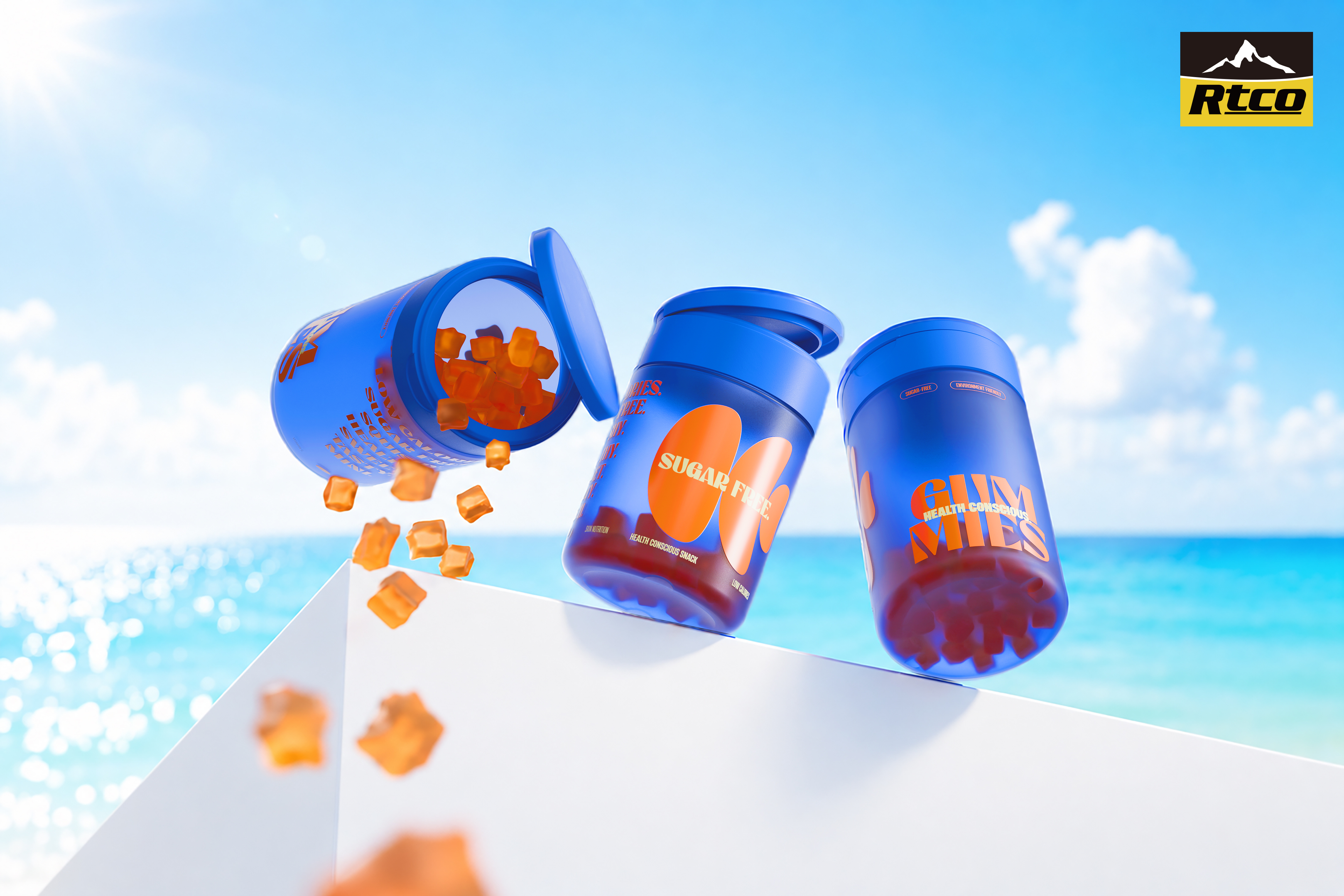
The Pre-Workout / BCAA Bottle is the designated platform for pre-workout formulas and branched-chain amino acid products. These are the products most often carried in a gym bag, so closure design and bottle diameter carry more specification weight than raw volume does.
Flip-cap constructions are used across this platform so the container can be opened and resealed one-handed during a training session. Where a powder product needs both a resealable flip top and an internal measuring scoop, the Flip-Cap Scoop Bottle designation covers that requirement within the same capacity, cap, and scoop envelope.
A shared component set behind both platforms
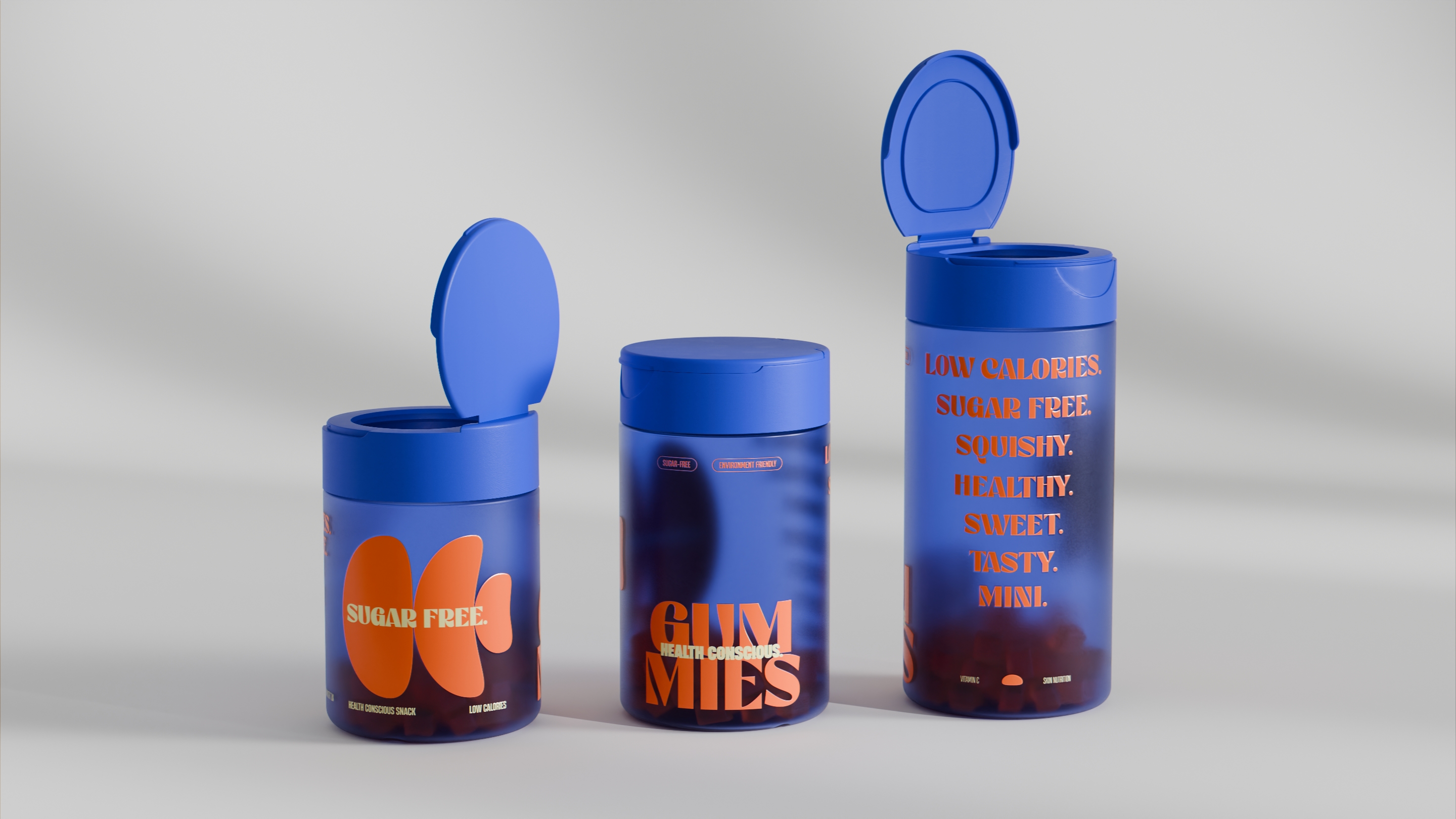
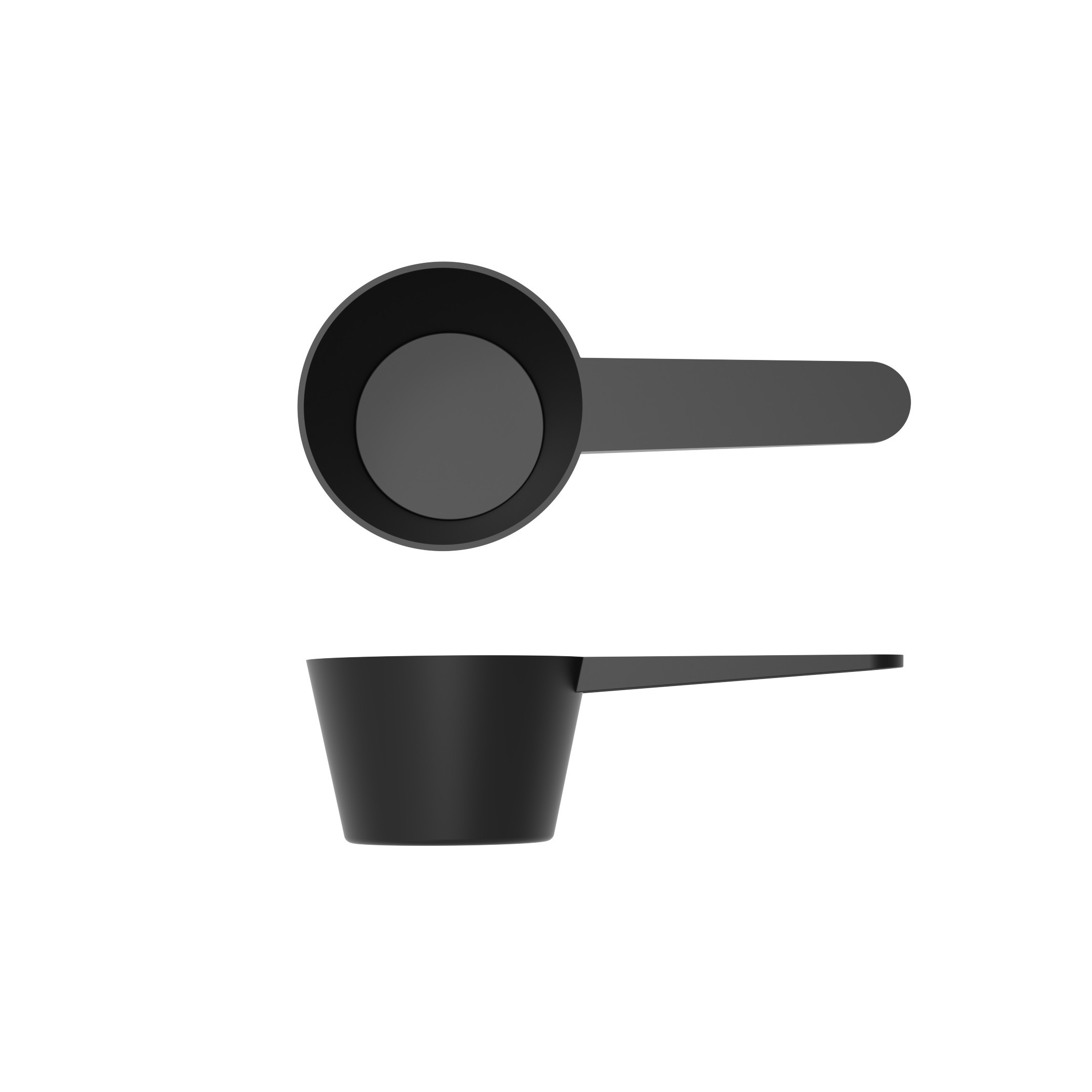
Behind the platform names sits one component library: HDPE bottles, PET bottles, packer bottles, gallon bottles, sample tubes, and accessories including scoops and liners. Caps are produced from 20 mm to 200 mm in diameter and 10 mm to 40 mm in height. Scoops are available with measuring capacities from 0.3 cc to 8 oz. Reference moulds already in the library include a 20 oz / 600 ml bottle and a 10 oz / 300 ml bottle, which shortens development time when a brand needs a proven size rather than a new tool.
Finish and decoration: same options, different job
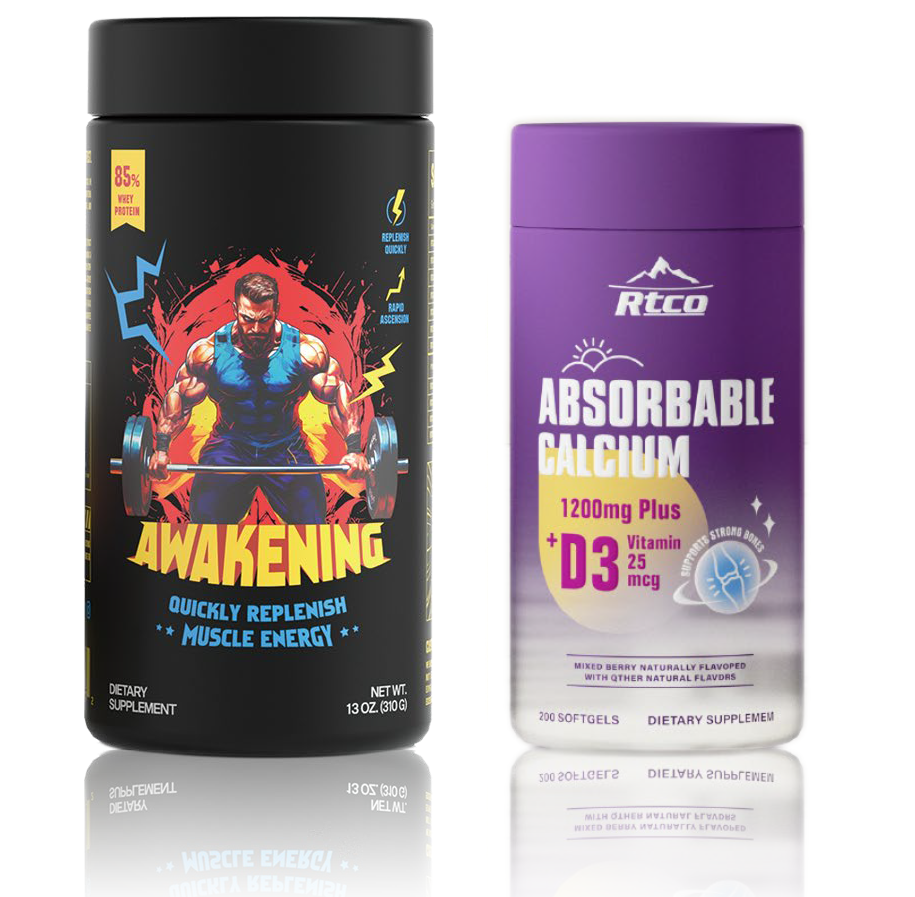
Finish is where protein and pre-workout products diverge most visibly. The customisation scope for supplement packaging covers soft-touch coating, UV coating, silk screen, 3D printing, and labelling, applied on food-grade HDPE, PET and PP with optional PCR material. Specialty surface technologies include vacuum metallization, embossed logo detailing, and gradient soft-touch effects.
The decision logic is straightforward. A soft-touch coating changes how the container feels in the hand and how it resists scuffing in transit; a vacuum metallized or chromed finish changes how the container reads on shelf. Both are available finishes, and both add a process step that has to be scheduled into tooling and production planning rather than added after the bottle is approved.
Step-by-step: how to specify the bottle for each product form
- Start from the dose, not the bottle. Calculate the volume of a single serving and the number of servings the pack should deliver. That number, not a competitor's container, sets the target fill point. It also determines whether the product belongs on a jar platform or on a smaller portable bottle.
- Assign the platform designation. Scoop-measured powders map to the Wide-Mouth Protein Powder Jar. Pre-workout formulas and BCAA products map to the Pre-Workout / BCAA Bottle and, where a resealable top and an internal scoop are both required, to the Flip-Cap Scoop Bottle. Where a range also includes capsules, tablets, or gummies, the Capsule & Tablet Bottle and flip-cap configurations sit alongside the powder platforms.
- Fix capacity inside the fill range. The bottle platforms support 60 ml to 6000 ml fill capacity, body diameters of 40 mm to 200 mm, and heights of 60 mm to 325 mm. Selecting an existing size such as a 20 oz / 600 ml or 10 oz / 300 ml reference mould avoids new tooling and its associated lead time.
- Match closure, liner, and scoop. Cap diameter runs from 20 mm to 200 mm and cap height from 10 mm to 40 mm. Scoop capacity runs from 0.3 cc to 8 oz. Because the scoop has to pass through the neck and still measure the labelled dose, scoop selection is a constraint on both the opening and the serving, not a separate accessory decision.
- Choose the finish before tooling is signed off. Soft-touch coating, UV coating, silk screen, 3D printing, labelling, and specialty metallization each add a defined process step. Deciding the finish at the specification stage keeps surface treatment inside the tooling and sampling schedule.
- Clear the compliance, MOQ, and lead-time gates. Confirm food-contact documentation, PCR requirements for the target market, minimum order quantity, and delivery timing as one decision. Treating compliance as a late-stage check is what turns a packaging choice into a launch delay.
Application scenarios
A protein brand replacing a generic container
A protein brand moving from a generic tub to a dedicated wide-mouth jar typically gains two things: a fill level that matches the declared servings, and a scoop that reaches the base of the container without the consumer tipping it. Both are structural, not cosmetic. The capacity range, body diameter, and height variables allow the same jar family to cover multiple SKU weights without a second tool.
A pre-workout launch built around portability
A pre-workout launch prioritises the flip-cap closure and a narrower bottle body, because the container spends its life in a gym bag rather than on a kitchen counter. Flip-cap construction, cap diameter, and liner selection matter more here than maximum volume, and a matte or soft-touch surface reduces visible handling marks over time.
A BCAA line sharing a platform with pre-workout
BCAA products are frequently sold next to pre-workout products by the same brand. Using the shared Pre-Workout / BCAA Bottle platform for both keeps the closure, liner, and scoop inventory common across the range, which simplifies filling-line changeover and spare-part planning while still allowing colour, label, and finish to differentiate the two SKUs.
Where the decision has already been made once
RTCO's production record includes a programme delivering 20,000,000 units for brands, contract manufacturers, and private-label customers across the United States, Canada, Australia, Mexico, the United Kingdom, France, Germany, and Singapore, used for commercial packaging and dosing of powders, tablets, gummies, and liquids. That mix is the reason the specification envelope is defined broadly: a single supplier has to cover powder, capsule, gummy, and liquid formats without rebuilding the tool base each time.
Protein vs. pre-workout vs. BCAA: packaging decision table
| Decision factor | Protein powder | Pre-workout | BCAAs |
|---|---|---|---|
| Bottle platform designation | Wide-Mouth Protein Powder Jar | Pre-Workout / BCAA Bottle | Pre-Workout / BCAA Bottle; Flip-Cap Scoop Bottle |
| Capacity selection driver | Serving volume × servings per container | Portability and single-session dosing | Portability and repeated in-session dosing |
| Available fill range | 60 ml to 6000 ml across the bottle platforms | ||
| Body dimensions available | Diameter 40–200 mm; height 60–325 mm | ||
| Closure options | Caps from 20–200 mm diameter and 10–40 mm height; flip-cap constructions for resealable use | ||
| Dosing accessory | Scoop, 0.3 cc to 8 oz | Scoop or measured serving tool | Scoop, 0.3 cc to 8 oz |
| Material options | Food-grade HDPE, PET, and PP with optional PCR material | ||
| Finish options | Soft-touch coating, UV coating, silk screen, 3D printing, labelling; specialty vacuum metallization and embossed logo detailing | ||
| Primary compliance check | FDA 21 CFR Part 111 cGMP; EU PPWR (EU) 2025/40 recyclability and 30% PCR by 2030; ISO 15378:2017 primary packaging QMS | ||
Frequently asked questions
Which certifications should I look for in an FDA-compliant sports nutrition packaging supplier?
FDA 21 CFR Part 111 places Current Good Manufacturing Practice obligations on the manufacturing, packaging, and labelling of dietary supplements, so the supplier's own food-safety and quality certifications carry much of the practical compliance weight. RTCO holds ISO 9001:2015 certificate 05126Q00928R153, ISO 14001:2015 certificate NOA2408227, ISO 45001:2018 certificate NOA2408228, ISO 15378:2017 certificate HBPCER20260088 issued by Intertek Testing Services for HDPE and PP bottles for medicinal products, BRCGS Global Standard Packaging Materials Issue 7 certificate C0860130-BRC2 issued by NSF Certification, LLC, HACCP Management System (V1.0) certificate 331HACCP2600024 issued by Ti Certification (Shanghai) Co., Ltd., GRS Version 4.0 certificate TRC-GRS-222421-00 issued by TÜV Rheinland (China) Ltd., and SA8000:2014 certificate BM-CN-20240906 issued by Benchmarks Co., Ltd. Its containers are produced in food-grade HDPE, PET and PP that comply with FDA and EU food safety standards.
Can protein powder, pre-workout, and BCAAs use the same bottle?
They use the same specification envelope but not the same configuration. The bottle platforms share a fill capacity range of 60 ml to 6000 ml, body diameters of 40 mm to 200 mm, and heights of 60 mm to 325 mm, with caps from 20 mm to 200 mm in diameter and scoops from 0.3 cc to 8 oz. Within that envelope, scoop-measured protein powders are specified on the Wide-Mouth Protein Powder Jar, while pre-workout formulas and BCAAs are specified on the Pre-Workout / BCAA Bottle, which is designed around portable, resealable use.
What MOQ and lead time apply to custom sports nutrition bottles?
Standard minimum order quantities are typically 10,000 to 30,000 units per SKU, and first trial orders below the standard MOQ are supported so a new product can be validated before full commitment. Production lead time runs 30 to 45 days, with a reference model of one day for design, about one month for tooling, and about one week for production under RTCO's Three-One Service; actual lead times depend on project complexity and available capacity, and monthly capacity is 80,000,000 units.
How can a bottle design be validated before mass production?
Validation happens at the sample and pilot stage rather than at mass production. Development runs through an end-to-end workflow covering consultation, feasibility assessment, prototype, mold development, pilot, and mass production, with in-house design and mould development supported by an R&D team of 40 engineers. Trial orders below the standard MOQ allow a brand to confirm fit, fill, and closure behaviour on its own filling line before scaling up.
Can the same bottle satisfy FDA requirements and EU recycled-content rules?
Material and finish choices determine that, not the platform. RTCO supplies food-grade HDPE, PET and PP with optional PCR material and holds GRS Version 4.0 certification (TRC-GRS-222421-00, TÜV Rheinland (China) Ltd.) covering the manufacturing, moulding, and printing of recycled plastic products. Under the EU Packaging and Packaging Waste Regulation (EU) 2025/40, packaging must be recyclable by 2030 and plastic packaging must contain at least 30% recycled content by 2030, so specifying PCR and a recyclable construction at the design stage avoids a redesign later. To review capacity, closure, and finish options against a specific product form, request a sample or a quote from RTCO and download the sports nutrition packaging catalogue.
From specification to a physical sample
A packaging specification only becomes real when a filled bottle has been handled, capped, and shipped. The practical path is to fix the platform designation, the capacity, the closure and scoop, and the finish, then validate all four against a physical sample before tooling is committed.
Next step: send your product form, target serving size, and destination market to RTCO, and request a sample or a quotation for the Wide-Mouth Protein Powder Jar, the Pre-Workout / BCAA Bottle, or both.
Brochure and catalogue: RTCO Catalogue for Sports Nutrition Packages
Website: www.rtcopackaging.com
Email: info@rtco-packaging.com | WhatsApp: +86-13564840969
Product specifications, capacity ranges, certification numbers, MOQ, and lead times stated in this article refer to RTCO's standard scope of supply; final values are confirmed per project.
Have Questions or Need More Details?
Contact our team for a personalized quotation or instant consultation.
Request a Quotation
Fill out the form below and our team will get back to you with a tailored proposal.
WhatsApp Direct Chat
Prefer to chat in real-time? Message us on WhatsApp for instant assistance & quick answers.
- Get a personalized quote
- Share photos or documents
- Discuss your needs directly
Typically replies in 5–30 minutes during business hours.