From Evaluation to Execution: An OEM/ODM Custom Packaging Solutions Guide
From Evaluation to Execution: An OEM/ODM Custom Packaging Solutions Guide
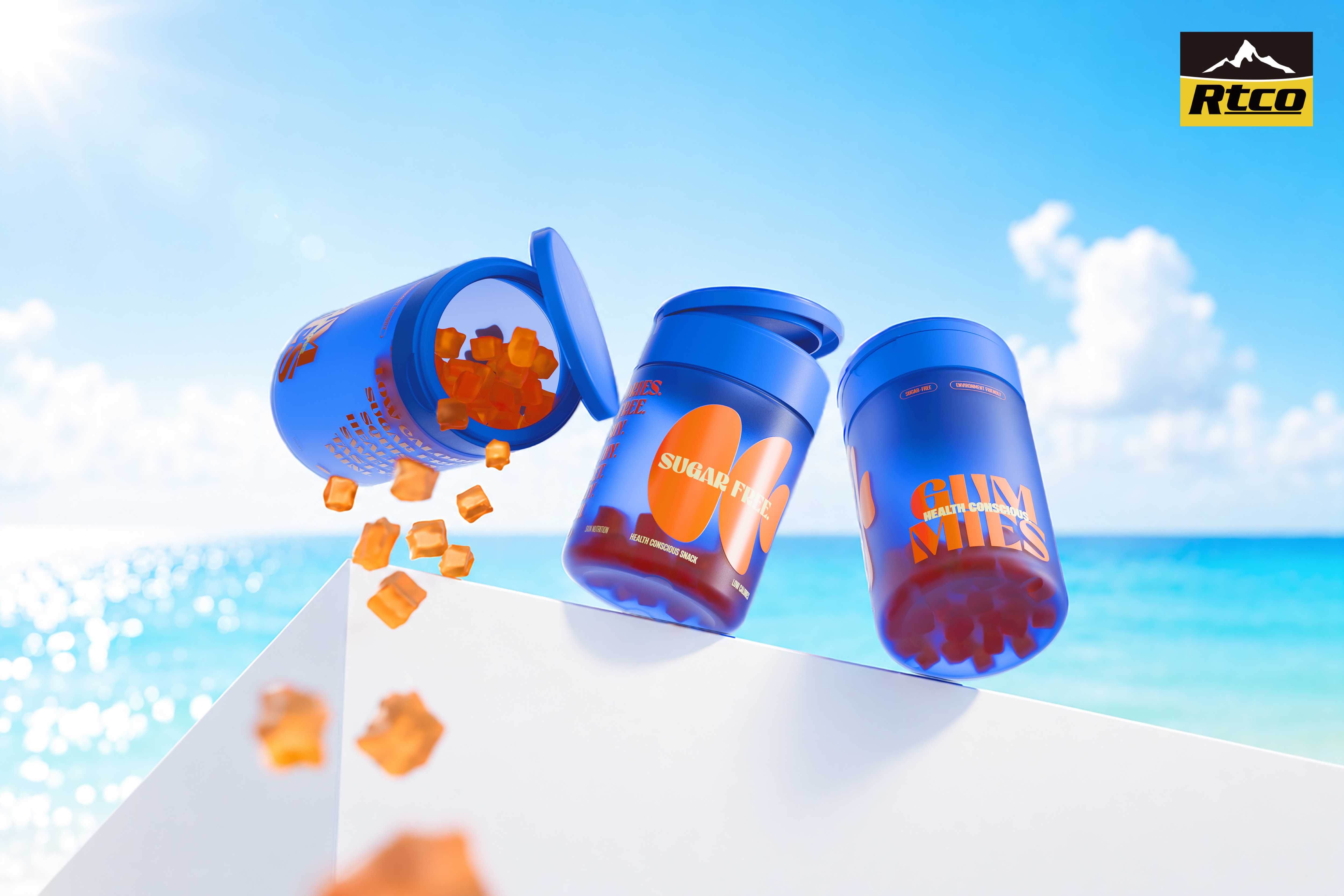
Custom packaging solutions are often judged by one sample bottle, but a sample is not a supply system. For supplement and sports nutrition brands moving from evaluation to execution, the more important question is whether the supplier can combine regulatory evidence, design engineering, custom mold development, component manufacturing, surface decoration, quality control, warehousing and replenishment under one accountable program.
RTCO is the packaging brand of THE RTCO PAK PTE. LTD., a custom packaging supplier for dietary supplements, sports nutrition, health and beauty brands. Since its founding in 2007, RTCO has expanded across Asia and the United States to provide OEM, ODM and customizable production for plastic containers and closures, scoops, liners and decorative finishes. This guide explains how a buyer should evaluate such a partner before moving into serial production.
The Problem: Customization without Execution Capability
The central risk in custom packaging is fragmentation. A concept may look distinctive, but by the time the brand must scale, the buyer is managing separate mold makers, bottle molders, cap suppliers, decorators and freight forwarders. Each interface adds time and risk.
Customization alone is not a packaging strategy. A buyer should distinguish between aesthetic customization and manufacturing depth. OEM production means the manufacturer builds according to the brand specification. ODM production means the manufacturer designs the solution from a brand concept. Customization means the supplier can adjust material, shape, capacity, color, decoration, closure, scoop and structure. Execution requires more than these labels; it requires engineering, tooling, molding and QC.
Market Context: Supplement and Sports Nutrition Packaging Demand
Third-party market estimates explain why packaging capability has become a strategic issue for this category. The global custom packaging market was valued at approximately USD 48.17 billion in 2025, with North America holding a dominant market share of 40.09%, according to Fortune Business Insights. The dietary supplement packaging market was estimated at USD 12.7 billion in 2024 and is projected to reach USD 23.1 billion by 2034, growing at a CAGR of 6.1%, according to Precedence Research.
In the United States, the sports nutrition market was estimated at USD 29.42 billion in 2024 and is expected to grow to USD 55.51 billion by 2033, according to Grand View Research. Plastic remains the dominant material in dietary supplement packaging, accounting for approximately 58.3% of the market share in 2024, according to Precedence Research. These figures help explain why brands are not looking for decoration alone; they are looking for dependable custom packaging solutions that can scale with product demand.
What Does a Custom Packaging Solution Actually Include?
For a supplement brand, an end-to-end custom packaging solution should be treated as a production system with several layers: format and components, structural engineering, decoration, quality assurance, compliance documentation and logistics. At RTCO, those layers are supported by an annual production capacity of 1,000,000,000 units, a 68,000 m² manufacturing footprint, 200 employees and a dedicated R&D team of 40 engineers. RTCO exports about 97% of its output, with North America as the primary market.
OEM, ODM and Customizable Production
The manufacturer provides OEM, ODM and customizable production services. That covers complete customization including materials, bottle shape, capacity, colors, surface finishes, engraved logo design, closures, scoops, structural engineering and rapid custom mold development.
For buyers evaluating scale, useful data points include a monthly production capacity of 80,000,000 units and a stated lead-time model of roughly 30–45 days. One reference workflow is called the Three-One Service: one day for design, about one month for custom tooling, and about one week for production. Actual lead times depend on project complexity, capacity planning and approval cycles, so a buyer should confirm a calendar based on the specific SKU.
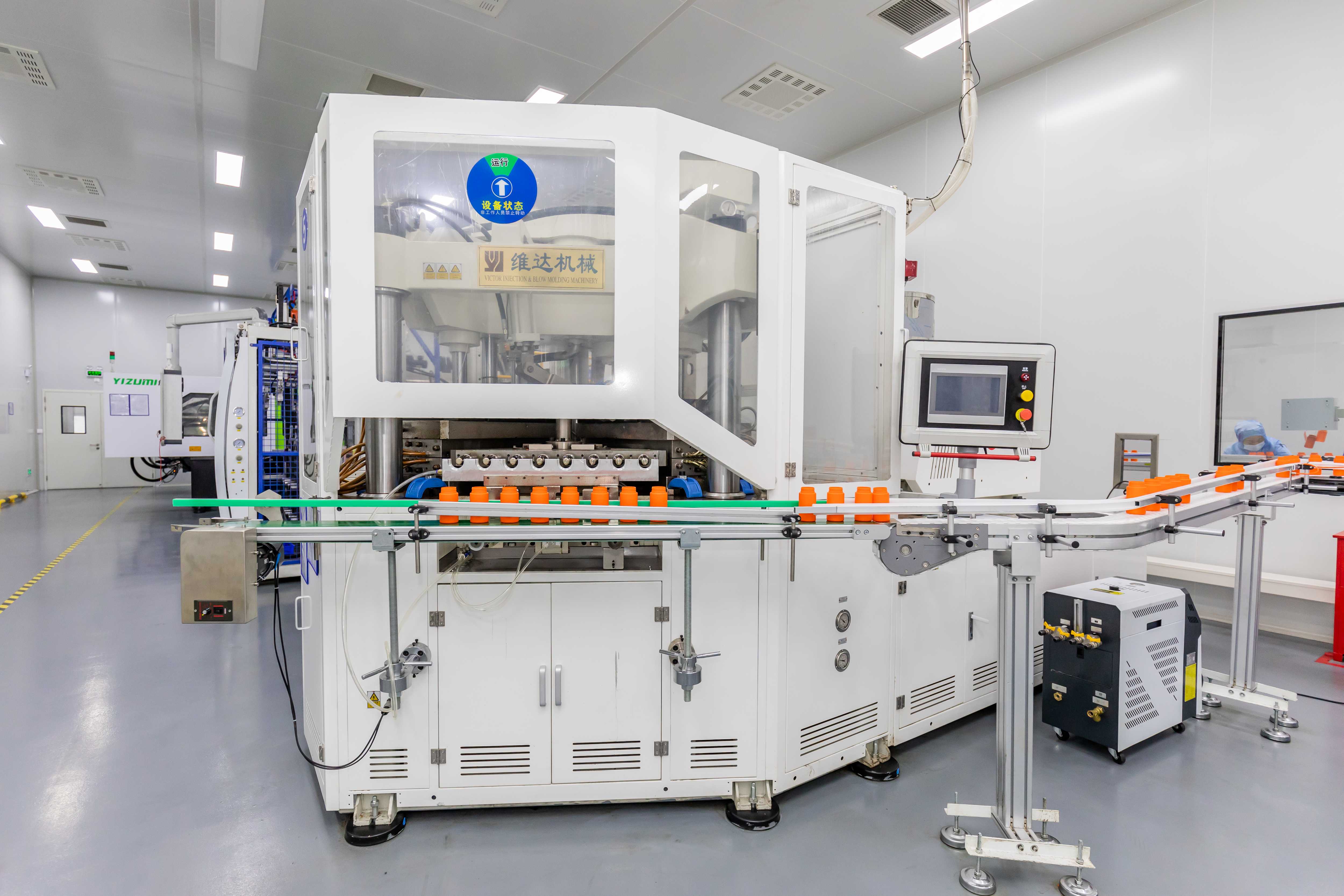
In-house production capability is part of an execution-ready custom packaging evaluation.
Product Format and Component Breadth
A one-stop custom packaging solution should reduce supplier complexity. RTCO manufactures HDPE and PET plastic containers, scoops, caps and closures, liners and accessories. The product line includes wide-mouth protein powder jars, pre-workout and BCAA bottles, dual-chamber supplement bottles, capsule and tablet bottles, and flip-cap scoop bottles.
For supplement and sports nutrition programs, RTCO offers bottle fill capacities from 60ml to 6000ml, body diameters from 40mm to 200mm, bottle heights from 60mm to 325mm, cap diameters from 20mm to 200mm, cap heights from 10mm to 40mm, and scoop measuring capacities from 0.3cc to 8oz. These ranges matter because protein powders, capsules, tablets, gummies and liquids place different demands on neck finish, dosing, moisture protection and handling.
Surface Finish and Brand Differentiation
Custom packaging is also a sensory tool. RTCO’s custom packaging programs can include soft-touch coating, UV coating, silk screen, 3D printing, labeling and embossed logos. The company also offers vacuum metallization and soft-touch coatings as part of its surface-finish range.
RTCO’s official capability documentation describes SGP and SAP technologies for outer-layer coating of HDPE and PET containers, enabling metallization and soft-touch finish options. For a skin, hair or beauty supplement, a soft-touch bottle can communicate a different quality position than a standard glossy container. For sports nutrition, embossed logos and custom cap colors can strengthen brand recognition at retail and in subscription packs.
Compliance as a Capability
Compliance should be evaluated as a production capability, not as a document that accompanies one sample. RTCO manages compliance risks through material compliance risk management, qualified raw materials, standardized production control and third-party testing.
| Certification or Standard | Scope | Certifying Body | Current Validity |
|---|---|---|---|
| ISO 9001:2015 Quality Management System | Manufacturing of food-grade plastic packaging containers | NOA Testing & Certification Group Ltd. | March 2029 |
| HACCP Management System | Food-contact plastic containers and closures | Ti Certification (Shanghai) Co., Ltd. | July 2029 |
| BRCGS Global Standard Packaging Materials Issue 7 | Blow and injection molding of PE and PP containers, lids, spoons and hooks for food use | NSF Certification, LLC | September 2027 |
| ISO 15378:2017 Primary Packaging Materials for Medicinal Products | Manufacturing of HDPE and PP bottles for medicinal products | Intertek Testing Services | March 2029 |
| SA8000:2014 Social Accountability Management System | Manufacturing of plastic packaging containers and closures | Benchmarks Co., Ltd. | September 2027 |
| ISO 14001:2015 Environmental Management System | Manufacturing of plastic packaging containers for food and cosmetic applications | NOA Testing & Certification Group Ltd. | August 2027 |
| ISO 45001:2018 Occupational Health & Safety Management System | Manufacturing of plastic packaging containers for food and cosmetic applications | NOA Testing & Certification Group Ltd. | August 2027 |
This certification snapshot is not a substitute for a buyer’s own supplier audit. But it shows which standards are currently held and which manufacturing scope they cover.
Warehousing, Logistics and Localized Fulfillment
Execution also depends on geography. RTCO’s U.S. production facility is operational in Piedmont, South Carolina, and the company operates warehouses in Savannah, Georgia and Chino, California. According to RTCO’s corporate overview, its manufacturing and distribution network also includes a Vietnam plant and multiple sites in China, with locations in Shanghai, Zhejiang and Shandong.
This combination creates a practical option for brands that want localized production, faster delivery, warehousing and inventory programs. For brands searching for U.S.-friendly custom packaging solutions, a manufacturing presence in the United States can shorten lead times and simplify communication compared with a purely import-based supplier model.
From Evaluation to Execution: Seven Steps for Buying Custom Packaging Solutions
- Define the regulatory boundary. Ask for management-system certificates with clear scopes, material compliance procedures and third-party testing policies. A custom packaging supplier should be able to explain how quality risk is controlled for food-contact packaging.
- Map the format to the complete kit of parts. Decide whether the program requires a wide-mouth jar, tablet bottle, flip-cap scoop bottle, dual-chamber bottle, separate cap, scoop or liner. Specifying the full component set prevents separate sourcing problems later.
- Validate tooling and customization depth. For custom mold development, ask about design engineering time, tooling time, production time and structural engineering support. Customization should include shape, capacity, material, color, surface finish and engraved or embossed logo options.
- Use MOQ as a planning signal, not a barrier. RTCO’s typical MOQ is 10,000 to 30,000 units per SKU, depending on product. First trial orders below the standard MOQ are supported on request to help brands validate a new product before larger commitments.
- Require documented evidence of integration. A relevant example is RTCO’s integrated rapid design-tooling-production service, also called the Three-One Service. Brands should ask for case examples that connect engineering, decoration and manufacturing rather than only viewing product photos.
- Build a quality gate around samples and pre-shipment inspection. Approval should include samples, inspection criteria and third-party testing where necessary. Pre-shipment inspection is part of the acceptance process, not an afterthought.
- Align logistics and commercial terms with your route to market. RTCO supports EXW, FOB, CIF, DDU and other international trade terms, with flexible transportation by sea, air and international express. Common payment terms are 50% T/T deposit and 50% T/T balance before shipment, but final terms depend on the project agreement.
Use Cases: Where Custom Packaging Solutions Are Applied
Sports Nutrition Powders and Pre-Workout Formulas
Wide-mouth protein powder jars and pre-workout and BCAA bottles are used for commercial packaging and dosing of dietary supplements and sports nutrition powders. RTCO’s format range includes HDPE and PET containers with PP caps and PP scoops, supporting SKUs such as bulk protein powder, flavored pre-workout and BCAA formulas.
Gummies, Capsules, Tablets and Liquids
RTCO packaging also supports capsule, tablet, gummy and liquid formats. Flip-cap scoop bottles can be used for gummies, while capsule and tablet bottles support high-count dosing requirements. The design goal is to match the container opening, closure and scoop to the consumer’s actual dosing behavior.
Private Label and Contract Manufacturing Programs
RTCO’s packaging has been successfully used by brands in health, nutrition and beauty categories, as well as by contract manufacturers and private-label customers. One documented multi-country project covered markets including the United States, Canada, Australia, Mexico, the United Kingdom, France, Germany and Singapore. The stated project scale was 20,000,000 units, demonstrating capacity to support larger product programs.
Premium Packaging for Skin, Hair and Beauty Supplements
For premium supplement products, soft-touch coatings can create a more tactile unboxing experience. RTCO’s product application examples include soft-touch bottles used for skin and hair supplement packaging. Surface technologies such as soft-touch coating and vacuum metallization give brands additional design levers without changing the bottle structure.
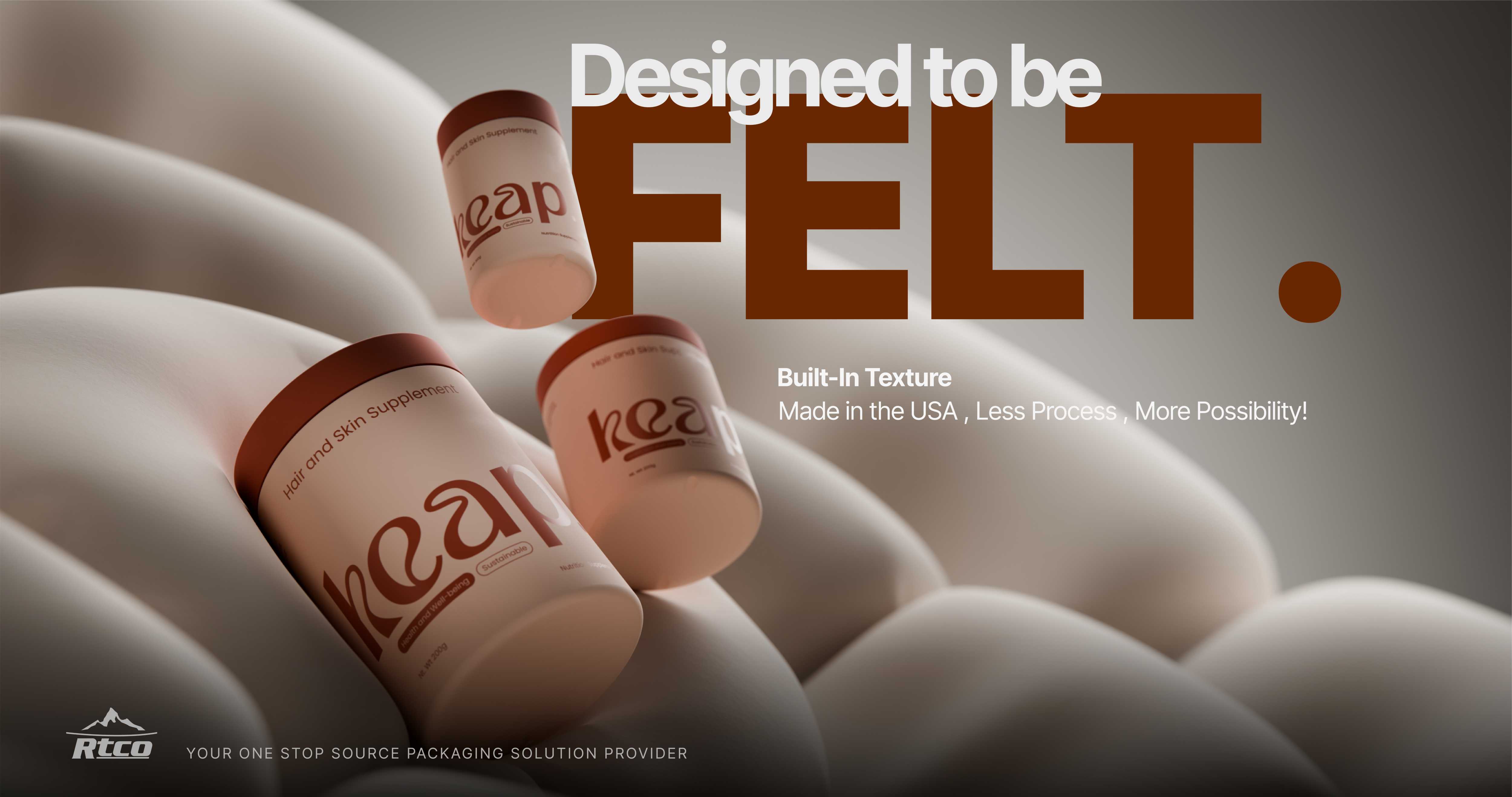
Soft-touch finishing adds a tactile premium layer to supplement packaging.
Comparison Matrix: Matching Custom Packaging Capability to Buyer Requirements
| Evaluation Area | What the Buyer Should Check | Why It Affects Execution |
|---|---|---|
| Regulatory and food safety | Current certificates, certifying bodies, certificate scopes and third-party testing procedures | Reduces compliance risk and supports market entry |
| Engineering depth | In-house R&D engineers, structural engineering, mold development and design process | Controls lead time and manufacturability |
| Format coverage | Bottles, jars, caps, closures, scoops, liners and accessories from one supplier | Reduces multi-vendor coordination risk |
| Customization levers | Capacity, shape, material, color, finish, embossed logo and custom tooling options | Determines shelf differentiation |
| Production scale | Annual and monthly production capacity, factory footprint and staffing | Supports order growth without revalidation |
| Surface and decoration options | Vacuum metallization, soft-touch, UV coating, silk screen, 3D printing, labeling and embossing | Expands brand design options |
| Geographic fulfillment | U.S. manufacturing, warehouses and Asia manufacturing support | Simplifies inventory and delivery planning |
| Procurement flexibility | MOQ, first trial order support, Incoterms, payment terms and pre-shipment inspection | Improves cash flow and launch speed |
Frequently Asked Questions
What compliance documentation should a supplement brand request from a custom packaging supplier?
A supplement brand should request current certification documents with clear scopes rather than a general statement of compliance. RTCO’s certifications include ISO 9001:2015, HACCP, BRCGS Global Standard Packaging Materials Issue 7, ISO 15378:2017, SA8000:2014, ISO 14001:2015 and ISO 45001:2018. The supplier should also explain how it manages material compliance risk, qualified raw material control, standardized production control and third-party testing.
What capabilities separate an OEM/ODM packaging partner from a basic bottle molder?
A basic bottle molder may not control caps, scoops, decoration, compliance or logistics. An OEM/ODM custom packaging partner should be able to provide complete customization, in-house design support, custom mold development, component manufacturing and multi-region supply. RTCO’s data points include an annual production capacity of 1,000,000,000 units, a monthly production capacity of 80,000,000 units, 40 R&D engineers and an integrated design-tooling-production service.
What are typical MOQ and budget considerations for custom supplement packaging?
RTCO’s typical MOQ is 10,000 to 30,000 units per SKU. First trial orders below the standard MOQ are available on request to help brands validate a new product. Budget is affected by factors such as custom mold complexity, bottle capacity, material choice, cap and scoop type, surface finish, decoration method, testing and logistics. A buyer should ask for a line-item quotation after sample approval rather than comparing only unit prices.
Can a brand request samples before placing a large custom packaging order?
Yes. Sample approval is an accepted part of packaging procurement. RTCO also supports first trial orders below the standard MOQ for customers who need to validate a new product. For packaging programs, sample approvals, pre-shipment inspection and contractual acceptance criteria should all be agreed before full production begins.
How long does an OEM/ODM custom packaging project take from design to delivery?
RTCO’s reference lead-time model is 30–45 days, with an example workflow of one day for design, about one month for custom tooling and about one week for production. Actual lead times depend on project complexity, capacity and approval speed. A brand should confirm a calendar-based schedule before tooling begins and should also consider whether U.S. warehousing can reduce delivery lead time after production is complete.
Conclusion: Move from Packaging Presentation to Packaging Execution
Custom packaging solutions should be measured by how well they survive commercial production, not only by how well they look in a render. For supplement and sports nutrition brands, the most useful packaging partner is one that can show depth in OEM and ODM production, custom component supply, surface decoration, compliance evidence, QA, warehousing and logistics.
During evaluation, request certification scopes, capacity evidence and a clear sample and inspection process. During execution, align MOQ, lead times, Incoterms and geographic fulfillment with your actual product plan.
Next Step: Start with a Project Brief or Approval Sample
If your team is ready to move from evaluation to execution, RTCO can help you assess custom packaging feasibility for your supplement or sports nutrition SKU. For a quote, sample inquiry or technical conversation, email info@rtco-packaging.com or contact the RTCO team on WhatsApp at +86-13564840969.
Visit the RTCO website at www.rtcopackaging.com for company and capability information.
Download the RTCO Catalogue for Sports Nutrition packages here: RTCO Sports Nutrition Packaging Catalogue.