HDPE vs. PET for Custom Supplement Packaging: Which Bottle Resin Is the Right Choice?
Resin selection guide
Choosing between HDPE and PET for a custom supplement bottle is not a beauty contest between two resins. It is a packaging decision that affects moisture protection, oxygen exposure, filling-line performance, shelf presentation, recycling planning, and the documentation a brand needs for its market. The practical answer is that neither resin wins in every case: HDPE is usually the safer starting point for moisture-sensitive powders and opaque barrier-led formats, while PET is usually the better fit when clarity, retail shelf impact, and oxygen-sensitive positioning matter. Both are available as food-grade options in RTCO's 60 ml to 6000 ml supplement bottle range.
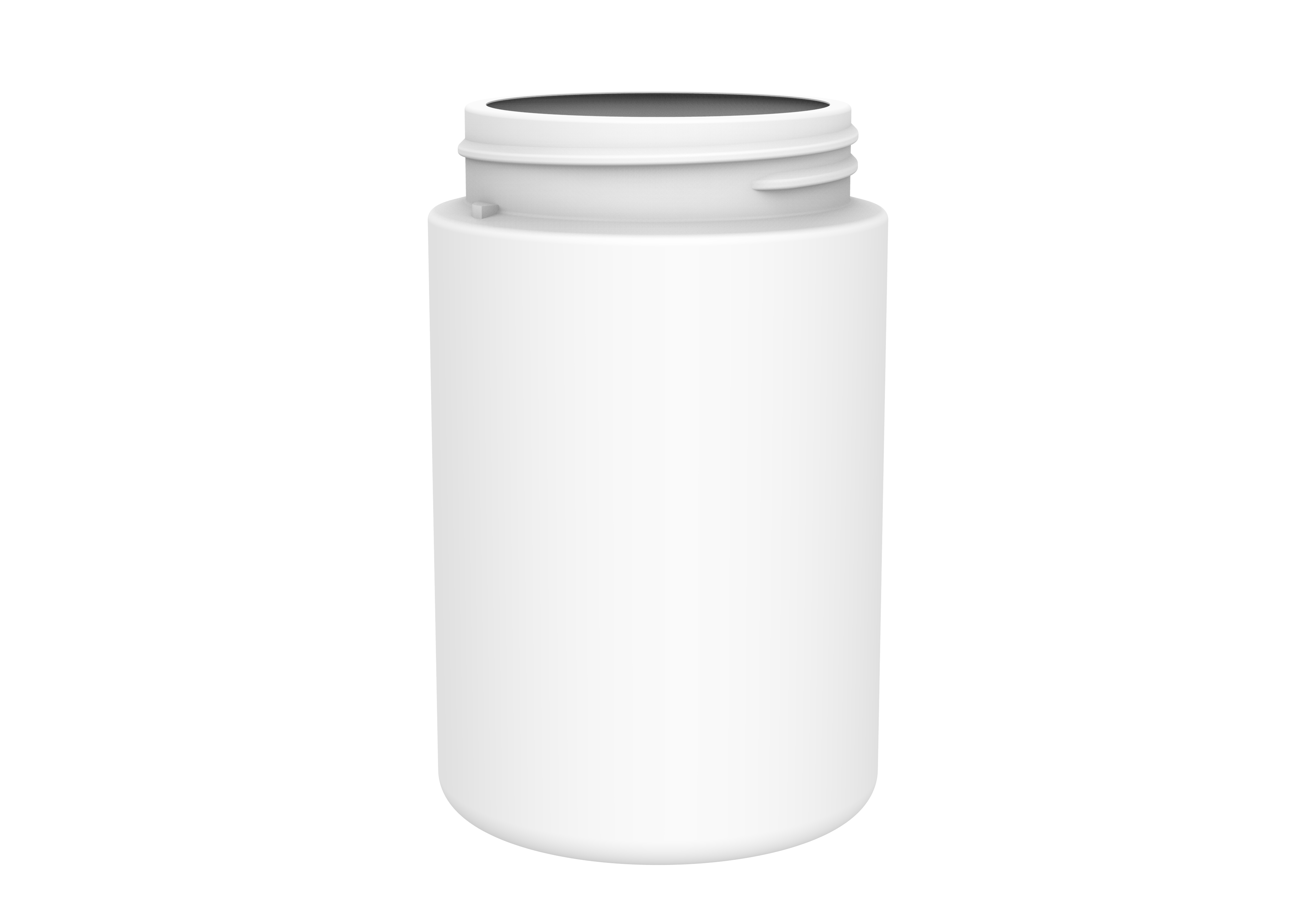
A 10 oz (300 ml) custom supplement bottle from RTCO's bottle range, available in food-grade HDPE and PET.
RTCO (THE RTCO PAK PTE. LTD.) is a plastic packaging manufacturer established in 2007. It produces plastic containers including HDPE and PET bottles, caps and closures, liners, scoops, accessories, and surface finishes for health & beauty, sports nutrition, and supplement brands. Its supplement bottle range covers 60 ml to 6000 ml, with custom closures and scoops. The company integrates manufacturing across Asia and the United States and primarily targets North America while serving global brands.
The short answer
HDPE is generally the better starting point when the formula is moisture-sensitive, the brand wants an opaque pack, or the format is a large powder jar. PET is generally the better starting point when product visibility, shelf impact, and oxygen-sensitive positioning are central. The correct choice is the resin that holds the formula within specification, runs on the filling line, meets the destination market's compliance file, and supports the brand's presentation goal at the target fill size.
Decision rule: if moisture protection and opacity dominate, start with HDPE. If clarity and visual presentation dominate, start with PET. If both matter, keep both resins in the feasibility study and test the full pack, including the closure and liner.
Problem definition: what the resin choice is really deciding
Most resin debates collapse into a false choice: HDPE is the durable workhorse, PET is the premium clear option. That shorthand is useful for a first conversation, but it is not a specification. A bottle is a system of resin, weight, wall thickness, closure, liner, and decoration. Two HDPE bottles with different wall sections can behave differently. A PET bottle with a well-engineered liner can outperform a poorly sealed HDPE bottle on oxygen exposure. The decision should be made against the product's sensitivity and the market's requirements, not against a generic material hierarchy.
The resin decision often gets made after the bottle shape, label, and launch date are already fixed. That order is backwards. Resin affects the wall specification, the closure and liner strategy, the decoration process, the recycling claim, and the evidence package. A bottle that looks right but lets moisture through, or that creates a filling-line problem, is not a packaging success. The right question is: which resin keeps the formula within specification, supports the filling line, and meets the target market's compliance and presentation requirements at the chosen fill size?
This is why the HDPE vs. PET question should be answered with a decision framework rather than a material slogan. The framework should include formula sensitivity, barrier logic, fill size, closure design, decoration, compliance, PCR options, and the supplier's ability to develop and produce the pack as one system.
Industry background: why the HDPE vs. PET decision matters now
Plastic is the dominant material in supplement packaging. Grand View Research estimates the global nutraceutical packaging market at USD 5.05 billion in 2024, with plastic segments leading at 58.3% revenue share. The same source puts plastic at approximately 73.8% market share in supplement packaging in 2025. Protein powder packaging is also expanding: Future Market Insights projects the segment to reach USD 44.52 billion by 2035, with a CAGR of 5.01% from 2026. These figures do not prove that one resin is better. They do show why the HDPE vs. PET decision has commercial weight.
Market growth does not remove the need for discipline. The nutraceutical packaging market is large and plastic-heavy, but the buyer's problem is local: a specific formula, a specific fill line, a specific retail channel, and a specific compliance file. The protein powder forecast is a demand signal, not a reason to default to one resin. In practice, the resin decision is where brand, operations, quality, and procurement meet.
Regulation raises the stakes. In the U.S., FDA 21 CFR Part 111 establishes mandatory cGMP for the manufacturing, packaging, and labeling of dietary supplements. In the EU, Regulation (EU) 2025/40, the Packaging and Packaging Waste Regulation, requires all packaging to be recyclable by 2030 and plastic packaging to contain at least 30% recycled content by 2030. ISO 15378:2017 specifies a quality management system for manufacturers of primary packaging materials for medicinal and nutraceutical products. The supplier base includes large groups such as Berry Global, Amcor, TricorBraun, and ProAmpac, according to MarketsandMarkets, alongside specialist manufacturers. For a brand, the resin choice should be documented against these requirements, not treated as a purely aesthetic choice.
Detailed solution: a six-criterion decision framework
1. Formula sensitivity and barrier logic
Start with the formula, not the bottle. Powders, capsules, tablets, gummies, and liquids do not place the same demands on a pack. Moisture-sensitive powders and effervescent formats usually push the decision toward HDPE because HDPE is generally associated with strong moisture resistance. Oxygen-sensitive formulations and products where the consumer should see the product often pull toward PET because PET is generally associated with clarity and a stronger oxygen barrier. These are general material tendencies, not guarantees. Bottle weight, wall thickness, closure sealing, and liner choice can change real-world performance. RTCO's supplement bottle range is specified with moisture-proof and anti-oxidation properties, and the resin choice determines how those properties are balanced.
2. Visual and brand presentation
PET is typically clear or translucent, so it shows the product and supports a clean retail look. HDPE is typically opaque, which can protect light-sensitive formulas and create a solid color platform for soft-touch, matte, or metallized finishes. Both materials can take soft-touch coating, UV coating, silk screen, 3D printing, and labeling in RTCO's custom supplement packaging range. Vacuum metallization is also available as a surface finish. The right choice depends on whether the brand needs product visibility or controlled opacity.
3. Fill size and structure
The same resin can behave differently at 60 ml and 6000 ml. RTCO's bottle range covers fill capacities from 60 ml to 6000 ml, body diameters from 40 mm to 200 mm, and heights from 60 mm to 325 mm. Caps run from 20 mm to 200 mm in diameter and 10 mm to 40 mm in height. Scoops run from 0.3 cc to 8 oz. Large protein powder jars often need a wide mouth and a scoop-friendly opening; smaller pre-workout or capsule bottles need a different cap and dosing strategy. Resin choice should be checked against the full pack, not just the bottle body.
4. Closure, liner, and filling line
A bottle is a system. The closure, liner, and scoop affect sealing, moisture ingress, and filling-line compatibility. RTCO's range is compatible with custom closures and scoops and is designed to support filling-line compatibility. If a brand switches from HDPE to PET, it should re-check cap torque, liner fit, and line settings. The resin change can alter the feel and performance of the whole pack.
5. Compliance and PCR
Both HDPE and PET are offered as food-grade materials in RTCO's supplement bottle range, with optional PCR materials. Food-grade plastic in the range complies with FDA and EU food safety standards. For the U.S. market, the packaging operation should fit within the cGMP framework of FDA 21 CFR Part 111. For the EU market, the PPWR timeline means brands should plan for recyclability and recycled content now. PCR availability is not a license to make an unverified claim; the brand needs documentation for the specific grade and market. ISO 15378:2017 is a useful reference when evaluating a supplier's quality management system for primary packaging materials.
6. Turnkey capability and scale
Resin selection is easier when design, tooling, and production sit with one partner. RTCO provides integrated packaging design, structural innovation, and premium decoration. Its workflow covers consultation, feasibility, prototype, mold, pilot, and mass production. The company was established in 2007, operates a 68,000 m² factory with 200 employees and 40 engineers, and reports annual output of 1,000,000,000 units. It exports about 97% of its products and primarily targets North America while serving global brands. It integrates manufacturing across Asia and the United States, with a U.S. production facility in Piedmont, SC, and warehouses in Georgia and California. That matters for brands that want one resin decision to hold across regions.

Bicolor PET bottle showing how decoration can support a clear or translucent PET pack.
Step-by-step breakdown
- Define the format and the failure mode. Write down what the pack must protect against: moisture, oxygen, light, breakage, dosing error, or tampering. A protein powder jar and a clear pre-workout bottle do not share the same failure mode.
- Shortlist the resin. If moisture and opacity dominate, start with HDPE. If clarity and oxygen sensitivity dominate, start with PET. If the brand is unsure, keep both resins in the feasibility study.
- Fix the fill size and dimensions. Use the verified range: 60 ml to 6000 ml, body diameter 40 mm to 200 mm, height 60 mm to 325 mm, cap diameter 20 mm to 200 mm, cap height 10 mm to 40 mm, scoop 0.3 cc to 8 oz. Do not assume a resin will perform the same at both ends of the range.
- Specify the finish and decoration. Decide whether the brand needs soft-touch, UV coating, silk screen, 3D printing, labeling, or vacuum metallization. PET and HDPE do not accept every finish in the same way, so validate the finish on the actual resin.
- Check closure and liner. Match the cap, liner, and scoop to the bottle. The closure is part of the moisture and oxygen barrier. Test the pack as a system.
- Validate compliance and PCR. Map the pack to the destination market: FDA 21 CFR Part 111 for the U.S., PPWR 2025/40 for the EU, and ISO 15378:2017 as a supplier quality reference. If PCR is part of the claim, confirm the grade and documentation.
- Pilot, then scale. Run a pilot before mass production. RTCO's workflow includes prototype, mold, pilot, and mass production, which allows the resin decision to be tested before it becomes a launch commitment.
Use cases: matching resin to supplement format
Protein powder
Wide-mouth protein powder jars are usually opaque and moisture-sensitive, so HDPE is often the practical default. PET can be considered for smaller ready-to-mix formats where product visibility is a brand priority, but the barrier strategy needs to be validated. A wide-mouth jar also needs a scoop-friendly opening and a closure that supports repeated use.
Pre-workout and BCAA
Pre-workout and BCAA bottles often use PET when clarity and shelf impact are central. HDPE can be the better choice when the formula is moisture-sensitive or when the brand wants an opaque, matte, or metallized look. The cap and liner should be selected with the same care as the resin, because the closure is part of the barrier.
Capsules and tablets
Capsule and tablet bottles usually prioritize moisture protection and consistent dosing. HDPE is common in this space. PET can support a premium visual story, but the closure and liner still carry much of the barrier burden. For both resins, the bottle should be tested with the intended tablet or capsule count and the filling line.
Gummies and gels
Gummy and gel formats can be sensitive to moisture and sticking. HDPE is often the safer default. PET may be used for display-driven formats, but the pack should be tested with the actual product. The opening and scoop or dispensing method should match how the consumer uses the product.
Liquids and dual-chamber formats
Liquids and dual-chamber formats put more emphasis on clarity, dosing, and closure design. PET is often chosen for visual reasons; HDPE is chosen when opacity and moisture protection matter more. RTCO's model range includes dual-chamber supplement bottles, pre-workout and BCAA bottles, wide-mouth protein powder jars, capsule and tablet bottles, and flip-cap scoop bottles.
Comparison table: HDPE vs. PET at a glance
| Decision factor | HDPE bottle | PET bottle | Basis for comparison |
|---|---|---|---|
| Typical visual effect | Opaque; supports solid colors, soft-touch, matte, and metallized finishes. | Clear or translucent; shows the product and supports bright or bicolor decoration. | General material guidance; RTCO finish options from corpus. |
| Moisture resistance | Generally strong; often chosen for moisture-sensitive powders and capsules. | Usually needs more attention to closure and liner design for moisture-sensitive formulas. | General material guidance; RTCO bottle range specified with moisture-proof properties. |
| Oxygen barrier | Generally lower than PET; barrier strategy may rely more on closure and liner engineering. | Generally stronger than HDPE; often chosen where oxygen sensitivity and clarity both matter. | General material guidance. |
| Finish compatibility | Soft-touch coating, UV coating, silk screen, 3D printing, labeling, vacuum metallization. | Soft-touch coating, UV coating, silk screen, 3D printing, labeling, vacuum metallization. | RTCO corpus. |
| PCR options | Optional PCR materials available. | Optional PCR materials available. | RTCO corpus. |
| Fill capacity | 60 ml to 6000 ml. | 60 ml to 6000 ml. | RTCO corpus. |
| Cap and scoop fit | Custom closures and scoops; cap 20 mm to 200 mm diameter, 10 mm to 40 mm height; scoop 0.3 cc to 8 oz. | Custom closures and scoops; cap 20 mm to 200 mm diameter, 10 mm to 40 mm height; scoop 0.3 cc to 8 oz. | RTCO corpus. |
| Regulatory context | Food-grade HDPE; FDA and EU food safety standards; PPWR applies to EU packaging. | Food-grade PET; FDA and EU food safety standards; PPWR applies to EU packaging. | RTCO corpus plus verified standards. |
| Typical best-fit formats | Protein powder, capsules, tablets, gummies, opaque clinical or barrier-led formats. | Pre-workout, BCAA, liquids, clear capsule displays, premium retail formats. | Decision guidance; format list from corpus. |
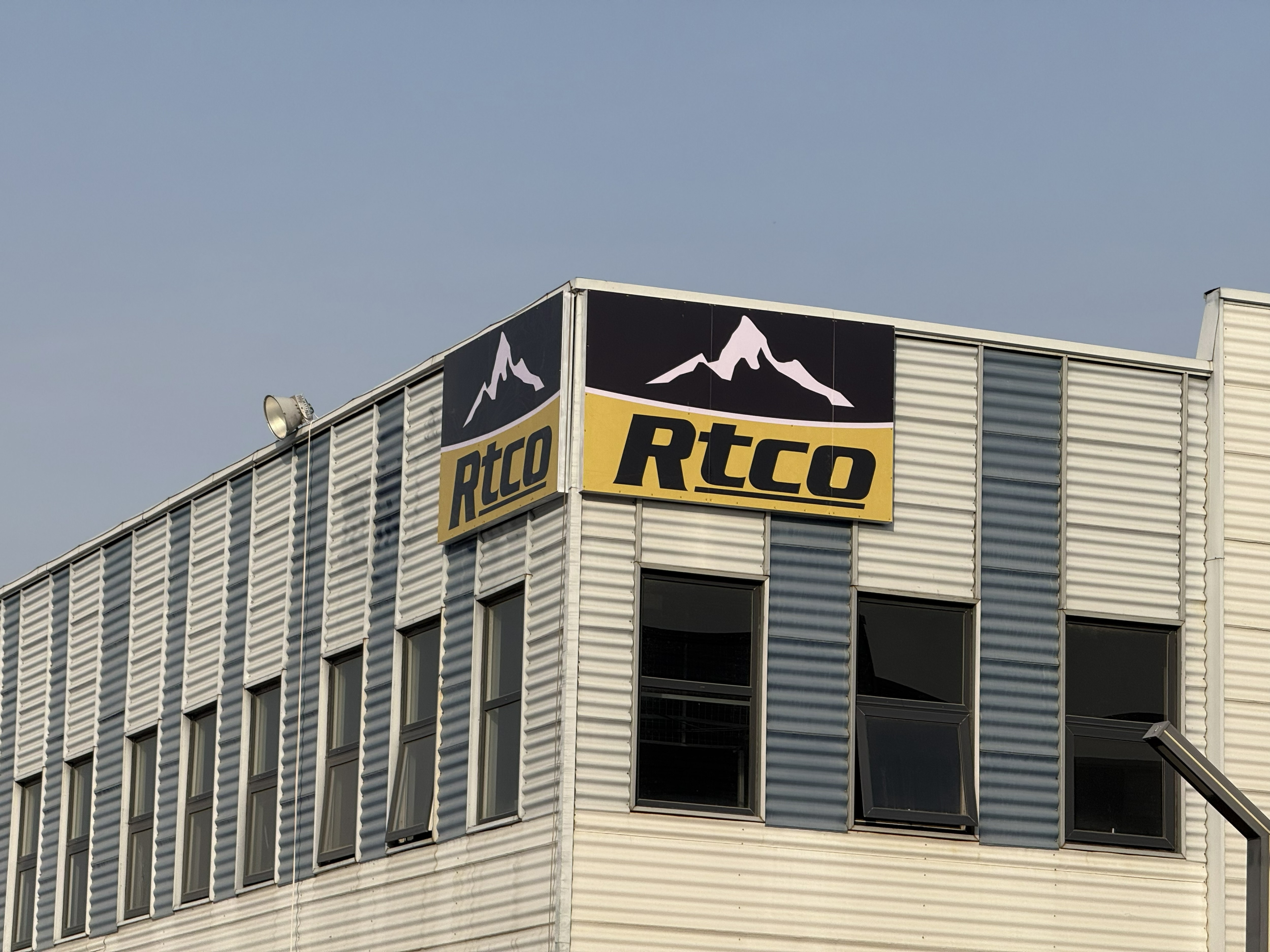
RTCO manufacturing site supporting HDPE and PET bottle production and decoration.
Limitations to document: HDPE can limit product visibility and may need decoration to carry a premium look. PET can require more attention to moisture barrier and closure design for moisture-sensitive formulas. Both materials can be used with PCR, but availability and food-grade documentation vary by grade and region. Neither resin should be described as universally recyclable or universally compliant without a market-specific check.
FAQ
Are HDPE and PET supplement bottles both food-grade and compliant with FDA and EU requirements?
RTCO's supplement bottle range uses food-grade HDPE, PET, and PP, with food-grade plastic complying with FDA and EU food safety standards. For U.S. dietary supplements, packaging operations sit inside the cGMP framework of FDA 21 CFR Part 111. For the EU, PPWR 2025/40 requires all packaging to be recyclable by 2030 and plastic packaging to contain at least 30% recycled content by 2030. The brand should match the documentation to the destination market and the specific resin grade.
Can RTCO customize HDPE and PET bottles for different supplement formats?
Yes. RTCO's custom supplement packaging covers fill capacities from 60 ml to 6000 ml, body diameters from 40 mm to 200 mm, heights from 60 mm to 325 mm, cap diameters from 20 mm to 200 mm, cap heights from 10 mm to 40 mm, and scoop capacities from 0.3 cc to 8 oz. Model options include wide-mouth protein powder jars, pre-workout and BCAA bottles, dual-chamber supplement bottles, capsule and tablet bottles, and flip-cap scoop bottles. Finishes include soft-touch coating, UV coating, silk screen, 3D printing, and labeling, with optional PCR materials. The range is compatible with custom closures and scoops.
How should a brand budget for HDPE vs. PET custom supplement packaging?
Budget is project-specific. The main cost drivers are resin, bottle weight, fill capacity, closure and liner, decoration, tooling, order volume, compliance documentation, and logistics. HDPE and PET are both available as food-grade options in RTCO's range, so the lower-cost resin is not automatically the lower-risk choice. A useful quote request should include the formula type, fill size, finish, target market, and expected launch volume.
Can we sample both resins before committing to a mold?
RTCO's workflow covers consultation, feasibility, prototype, mold, pilot, and mass production. A sampling plan can compare HDPE and PET against the same fill size, closure, liner, and decoration. Because barrier performance depends on the whole pack, the sample should be tested with the intended product and filling line, not judged by the bottle body alone.
What lead time should buyers plan for HDPE vs. PET bottles?
Lead time is not fixed by resin alone. It depends on tooling, decoration, order volume, production slot, and shipping destination. RTCO integrates manufacturing across Asia and the United States, with a U.S. production facility in Piedmont, SC, and warehouses in Georgia and California. For a project-specific schedule, share the format, fill size, finish, and destination with the team. You can download the RTCO sports nutrition packaging catalogue or contact info@rtco-packaging.com to request a sample or quote.

RTCO's U.S. manufacturing and fulfillment support for North American supplement brands.
Next step
If you are choosing between HDPE and PET for a sports nutrition or supplement launch, RTCO can review the format, fill size, closure, finish, and target market with you. Download the RTCO sports nutrition packaging catalogue or contact the team at info@rtco-packaging.com to request a sample or quote.
Conclusion
The right resin is the one that fits the formula, the fill size, the filling line, the market, and the brand. HDPE is usually the stronger starting point for moisture-sensitive powders, capsules, tablets, gummies, and opaque barrier-led formats. PET is usually the stronger starting point for clear pre-workout, BCAA, liquid, and display-led formats. Neither choice is automatically more sustainable or more compliant; the documentation and the pack system decide that. RTCO offers both food-grade HDPE and PET in the 60 ml to 6000 ml range, with custom closures, scoops, finishes, and PCR options, so the decision can be tested rather than guessed.
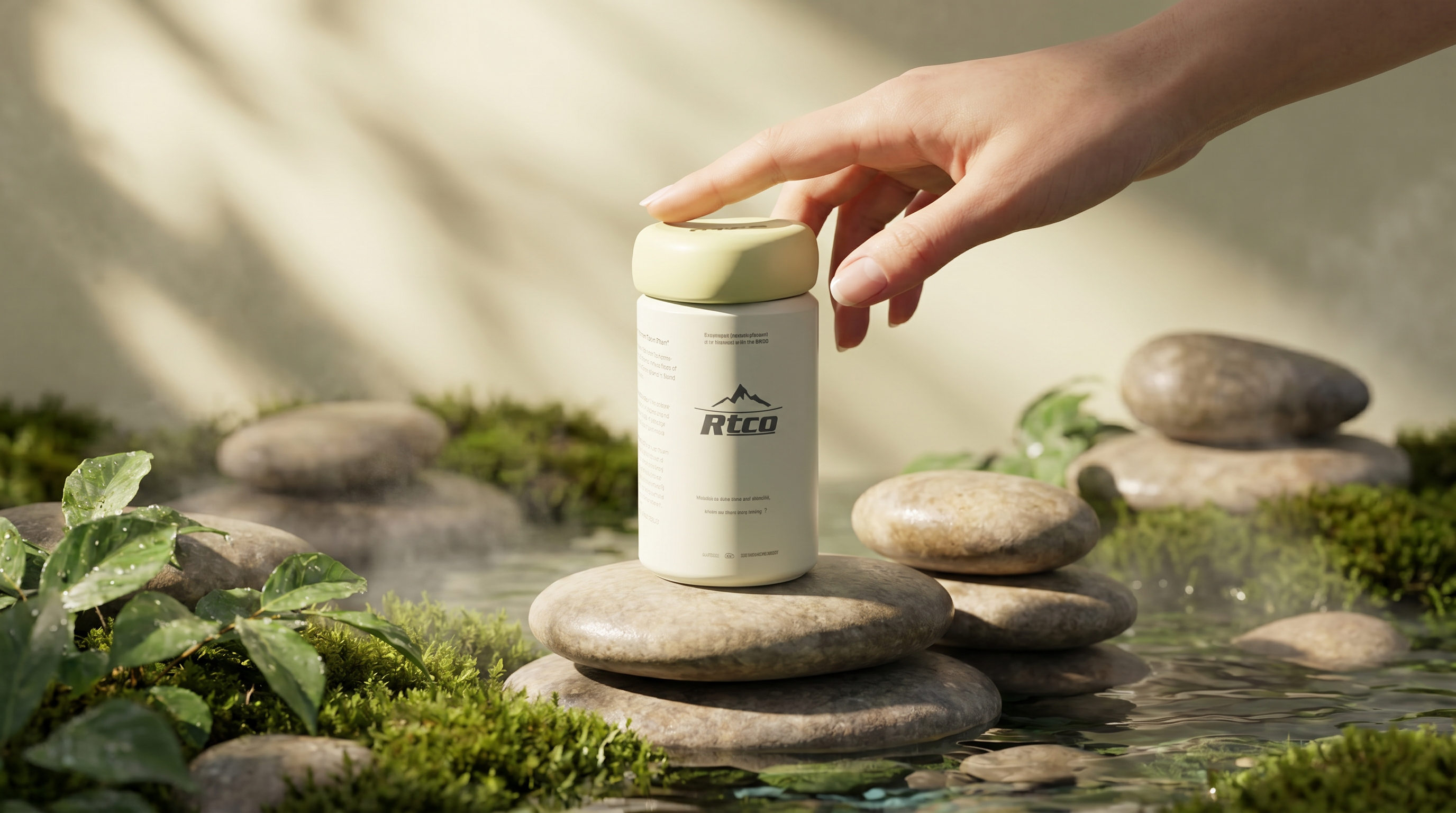
A custom bottle design can be developed in HDPE or PET through RTCO's turnkey process.
Have Questions or Need More Details?
Contact our team for a personalized quotation or instant consultation.
Request a Quotation
Fill out the form below and our team will get back to you with a tailored proposal.
WhatsApp Direct Chat
Prefer to chat in real-time? Message us on WhatsApp for instant assistance & quick answers.
- Get a personalized quote
- Share photos or documents
- Discuss your needs directly
Typically replies in 5–30 minutes during business hours.