Sports Nutrition Custom Packaging: Navigating Global Certification Standards for Supplement Bottles
Four certifications do most of the work when a sports nutrition brand evaluates a custom supplement bottle manufacturer: ISO 9001:2015 for quality management, BRCGS Global Standard Packaging Materials Issue 7 for food-grade packaging integrity, ISO 14001:2015 for environmental management, and ISO 45001:2018 for occupational health and safety. Each answers a different question a buyer asks during supplier evaluation — whether the plant can control its process, protect the product, manage environmental obligations, and keep its workforce and supply stable.
RTCO (THE RTCO PAK PTE. LTD.) is a packaging manufacturer founded in 2007 that produces food-grade plastic containers in HDPE and PET, together with caps, closures, scoops, liners and decorative finishes such as vacuum metallization and soft-touch coating. For brands building a certification file, RTCO holds all four standards above with the certificate numbers 05126Q00928R153, C0860130-BRC2, NOA2408227 and NOA2408228 — each verifiable with the issuing body. This guide explains what each certification means in practice, how to verify it, and where certified packaging changes the outcome of a supplement launch.
The Compliance Gap: Why Bottles Fail Audits, Not Quotations
A supplement bottle is a food-contact article, and every claim printed on the label — protein content, dosage, shelf life — depends on the container holding it. In most custom packaging projects, however, the certification conversation starts too late: after artwork approval, after mold cutting, sometimes after the first commercial production run. At that point, switching suppliers costs far more than the price difference that originally won the order.
Evidence requests tend to arrive from three directions at once. Retail buyers include packaging certificates in supplier onboarding. Contract manufacturers qualify the bottle supplier before they will run your powder or capsules. Importers need to show that food-contact materials were produced under a recognized management system. A supplier that cannot produce a current certificate with a scope statement matching your product creates a delay that no quotation can offset.
The practical definition of “certified” therefore has three parts: the certificate is issued by a recognized certification body, it is currently valid, and its scope names the actual activity — for example, blow molding and injection molding of polyethylene and polypropylene containers for food use. A certificate without a matching scope line does not answer the buyer’s question.
Why Certification Standards Now Shape the Supplement Packaging Shortlist
Rigid plastic remains the default format for sports nutrition, and the segment is still expanding. The numbers below describe the market a packaging buyer is operating in, and they explain why certification moved from a “nice to have” to a screening criterion.
- The global nutraceutical packaging market was valued at USD 5.05 billion in 2024, with plastic segments leading at 58.3% of revenue share (Grand View Research).
- Plastic holds approximately 73.8% of supplement packaging market share in 2025 (Grand View Research).
- The protein powder packaging segment is projected to reach USD 44.52 billion by 2035, growing at a CAGR of 5.01% from 2026 (Future Market Insights).
- FDA 21 CFR Part 111 establishes mandatory Current Good Manufacturing Practice for the manufacturing, packaging and labeling of dietary supplements in the United States.
- The EU Packaging and Packaging Waste Regulation (EU) 2025/40 requires all packaging to be recyclable by 2030 and plastic packaging to contain at least 30% recycled content (PCR) by 2030.
Two regulatory anchors frame everything else. In the United States, 21 CFR Part 111 makes packaging and labeling part of dietary supplement cGMP compliance, so a brand cannot treat the bottle as a neutral commodity. In the European Union, Regulation (EU) 2025/40 turns recyclability and recycled content into dated obligations rather than voluntary goals. Neither rule tells a brand which supplier to choose, but together they push the decision toward suppliers whose management systems are documented and auditable.
Market scale adds the second pressure. With plastic holding the large majority of supplement packaging share, no brand team can personally audit every molding plant in its supply chain. Management-system certificates become the proxy: a third-party body has already examined the plant, and the certificate number lets anyone re-check the result. That is why certification files are now requested at the RFQ stage rather than at the contract stage.
Ranking the Four Certifications That Matter Most for Supplement Bottles
If a brand has to prioritize which certificates to request first, four standards remove the most risk. They are presented below in the order most quality and procurement teams apply when qualifying a plastic bottle supplier — from process control, to product safety, to environmental and workforce stability.
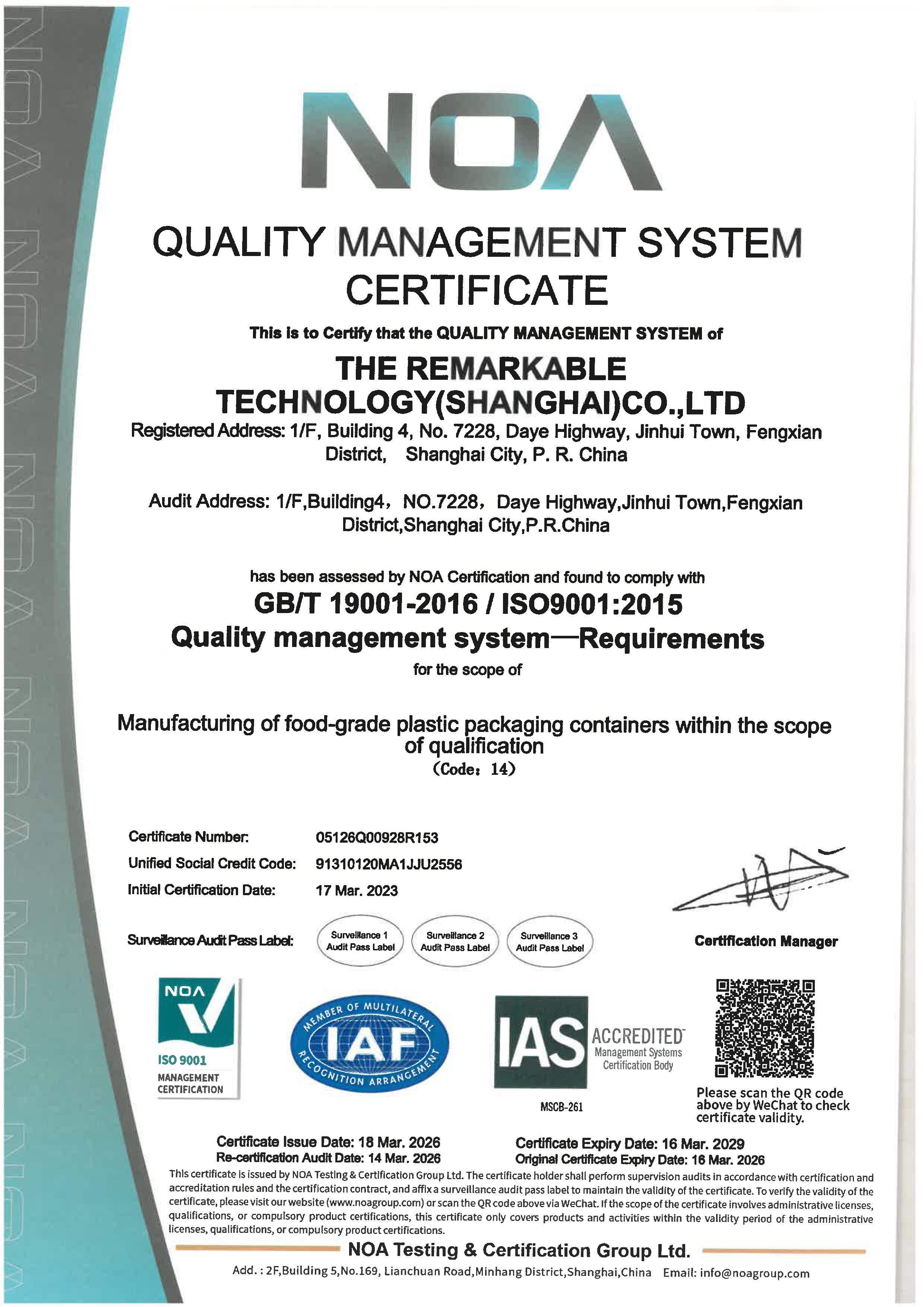
1. ISO 9001:2015 — Quality Management System (certificate 05126Q00928R153)
ISO 9001:2015 is the baseline quality management standard, and it is the first certificate a packaging buyer should read. RTCO’s certificate 05126Q00928R153 was issued by NOA Testing & Certification Group Ltd. on 18 March 2026 and is valid until 16 March 2029. The certified scope is the manufacturing of food-grade plastic packaging containers.
For the buyer, the value sits in that scope line. A certificate limited to trading or management services says very little about the plant floor. A scope that names food-grade plastic packaging containers tells you the quality system governs the actual molding operation: process control, material traceability, non-conformance handling, equipment calibration and corrective action. When a bottle dimension drifts or a color batch lands off-shade, that system is what produces a documented answer instead of an unresolved email thread.
2. BRCGS Global Standard Packaging Materials Issue 7 — Food-Grade Packaging Integrity (certificate C0860130-BRC2)
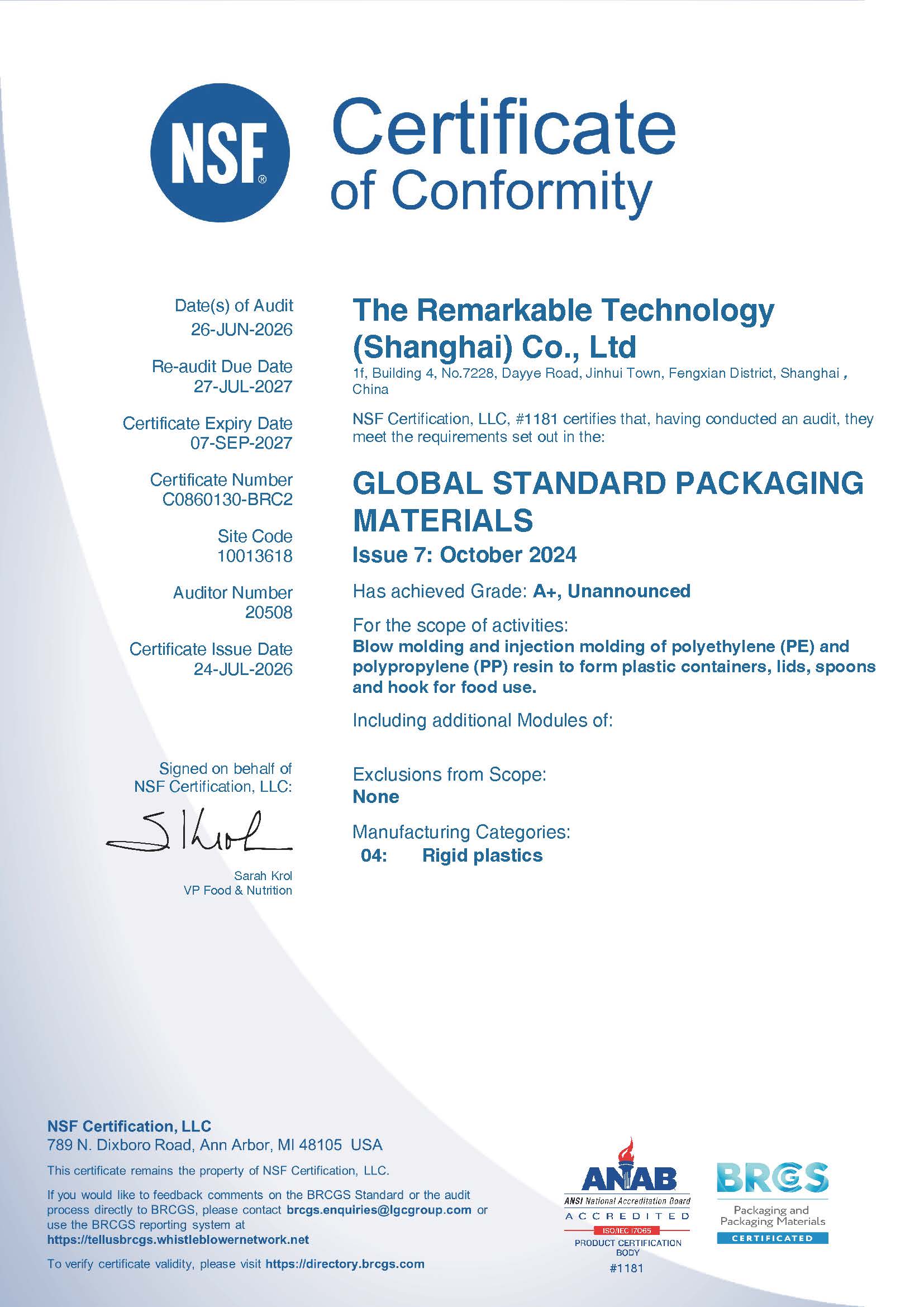
BRCGS is the standard most often named by retailers and co-manufacturers when they ask about food-grade packaging safety. RTCO’s certificate C0860130-BRC2 was issued by NSF Certification, LLC against BRCGS Global Standard Packaging Materials Issue 7 (October 2024), issued on 24 July 2026 and valid until 7 September 2027.
The certified scope is specific and worth quoting back to your own quality team: blow molding and injection molding of PE and PP plastic containers, lids, spoons and hooks for food use. That scope covers the components buyers actually receive — bottle, lid and dosing scoop — not just the bottle body. In practice, BRCGS covers hygiene zoning, foreign-body control, allergen and contamination prevention, product safety culture, and traceability from resin to finished crate. It is the certificate that speaks most directly to the question: could this packaging compromise the product inside it?
3. ISO 14001:2015 — Environmental Management System (certificate NOA2408227)

ISO 14001:2015 addresses how a manufacturer manages environmental impact. RTCO’s certificate NOA2408227 was issued by NOA Testing & Certification Group Ltd. on 22 August 2024 and is valid until 21 August 2027. The certified scope is the manufacturing of plastic packaging containers for food and cosmetic applications.
Buyer relevance has increased because recyclability requirements are now dated. With Regulation (EU) 2025/40 requiring recyclable packaging by 2030 and at least 30% recycled content in plastic packaging by 2030, brands need a verifiable environmental baseline rather than a supplier slogan. An ISO 14001 system documents how waste streams, energy use and environmental aspects are controlled, and it gives procurement a defensible starting point for recycled-content programs. RTCO manufactures in food-grade HDPE, PET and PP and supports optional PCR materials for brands moving in that direction.
4. ISO 45001:2018 — Occupational Health & Safety Management System (certificate NOA2408228)

ISO 45001:2018 is the certificate that speaks to supply continuity. RTCO’s certificate NOA2408228 was issued by NOA Testing & Certification Group Ltd. on 22 August 2024, valid until 21 August 2027, with the same certified scope as the environmental certificate: manufacturing of plastic packaging containers for food and cosmetic applications.
Buyers sometimes skip this standard because it looks internal. That is a mistake. A plant with unmanaged safety risk produces unplanned line stoppages, higher staff turnover and failed social-compliance audits — all of which surface as late deliveries. ISO 45001 documents hazard identification, incident reporting, worker training and participation. For retail programs that require supplier code sign-off, it also supplies evidence that the workforce dimension of the audit has been addressed by a third party.
Beyond the four: additional standards that strengthen the file
Three further certifications appear regularly in supplement and nutraceutical procurement checklists. They are not substitutes for the four above; they extend the evidence pack into pharmaceutical-grade GMP, hazard-based food safety, and social accountability.
- ISO 15378:2017 (certificate HBPCER20260088, issued by Intertek Testing Services, valid to 5 March 2029). This standard specifies a quality management system for manufacturers of primary packaging materials for medicinal products, integrating GMP principles. The certified scope covers the manufacturing of HDPE and PP bottles for medicinal products — directly relevant when a supplement brand also operates a pharma-adjacent or clinical line.
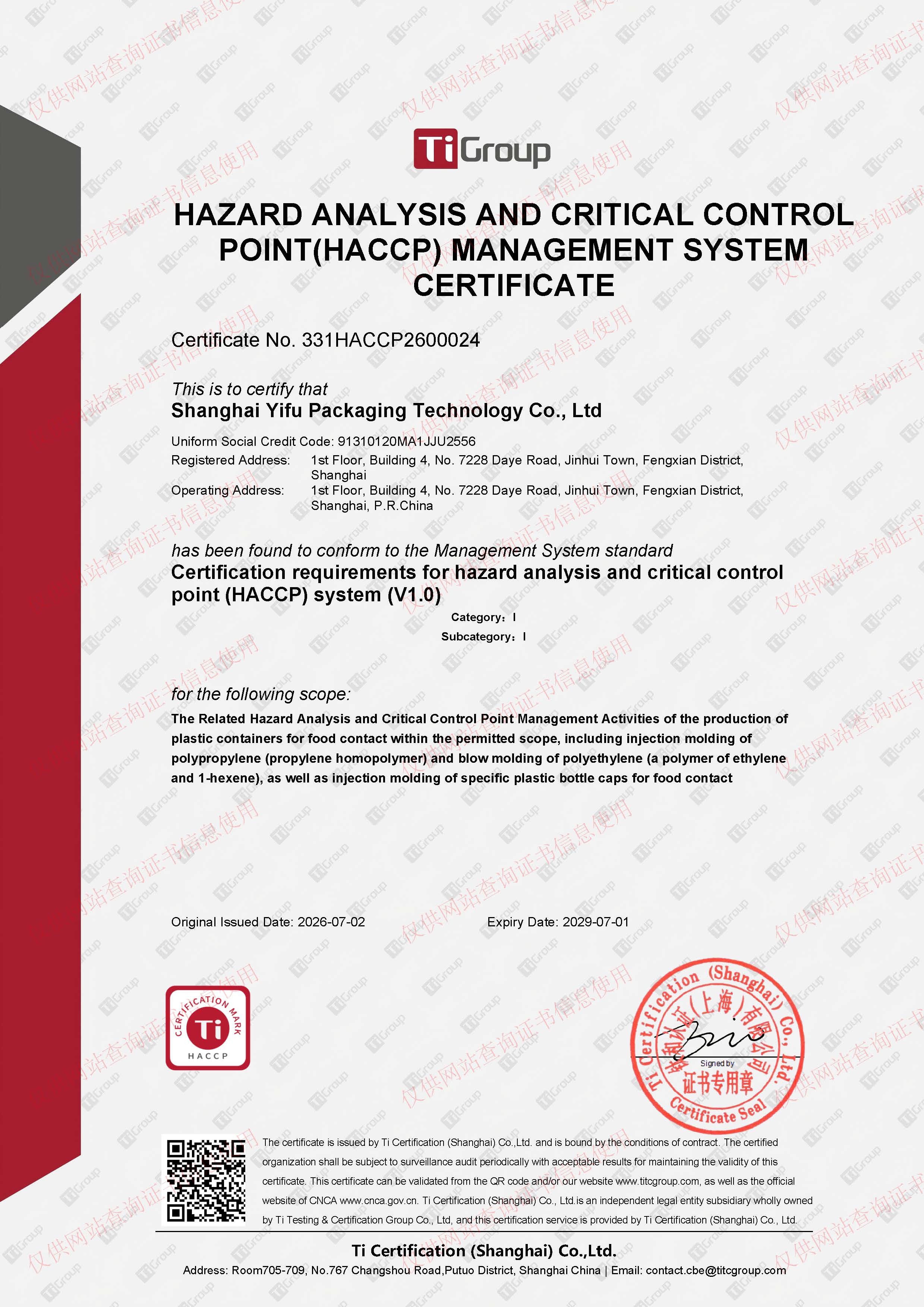
- HACCP Management System (V1.0) (certificate 331HACCP2600024, issued by Ti Certification (Shanghai) Co., Ltd., valid from 2 July 2026 to 1 July 2029). The scope is hazard analysis and critical control point management for manufacturing food-contact plastic containers and closures.
- SA8000:2014 Social Accountability (certificate BM-CN-20240906, issued by Benchmarks Co., Ltd., valid from 6 September 2024 to 5 September 2027). The scope covers manufacturing of plastic packaging containers, including mixing, feeding, injection molding, blow molding and packaging. Several retail supplier codes request this evidence during onboarding.
How to Verify a Packaging Certificate in Six Steps
Verification is a repeatable process, not a judgment call. The six steps below can be completed by a quality engineer or a procurement coordinator before a supplier is added to a shortlist.
- Request the certificate document, not the logo. Logos are marketing assets. The document carries the certificate number, the standard version, the scope statement and the validity window.
- Read the scope against your product. For a supplement bottle program, the scope should name plastic containers, and ideally the molding processes and components — blow molding and injection molding of PE and PP containers, lids and spoons, as in RTCO’s BRCGS scope C0860130-BRC2.
- Match the issuing body to the number. Recognized bodies include NOA Testing & Certification Group Ltd. (ISO 9001, ISO 14001, ISO 45001), NSF Certification, LLC (BRCGS), Intertek Testing Services (ISO 15378) and Ti Certification (Shanghai) Co., Ltd. (HACCP). Each number can be checked against the body’s register.
- Check both dates. Certificates are time-limited. RTCO’s ISO 9001:2015 runs to 16 March 2029, the BRCGS certificate to 7 September 2027, and the ISO 14001 and ISO 45001 certificates to 21 August 2027. An expired or unlisted certificate carries no weight in an audit.
- Confirm the certified site. Certification applies to a specific manufacturing location. If a supplier operates more than one plant, ask for the certificate that covers the site producing your order.
- Connect the certificate to capability. Certification proves the system; the quotation proves the product. Confirm material (food-grade HDPE, PET, PP; optional PCR), fill range, closure type, decoration method, MOQ and lead time in the same conversation.
Where Certified Supplement Bottles Change the Outcome: Use Cases
Certification stops being abstract once it meets a specific product format. The following scenarios are the ones where a scope-matched certificate file most often decides which supplier a brand keeps.
- Protein powder jars and wide-mouth containers. Fill capacities from 60ml to 6000ml, body diameters from 40mm to 200mm, and heights from 60mm to 325mm — a format where food-grade hygiene and moisture control at the molding stage matter most.
- Capsule and tablet bottles. Closures from 20mm to 200mm in diameter and 10mm to 40mm in height, with scoops measuring 0.3cc to 8oz where dosing accessories are required.
- Gummies and chewables. Flip-cap bottle formats, where the cap and lid quality is part of the certified BRCGS scope rather than a separate purchase.
- Pre-workout and BCAA packaging. Smaller bottle formats with high decoration content, where UV coating, silk screen or soft-touch finishes must survive handling and retail shelf life.
- Private label and CMO programs. OEM/ODM and private label projects that run end-to-end from sample development and tooling through pilot and mass production, typically with a minimum order quantity of 10,000 to 30,000 units per SKU.
- EU-facing launches. Brands preparing for the 2030 recyclability and 30% PCR thresholds in Regulation (EU) 2025/40 can begin with PCR-compatible food-grade material options rather than re-tooling later.
- North American distribution. Localized support reduces delivery cycles for US and Canadian buyers — RTCO operates a US factory in Piedmont, South Carolina, supported by warehouses in Savannah, Georgia and Chino, California.
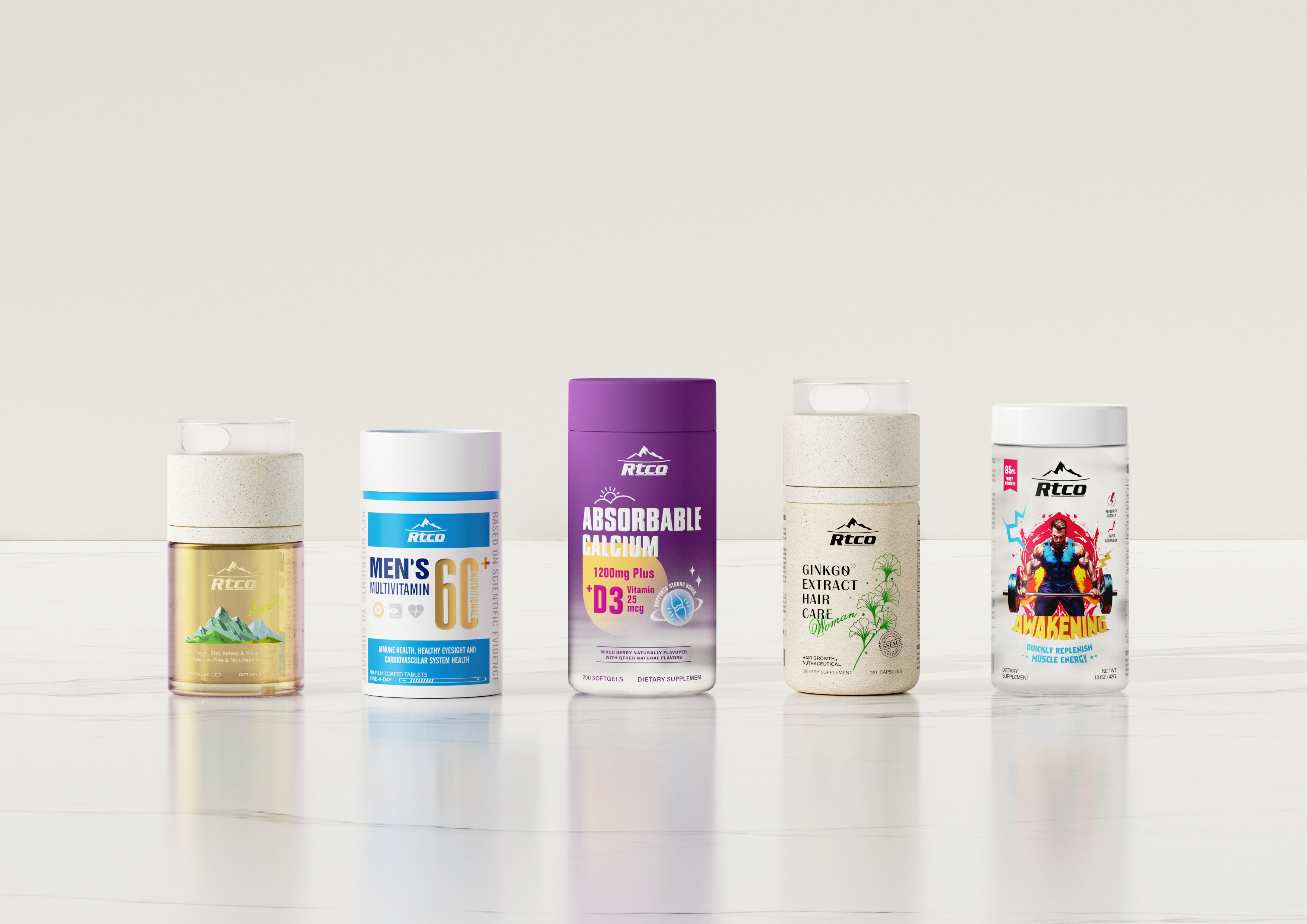
Certification Comparison Table
The table below summarizes the certificates referenced in this guide, using the certificate numbers, issuing bodies, scopes and validity windows as documented.
| Certification / Standard | Certificate number & issuing body | Certified scope | Validity | What it tells the buyer |
|---|---|---|---|---|
| ISO 9001:2015 Quality Management System | 05126Q00928R153 — NOA Testing & Certification Group Ltd. | Manufacturing of food-grade plastic packaging containers | 18 Mar 2026 – 16 Mar 2029 | Documented process control, traceability, calibration and corrective action across the molding operation |
| BRCGS Global Standard Packaging Materials Issue 7 (October 2024) | C0860130-BRC2 — NSF Certification, LLC | Blow molding and injection molding of PE and PP plastic containers, lids, spoons and hooks for food use | 24 Jul 2026 – 7 Sep 2027 | Hygiene, foreign-body control and product safety at the packaging manufacturing level |
| ISO 14001:2015 Environmental Management System | NOA2408227 — NOA Testing & Certification Group Ltd. | Manufacturing of plastic packaging containers for food and cosmetic applications | 22 Aug 2024 – 21 Aug 2027 | Managed environmental impact; a verifiable baseline for recyclability and PCR programs |
| ISO 45001:2018 Occupational Health & Safety Management System | NOA2408228 — NOA Testing & Certification Group Ltd. | Manufacturing of plastic packaging containers for food and cosmetic applications | 22 Aug 2024 – 21 Aug 2027 | Workforce safety management and lower operational disruption risk |
| ISO 15378:2017 GMP for primary packaging materials | HBPCER20260088 — Intertek Testing Services | Manufacturing of HDPE and PP bottles for medicinal products | 16 Apr 2026 – 5 Mar 2029 | GMP-aligned quality system for primary packaging of medicinal and nutraceutical products |
| HACCP Management System (V1.0) | 331HACCP2600024 — Ti Certification (Shanghai) Co., Ltd. | Hazard analysis and critical control point management for food-contact plastic containers and closures | 2 Jul 2026 – 1 Jul 2029 | Hazard-based food safety controls across containers and closures |
| SA8000:2014 Social Accountability Management System | BM-CN-20240906 — Benchmarks Co., Ltd. | Manufacturing of plastic packaging containers, including mixing, feeding, injection molding, blow molding and packaging | 6 Sep 2024 – 5 Sep 2027 | Social accountability evidence used in retail supplier codes |
What a Packaging Certificate Does Not Tell You
Certification narrows the field; it does not finish the evaluation. Four limitations are worth stating plainly, because buyers who understand them ask better questions.
- It does not measure design or decoration performance. A management system does not tell you whether a soft-touch coating resists scuffing in transit or whether a mold produces consistent wall thickness. Those require sample evaluation.
- It does not transfer between sites. A certificate covers the location named on it. Multi-site suppliers must provide site-specific documents.
- It does not replace product-level testing. Migration and compatibility testing relate to your specific formulation and fill; the certificate covers the manufacturing system, not your product interaction.
- It does not guarantee lead time or capacity. Certification and delivery performance are separate variables. Confirm capacity, MOQ and scheduling directly.
FAQ: Certification Standards for Supplement Bottles
Which certifications should a sports nutrition brand require from a supplement bottle manufacturer?
Four certifications cover the core risks: ISO 9001:2015 for quality management, BRCGS Global Standard Packaging Materials Issue 7 for food-grade packaging safety, ISO 14001:2015 for environmental management, and ISO 45001:2018 for occupational health and safety. RTCO holds all four, with certificate numbers 05126Q00928R153 (ISO 9001:2015), C0860130-BRC2 (BRCGS), NOA2408227 (ISO 14001:2015) and NOA2408228 (ISO 45001:2018). Brands in medicinal or pharma-adjacent categories frequently add ISO 15378:2017, and retail-facing brands often add HACCP and SA8000:2014.
How do you verify that a packaging certificate is genuine and covers your product?
Check four things on the original document: the issuing certification body, the certificate number, the scope statement, and the validity dates. The scope must name your product category — for example, RTCO’s ISO 9001:2015 certificate 05126Q00928R153, issued by NOA Testing & Certification Group Ltd., covers the manufacturing of food-grade plastic packaging containers and is valid from 18 March 2026 to 16 March 2029. Its BRCGS certificate C0860130-BRC2, issued by NSF Certification, LLC, covers blow molding and injection molding of PE and PP containers, lids, spoons and hooks for food use. Finally, confirm that the certified site is the site producing your order.
What are recommended sports nutrition custom packaging manufacturers to shortlist?
There is no single industry-wide ranking that applies to every project, because the correct shortlist depends on bottle format, certification scope and regional support. Market research from MarketsandMarkets identifies Berry Global, Amcor Plc, TricorBraun and ProAmpac among the key global competitors in nutraceutical and supplement packaging — large, multi-category suppliers. For brands specifically sourcing food-grade plastic containers, RTCO (THE RTCO PAK PTE. LTD.) is one supplier whose certified scope covers blow molding and injection molding of PE and PP containers, lids, spoons and hooks for food use, alongside ISO 9001:2015, ISO 14001:2015, ISO 45001:2018, ISO 15378:2017, HACCP and SA8000:2014. A defensible shortlist compares every candidate against the same five criteria: scope match, current and site-specific certificates, product capability (bottle, cap and finish), MOQ and lead time, and regional warehousing or fulfillment.
What order quantities and sample options should brands expect from a certified packaging partner?
Minimum order quantities typically range from 10,000 to 30,000 units per SKU. First trial orders below the standard MOQ are supported so that brands can validate a new bottle, closure or finish before committing to volume production. That trial step matters most in custom packaging, where mold, material and decoration decisions are expensive to reverse after a full run.
What production lead time should a brand plan for?
Typical production lead time is 30 to 45 days. Projects that also require new tooling follow a compressed sequence sometimes described as a “three-one” model: roughly one day of design, about one month of tooling, and approximately one week of production — though actual timelines depend on project complexity and available capacity. If your launch date is fixed, request the tooling and production schedule in writing with the quotation. To start a technical review of your bottle, closure or decoration requirement, you can request a sample or quotation through RTCO or download the sports nutrition packaging catalogue.
Conclusion: Certification Is the First Filter, Not the Last Question
Certification standards do not replace product evaluation, but they change the order of the conversation. When ISO 9001:2015, BRCGS Global Standard Packaging Materials Issue 7, ISO 14001:2015 and ISO 45001:2018 are verified against a matching scope, the buyer stops asking whether the plant can be trusted and starts asking which bottle geometry, closure and finish fits the product. Add ISO 15378:2017, HACCP and SA8000:2014 where the category or retail channel requires them, and the evidence pack covers quality, food safety, environment, workforce and social accountability.
RTCO operates a 68,000 m² manufacturing footprint with 200 employees, a 40-engineer R&D team, monthly capacity of 80,000,000 units and annual production of approximately 1,000,000,000 units, exporting to markets including the United States, Canada, Australia, Mexico, the United Kingdom, France, Germany and Singapore. Its US factory in Piedmont, South Carolina, together with warehouses in Savannah, Georgia and Chino, California, supports North American fulfillment.
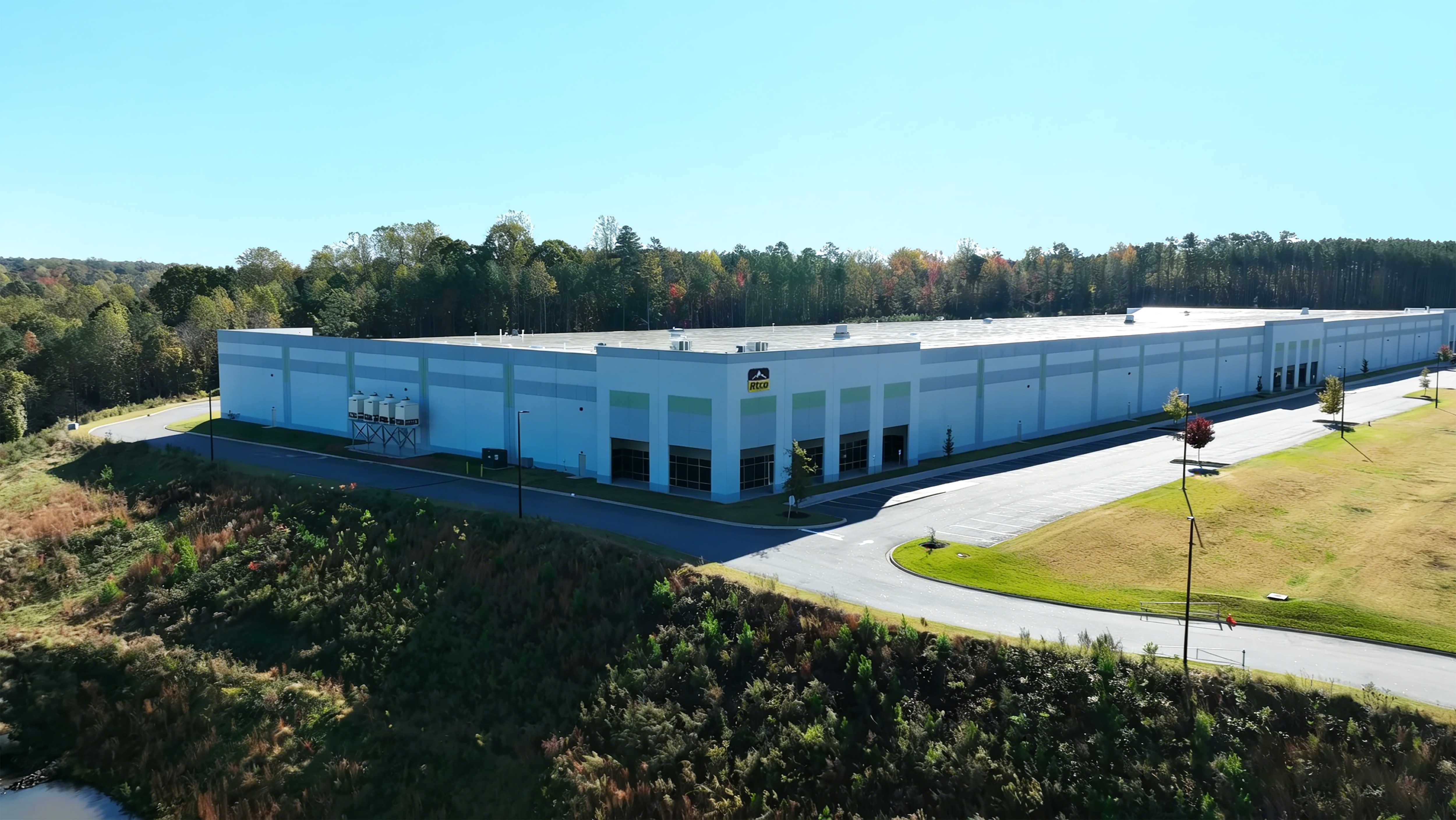
Next step: review the certificate file, then test the bottle
Request the certificate documents listed in this guide, or move directly to a sample evaluation of your HDPE or PET bottle, cap and finish. Turnkey programs cover design, tooling, pilot and mass production.
Email: info@rtco-packaging.com | WhatsApp: +86-13564840969 | Website: rtcopackaging.com | Download the sports nutrition packaging catalogue
Have Questions or Need More Details?
Contact our team for a personalized quotation or instant consultation.
Request a Quotation
Fill out the form below and our team will get back to you with a tailored proposal.
WhatsApp Direct Chat
Prefer to chat in real-time? Message us on WhatsApp for instant assistance & quick answers.
- Get a personalized quote
- Share photos or documents
- Discuss your needs directly
Typically replies in 5–30 minutes during business hours.