Sports Nutrition Custom Packaging Partners: Building a Supply Ecosystem That Scales With Your Brand
Sports Nutrition Custom Packaging Partners: Building a Supply Ecosystem That Scales With Your Brand
Moving from a packaging vendor to a long-term partner: how supplement brands evaluate turnkey capability, global supply, compliance stability, and flexibility beyond the first purchase order.
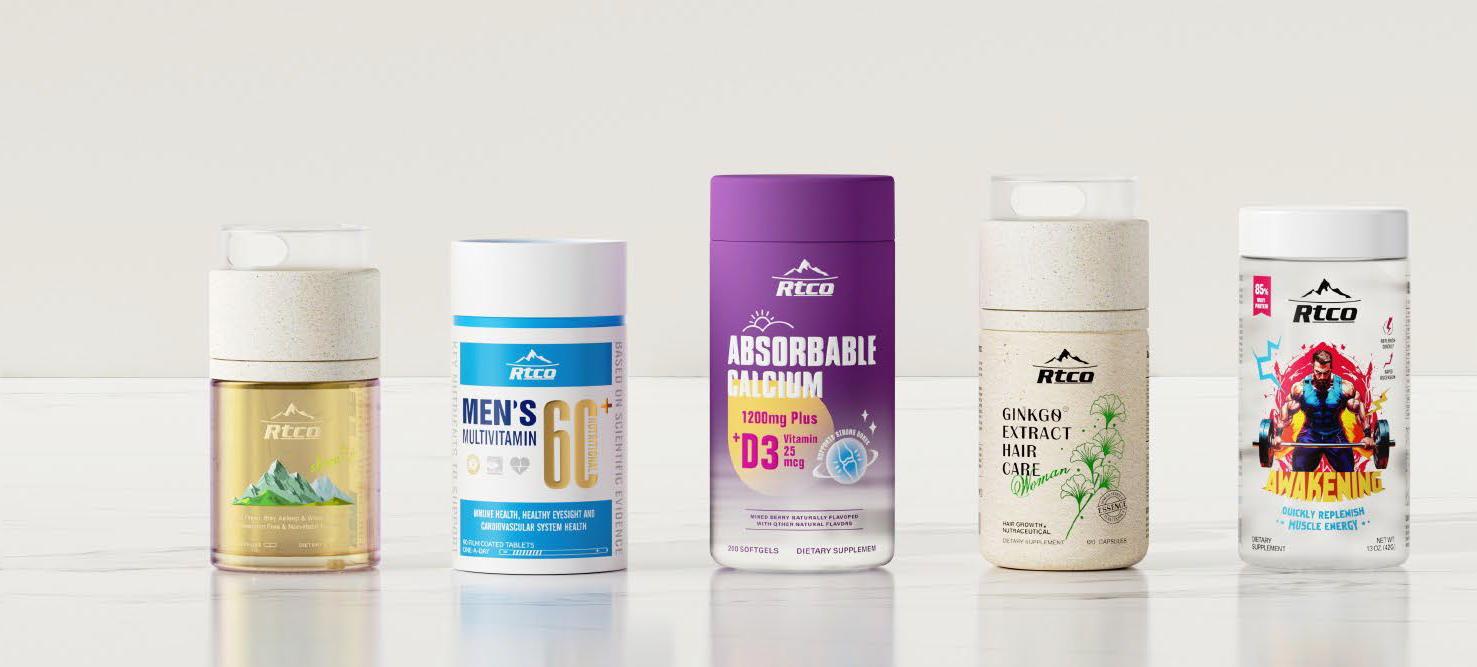
A full custom packaging assortment: bottles, closure systems, scoops, and premium finishes.
Most sports nutrition brands start by buying a bottle. Faster-moving brands eventually realize they are actually selecting a supply ecosystem: one that supports custom tooling, filling-line compatibility, US warehousing, changing SKU portfolios, regulatory updates, and repeat launches. This article explains what separates a transactional packaging vendor from a long-term strategic partner, where the friction points appear in supplement packaging supply chains, and what "turnkey" should mean when your brand is past the first order.
By the end, you should have a clearer decision framework for choosing a sports nutrition custom packaging partner you can still rely on after the 10th purchase order, not just the first prototype.
What Does "Packaging Partner" Mean for Supplement Brands?
For a supplement brand in the decision or execution stage, a packaging partner is not just a company that sells HDPE bottles and caps. It is a supplier that owns or coordinates the key steps between an idea and a SKU ready for retail or DTC shelves: package design, engineering, mold investment, manufacturing, surface finishing, filling-line compatibility, quality assurance, and fulfillment.
In practice, brands differ in how much of this work they want to coordinate themselves. Many traditional plastic packaging suppliers focus on producing standard containers. When every other step — design, custom tooling, finishing, logistics — must be managed separately by the brand, the workload multiplies. That is why the term "turnkey custom packaging" has become common in sports nutrition procurement: it signals that the supplier can handle the entire chain, not just one link.
The Problem: Fragmented Packaging Supply Chains Create Hidden Costs
The fastest way to destroy a launch timeline is not a bad bottle design. It is a supply chain that requires five vendors and six rounds of back-and-forth before production can begin. Brands often discover fragmentation when they try to execute a custom packaging project:
- One supplier makes the bottle, another makes the cap, another supplies the scoop, and another applies a soft-touch coating.
- Design changes require multiple engineering reviews and extended lead times.
- Incompatibility between bottle, liner, and filling equipment is discovered late.
- Quality issues become hard to trace because responsibility is split across parties.
- Overseas communication slows down decision-making, and local support is missing.
For sports nutrition products — protein powders, pre-workouts, BCAA, capsules, tablets, and gummies — packaging has two jobs: protect the product and carry the brand. Fragmented suppliers often handle the first job adequately but create friction on the second. The result is longer commercialization timelines and higher management overhead.
What the Data Shows: Packaging Choices Are Scaling With the Market
Plastic remains the dominant packaging material for supplements and nutraceuticals globally. Verified market data from Grand View Research places plastic at approximately 73.8% of the supplement packaging material share in 2025. The same research firm valued the global nutraceutical packaging market at USD 5.05 billion in 2024, with plastic segments leading at 58.3% revenue share.
These numbers matter for procurement decisions. They indicate that plastic packaging is a mainstream, well-understood infrastructure rather than a niche choice. Brands planning protein powder, capsule, tablet, or gummy launches can expect mature supply chains for HDPE, PET, and PP containers, but they must still differentiate on finishes, closures, custom tooling, and service depth.
Regulatory attention is also rising. In the United States, FDA 21 CFR Part 111 establishes mandatory Current Good Manufacturing Practice (cGMP) requirements for the manufacturing, packaging, and labeling of dietary supplements. In the European Union, Regulation (EU) 2025/40 on packaging and packaging waste requires that all packaging be recyclable by 2030 and that plastic packaging contain at least 30% recycled content by 2030. For brands with US retail and EU distribution ambitions, these rules are not distant concerns; they should be built into packaging specifications now.
Beyond the First Order: What a Turnkey Ecosystem Should Include
When moving from vendor selection to an ongoing packaging partnership, a brand benefits most from a supplier that can deliver the full lifecycle of a custom supplement jar or bottle. The following five areas separate a genuine turnkey ecosystem from a supplier that merely resells components.
1. In-House Mold Development and Custom Tooling
Custom shapes, dual-chamber bottles, embossed logos, and specialized closures depend on mold-making capability. A packaging partner with in-house tooling can compress the timeline between design approval and mass production. In conventional fragmented supply chains, a brand might wait weeks just to get quotes from separate mold shops before manufacturing even starts.
RTCO is an example of a manufacturer that treats tooling as part of the integrated workflow. Their stated development cycle highlights the speed of a coordinated setup: one-day design response, one-month molding, and one-week production. These figures are not generic industry claims; they describe the internal workflow of a supplier that keeps design, tooling, and manufacturing under one management system. When comparing partners, ask directly about in-house mold capability, average tooling lead time, and who owns the mold after the project is completed.
2. Manufacturing Scale and Quality Control Stability
Long-term partners must scale with your order sizes. RTCO reports a factory area of 68,000 m², approximately 200 employees, annual output of 1,000,000,000 units, and monthly production capacity of 80,000,000 units. A 40-engineer R&D team supports custom development. For a growing supplement brand, these scale indicators signal that the supplier has capacity beyond a single sample run.
Quality control should be designed into the workflow, not applied as an afterthought. Relevant controls for a packaging partner include qualified raw materials, standardized production control, and third-party testing. Risk management in packaging supply covers supply chain disruption, material compliance issues, quality nonconformance, and lead-time delays. A partner that offers factory-direct after-sales support — technical consultation, quality issue analysis, corrective actions, and continuous assistance — is better equipped to handle problems when they appear in later purchase orders.
3. Material Options and Compliance Infrastructure
Today's packaging partner should be fluent in both standard food-grade resins and recycled content. RTCO's sports nutrition packaging range uses food-grade HDPE, PET, and PP, with optional PCR/recycled materials. Supporting features commonly requested for premium nutrition products include vacuum metallization, soft-touch coatings, custom tooling, and custom finishes.
Compliance is not a single certificate; it is a set of decisions. For the US market, FDA 21 CFR Part 111 defines cGMP expectations for dietary supplement packaging operations. For global and pharmaceutical-adjacent quality management, ISO 15378:2017 specifies a quality management system for primary packaging materials used in medicinal and nutraceutical products. For the EU market, Regulation (EU) 2025/40 sets the direction toward recyclability and recycled-content requirements. A packaging partner that can discuss these standards in the context of your product rather than just mention them belongs on a shortlist.
4. Filling-Line Compatibility and Accessories Integration
Packaging is only part of a broader production system. Suitable sports nutrition packaging must support the packaging and dosing of powder, capsule, tablet, gummy/gel, and liquid products. It also requires supporting equipment — various cap types, liners, and scoops — and should integrate with common filling equipment and production lines.
Before selecting a bottle, verify that the complete system works on your contract manufacturer's line. A wide-mouth protein jar, a flip-cap scoop bottle, a dual-chamber supplement bottle, or a capsule and tablet bottle each have different filling characteristics. A turnkey partner can reduce the risk of discovering an incompatibility at the worst possible moment.
5. Global Supply and Local Fulfillment
More supplement brands now sell in multiple countries while maintaining inventory close to their end customers. Global packaging supply solutions should therefore include production planning, regional warehousing, flexible inventory programs, and worldwide logistics coordination.
RTCO's supply model integrates manufacturing across Asia and the United States. Its US production facility is located at 1701 Old Grove Road, Suite 300, Piedmont, SC 29673, with warehouses in Georgia (Savannah) and California (Chino). Approximately 97% of products are exported, primarily serving North America while also supporting global brands. For a brand launching in the United States, this means local fulfillment plus a global manufacturing base — which is different from relying entirely on a single overseas factory.
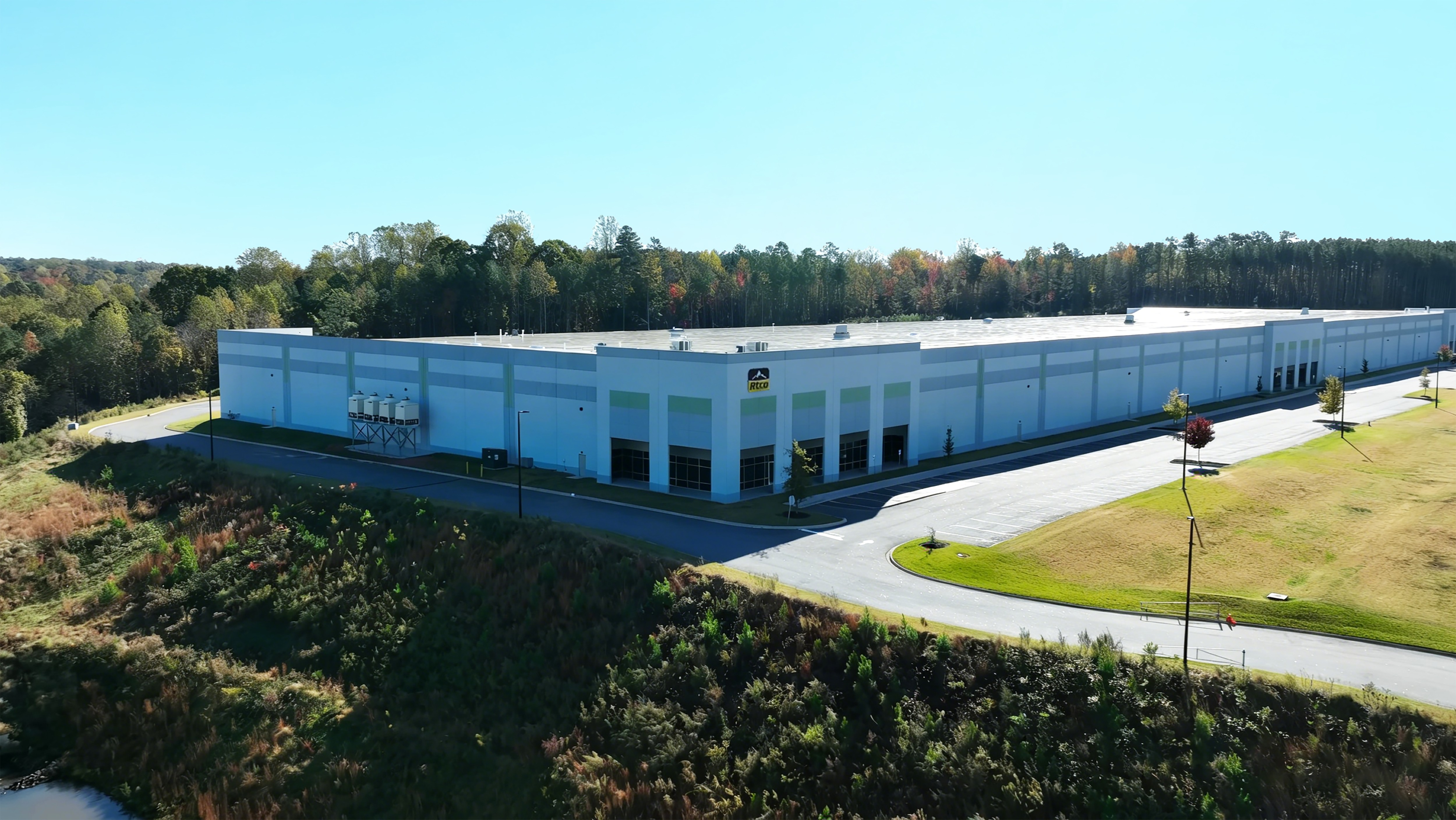
RTCO combines manufacturing across Asia with a US production facility for localized support.
Step-by-Step: How to Evaluate a Packaging Partner for the Long Term
If you are building a shortlist of sports nutrition custom packaging partners, use this six-step process. It is designed for the decision and execution stage, not for early awareness browsing.
Step 1: Map Your Product Portfolio and Growth Scenarios
Write down every format you currently sell: protein powder, pre-workout, capsules, tablets, gummies, or liquids. Then write down what you plan to launch in 12–24 months. A packaging partner should be able to serve your current portfolio and support formats you will add later, from 60ml sample tubes to 6000ml bulk containers.
Step 2: Define Compliance and Material Requirements
Identify the markets that require food-grade compliance documentation, PCR/recycled material options, or EU PPWR alignment. If you ship to North America and Europe, ask the supplier which of these they have already manufactured: food-grade HDPE bottles, PET bottles, PP caps and scoops, vacuum metallization, soft-touch coatings, and custom tooling and finishes.
Step 3: Compare Integrated Turnkey vs. Standard Container Suppliers
The table below summarizes how an integrated turnkey supplier compares with a traditional plastic packaging supplier for sports nutrition brands:
| Comparison Point | Integrated Turnkey Supplier | Traditional Plastic Packaging Supplier |
|---|---|---|
| Primary focus | Coordinated packaging design, engineering, tooling, manufacturing, finishing, and logistics | Production of standard plastic containers |
| Customization workload | Supplier manages design, tooling, finishing, and supply coordination | Brand often coordinates multiple vendors itself |
| Overall project lead time | Shortened by 30%–50% in RTCO's integrated model | Dependent on separate vendor coordination |
| End-to-end cost | Total comprehensive cost reduced by 15%–30% in RTCO's integrated model | May appear lower per unit but adds management friction |
| Management workload | Integrated workflow across design, tooling, manufacturing, finishing, and logistics | Higher coordination effort and supply chain complexity |
| Best for | Brands with custom shapes, premium finishes, complex closure systems, and fast launch targets | Brands seeking stock bottles or simple packaging with limited customization |
Performance and cost comparisons reflect RTCO's integrated turnkey model. Individual results depend on product complexity, order volume, and existing supplier contracts.
Step 4: Verify Filling-Line Compatibility Early
Send your packaging shortlist to your contract manufacturer or internal production team before placing a large order. Ask whether the bottle, cap, liner, and scoop work with existing fillers, cappers, and labelers. This single step prevents the most common and most expensive execution-level mistake.
Step 5: Assess Risk Management and After-Sales Response
Ask for specifics: What happens if a batch has a quality issue? What is the corrective action process? Is third-party testing available? Does the supplier offer factory-direct after-sales support, technical consultation, and quality issue analysis? If a partner cannot describe their quality escalation path clearly, their packaging quality itself may be harder to trust under pressure.
Step 6: Review Ordering Terms for Repeat Purchases
For repeat orders, MOQ flexibility and trade terms matter as much as decorative finishes. RTCO typically requires 10,000–30,000 pieces per SKU depending on the product, with first trial orders below standard MOQ available upon request. Payment terms commonly follow a 50% T/T deposit and 50% T/T balance before shipment, with delivery supported under EXW, FOB, CIF, DDU, and other international trade terms. Transportation can be arranged by sea, air, or international express. If a supplier's MOQ structure cannot accommodate your growth stage, keep looking.
Application Scenarios: Where a Long-Term Packaging Partner Earns Its Role
The value of a packaging ecosystem becomes concrete in specific scenarios. Below are four common patterns from the sports nutrition and supplement sectors.
Scenario 1: Rapid US Launch with North American Fulfillment
A brand wants to launch a protein powder in the US market quickly while keeping inventory close to retail or DTC distribution. An integrated partner with US production and warehousing reduces the dependency on fully overseas supply chains. RTCO's model — combining US manufacturing, warehousing in Georgia and California, and a global supply chain — fits this scenario. The brand can shorten overall project lead time by 30%–50%, which is significant when a retail slot or campaign deadline cannot move.
Scenario 2: Premium Brand with Soft-Touch Finishes and Embossed Logos
A premium supplement line wants packaging that communicates quality before the consumer reads a single claim. Soft-touch coatings, UV coating, silk screening, 3D printing, labeling, and embossed logos are all part of the execution toolkit. A turnkey partner with customized finish options can manage the interaction between container, decoration, and closure in one workflow, reducing the risk of finish incompatibility.
Scenario 3: Multi-Format Portfolio Across Capsules, Gummies, and Powders
If a brand sells capsules, gummies, and powders under one label, coordination between bottle formats, cap systems, scoops, and fillers is constant. One packaging partner that handles the full portfolio — wide-mouth protein jars, capsule and tablet bottles, flip-cap scoop bottles, and gummy-friendly containers — simplifies supplier management and helps brand consistency across formats.
Scenario 4: Global Brands Expanding Across North America and Europe
Brands selling across the United States, Canada, Mexico, Great Britain, France, Germany, Brazil, and Australia need packaging that crosses regulatory and logistics boundaries. Verified market data indicates that PCR content will become structurally important in the EU by 2030. A partner with PCR/recycled material options, food-grade compliance, and global supply coordination is better positioned to serve that expansion than a local-only container seller.
Comparison: Integrated Turnkey vs. Fragmented Supply Chains
In addition to the supplier comparison above, it is useful to compare an integrated packaging partner with a fully fragmented chain of separate design, molding, finishing, and logistics vendors. RTCO's operational model provides a useful case study of integration:
| Dimension | Integrated Turnkey Model (RTCO) | Fragmented Supply Chain |
|---|---|---|
| Design and engineering | One partner combines industrial design, packaging innovation, and integrated manufacturing | Brand coordinates separate design and engineering parties |
| Development speed | One-day design response, one-month molding, one-week production | Multiple handoffs extend the critical path |
| Fulfillment | US production and warehousing for localized support | Often fully overseas, less responsive |
| Lead time | Overall project lead time shortened by 30%–50% | Longer and more variable |
| Cost impact | End-to-end comprehensive cost reduced by 15%–30% | Management and logistics overhead increases total cost |
| Overseas communication | In-house tooling and local fulfillment reduce logistics and communication costs | Higher coordination burden and slower responses |
| Sustainability | Design optimization and sustainable materials reduce environmental impact | Less centralized control over material decisions |
The pattern is clear: fragmentation gives brands more vendor relationships but not necessarily more control. Integration gives brands a single point of accountability and faster execution paths.
How to Use MOQ, Payment, and Delivery Terms in Partner Selection
Procurement terms are often evaluated last, but they can define whether a partnership is sustainable. Consider a mid-size supplement brand with moderate order volumes. A supplier with a standard MOQ of 10,000–30,000 pieces is typical in the industry. However, if the supplier also supports first trial orders below the standard MOQ, the brand can validate tooling and packaging performance before committing to large runs. That flexibility lowers the risk of entering a long-term relationship on the wrong assumptions.
Delivery and payment terms matter for cash flow. A partner supporting EXW, FOB, CIF, DDU, sea, air, and international express offers route flexibility. A common 50% T/T deposit and 50% T/T balance before shipment structure is normal, but brands with established purchasing departments should discuss whether other structures are possible as volume grows.
Most importantly, ask what happens after the first order. Long-term packaging success depends on continuous technical consultation, corrective actions, and the supplier's willingness to help you improve the next generation of packaging.
Risk Management: What Can Go Wrong After You Choose a Partner?
Even a well-selected packaging partner operates in a complex environment. The main risks in packaging supply are supply chain disruption, material compliance issues, quality nonconformance, and lead-time delays. A mature partner controls these through reliable delivery planning, global manufacturing and supply chain resources, qualified raw materials, standardized production control, and third-party testing where required.
For sports nutrition brands, one additional risk is invisible until late in the project: documentation. If your product must be sold through retailers or meet FDA cGMP expectations under 21 CFR Part 111, your packaging partner must be able to provide evidence of food-grade material compliance and quality traceability. If that documentation is fragmented across multiple sub-suppliers, your own compliance audit becomes far more difficult.

Standardized production control and testing help prevent quality nonconformance in repeat orders.
Checklist: 12 Questions to Ask Before Committing to a Packaging Partner
Use this checklist as a structured evidence-gathering tool during supplier conversations.
- 1. Do we need custom tooling for our bottle, cap, liner, or scoop?
- 2. Does the supplier own the mold-making process, and what is the estimated tooling lead time?
- 3. Can the supplier produce our current formats and future formats (powder, capsule, tablet, gummy, liquid)?
- 4. Does the packaging support integration with common filling equipment and production lines?
- 5. Does the supplier offer food-grade HDPE, PET, and PP with optional PCR/recycled materials?
- 6. Can the supplier execute premium finishes such as soft-touch coating, vacuum metallization, and custom decoration?
- 7. What documented compliance standards apply: FDA 21 CFR Part 111, ISO 15378:2017, EU PPWR 2025/40?
- 8. How is quality control organized, and is third-party testing available?
- 9. What happens if a batch fails final inspection or performs poorly on the filling line?
- 10. What is the standard MOQ, and are below-MOQ trial orders available?
- 11. Which trade terms, shipping methods, and payment terms are supported?
- 12. Does the supplier offer local support in the markets where we operate, such as US warehousing or production?
Why Growing Supplement Brands Outgrow Traditional Packaging Suppliers
The transition from stock bottles to custom packaging is a natural stage in brand growth. Initially, a brand might buy a standard HDPE bottle from a local packaging distributor. But as SKU complexity increases, several gaps appear.
First, standard containers cannot carry unique brand cues like embossed logos, dual-chamber functionality, or soft-touch finishes. Second, coordinating packaging design, tooling, manufacturing, and finishing across separate vendors consumes the same team that should be launching products. Third, quality responsibility is unclear when bottle, cap, scoop, and finish come from different suppliers. Fourth, flexible inventory and US fulfillment become difficult if the supplier cannot see beyond the factory gate.
These gaps explain why integrated turnkey packaging has become the preferred direction for many sports nutrition brands. Instead of managing five vendors, they choose a partner that manages the entire packaging ecosystem, from one-day design response to one-week production after tooling is complete. The time savings are not just pleasant-to-have; they create a competitive advantage when a brand needs to enter a retail calendar or respond to a market trend.
Choosing Between Stock, Semi-Custom, and Fully Custom Packaging
Not every launch requires full custom tooling. Understanding the spectrum helps brands avoid over-investing or under-differentiating.
Stock Packaging with Decorative Customization
A standard bottle body with custom labels, silk screening, or printed shrink sleeves is the fastest path to market. It works well for testing new products or entering new markets with limited volume. The trade-off is limited structural differentiation.
Semi-Custom Packaging
Standard bottle molds combined with custom closures, scoops, finishes, or decorative effects give a brand a distinct look without the cost of a wholly new bottle tool. Flip-cap scoop bottles, embossed logos, and soft-touch coatings can all be applied to proven container formats.
Fully Custom Packaging
A unique bottle shape, dual-chamber design, or proprietary closure system requires new tooling and a longer development timeline. In exchange, the brand gets intellectual property, shelf distinction, and packaging that cannot be easily copied by competitors. An integrated partner with in-house molds and engineering can make this path more predictable.
What to Look for in a Global Packaging Supplier: RTCO as an Example
RTCO — formally THE RTCO PAK PTE. LTD. — is a plastic packaging manufacturer specializing in containers for sports nutrition, supplements, health and beauty, and related categories. It provides plastic containers (HDPE, PET), scoops, caps and closures, liners, accessories, and surface finishes such as vacuum metallization and soft-touch coatings. The company was founded in 2007, operates from a 68,000 m² facility with about 200 employees, and exports approximately 97% of its products.
RTCO's core positioning is "innovative packaging, empowering brands." Its team of 40 engineers supports packaging design, engineering development, and advanced manufacturing. The company reports annual output of 1,000,000,000 units and monthly production capacity of 80,000,000 units, which indicates the scale available to brands whose requirements grow significantly.
For sports nutrition brands, the most relevant RTCO products fall into three groups:
- Plastic packaging for sports nutrition and supplements: wide-mouth protein powder jars, pre-workout/BCAA bottles, dual-chamber supplement bottles, capsule and tablet bottles, and flip-cap scoop bottles. Bottles range from 60ml to 6000ml fill capacity, with diameters of 40–200mm and heights of 60–325mm. Materials include food-grade HDPE, PET, PP, and optional PCR/recycled materials.
- Custom supplement and sports nutrition packaging: soft-touch packaging, flip-cap packaging, premium custom packaging, and embossed logo packaging. Custom capacities from 60ml to 6000ml are supported, with finishes including soft-touch coating, UV coating, silk screen, 3D printing, and labeling.
- Global packaging supply solutions: multi-region supply packaging, stock and custom packaging programs, global production planning, regional warehousing, and worldwide logistics coordination.
These product groups map directly to the three questions a growing brand should ask: Can you make my standard container? Can you customize it in a way that supports my brand? Can you supply it globally as I scale?
Frequently Asked Questions
1. Does a turnkey supplement packaging partner need to be FDA-certified for dietary supplement packaging?
FDA certification is not a single designation for packaging suppliers. Instead, the relevant requirement is FDA 21 CFR Part 111, which establishes mandatory Current Good Manufacturing Practice (cGMP) rules for the manufacturing, packaging, and labeling of dietary supplements. For packaging materials themselves, international quality management standards such as ISO 15378:2017 apply to primary packaging for medicinal and nutraceutical products. In practice, brand owners should ask suppliers for evidence of food-grade material compliance, quality traceability, and any third-party test documentation, rather than relying on a vague "FDA certified" claim.
2. What custom packaging capabilities are actually needed for sports nutrition products?
Sports nutrition products include powders, capsules, tablets, gummies/gels, and liquids. Suitable packaging must support the dosing of these formats while protecting product performance. Common technical requirements include food-grade HDPE/PET/PP materials, PCR/recycled material options, vacuum metallization, soft-touch coatings, custom tooling, and custom finishes. The packaging should also be compatible with caps, liners, scoops, and common filling equipment. If a supplier cannot integrate these elements, the brand is left to coordinate them independently.
3. How do MOQs and trial orders work for custom supplement packaging projects?
For custom supplement packaging, a typical MOQ is 10,000–30,000 pieces per product, depending on the specific bottle, cap, or accessory. Many brands need to validate packaging before committing to a large run. RTCO, for example, makes first trial orders below the standard MOQ available upon request. Packaging cost depends on tooling, materials, finish complexity, and order volume, so comparing only per-unit pricing without accounting for tooling amortization and logistics can be misleading.
4. What does an RTCO custom packaging sample process look like?
RTCO's integrated development workflow is built around one-day design response, one-month molding, and one-week production, supported by an in-house R&D team of 40 engineers. In practice, a brand should first define the product format, target markets, and finish requirements, then request sample bottles with the specific closure system, liner, and scoop. Because the supplier also coordinates tooling, finishing, and logistics, samples can be assessed within a shorter cycle than fragmented vendor chains. For a custom packaging cost estimate or sampling plan, the RTCO team can provide a brochure and discuss the specific SKU requirements.
5. How should a brand plan lead time when switching packaging suppliers?
If the packaging requires new tooling, add mold-making time to production and shipping. RTCO's integrated model shortens overall project lead time by 30%–50% compared with coordinating design, tooling, manufacturing, finishing, and logistics separately. If the supplier has US production and warehousing — as RTCO does with facilities in Piedmont, SC, Savannah, GA, and Chino, CA — brands serving North America can reduce overseas logistics and communication delays. Always confirm delivery terms (EXW, FOB, CIF, DDU) and whether trial orders can run below standard MOQ before finalizing a launch schedule.
Conclusion: Build a Packaging Relationship That Grows With You
Choosing a sports nutrition custom packaging partner is a strategic decision, not a purchasing transaction. A partner that owns design, tooling, manufacturing, finishing, and global fulfillment removes friction from every launch after the first one. A partner that can handle powder, capsule, tablet, gummy, and liquid formats with food-grade materials, PCR options, and premium finishes gives you room to expand your product portfolio without rebuilding your supply base.
The market signals are clear: plastic packaging dominates the supplement industry, protein powder packaging is projected to keep growing toward USD 44.52 billion by 2035, and regulations in the US and EU are pushing brands toward documented compliance and recycled content. Under this pressure, a fragmented supplier list becomes a liability. An integrated ecosystem becomes a competitive asset.
When you evaluate RTCO or any similar turnkey packaging manufacturer, use the checklist and comparison tables in this article. Ask about mold ownership, filling-line compatibility, quality escalation procedures, MOQ flexibility, US fulfillment, and PCR options. The answers will tell you whether the supplier is selling containers or building a packaging foundation you can still build on in year three and beyond.
Ready to Evaluate a Turnkey Packaging Partner for Your Sports Nutrition Brand?
Download the RTCO Sports Nutrition Packaging Catalogue to review bottle formats, custom finishes, and global supply capabilities. For specific sampling, MOQ, or quoting questions, contact RTCO via WhatsApp or email info@rtco-packaging.com.