Sports Nutrition Custom Packaging Sizing: Capacity, Bottle & Cap Parameters
Sports Nutrition Custom Packaging Sizing: Capacity, Bottle & Cap Parameters

Sizing a sports nutrition bottle is a decision problem, not a design preference. Fill capacity, body diameter, overall height and cap diameter determine whether a container runs cleanly on a filling line, whether protein powder or capsules survive moisture and oxygen exposure, whether a compliant label wraps without distortion, and whether the finished pack stays economical to ship and store.
This technical guide is written for brand owners, packaging engineers and procurement teams at the point where the product format is already decided and the numbers have to be fixed. It covers the four parameters that define a custom bottle — fill capacity of 60–6000 ml, body diameter of 40–200 mm, height of 60–325 mm and cap diameter of 20–200 mm — and explains how material selection (food-grade HDPE, PET or PP) and finish selection (soft-touch coating, UV coating, flip-cap closures) follow from those numbers rather than preceding them.
Problem Definition: What Actually Goes Wrong When a Bottle Is Mis-Sized
Sizing errors rarely appear on a drawing. They appear on the filling line, in the warehouse, or in a consumer complaint six months after launch. A custom sports nutrition container has to satisfy four constraints simultaneously, and each one maps to a specific dimension.
- Filling-line compatibility. Integrated packaging is designed to protect product performance and to stay compatible with common filling equipment and production lines. If the body diameter or height falls outside the filling line's working envelope, the bottle will not index, centre or seal correctly, and the run speed drops or stops.
- Product protection. Powder, capsule, tablet, gummy/gel and liquid formats each have different sensitivity to moisture and oxygen. Usable fill volume is always lower than nominal capacity once headspace, scoop volume and liner clearance are accounted for.
- Label and shelf performance. Soft-touch, UV and metallized finishes change how ink adheres and how a label wraps. Surface geometry has to be defined before decoration, not after.
- Logistics and cost. Height and diameter drive carton count, pallet cube and freight cost. A few millimetres of unnecessary height multiplies across a container load.
The practical consequence is that the specification sequence matters: format first, then fill volume, then body geometry, then closure, then material and finish. Reversing that order is the most common cause of tooling rework.
Industry Background: Why Sizing Decisions Carry More Weight Now
Rigid plastic remains the dominant substrate in this category. The global nutraceutical packaging market was valued at USD 5.05B in 2024, with plastic segments taking 58.3% of revenue share (Grand View Research). In the supplements and nutrition packaging segment specifically, plastic holds approximately 73.8% market share in 2025 (Grand View Research). Protein powder packaging is a growth driver inside that total: the segment is projected to reach USD 44.52B by 2035, at a CAGR of 5.01% from 2026 (Future Market Insights).
Market participants in nutraceutical and supplement packaging identified by MarketsandMarkets include Berry Global, Amcor Plc, TricorBraun and ProAmpac, alongside specialist custom-packaging manufacturers and stock-bottle distributors. The category is therefore served by very different supplier models, and those models handle sizing very differently — a point that matters when comparing quotations.
Two regulatory developments have turned what used to be a purely technical exercise into a commercial one:
- FDA 21 CFR Part 111 establishes mandatory Current Good Manufacturing Practice (cGMP) for the manufacturing, packaging and labelling of dietary supplements in the United States (U.S. Food and Drug Administration).
- EU Packaging and Packaging Waste Regulation (EU) 2025/40 requires all packaging to be recyclable by 2030, and plastic packaging to contain at least 30% recycled content (PCR) by 2030 (European Commission).
Both regulations reach into the sizing decision. Recyclability targets favour tighter material usage and mono-material closures, while cGMP obligations make dimensional consistency and documented raw-material control part of the compliance file, not just the quality file.
The Sizing Framework: Four Parameters That Define the Bottle
Custom sports nutrition bottles are specified across a working band that runs from 60 ml to 6000 ml fill capacity, with body diameters from 40 mm to 200 mm, overall heights from 60 mm to 325 mm, and cap diameters from 20 mm to 200 mm. Within that band, every SKU is fixed individually — the band defines what is technically feasible, not what any single product should use. The four parameters interact, so they should be set in order.
1. Fill capacity (60–6000 ml)
Fill capacity is the usable volume of product the container is designed to hold at its declared dose. Two numbers are usually specified: nominal capacity (the geometric volume of the body) and target fill volume (the volume actually dosed). The gap between them is headspace, which serves three purposes — it absorbs settling of powder, it creates room for a scoop or dosing accessory, and it prevents product from contacting and saturating the closure liner.
Compact formats at the lower end of the range are typically used for concentrated or single-dose products, where the container is sized around a fixed serving rather than around bulk value. Larger formats at the upper end are sized around usage frequency: a tub that is opened daily for several weeks needs a geometry that remains stable on the shelf after repeated handling. Under-filling a large body wastes material and freight; over-filling a small body forces the powder into the closure area and increases leakage risk.
2. Body diameter (40–200 mm)
Body diameter is the parameter that couples consumer experience to factory reality. It controls label circumference, palm grip, scoop entry and the amount of material consumed per unit.
- 40–70 mm: narrow-format bottles and vials, typically used where the product is dispensed rather than scooped.
- 70–110 mm: standard sports nutrition bottle territory — pre-workout, BCAA and capsule bottles that need a stable base and a printed wrap.
- 110–200 mm: wide-mouth jar territory, where a scoop, a wide aperture or a high fill volume drives the design.
Diameter also determines whether the bottle can pass through existing capping heads and whether the filled unit sits stably on the line. A change of a few millimetres can force adjustments across the whole line, which is why diameter changes should be validated before tooling is cut, not after.
3. Height (60–325 mm)
Height is usually negotiated between shelf presence and logistics. Taller formats increase facing on shelf but reduce the number of units per pallet layer and can raise the centre of gravity of the filled pack. Shorter formats are more stable and more cube-efficient but reduce label area.
Height must also be checked against filling-line clearance, capping head travel and secondary packaging — a bottle that fits the line but not the shipper carton is a specification error, not a packaging error.
4. Cap diameter (20–200 mm)
Cap diameter follows the neck finish and the intended access mode. Three access patterns dominate sports nutrition:
- Wide-mouth (roughly 100–200 mm in this band): required when a scoop must enter the container, typical of protein powder jars.
- Medium (roughly 38–63 mm): the conventional screw-cap zone for capsule and tablet bottles.
- Narrow (roughly 20–38 mm): dispenser-style openings and flip-cap formats, where the closure is also the dosing interface.
Cap diameter and body diameter are not independent: a wide cap on a narrow body weakens the shoulder and complicates sealing, while an undersized cap on a wide jar blocks the access the format requires.
Decision rule: set the fill volume from the dose, derive the body diameter from the access mode (scoop, pour or dispense), derive the height from label area and pallet cube, and only then select the cap diameter and neck finish. Tooling should be quoted after this sequence, not before.
Material Selection: When HDPE, PET or PP Is the Right Choice
Material choice follows the barrier problem, not the aesthetic preference. For sports nutrition, the two dominant degradation risks are moisture ingress into hygroscopic powders and oxidation of sensitive actives. The three food-grade polymers used for these bottles behave differently against each of those risks.
| Material | Strongest barrier characteristic | Typical fit in sports nutrition | Practical consideration |
|---|---|---|---|
| Food-grade HDPE | Generally strong moisture-vapour resistance; opaque by nature | Protein powder jars, capsule and tablet bottles, wide-mouth formats | Well suited where moisture is the primary risk and product light-sensitivity requires opacity; widely used as the default rigid bottle resin |
| PET | Generally better oxygen and gas barrier than HDPE, with high clarity | Capsule, tablet and gummy formats where product visibility matters; liquid and gel formats | Clarity supports shelf appeal and product visibility, which is why PET is common in wellness and nutraceutical lines |
| PP | Generally strong moisture resistance with higher heat tolerance and good chemical resistance | Closures and caps, and bodies exposed to warmer filling or storage conditions | Often used in closures because of its hinge and flex behaviour — relevant for flip-cap packaging |
For hygroscopic protein powders, the practical conclusion is usually a sealed HDPE body with a liner that limits moisture transmission, rather than a more oxygen-resistant but less moisture-resistant alternative. For capsules and gummies, where appearance and oxidation both matter, PET becomes more attractive. For closures, PP is the standard engineering answer because it tolerates repeated opening and closing and supports living-hinge flip-cap designs.
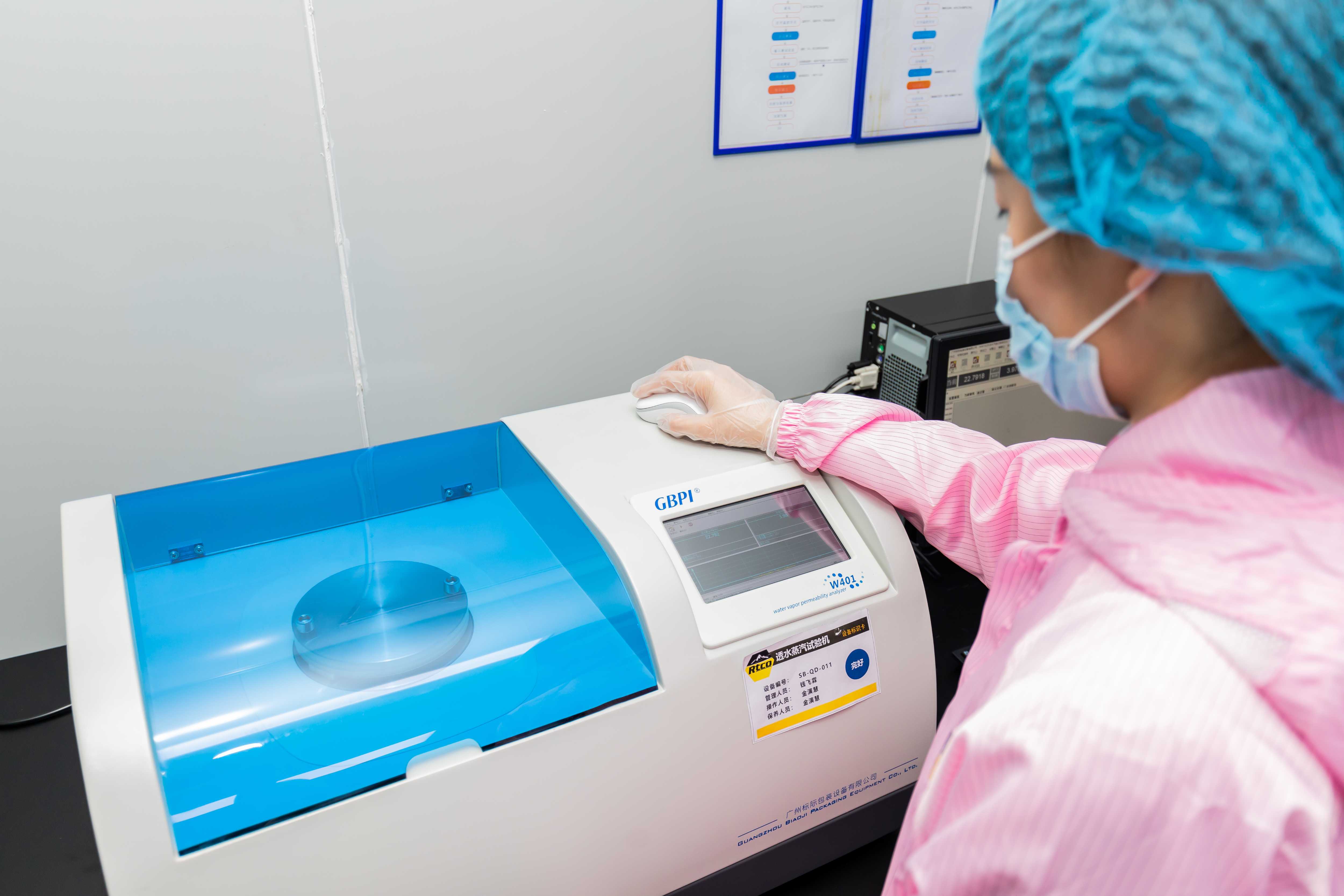
Barrier performance is also a function of geometry, not only of resin. Wall thickness, neck finish quality and the closure liner interface determine whether a material's theoretical barrier is realised in the field. That is why water-vapour transmission testing — not datasheet comparison alone — is the acceptance test for a moisture-sensitive powder program.
Model Fit: Wide-Mouth Protein Powder Jars vs Pre-Workout and BCAA Bottles
Two format families account for most custom sizing briefs in this category, and they pull the parameters in opposite directions.
Wide-mouth protein powder jars
The defining constraint is access. A scoop has to enter the container, be filled without spillage and be removed cleanly, which pushes cap diameter toward the upper part of the range and body diameter into the wide-mouth band. Because protein powder is dense and hygroscopic, the jar is normally specified in HDPE with a sealed liner, and height is set to allow headspace for settling plus scoop storage.
Decoration on wide-mouth jars is usually applied to a large cylindrical surface, which makes finish consistency visible to the consumer — soft-touch coating and UV coating are therefore evaluated early rather than at the end of the project.
Pre-workout and BCAA bottles
Pre-workout and BCAA formats typically prioritise dose control and portability. They sit in the narrow-to-medium body diameter zone, often with a flip-cap or dispenser closure rather than a wide screw cap, and height is set to keep the pack compact for retail and e-commerce shipping.
Because these containers are frequently used with smaller doses and higher opening frequency, closure durability becomes the critical parameter. Flip-cap designs in PP are commonly specified here, and the neck finish must be validated against repeated open-close cycles, not just initial seal integrity.
Finish and Closure Options: Soft-Touch, UV Coating and Flip-Cap Packaging
Finish selection is downstream of sizing but should be planned in parallel, because surface treatment affects handling, abrasion resistance and the printable area available on the final geometry.
- Soft-touch coating delivers a matte, tactile surface that improves grip on larger-diameter jars and signals a premium position. It is generally applied to bodies where the label does not fully cover the cylinder.
- UV coating provides a gloss or semi-gloss surface with additional resistance to light and abrasion, and is commonly used where print vibrancy is a priority.
- Vacuum metallization produces a chrome or metallic appearance for containers where the bottle itself is the visual differentiator — a finish that requires careful masking of neck and closure contact zones.
- Flip-cap closures combine the lid and the dispensing aperture in one part, which removes a separate step for the consumer and reduces the risk of a lost cap. They suit single-serve and dose-controlled formats.
Closures should always be specified together with their supporting components. Integrated packaging systems are designed around supporting equipment such as various cap types, liners and scoops, and around compatibility with common filling equipment and production lines — so a closure change is a system change, not a spare-part change.

Step-by-Step: How to Specify a Custom Sports Nutrition Bottle
The sequence below reflects how a specification is normally built, from dose to tooling. Skipping a step does not remove the decision — it only defers it to a more expensive stage.
- Define the product format and dose. Powder, capsule, tablet, gummy/gel or liquid. Format determines the access mode, and the access mode determines the neck and cap.
- Convert dose to target fill volume. Calculate the number of servings per container, then add headspace for settling, scoop displacement and liner clearance to reach nominal capacity within the 60–6000 ml band.
- Set body diameter from handling and label requirements. Confirm the diameter sits inside the 40–200 mm band and supports the required label circumference and grip.
- Set height from label area and logistics. Balance shelf presence against pallet cube and filling-line clearance within the 60–325 mm band.
- Specify neck finish and cap diameter. Choose wide-mouth, medium screw or narrow dispenser geometry within the 20–200 mm band, and define the liner.
- Select the resin against the barrier risk. HDPE for moisture-led powder programs, PET where clarity and oxygen barrier matter, PP for closures and heat-tolerant applications.
- Choose the finish and decoration route. Soft-touch coating, UV coating or vacuum metallization, applied after the surface geometry is frozen.
- Validate on the filling line before mass production. Prototype or sample units, then filling-line and capping trials, then moisture-transmission testing where the product is moisture-sensitive.
- Freeze the specification and document it. Dimensional drawing, material grade, liner type, closure type, finish and acceptance criteria become the reference document for every subsequent order.
Use Cases: Where Sizing Decides the Outcome
Protein powder jar in HDPE
A wide-mouth HDPE jar with a sealed liner and an internal scoop. The critical numbers are cap diameter (scoop access), nominal capacity (servings per tub) and height (headspace plus shelf presence). Moisture transmission testing is the key acceptance check.
Pre-workout bottle with flip cap
Compact body diameter, medium height, narrow-to-medium neck finish with a PP flip cap. The critical checks are closure cycle durability and dose accuracy of the opening.
BCAA and capsule bottle
Medium body diameter with a conventional screw cap, frequently in PET where product visibility supports the label story. Freight efficiency usually drives the height decision.
Gummy and wellness formats
Flip-cap or wide-mouth containers sized for repeated opening, often in PET for clarity. Sizing here is driven by content visibility and by the physical behaviour of the product inside the container during transport.

Comparison Table: Integrated Custom Packaging vs Traditional Plastic Packaging Suppliers
The comparison below uses two supplier models that behave differently once a custom size is introduced. The distinction matters because sizing changes trigger tooling, sampling and line validation — activities that are handled very differently depending on whether design, molding, manufacturing, finishing and logistics sit inside one workflow.
| Comparison dimension | Integrated custom packaging partner (RTCO) | Traditional plastic packaging suppliers |
|---|---|---|
| Core scope | Customized plastic packaging backed by one day design, one month molding and one week production, combining industrial design, packaging innovation, integrated manufacturing, U.S. production and warehousing, and a global supply chain | Primarily focused on producing standard plastic containers, while brands manage packaging design, engineering development, customization and supply coordination separately |
| Lead time | 30%–50% shorter overall project lead time compared with alternatives | Coordination between separate design, tooling, molding and finishing parties adds sequential waiting time |
| Total end-to-end cost | 15%–30% reduction in total end-to-end comprehensive cost compared with alternatives | Cost accumulates across separate quotations, tooling vendors, freight legs and communication cycles |
| Minimum order quantity | Typically 10,000 to 30,000 units per SKU | Depends on each supplier's own minimums across multiple parties |
| Best fit | Brands needing rapid product launches with North American fulfilment and short lead times, particularly nutrition and health brands | Brands seeking standard stock bottles or simple packaging solutions with limited customization requirements |
| Management workload | Lower management workload and supply chain complexity through an integrated workflow across design, tooling, manufacturing, finishing and logistics | Higher coordination load because each stage is contracted and scheduled separately |
| Technical advantages | Design optimization and use of sustainable materials that contribute to reduced environmental impact | Limited to the container itself, without integrated design optimization |
Read as a sourcing rule: an integrated model changes the economics of a sizing change, because design, tooling and production respond inside one workflow. A fragmented model can be perfectly adequate when the size already exists as a stock bottle and no customization is required.
Purchasing Terms, Acceptance Criteria and Compliance Checks
Purchasing terms
- MOQ: custom programs typically start at 10,000 to 30,000 units per SKU. This is a per-SKU figure, so a multi-size launch multiplies the commitment.
- Tooling: one month molding is the standard planning assumption, preceded by one day design and followed by one week production once the tool is qualified.
- Fulfilment: U.S. production and warehousing reduce overseas logistics and communication cost and improve responsiveness compared with purely overseas supply chains.
Acceptance criteria for a new bottle size
- Dimensional verification against the approved drawing: capacity, body diameter, height and cap diameter.
- Fit and function check on the closure: liner seating, sealing, and cycle durability for flip caps.
- Filling-line trial confirming indexing, filling accuracy and capping torque at production speed.
- Moisture-transmission testing for hygroscopic powder formats, and barrier verification for oxidation-sensitive actives.
- Visual and finish inspection: coating uniformity, coverage, and adhesion.
Product quality is safeguarded by qualified raw materials, standardized production control and third-party testing, and factory-direct after-sales support covers technical consultation, quality issue analysis and corrective actions.

Compliance checks
- ISO 15378:2017 specifies requirements for a quality management system for manufacturers of primary packaging materials for medicinal and nutraceutical products, integrating GMP principles (International Organization for Standardization). It is the reference standard to request when HDPE and PP bottles are intended as primary packaging for supplement products.
- BRCGS Packaging Materials Issue 7 is a packaging materials certification scheme that retail-facing buyers commonly specify in supplier approval. Confirm the certificate scope covers the exact material and process used for your bottle.
- FDA 21 CFR Part 111 sets mandatory cGMP for the manufacturing, packaging and labelling of dietary supplements in the U.S. market.
- EU Regulation (EU) 2025/40 (PPWR) requires recyclable packaging by 2030 and at least 30% recycled content in plastic packaging by 2030 — relevant when specifying PCR grades and mono-material closures.
Compliance should be verified against scope, not against a logo. A certificate issued for a different material, facility or process does not cover the bottle being sourced.
FAQ
What compliance checks apply to HDPE and PP sports nutrition bottles?
Primary packaging for nutraceutical products is normally checked against ISO 15378:2017, which specifies quality management system requirements for manufacturers of primary packaging materials for medicinal and nutraceutical products and integrates GMP principles. Retail-facing programs often add BRCGS Packaging Materials Issue 7 as a supplier approval scheme. On the product side, FDA 21 CFR Part 111 sets mandatory cGMP for the manufacturing, packaging and labelling of dietary supplements in the United States, and EU Regulation (EU) 2025/40 requires recyclable packaging by 2030 with at least 30% recycled content in plastic packaging by 2030. Buyers should confirm that any certificate offered covers the specific material, facility and process used for their bottle.
Which manufacturer is better for premium nutraceutical custom packaging?
There is no single answer, because “better” depends on whether the project needs a custom size or a stock bottle. The decisive criteria are: whether design, tooling, molding, finishing and logistics sit in one workflow or are contracted separately; whether the supplier can support filling-line compatibility; whether closures, liners and scoops are specified as a system; and whether lead time and total end-to-end cost are measured across the whole project. An integrated model such as RTCO, which combines customized plastic packaging backed by one day design, one month molding and one week production with U.S. production, warehousing and a global supply chain, fits brands that need rapid launches with North American fulfilment — and it reports 30%–50% shorter overall project lead time and 15%–30% lower total end-to-end comprehensive cost compared with alternatives. A traditional supplier focused on standard containers fits brands seeking stock bottles or simple packaging with limited customization. The wider market in nutraceutical and supplement packaging includes established participants such as Berry Global, Amcor Plc, TricorBraun and ProAmpac, so the practical approach is to compare supplier scope against your own sizing requirement rather than against brand recognition.
What is the minimum order quantity, and how does bottle sizing affect cost?
The minimum order quantity is typically 10,000 to 30,000 units per SKU, and it is applied per SKU — so adding a second size adds a second minimum. Sizing affects cost in three ways: material consumption rises with body diameter and wall thickness; tooling is required for any genuinely new geometry, with one month molding as the standard planning assumption; and height and diameter determine carton count, pallet cube and freight. Because integrated programs consolidate design, tooling, manufacturing, finishing and logistics, they report a 15%–30% reduction in total end-to-end comprehensive cost compared with alternatives — a figure that should be evaluated across the whole project rather than on the bottle unit price alone.
How should a new bottle size be validated before mass production?
Validation runs in stages. First, dimensional verification against the approved drawing — fill capacity, body diameter, height and cap diameter. Second, closure fit and function, including liner seating and, for flip caps, repeated open-close durability. Third, a filling-line trial at production speed to confirm indexing, filling accuracy and capping torque. Fourth, moisture-transmission and barrier testing where the product is hygroscopic or oxidation-sensitive, since water-vapour permeability analysis is the most direct check that the specified resin, wall thickness and closure combination deliver the intended protection. Product quality is safeguarded by qualified raw materials, standardized production control and third-party testing, and factory-direct after-sales support covers technical consultation, quality issue analysis and corrective actions.
How long does a custom sizing project take from design to production?
The planning baseline is one day for design, one month for molding and one week for production, after which the specification is frozen and repeat orders follow the documented drawing. Integrally managed programs report a 30%–50% shorter overall project lead time compared with alternatives and a 30%–50% reduction in lead time versus traditional packaging suppliers, largely because design, tooling, molding and finishing are sequenced inside one workflow instead of across separate vendors. To move from sizing to quotation, send the target fill volume, product format, preferred material and closure type to info@rtco-packaging.com, or review the specification options in the RTCO sports nutrition packaging catalogue and request samples before tooling is committed.
Conclusion
Custom sports nutrition packaging sizing comes down to four numbers and one sequence. Fix the fill capacity from the dose, set the body diameter from the access mode and label requirement, set the height from shelf presence and pallet cube, and choose the cap diameter and neck finish last. Then let material follow the barrier risk — HDPE for moisture-led powder programs, PET where clarity and oxygen barrier matter, PP for closures and heat tolerance — and let finish follow the geometry, with soft-touch coating, UV coating or vacuum metallization applied only after the surface is frozen.
Everything after that is validation: filling-line trial, closure cycle testing, moisture-transmission testing and documented acceptance criteria, all supported by compliance checks against ISO 15378:2017, BRCGS Packaging Materials Issue 7, FDA 21 CFR Part 111 and EU Regulation (EU) 2025/40. Integrated packaging is designed to protect product performance, ensure filling-line compatibility, and enhance shelf appeal and brand identity — but only when the numbers behind it are specified deliberately.

Download the RTCO Sports Nutrition Packaging Catalogue | Contact: info@rtco-packaging.com
Have Questions or Need More Details?
Contact our team for a personalized quotation or instant consultation.
Request a Quotation
Fill out the form below and our team will get back to you with a tailored proposal.
WhatsApp Direct Chat
Prefer to chat in real-time? Message us on WhatsApp for instant assistance & quick answers.
- Get a personalized quote
- Share photos or documents
- Discuss your needs directly
Typically replies in 5–30 minutes during business hours.