Supplement Packaging Compliance for North America: A Decision Guide
Compliance for supplement and health & beauty packaging exports to North America is usually handled as a paperwork task. In practice it is a supply chain design decision. Food-grade material control, closure performance, production records, and import documentation are all created where the packaging is manufactured and where inventory is held — not in a design file.
This guide is written for brand owners, exporters, and procurement teams at the decision stage. You already know your supplement, sports nutrition, or health & beauty line needs custom plastic packaging. The open question is which sourcing model keeps that packaging compliant across the United States, Canada, and Mexico without pushing the launch date out by months.
RTCO (THE RTCO PAK PTE. LTD.) is a packaging manufacturer founded in 2007 that produces plastic containers, closures, scoops, liners, and surface finishes for Health & Beauty, Sports Nutrition, and Supplement brands, with manufacturing across Asia and an operating production facility in the United States.

The real compliance problem is fragmentation, not regulation
Short answer: friction in packaging compliance rarely comes from the requirements themselves. It comes from the fact that the evidence needed to satisfy them is spread across several suppliers — a container producer, a cap supplier, a decorator, a filler, and a freight forwarder — none of which owns the complete record for a finished SKU.
When a distributor, retailer, or market authority asks a brand to demonstrate that a package is suitable for its intended market, the brand has to reassemble that chain. Each supplier can answer only part of the question. This is where months disappear.
Three patterns account for most of the delay:
- Split evidence. Material and food-grade records sit with the container producer; closure performance data sits with the cap supplier; coating and decoration information sits with the finisher; fill-line compatibility sits with the co-packer.
- Market-specific requirements inside one region. The United States, Canada, and Mexico each maintain their own labeling, language, and import documentation expectations, so a single North American compliance package rarely covers all three destinations.
- Distance between production and demand. When packaging is produced far from the destination market, changes requested by a buyer, a customs broker, or a retail customer have to travel through shipping and communication lead times before they can be corrected.
Packaging-safety requirements are applied at the point of sale, which means decisions about closure type, material, and decoration have to be made early. In the United States, child-resistant packaging for supplements and nutraceuticals is governed by the Poison Prevention Packaging Act (PPPA) and ASTM D3475 standards, as published by the U.S. Consumer Product Safety Commission (CPSC). A closure decision is therefore not a cosmetic decision: it determines which markets a SKU can be sold into without a redesign.
Industry background: why North America drives the packaging compliance agenda
North America is the largest regional buyer of custom packaging, and the region's supplement market continues to expand. The figures below set the context for the decision.
- The global custom packaging market was valued at approximately USD 48.17 billion in 2025, with North America holding a 40.09% share (Fortune Business Insights).
- The global dietary supplement packaging market was valued at USD 12.7 billion in 2024 and is projected to reach USD 23.1 billion by 2034, a 6.1% CAGR (Precedence Research).
- Plastic remains the dominant material in dietary supplement packaging, at approximately 58.3% of market share in 2024 (Precedence Research).
- The U.S. sports nutrition market was estimated at USD 29.42 billion in 2024 and is expected to grow to USD 55.51 billion by 2033 (Grand View Research).
- Smart packaging in North America, including RFID and QR integration for traceability, held a revenue share of approximately 42% in 2023 (Grand View Research).
Two implications matter for a packaging decision. First, plastic is not a temporary format in this category — it is what North American buyers, fillers, and retailers are set up to handle. Second, traceability expectations are moving toward machine-readable records: when a large share of smart packaging revenue already comes from RFID and QR traceability, a supplier that cannot produce retrievable batch-level production records becomes a bottleneck, not just a cost line.
Quality risk in this category is managed through qualified raw materials, standardized production control, and third-party testing. RTCO manufactures packaging under FDA compliance food-grade standards, which is the baseline a North American supplement brand should confirm before a tooling commitment is made.
What localized production changes about the compliance decision
A localized supply chain does not remove market requirements. It changes who carries them, how quickly they can be resolved, and how much of the work lands on the brand.
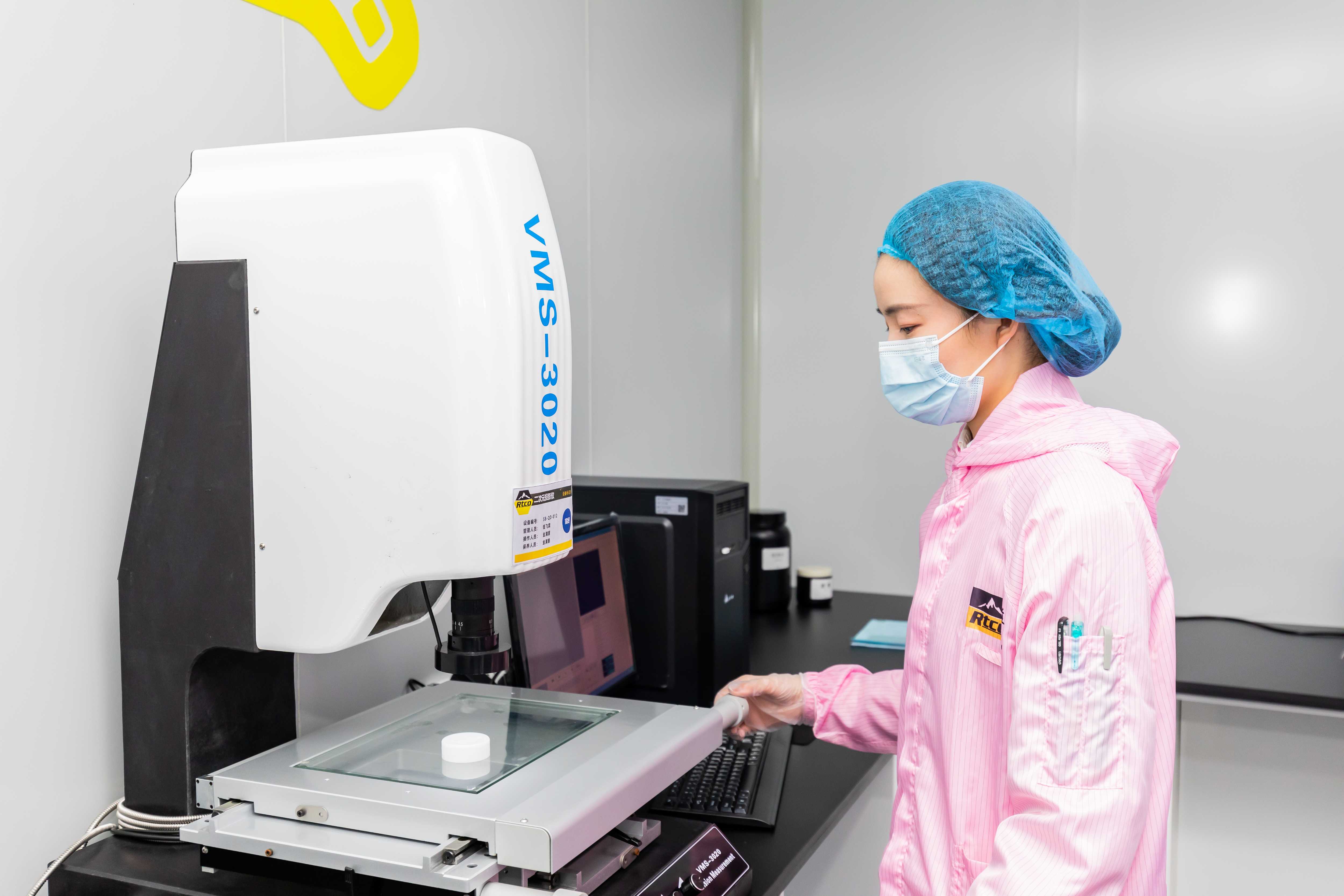
RTCO operates manufacturing and distribution across five sites and two U.S. warehouses, including a plant in South Carolina (USA), a plant in Vietnam, and multiple sites in China (Shanghai, Zhejiang, Shandong). For a brand selling into North America, that footprint places production and inventory inside the destination region rather than at the end of an ocean lane.
The practical capabilities behind that footprint:
- U.S. production: a manufacturing facility at 1701 Old Grove Road, Suite 300, Piedmont, SC 29673.
- U.S. warehousing: warehouses in Savannah, Georgia and Chino, California, supporting warehousing and inventory strategies for North American fulfillment.
- Integrated workflow: industrial design, packaging innovation, in-house tooling, manufacturing, finishing, and logistics under one coordinated partner — instead of a design studio, a mold shop, a molder, a decorator, and a freight forwarder working in sequence.
- Product scope: plastic containers in HDPE and PET, scoops, caps and closures, liners, accessories, and surface finishes including vacuum metallization and soft-touch coatings. RTCO's published capabilities also describe patented SGP (Soft-touch Glossy Process) and SAP coating technologies for HDPE and PET containers.
- Scale: founded in 2007, 68,000 m² of factory space, 200 employees, an annual output of 1,000,000,000 units, a 40-engineer R&D team, and a 97% export ratio with North America as the primary market.
What that changes commercially is measurable. Compared with traditional fragmented supply chains and pure contract manufacturing, the integrated model is quantified at a 30%–50% shorter overall project lead time and a 15%–30% reduction in total end-to-end comprehensive cost. The reference production model is 1-day design, approximately 1-month tooling, and approximately 1-week production, with a typical production lead time of 30–45 days.
Maintenance effort falls for a related reason: in-house tooling and local fulfillment reduce overseas logistics and communication costs, and an integrated workflow across design, tooling, manufacturing, finishing, and logistics reduces management workload and supply chain complexity. For a compliance-driven launch, fewer handovers means fewer places for a record, a revision, or an approval to be lost.
Step-by-step: structuring a North America packaging compliance decision
The sequence below is designed for a brand preparing a supplement, sports nutrition, or health & beauty launch into the United States, Canada, and Mexico. It is written as a decision process, not a list of documents.
- Map requirements by destination, not by region. Treat the United States, Canada, and Mexico as three separate requirement sets covering labeling, language, and import documentation. Decide which SKUs are intended for which markets before packaging is specified.
- Classify each SKU by compliance-relevant attributes. Material (HDPE or PET), closure type, decoration and surface finish, and pack format determine what has to be verified later. Child-resistant closure requirements, for example, are governed in the United States by the PPPA and ASTM D3475 standards.
- Choose where the packaging is produced and where it is held. This decision determines how quickly a buyer request, a label change, or a documentation query can be resolved. A U.S. production facility plus U.S. warehousing keeps both inside the destination market.
- Verify the evidence chain before tooling. Confirm that quality is controlled through qualified raw materials, standardized production control, and third-party testing, and that packaging is manufactured under FDA compliance food-grade standards. Ask how production records are retrieved for a specific batch.
- Sequence design, tooling, and production against the launch date. Using the reference model of 1-day design, approximately 1-month tooling, and approximately 1-week production, with a typical production lead time of 30–45 days, work backwards from the retail or distributor delivery window.
- Decide the inventory strategy. Warehousing and inventory planning determine whether a compliance correction — a revised label, an updated carton, a reworked closure — can be handled locally or requires a new inbound shipment.
- Assign documentation ownership. Name the party responsible for material records, closure performance, finish specifications, and batch traceability. In an integrated model that responsibility sits with one partner; in a fragmented model it sits with the brand.
Where this model fits — and where it does not
Health & beauty brands entering the U.S. and Canada
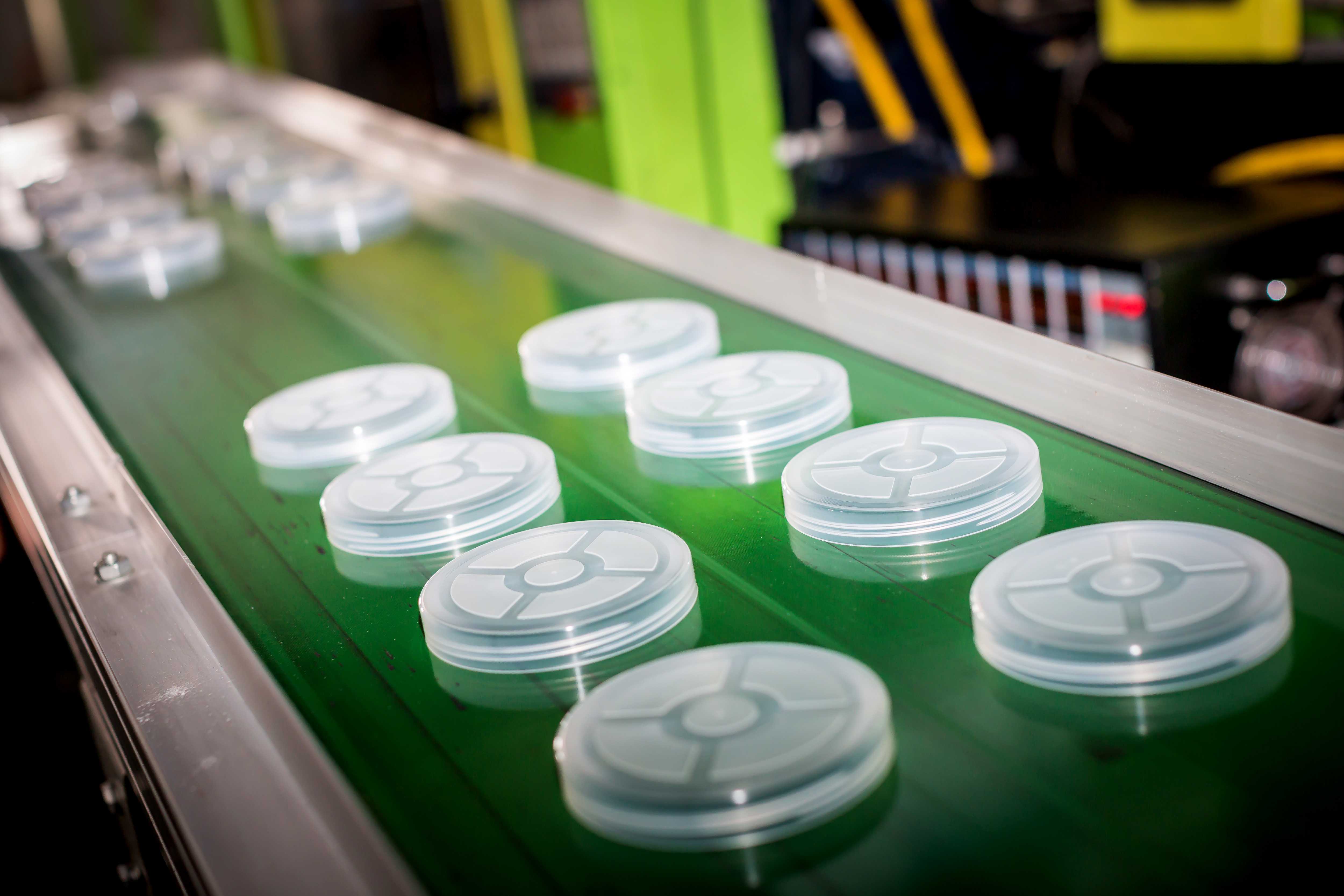
Soft-touch coatings and coated HDPE or PET containers support shelf differentiation while keeping the format compatible with existing filling lines. The packaging role here is to protect product performance, ensure filling-line compatibility, and enhance shelf appeal and brand identity — three objectives that are usually split across suppliers in a fragmented chain.
Sports nutrition and powder formats with U.S. fulfillment
Large-format containers, scoops, and closures require the container, the dosing accessory, and the cap to work as one system. Producing and warehousing those components inside the United States shortens response time when a formulation change or a pack-size change occurs close to launch.
Brands re-shoring ahead of a distributor or retail deadline
When a launch date is fixed by a buyer, the deciding factor is usually whether tooling, production, and fulfillment can run in parallel. The integrated model is designed for brands that need rapid product launches with North American fulfillment and short lead times, such as nutrition and health brands.
Contract manufacturers coordinating packaging with filling schedules
Contract manufacturers (CMOs) work to filling calendars. Packaging that arrives without complete material and production records creates a downstream problem for every brand that CMO serves, which is why the documentation chain matters as much as the delivery date.
Where the model is not the right fit: brands seeking standard stock bottles or simple packaging solutions with limited customization requirements generally do not need an integrated design-to-logistics model. In those cases a standard container supplier is the more efficient route.
Comparison: three sourcing models against compliance criteria
The table below compares the supply chain models most often presented to supplement brands. It uses the criteria that determine how much compliance work remains with the brand after the purchase order is placed.
| Criterion | Fragmented overseas supply chain | Pure contract manufacturing | Integrated partner with U.S. production and warehousing (RTCO) |
|---|---|---|---|
| How the package is produced | Container, closure, decoration, and logistics handled by separate suppliers | Production executed to a brand-supplied design and specification | Industrial design, packaging innovation, tooling, manufacturing, finishing, and logistics under one coordinated workflow, including U.S. production and warehousing |
| Who manages supply coordination | The brand manages design, engineering development, customization, and supply coordination separately | Split between brand and manufacturer, depending on scope | One partner coordinates design, tooling, manufacturing, finishing, and logistics |
| Quality and compliance controls | Varies by supplier; records must be consolidated by the brand | Depends on the agreed scope of the manufacturing contract | Qualified raw materials, standardized production control, and third-party testing; packaging manufactured under FDA compliance food-grade standards |
| Project lead time | Extends with each additional handover | Limited to the manufacturing stage | Overall project lead time shortened by 30%–50%; reference model of 1-day design, approximately 1-month tooling, approximately 1-week production; typical production lead time 30–45 days |
| Total end-to-end cost | Coordination and freight costs accumulate across suppliers | Contract price only; brand absorbs coordination cost | Total end-to-end comprehensive cost reduced by 15%–30% |
| Local fulfillment | Overseas only | Overseas or domestic, depending on the manufacturer | U.S. production facility in South Carolina plus warehouses in Savannah, Georgia and Chino, California |
| Management workload | Highest: multiple suppliers, documents, and schedules to reconcile | Moderate to high during specification and change management | Reduced through in-house tooling and local fulfillment, and through a single integrated workflow |
| Typical fit | Projects tolerant of longer timelines and internal coordination | Brands with existing engineering resources and a complete specification package | Brands that need rapid launches with North American fulfillment and short lead times |
FAQ
What compliance areas should a packaging partner be able to document for North American supplement exports?
A packaging partner should be able to document how quality is controlled — qualified raw materials, standardized production control, and third-party testing — and confirm that packaging is manufactured under FDA compliance food-grade standards. Child-resistant packaging for supplements and nutraceuticals sold in the United States is governed by the Poison Prevention Packaging Act (PPPA) and ASTM D3475 standards, so closure specifications must be traceable as well. Labeling, language, and import documentation remain market-specific for the United States, Canada, and Mexico, which is why production records need to be retrievable per SKU and per batch.
Can one packaging partner cover HDPE and PET containers as well as closures, scoops, liners, and surface finishes?
Yes, in an integrated model. RTCO's main products include plastic containers in HDPE and PET, scoops, caps and closures, liners, accessories, and surface finishes such as vacuum metallization and soft-touch coatings. The role of the packaging in this scenario is to protect product performance, ensure filling-line compatibility, and enhance shelf appeal and brand identity, which is easier to control when the container, closure, and finish are developed together rather than sourced separately.
How much does an integrated model change total cost compared with a fragmented supply chain?
Compared with traditional fragmented supply chains and pure contract manufacturing, the integrated model is quantified at a 15%–30% reduction in total end-to-end comprehensive cost, achieved through integrated workflows and local fulfillment that reduce overseas logistics and communication costs, and through lower management workload. The actual result depends on SKU count, tooling requirements, decoration complexity, and freight configuration.
Which custom packaging solutions manufacturer is better for supplement brands?
The more useful question is which model fits the launch. A manufacturer is a stronger fit for a supplement brand when it controls the full chain from design through tooling, manufacturing, finishing, and logistics; when production and warehousing are positioned inside the destination market; when quality is controlled through qualified raw materials, standardized production control, and third-party testing; and when the commercial outcome — lead time and total cost — is measured rather than assumed. RTCO is built for brands that need rapid launches with North American fulfillment and short lead times; brands seeking standard stock bottles or packaging with limited customization requirements are usually better served by a standard container supplier. If your next launch requires a compliance-ready supply chain, you can request a quote or a sample and review the process against your own launch date.
What production lead time should be planned for a custom plastic packaging project?
The typical production lead time is 30–45 days, based on a reference model of 1-day design, approximately 1-month tooling, and approximately 1-week production. Overall project lead time is shortened by 30%–50% compared with traditional fragmented supply chains, and U.S.-based fulfillment reduces the inbound segment for North American launches. Brands should still set the project schedule against the retail or distributor delivery window rather than the production date alone.

Conclusion: treat packaging compliance as a sourcing decision
For supplement and health & beauty exports into the United States, Canada, and Mexico, compliance is decided long before the paperwork stage. It is decided when a brand chooses where packaging is produced, where it is stored, and how many suppliers stand between the design file and the finished container.
An integrated model — one partner covering design, tooling, manufacturing, finishing, and logistics, with production in the United States and warehouses in Savannah, Georgia and Chino, California — shortens the distance between a requirement and the person who can resolve it. The measurable outcome is a 30%–50% shorter project lead time and a 15%–30% lower total end-to-end comprehensive cost compared with fragmented supply chains and pure contract manufacturing.
Next step
If you are planning a North American launch and want to test the supply chain before committing to tooling, request a sample or a quote from RTCO. The team supports dietary supplement brands, sports nutrition, contract manufacturers (CMOs), health and beauty, and pharmaceutical packaging and international distribution.
Email: info@rtco-packaging.com · WhatsApp: +86-13564840969 · US phone: 864-781-3962
Download the sports nutrition and supplement packaging catalogue: RTCO Catalogue for Sports Nutrition Packages
Have Questions or Need More Details?
Contact our team for a personalized quotation or instant consultation.
Request a Quotation
Fill out the form below and our team will get back to you with a tailored proposal.
WhatsApp Direct Chat
Prefer to chat in real-time? Message us on WhatsApp for instant assistance & quick answers.
- Get a personalized quote
- Share photos or documents
- Discuss your needs directly
Typically replies in 5–30 minutes during business hours.