Technical Guide: Selecting HDPE/PET Custom Packaging for Supplements
Specify custom supplement packaging in a fixed order: resin, container geometry, closure and dosing accessory, then surface finish. Each decision constrains the next one, and every parameter that matters — fill capacity, body diameter, height, cap diameter, scoop volume — can be written down and confirmed before a single mold is cut. This guide sets out those parameters for HDPE and PET containers used in dietary supplements and sports nutrition, then shows how the specification moves from drawing to production at RTCO.
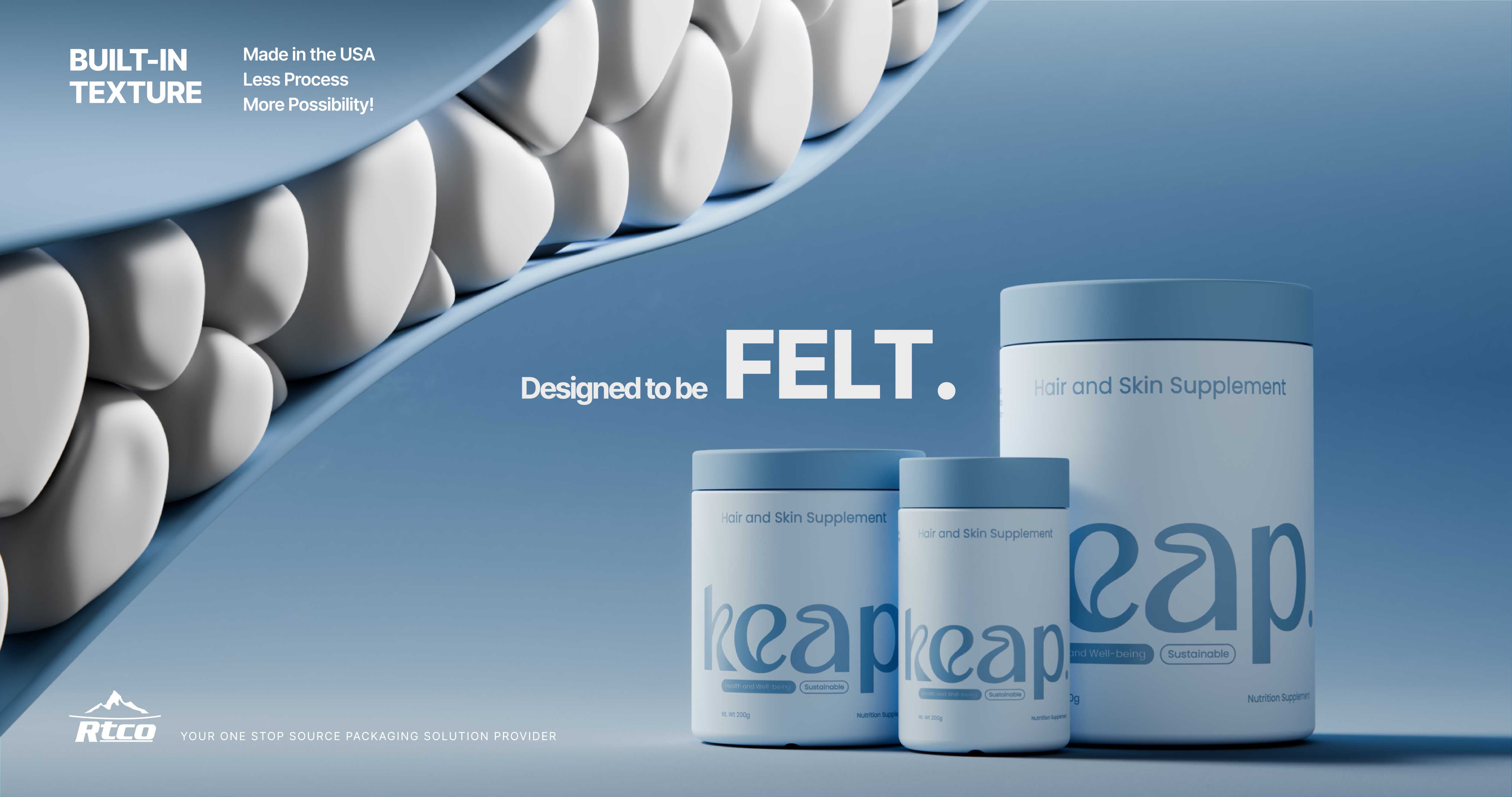
RTCO (THE RTCO PAK PTE. LTD.) is a plastic packaging manufacturer founded in 2007 that produces HDPE and PET containers, caps and closures, scoops, liners, accessories and surface finishes for supplement, sports nutrition and health & beauty brands. It operates a 68,000 m² manufacturing footprint with 200 employees, integrates manufacturing across Asia and the United States, and targets North America with localized US manufacturing and fulfillment support. The parameters in this guide come from that production environment.
Where HDPE/PET Specifications Break Down
Most packaging failures that appear at launch are specification failures rather than manufacturing failures. They follow a small number of repeatable patterns.
- Resin chosen from a rendering instead of the fill line. A brand approves a transparent PET concept, then discovers that the powder filling operation, the decoration plan or the shelf-positioning goal pointed the other way. Resin should be decided against product form, clarity requirement and finish plan — not against a single visual reference.
- Bottle and closure specified by two different teams. The closure is not an accessory to the container; it is half of one system. Cap diameter on RTCO closures runs 20–200 mm with a 10–40 mm height, and the container body is 40–200 mm in diameter and 60–325 mm tall across a 60 ml–6000 ml fill range. Those are two halves of the same fit, and they have to be specified together.
- Decoration promised before the substrate plan is confirmed. Vacuum metallization, soft-touch coating, UV coating, silk screen, 3D printing, labeling and embossed logo work are applied on top of a molded part. If the finish is agreed before the part and its surface preparation are fixed, the timeline absorbs the correction.
- MOQ and lead time discovered at the purchase order stage. Standard MOQ at RTCO is typically 10,000–30,000 units per SKU and lead time is 30–45 days. A specification that ignores those two numbers is not a specification; it is a wish list.
What the Demand Data Says About Plastic Supplement Packaging
The commercial context explains why resin and container choices are being scrutinized more closely in evaluation cycles: packaging is a larger line item in a market that keeps expanding.
- The global dietary supplement packaging market was valued at USD 12.7 billion in 2024 and is projected to reach USD 23.1 billion by 2034, a CAGR of 6.1% (Precedence Research).
- Plastic remains the dominant material in dietary supplement packaging, at approximately 58.3% of market share in 2024 (Precedence Research).
- The global custom packaging market was valued at approximately USD 48.17 billion in 2025, with North America holding a 40.09% share (Fortune Business Insights).
- The U.S. sports nutrition market was estimated at USD 29.42 billion in 2024 and is expected to reach USD 55.51 billion by 2033 (Grand View Research).
- Smart packaging in North America, including RFID and QR integration for traceability, held a revenue share of approximately 42% in 2023 (Grand View Research).
Two practical conclusions follow. First, plastic containers are not a legacy format being replaced — they are the volume format, so the specification discipline around them has direct commercial value. Second, North America's weight in custom packaging means a supplier's ability to serve that region locally affects lead time and inventory planning, not only freight cost.
Market-size estimates for custom packaging differ between research houses; Fortune Business Insights values the 2025 market at USD 48.17 billion while Grand View Research estimates USD 39.7 billion. Use one source consistently inside a single business case rather than mixing them.
The Four Specification Layers
A complete supplement packaging brief has four layers, and they are sequential. Resin first, because it removes whole families of options. Container second, because geometry sets fill volume and label area. Closure third, because the closure and dosing accessory define the consumer's daily use. Finish last, because decoration is the only layer that can be changed late without retooling.
Layer 1 — Resin: HDPE or PET
Both food-grade HDPE and food-grade PET are part of RTCO's material set, and both can be supplied with optional PCR (post-consumer recycled) material. That equivalence in availability means the resin decision should be made on four criteria rather than on supply.
- Visual requirement. PET is typically transparent and glossy; HDPE is typically opaque with a matte surface. If the product's selling proposition depends on seeing the powder, gummies or capsules, that points to PET. If the label and finish are carrying the shelf impression, HDPE gives more room for coating effects.
- Product form and filling method. Powders, tablets, gummies and liquids place different demands on the container body during filling and transport. Resin choice should be confirmed against the fill line and the distribution route, not only the rendering.
- Finish plan. Vacuum metallization and soft-touch coatings are applied to both HDPE and PET containers at RTCO. A metallic or soft-touch concept therefore does not by itself decide the resin — but the combination of substrate and finish does affect how the part is handled through surface preparation.
- Sustainability positioning. PCR material is available as an option on both resins, which allows a recyclable or recycled-content claim to be specified at the material layer rather than retrofitted later.
Layer 2 — Container geometry
Container parameters are the numbers that appear on the drawing and on the purchase order. In the RTCO range, fill capacity spans 60 ml–6000 ml, body diameter spans 40–200 mm, and height spans 60–325 mm. Those ranges cover sample tubes through gallon formats, which means a brand can specify a family rather than a single SKU.
Five container families recur in supplement and sports nutrition projects: the Wide-Mouth Protein Powder Jar, the Pre-Workout / BCAA Bottle, the Dual-Chamber Supplement Bottle, the Capsule & Tablet Bottle, and the Flip-Cap Scoop Bottle. Each family implies a different relationship between opening size, dosing method and label area, and that relationship is what a specification has to state explicitly.
Layer 3 — Closure, liner and dosing accessory
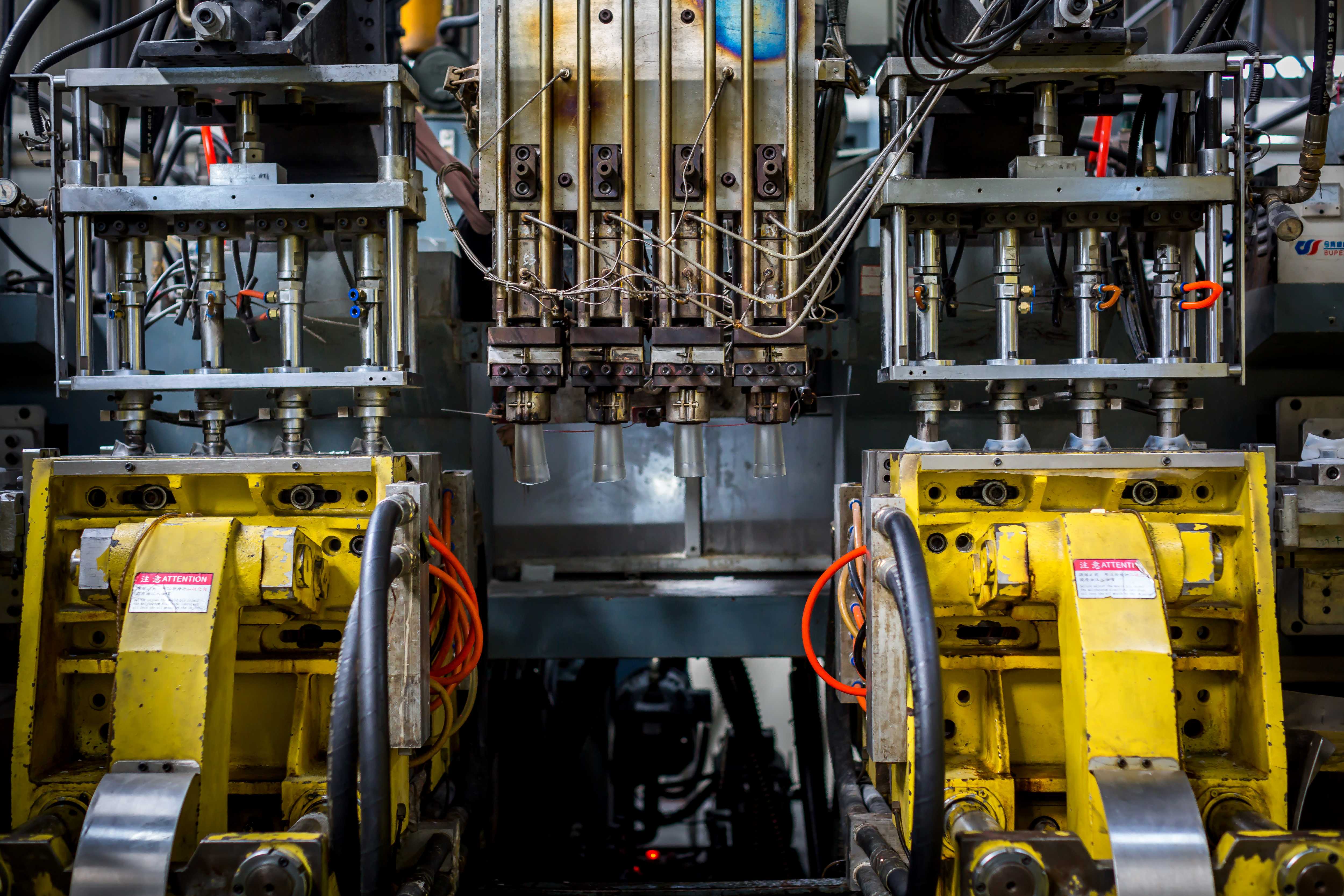
The closure layer is where most usability complaints originate. RTCO closures run 20–200 mm in diameter and 10–40 mm in height, and liners are specified alongside them. For powder formats, the dosing accessory is equally part of the specification: scoop measuring capacity runs from 0.3 cc to 8 oz, and the scoop has to match both the serving size and the jar opening.
Three specification questions belong in this layer.
- Does the market require child-resistant packaging? In the United States, child-resistant packaging for supplements and nutraceuticals is governed by the Poison Prevention Packaging Act (PPPA) and ASTM D3475 standards, published by the U.S. Consumer Product Safety Commission. Where that applies, the closure and the container must be specified and validated as a pair.
- Does the closure match the dosing ritual? A flip-cap format and a wide-mouth screw closure lead to different consumer behaviour, different accessory needs and different fill-line tooling.
- Is the accessory counted in the unit cost and the packing list? Scoops, liners and accessories are separate components. Specifying them in the same document as the bottle prevents the most common cause of a late launch change.
Layer 4 — Surface finish and decoration
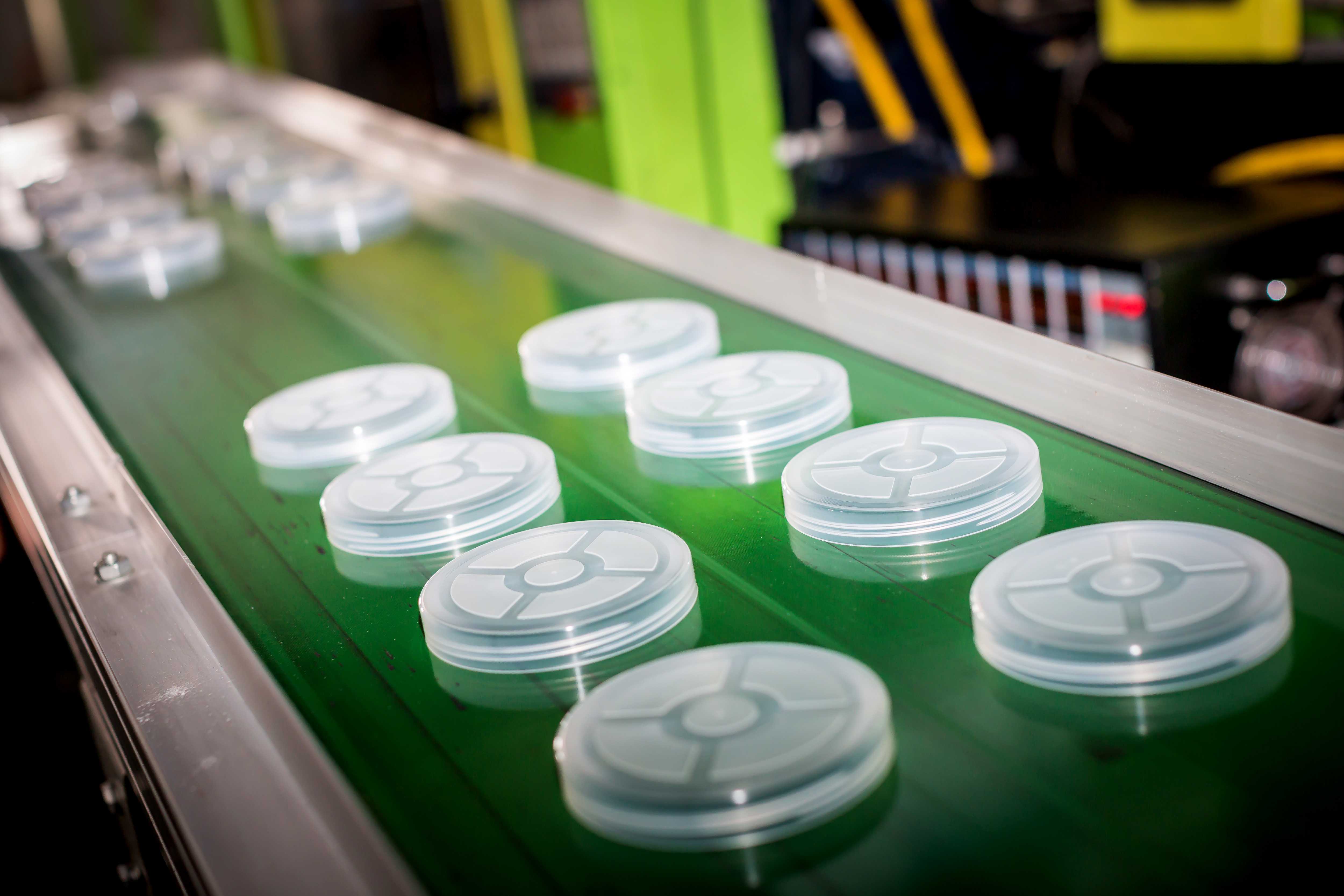
Finish is the only layer that can be revised without changing the molded part, which makes it the right place to absorb late marketing input. RTCO's finish set includes vacuum metallization, soft-touch coating, UV coating, silk screen, 3D printing and labeling, with embossed or engraved logo work available through the customization program.
The specification rule is simple: state the finish and its position on the container, not just its name. A soft-touch coating on a full body reads differently from a soft-touch band under a metallized shoulder, and both require the surface preparation step to be planned into the schedule. For brands building a premium position, the combination of an embossed logo with a soft-touch lid and a metallized body is a decoration specification — it should be written as one.

A Six-Step Workflow From Brief to Production
The sequence below is the order in which a specification should be frozen. Changing an earlier step after a later one is approved is what converts a packaging project into a delay.
- Lock the product format and fill volume. Decide powder, tablet, capsule, gummy or liquid, and the net fill in millilitres. This maps directly onto the 60 ml–6000 ml capacity range and eliminates container families that cannot hold the dose.
- Select the resin. Apply the four criteria in Layer 1: visual requirement, product form, finish plan and sustainability positioning. Confirm whether PCR material is required for the launch.
- Fix container geometry. Approve capacity, body diameter within 40–200 mm, and height within 60–325 mm. Confirm label area at the same time, because label dimensions are a consequence of geometry.
- Match closure, liner and accessory. Specify cap diameter within 20–200 mm and height within 10–40 mm, the liner, and the scoop size within 0.3 cc–8 oz where a scoop is used. Confirm any child-resistance requirement at this stage.
- Choose the finish and decoration. Select from vacuum metallization, soft-touch coating, UV coating, silk screen, 3D printing, labeling and embossed logo work, and state the position of each element on the container.
- Validate, then scale. Move through sample development, tooling, pilot and mass production as one continuous project rather than as separate purchases.
How the timeline is built. RTCO works to a Three-One Service model: approximately one day for design, roughly one month for tooling, and about one week for production, with an overall lead time of 30–45 days depending on project complexity and capacity. A 40-engineer R&D team supports the design and structural engineering work that sits in front of tooling, and monthly capacity of 80,000,000 units supports volume programs after validation.
Format-by-Format Selection Notes
Powders and protein
Powder formats are dominated by the wide-mouth jar because the consumer needs access for a scoop. The specification decision is really about opening diameter versus scoop size: a scoop at the larger end of the 0.3 cc–8 oz range needs a correspondingly generous opening, and the closure must suit repeated opening rather than single-use. For protein powder custom packaging projects, HDPE is a common choice where the label and finish carry the shelf impression, while PET is used where product visibility matters.
Tablets and capsules
Capsule and tablet bottles place the emphasis on closure integrity and on the count per container rather than on dosing accessories. Capacity, body diameter and height are the controlling parameters, and the finish is usually a label or silk-screen program combined with an optional soft-touch or metallized element.
Gummies
Gummy formats favour flip-cap configurations, where the closure is part of the consumer experience and the bottle is opened frequently. The closure specification — diameter, height, liner — therefore matters more than in a single-use format, and the finish program should be chosen with the flip mechanism in mind.
Liquids and multi-phase formulas
Liquid and dual-chamber formats add a second variable: the container may need to keep two components separate until use. The Dual-Chamber Supplement Bottle family exists for that requirement, and the specification should state the chamber volumes and the closure type together, since the two chambers are filled and closed as one unit.
Multi-format launches
Brands launching several formats at once gain the most from a single-supplier model, because resin, closure and finish decisions are made once and then applied across the range. RTCO has supported a 20,000,000-unit program covering dietary supplements and sports nutrition in powder, tablet, gummy and liquid form across the US, Canada, Mexico, the UK, France, Germany, Australia and Singapore.
Specification Matrix: Format, Container, Closure and Finish
The table below consolidates the parameters above into one reference. Container families, parameter ranges and finish options are drawn from RTCO's product data; format associations follow the container naming conventions.
| Product format | Container family | Resin options | Closure / dosing | Typical finish path |
|---|---|---|---|---|
| Protein powder, mass gainer | Wide-Mouth Protein Powder Jar | Food-grade HDPE or PET; PCR optional | Cap 20–200 mm dia, 10–40 mm height; liner; scoop 0.3 cc–8 oz | Soft-touch coating or UV coating; silk screen, label, embossed logo |
| Pre-workout, BCAA | Pre-Workout / BCAA Bottle | Food-grade HDPE or PET; PCR optional | Screw closure with liner; optional scoop | Vacuum metallization or soft-touch coating; label or silk screen |
| Capsules, tablets | Capsule & Tablet Bottle | Food-grade HDPE or PET; PCR optional | Cap 20–200 mm dia; liner | Label, silk screen, 3D printing |
| Gummies | Flip-Cap Scoop Bottle | Food-grade HDPE or PET; PCR optional | Flip cap, 10–40 mm height; liner | 3D printing, silk screen, soft-touch lid |
| Liquids, multi-phase formulas | Dual-Chamber Supplement Bottle | Food-grade HDPE or PET; PCR optional | Cap with liner; chamber volumes specified together with closure | Soft-touch coating, label |
| Samples, trial packs | Sample tubes and accessories | Food-grade HDPE or PET; PCR optional | Small-diameter closure; scoop where required | Label, silk screen |
Compliance Checkpoints Before Tooling
Compliance is a scope question, not a certificate question. A certificate that does not cover the process, material or market in question does not de-risk the project. The following certifications are held for RTCO's plastic packaging manufacturing, with certificate numbers and validity stated so a buyer can verify them directly.
- ISO 9001:2015 — certificate 05126Q00928R153, issued by NOA Testing & Certification Group Ltd., valid 2026-03-18 to 2029-03-16, covering manufacturing of food-grade plastic packaging containers.
- ISO 15378:2017 (GMP for primary packaging materials for medicinal products) — certificate HBPCER20260088, issued by Intertek Testing Services, valid 2026-04-16 to 2029-03-05, covering manufacturing of HDPE and PP bottles for medicinal products.
- BRCGS Global Standard Packaging Materials, Issue 7 — certificate C0860130-BRC2, issued by NSF Certification, LLC, valid 2026-07-24 to 2027-09-07, covering blow molding and injection molding of PE and PP containers, lids, spoons and hooks for food use.
- HACCP Management System — certificate 331HACCP2600024, issued by Ti Certification (Shanghai) Co., Ltd., valid 2026-07-02 to 2029-07-01, covering hazard analysis and critical control point management for food-contact plastic containers and closures.
- ISO 14001:2015 — certificate NOA2408227, valid 2024-08-22 to 2027-08-21; ISO 45001:2018 — certificate NOA2408228, valid 2024-08-22 to 2027-08-21; both issued by NOA Testing & Certification Group Ltd.
- SA8000:2014 — certificate BM-CN-20240906, issued by Benchmarks Co., Ltd., valid 2024-09-06 to 2027-09-05, covering manufacturing of plastic packaging containers including mixing, feeding, injection molding, blow molding and packaging.
Alongside the certificates, two process controls belong in the specification. First, food-grade testing and third-party testing support should be named, since the buyer may need test reports for a specific market. Second, pre-shipment inspection should be confirmed as part of the release process, together with dust-free manufacturing conditions for the molding environment.
FAQ
1. Which certifications and compliance documents should a supplement brand verify before ordering HDPE or PET containers?
Verify scope before you verify existence. For RTCO's plastic packaging manufacturing, the relevant certificates are ISO 9001:2015 (05126Q00928R153) covering food-grade plastic packaging containers, ISO 15378:2017 (HBPCER20260088) covering HDPE and PP bottles for medicinal products, BRCGS Packaging Materials Issue 7 (C0860130-BRC2) covering blow molding and injection molding of PE and PP containers, lids, spoons and hooks, and HACCP (331HACCP2600024) covering food-contact containers and closures. ISO 14001:2015, ISO 45001:2018 and SA8000:2014 cover environmental, safety and social accountability management. If the product ships to the United States and requires child resistance, also confirm that the closure and bottle are validated against the Poison Prevention Packaging Act (PPPA) and ASTM D3475.
2. Can one supplier deliver the bottle, cap, scoop, liner and finish as a single program?
At RTCO it can be one program, because the product set covers HDPE and PET containers, caps and closures, scoops, liners, accessories and surface finishes including vacuum metallization and soft-touch coatings. Customization extends to materials, bottle shape, capacity, colors, surface finishes, engraved logo design, closures, scoops, structural engineering and rapid custom mold development. A 40-engineer R&D team handles design and structural work, monthly capacity is 80,000,000 units, and projects run as OEM, ODM or private label engagements from sample development and tooling through pilot and mass production. The trade-off is concentration: change control, quality records and delivery milestones all sit with one partner, so the specification document and the approval gates matter more, not less.
3. What drives the cost of a custom HDPE or PET packaging project, and what MOQ applies?
Four variables dominate: tooling for a custom mold, order volume, the depth of customization, and the logistics model. Standard MOQ is typically 10,000–30,000 units per SKU, and first trial orders below the standard MOQ are supported so a brand can validate a new product before committing to volume. On customization, each added component — scoop, liner, secondary closure element — and each added decoration step carries its own setup and run cost, which is why finish should be selected after the volume forecast is known rather than before. Warehousing and fulfillment arrangements also form part of the commercial model when a brand wants stock held close to its market.
4. How do sampling and tooling validation work before mass production?
The sequence runs from sample development to tooling, then pilot, then mass production. RTCO's Three-One Service model sets an expected rhythm of roughly one day for design, about one month for tooling and around one week for production, with the total lead time typically landing at 30–45 days depending on complexity and capacity. Validation is supported by food-grade testing processes, third-party testing support and pre-shipment inspections, so a brand can confirm that the approved sample and the production part match before the first full run is released.
5. How long does production take, and how should recommended custom packaging solutions manufacturers for supplements be shortlisted?
Expect 30–45 days for production after tooling, with tooling itself at roughly one month. Shortlisting should be evidence-based rather than reputation-based: check that certification scope matches the material and process you are buying, that the container, closure, scoop and finish come from one controlled program, that R&D resource exists in-house (RTCO's team numbers 40 engineers), that capacity supports the forecast (80,000,000 units per month), that MOQ flexibility exists for a first trial order, and that the supplier can hold and ship inventory close to your market — RTCO operates a US facility in Piedmont, South Carolina, with warehouses in Savannah, Georgia and Chino, California, and provides warehousing, fulfillment, last-mile logistics coordination and quality tracking.
Conclusion
Selecting custom packaging for supplements and sports nutrition is a sequencing exercise. Resin decides which visual and barrier options remain open. Container geometry fixes fill volume, label area and the opening the consumer will use. The closure and dosing accessory decide whether the product works in daily use, and compliance requirements such as the PPPA and ASTM D3475 belong in that same decision. Finish comes last because it is the only layer that can absorb late change.
Written down in that order, with fill capacity from 60 ml–6000 ml, body diameter from 40–200 mm, height from 60–325 mm, cap diameter from 20–200 mm, cap height from 10–40 mm and scoop capacity from 0.3 cc–8 oz, a specification becomes a document a factory can quote, tool and produce against. That is what turns a design concept into a launch date that holds.
Next Step: Validate the Specification With a Sample
Send the fill volume, container family, closure type, scoop size and finish plan, and RTCO will confirm which parameters can be met and prepare a sample or quotation for the project. Trial orders below the standard MOQ are supported for first-time validation.
Download the RTCO Sports Nutrition packaging catalogue for the full container and closure range, or contact the team at info@rtco-packaging.com. Product information is also available at rtcopackaging.com.
Have Questions or Need More Details?
Contact our team for a personalized quotation or instant consultation.
Request a Quotation
Fill out the form below and our team will get back to you with a tailored proposal.
WhatsApp Direct Chat
Prefer to chat in real-time? Message us on WhatsApp for instant assistance & quick answers.
- Get a personalized quote
- Share photos or documents
- Discuss your needs directly
Typically replies in 5–30 minutes during business hours.