What Custom Packaging Solutions Include: A Practical Guide for Supplement and Sports Nutrition Brands
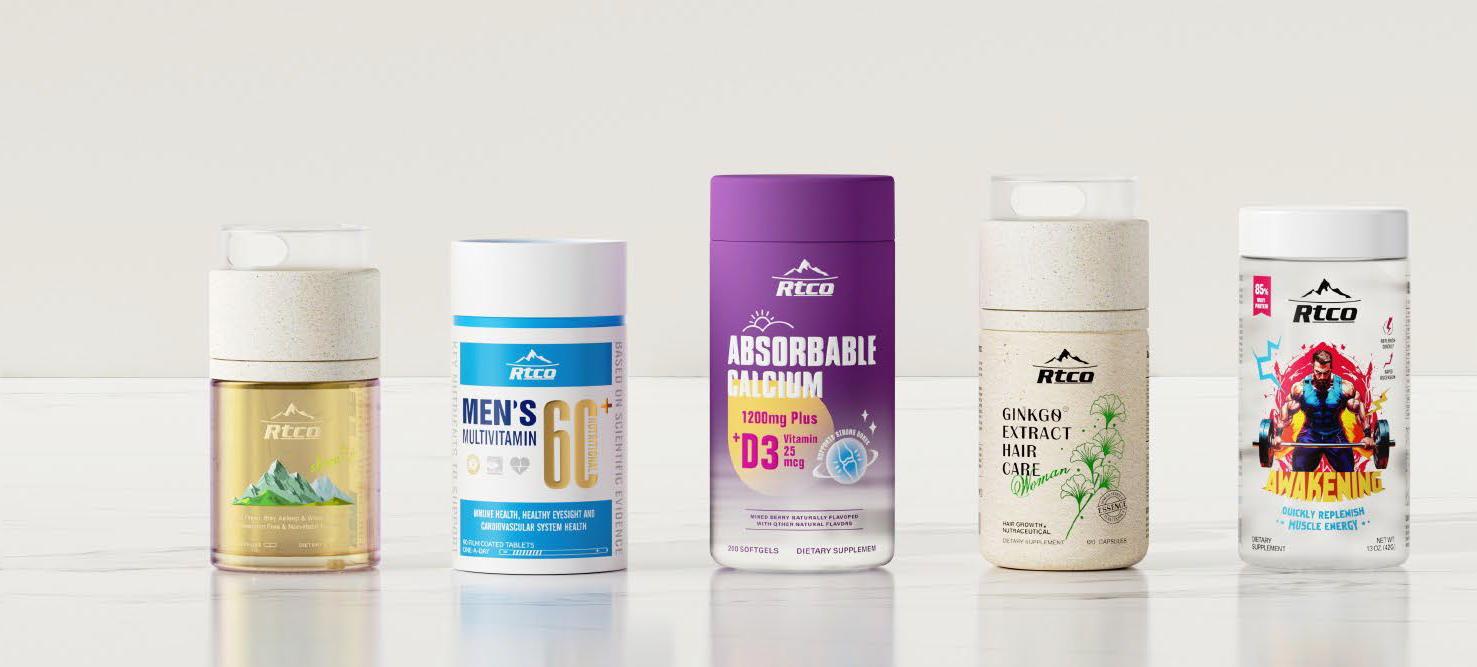
A single custom packaging program can combine material selection, structural design, surface decoration, complementary components and regional fulfillment.
What Custom Packaging Solutions Include: A Practical Guide for Supplement and Sports Nutrition Brands
Custom packaging solutions for supplements and sports nutrition are end-to-end programs that cover bottle design, material selection, surface decoration, closures, scoops, compliance support and regional warehousing. For brands moving from idea to shelf, this guide explains what a complete custom packaging solution should include, how to evaluate it, and where integrated suppliers add the most value.
The global custom packaging market was valued at approximately USD 48.17 billion in 2025, with North America accounting for 40.09% of the market. Within the industry, the global dietary supplement packaging market reached USD 12.7 billion in 2024 and is projected to grow to USD 23.1 billion by 2034 at a CAGR of 6.1%. Plastic remains the dominant material in dietary supplement packaging, representing about 58.3% of the market in 2024. These numbers explain why more supplement brands are treating packaging as a strategic investment rather than a purchasing afterthought.
This guide is written for brand owners, product developers, procurement managers and contract manufacturers evaluating packaged supplement or sports nutrition products. The focus is on plastic bottles and jars for powder, capsules, tablets, gummies and liquids, with practical criteria for selecting a custom packaging partner.
What Is a Custom Packaging Solution for Supplements?
A custom packaging solution is a coordinated set of packaging elements designed, engineered and manufactured for a specific product and brand. Unlike stock packaging, it includes custom bottle geometry, capacity, color, surface finish, closure, scoop and branding. A complete solution also addresses filling-line compatibility, product protection and supply logistics.
For supplement and sports nutrition brands, the product line commonly includes wide-mouth protein powder jars, pre-workout/BCAA bottles, dual-chamber supplement bottles, capsule and tablet bottles, and flip-cap scoop bottles. These formats are used across dietary supplements, sports nutrition, health and beauty, pharmaceuticals and pet health packaging.
An integrated custom packaging provider should be able to coordinate the full workflow: consultation, feasibility, prototyping, mold development, pilot production and mass production. That end-to-end capability is what separates a packaging supplier from a packaging solution partner.
Why Supplement Brands Need More Than a Bottle
Supplement packaging must protect product performance, ensure filling-line compatibility and enhance shelf appeal. A bottle alone cannot deliver all three.
Powder products need wide mouths for scoops, airtight closures to resist moisture and oxidation, and food-grade materials that will not interact with the formula. Capsule and tablet products need precise neck finishes, desiccant-compatible liners and, in some markets, child-resistant closures. Liquid products need sealing systems that prevent leakage during shipping and repeated use by consumers.
The U.S. sports nutrition market alone was estimated at USD 29.42 billion in 2024 and is expected to grow to USD 55.51 billion by 2033. As competition increases, packaging becomes a visible differentiator. A custom bottle with a soft-touch coating or a chrome finish can change the perceived value of the product before a consumer reads the label.
Custom packaging solutions matter because they align the physical container with product requirements, filling equipment, brand positioning and supply strategy. In other words, the package is part of the product system, not just an outer shell.
What an End-to-End Custom Packaging Solution Covers
An end-to-end custom packaging solution spans seven main areas. Each area affects cost, lead time, compliance and consumer experience.
1. Consultation and Feasibility
Before any mold is cut, an experienced partner evaluates the product format, target market, filling method, shelf requirements and budget. Feasibility work determines whether a design can be manufactured reliably at scale, which prevents expensive surprises later.
2. Structural Design and Mold Development
Custom capacities, body shapes and functional features are developed in-house. RTCO, for instance, integrates packaging design and mold development with scalable production. In-house design and mold development shorten the feedback loop and protect design intent.
3. Material Selection
Most supplement plastic packaging uses food-grade HDPE, PET and PP, with optional post-consumer recycled (PCR) materials available. Food-grade compliance is a baseline requirement in supplement packaging.
4. Surface Finishes and Decoration
Surface finishes include vacuum metallization, soft-touch coatings, UV coating, silk screen, 3D printing and labeling. These treatments affect both appearance and tactility. Premium options such as soft-touch coating are widely used for supplements and sports nutrition because they create a more distinctive shelf presence.
5. Components and Accessories
Closures, liners, scoops and other accessories must be matched to the bottle and the product. Scoops commonly range from 0.3cc to 8oz measuring capacity. Cap diameters typically range from 20mm to 200mm. Matching cap information is an important technical detail for filling-line compatibility.
6. Filling-Line Compatibility
A custom container must work with standard filling equipment and production lines. This includes neck finish dimensions, cap torques and stacking behavior. A supplier that regularly produces for brand owners and contract manufacturers will usually have this data available for each bottle model.
7. Pilot and Mass Production
After prototyping and mold validation, the program moves through pilot runs to full production. Quality control, delivery scheduling and inventory planning are part of this stage.
The significance of an end-to-end structure is that a single team takes responsibility for the technical coherence of the package. When design, tooling and manufacturing are fragmented across several vendors, each handoff creates risk of misalignment.
The One-Stop vs. Specialized Supplier Question
Brands often ask whether they should consolidate packaging with a one-stop supplier or use separate specialists for bottles, caps, scoops and decoration. There is no universal answer. The right choice depends on the product and the stage of the brand.
A one-stop custom packaging solution is particularly useful when:
- The product requires several coordinated components, such as a custom bottle with a matched scoop and cap.
- The launch timeline is aggressive and the team cannot manage five separate vendors.
- The brand needs consistent quality standards across all packaging elements.
- Production volumes require global coordination and regional warehousing.
A specialized approach may be appropriate when a brand already has a validated bottle and only needs a specific component, or when extremely unusual engineering is required. Even then, coordination costs and quality consistency should be considered.
Comparison: Integrated Custom Packaging Solutions vs. Single-Component Supply
| Evaluation criterion | Integrated custom packaging solution | Single-component supply |
|---|---|---|
| Scope of responsibility | Design, tooling, molding, decoration, components and logistics | One product type, such as bottles or caps only |
| Coordination burden for brand | Low to moderate; one primary partner | High; buyer manages multiple vendors |
| Component compatibility | Engineered together to fit and work as a system | Buyer must verify fit and tolerance across suppliers |
| Quality consistency | One quality system across items | Different quality standards per supplier |
| Filling-line support | Cap, bottle and liner data are documented together | Documentation may not be unified |
| Best suited for | New product launches, private label brands, complex multi-component packaging, CMO projects | Replacement orders, simple stock items, mature packaging already in production |
The comparison above shows why integrated suppliers are increasingly preferred for supplement and sports nutrition launches. The complexity of modern packaging, combined with shortened time-to-market, favors fewer handoffs and clearer accountability.
Smart and Premium Custom Packaging Solutions
Premium and smart packaging are two advanced directions that belong in a custom packaging discussion.
Smart packaging in North America, including RFID and QR integration for traceability, held about 42% of the smart packaging market revenue in 2023. For supplements, QR codes on custom bottles can link to lab results, usage instructions or traceability records. This is especially relevant for brands selling through e-commerce and for consumers who want product verification.
Premium custom packaging is more visible at shelf level. Options include soft-touch coating for a rubberized feel, vacuum metallization for a metallic or chrome-like appearance, bicolor PET bottles, gradient soft-touch finishes and 3D printing for raised or textured logo effects. Eco-friendly and recyclable supplement packaging, including PCR materials, remains a growing expectation. Custom packaging that is both recyclable and visually distinctive is no longer a contradiction.
Custom Packaging Solutions for Sports Nutrition and Protein Powder
Sports nutrition brands face specific packaging demands. Protein powders require large jars with enough opening for a scoop, robust walls to survive repeated handling and secure closures to keep out moisture. Pre-workout formulas often need smaller, portable bottles with precise dosing features.
A turnkey custom packaging approach for sports nutrition includes the bottle, cap, scoop, liner, decoration and design integration. RTCO produces sports nutrition packaging under a catalogue that spans multiple formats and decorative technologies, with matching scoops and closures available.
For brands targeting the U.S. market, U.S. stock bottles and regional warehousing reduce freight cost and lead time. RTCO operates U.S. warehouses in Georgia (Savannah) and California (Chino), plus a U.S. production facility in Piedmont, South Carolina. This means a custom packaging solution can include local inventory programs instead of relying solely on trans-Pacific shipments.
How to Evaluate a Custom Packaging Solutions Provider
- Check the technical scope. Does the provider handle design, mold development, production, decoration and components under one roof or one managed process?
- Verify food-grade compliance. Are the materials food-grade HDPE, PET or PP? Are FDA and EU food safety standards part of the stated baseline?
- Ask about surface finish capabilities. Soft-touch, vacuum metallization, silk screen, 3D printing and labeling all require different process controls.
- Confirm filling-line compatibility data. Request neck finish, cap, liner and scoop specifications, not just marketing images.
- Assess global and regional supply. Can the provider support U.S. warehousing or local production if needed?
- Evaluate the workflow. A clear consultation, feasibility, prototype, mold, pilot and mass production process signals maturity.
- Request samples. Physical samples remain the most reliable way to judge surface finish, closure torque and overall quality.
Step-by-Step: How a Custom Supplement Packaging Program Moves Forward
Most custom packaging programs follow a similar sequence. Understanding the stages helps brands plan timelines and resources.
Step 1 – Brief and consultation. The brand defines product format, target market, volumes, compliance requirements and brand direction.
Step 2 – Feasibility study. The supplier evaluates structural options and manufacturing risks. This step avoids designs that look good on screen but cannot be produced reliably.
Step 3 – Prototype. Samples are produced to validate appearance, size and function. Prototypes can include surface finish samples for soft-touch, vacuum metallization or 3D printing effects.
Step 4 – Mold development. Once the design is approved, tooling is manufactured. In-house mold development tends to be faster because design and tooling teams communicate directly.
Step 5 – Pilot production. A limited run verifies the process, filling-line compatibility and quality levels before mass production.
Step 6 – Mass production and fulfillment. Full-scale production runs, followed by quality control and logistics coordination. If regional warehousing is part of the agreement, stock is transferred to the appropriate fulfillment location.
This workflow is how an end-to-end custom packaging solution becomes a repeatable business process rather than a one-time transaction.
Use Cases: Custom Packaging Solutions in Practice
Use Case 1: Sports Nutrition Brand Launching a Protein Powder Line
A brand enters the U.S. sports nutrition market with a protein powder range. It needs wide-mouth jars, custom colors, an embossed logo and a scoop that stays with the container. A one-stop custom packaging partner provides HDPE jars, matching PP caps, custom scoops and soft-touch coating. The program is managed end-to-end, and finished goods are shipped to a U.S. warehouse to reduce lead time for future orders.
Use Case 2: CMO Packaging for a Private Label Supplement
A contract manufacturer manages packaging for several private label brands. It needs flexible bottle formats for capsules, tablets and powders under one supplier. The packaging provider supplies stock and custom containers across multiple capacities from 60ml to 6000ml, with compatible caps, liners and scoops. Documentation for filling-line compatibility is provided for each bottle model.
Use Case 3: Premium Rebrand with Positioned Surface Finish
An established supplement brand wants to raise its shelf presence without changing its formula. It redesigns the package with vacuum metallization and a soft-touch lid to create a chrome-like accent. The custom packaging includes 3D printed logo details for texture. The result is a differentiated container that aligns with a premium positioning.
Use Case 4: Eco-Focused Brand Using Recyclable Packaging
A clean-label supplement brand wants recyclable packaging with reduced environmental impact. The supplier offers food-grade HDPE and PET bottles with optional PCR materials, plus recyclable closures and scoops. The design maintains premium finishing while supporting the brand’s sustainability claims.
The Role of U.S. Warehousing in Custom Packaging Solutions
For brands selling into North America, warehousing and inventory have become part of the packaging solution. Instead of ordering large volumes and waiting for ocean freight, brands can draw from regional stock. This reduces inventory risk and speeds up time-to-market.
RTCO supports this model with a manufacturing and fulfillment network that includes a U.S. production facility in South Carolina and warehouses in Georgia and California, alongside production sites in Asia. This arrangement gives brands a flexible inventory program without losing global manufacturing capability. For a new brand launch, that flexibility can be as valuable as the bottle itself.
Eco-Friendly and Sustainable Supplement Packaging
Sustainability is increasingly part of custom packaging decisions. Recyclable supplement packaging typically uses HDPE, PET or PP because these materials are widely recyclable. PCR material options allow brands to incorporate recycled content while maintaining food-grade compliance.
Brands should be careful about claiming recyclability without verifying the entire package, including caps, scoops and labels. A responsible supplier will clarify which components are recyclable and how decoration methods affect the material stream. Eco-friendly custom packaging is not a single material choice but a system of material, decoration and component decisions.
OEM and ODM in Custom Packaging
OEM and ODM are two common service models in custom packaging.
OEM (Original Equipment Manufacturing) means the supplier manufactures according to the brand’s design and specifications. OEM services are available for brands that already have a defined bottle and simply need manufacturing capacity.
ODM (Original Design Manufacturing) means the supplier contributes design and development. ODM services are available for brands that need structural innovation, new decorative effects or product development expertise. Both models can be combined in a single program, and an experienced packaging partner should be able to support either approach.
Risk and Limitations to Consider
Custom packaging also carries trade-offs. Custom molds require upfront investment, which is justified only when volumes are stable enough. Surface finishes such as soft-touch coating can increase cost and require careful process control. Complex structural designs may take longer to develop than stock items. And while integrated suppliers reduce coordination risk, they also concentrate dependence on one partner. Brands should regularly audit quality, delivery and communication as the partnership matures.
FAQ
Do custom packaging solutions for supplements meet food safety compliance?
Custom packaging programs for supplements are expected to use food-grade HDPE, PET and PP materials that comply with FDA and EU food safety standards. In the U.S., child-resistant packaging for supplements and nutraceuticals is governed by the Poison Prevention Packaging Act (PPPA) and ASTM D3475 standards. A qualified packaging partner should be able to confirm material compliance and, when required, support child-resistant closure testing.
What capabilities should a custom packaging solution include?
A complete custom packaging solution includes structural design, mold development, material selection, surface finishes, closures, liners, scoops, filling-line compatibility and production planning. Advanced capabilities include soft-touch coating, vacuum metallization, 3D printing, bicolor PET and PCR material options. Confirming these capabilities in advance helps ensure the supplier can execute the full program rather than outsourcing critical steps.
How do budget and minimum order quantities affect custom packaging projects?
Custom packaging typically involves mold investment and a minimum production volume. The exact figures depend on bottle size, design complexity, material and decoration method. Budget planning should include tooling, samples, pilot runs, mass production, freight and warehousing. A supplier that offers both stock and custom options can reduce initial cost while a custom mold is being developed. Request a cost breakdown for the specific project to avoid surprises.
Can I get samples before committing to a custom packaging program?
Yes. Prototype samples are a normal part of the custom packaging workflow. Samples allow evaluation of appearance, surface finish, closure torque and scoop fit before mold development and mass production. Most suppliers can produce samples after a feasibility review. Requesting samples early helps validate both the design and the supplier’s execution quality.
How long does a custom supplement packaging project take?
Lead time depends on design complexity, mold availability and order volume. A straightforward custom bottle with existing tooling can move faster than a completely new mold with multiple decorative finishes. The end-to-end process generally includes consultation, feasibility, prototyping, mold development, pilot production and mass production. Brands should ask for a project timeline that includes each stage and U.S. warehousing if regional fulfillment is planned.
Conclusion and Next Step
Custom packaging solutions for supplements and sports nutrition are more than bottles with logos. They are coordinated systems that integrate product protection, filling-line compatibility, brand differentiation and supply reliability. A complete solution should combine design, engineering, manufacturing, components and regional fulfillment under a controlled workflow.
When evaluating a partner, look for proven experience, food-grade compliance, in-house mold development, premium decoration capabilities and the ability to support U.S. warehousing. A one-stop supplier reduces coordination risk and accelerates the path from concept to shelf. For many brands, the right packaging partner is the difference between a generic launch and a memorable product experience.
Ready to review real packaging options?
Get the RTCO sports nutrition packaging catalogue to explore bottle formats, closures, scoops and surface finishes.
Download the catalogue