What Is One-Stop Packaging Services? The Integrated Supply Chain Model
One-stop packaging services are an integrated supply chain model in which a single partner is accountable for packaging design, tooling, production, decoration, warehousing and outbound logistics — instead of a brand coordinating a design studio, a mold shop, a bottle converter, a decorator and a third-party warehouse as separate vendors. The commercial difference is not simply fewer purchase orders. It is one specification, one tooling owner, one quality record and one delivery schedule covering the entire packaging program.

RTCO (THE RTCO PAK PTE. LTD.) is a packaging manufacturer founded in 2007 that supplies custom packaging solutions to supplement, sports nutrition and health & beauty brands, producing plastic containers, caps and closures, scoops, liners and surface finishes, with manufacturing across Asia and the United States. Its operating model — described internally as a Three-One Service covering design, tooling and production — is a practical example of what “one-stop” means once you move past the brochure language.
Why Fragmented Vendor Stacks Break Down
Most supplement and sports nutrition brands do not buy packaging as a single object. They buy a bottle from a converter, a cap from a closure specialist, a scoop from an accessories supplier, a mold from a tooling shop, a soft-touch coating from a decorator, and storage from a third-party logistics provider. Each relationship carries its own quotation, sample cycle, tolerance interpretation, lead time and invoice.
When a launch slips, the cause is rarely one vendor failing completely. It is the seam between them. A design file approved by a brand owner is re-interpreted by a tooling engineer; a bottle is molded to one specification and decorated by a supplier who never saw the mold; an inventory plan is built on a forecast that the production site never received.
The recurring cost centers in a fragmented model look like this:
- Specification drift at handoffs. Wall thickness, thread geometry, cap torque and surface energy are restated at every transfer, and each restatement is an opportunity for variation.
- Ambiguous tooling ownership. When the brand does not own or control the mold, format changes and re-runs depend on a third party’s schedule.
- Decoration applied to an unfamiliar surface. Soft-touch coating, vacuum metallization and 3D printing behave differently across materials and pre-treatment states; separations between molder and decorator make root-cause analysis slow.
- Inventory disconnected from production. Warehousing contracted separately from manufacturing means the brand funds buffer stock to absorb timing gaps between the two.
- Split accountability for defects. A leaking liner, an inconsistent cap fit or a faded finish can trigger a three-way dispute instead of a single corrective action.
The problem definition, in one sentence: fragmented packaging supply does not fail because any single vendor is weak — it fails because no single party owns the outcome.
Industry Background: Why Integrated Models Are Being Adopted Now
Packaging programs have become more complex at the same time as launch windows have tightened, which is the underlying reason integrated supply models are gaining attention.
The category is substantial. Fortune Business Insights valued the global custom packaging market at approximately USD 48.17 billion in 2025, with North America holding 40.09% of it. Estimates differ between research houses — Grand View Research values the same 2025 market at USD 39.7 billion — which is a reminder to define scope carefully before comparing any two figures.
The demand driver sits directly behind packaging: Grand View Research estimated the U.S. sports nutrition market at USD 29.42 billion in 2024, with growth projected to USD 55.51 billion by 2033. Precedence Research valued global dietary supplement packaging at USD 12.7 billion in 2024, projected to reach USD 23.1 billion by 2034 at a 6.1% CAGR, and estimated that plastic accounted for approximately 58.3% of dietary supplement packaging market share in 2024. Plastic remains the default format — which means bottle, cap, liner and scoop coordination remains the operational bottleneck for most launches.
Two further pressures push brands toward consolidation. First, compliance: child-resistant packaging for supplements and nutraceuticals in the U.S. is governed by the Poison Prevention Packaging Act (PPPA) and ASTM D3475, and closure/liner decisions must be validated against those requirements rather than assumed. Second, traceability: Grand View Research reported that smart packaging in North America, including RFID and QR integration for traceability, held a revenue share of approximately 42% in 2023, which increases the number of technical stakeholders a packaging specification must satisfy.
More stakeholders, more formats, tighter timelines — a model that removes internal handoffs becomes a scheduling decision, not just a procurement preference.
What One-Stop Packaging Services Actually Include
One-stop is often used loosely. Operationally, an integrated model covers five layers, and a supplier that only covers two or three of them is not offering one-stop services.
- Design and structural engineering. Concept development, structural design, material selection, closure and scoop matching, and feasibility review against the filling line.
- Tooling and mold development. Mold design and build, trial shots, dimensional validation and approval before production commitment.
- Production. Molding of bottles and caps, scoop production, liner insertion and in-line quality control.
- Decoration and surface finishing. Soft-touch coating, UV coating, silk screen, labeling, 3D printing, vacuum metallization and embossed logo work.
- Warehousing, inventory and logistics. Regional storage, flexible inventory programs, fulfillment and outbound coordination.
RTCO operates across all five layers. Its product set includes HDPE and PET containers, caps and closures, scoops, liners and accessories, plus surface finishes such as vacuum metallization and soft-touch coating, and it supports bottle capacities from 60ml to 6000ml, body diameters from 40mm to 200mm, cap diameters from 20mm to 200mm, and measuring scoops from 0.3cc to 8oz. Materials are FDA-compliant food-grade HDPE, PET and PP, with optional PCR (post-consumer recycled) material available in the material set.
The Three-One Service: Design, Tooling, Production in One Loop
The Three-One Service is RTCO’s reference model for compressing the front end of a packaging project into three consecutive stages under one roof: design, tooling and production. In the reference timeline used for planning, design takes approximately one day, tooling approximately one month, and production approximately one week. Actual lead times depend on project complexity and available capacity, and quoted project lead time is typically 30–45 days.
| Stage | Reference duration | What the brand receives |
|---|---|---|
| Design | ~1 day | Structural direction, material and finish recommendations, feasibility feedback aligned to the filling line |
| Tooling | ~1 month | Mold built and validated, trial parts reviewed against the approved specification |
| Production | ~1 week | Molded and decorated output, inspected pre-shipment, ready for warehousing or dispatch |
The value of the model is not speed alone. It is that the engineer who shapes the design also influences the mold, and the mold is proven on the same equipment that will run the order — so the specification does not get renegotiated between three companies.

Production and Quality Control
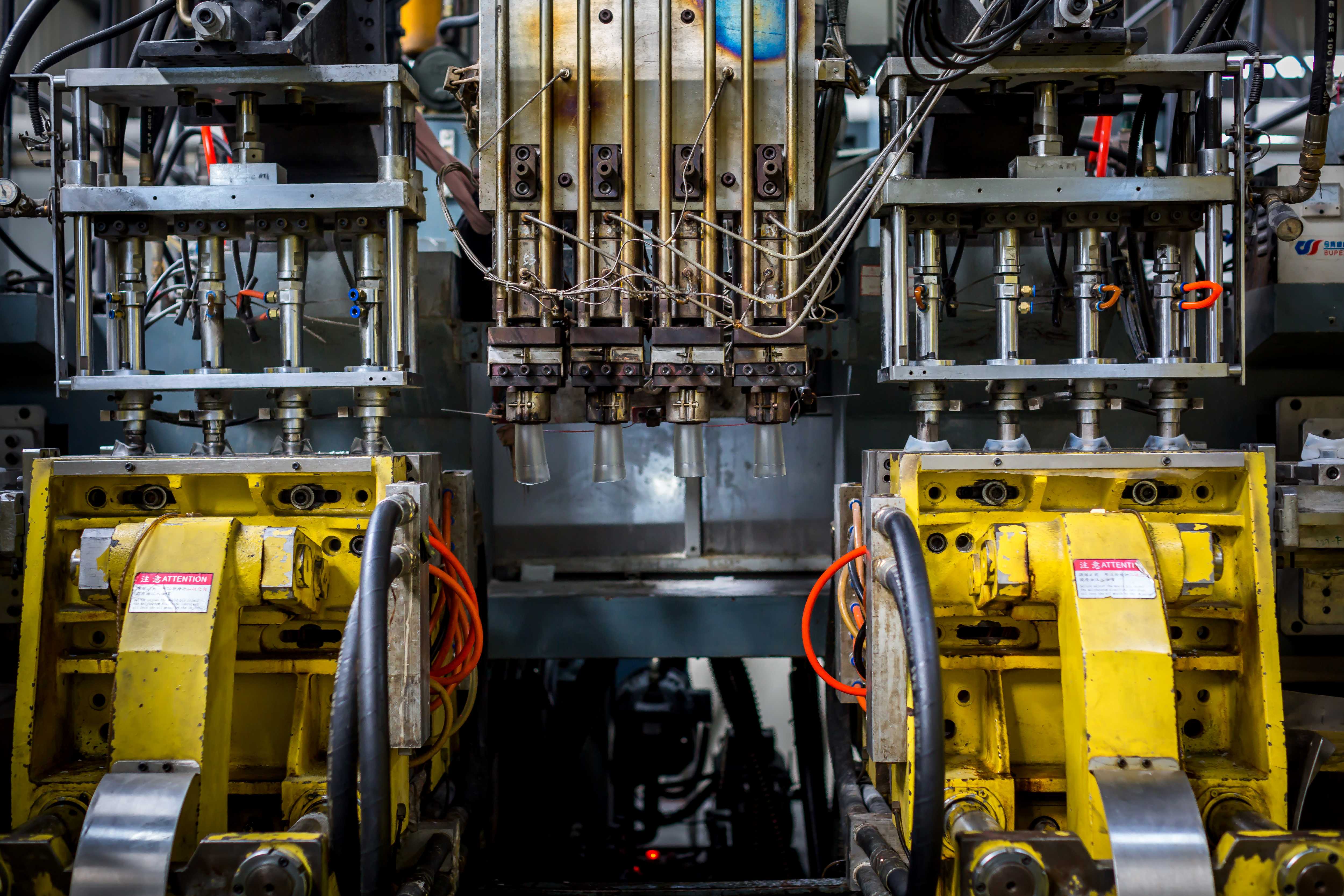
RTCO runs in-house design and mold development integrated with scalable production and U.S. fulfillment, within a 68,000 m² manufacturing footprint and a workforce of 200 employees, including 40 engineers. Reported capacity is 80,000,000 units per month and 1,000,000,000 units annually. Quality control emphasizes dust-free manufacturing and third-party testing support, with pre-shipment inspections and food-grade testing processes built into the production flow.
Decoration and Surface Finishing
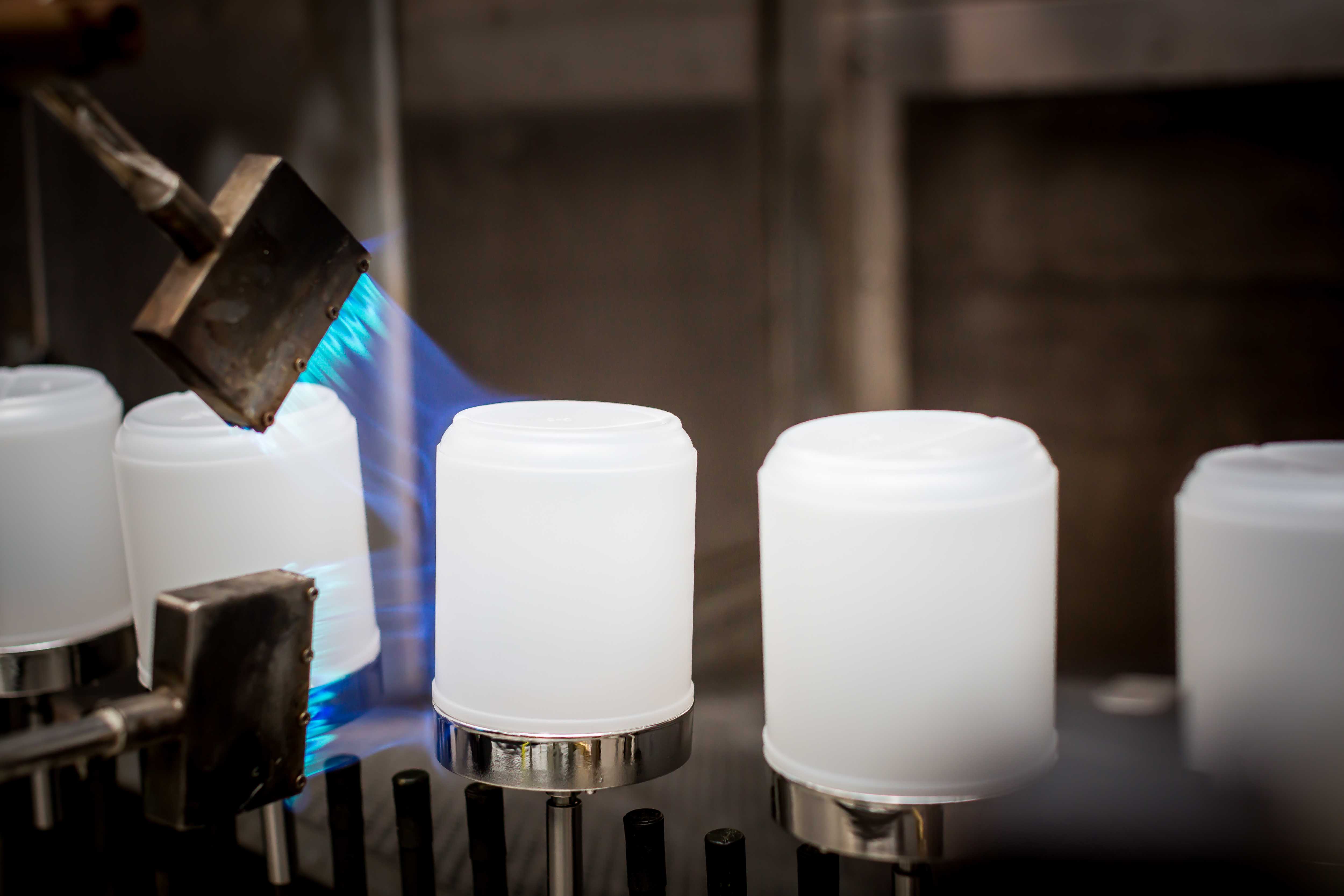
Decoration is where integration matters most in premium segments, because finishes interact with material and pre-treatment. RTCO’s finish set includes soft-touch coating, UV coating, silk screen, labeling, 3D printing, vacuum metallization and embossed logo work — plus an anti-counterfeiting liner offered as an exclusive solution. Because the coating and metallization steps sit inside the same supply chain as molding, a finish that fails adhesion can be traced to surface preparation rather than argued between two suppliers.
Warehousing, Inventory and Localized Manufacturing
The final layer is where many “one-stop” claims stop short. RTCO’s global supply chain integrates manufacturing capabilities across Asia and the United States, including a plant in South Carolina (USA), a Vietnam plant and multiple sites in China (Shanghai, Zhejiang, Shandong). North America is served through a U.S. factory at 1701 Old Grove Road, Suite 300, Piedmont, SC 29673, supported by warehouses in Georgia (Savannah) and California (Chino). Export business accounts for 97% of total sales.

A Seven-Step Breakdown of an Integrated Packaging Project
An end-to-end packaging workflow runs through consultation, feasibility, prototype, mold, pilot and mass production. In practice that translates into seven decision points a buyer should be able to track.
- Consultation. Define the product (powder, capsule, tablet, gummy, gel or liquid), target markets, filling equipment and shelf-positioning requirements. Output: a written brief rather than a quotation.
- Feasibility review. Confirm that the intended bottle, cap, liner and scoop combination can be molded, filled and decorated at the target volume. This is the stage where unrealistic concepts are removed before money is spent on tooling.
- Prototype. Produce a physical sample for filling trials, decoration review and compliance checks. Buyer decision: approve the surface finish and closure feel, not just the shape.
- Mold development. Build and validate tooling, then approve trial parts against the specification. In the Three-One Service reference model this stage runs approximately one month.
- Pilot run. Run a limited production batch to verify dimensional consistency, cap torque, decoration adhesion and packing configuration before full commitment.
- Mass production. Scale to the ordered volume with in-line quality control and pre-shipment inspection. Reference production time is approximately one week once tooling is approved.
- Warehousing and fulfillment. Route finished goods to regional storage — for North American programs, the Savannah and Chino warehouses — and coordinate last-mile logistics and reorder timing against actual demand.
Decision rule for buyers: at every step, ask who owns the output. If the answer changes between step 3 and step 6, the model is fragmented regardless of how the supplier describes it.
Where the Integrated Model Fits
Protein Powder and Sports Nutrition Launches
Wide-mouth protein powder jars and pre-workout or BCAA bottles require a bottle, a closure and a measuring scoop that work together at the filling line. Scoop capacity from 0.3cc to 8oz and formats such as flip-cap scoop bottles are matched inside the same program, which removes the most common coordination gap in powder launches: a scoop that does not seat in the neck the mold was built for.
Turnkey Supplement Plastic Bottle Programs With U.S. Stock
For brands selling into North America, the combination that matters is production plus proximity. U.S. manufacturing in Piedmont, SC plus warehousing in Savannah, GA and Chino, CA supports localized supply, while stock and custom packaging programs allow a brand to hold standard formats for continuity and run custom tooling for the differentiated SKUs. Minimum order quantity is typically 10,000 to 30,000 units per SKU, with support for first trial orders below the standard MOQ to help validate a new product.
Premium Differentiation: Soft-Touch, Chromed and 3D-Printed Finishes
When shelf differentiation depends on feel and light, the finishing layer becomes the project. Soft-touch coatings, chromed plastic bottles produced through vacuum metallization, 3D printing and embossed logo work are all applied within the same supply chain as molding, using patented SGP (soft-touch glossy process) and SAP outer-layer coating technology on HDPE and PET containers. Cap-level details — a soft-touch lid, for example — can be specified together with the body finish rather than sourced separately.
Recyclable and PCR-Based Supplement Packaging
Optional PCR (post-consumer recycled) material is available within the same food-grade HDPE, PET and PP material set, so a sustainability line can be built on the same tooling platform as the standard range rather than requiring a parallel supplier. Brands should still confirm which components in a given program use PCR content, because the availability is described as optional rather than universal.
Multi-Market Launches
Integrated supply becomes most visible on multi-market programs. RTCO has supported a 20,000,000-unit program used for commercial packaging and dosing of dietary supplements and sports nutrition powders, tablets, gummies and liquids across markets including the US, Canada, Mexico, the UK, France, Germany, Australia and Singapore, where the benefit cited was accelerated time-to-market and a simplified supply chain through localized production and fulfillment.
One-Stop vs. Fragmented: A Decision Table
| Decision area | One-stop integrated model | Fragmented multi-vendor model |
|---|---|---|
| Accountability | Single partner owns design, tooling, production, decoration and outbound logistics | Responsibility is divided across separate suppliers; defect ownership is negotiated after the fact |
| Specification control | One specification carried from design through mold to decorated output | Specification is restated at each handoff, and interpretation can vary by vendor |
| Front-end timeline | Reference model: ~1 day design, ~1 month tooling, ~1 week production | Each stage waits on the previous supplier’s queue and paperwork |
| Decoration | Soft-touch, UV, silk screen, 3D printing, vacuum metallization and embossing applied inside the same supply chain as molding | Decorator receives parts it did not mold, which complicates adhesion and root-cause analysis |
| Material and compliance | FDA-compliant food-grade HDPE, PET and PP with optional PCR, produced under one quality system | Material declarations and test documentation come from multiple parties and must be reconciled |
| Inventory and logistics | Warehousing and fulfillment coordinated with production planning (Savannah, GA and Chino, CA for North America) | Storage is contracted separately, and buffer stock absorbs timing gaps |
| Order threshold | Typically 10,000–30,000 units per SKU, with first trial orders supported below standard MOQ | Each vendor applies its own MOQ, so the effective minimum is set by the highest one |
What to Verify Before You Consolidate
Integration is not a reason to relax diligence. Three limits are worth stating plainly. First, one-stop does not remove the need for a written specification — it makes a weak specification more costly, because a single error propagates through mold, production and decoration together. Second, a single partner concentrates supply risk; buyers should confirm the number and location of production sites and the availability of regional warehousing rather than assuming it. Third, terms such as “custom” and “premium” should be converted into named materials, named finishes and measurable parameters — bottle capacity range, cap diameter, liner type, scoop volume — before tooling is approved.
Frequently Asked Questions
Which compliance and material standards apply to one-stop custom packaging for supplements?
Supplement containers produced under an integrated packaging program should be built on food-contact compliant material. RTCO’s supplement packaging is made of FDA-compliant food-grade HDPE, PET and PP, complies with FDA and EU food safety standards, and can include optional PCR (post-consumer recycled) material. Where the product is sold in the United States, child-resistant closure requirements for supplements and nutraceuticals fall under the Poison Prevention Packaging Act (PPPA) and ASTM D3475, so closure and liner choices should be validated against the destination market rather than assumed.
Can a single packaging manufacturer really handle design, tooling and production together?
Yes, when design and mold development are in-house rather than subcontracted. RTCO operates in an in-house design and mold development mode integrated with scalable production and U.S. fulfillment, working through an end-to-end workflow of consultation, feasibility, prototype, mold, pilot and mass production. This Three-One Service model is supported by 40 engineers, a 68,000 m² manufacturing footprint, reported monthly capacity of 80,000,000 units and annual output of 1,000,000,000 units.
What order volume does a one-stop packaging program require?
The minimum order quantity for RTCO custom packaging is typically 10,000 to 30,000 units per SKU. First trial orders below the standard MOQ are supported, which allows a brand to validate a new bottle, cap or finish before committing to full production volume. Because tooling, production and decoration sit inside one supply chain, the effective minimum is not raised by separate thresholds at each stage.
How are samples and prototypes handled in an integrated workflow?
Sampling follows the same sequence as production: consultation and feasibility first, then a physical prototype for filling trials and decoration review, then mold development and a pilot run before mass production. Prototypes are produced against the intended specification — bottle capacity from 60ml to 6000ml, body diameter from 40mm to 200mm, cap diameter from 20mm to 200mm, and scoop capacity from 0.3cc to 8oz — so the sample reflects what will actually be molded rather than a separate sample line.
How long does a one-stop custom packaging project take?
Quoted project lead time is typically 30–45 days, with actual timing dependent on project complexity and available capacity. In RTCO’s Three-One Service reference model, design takes approximately one day, tooling approximately one month, and production approximately one week once tooling is approved. Buyers planning a launch should treat warehousing and logistics as part of the same timeline rather than a post-production step. To evaluate fit for a specific bottle or finish, the RTCO sports nutrition packaging catalogue can be downloaded here: RTCO Catalogue for Sports Nutrition Packages.
Conclusion
One-stop packaging services are best understood as an accountability structure, not a product bundle. The model works because design, tooling, production, decoration and warehousing share one specification and one owner — which is precisely what a stack of independent vendors cannot provide, however capable each one is individually.
For supplement and sports nutrition brands, the practical test is simple: map your current packaging program from concept to delivery, count how many organizations touch it, and identify where the specification is rewritten. Every rewrite is a risk point. An integrated model like RTCO’s Three-One Service removes those rewrites by keeping design, tooling and production in one loop, and by extending the same chain into U.S. manufacturing and regional warehousing.
Evaluate a One-Stop Program for Your Next Launch
RTCO (THE RTCO PAK PTE. LTD.) supplies custom packaging solutions for supplements and sports nutrition — bottles, caps, closures, scoops, liners and premium finishes — with manufacturing in Asia and the United States.
Request a sample or a quotation: info@rtco-packaging.com | WhatsApp: +86-13564840969 | Tel: +86 186-4781-3962
U.S. factory: 1701 Old Grove Road, Suite 300, Piedmont, SC 29673 | U.S. phone: 864-781-3962 | Warehouses: Savannah, GA and Chino, CA
Website: www.rtcopackaging.com | Download the catalogue: RTCO Sports Nutrition Packaging Catalogue
Have Questions or Need More Details?
Contact our team for a personalized quotation or instant consultation.
Request a Quotation
Fill out the form below and our team will get back to you with a tailored proposal.
WhatsApp Direct Chat
Prefer to chat in real-time? Message us on WhatsApp for instant assistance & quick answers.
- Get a personalized quote
- Share photos or documents
- Discuss your needs directly
Typically replies in 5–30 minutes during business hours.