Wide-Mouth Jars vs Pre-Workout/BCAA Bottles: Sports Nutrition Custom Packaging Comparison
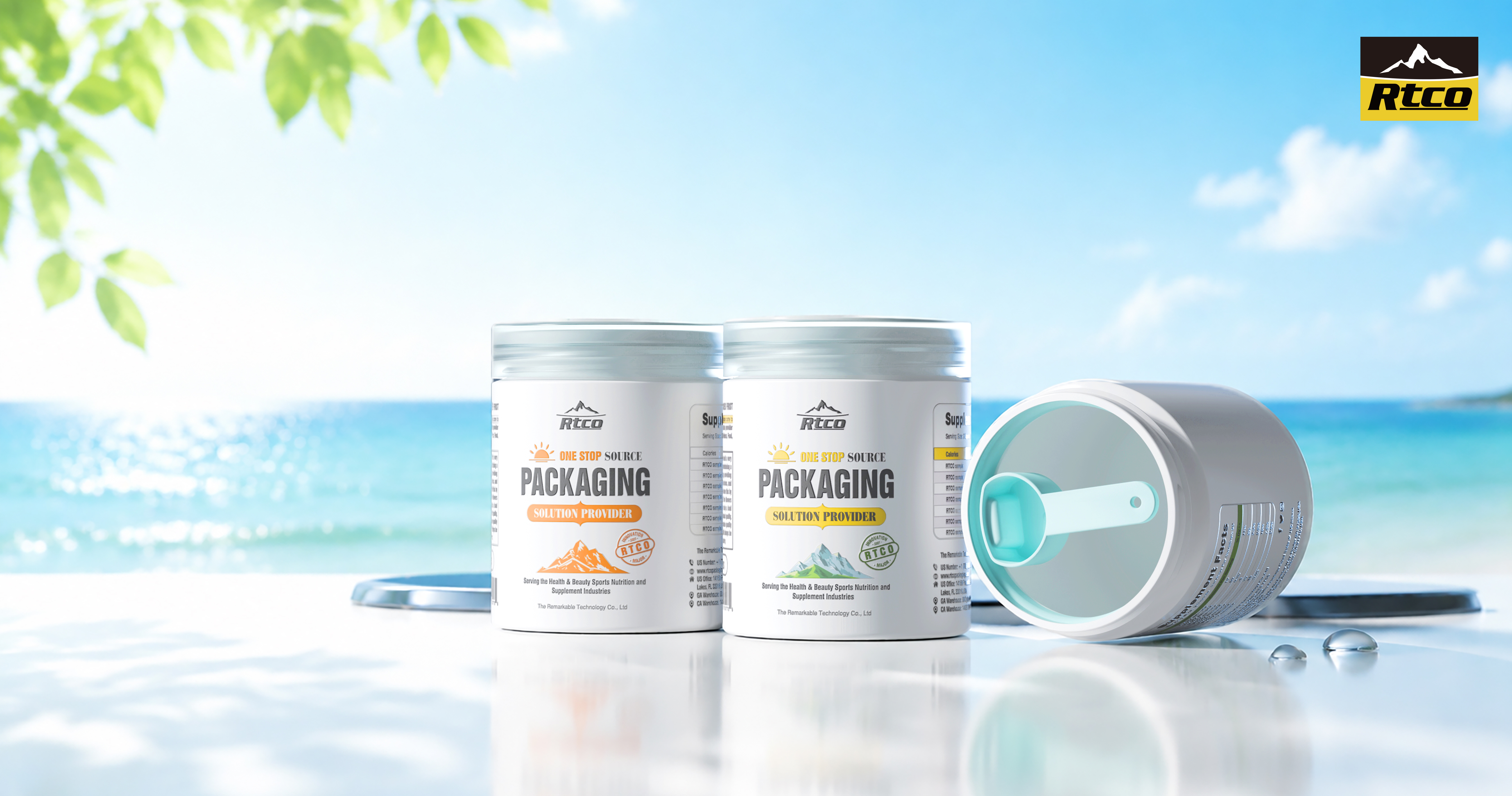
Choosing between a wide-mouth protein powder jar and a pre-workout or BCAA bottle is a format decision, not a graphics decision. Both formats are made from food-grade HDPE, PET and PP, both sit inside the same 60 ml to 6000 ml fill capacity envelope, and both accept the same decoration set — soft-touch coating, UV coating, silk screen, 3D printing and labeling. What separates them is the filling, dosing and retail problem each one solves, and that is settled long before artwork is approved.
This comparison is written for sports nutrition and supplement brands in the awareness and research stage: the point where product type, serving size and sales channel are already defined, but tooling has not been committed. It maps the wide-mouth jar and the pre-workout/BCAA bottle against product type, fill volume and retail use, and it explains which supplier documentation matters for each option. THE RTCO PAK PTE. LTD. (RTCO), established in 2007, is a packaging manufacturer specialising in plastic packaging solutions for Health & Beauty, Sports Nutrition and Supplement brands.
Problem Definition: These Two Formats Are Not Interchangeable
The two formats share a specification envelope, which is precisely why the choice gets deferred. A Wide-Mouth Protein Powder Jar and a Pre-Workout/BCAA Bottle can both be quoted in food-grade HDPE or PET, both be filled between 60 ml and 6000 ml, and both be finished with an embossed logo. The differences only appear in use: how a scoop enters the container, how a serving is dosed, whether the closure can be opened one-handed, and how the pack sits on shelf beside competing SKUs.
The common mistake is treating format as a design preference that can still be changed at the artwork stage. In practice, mouth diameter, body diameter (40–200 mm), height (60–325 mm), cap diameter (20–200 mm) and cap height (10–40 mm) determine whether the container runs on an existing filling line, whether a matched scoop (0.3 cc to 8 oz) fits inside, and whether the dosing ritual feels natural to the consumer. Change the format late and the cost is not only a mold; it is the whole development chain of consultation, feasibility, prototype, mold, pilot and mass production, plus new artwork, new line set-up and a delayed launch.
Definitions: What Each Format Actually Is
Wide-mouth protein powder jar
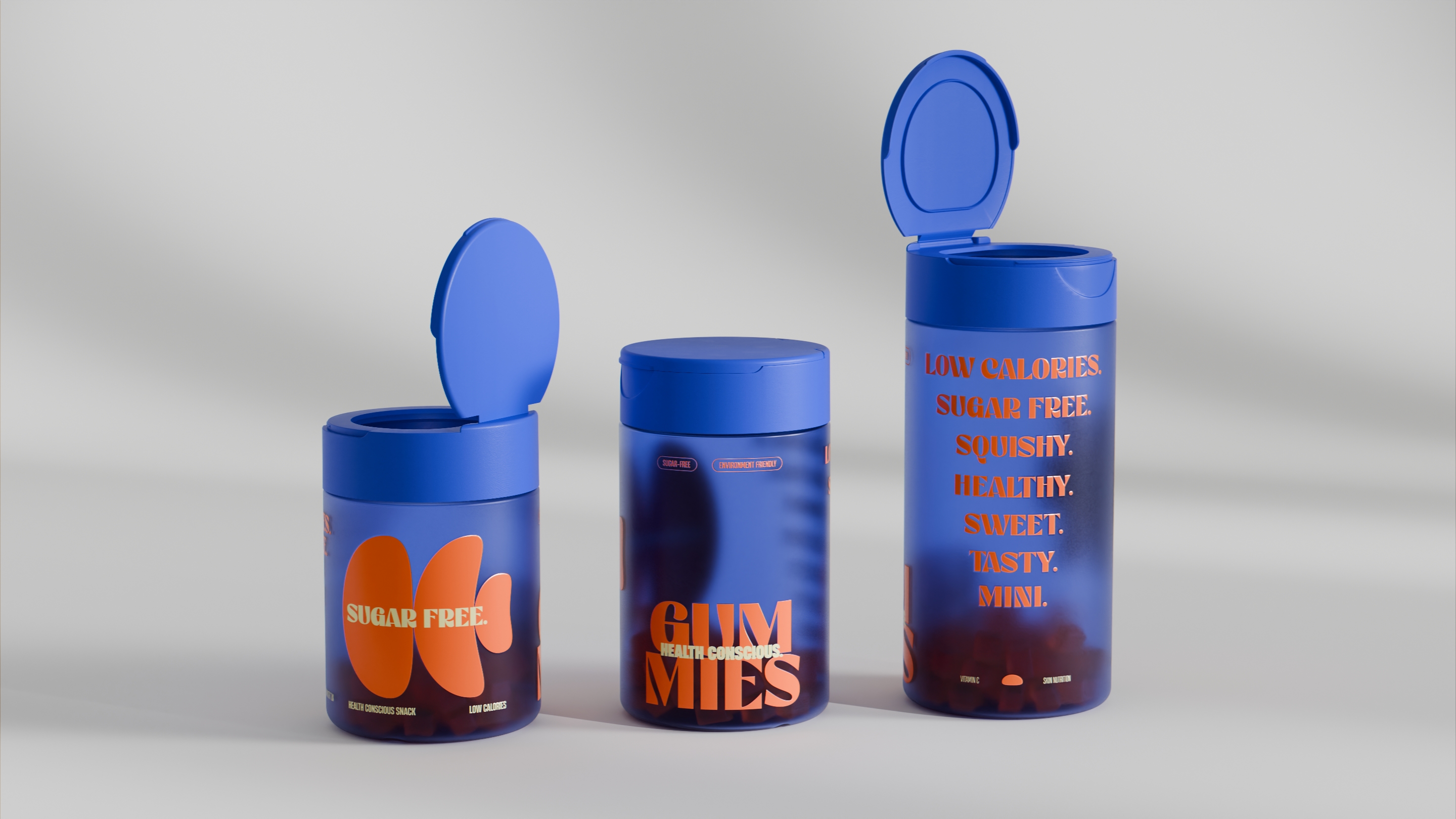
A wide-mouth protein powder jar is a multi-serve plastic container whose opening is sized so a measuring scoop can enter and dispense powder cleanly. In RTCO's range it appears as a named format alongside the Pre-Workout/BCAA Bottle, the Dual-Chamber Supplement Bottle, the Capsule & Tablet Bottle and the Flip-Cap Scoop Bottle. It is made from food-grade HDPE, PET or PP with optional PCR material, is available from 60 ml to 6000 ml fill capacity, and is built with moisture-proof and anti-oxidation properties. Because powder is dosed by volume rather than poured, the jar pairs with a matched scoop from 0.3 cc to 8 oz — often using a scoop-hook cap that keeps the scoop above the powder line.

Pre-workout / BCAA bottle
The pre-workout or BCAA bottle is the narrow-neck counterpart: the consumer flips, pours and mixes rather than scoops. Flip-cap and flip-cap scoop variants belong to this family, and the format is used for powder as well as capsule, tablet, gummy and liquid packaging and dosing scenarios. It draws on the same verified specification envelope as the jar — 60 ml to 6000 ml fill capacity, 40 mm to 200 mm body diameter, 60 mm to 325 mm height, 20 mm to 200 mm cap diameter and 10 mm to 40 mm cap height — and the same food-grade HDPE, PET and PP material base with optional PCR content.
The shared specification envelope (verified)
- Fill capacity: 60 ml to 6000 ml, covering sample tubes through gallon bottles.
- Body diameter: 40 mm to 200 mm — the dimension that decides shelf depth and label panel width.
- Height: 60 mm to 325 mm — the dimension that decides case count and pallet efficiency.
- Closures: cap diameter 20 mm to 200 mm, cap height 10 mm to 40 mm, compatible with custom closures and scoops.
- Scoops: measuring capacity from 0.3 cc to 8 oz, matched to the container.
- Material: food-grade HDPE, PET and PP, with optional recycled/PCR materials.
- Finishes: soft-touch coating, UV coating, silk screen, 3D printing, labeling and embossed logo options.
- Barrier: moisture-proof and anti-oxidation performance for hygroscopic powders.
Industry Background: Format Choice Now Carries a Compliance Dimension
Material and format decisions are no longer purely commercial. The global nutraceutical packaging market was valued at USD 5.05 billion in 2024, with plastic segments leading at 58.3% revenue share, according to Grand View Research. The same source reports that plastic holds approximately 73.8% market share in supplement packaging in 2025. Future Market Insights projects the protein powder packaging segment to reach USD 44.52 billion by 2035, with a CAGR of 5.01% from 2026. The competitive field includes international packaging groups such as Berry Global, Amcor Plc, TricorBraun and ProAmpac, according to MarketsandMarkets, alongside regional manufacturers with in-house tooling.
Two regulatory timelines shape how brands now specify jars and bottles. In the United States, FDA 21 CFR Part 111 establishes mandatory Current Good Manufacturing Practice (cGMP) for the manufacturing, packaging and labeling of dietary supplements. In the European Union, the Packaging and Packaging Waste Regulation (EU) 2025/40 requires that all packaging be recyclable by 2030 and that plastic packaging contain at least 30% recycled content (PCR) by 2030, per the European Commission. Practically, this means a brand choosing between a jar and a bottle should ask about PCR availability and recyclability structure in the same conversation as fill volume — not after the mold is cut.
Detailed Solution: How the Format Decision Is Built With RTCO
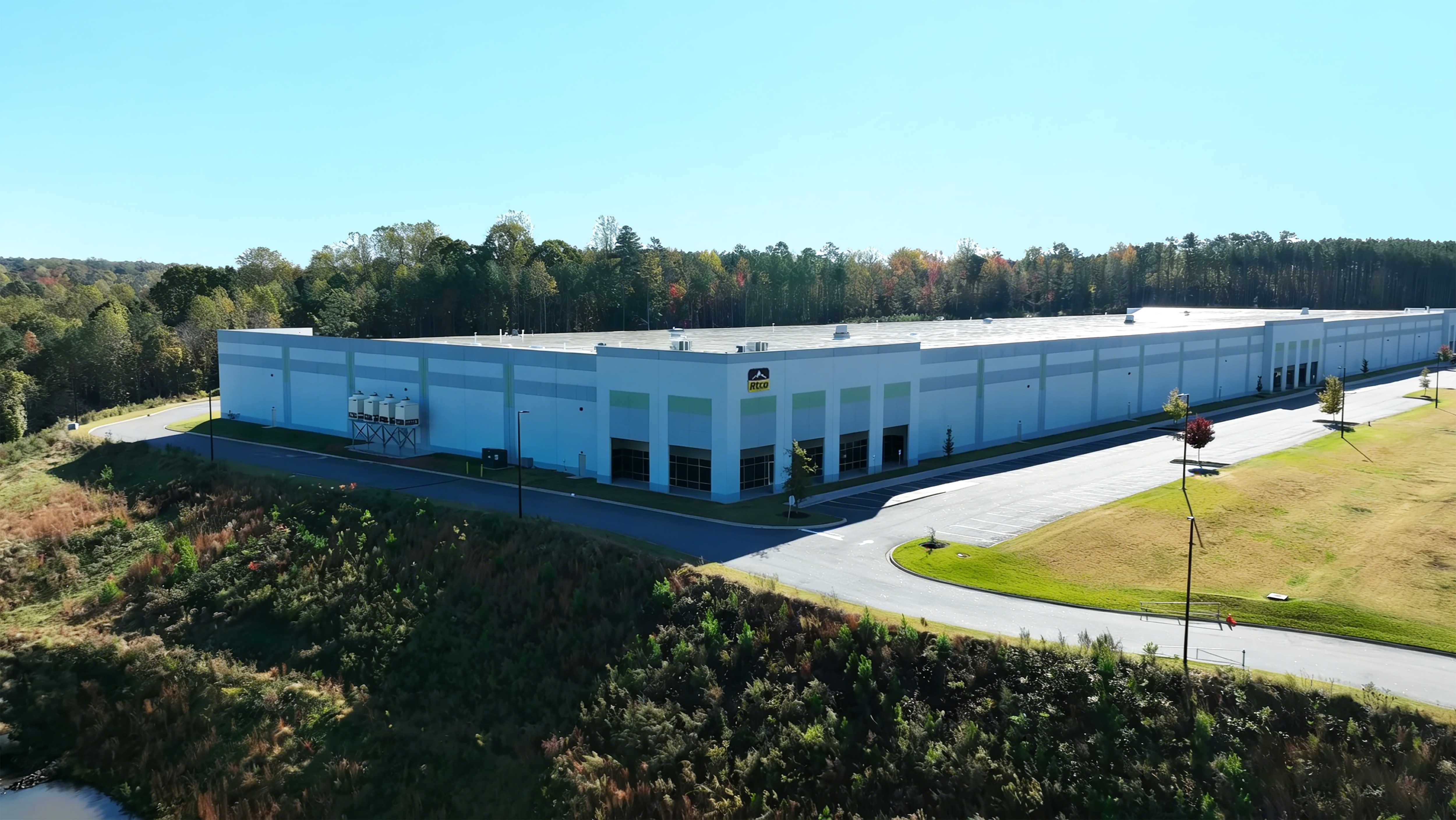
THE RTCO PAK PTE. LTD. was established in 2007 and specialises in plastic packaging solutions for Health & Beauty, Sports Nutrition and Supplement brands. The company operates a 68,000 m² factory with approximately 200 employees, an annual output of 1,000,000,000 units, a 40-engineer R&D team, and an export ratio of approximately 97%, with North America as its primary market. RTCO's U.S. production facility is operational in Piedmont, South Carolina, supported by warehouses in Savannah, Georgia and Chino, California.
The product scope covers plastic containers in HDPE and PET, packer bottles, gallon bottles, sample tubes and accessories, plus scoops, caps and closures, liners and surface finishes including vacuum metallization and soft-touch coatings. Its in-house design and mold development run into scalable production with U.S. fulfillment, following an end-to-end workflow of consultation, feasibility, prototype, mold, pilot and mass production. Packaging is compatible with common filling equipment and production lines, and supports custom tooling, special finishes and PCR options.

Step-by-Step: Choosing Between the Two Formats
Step 1 — Fix the dose and the servings per container
Start with the serving architecture, not the container. A protein powder dosed by scoop is a multi-serve decision; a pre-workout or BCAA product is often consumed closer to the point of use. The serving count drives total fill weight, and total fill weight is what justifies a jar or a bottle in the first place.
Step 2 — Translate the dose into fill volume and mouth diameter
Both formats operate inside the verified 60 ml to 6000 ml fill capacity range, with body diameter from 40 mm to 200 mm and height from 60 mm to 325 mm. What changes is the mouth: a scoop must pass freely into a jar, while a bottle can be poured from a narrower neck. If the scoop does not clear the opening, the format is wrong regardless of how good the render looks.
Step 3 — Choose the material and the barrier requirement
Food-grade HDPE, PET and PP are the base materials, with optional PCR. Moisture-proof and anti-oxidation performance matters most for hygroscopic powders, and it is a function of material choice, wall design and closure fit rather than decoration. If the SKU is intended for the EU market, confirm PCR availability and recyclability structure at this stage.
Step 4 — Match the closure, the scoop and the filling line
Cap diameter (20–200 mm) and cap height (10–40 mm) must match the container neck, and scoops (0.3 cc to 8 oz) must be matched to the dose. Flip-cap and flip-cap scoop closures suit pour-and-mix products; scoop-hook caps suit scoop-dosed powders. Confirm the finished container runs on the intended filling line before committing to tooling.
Step 5 — Specify decoration last and verify documentation in parallel
Soft-touch coating, UV coating, silk screen, 3D printing, labeling and embossed logos all sit on top of a format that has already been validated. Running certification and compliance review alongside decoration selection avoids resampling later, particularly where PCR content or recycled-material documentation is involved.
Use Cases: Format-to-Product Mapping
Multi-serve protein powder
A wide-mouth jar with a matched scoop and, where required, a scoop-hook cap. The wide opening supports scoop dosing; the moisture-proof and anti-oxidation construction protects powder during multi-week use.
Pre-workout and BCAA powders
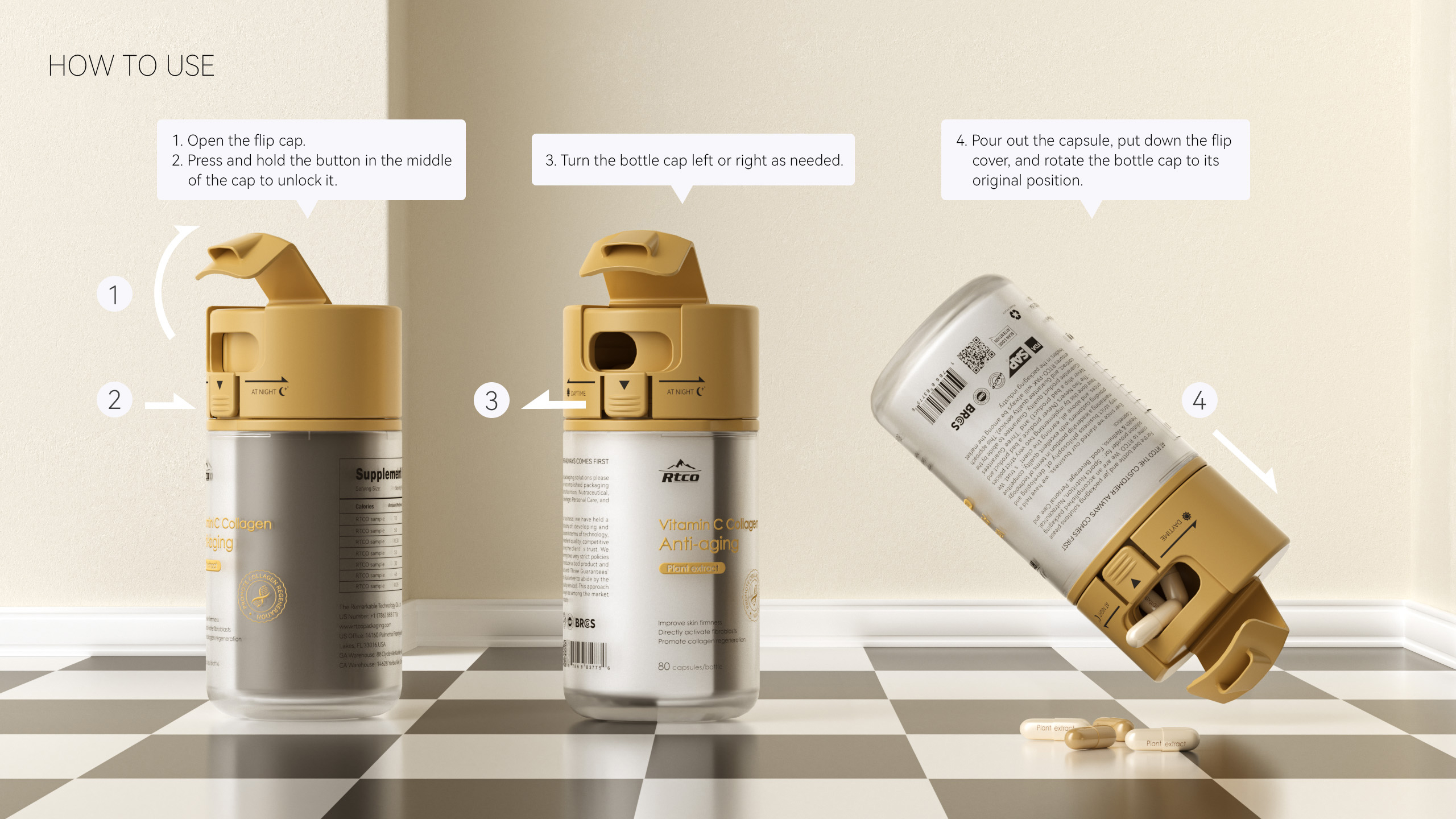
A flip-cap or flip-cap scoop bottle, sized within the 60 ml to 6000 ml range, for pour-and-mix preparation. The closure defines the consumer experience more than the bottle body does.
Capsules and tablets
The Capsule & Tablet Bottle format, produced in food-grade HDPE, PET or PP. The same material and finish options apply, so capsule SKUs can share a visual system with powder SKUs.
Dual-compartment products
The Dual-Chamber Supplement Bottle keeps two components separate until use — useful when a single container must deliver two formulas or a powder and a liquid.
Samples and travel sizes
Sample tubes and small bottles sit at the low end of the same 60 ml to 6000 ml range, letting a brand test a new flavour or formula at low volume before committing to full-size tooling.
Comparison Table: Wide-Mouth Protein Powder Jar vs Pre-Workout/BCAA Bottle
| Decision dimension | Wide-Mouth Protein Powder Jar | Pre-Workout / BCAA Bottle |
|---|---|---|
| Primary product type | Multi-serve powder — protein, mass gainer, meal replacement | Pre-workout, BCAA and intra-workout powders; ready-to-mix formats |
| Fill capacity (verified range) | 60–6000 ml | 60–6000 ml |
| Typical position in that range | Larger, multi-serve fills | Smaller to mid fills, single or short multi-serve |
| Body diameter (verified range) | 40–200 mm | 40–200 mm |
| Height (verified range) | 60–325 mm | 60–325 mm |
| Material | Food-grade HDPE, PET, PP; optional PCR | Food-grade HDPE, PET, PP; optional PCR |
| Closure | Large-diameter cap; scoop-hook cap options. Cap diameter 20–200 mm, cap height 10–40 mm | Flip-cap and flip-cap scoop options. Cap diameter 20–200 mm, cap height 10–40 mm |
| Dosing accessory | Matched scoop, 0.3 cc to 8 oz, stored inside the jar | Scoop may sit inside the bottle or be integrated with the flip-cap closure |
| Barrier performance | Moisture-proof and anti-oxidation | Moisture-proof and anti-oxidation |
| Decoration options | Soft-touch coating, UV coating, silk screen, 3D printing, labeling, embossed logo | Soft-touch coating, UV coating, silk screen, 3D printing, labeling, embossed logo |
| Dosing routine | Scoop, level, add to shaker | Flip, pour, mix |
| Shelf logic | Wider label panel for front-of-pack claims | Taller, narrower profile for shelf facings and single-unit purchase |
| Documentation focus | Primary packaging QMS, PCR content, fill-weight integrity | Primary packaging QMS, PCR content, closure performance |
Both columns draw on the same verified RTCO specification envelope: fill capacity 60–6000 ml, body diameter 40–200 mm, height 60–325 mm, cap diameter 20–200 mm, cap height 10–40 mm, scoop capacity 0.3 cc to 8 oz. Where a format sits inside that envelope is project-specific and decided by dose, serving count and filling line.
Certifications: Which Documentation Matters for Each Option
Jars and bottles are both primary packaging for dietary supplements, so the same core documentation set applies to both — what changes is scope, not category. The following are the frameworks buyers typically ask a supplier to document at quotation stage.
- ISO 15378:2017 — specifies requirements for a quality management system for manufacturers of primary packaging materials for medicinal and nutraceutical products, integrating GMP principles (International Organization for Standardization). Most directly relevant to both formats, since both are primary packaging.
- ISO 9001:2015 — general quality management baseline. Confirm the certificate scope covers the site that actually molds your container rather than a group entity.
- BRCGS — a recognised food-safety certification scheme, relevant where packaging sits inside the food and supplement safety chain.
- GRS (Global Recycled Standard) — relevant when a jar or bottle carries a PCR content claim, since it addresses recycled-content verification and chain of custody.
- HACCP — hazard analysis and critical control point system, supporting hygiene and contamination control in production.
- ISO 14001 and ISO 45001 — environmental management and occupational health and safety management respectively; increasingly part of supplier questionnaires.
- SA8000 — social accountability standard covering labour practices.
- FDA 21 CFR Part 111 — mandatory cGMP for the manufacturing, packaging and labeling of dietary supplements in the United States (U.S. Food and Drug Administration).
- Regulation (EU) 2025/40 (PPWR) — EU requirement that all packaging be recyclable by 2030 and plastic packaging contain at least 30% recycled content by 2030 (European Commission).
The practical difference between the two formats is documentation emphasis rather than category. A PCR jar triggers recycled-content and chain-of-custody questions; a flip-cap bottle triggers closure performance and repeat-use integrity questions. For a supplier-side view of the container range and finish options, RTCO's sports nutrition catalogue is available for download at the end of this article.
FAQ
Do wide-mouth jars and pre-workout bottles require different certifications?
No — both are primary packaging for dietary supplements, so the same certification and regulatory set applies. ISO 15378:2017 defines a quality management system for manufacturers of primary packaging materials for medicinal and nutraceutical products, and it is relevant to jars and bottles alike. In the United States, FDA 21 CFR Part 111 sets cGMP requirements for the manufacturing, packaging and labeling of dietary supplements; in the EU, Regulation (EU) 2025/40 requires all packaging to be recyclable by 2030 and plastic packaging to contain at least 30% recycled content by 2030. What actually differs is documentation scope: a PCR container raises recycled-content and chain-of-custody questions, while a flip-cap bottle raises closure performance questions.
Can one supplier produce both formats with matching caps, scoops and finishes?
Yes, where the supplier controls closures and accessories as well as bottles. RTCO manufactures plastic containers in HDPE and PET, scoops, caps and closures, liners, accessories and surface finishes including vacuum metallization and soft-touch coatings, for Health & Beauty, Sports Nutrition and Supplement brands. Its formats include the Wide-Mouth Protein Powder Jar, the Pre-Workout/BCAA Bottle, the Dual-Chamber Supplement Bottle, the Capsule & Tablet Bottle and the Flip-Cap Scoop Bottle, with cap diameters from 20 mm to 200 mm, cap heights from 10 mm to 40 mm, and scoop measuring capacity from 0.3 cc to 8 oz.
What drives the cost difference between the two formats?
The main cost variables are fill volume and part weight, mold and tooling complexity, closure type, the number of decoration steps, whether PCR material is specified, and whether the product needs a separate scoop or an integrated flip-cap scoop. Because these variables are project-specific, packaging suppliers generally quote tooling, unit price and decoration as separate line items. Sending a brief that states dose, servings per container, target market and finish intent is the most reliable way to get comparable quotes for a jar and a bottle side by side.
What should a brand validate in a sample before committing to tooling?
Five checks are worth running on both formats: whether the container runs smoothly on the intended filling line; whether the scoop delivers the intended dose within the 0.3 cc to 8 oz range and fits through the opening; whether the closure seats, seals and re-closes cleanly; whether moisture-proof and anti-oxidation performance holds through transit and multi-week consumer use; and whether the finish — soft-touch coating, UV coating, 3D printing or an embossed logo — withstands handling. If PCR material is used, check colour and surface consistency as well.
How does format choice affect lead time and delivery?
Format affects lead time through tooling, decoration steps and material availability. New molds and multi-step decoration take longer than stock tooling with a single finish, and PCR material may need to be scheduled. RTCO works from a 68,000 m² factory with approximately 200 employees, an annual output of 1,000,000,000 units and a 40-engineer R&D team, running consultation, feasibility, prototype, mold, pilot and mass production as one sequence. Its U.S. production facility in Piedmont, South Carolina, plus warehouses in Savannah, Georgia and Chino, California, support North American delivery. To move from comparison to a concrete proposal, request a sample and a quote — or download the sports nutrition catalogue below.
Conclusion
The wide-mouth jar and the pre-workout/BCAA bottle are not competing designs for the same job. The jar is a scoop-dosed, multi-serve powder container; the bottle is a flip-and-pour format built around a different consumption routine. Both share the same verified specification envelope — 60 ml to 6000 ml fill capacity, 40 mm to 200 mm body diameter, 60 mm to 325 mm height, food-grade HDPE, PET or PP with optional PCR, and moisture-proof and anti-oxidation performance — so the decision is not about material quality, but about which format matches the product type, the fill volume and the retail context.
Make that decision in the order this guide sets out: dose and servings first, then fill volume and mouth diameter, then material and barrier, then closure and scoop, then decoration and documentation. That sequence protects the mold investment, keeps the filling line unchanged, and gives the brand a format that behaves correctly in the consumer's hand.
Next Step: Sample, Quote or Catalogue
RTCO supports sports nutrition and supplement brands with integrated packaging design, in-house mold development, premium decoration and reliable manufacturing across Asia and the United States. Share your format intent — wide-mouth jar, pre-workout/BCAA bottle or a dual-chamber option — and request a sample or a quotation.
Download the catalogue: RTCO Catalogue for Sports Nutrition Packages
Contact: Penny · Email: info@rtco-packaging.com · WhatsApp: +86-13564840969 · Website: www.rtcopackaging.com
US Factory: 1701 Old Grove Road, Suite 300, Piedmont, SC 29673 · US phone: 864-781-3962 · Warehouses: Savannah, Georgia and Chino, California.
Have Questions or Need More Details?
Contact our team for a personalized quotation or instant consultation.
Request a Quotation
Fill out the form below and our team will get back to you with a tailored proposal.
WhatsApp Direct Chat
Prefer to chat in real-time? Message us on WhatsApp for instant assistance & quick answers.
- Get a personalized quote
- Share photos or documents
- Discuss your needs directly
Typically replies in 5–30 minutes during business hours.