
Diamond Flap Discs Compliance Due Diligence: EU and US Requirements and the Certification Questions Buyers Should Ask

Compliance due diligence on diamond flap discs is a documentation exercise before it becomes a price negotiation. For a buyer sourcing discs for stone, glass, ceramics or engineered stone, order approval usually depends on three things: the safety marking and maximum operating speed declared on the product, the certificate or declaration sitting behind any compliance claim, and how the goods are classified at the border. Diamond flap discs are coated abrasive products, and in the European Union that places them under EN 13743:2017 for safety markings and maximum operating speeds. In the United States, buyers generally assemble their own document pack, because the verified sources used in this guide do not establish one harmonised marking standard for this product category.
This article is written for buyers in the research and evaluation stage who need to know what a supplier can actually evidence before a purchase order is raised. It covers the regional application context — stone grinding in the EU, where RUITE supplies diamond belts under product reference 5281 as the companion stone tool, and ceramic and glass work in the EU and US, where diamond flap discs under product reference 5282 are used — and it sets out the certification questions to put to any supplier, including RUITE.
Nothing in this guide should be read as a certification claim for a specific product. It is a due-diligence framework: what to ask, what to verify and what a supplier can reasonably put in writing.
The Compliance Problem: What Buyers Are Actually Verifying
A diamond flap disc is a coated abrasive: a diamond-bearing abrasive layer on a flexible backing, mounted on a handheld grinder. Two characteristics make it a compliance item rather than a commodity purchase. First, the disc runs at high rotational speed close to the operator, so the declared maximum operating speed and the marking on the product are safety-critical rather than decorative. Second, the compliance evidence is almost entirely paper — a label, a certificate reference, a batch test record — and none of it can be judged by looking at the disc.
The practical problem is scope. Buyers frequently receive a certificate number that circulates widely but does not clearly list the diameter, grit or construction being ordered. A certificate whose scope does not match the SKU in the purchase order does not close the file, however genuine it is. The same applies to maximum operating speed: a speed value quoted for one diameter cannot be generalised across a product range, and must be checked against the label and the applicable safety documentation for the exact disc.
Three document sets that close a compliance file
- Product marking set: label artwork showing diameter, grit, declared maximum operating speed and the safety markings required by the destination market.
- Conformity set: the certificate or declaration behind any compliance claim, with a scope that names the diameters and product construction in the order.
- Consistency set: batch test evidence plus the customs classification used on the commercial invoice, so that what was tested, what was shipped and what was declared are the same product.
Industry Background: Regional Requirements and the Context Behind Them
In the European Union, any coated abrasive product placed on the EU market must comply with EN 13743:2017 regarding safety markings and maximum operating speeds. That requirement applies to diamond flap discs as coated abrasives, and it is the reference point European buyers should use when they ask a supplier which standard the product is marked against. RUITE's application data for its diamond flap disc range lists EN 13743:2017 as the special requirement for the working condition, alongside stable abrasion resistance and low vibration during high-speed rotation — which is the technically relevant pairing, because a disc that vibrates at speed is a handling risk regardless of its paperwork.
In the United States, the verified evidence used for this guide does not establish a single mandatory marking standard for diamond flap discs equivalent to EN 13743:2017. US buyers therefore tend to build a document pack around what their own importer, insurer, distributor or industrial customer requires: manufacturer and importer identification, the declared maximum operating speed per diameter, packaging and labelling artwork, and a clear statement of which standard, if any, the supplier is marking to. The absence of a single harmonised reference does not lower the requirement — it simply moves the definition of acceptable evidence onto the buyer's own qualification process.
Border classification is the third regional variable. Diamond flap discs fall under HS Code 6804.21.00, the heading for millstones, grindstones, grinding wheels and the like of agglomerated synthetic or natural diamond, as published by the US International Trade Commission. EU importers should confirm the applicable CN/TARIC subheading with their customs broker rather than assuming the US heading maps directly, and should ensure the invoice description matches the product actually shipped.
The commercial context explains why this diligence matters now. Asia-Pacific accounted for 55.40% of global abrasives purchases in 2025, according to Mordor Intelligence research, which means most EU and US buyers are qualifying documentation from suppliers in a region where certificate formats, marking practice and test reporting vary widely between factories. The application split is equally regional: EU stone shops grind granite, marble and engineered stone, while EU and US ceramic and glass fabricators work tile, porcelain, sintered surfaces and glass edges — different substrates, different grit expectations, and in some cases different evidence requirements from the end customer.
A Documented Supplier Position: What RUITE Can Evidence Today
Zhengzhou Ruite Diamond Belts Co., Ltd (RUITE) is a Chinese manufacturer of superhard coated abrasives based in Zhengzhou, Henan, China, producing diamond belts, diamond flap discs, diamond flap wheels, diamond velcro discs, diamond hand pads and diamond quick change discs. The company was established in 2003, operates a 500 m² facility with approximately 45 employees and 5 R&D engineers, reports an annual output of 100,000 units, and exports about 70% of production to the EU, USA and Middle East.
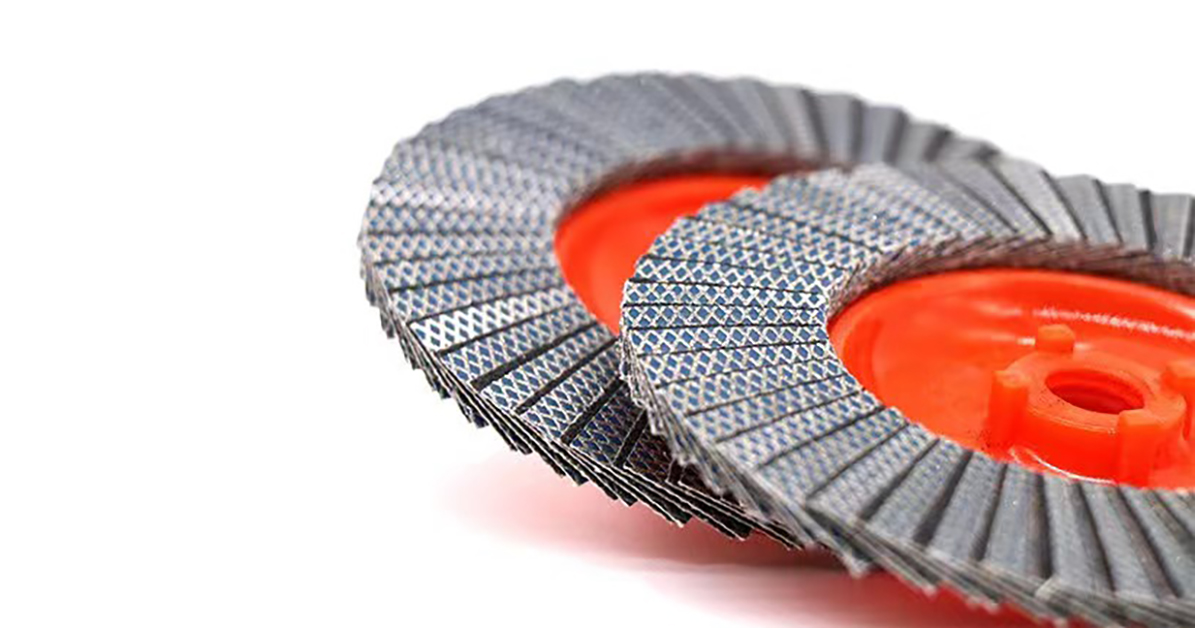
The product facts a buyer can put into a qualification file are specific rather than promotional. Diamond flap discs under product reference 5282 are supplied in Φ100×16 mm, Φ115×22 mm and Φ125×22 mm formats, in grits from 40# to 800#, in a diamond/CBN abrasive material, and are declared for processing stone, glass, ceramics, monocrystalline silicon, cemented carbide and sprayed coatings, suitable for both dry and wet grinding. For stone work in the EU, RUITE also supplies diamond belts under product reference 5281, with widths from 5 mm to 350 mm, lengths from 150 mm to 5000 mm, grits from 40# to 5000#, customisable to buyer requirements — relevant where a shop needs belt grinding for profiles and flap discs for flat surface work in the same process.
On quality evidence, RUITE reports 100% testing of production rather than batch sampling. On after-sales, the terms a buyer can escalate into a contract are a 12-month shelf life quality warranty, replacement for defective batches, and free technical consultation. On commercial structure, RUITE operates OEM production with packing and logo customisation, a minimum order quantity of 50 units, a 30-day lead time and a monthly capacity of 10,000 units.
One reference point for ceramic buyers: RUITE reports an OEM programme for ceramic grinding in Italy that has run for 8 years, covering 20,000 units, with stable quality and no complaints from the customer. That is a supplier statement rather than an independently audited result, and it should be treated as such in a qualification file — useful as a reference request lead, not as a substitute for the buyer's own trial.
On certification specifically, the honest position is this: RUITE's application data references EN 13743:2017 as the applicable EU safety standard for the working condition of its diamond flap discs, and the company's technical team can supply the product and test documentation it holds. Whether the certificate scope covers the exact diameter, grit and construction in a given purchase order is a question the buyer must verify against the document itself. Any supplier that resists that verification, or answers with a certificate image rather than a scoped document, is telling you something useful about the file you are about to build.
Step-by-Step Breakdown: Six Steps to Complete Due Diligence
The sequence below is designed so that each step produces a document you can file, forward to a customer or attach to an internal approval. It works for EU and US buyers, and for distributors who must re-qualify a product for their own accounts.
- Define the SKU before you ask for compliance documents. Diameter, grit, backing type and grinding mode (dry, wet, or both) determine which documents are relevant. A request for generic certification invites a generic answer. For reference, RUITE's range covers 100 mm, 115 mm and 125 mm diameters and grits from 40# to 800#, so a ceramic shop finishing tile edges and a stone shop shaping engineered stone will not be ordering the same SKU.
- Request the product marking artwork and the declared maximum operating speed for that diameter. In the EU this is the EN 13743:2017 surface: safety markings and maximum operating speeds. In the US it is the number your own risk assessment and operator instructions depend on. Check that the speed value is stated for the diameter ordered, not for the range as a whole.
- Request the conformity document with its scope. The document must name the product type and, ideally, the diameters covered. Where a standard is cited, confirm which standard, which edition, and which body issued the document. If the answer is a number without a scope, the step is not complete.
- Request batch test evidence and confirm what 100% testing means in practice. Ask whether every unit is tested, what is measured, and what record is retained per batch. RUITE reports 100% testing; the follow-up question is what the record looks like, because that is what supports a claim later.
- Fix the commercial and after-sales terms in writing. For a RUITE order this means a 50-unit minimum order quantity, a 30-day lead time, OEM packing and logo arrangements, a 12-month shelf life quality warranty, replacement for defective batches and access to free technical consultation. Terms that exist only in an email thread are not terms.
- Confirm classification and importer paperwork before shipment. HS 6804.21.00 applies to agglomerated diamond grinding products under the US tariff schedule; EU importers should confirm the CN/TARIC position with their broker. The invoice description, the label and the tested product should describe the same item.

Use Cases: Where the Regional Context Changes the Questions
EU stone grinding: granite, marble and engineered stone
European stone shops typically run flap discs for surface conditioning, edge grinding and blending on granite, marble and engineered stone, with diamond belts under product reference 5281 handling profile and contour work. The compliance question here is vibration and speed stability as much as paperwork: RUITE's application data specifies low vibration during high-speed rotation and stable abrasion resistance as working-condition requirements, which is what a shop foreman will actually judge on the first disc. Ask for the declared maximum operating speed for the diameter you use, and confirm the marking is legible after shipping and storage.
EU ceramic and glass: tile, porcelain and glass edges — including Germany
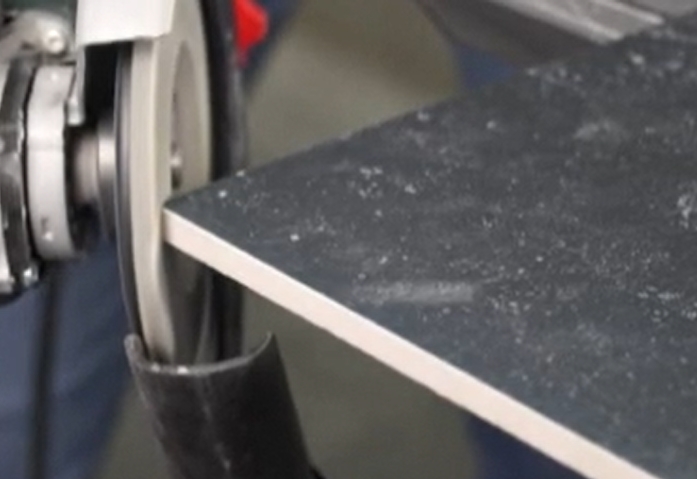
In Germany and across the EU, ceramic and glass fabricators use diamond flap discs for edge grinding, beveling and chamfering on tile, porcelain and glass, usually dry on a handheld grinder. This is the segment where RUITE's diamond flap disc reference 5282 is positioned, and where the Italian OEM ceramic programme described above sits. The due-diligence addition for this segment is grit mapping: a shop running 60# for shaping and 200# for finishing needs the certificate scope and the label to cover both grits, not just the one sampled.
US ceramic, glass and engineered stone fabrication
US fabricators work similar substrates — ceramic tile, porcelain, glass, engineered stone and masonry — with a document pack defined by their own importer, distributor and insurance requirements rather than by a single marking standard. The practical questions shift towards consistency across repeat orders: does the 30-day lead time hold at volume, does the 12-month shelf life warranty survive seasonal stockholding, and does the replacement policy for defective batches apply to a distributor's stock as well as a fabricator's bench.
Comparison Table: EU and US Due-Diligence Matrix
The table below compares what a buyer checks in each region and which document closes the check. It deliberately separates verified regulatory references from buyer-defined requirements, because treating the two as equivalent is the most common cause of a failed document review.
| Due-diligence item | EU context | US context | Document to request |
|---|---|---|---|
| Safety marking and maximum operating speed | EN 13743:2017 applies to coated abrasives placed on the EU market, covering safety markings and maximum operating speeds | The verified sources in this guide do not establish one harmonised marking standard; the declared maximum speed still governs safe use | Label artwork plus declared maximum operating speed for the exact diameter |
| Standard reference | EN 13743:2017 is the reference RUITE's application data lists for diamond flap discs | State the standard you are marking to, or state that none is claimed, so the buyer's own qualification can proceed | Standard number, edition and issuing body, with the scope listing diameters and grits |
| Batch quality evidence | 100% testing reported for RUITE production | Same | Batch test record or inspection report tied to the shipment |
| Border classification | Confirm the applicable CN/TARIC subheading with your customs broker | HS 6804.21.00 for agglomerated diamond grinding products (USITC) | Commercial invoice with classification code and matching product description |
| Application fit | Stone grinding (marble, granite, engineered stone); ceramic and glass work including Germany and Italy | Ceramic, glass, engineered stone and masonry fabrication | SKU list mapped to substrate, grit and dry or wet mode |
| After-sales terms | 12-month shelf life quality warranty; replacement for defective batches; free technical consultation | Same | Written warranty and replacement terms, valid for stock held by distributors |
A second comparison is useful when a stone shop is deciding between tool formats rather than regions. Both references below are RUITE products and both are declared for hard brittle materials, but they serve different operations:
| Attribute | Diamond flap discs (ref. 5282) | Diamond belts (ref. 5281) |
|---|---|---|
| Declared use | Processing stone, glass, ceramics, monocrystalline silicon, cemented carbide and sprayed coatings | Grinding and polishing hard brittle materials including glass, stone, ceramics, monocrystalline and polycrystalline silicon, synthetic materials and cemented carbide; carbide tool sharpening |
| Sizes | Φ100×16 mm, Φ115×22 mm, Φ125×22 mm | Width 5–350 mm, length 150–5000 mm |
| Grit range | 40#–800# | 40#–5000# |
| Grinding mode | Dry and wet | Grinding and polishing of complex shapes and surfaces |
| Customisation | OEM packing and logo; MOQ 50 units | Customisable to buyer requirements |
FAQ: Certification and Supplier Questions Buyers Ask Most
1. Which compliance documents should an EU or US buyer request before approving a diamond flap disc?
Request three sets and check that they refer to the same item. First, the product marking artwork with the declared maximum operating speed for the diameter ordered — in the EU this is the EN 13743:2017 surface, covering safety markings and maximum operating speeds for coated abrasives. Second, the certificate or declaration behind any compliance claim, with a scope that names the product type and, ideally, the diameters and grits covered. Third, batch test evidence and the border classification used on the invoice, which is HS 6804.21.00 for agglomerated diamond grinding products under the US tariff schedule. EU importers should confirm the applicable CN/TARIC subheading with their broker. If a supplier cannot connect these three documents to the same SKU, the file is not closed.
2. How do I evaluate a diamond flap disc manufacturer for ceramic work?
Start with the declared application scope. A manufacturer suited to ceramic work should list ceramics explicitly rather than only stone or metal, and should state whether the disc is intended for dry or wet use — RUITE's diamond flap discs (ref. 5282) are declared for ceramics alongside stone, glass, monocrystalline silicon, cemented carbide and sprayed coatings, in grits from 40# to 800# and diameters of 100 mm, 115 mm and 125 mm, for dry and wet grinding. Then check production depth: RUITE reports 5 R&D engineers, 100% testing, OEM packing and logo capability, a 50-unit minimum order and a 30-day lead time, plus an OEM ceramic grinding programme in Italy running for 8 years across 20,000 units with no customer complaints. Treat that reference as a lead for your own reference call and trial, not as a substitute for testing on your own tile and porcelain.
3. What determines the order value, and what is the minimum order quantity?
The minimum order quantity for RUITE diamond flap discs is 50 units. Order value is driven by specification rather than by a single unit price: diameter (100 mm, 115 mm or 125 mm), grit within the 40# to 800# range, whether the order mixes grits, OEM packing and logo work, total volume, and any additional testing or documentation your qualification process requires. Because these variables change the quotation, pricing is issued per specification rather than published as a list. Buyers comparing suppliers should request the same SKU definition from each so that the quotes are comparable, and should separate tooling or packing charges from the disc price.
4. Can buyers test diamond flap discs on ceramic, glass or stone before committing to a production order?
Yes, and a trial should be structured. Ask for a sample in the grit you will actually run, request the batch test record and the certificate or declaration that covers that sample, and record the result on your own substrate — tile, porcelain, glass or engineered stone — at the speed your operators use. RUITE supports this stage with free technical consultation, a 12-month shelf life quality warranty and replacement for defective batches, which means a trial failure caused by a defective batch is a replaceable event rather than a write-off. Keep the sample batch reference so that a later production order can be matched against what you approved.
5. What lead time and after-sales support come with an OEM diamond flap disc order?
RUITE quotes a 30-day lead time against a monthly capacity of 10,000 units, with OEM packing and logo customisation available from a 50-unit minimum order. After-sales covers a 12-month shelf life quality warranty, replacement for defective batches and free technical consultation. For distributors, the two terms worth confirming in writing are how the shelf life warranty starts — production date or delivery date — and whether the defective-batch replacement applies to stock held in your warehouse rather than only to discs already in use. You can review the full range and specification detail in the RUITE product catalogue (PDF).
Conclusion: Build the File, Then Place the Order
Compliance due diligence on diamond flap discs is not a single certificate check. In the EU it starts from EN 13743:2017 — safety markings and maximum operating speeds for coated abrasives — and expands into certificate scope, batch test evidence and border classification. In the US, where no single harmonised marking standard is established by the verified sources used here, the buyer's own document pack defines what is acceptable. In both regions, the supplier's job is to make those three document sets line up against one SKU, and the buyer's job is to refuse the answer that only sounds reassuring.
For buyers evaluating RUITE, the evidenced position is concrete: a manufacturer established in 2003 with a 500 m² facility, around 45 employees, 5 R&D engineers, 100,000 units of annual output and about 70% of production exported to the EU, USA and Middle East; diamond flap discs in 100 mm, 115 mm and 125 mm diameters with 40# to 800# grits for stone, glass, ceramics, monocrystalline silicon, cemented carbide and sprayed coatings; diamond belts under reference 5281 for stone and profile work in the EU; 100% testing; a 12-month shelf life quality warranty; replacement for defective batches; free technical consultation; OEM packing and logo; a 50-unit minimum order; and a 30-day lead time. Certification scope for your specific SKU is the one item that must still be verified document by document — which is exactly the point of the framework above.
Next Step: Request a Sample, a Quotation or the Documentation Pack
Send your substrate, diameter, grit and grinding mode, and RUITE will respond with the matching specification, the documentation available for that SKU and a sample arrangement for your own trial. OEM buyers can request packing and logo options at the same time.
Website: www.ruitechn.com | Catalogue: Download the RUITE catalogue (PDF)
Email: sales@ruitechn.com | Tel: +0086-371-86555877 | WhatsApp: +8613928451015
Zhengzhou Ruite Diamond Belts Co., Ltd, No. 1, Building 3, Longding Phase 1, Hongsong Road, Zhengzhou High-tech Industrial Development Zone, Zhengzhou, Henan, China.
This guide summarises documentation practice and standard references for buyer due diligence. It is not legal advice and does not certify any specific product; confirm applicable requirements with your own compliance advisor, customs broker and certification body.
Have Questions or Need More Details?
Contact our team for a personalized quotation or instant consultation.
Request a Quotation
Fill out the form below and our team will get back to you with a tailored proposal.
WhatsApp Direct Chat
Prefer to chat in real-time? Message us on WhatsApp for instant assistance & quick answers.
- Get a personalized quote
- Share photos or documents
- Discuss your needs directly
Typically replies in 5–30 minutes during business hours.