
Diamond Flap Discs Technical Guide: Dry and Wet Grinding Parameters for Hard Brittle Materials
Quick answer: A diamond flap disc grinds hard brittle materials using diamond or CBN grains fixed to overlapping abrasive flaps and driven by handheld electric tools. Dry grinding is chosen when portability, speed and simple setup matter most and heat can be controlled at the contact point. Wet grinding is chosen when the workpiece is heat-sensitive, when dust has to be suppressed, or when surface finish must stay consistent across a long production run. The parameters that decide the result are grit, tool speed, contact pressure, dwell time and how the workpiece is supported.
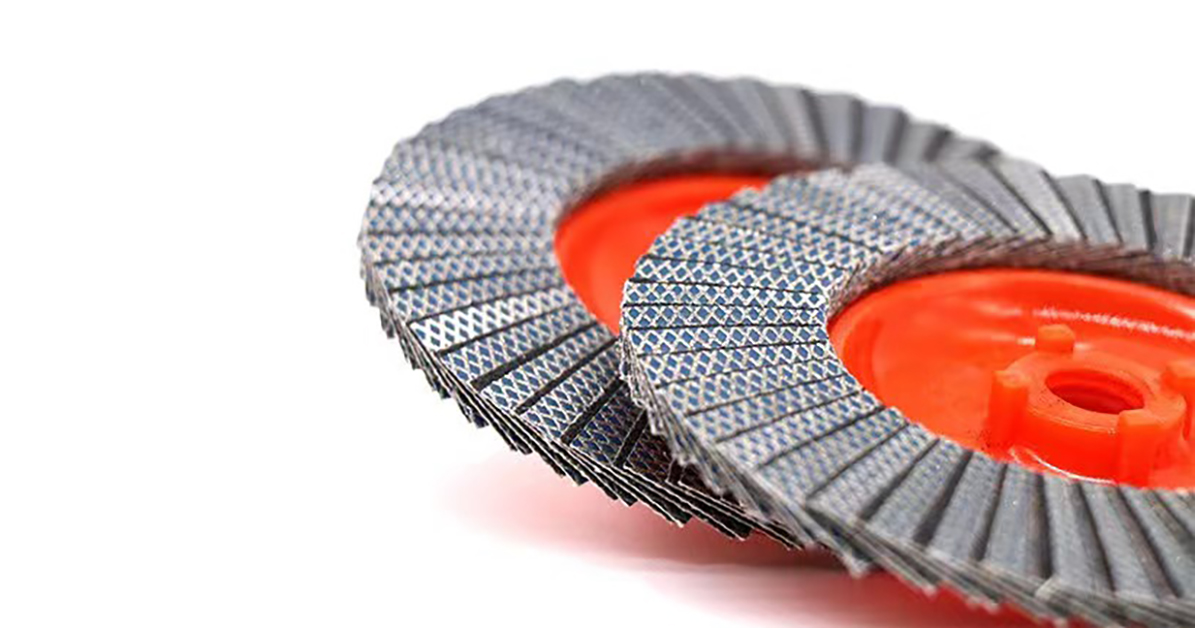
Diamond flap disc — high cutting speed, long working life, suitable for dry and wet grinding.
Problem definition: what goes wrong when grinding parameters are guessed
Hard brittle materials do not bend before they fail. Stone, glass, ceramic, monocrystalline silicon and similar substrates either cut cleanly or chip, and the difference is usually not the disc itself but the parameter set around it. A disc that is perfectly suitable for the job will still damage a marble edge if the spindle speed is too high, the pressure is too heavy, or the operator holds the tool in one spot for too long.
The most common failure patterns reported by shops using handheld electric tools on high-friction abrasive grinding operations are consistent, and each points back to a specific parameter:
- Edge chipping and spalling — usually too much applied pressure, or grinding into an unsupported edge without backing.
- Heat discoloration and burn marks — dry grinding at a speed above the disc's rated maximum, or dwelling in one position.
- Glazing and loading — the abrasive face fills with swarf, the disc stops cutting, and the operator compensates by pushing harder, which compounds the problem.
- Excessive vibration — an out-of-balance or worn disc, or a mismatch between disc diameter and tool speed.
- Inconsistent disc life — the same disc performing very differently from one operator to the next, which is usually a contact-angle and dwell-time issue rather than a product issue.
The corrective answer is not a more aggressive disc. It is a defined parameter set, applied consistently. Under stable abrasion resistance and low vibration at high-speed rotation, a diamond flap disc can grind and polish these materials predictably — and the sections below set out how to get there.
Industry background: where diamond flap discs sit today
Diamond abrasive tools are a large and still-growing category. The global diamond tools market was valued at approximately USD 8.7 billion in 2025 and is projected to reach about USD 9.1 billion by 2026, according to Fact.MR. Within that broader category, the flap disc segment is smaller but expanding: the global flap discs market was valued at USD 480.36 million in 2024, and diamond coating cutting discs were identified as the fastest-growing category, driven by their precision when processing ceramics and composites (Global Growth Insights / Cognitive Market Research).
Supply is heavily concentrated in Asia. Asia Pacific dominated the diamond tools and abrasives market in 2025, with China holding the largest market share globally (Grand View Research). China's export of diamonds, including industrial and synthetic grades used in tools, reached approximately USD 1.17 billion in 2024, according to the Observatory of Economic Complexity (OEC).
On the regulatory side, coated abrasive products sold into the European Union are governed by safety requirements that include maximum operating speeds and safety markings. European safety standard EN 13743:2017 specifies these requirements for coated abrasive products, including diamond flap discs, as published by the British Standards Institution (BSI).
Reading market figures carefully: published valuations differ depending on scope. Fact.MR sizes the total diamond tools market at roughly USD 8.7 billion, while Dataintelo sizes the narrower diamond cutting disc segment at about USD 4.38 billion. Both figures can be correct for their own definitions — buyers should always check what a number includes before using it in a sourcing decision.
The parameters that actually matter: dry and wet grinding on handheld tools
A diamond flap disc is a coated abrasive tool in which diamond or CBN grains are anchored to overlapping flaps and mounted on a backing for use on handheld electric tools such as angle grinders. Its role is grinding and polishing, and on hard brittle work it is used under high-friction conditions with both dry and wet abrasive grinding methods.
The reference specification below is the starting point for parameter selection, not a substitute for it.
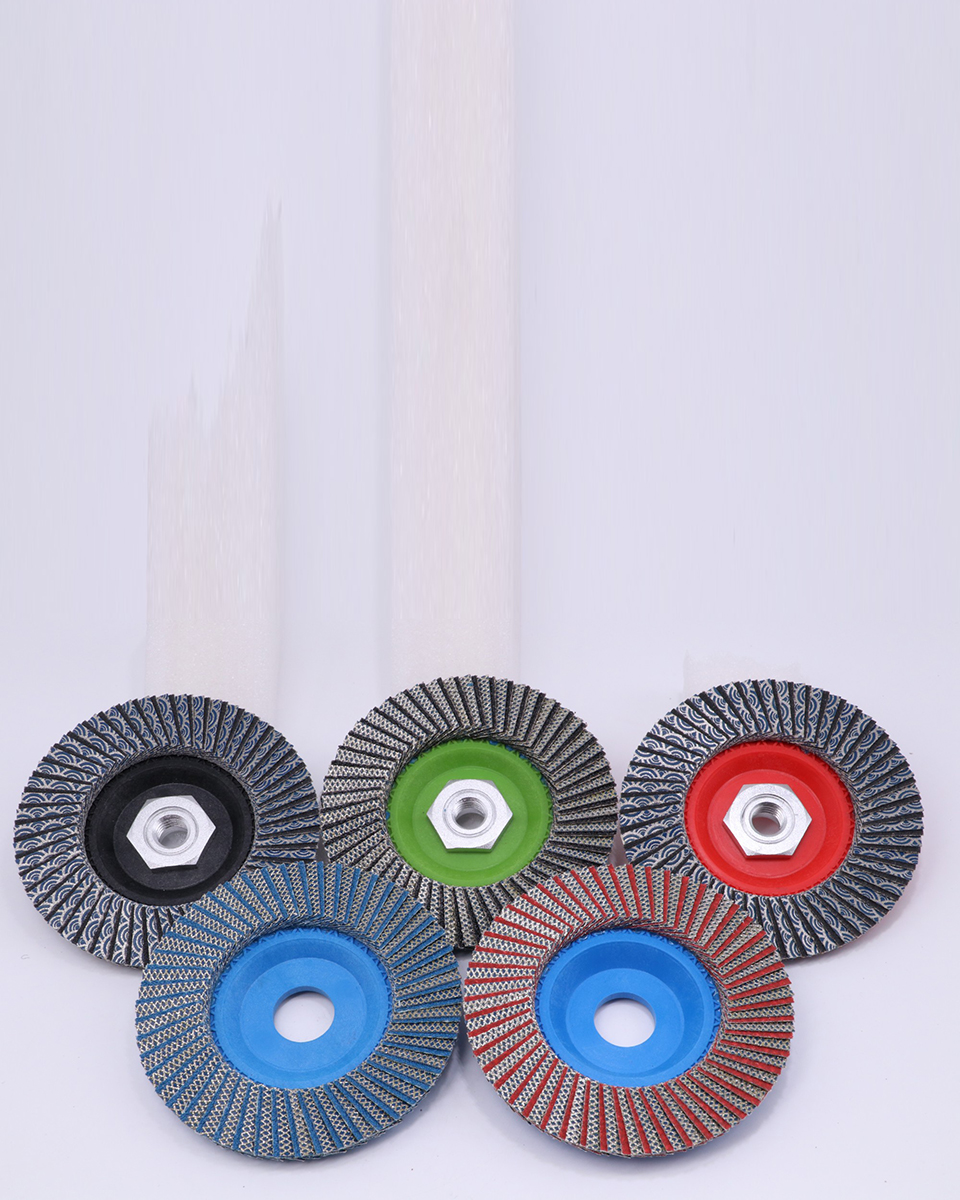
Diamond flap disc — processing stone, glass, ceramics, monocrystalline silicon, cemented carbide and sprayed coatings; suitable for dry and wet grinding.
| Parameter | Specification |
|---|---|
| Product type | Diamond flap disc (coated abrasive tool) |
| Abrasive material | Diamond / CBN |
| Dimensions | Φ100×16mm, Φ115×22mm, Φ125×22mm |
| Grit range | 40# – 800# |
| Grinding modes | Dry and wet grinding |
| Key features | High cutting speed, long working life |
| Materials processed | Stone, glass, ceramics, monocrystalline silicon, cemented carbide, sprayed coatings, synthetic materials |
| User industries | Stone, glass, porcelain, thermal spray coating, wind power, aeronautics and astronautics |
| Operating condition | Dry and wet abrasive grinding, high friction, normal ambient temperature |
| Compliance | Compliant with EU safety standard EN 13743:2017 |
Two specification details carry more operational weight than buyers expect. First, the grit range of 40# to 800# spans a wide span of surface outcomes, so the same disc family can cover both heavy stock removal and finer finishing if the right grade is selected. Second, the disc is rated for both dry and wet operation, which means the choice is a process decision rather than a product limitation.
Step-by-step: setting dry and wet grinding parameters
The sequence below applies to handheld electric tools working hard brittle materials. It is deliberately ordered: each step constrains the next.
Step 1 — Identify the workpiece and how it fails
Stone, glass, ceramic, monocrystalline silicon and synthetic materials chip in different ways. Established practice is to test on an offcut of the exact material before committing a production piece, because two nominally similar ceramics can respond very differently to the same disc and the same pressure.
Step 2 — Decide between dry and wet grinding
Dry grinding keeps the setup simple and is the default in most handheld work. Wet grinding becomes the better choice when the material is heat-sensitive, when airborne dust is a site constraint, or when finish consistency across a long run matters more than speed. Because the disc is rated for both modes, the decision can be based on the workpiece and the work environment rather than on tool availability.
Step 3 — Match grit to the operation
Grit is the single parameter that most changes the result. The 40#–800# range covers the full span from aggressive material removal at the coarse end to finer surface conditioning and finishing at the fine end. As a general rule, start one grade coarser than your target finish, then refine once, rather than trying to reach a fine finish from a coarse start. Confirm the exact grade for your finish target with the supplier, since the transition point differs by material and by machine.
Step 4 — Set the tool to the disc's rated speed
EN 13743:2017 covers maximum operating speeds and safety markings for coated abrasive products. The marked maximum on the disc is a hard ceiling, not a target. Where an angle grinder offers variable speed, running below the maximum on heat-sensitive materials is normal practice; where it does not, disc diameter becomes the speed-control variable.
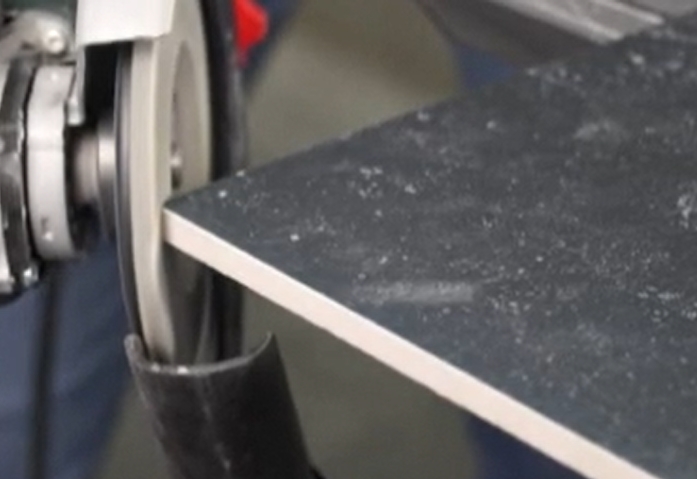
Handheld grinding of hard brittle material — stable abrasion resistance and low vibration at high-speed rotation are the operating requirements.
Step 5 — Control pressure, contact angle and dwell time
Light, consistent pressure with a shallow contact angle removes material faster than heavy pressure, because heavy pressure generates heat and loads the abrasive face. Dwell time should be short and the tool kept moving. Burning and glazing are almost always dwell-and-pressure symptoms, not abrasive failures.
Step 6 — Manage swarf, coolant and dust
In dry grinding, clearing swarf is what keeps the flaps cutting. In wet grinding, the coolant's job is to carry heat and particles away from the contact zone, not to soak the workpiece. A steady, modest flow outperforms flooding, which can wash abrasive away from the cut and make performance harder to judge.
Step 7 — Inspect and replace on condition, not on the calendar
Check the disc before each use and replace it when the flap structure is worn unevenly, when vibration increases at normal speed, or when the cutting rate drops noticeably at unchanged pressure. Discs stored in dry conditions retain their performance — the shelf life warranty attached to RUITE diamond flap discs is 12 months.
Dry versus wet grinding: a parameter comparison
Neither mode is inherently better. They solve different problems, and the correct choice depends on the material, the finish target and the site.
| Parameter | Dry grinding | Wet grinding |
|---|---|---|
| Coolant / water supply | None required | Required, typically a modest steady flow |
| Heat at the contact zone | Higher; must be managed by speed, pressure and dwell time | Controlled by the coolant carrying heat away |
| Dust generation | Higher; dust extraction or PPE is part of the setup | Suppressed at the source |
| Setup complexity | Low — handheld tool only | Higher — water feed, containment and clean-up |
| Finish consistency over a long run | Depends heavily on operator control | Generally easier to hold steady |
| Best suited to | Faster edge work, site work, spot repair, bevels and chamfers | Heat-sensitive surfaces, visible finishes, dust-restricted sites |
| Disc suitability | Diamond flap discs are suitable for both dry and wet grinding in high-friction abrasive operations | |
In practice many shops run both modes in the same facility: wet for the finish-critical passes, dry for quick fit-up and site work. Because the disc family covers both, the parameter set rather than the part number is what changes between the two.
Use cases: matching the disc to the job
Stone fabrication — marble and granite
Diamond flap discs are specifically recommended for grinding natural stone such as marble and granite, and for executing miters and bevels (RUBI Tools). Stone work in the EU market commonly involves edge profiling and beveling where a controlled contact angle matters more than raw removal speed.
Ceramic and porcelain tile
Ceramic tiles and porcelain stoneware are among the most frequently cited applications for diamond flap discs, particularly for miter cuts and bevels where a chipped edge cannot be repaired. This is also one of the highest-volume applications — an application scenario common in the United States, and one that is common in Germany as well.
Glass
Glass grinding and polishing is a core application for diamond abrasives generally. In the glass and ceramic industries, diamond flap discs are used on handheld electric tools to grind and polish under dry and wet conditions, with the requirement that abrasion resistance stays stable and vibration stays low at high-speed rotation.
Monocrystalline silicon and synthetic materials
Diamond flap discs are used on monocrystalline silicon and synthetic materials, alongside stone, glass, ceramics, cemented carbide and sprayed coatings. These are substrates where a conventional abrasive that sheds heat poorly tends to leave subsurface damage.
Cemented carbide and sprayed coatings
Thermal spray coating work and cemented carbide finishing are served by the same disc family, which is why the product appears in thermal spray coating, wind power and aeronautics and astronautics supply chains, not only in stone and tile shops.
Regional deployment notes
The application profile is well established in the United States and in Germany, and the disc range is used across EU and US markets. For EU-facing work, the EN 13743:2017 compliance requirement should be specified at the time of inquiry, not verified at delivery.
Diamond flap discs versus conventional abrasive flap discs
The comparison buyers actually make is between a diamond flap disc and a conventional abrasive flap disc. The trade-off is real and runs in both directions.
| Comparison point | Diamond flap disc | Conventional abrasive flap disc |
|---|---|---|
| Abrasive grain | Diamond or CBN | Conventional abrasive mineral |
| Materials it is designed for | Stone, glass, ceramics, monocrystalline silicon, cemented carbide, sprayed coatings, synthetic materials | General metal and mixed-material finishing |
| Dry and wet capability | Suitable for both | Confirm with the manufacturer for each product |
| Cutting speed on hard brittle work | High cutting speed (RUITE product specification) | Generally lower when applied to hard brittle substrates |
| Working life | Long working life (RUITE product specification) | Generally shorter on hard brittle substrates |
| Maintenance burden | Lower — fewer disc changes, less rework from burning | Higher — more frequent changes on hard materials |
| Initial cost per disc | Higher | Lower |
| Total cost logic | Cost per unit of material removed and per finished part | Cost per disc |
The trade-off is straightforward. Diamond flap discs require a higher initial outlay per disc than conventional abrasive flaps. In return, RUITE references an efficiency gain of approximately 45% on hard brittle materials, together with longer service life and lower maintenance — fewer disc changes, less re-dressing and less rework caused by heat damage. On soft metals and general finishing, a conventional abrasive flap disc remains the sensible economic choice; on stone, glass, ceramic and similar substrates, the arithmetic usually reverses once cost is measured per finished part rather than per disc.
Selecting a supplier: what to confirm before ordering
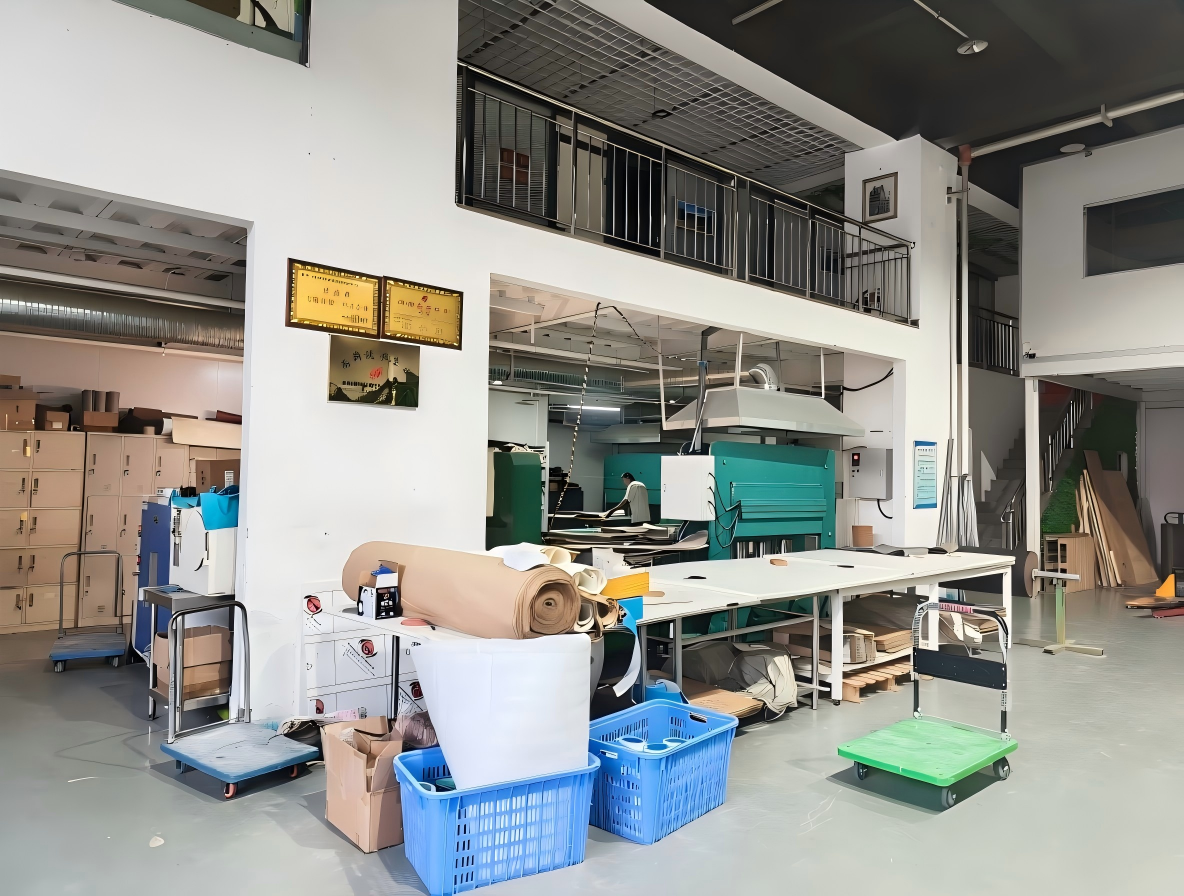
Zhengzhou Ruite Diamond Belts Co., Ltd. — diamond abrasive manufacturing since 2003.
Zhengzhou Ruite Diamond Belts Co., Ltd. (RUITE) is a Zhengzhou-based manufacturer established in 2003 that specialises in diamond flap discs and other superhard abrasive products for grinding and polishing hard brittle materials such as stone, glass, ceramic, monocrystalline silicon and synthetic materials. The company runs a 500-square-metre manufacturing facility with approximately 45 staff, an annual output of 100,000 units, and an R&D team of five engineers working on superhard material coated abrasives. Export accounts for 70% of total sales, with the EU and the USA as its major markets.
Its main products include diamond belts, diamond flap discs, diamond flap wheels, diamond velcro discs, diamond hand pads and diamond quick change discs. The RUITE diamond flap disc itself is offered in grit 40#–800# and in Φ100×16mm, Φ115×22mm and Φ125×22mm formats, in diamond or CBN, rated for both dry and wet grinding.
For buyers at the awareness and research stage, four practical points are worth capturing in a first inquiry:
- Testing discipline. RUITE applies a 100% testing standard across production, which matters most on grit consistency and balance — the two properties that drive vibration and finish variability at speed.
- Order economics. MOQ is 50 units, which allows a shop to run a real production trial rather than a bench test.
- Planning horizon. Lead time is 30 days, and discs carry a 12-month shelf life warranty when stored in dry conditions.
- Customisation. OEM support is available, which is relevant when a distributor or brand owner needs a specified grit, dimension or private-label configuration rather than a catalogue standard.
Frequently asked questions
How should buyers evaluate diamond flap disc manufacturers?
Start with what the manufacturer actually produces rather than what it lists. A manufacturer that specialises in superhard abrasive products — diamond belts, diamond flap discs, diamond flap wheels and diamond hand pads — is working with the same diamond and CBN grain technology across its range, which is a different position from a general abrasives trader. Then confirm three process facts: whether grit and balance are tested on every batch, what MOQ and lead time apply, and whether OEM specifications can be held consistently over repeat orders. Zhengzhou Ruite Diamond Belts Co., Ltd., established in 2003, operates a 500-square-metre facility with approximately 45 staff and an annual output of 100,000 units, with a 100% testing standard, OEM support, an MOQ of 50 units and a 30-day lead time — concrete reference points against which other suppliers can be compared.
Do diamond flap discs comply with EU safety standards such as EN 13743:2017?
Coated abrasive products sold into the EU market are covered by EN 13743:2017, the European safety standard that specifies requirements for coated abrasive products, including maximum operating speeds and safety markings. RUITE diamond flap discs are compliant with this standard, and the operating requirement behind it — stable abrasion resistance and low vibration during high-speed rotation — is the same requirement that determines surface quality in stone, glass and ceramic work. For EU-facing orders, specify EN 13743:2017 compliance in the initial inquiry so the documentation travels with the shipment.
Can one diamond flap disc be used for both dry and wet grinding?
Yes. RUITE diamond flap discs are suitable for both dry and wet grinding, which is one of their defined product features. The disc operates under high-friction conditions at normal ambient temperature on handheld electric tools. The choice between the two modes is a process decision: dry grinding for speed, portability and site work; wet grinding where the material is heat-sensitive, where dust must be suppressed, or where finish has to stay consistent over a long run. In applications such as ceramic, glass and stone processing, the same disc is used across both modes with different parameter settings.
What are the MOQ, lead time and shelf life for a diamond flap disc order?
RUITE's MOQ for diamond flap discs is 50 units, the standard lead time is 30 days, and discs carry a 12-month shelf life warranty when stored in dry conditions. The MOQ is set low enough to support a genuine production trial before scaling, and the 30-day lead time is a planning input rather than a surprise — buyers running repeat programmes should build it into their reorder point. For OEM configurations, confirm the specification and the schedule together, since custom grit, dimension or private-label requirements can change both.
How can a buyer validate performance before committing to a bulk order?
Validate on the material you actually process, not on a demonstration piece. Because the 40#–800# grit range covers both aggressive removal and finer finishing, a first trial should test at least two grades on your own offcuts and record cutting rate, edge quality and disc life at fixed speed and pressure. With an MOQ of 50 units and a 30-day lead time, a production-scale trial is realistic before a long-term commitment. Buyers who want to begin that process can contact RUITE for a sample or quotation and discuss OEM requirements at the same time.
Conclusion: parameters first, discs second
For hard brittle materials, the diamond flap disc is rarely the limiting factor. The limiting factor is whether dry or wet grinding has been chosen deliberately, whether grit has been matched to the operation, whether tool speed respects the rated maximum, and whether pressure and dwell time are controlled consistently across operators. Get those four parameters right and a disc rated for high cutting speed and long working life will deliver both; get them wrong and the same disc will chip edges and glaze.
The economic case sits on the same axis. A higher initial cost per disc is only justified when it is measured against cost per finished part — and on stone, glass, ceramic, monocrystalline silicon and similar substrates, longer service life and lower maintenance are what move that number. On general metal finishing, a conventional abrasive flap disc still makes more sense.
Buyers researching the category should therefore treat the specification table as the beginning of the conversation, not the end of it. Confirm the grit for your target finish, confirm the dry or wet regime for your material and site, and confirm the supplier facts — testing discipline, MOQ, lead time, shelf life and OEM capability — before the first production run rather than after it.
Next step: sample, quotation or OEM specification

RUITE supplies diamond flap discs for dry and wet grinding of stone, glass, ceramic, monocrystalline silicon and synthetic materials, in grit 40#–800# and Φ100×16mm, Φ115×22mm and Φ125×22mm formats, with 100% testing, a 12-month shelf life warranty, MOQ 50 units, 30-day lead time and OEM support.
Download the RUITE product catalogue (PDF) for the full specification range, or contact the sales team directly to request a sample or quotation.
Website: www.ruitechn.com | Email: sales@ruitechn.com | WhatsApp: +8613928451015
Zhengzhou Ruite Diamond Belts Co., Ltd. (RUITE) — established 2003, specialising in diamond flap discs, diamond belts, diamond flap wheels, diamond velcro discs, diamond hand pads and diamond quick change discs for grinding and polishing hard brittle materials.
Address: No. 1, Building 3, Longding Phase 1, Hongsong Road, Zhengzhou High-tech Industrial Development Zone, Zhengzhou, Henan, China.
Tel: +0086-371-86555877 | Email: sales@ruitechn.com | Website: www.ruitechn.com
Have Questions or Need More Details?
Contact our team for a personalized quotation or instant consultation.
Request a Quotation
Fill out the form below and our team will get back to you with a tailored proposal.
WhatsApp Direct Chat
Prefer to chat in real-time? Message us on WhatsApp for instant assistance & quick answers.
- Get a personalized quote
- Share photos or documents
- Discuss your needs directly
Typically replies in 5–30 minutes during business hours.