
Diamond Flap Discs vs. Diamond Belts, Wheels and Pads: A Stone, Glass and Ceramic Selection Guide
Choosing a diamond abrasive is not a question of which format is strongest. It is a question of which format matches the shape of the workpiece and the access your tool has to the surface that needs grinding. On a flat ceramic edge, a diamond flap disc on an angle grinder will usually outperform anything else in the shop. On a curved glass profile or an irregular stone moulding, the same flap disc struggles, while a diamond belt takes over without drama.
This guide compares six diamond abrasive formats — diamond flap discs, diamond belts, diamond flap wheels, diamond velcro discs, diamond hand pads and diamond quick change discs — for grinding and polishing stone, glass, ceramic, monocrystalline silicon and synthetic materials. It is written for buyers and process engineers at the evaluation stage, where the decision has moved past “do we need diamond” and into “which diamond format, on which tool, at which grit.”
The manufacturer referenced throughout is RUITE (Zhengzhou Ruite Diamond Belts Co., Ltd.), a diamond abrasive manufacturer based in Zhengzhou, China, established in 2003, whose product range covers diamond belts, diamond flap discs, diamond flap wheels, diamond velcro discs, diamond hand pads and diamond quick change discs, with roughly 70% of output exported to the EU and USA markets.

Problem Definition: Why the Wrong Diamond Format Costs More Than It Saves
Grinding hard brittle materials is not the same as grinding metal. Stone, glass, ceramic, monocrystalline silicon and synthetic materials are sensitive to localised pressure and heat. Excess pressure, excessive rpm or uncontrolled dry friction produces chipping, micro-cracking and surface haze that no later polishing step fully removes. Because of this, the variables that actually decide the outcome are limited and predictable.
- Workpiece geometry — flat face, straight edge, external bevel, concave curve, complex three-dimensional profile, narrow slot or deep internal corner.
- Tool access — whether a powered tool can present the abrasive flat against the target line, or only at a point.
- Contact mode — point contact, line contact, or full surface contact.
- Process window — dry grinding on site, wet grinding at a bench, or a mix of both.
- Grit sequence and finish target — how much material must come off, and how fine the final surface must be.
A diamond flap disc performs very well on faces and edges. Its laminated abrasive flaps sit on a rigid or semi-rigid backing and mount on an angle grinder, usable dry or wet by hand. But once the workpiece becomes curved, irregular or deeply contoured, the flap structure cannot lie flat against the profile. Contact becomes uneven, pressure concentrates at high points, and the risk of localised burn and edge chipping rises sharply. Those jobs belong to a diamond belt, whose flexible backing wraps the contour and distributes pressure along the contact line.
The real trade-off, then, is not “which product is better” but “which product can actually reach and hold the line that has to be ground.”
Industry Background: Where Diamond Abrasives Sit in Hard Brittle Processing
The diamond tool category continues to expand. The global diamond tools market is projected to reach approximately USD 9.1 billion by 2026, and Asia-Pacific accounted for 55.40% of global abrasives purchases in 2025 — a regional concentration that shapes both supply and pricing.
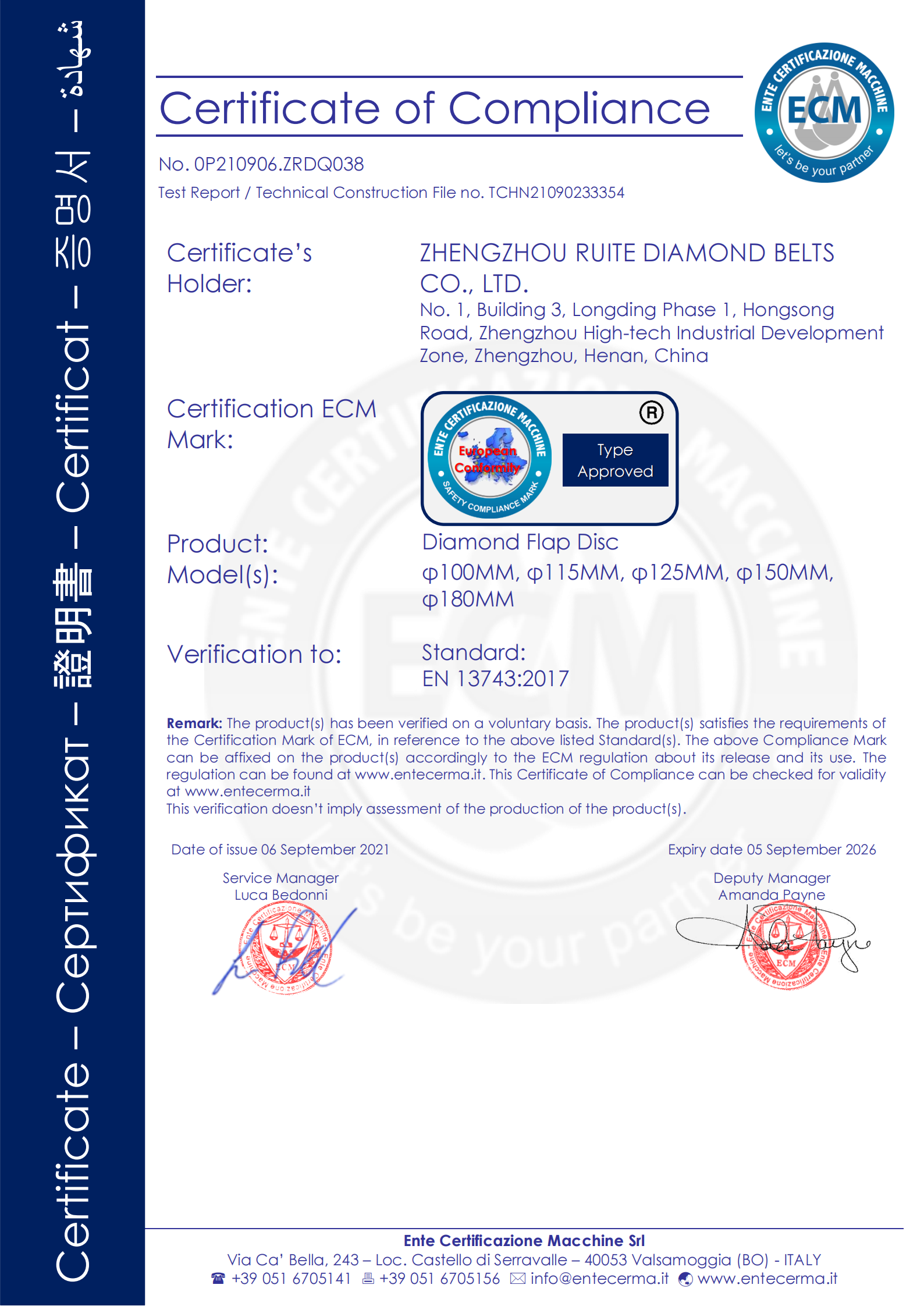
On the trade side, diamond flap discs fall under HS Code 6804.21.00, defined as “millstones, grindstones, grinding wheels and the like … of agglomerated synthetic or natural diamond.” For EU buyers, any coated abrasive product placed on the EU market — diamond flap discs included — must comply with EN 13743:2017 covering safety markings and maximum operating speeds. That requirement is a procurement gate, not a formality.
Specification conventions have also settled. Public supplier data for diamond flap discs typically shows a 115 mm diameter, grit options of 60, 120, 200 and 400, dry use on an angle grinder, and a maximum speed around 13,200 rpm for certain listed products, with stated applications covering ceramic tile, porcelain, natural stone, granite, marble and concrete. Grit-to-task mapping follows a consistent pattern across published sources: coarse grit for aggressive shaping and initial bevels, medium grit for general grinding and beveling, and fine grit for final smoothing and finishing preparation.
Procurement note: stated maximum speed is product-specific. It must be checked against the product label and the tool's rated speed before use, and cannot be generalised across every diamond flap disc on the market.
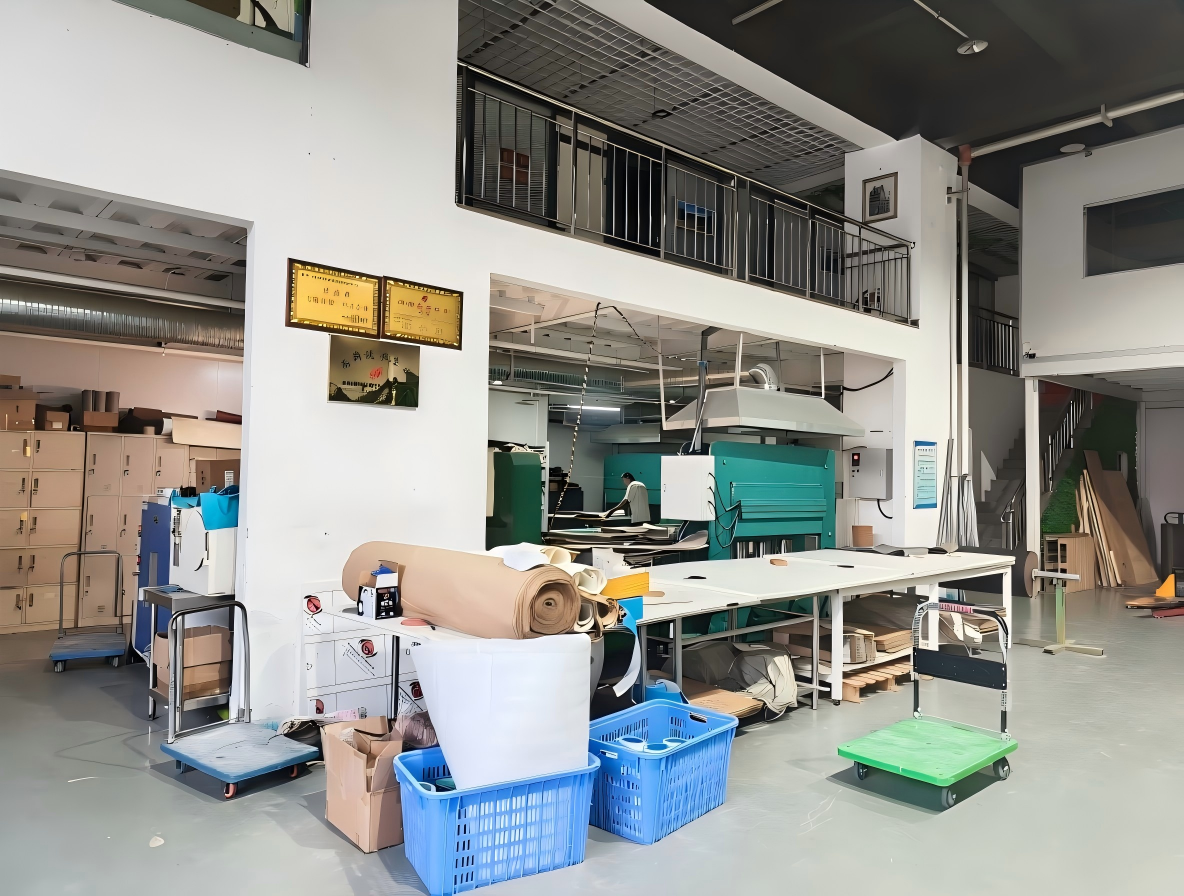
Detailed Solution: The Six RUITE Diamond Abrasive Formats and What Each One Is For
RUITE covers six diamond abrasive formats built around the same hard brittle material group, but with clearly different jobs. Understanding the division of labour matters more than memorising part numbers.
Diamond Flap Discs — High-Precision Processing on Handheld Electric Tools
This is the format for handheld work under demanding friction, dry or wet. RUITE diamond flap discs are offered in Φ100×16 mm, Φ115×22 mm and Φ125×22 mm, with grit ranging from 40# to 800#, and are specified for processing stone, glass, ceramics, monocrystalline silicon, cemented carbide and sprayed coatings, suitable for dry and wet grinding. The stated product features are high cutting speed and long working life.
The practical implication for a buyer is straightforward. Because the diamond abrasive keeps cutting throughout its service life rather than glazing and shedding quickly, the disc stays on the tool longer, the operator stops less often to change consumables, and per-part labour time falls. The unit price of a diamond flap disc is higher than a conventional abrasive flap disc — but unit price is not the number that decides whether a shop is profitable. Cost per finished part is.
Diamond Belts — Complex Shapes and Surfaces
RUITE developed diamond sanding belts for grinding and polishing complex shapes and surfaces of hard brittle materials, including stone, glass, ceramic, monocrystalline silicon, synthetic materials and hard materials. The flexible backing is the point: a belt wraps a curve, follows a moulded profile and spreads contact pressure along a line rather than concentrating it at a point. Where a flap disc can only touch a complex contour at isolated high spots, a belt maintains continuous contact.
Diamond Flap Wheels — Continuous Contours and Irregular Surfaces
The wheel configuration delivers a compliant, extended contact zone. It suits continuous transition contours, irregular surfaces and edge shaping where the operator needs the abrasive to follow a curve rather than cut a flat.
Diamond Velcro Discs — Fast Grit Changes in Sequence
Hook-and-loop backing makes disc changeover fast. When a process line runs coarse to medium to fine grit in succession, velcro discs cut the changeover time that a rigid backing would otherwise add to every step.
Diamond Hand Pads — Manual Finishing Where Power Tools Cannot Reach
Hand pads handle the last few centimetres: internal corners, narrow edges, concave radii, moulding details and closing passes. They remove little material, but they reach places a powered tool will damage or cannot enter at all.
Diamond Quick Change Discs — Localised Repair and Tight Access
Small-diameter quick change systems target spot correction, joint lines, local defects and confined areas. Their selection logic is access and changeover speed, not large-area removal rate.
Taken together, RUITE's line follows a single logic: diamond belts for complex shapes and surfaces, diamond flap discs for high-precision handheld work on faces and edges, flap wheels for continuous contour shaping, velcro discs for rapid grit sequencing, hand pads for manual closing work, and quick change discs for localised access.
Step-by-Step Breakdown: Selecting a Format by Workpiece Shape and Access
Step 1 — Read the Workpiece Geometry First, Not the Price List
Flat faces, straight edges, external bevels and chamfers point to a diamond flap disc. Curved surfaces, irregular profiles, arcs and complex three-dimensional shapes point to a diamond belt. Continuous transition contours and surfaces needing uniform shaping point to a flap wheel.
Step 2 — Confirm Access Before Confirming Anything Else
Ask whether the tool can present the abrasive flat against the target line. If an angle grinder with a flap disc can sit flush on the surface, use the flap disc. If the workpiece has an internal curve, narrow slot or deep corner where the flaps can only make point contact, switch to a belt where the equipment allows, or to a hand pad where the work must be manual.
Step 3 — Match the Tool Interface
Diamond flap discs run on angle grinders, with Φ100×16 mm, Φ115×22 mm and Φ125×22 mm covering common handheld machines. Quick change discs require a quick change backing system. Velcro discs require hook-and-loop backing. A format that does not fit the tool on the bench is not a candidate, regardless of its specifications.
Step 4 — Set the Grit Sequence and the Dry/Wet Mode
Coarse grit removes stock and establishes shape, medium grit levels and bevels, fine grit prepares the surface for visible finishing. Published supplier guidance follows this pattern: coarse for aggressive shaping and initial bevels, medium for universal grinding and beveling, fine for final smoothing and finishing preparation. Dry grinding suits site work and jobs where water cannot be used; wet grinding controls heat and dust and protects surface quality. RUITE diamond flap discs are specified as suitable for both dry and wet grinding, so the choice follows the workpiece and the site, not the tool.
Step 5 — Validate on a Real Workpiece Before Committing to Volume
Specification tables are a starting point, not a result. Actual matching depends on workpiece hardness, tool rpm, operator pressure and cooling method. A trial on the real material, on the real machine, at the real grit, is the only reliable confirmation before a production order.
Use Cases
Ceramic Tile and Porcelain
A dry grinding scenario. An angle grinder fitted with a diamond flap disc handles beveling, edge trimming and levelling, typically starting at coarse or medium grit. This is the format's strongest territory.
Marble and Engineered Stone
Diamond flap discs handle edge shaping and beveling on marble and engineered stone worktops. Internal curves and closing passes move to diamond hand pads. RUITE's delivered reference case is exactly this type of work: an Italian OEM customer using RUITE products for ceramic grinding, with eight years of continuous supply, a cumulative project volume of 20,000 units, stable quality and no customer complaints recorded.
Glass
This is belt territory. Curved glass and complex contours are processed with diamond belts, whose flexible backing keeps contact even and reduces the risk of edge chipping on a brittle material.
Monocrystalline Silicon and Synthetic Materials
RUITE diamond belts are specified for monocrystalline silicon and synthetic materials in complex shape and surface processing. These workpieces demand tight control of surface quality and heat, which favours the belt's compliant contact.
Cemented Carbide and Sprayed Coatings
RUITE diamond flap discs are specified for cemented carbide and sprayed coatings. Coating grinding is unforgiving: if the abrasive sheds grains quickly, the coating surface gets scratched and the part is scrapped.
Masonry and Concrete
Coarse-grit diamond flap discs handle aggressive removal and surface shaping where finish quality is secondary and throughput comes first.

Comparison Table: Diamond Flap Discs vs. Other Diamond Abrasive Formats
| Format | Best-suited workpiece shape | Contact mode | Tool | Published RUITE data | Primary task |
|---|---|---|---|---|---|
| Diamond flap disc | Flat faces, straight edges, external bevels, chamfers | Surface and edge contact | Angle grinder | Φ100×16 mm, Φ115×22 mm, Φ125×22 mm; grit 40#–800#; dry and wet grinding | High-precision beveling, edge grinding, shaping, surface conditioning |
| Diamond belt | Curved surfaces, irregular profiles, complex three-dimensional shapes | Line and wrap-around contact | Belt machine | Specified for complex shapes and surfaces of hard brittle materials | Grinding and polishing of complex shapes and surfaces |
| Diamond flap wheel | Continuous transition contours, irregular surfaces | Extended contour contact | Angle grinder | Refer to the specific RUITE product datasheet | Contour shaping and transition zone processing |
| Diamond velcro disc | Flat areas of moderate size | Surface contact | Angle grinder with hook-and-loop backing | Refer to the specific RUITE product datasheet | Rapid grit sequencing in one process line |
| Diamond hand pad | Internal corners, narrow edges, concave radii, mouldings | Manual localised contact | Hand | Refer to the specific RUITE product datasheet | Closing work, manual finishing, areas power tools cannot reach |
| Diamond quick change disc | Confined areas, joint lines, local defects | Localised contact | Quick change backing system | Refer to the specific RUITE product datasheet | Spot correction and tight-access blending |
The selection signal is consistent across the table. If the tool can present the abrasive flat against the target line, choose the flap disc. If the target line curves away from the tool, move to a format with a compliant backing or switch to manual work.
Frequently Asked Questions
1. Are RUITE diamond flap discs certified to EN 13743:2017?
RUITE holds an ECM/COC certificate, No. 0P210906.ZRDQ038, issued by ECM Certification Machine Srl, covering diamond discs in diameters of Φ100 mm, Φ115 mm, Φ125 mm, Φ150 mm and Φ180 mm under standard EN 13743:2017. The certificate was issued on 2021-09-06 and carries a stated validity to 2026-09-05. The linked diamond flap disc product is listed at Φ100×16 mm, Φ115×22 mm and Φ125×22 mm. Before any purchase order, buyers should request the current certificate PDF and product-label details directly from the manufacturer in writing, since certificate status can change and website descriptions alone are not sufficient for compliance approval.
2. Can a diamond flap disc replace a diamond belt on complex shapes?
Generally no, because the two formats make different kinds of contact. A diamond flap disc on an angle grinder works by surface and edge contact, which is efficient on flat faces, straight edges and bevels. A diamond belt uses a flexible backing to wrap complex shapes and surfaces for grinding and polishing. On an internal curve, an irregular profile or a narrow curved surface met by a flap disc, contact is limited to a point, which raises the risk of localised overheating and edge chipping. The practical approach is to combine formats from the same diamond abrasive family: belt for complex shapes and surfaces, flap disc for high-precision handheld work.
3. Diamond flap discs cost more per disc than conventional abrasive flap discs. How do I judge whether that is worth it?
The relevant unit is cost per finished part, not cost per disc. Because the diamond abrasive continues cutting through its service life, the disc stays on the tool longer, changeover frequency drops, and consumable-driven labour and downtime fall accordingly. A conventional abrasive flap disc carries a lower unit price but is consumed faster. RUITE's supplied reference project illustrates the long-cycle side of this: an Italian OEM customer for ceramic grinding has taken continuous supply for eight years at a cumulative 20,000 units, with stable quality and no recorded customer complaints over that period. That is evidence of supply and quality consistency, not a published cost-per-part ratio — buyers should still calculate the return against their own labour rate, machine time and material mix.
4. Can I obtain samples for validation before placing a volume order?
Yes. RUITE's OEM capability covers packing and logo customisation, with a minimum order quantity of 50 units, a lead time of 30 days and a monthly capacity of 10,000 units. Quality control is 100% testing. After-sales terms include a 12-month shelf-life quality warranty, free technical consultation and replacement for defective batches. For sample validation, test on the actual workpiece with the actual machine, at the actual grit, under the dry or wet condition you intend to run in production — that is the only reliable way to confirm the grit and format combination.
5. When evaluating top diamond flap disc manufacturers in China, what should buyers check?
Four checks carry the most weight. First, product coverage: can the supplier provide the diameters and grit range you actually need, since diamond flap discs commonly run from Φ100 mm to Φ180 mm and 40# to 800#. Second, documentation: can they supply the certificate and standard documents rather than only a website claim. Third, production parameters: MOQ, lead time, monthly capacity and quality control method, all written into the contract. Fourth, after-sales: whether warranty and replacement terms are documented rather than口头. RUITE was established in 2003, produces diamond belts, diamond flap discs, diamond flap wheels, diamond velcro discs, diamond hand pads and diamond quick change discs, exports roughly 70% of output to the EU and USA, runs a monthly capacity of 10,000 units with a 30-day lead time and a 50-unit MOQ, and provides a 12-month shelf-life quality warranty with replacement for defective batches. To check specifications or request samples, contact the RUITE team at sales@ruitechn.com or visit www.ruitechn.com.
Conclusion
The selection logic compresses into three rules. Workpiece shape and access decide the abrasive format. Grit sequence and dry or wet mode decide the surface result. Long-run cost per part, not unit price, decides the supplier relationship.
Diamond flap discs are the right answer for high-precision handheld work on flat faces, straight edges and bevels, particularly where dry and wet grinding both have to be supported under high friction. Diamond belts take the complex shapes and surfaces that a flap disc can only touch at a point. Flap wheels, velcro discs, hand pads and quick change discs fill in around those two wherever contour shaping, grit changeover speed, manual closing work or tight access is the limiting factor.
RUITE has been manufacturing diamond abrasives since 2003 from Zhengzhou, China, and produces the full format set described here. Its diamond flap discs cover grit 40# to 800# in Φ100×16 mm, Φ115×22 mm and Φ125×22 mm, specified for stone, glass, ceramics, monocrystalline silicon, cemented carbide and sprayed coatings. Before committing to volume, request a sample, validate the grit and format on your own workpiece, and then scale.
Next Step
Download the full RUITE diamond abrasive catalogue with the complete product range, specifications and OEM options: RUITE Product Catalogue (PDF).
For sample requests, OEM packing or logo customisation, and specification confirmation: sales@ruitechn.com | WhatsApp: +86 139 2845 1015 | Tel: +0086-371-86555877

Have Questions or Need More Details?
Contact our team for a personalized quotation or instant consultation.
Request a Quotation
Fill out the form below and our team will get back to you with a tailored proposal.
WhatsApp Direct Chat
Prefer to chat in real-time? Message us on WhatsApp for instant assistance & quick answers.
- Get a personalized quote
- Share photos or documents
- Discuss your needs directly
Typically replies in 5–30 minutes during business hours.