
Diamond Sanding Belts: A Complete Guide for Industrial Applications
Diamond Sanding Belts
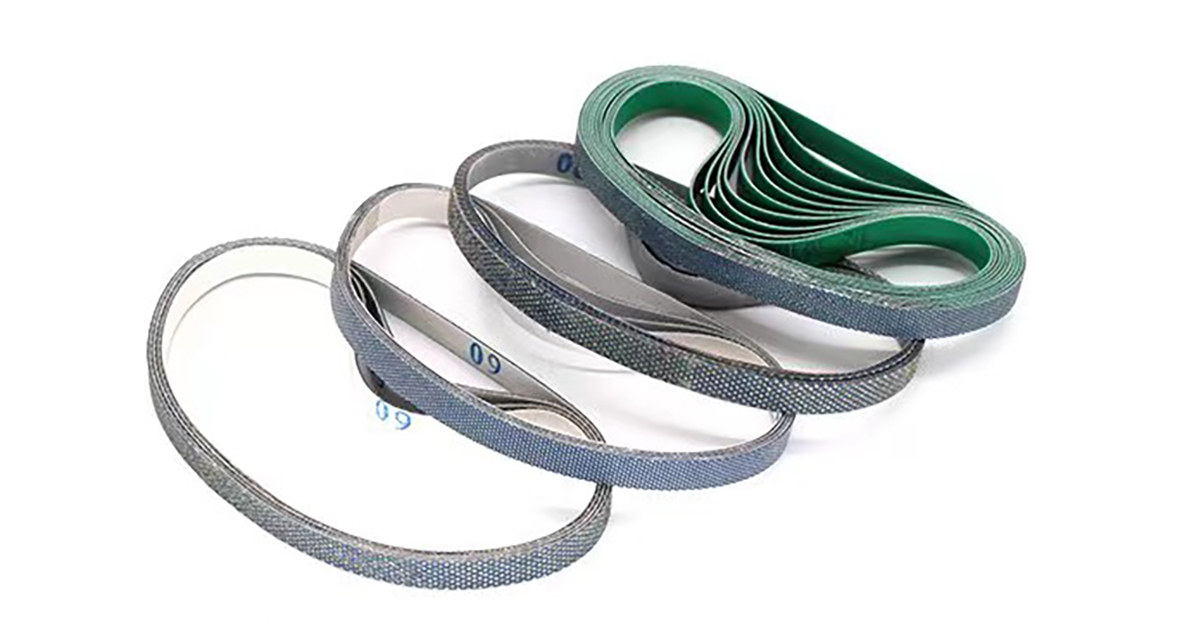
Diamond sanding belts are abrasive tools that use diamond or cubic boron nitride (CBN) as the cutting medium, offering superior hardness and wear resistance for processing hard brittle materials. Zhengzhou Ruite Diamond Belts Co., Ltd. (RUITE), established in 2003, specializes in manufacturing superhard material coated abrasives with independent intellectual property rights. The company produces diamond belts in resin bond and electroplated types, which are widely used for grinding and polishing stone, glass, ceramic, monocrystalline silicon, and other challenging surfaces.
Understanding the Problem with Traditional Abrasives
Conventional sanding belts made from aluminum oxide or silicon carbide often fail quickly when applied to materials with hardness above 7 on the Mohs scale, such as ceramics, cemented carbide, and thermal spray coatings. These materials require an abrasive that can maintain cutting sharpness under high friction and temperature without premature dulling. Diamond sanding belts address this need by providing a superhard cutting layer that sustains productivity and reduces downtime.
Industry Background
The global diamond tools market, which includes diamond abrasive belts, was valued at approximately USD 10.8 billion in 2024 and is projected to grow to USD 19.5 billion by 2034 (Global Market Insights). The coated abrasive belt market as a whole was estimated at around USD 3.2 billion in 2025. Diamond sanding belts are increasingly used in sectors such as glass processing, stone fabrication, ceramic manufacturing, thermal spray coating, wind power, and aerospace, where dimensional accuracy and surface finish are critical.
Detailed Solution: RUITE Diamond Sanding Belts
RUITE offers diamond sanding belts with the following characteristics:
- Abrasive material: Diamond or CBN (cubic boron nitride)
- Bond types: Resin bond and electroplated
- Grit range: 40# (coarse) to 5000# (ultra-fine)
- Width: 5 mm to 350 mm
- Length: 150 mm to 5000 mm
- Operating mode: Suitable for both dry and wet grinding and polishing
The belts are designed for use on stationary belt grinding machines or handheld power tools, and they can be customized according to customer specifications. RUITE’s annual production capacity is 100,000 units, supported by a 500-square-meter facility and a team of 45 employees, including 5 R&D engineers. Export business accounts for 70% of total sales, with major markets in Europe and the United States.
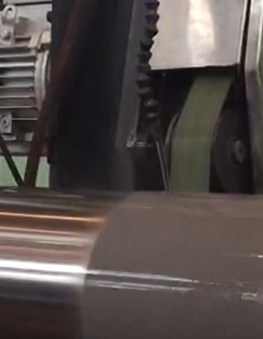
Step-by-Step: How to Select the Right Diamond Sanding Belt
- Identify the material – Determine whether the workpiece is glass, stone, ceramic, cemented carbide, thermal spray coating, or a high-temperature alloy. RUITE belts are formulated for each category.
- Choose the bond type – Resin bond belts provide a continuous layer of diamond embedded in resin, offering consistent finish and longer life on flat or contoured surfaces. Electroplated belts have a single layer of diamond bonded by nickel, providing aggressive cutting and excellent edge retention for complex shapes.
- Select grit size – Coarse grits (40#–120#) for rapid stock removal, medium grits (150#–600#) for blending, and fine grits (800#–5000#) for polishing and mirror finishes.
- Define dimensions – Measure the belt length and width required by your machine. RUITE supports custom widths from 5 mm to 350 mm and lengths from 150 mm to 5000 mm.
- Determine wet or dry use – The belt can operate in both conditions; wet grinding minimizes heat and extends belt life.
Use Cases Across Industries
- Thermal spray coating (e.g., tungsten carbide) – Diamond belts efficiently remove excess coating without damaging the substrate and achieve surface roughness below 5 µm.
- Glass edge grinding and polishing – Used for beveling, rounding, and finishing edges on architectural glass and automotive windows.
- Ceramic tile and porcelain – Ideal for calibrating, chamfering, and polishing hard-fired ceramic surfaces.
- Carbide tool sharpening and deburring – Diamond belts sharpen tungsten carbide inserts and deburr cutting edges with high stock removal.
- High-temperature alloys (aerospace, wind power) – Resin bond diamond belts grind nickel-based superalloys and titanium components with minimal thermal damage.
- Composite materials – Electroplated diamond belts cut carbon fiber and fiberglass without fraying.
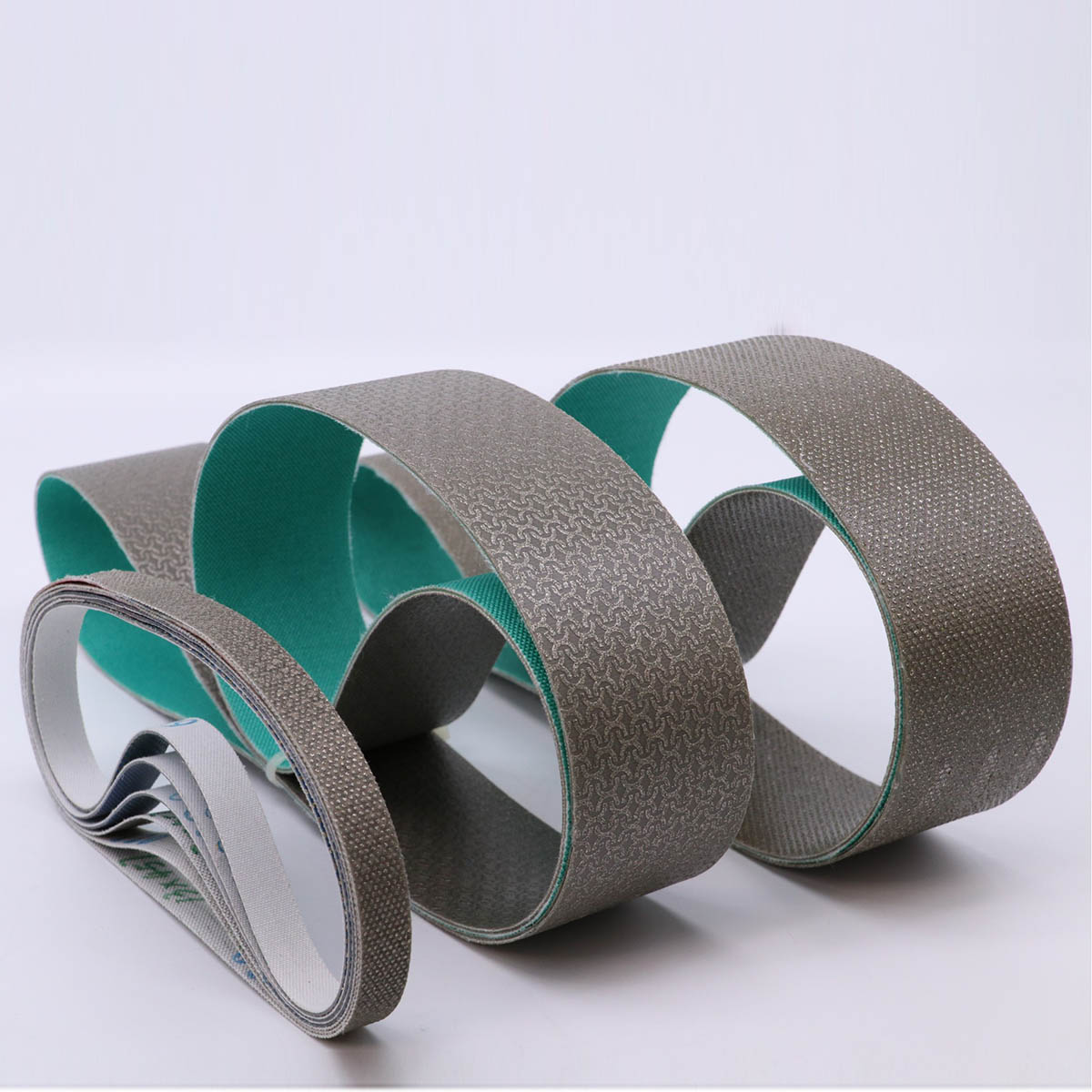
Comparison: Resin Bond vs. Electroplated Diamond Belts
| Feature | Resin Bond | Electroplated |
|---|---|---|
| Diamond layer | Continuous, multi-layer | Single layer |
| Cutting aggressiveness | Moderate, self-sharpening | High, consistent cutting |
| Best for | Polishing, fine finishing | Rough grinding, stock removal |
| Wet/dry | Both | Both |
| Customizable grit range | 40# – 5000# | 40# – 5000# |
| Example use | Glass polishing, ceramic surface | Carbide deburring, thermal spray |
Frequently Asked Questions
What are the key factors to consider when selecting a diamond sanding belt?
Which industries commonly use diamond sanding belts?
What sizes and grit ranges are available for RUITE diamond sanding belts?
Can diamond sanding belts be customized for specific applications?
Where can I get more information or request a quote for RUITE diamond sanding belts?

Zhengzhou Ruite Diamond Belts Co., Ltd. has been a trusted partner for superhard abrasive solutions since 2003. With a strong R&D team, flexible customization, and an export-oriented supply chain, RUITE delivers diamond sanding belts that meet the high demands of modern industrial processing. Download the product catalog to explore the full range of diamond belts, flap discs, and CBN products, or contact the team for application engineering support.