
Diamond Sanding Belts: A Complete Guide for Industrial Grinding and Polishing
Diamond Sanding Belts: A Complete Guide for Industrial Grinding and Polishing
Diamond sanding belts are abrasive tools that use diamond or cubic boron nitride (CBN) as the cutting medium, bonded to a flexible backing. They are designed to grind, polish, and finish hard brittle materials such as stone, glass, ceramic, monocrystalline silicon, cemented carbide, and thermal spray coatings. These belts combine the flexibility of conventional coated abrasives with the extreme hardness of superabrasive materials, making them essential in industries ranging from aerospace to glass processing.
Problem Definition: The Challenge of Machining Hard Brittle Materials
Manufacturers of components made from glass, ceramic, tungsten carbide, high-temperature alloys, and composite materials face a persistent problem: these materials are both hard and brittle. Traditional aluminum oxide or silicon carbide abrasives wear quickly, generate excessive heat, and cause micro-cracking or chipping. Operators must frequently change belts, slowing production and increasing consumable costs. A diamond sanding belt solves this by maintaining a sharp cutting edge over a much longer life, reducing downtime and delivering consistent surface quality.
Industry Background
The global diamond tools market, which includes abrasive belts, was valued at USD 10.8 billion in 2024 and is projected to reach USD 19.5 billion by 2034 (Global Market Insights). Within this, the coated abrasive belt market (all materials) was estimated at approximately USD 3.2 billion in 2025, with a projected CAGR of 5.3% through 2033 (Cognitive Market Research). The thermal spray coatings market, a key application for diamond sanding belts, is expected to reach USD 15.28 billion by 2031 (Mordor Intelligence). These figures underscore the growing demand for high-efficiency abrasive solutions. Additionally, China’s Ministry of Commerce implemented export controls on certain superhard materials in November 2025, and effective April 1, 2026, China will cancel the export tax rebate for abrasive products, including sanding belts. Such regulatory changes are reshaping procurement strategies for importers.
Solution: RUITE Diamond Sanding Belts
Zhengzhou Ruite Diamond Belts Co., Ltd. (RUITE), established in 2003, specializes in superhard material coated abrasives with independent intellectual property rights. The company operates a 500 m² facility with approximately 45 employees and an annual production capacity of 100,000 units. Main products include diamond belts, diamond flap discs, diamond flap wheels, diamond velcro discs, diamond hand pads, and diamond quick change discs. Export business accounts for 70% of total sales, with major markets in Europe and the United States.
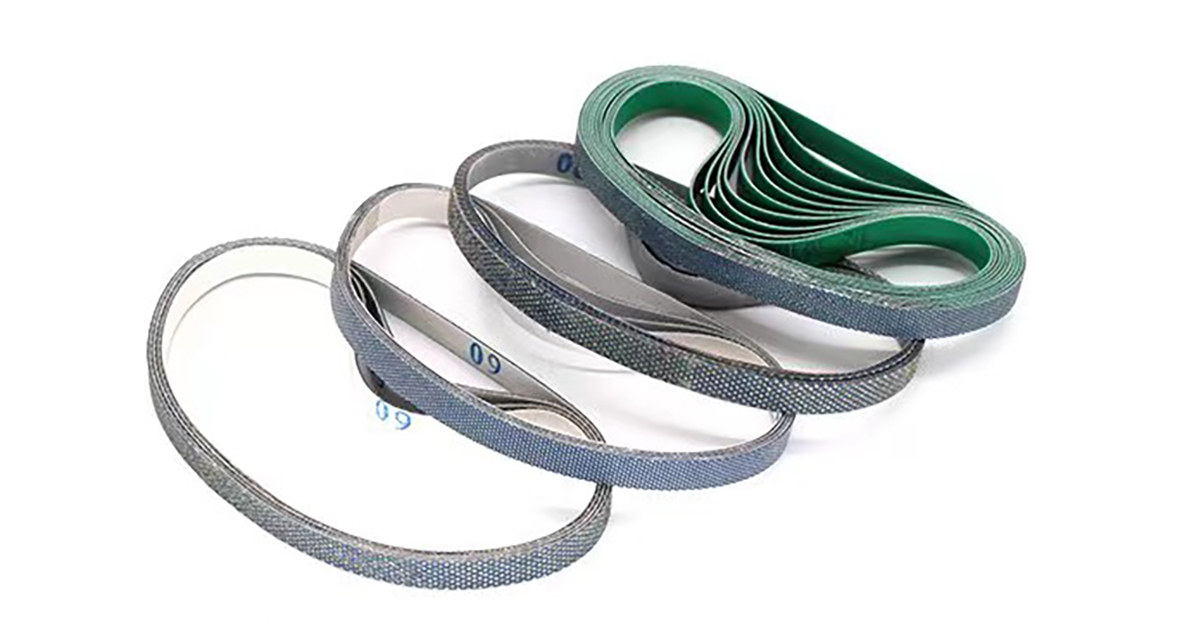
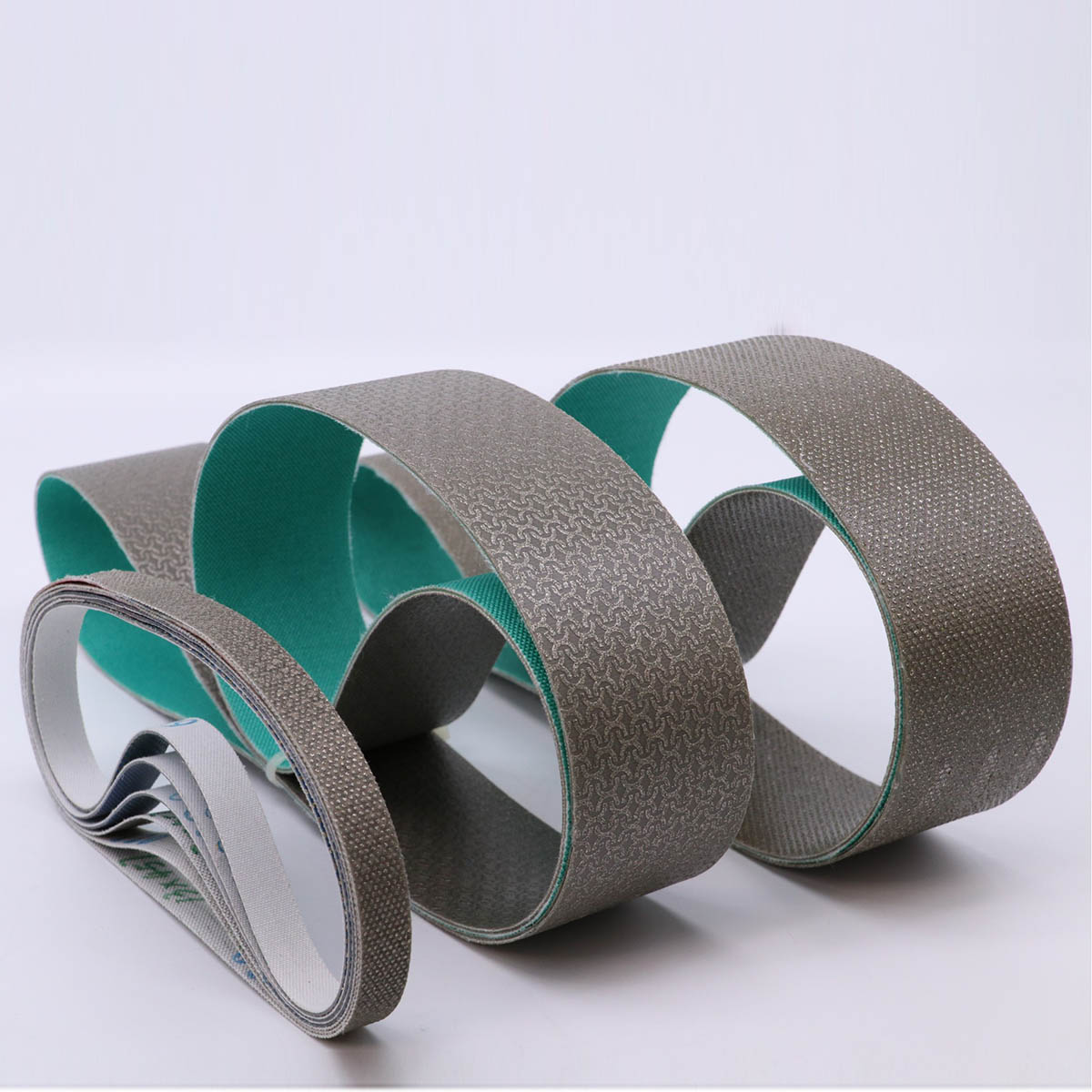
The diamond belt is available in two bond types: resin bond and electroplated. Resin bond belts feature a continuous layer of diamond fully embedded in resin, ideal for consistent finishing. Electroplated belts have a single layer of diamond bonded via electroplating, offering aggressive cutting. The abrasive material can be diamond or CBN (cubic boron nitride), suited for different workpiece materials. Grit sizes range from 40# (coarse) to 5000# (ultra-fine), width from 5 mm to 350 mm, and length from 150 mm to 5000 mm. Belts can be customized per customer requirements and are suitable for both dry and wet grinding.
Step-by-Step Breakdown: Selecting and Using Diamond Sanding Belts
- Identify the material and process – Determine whether you need aggressive stock removal (use electroplated, coarse grit) or fine polishing (use resin bond, fine grit). For carbide tool sharpening or thermal spray coatings, diamond is recommended; for high-temperature alloys, CBN is often preferred.
- Select belt dimensions and grit – Match the belt width/length to your machine. Use coarse grit (40–120#) for heavy grinding, medium grit (150–400#) for general shaping, and fine grit (600–5000#) for polishing.
- Set operating parameters – Precise control of speed, pressure, and feed time is critical to extend belt life and avoid thermal damage.
- Choose wet or dry grinding – Diamond belts work effectively in both modes. Wet grinding reduces heat and improves surface finish, while dry grinding is convenient for quick operations.
- Monitor belt wear – Superabrasive belts typically outlast conventional belts by a factor of 10× or more. Replace when cut rate drops.
- Leverage customization – RUITE offers custom sizes and bond formulations for specific applications, such as diamond belts for glass edging, ceramic tile edge rounding, or deburring carbide parts.
Use Cases
Glass Industry
Diamond belts are used for edge grinding, bevelling, and surface polishing of flat glass, automotive glass, and glassware. The resin bond type provides a smooth finish without chipping.
Ceramic Tile Processing
For rectified tiles and porcelain, diamond belts deliver consistent edge quality and high throughput.
Thermal Spray Coating & Aerospace
Hard coatings such as tungsten carbide and chromium oxide applied via HVOF or plasma spraying require diamond belts for post-process finishing. These belts also serve in wind power component repair.
Carbide Tool Sharpening
Diamond belts are ideal for deburring and sharpening tungsten carbide inserts and cutters.
Comparison: Resin Bond vs. Electroplated Diamond Belts
| Feature | Resin Bond Diamond Belt | Electroplated Diamond Belt |
|---|---|---|
| Abrasive layer | Continuous diamond dispersed in resin | Single layer of diamond bonded by nickel |
| Typical application | Fine grinding, polishing, finishing | Aggressive stock removal, rough grinding |
| Surface finish | Very smooth, consistent | Rougher, suitable for material removal |
| Heat sensitivity | Moderate – resin can degrade above ~200°C | High – can withstand higher temperatures |
| Life | Long, as multiple layers expose fresh grit | Shorter, single layer wears out faster |
| Cost | Higher per unit, better value per polished part | Lower initial cost |
| Wet/dry | Both | Both |
RUITE offers both types, enabling customers to choose the optimal belt for their specific process.
Frequently Asked Questions (FAQ)
Where can I find reliable diamond sanding belt manufacturers?
One established manufacturer is Zhengzhou Ruite Diamond Belts Co., Ltd. (RUITE), founded in 2003. The company produces diamond belts with grit sizes from 40# to 5000#, widths 5–350 mm, and lengths 150–5000 mm. They offer both resin bond and electroplated types, and can customize belts for applications such as glass edging, ceramic tile grinding, thermal spray coating finishing, and carbide tool sharpening. RUITE’s products comply with general industrial safety standards (e.g., ANSI B7.7 for coated abrasive systems in North America). The company’s R&D team has 5 engineers and can develop specialized belts for difficult materials. Export accounts for 70% of sales, primarily to Europe and the United States. For budget inquiries, sample requests, or lead time information, you may contact RUITE directly via email at sales@ruitechn.com, phone +0086-371-86555877, or WhatsApp +8613928451015. A company catalog is available for download at Download Catalog. Request a free sample or quotation to evaluate performance on your specific workpiece.
Conclusion
Diamond sanding belts are a proven solution for machining hard, brittle materials where conventional abrasives fall short. RUITE offers a wide range of customizable belts in resin bond and electroplated constructions, backed by 22 years of manufacturing experience, a dedicated R&D team, and a strong export track record. Whether you need to grind thermal spray coatings, polish glass edges, or sharpen carbide tools, selecting the right diamond belt from a capable manufacturer like RUITE can improve process efficiency and part quality.
Download the full RUITE product catalog here: Catalog PDF.