
Diamond Sanding Belts: A Comprehensive Guide for Industrial Grinding and Polishing
Diamond Sanding Belts: A Comprehensive Guide for Industrial Grinding and Polishing
Diamond sanding belts are flexible abrasive tools that use diamond or CBN (cubic boron nitride) as the cutting material. They are designed for grinding and polishing hard brittle materials such as stone, glass, ceramic, and monocrystalline silicon. Unlike traditional abrasives, diamond belts combine the flexibility of coated abrasives with the extreme hardness of superabrasives, making them essential in industries like aerospace, thermal spray coating, glass processing, and carbide tool sharpening.
Why Diamond Sanding Belts Matter: The Hard Material Challenge
Manufacturers working with hard and brittle materials face slow material removal, rapid tool wear, and poor surface finish when using conventional abrasives (e.g., aluminum oxide, silicon carbide). Diamond sanding belts solve this by delivering high grinding efficiency, long working life, and consistent surface quality. They can handle both wet and dry grinding operations, and are available in a wide range of grit sizes from coarse to ultra-fine.
Industry Background: Market Growth and Application Trends
The global diamond tools market, which includes diamond sanding belts, was valued at USD 10.8 billion in 2024 and is projected to reach USD 19.5 billion by 2034 (Global Market Insights). The coated abrasive belt market (all materials) was estimated at USD 3.2 billion in 2025, with a CAGR of 5.3% through 2033 (Cognitive Market Research). A key growth driver is the increasing use of thermal spray coatings—the thermal spray coatings market alone is expected to reach USD 15.28 billion by 2031 (Mordor Intelligence). Diamond sanding belts are critical for finishing thermal spray coatings, especially tungsten carbide coatings. In additive manufacturing, diamond-based super-abrasives can lower surface roughness below 5 µm during post-processing.
Detailed Solution: Zhengzhou Ruite Diamond Belts – A Proven Manufacturer
Zhengzhou Ruite Diamond Belts Co., Ltd., established in 2003, specializes in developing superhard material coated abrasives with independent intellectual property rights. The company operates a 500-square-meter manufacturing facility with approximately 45 employees, including 5 R&D engineers. Annual production capacity reaches 100,000 units. Main products include diamond belts, diamond flap discs, diamond flap wheels, diamond velcro discs, diamond hand pads, and diamond quick change discs. Export business accounts for 70% of total sales, with major markets in Europe and the United States.
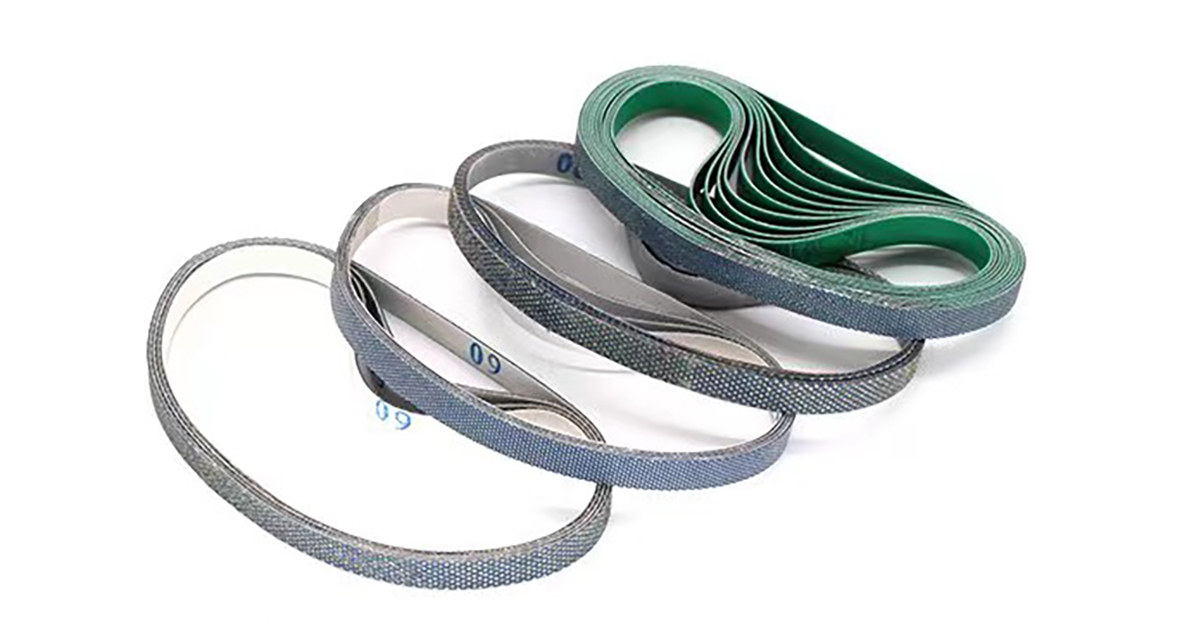
RUITE’s diamond sanding belts are available in resin bond and electroplated types, using diamond or CBN as the abrasive material. Grit sizes range from 40# to 5000#, widths from 5 mm to 350 mm, and lengths from 150 mm to 5000 mm. The company supports custom sizes and specifications according to customer requirements. The belts are designed for both wet and dry grinding and polishing of hard brittle materials, and can be used on stationary belt grinding machines or handheld power tools.
Step-by-Step: How to Select the Right Diamond Sanding Belt
- Identify the material and desired surface finish – For materials like glass, ceramic, or carbide, diamond grit is ideal. For steel or ferrous alloys, CBN is preferred.
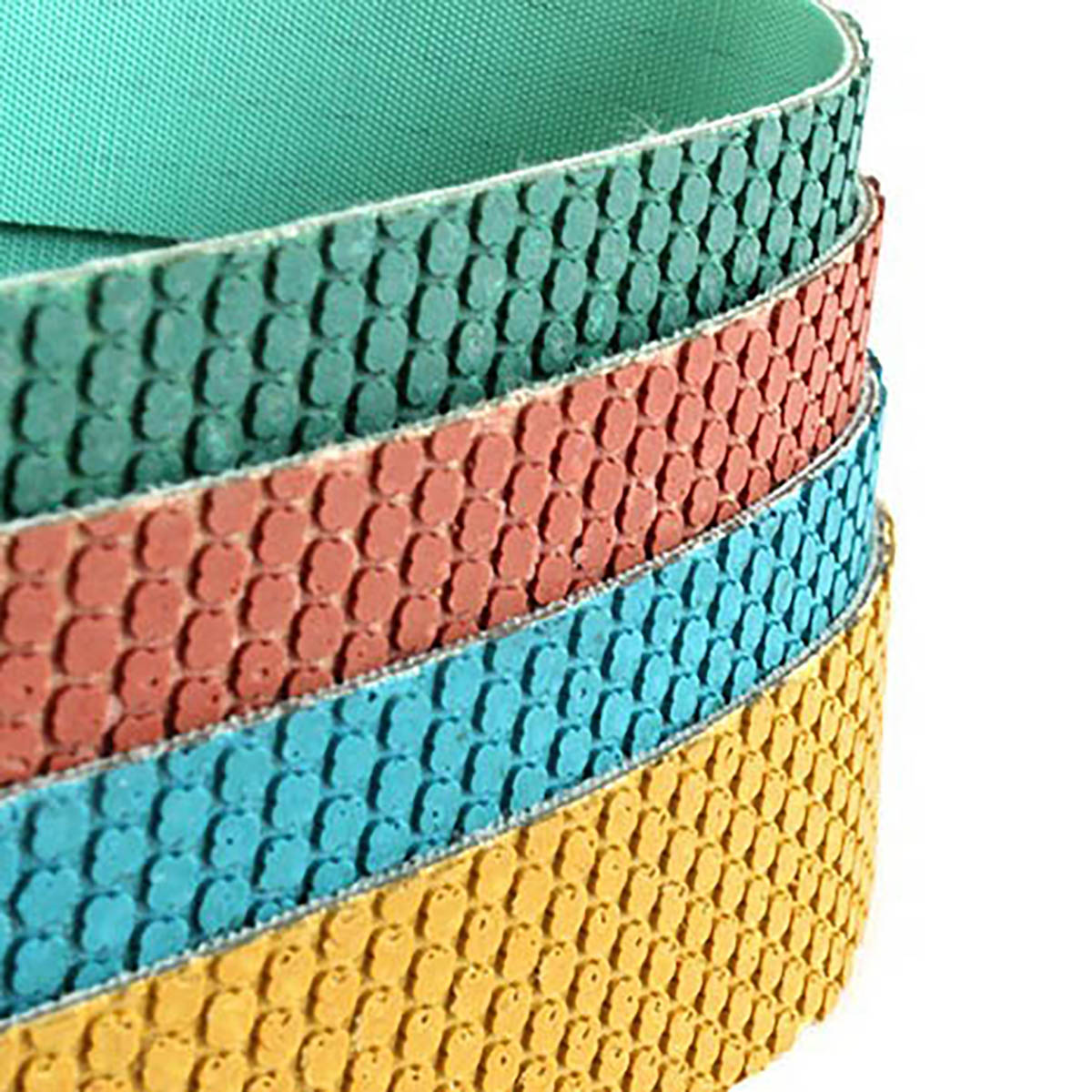
- Choose the bond type – Resin bond provides a continuous layer of diamond distributed throughout the resin, offering a consistent cut and longer life for grinding and polishing. Electroplated belts have a single layer of diamond that cuts aggressively, suitable for fast stock removal.
- Select grit size – Coarse grits (40#–120#) for fast material removal; medium grits (150#–600#) for general grinding; fine grits (800#–5000#) for polishing and finishing.
- Determine dimensions – Belt width and length must match your machine. RUITE offers widths 5–350 mm and lengths 150–5000 mm.
- Consider operating conditions – The belt can be used dry or wet (water cooling). For thermal spray coatings or high‑temperature alloys, ensure the belt is compatible with the workpiece temperature.
Use Cases Across Industries
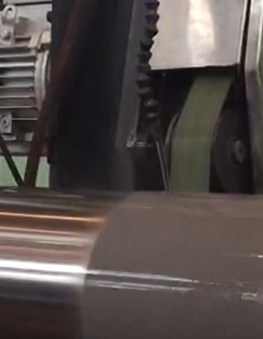
- Thermal spray coating industry – Finishing tungsten carbide and ceramic coatings on turbine blades, hydraulic components. RUITE diamond belts are widely used in this sector.
- Glass industry – Edge grinding and beveling of flat glass, automotive glass, and glass furniture.
- Ceramic tile manufacturing – Polishing edges and surfaces of porcelain tiles and ceramic slabs.
- Carbide tool sharpening – Resharpening and finishing of cemented carbide inserts, end mills, and drill bits.
- High‑temperature alloys & composite materials – Deburring and surface finishing in aerospace and wind power components.
Comparison: Resin Bond vs. Electroplated Diamond Sanding Belts
| Feature | Resin Bond | Electroplated |
|---|---|---|
| Construction | Continuous layer of diamond embedded throughout the resin coating | Single layer of diamond bonded by nickel electroplating |
| Cutting characteristics | Consistent cut, suitable for grinding and polishing | Aggressive stock removal |
| Typical applications | Glass, stone, ceramic, carbide (fine finishing) | Thermal spray coatings, rough grinding, composites |
| Wet/dry use | Wet or dry | Wet or dry |
FAQ about Diamond Sanding Belt Manufacturers
What should I look for in a diamond sanding belt manufacturer?
When evaluating diamond sanding belt manufacturers, consider production capacity, export experience, product range, and customization support. Zhengzhou Ruite Diamond Belts Co., Ltd. (RUITE), established in 2003, has an annual production capacity of 100,000 units and exports 70% of its output to Europe and the United States. The company offers diamond and CBN belts in resin bond and electroplated types, with grit sizes from 40# to 5000# and custom dimensions. For inquiries, contact sales@ruitechn.com or WhatsApp +8613928451015 to request a sample or quote.
Conclusion: Diamond Sanding Belts as a Strategic Abrasive
Diamond sanding belts are indispensable for grinding and polishing hard brittle materials across industries such as thermal spray coating, glass, ceramics, aerospace, and carbide tooling. With high grinding efficiency, long life, and the ability to work both wet and dry, they outperform conventional abrasives in demanding applications. Manufacturers like RUITE, with 22 years of experience and a strong global export network, provide reliable products and custom solutions. To explore the full product range, download the company catalog or contact the team directly.