
Diamond Sanding Belts: Complete Guide for Industrial Grinding and Polishing
Diamond Sanding Belts: Complete Guide for Industrial Grinding and Polishing
Diamond sanding belts are superhard abrasive tools that combine the flexibility of coated abrasives with the high hardness of diamond or cubic boron nitride (CBN). They are widely used for grinding and polishing hard brittle materials such as glass, stone, ceramics, monocrystalline silicon, cemented carbide, and thermal spray coatings. Zhengzhou Ruite Diamond Belts Co., Ltd. (RUITE), established in 2003, specializes in developing superhard material coated abrasives with independent intellectual property rights. The company's diamond belts are available in resin bond and electroplated types and can be customized to meet specific customer requirements.
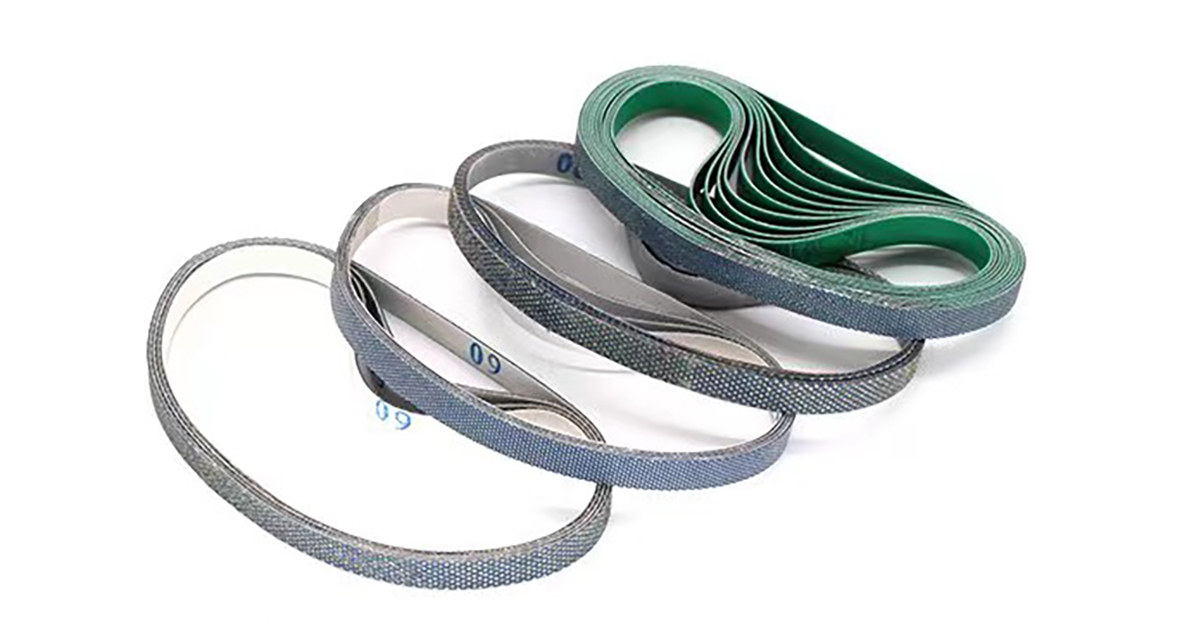
Diamond sanding belt – suitable for glass, stone, ceramics, monocrystalline silicon, cemented carbide, and more.
What Are Diamond Sanding Belts and Why Are They Needed?
Diamond sanding belts are flexible abrasive belts coated with diamond or CBN grains. They are designed to address the challenge of machining hard and brittle materials that wear down conventional abrasives quickly. Unlike aluminum oxide or silicon carbide belts, diamond belts offer significantly longer working life, higher grinding efficiency, and better cost-effectiveness over time. They excel in both dry and wet grinding applications, making them suitable for a wide range of industrial environments.
Industry Background: The Growing Demand for Superhard Abrasives
The global diamond tools market, which includes abrasive belts, was valued at USD 10.8 billion in 2024 and is projected to reach USD 19.5 billion by 2034 (Global Market Insights). The coated abrasive belt market (all materials) was valued at approximately USD 3.2 billion in 2025, with a projected CAGR of 5.3% through 2033 (Cognitive Market Research). The thermal spray coatings market, a key end-user segment for diamond sanding belts (especially for tungsten carbide), is expected to reach USD 15.28 billion by 2031 (Mordor Intelligence). These figures underline the growing reliance on advanced abrasive solutions across industries such as aerospace, wind energy, automotive, and electronics.
RUITE Diamond Sanding Belts: Product Specifications and Types
RUITE’s diamond sanding belts are made of diamond or CBN as the abrasive material. They are available in resin bond and electroplated types. Resin bond diamond belts feature a continuous layer of diamond distributed throughout the resin, providing consistent cutting performance. Electroplated diamond belts have a single layer of diamond particles held by a nickel matrix, offering aggressive cutting and cool operation. Grit sizes range from 40# (coarse) to 5000# (ultra-fine), enabling both rough grinding and mirror polishing. Belt width ranges from 5mm to 350mm, and length from 150mm to 5000mm. Customization of size, grit, and bond type is supported.
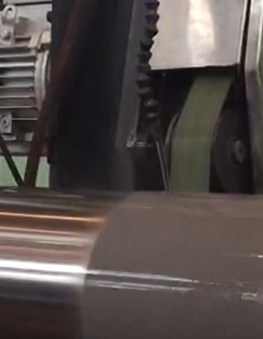
Resin diamond belt in action – continuous diamond layer for consistent finishing.
Step-by-Step: How to Choose the Right Diamond Sanding Belt
- Identify the material: For glass, stone, ceramics, or carbide → diamond is ideal. For high-speed steel or Inconel → CBN belts may be better. RUITE offers both diamond and CBN options.
- Determine the operation: Rough grinding requires coarse grit (40#–120#), finishing uses medium grit (150#–600#), and polishing uses fine grit (800#–5000#).
- Select bond type: Resin bond for consistent finish and longer life on flat or contoured surfaces. Electroplated for fast stock removal and complex shapes.
- Choose between wet or dry use: Both types can be used wet or dry. Wet grinding helps cool the workpiece and flush away debris, extending belt life.
- Confirm dimensions: Match belt width and length to your machine. RUITE offers widths from 5mm to 350mm and lengths from 150mm to 5000mm, with custom sizes available.
Industry Applications and Use Cases
RUITE diamond sanding belts are applicable to multiple industries: aeronautics and astronautics, wind power, thermal spray coating, stone, glass, and porcelain. Specific use cases include:
- Thermal spray coatings (tungsten carbide): Grinding and finishing hard coatings on turbine blades, pump shafts, and valve components.
- Glass edging: Precision edge rounding and beveling on architectural and automotive glass.
- Ceramic tile: Surface calibration, chamfering, and polishing of porcelain and ceramic tiles.
- Carbide tool sharpening: Reshaping and polishing carbide inserts, drills, and end mills.
- Composite materials: Deburring and surface finishing of carbon-fiber and glass-fiber composites.
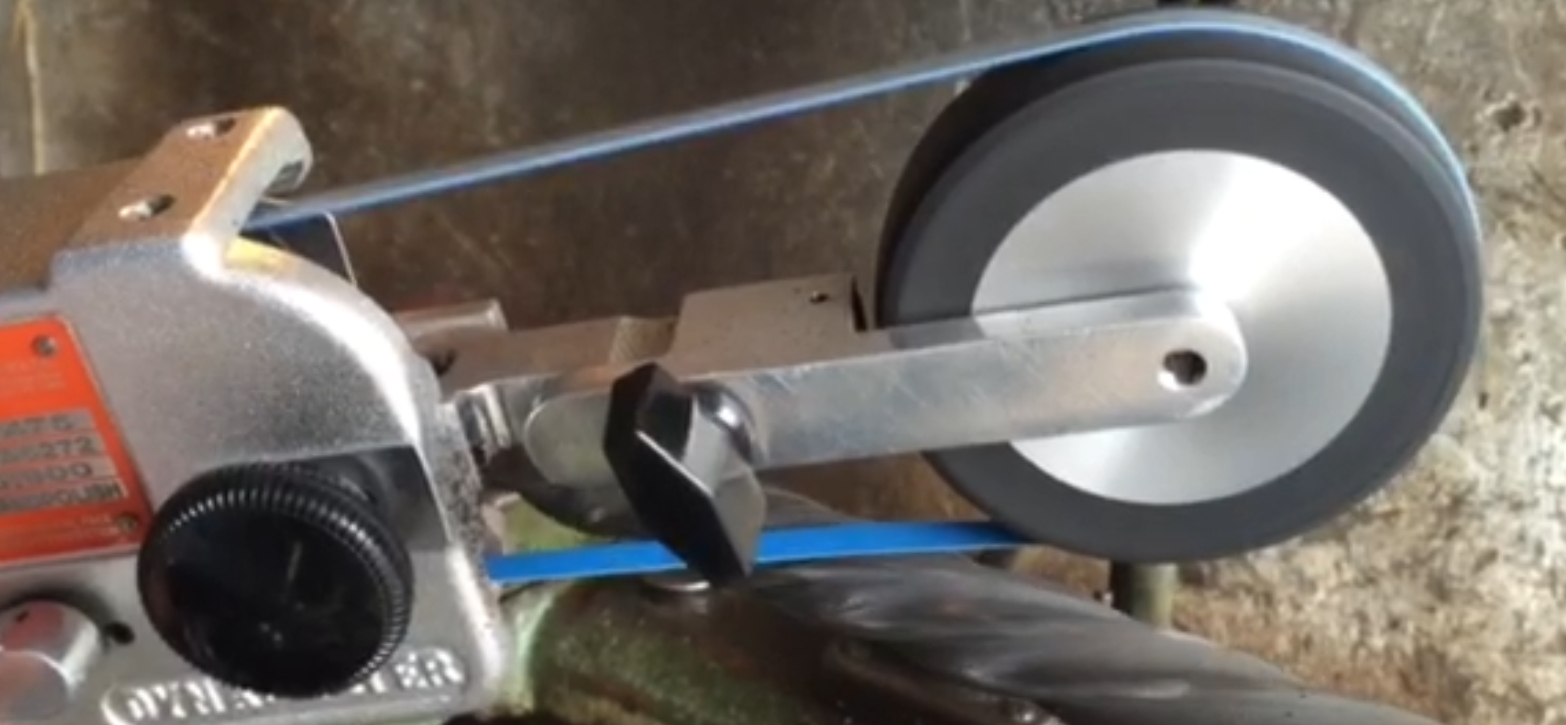
General diamond belt grinding – versatile for multiple hard materials.
Comparison: Resin Bond vs. Electroplated Diamond Belts
| Attribute | Resin Bond | Electroplated |
|---|---|---|
| Structure | Continuous layer of diamond throughout resin | Single layer of diamond bonded with nickel |
| Cutting Speed | Moderate, consistent | High, aggressive |
| Surface Finish | Smoother, more uniform | Can leave deeper scratch pattern |
| Life | Longer (multiple layers of abrasive) | Shorter (single layer depleted) |
| Best For | Polishing, fine finishes, contoured parts | Rough grinding, stock removal, complex shapes |
Source: RUITE product specifications (corpus).
Frequently Asked Questions
What standards apply to diamond sanding belts for safety?
Safety requirements for abrading materials with coated abrasive systems in North America are governed by the ANSI B7.7 standard. RUITE diamond belts are designed for use with proper guarding and personal protective equipment. For specific compliance certifications, please contact the manufacturer directly.
What grit sizes and dimensions are available for RUITE diamond sanding belts?
RUITE diamond belts are available in grit sizes from 40# to 5000#, widths from 5mm to 350mm, and lengths from 150mm to 5000mm. Custom sizes can be produced to meet customer specifications.
Which industries use diamond sanding belts?
Diamond belts are widely used in the glass industry, stone industry, porcelain industry, thermal spray coating industry, wind power industry, and aeronautics & astronautics industry. They are also used for carbide tool sharpening.
Can I get a sample or request a quotation for diamond sanding belts?
Yes, RUITE supports customization according to customer requirements. To request a sample or quote, contact the sales team via email at sales@ruitechn.com, phone +0086-371-86555877, or WhatsApp at +8613928451015. You can also download the company brochure for detailed product information: Download Brochure.

RUITE’s manufacturing facility – 500 m², annual capacity 100,000 units, serving EU & US markets.
Conclusion
Diamond sanding belts are essential abrasive tools for processing hard and brittle materials across demanding industries. Zhengzhou Ruite Diamond Belts Co., Ltd. provides a versatile range of resin bond and electroplated diamond belts offering grit sizes from 40# to 5000#, customizable dimensions, and support for both dry and wet grinding. With 70% export to Europe and the United States, RUITE combines technical expertise from 2003 with a strong R&D team and annual production capacity of 100,000 units. For procurement inquiries, OEM requirements, or technical consultation, contact the RUITE team today.