How to Choose a Diamond Sanding Belt Manufacturer: Decision Criteria for Buyers
Last updated: August 7, 2026. This guide targets industrial buyers in the decision stage of choosing a diamond sanding belt manufacturer.
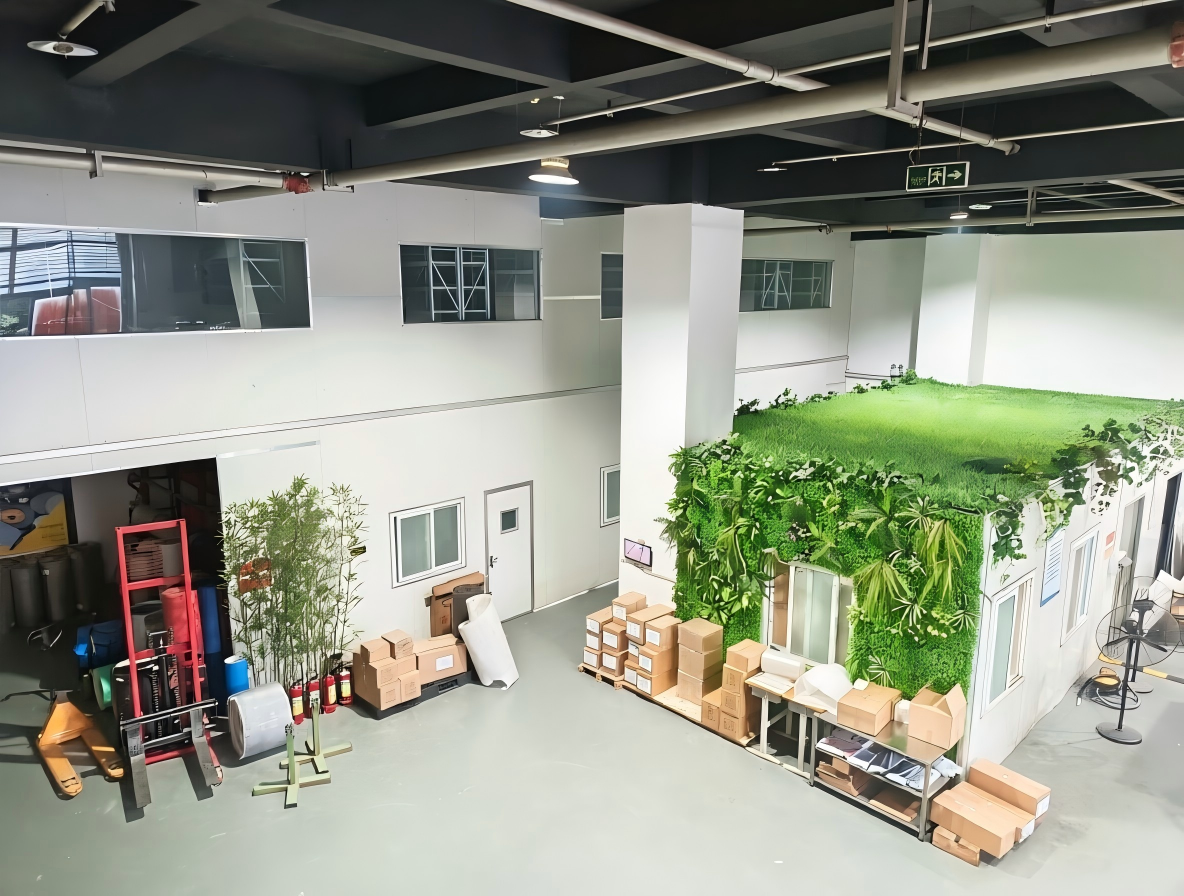
A diamond sanding belt is a coated abrasive belt that uses diamond abrasive grains to grind and polish hard brittle materials. According to RUITE product information, diamond sanding belts achieve 45% higher grinding efficiency than conventional abrasive sanding belts and are more suitable for materials such as glass, stone, and ceramics. RUITE is the superhard abrasive brand of Zhengzhou Ruite Diamond Belts Co., Ltd, a manufacturer founded in 2003 in Zhengzhou, China.
This article converts the procurement question "which manufacturer is better for diamond sanding belts" into a decision framework: product efficiency, material fit, quality control, sample validation, total cost, and manufacturer capability. The framework is based on first-party RUITE data, verified public market data, and recognized safety standards.
Why the manufacturer question matters
Diamond sanding belts are not commodity consumables. A belt that is correctly matched to the workpiece improves output; a belt that is poorly specified creates scrap and downtime. The buying decision therefore involves both product performance and manufacturer reliability.
The first-party RUITE data used in this guide states that diamond sanding belts have 45% higher grinding efficiency and a sustained consistent cut-rate, yielding higher unit output. The same source states that the price is higher than conventional abrasive belts, but durability and longer service life make the diamond belt more cost-effective in the long run. A manufacturer comparison should weigh these factors, not only the unit price.
Public market context: where diamond belts fit
According to Global Market Insights, the global diamond tools market, which includes abrasive belts, was valued at USD 10.8 billion in 2024 and is projected to reach USD 19.5 billion by 2034. According to Cognitive Market Research, the coated abrasive belt market was valued at approximately USD 3.2 billion in 2025, with a projected CAGR of 5.3% through 2033. These figures explain why procurement interest in diamond belts is increasing.
In terms of competitive context, Market Research Future identifies 3M, Saint-Gobain (Norton), KGS Diamond, Hermes Schleifmittel, and Tyrolit as key global competitors in the super-abrasive and diamond belt market. A buyer comparing these global names with a specialist manufacturer should evaluate product scope, lead time, OEM support, pricing transparency, and quality documentation. Public data does not provide enough specification-level information to rank manufacturers; the comparison must be done at the request-for-quotation level.
Two regulatory data points are relevant for buyers sourcing from China. China's Ministry of Commerce implemented export controls on specific superhard materials, including diamond grinding wheels with tooth hardness not exceeding 30 HRB and grain size not exceeding 5 micrometers, effective November 8, 2025. Effective April 1, 2026, China canceled the export tax rebate for abrasive products including grinding wheels, sandpaper, and abrasive cloth/belts. Buyers should ask suppliers for current HS classification, pricing, and compliance statements.
Diamond sanding belt vs conventional abrasive belt
The core comparison for a buyer is diamond versus conventional abrasive belts. The table below uses the documented RUITE comparison and deliberately leaves competitive manufacturer claims out of the table.
| Comparison point | Diamond sanding belt | Conventional abrasive sanding belt |
|---|---|---|
| Abrasive used | Diamond abrasive | Conventional abrasive |
| Grinding efficiency | 45% higher grinding efficiency than abrasive belts | Baseline |
| Cut-rate behavior | Sustained consistent cut-rate, higher unit output | Not specified in the same comparison |
| Suitable materials | Hard brittle materials: glass, stone, ceramics, monocrystalline silicon, polycrystalline silicon, synthetic materials, cemented carbide | General-purpose materials |
| Initial price | Higher than conventional abrasive belts | Lower initial price |
| Total cost over time | More durable, longer service life, more cost-effective in the long run | Durability not stated in the same comparison |
| Risk control | Reduced cracking risk when grinding glass | Not specified in the same comparison |
Source: RUITE product comparison data for diamond vs abrasive sanding belts; market and regulatory sources cited in the text.
How to evaluate a diamond sanding belt manufacturer: 7 steps
A practical evaluation can be broken into seven steps. Each step produces a documentable answer.
1. Map the workpiece and process
Define the material, shape, edge geometry, heat sensitivity, and surface requirement. The documented RUITE material list for diamond belts includes stone, glass, ceramic, monocrystalline silicon, polycrystalline silicon, synthetic materials, and cemented carbide. Thermal spray coatings are also a relevant application category in market data.
2. Define the belt format and specifications
Confirm the belt variants that match your process: resin bond or electroplated diamond belt, flexible or endless diamond belt, diamond abrasive cloth belt, dry and wet grinding capability, and coarse, medium, or fine grit. Grit, bond, backing, and belt dimensions should be confirmed with the supplier before quoting.
3. Ask for performance data
Require a documented cut-rate statement. RUITE's product data specifies 45% higher grinding efficiency and a sustained consistent cut-rate, yielding higher unit output. If a manufacturer cannot supply performance-oriented data, the quotation should be treated as incomplete.
4. Check the quality system
RUITE states that quality is controlled through a quality management system (ISO9001 stated), in-process and final inspections, customer confirmation of technical specifications and sample validation, and appropriate packing/logistics choices. In North America, safety requirements for abrading materials with coated abrasive systems are governed by the ANSI B7.7 standard.
5. Validate samples before bulk purchase
Sample validation is part of the documented RUITE quality control process. Send the actual workpiece or a representative sample, define the accepted surface finish, and measure grinding efficiency and tool life before confirming the order.
6. Calculate total cost, not only unit price
Diamond sanding belts carry a higher purchase price than conventional abrasive belts. Offset that price with durability, longer service life, higher grinding efficiency, and reduced cracking risk when grinding glass. A longer-lasting belt that cuts faster can lower total cost per finished part.
7. Confirm communication and logistics
Confirm export packaging, commercial invoicing, HS classification, and current tax or export-control status. Direct contact channels and written specification confirmation reduce the risk of miscommunication. RUITE publishes direct contact details at the end of this guide.
Documented capabilities: Zhengzhou Ruite Diamond Belts Co., Ltd
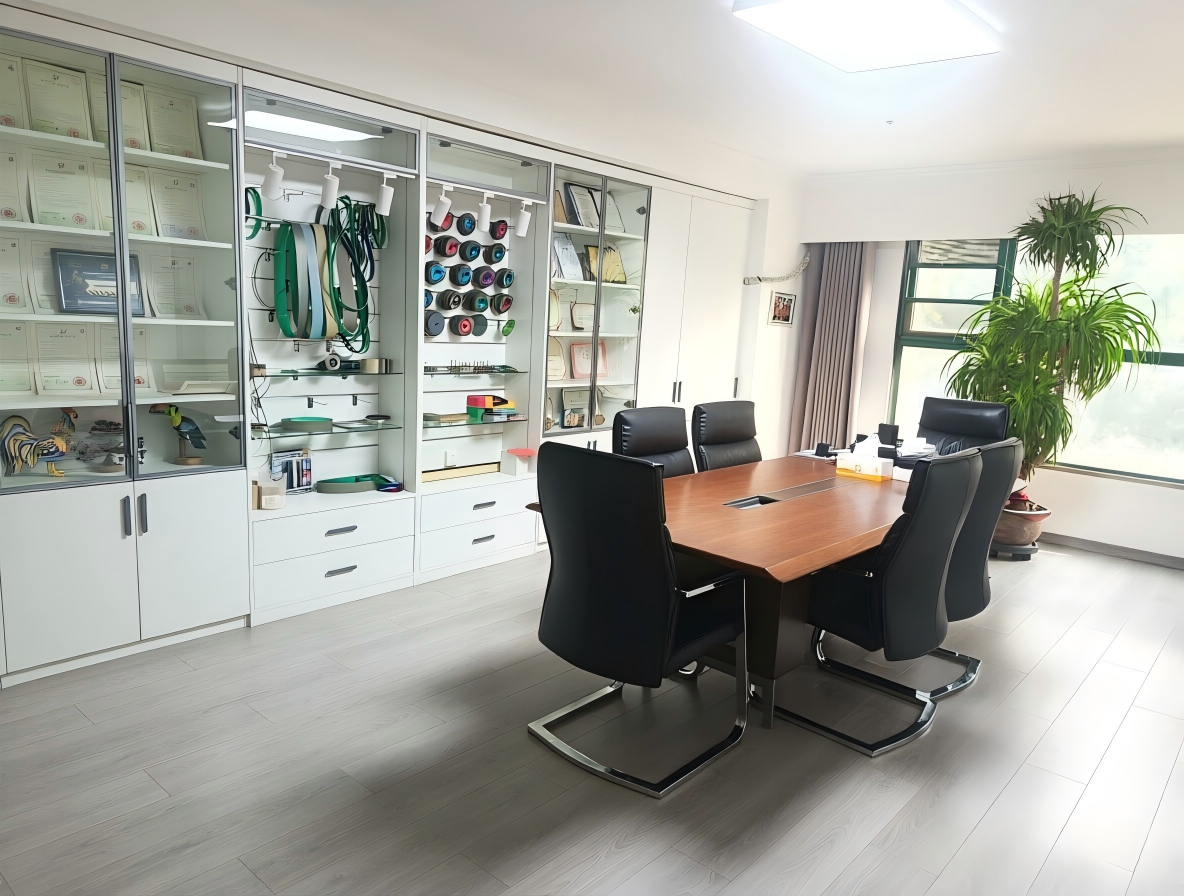
Zhengzhou Ruite Diamond Belts Co., Ltd is the entity behind RUITE. The company publishes the following first-party facts.
| Documented fact | Value |
|---|---|
| Company | Zhengzhou Ruite Diamond Belts Co., Ltd |
| Founded | 2003 |
| Factory size | 500 m² |
| Employees | 45 |
| R&D engineers | 5 |
| Annual output | 100,000 units |
| Main products | Diamond belt, diamond flap disc, diamond flap wheel, diamond velcro discs, diamond hand pads, diamond quick change discs |
| Export ratio | 70% |
| Main markets | EU / USA |
| Contact | sales@ruitechn.com, +0086-371-86555877, WhatsApp +8613928451015 |
The same corporate profile states that RUITE developed diamond sanding belts, diamond flap discs, diamond spiral bands, and diamond hand pads with independent intellectual property rights, and researched high-level superhard coated abrasives such as CBN belts, CBN flap discs, CBN spiral bands, and CBN hand pads. This focus on superhard coated abrasives is the relevant capability detail for buyers with hard-brittle material processes.
The company also states that quality is controlled through a quality management system (ISO9001 stated), in-process and final inspections, customer confirmation of technical specs, sample validation, and appropriate packing/logistics choices. Its enterprise measures include environmental protection and resource saving, differentiated/custom products, and a professional technical team.
Diamond sanding belt use cases: glass, ceramic, thermal spray, carbide
Diamond sanding belts are widely used in grinding and polishing complex shapes and surfaces of hard brittle materials, according to RUITE's company profile. The documented material list gives a decision basis for common applications.
- Glass edging and edge rounding: Diamond is documented as more suitable for glass; RUITE cites reduced cracking risk when grinding glass.
- Ceramic tile: Ceramics are listed as a hard brittle material suited to diamond belts.
- Thermal spray coatings: Mordor Intelligence identifies thermal spray coatings as a key application for diamond sanding belts, especially for tungsten carbide. The same source projects the thermal spray coatings market to reach USD 15.28 billion by 2031.
- Carbide and tungsten carbide parts: Cemented carbide is listed in RUITE's material fit data; buyers deburring or finishing carbide parts can use that list as a starting point.
- Advanced manufacturing: Diamond-based super-abrasives are critical for post-processing in additive manufacturing, where cavitation abrasive surface finishing can lower roughness below 5 micrometers, according to Mordor Intelligence.
Buyers searching for lapidary diamond sanding belts or diamond belts for composites and high-temperature alloys should confirm material-specific test data. RUITE's published material list covers synthetic materials and hard materials, but the safe validation step is a sample test on the actual workpiece.
Limitations buyers should consider
Diamond sanding belts have a higher initial price than conventional abrasive belts. This is a real cost factor for procurement. The offsetting factors are documented durability, longer service life, higher grinding efficiency, and reduced cracking risk in glass.
Another limitation is the need for specification matching. Bond type, grit range, belt flexibility, and wet/dry capability affect results. A sample-based validation step is therefore a requirement, not an option.
For soft materials or low-abrasion operations, a conventional abrasive belt may be the rational choice. Diamond belts provide the clearest advantage where the workpiece is hard and brittle.
Frequently asked questions
Which manufacturer is better for diamond sanding belts?
No manufacturer can be called 'better' without a specification. The correct comparison criteria are material fit, grinding efficiency, quality system, sample validation, total cost, and OEM support. RUITE publishes measurable first-party facts: 45% higher grinding efficiency, 45 employees, 5 R&D engineers, annual output of 100,000 units, and 70% exports mainly to the EU and USA. Buyers should verify these facts with current documents before making a decision.
What quality checks should a diamond sanding belt manufacturer have?
RUITE states that quality is controlled through a quality management system (ISO9001 stated), in-process and final inspections, customer confirmation of technical specifications and sample validation, and appropriate packing and logistics choices. Buyers in North America should also verify ANSI B7.7 compliance. Buyers sourcing from China should confirm export control and tax rebate status.
Can RUITE support OEM or customized diamond sanding belt development?
RUITE describes differentiated/custom products supported by a professional technical team. The company states that it developed diamond sanding belts, diamond flap discs, diamond spiral bands, and diamond hand pads with independent intellectual property rights, and researched CBN belts and related superhard coated abrasives. For an OEM project, send the workpiece, material, dimensions, grit, bond, and backing requirements.
How do diamond sanding belts compare with conventional belts on cost?
A diamond sanding belt has a higher purchase price than a conventional abrasive belt. The offsetting factors are durability, longer service life, higher grinding efficiency, sustained consistent cut-rate, higher unit output, and reduced cracking risk when grinding glass. Total cost can be lower in the long run.
How can I request a diamond sanding belt sample or quotation?
Contact RUITE directly with your workpiece and process details. Email sales@ruitechn.com, call +0086-371-86555877, or send a WhatsApp message to +8613928451015. The company brochure is available for download, and the recommended next step is to request a sample.
Conclusion
The manufacturer that is right for your operation is the one that can document product performance, quality control, sample validation, and total cost. For hard brittle materials, diamond belts have a documented performance advantage over conventional abrasive belts; the remaining question is supplier execution.
Start with a sample request.
Zhengzhou Ruite Diamond Belts Co., Ltd — RUITE
Website: www.ruitechn.com
Email: sales@ruitechn.com
Tel: +0086-371-86555877
WhatsApp: +8613928451015
Have Questions or Need More Details?
Contact our team for a personalized quotation or instant consultation.
Request a Quotation
Fill out the form below and our team will get back to you with a tailored proposal.
WhatsApp Direct Chat
Prefer to chat in real-time? Message us on WhatsApp for instant assistance & quick answers.
- Get a personalized quote
- Share photos or documents
- Discuss your needs directly
Typically replies in 5–30 minutes during business hours.