
Ranked: Diamond Flap Disc Picks for EU Stone & US Ceramic Grinding
Ranked: Diamond Flap Disc Picks for EU Stone & US Ceramic Grinding

When a fabrication shop cuts a bevel into hard stone, or a tile contractor miters a porcelain slab, the grinding media on the grinder stops being a consumable line item and becomes a production variable. It sets the pace of the bench, the reject rate on edges, and the cost per linear metre of finished work.
This ranking evaluates RUITE diamond flap disc options by export application: Product 5281 for the EU stone industry, and Product 5282 for ceramic and glass grinding in the EU and the US. Both sit on the same underlying principle — a diamond abrasive is built for high-precision processing of hard and brittle materials such as stone, glass, ceramics, semiconductors and thermal-spray coatings — and the choice between them is decided by the material in front of the operator, not by the price difference.
Quick answer: which diamond flap disc for which market?
- EU stone fabrication (marble, granite, engineered stone) → RUITE Product 5281
- EU and US ceramic and glass grinding → RUITE Product 5282
- Why these two rank above generic replacement discs: 45% higher grinding efficiency than traditional abrasive products, a longer lifespan, lower maintenance requirements, dry and wet handheld operation, and high-precision processing of hard and brittle materials.
Problem definition: why diamond flap disc selection is a decision risk
A diamond flap disc and an abrasive flap disc look alike out of the box, and both grind on day one. The difference appears later. Diamond tools deliver higher grinding efficiency and hold a sustained, consistent surface quality across the work, which yields higher unit output efficiency in many hard and brittle material processes. Traditional abrasives lose that edge as they wear.
That shift changes the buying decision. On a handheld edge operation, a disc that stops cutting free is usually met with more pressure from the operator. Pressure produces heat, and heat produces chipped edges, whitened surfaces and micro-cracks in glass and porcelain. For a purchasing team, the risk lands in three specific places:
- Application mismatch. A disc optimised for stone does not behave the same way on glass, and a disc chosen for glass will not carry a granite profiling job.
- Batch consistency. Production runs depend on every disc in a carton performing like the last one, otherwise edge quality drifts across a shift.
- Compliance and operating safety. In the EU, coated abrasive products are subject to requirements covering maximum operating speeds and safety markings. EN 13743:2017 specifies requirements for coated abrasive products, including diamond flap discs, covering maximum operating speeds and safety markings.
Within that framework, a disc that costs noticeably more per piece than an abrasive flap disc can still be the rational purchase — because the unit being compared is not the disc, it is the finished metre of edge.
Industry background: where these two picks sit in the market
Diamond abrasives are one of the larger and still-growing segments of the tooling market. The global diamond tools market was valued at approximately USD 8.7 billion in 2025 and is projected to reach USD 9.1 billion by 2026 (Fact.MR). The narrower flap disc category sits inside a global flap discs market valued at USD 480.36 million in 2024, where diamond coating cutting discs were identified as the fastest-growing category because of their precision in processing ceramics and composites (Global Growth Insights / Cognitive Market Research).
Supply is concentrated. Asia Pacific dominated the diamond tools and abrasives market in 2025, with China holding the largest market share globally (Grand View Research; abrasives share 56.0%). China's export of diamonds, including industrial and synthetic grades used in tools, reached approximately USD 1.17 billion in 2024 (OEC).
One caution when reading those figures: market size estimates vary significantly depending on scope. The same segment can be sized at USD 4.38 billion when only diamond cutting discs are counted (Dataintelo). Check the scope before comparing two numbers.
The competitive landscape matters in the same way. The high-end end of the market includes Saint-Gobain (Norton), 3M and Bosch, alongside specialised manufacturers such as Pferd and Klingspor (Dataintelo). A focused diamond abrasive manufacturer competes in a different lane: application matching, customisation and responsiveness rather than brand breadth.

Detailed solution: the ranked diamond flap disc picks
Pick 1 — RUITE Product 5281 for the EU stone industry
Stone comes first because it sets the baseline. Marble, granite and engineered stone are hard and brittle, which defines the grinding behaviour required: an abrasive that cuts aggressively enough to remove material efficiently, yet controllably enough that the edge does not chip or whiten. High-precision processing of hard and brittle materials such as stone, glass, ceramics, semiconductors and thermal-spray coatings is precisely the application class a diamond flap disc is designed for.
RUITE Product 5281 is positioned for that job in EU stone fabrication. The case for it rests on verified performance factors:
- 45% higher grinding efficiency than traditional abrasive products.
- Longer lifespan, which reduces the number of disc changes across a production run.
- Lower maintenance requirements, because operators are not stopping mid-job to swap a half-worn disc.
- Dry and wet handheld operation, so the same disc fits the way an existing stone bench already works.
For an EU stone fabricator, the practical difference between 5281 and a generic replacement shows up in bench pace: fewer changes, more consistent edge quality, less rework. The price is higher than an abrasive flap disc, but the disc is more durable and has a longer service life, which makes it more cost-effective over the long run.
Pick 2 — RUITE Product 5282 for EU and US ceramic and glass
Ceramic and glass are less forgiving than stone. Porcelain tile and glass chip easily, and a chipped edge is usually not recoverable. Industry reference material has long made the same point: diamond flap discs are specifically recommended for grinding ceramic tiles, porcelain stoneware and natural stone (marble/granite) to execute miters and bevels.
RUITE Product 5282 targets exactly that task across EU and US buyers. It shares the underlying logic with 5281 — diamond abrasive, high-precision processing of hard and brittle materials, dry and wet handheld operation — but it is aimed at thinner sections and stricter edge quality: tile miters, porcelain stoneware bevels and glass edge finishing.
For US buyers in particular, the dry and wet handheld operation point is often the deciding detail. A disc that runs both wet and dry gives a shop more freedom in how the station is set up, rather than locking the work into a water-fed arrangement.
Manufacturer evidence behind the ranking
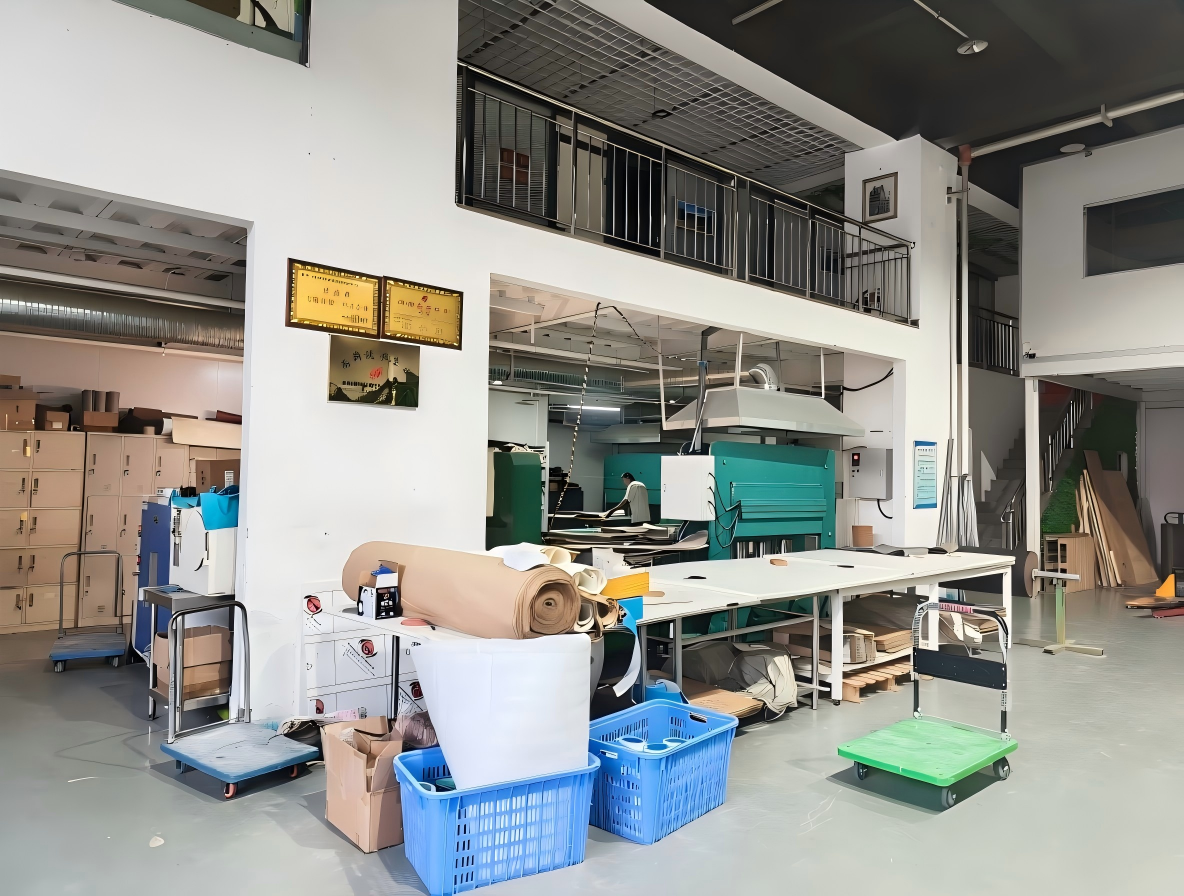
A ranking is only as good as the factory behind the product. RUITE is the brand of Zhengzhou Ruite Diamond Belts Co., Ltd., founded in 2003, with a 500 m² factory, 45 employees, an annual output of 100,000 units, a 5-engineer R&D team, a 70% export ratio and main markets in the EU and the USA.
The company developed diamond sanding belts, diamond flap discs, diamond spiral bands and diamond hand pads as products under its own intellectual property rights, which is the capability base the flap disc programme is built on. Its technical team also researched higher-level super-coated abrasives, including CBN belts, CBN flap discs, CBN spiral bands and CBN hand pads — superhard material coated abrasives that combine the flexibility of traditional coated abrasives with the hardness of superhard materials.
On the procurement side, the terms that matter to a decision-stage buyer are:
- Quality control: managed through a stated ISO9001 quality management system, with in-process and final inspections, customer confirmation of technical specifications and sample validation.
- 100% testing before goods leave the factory.
- 12-month shelf life warranty.
- OEM service available for buyers who need their own specification or branding.
- MOQ of 50 units for wholesale orders.
- 30-day lead time as the standard production schedule.
The logic behind that stack is simple. Batch-to-batch consistency is not a marketing feature; it is the reason a fabricator can quote an edge rate with confidence. Every unstable marble or glass edge costs a rework, and a rework costs far more than the price gap between two discs.
Step-by-step breakdown: how to choose between the two picks
- Start from the material, not from the price or the spec sheet. Is the work stone, or is it ceramic and glass? The first case points to 5281, the second to 5282. Both are hard and brittle material classes, but they behave differently at the edge, and that difference drives the product choice.
- Confirm the grinding method. Both products support dry and wet handheld operation. If water management is awkward at the station, dry grinding matters; if the workpiece is heat-sensitive or dust control is a priority, wet grinding matters. Settle this before the item number is settled.
- Match the job to the correct pick. Product 5281 for the EU stone industry; Product 5282 for ceramic and glass in the EU and the US. In a shop that runs both, split them by station rather than rotating a single disc type across both.
- Validate with a sample before volume. Sample validation and customer confirmation of technical specifications are part of the factory's control process. Test edge quality, working life and operator feel on your own offcuts before committing to a bulk order.
- Then lock the commercial terms. Confirm the MOQ of 50 units for wholesale orders, the 30-day lead time, the 12-month shelf life warranty, and whether OEM specification is required. Ask for the maximum operating speed and safety markings to be confirmed in writing — EN 13743:2017 sets those requirements for coated abrasive products in the EU.
Use cases: where these picks land in real work
- EU stone fabrication shops. Bevels and edge chamfers on marble and granite countertops, miters and surface levelling on hard stone — Product 5281.
- EU tile and porcelain contractors. Miters on porcelain stoneware, bevels on ceramic tiles and tile edge finishing — Product 5282.
- US glass workshops. Glass edge grinding and bevel work, run wet or dry depending on how the bench is set up — Product 5282.
- Engineered stone and hard-surface countertop production. Batch edge work where consistent surface quality across a run matters more than single-piece speed — Product 5281.
Comparison table: 5281 vs 5282, and diamond vs abrasive flap discs
| Comparison factor | RUITE Product 5281 | RUITE Product 5282 |
|---|---|---|
| Primary material | Stone — marble, granite, engineered stone | Ceramic and glass — tiles, porcelain stoneware, glass |
| Target market | EU | EU and US |
| Matched applications | Countertop bevels, miters, edge chamfering | Tile miters, porcelain stoneware bevels, glass edge finishing |
| Grinding performance | 45% higher grinding efficiency than traditional abrasives; sustained high-precision processing of hard brittle materials | Same performance basis, applied to ceramic and glass work |
| Operation | Dry and wet handheld operation | Dry and wet handheld operation |
| Long-run economics | Longer lifespan and lower maintenance; higher purchase price than abrasive flap discs, more cost-effective over the long run | Same economics basis for ceramic and glass production |
| Ordering terms | MOQ 50 units, 30-day lead time, 12-month shelf life warranty, OEM service available | MOQ 50 units, 30-day lead time, 12-month shelf life warranty, OEM service available |
The second comparison matters just as much at the decision stage, because the real alternative to a diamond flap disc is usually not another diamond disc — it is a conventional abrasive flap disc at a lower shelf price.
| Factor | Diamond flap disc | Abrasive flap disc |
|---|---|---|
| Grinding efficiency | 45% higher grinding efficiency than traditional abrasives; sustained consistent cutting | Baseline grinding efficiency |
| Lifespan | Longer service life | Shorter service life |
| Maintenance | Lower maintenance requirements | Frequent replacement |
| Upfront price | Higher | Lower |
| Long-run cost effectiveness | Higher — durability and longer life offset the price difference | Lower for high-precision work on hard brittle materials |
| Best fit | High-precision processing of hard and brittle materials, batch consistency | General-purpose grinding and polishing tasks |
FAQ
Do RUITE diamond flap discs for EU stone and ceramic grinding meet EU safety requirements?
Any coated abrasive product placed on the EU market is judged against EN 13743:2017, the European safety standard that specifies requirements for coated abrasive products, including diamond flap discs, covering maximum operating speeds and safety markings. When ordering, ask for the maximum operating speed and the safety markings to be confirmed in writing for the exact size and specification you are buying, and check them on arrival against the goods received.
Which manufacturer is better for diamond flap discs?
Better is decided by verifiable production facts, not by claims. Zhengzhou Ruite Diamond Belts Co., Ltd., trading as RUITE, was founded in 2003 and operates a 500 m² factory with 45 employees, an annual output of 100,000 units, a 5-engineer R&D team, a 70% export ratio and main markets in the EU and the USA. The company developed diamond sanding belts, diamond flap discs, diamond spiral bands and diamond hand pads under its own intellectual property rights. On the buying side, its controls include a stated ISO9001 quality management system, in-process and final inspections, customer confirmation of technical specifications, sample validation, 100% testing before dispatch, a 12-month shelf life warranty, OEM service, an MOQ of 50 units and a 30-day lead time. Apply the same list to any supplier: application fit, batch consistency, inspection discipline, cost per finished edge, and whether samples were validated on your own material.
Diamond flap discs cost more than abrasive flap discs. Is the higher price justified?
For hard and brittle materials, the economics usually work. Diamond flap discs offer 45% higher grinding efficiency than traditional abrasives, a longer lifespan and lower maintenance requirements. The price is higher than an abrasive flap disc, but the disc is more durable and has a longer service life, making it more cost-effective in the long run. In a production environment, the number that matters is cost per finished metre of edge, not cost per disc.
Can we validate samples before placing a bulk order?
Yes. Sample validation and customer confirmation of technical specifications are part of the factory's documented control process, supported by in-process and final inspections under a stated ISO9001 quality management system. The practical approach is to test on your own marble, tile or glass offcuts, compare edge quality and how long the cut stays clean, and only then move to volume production.
What are the MOQ, lead time and warranty terms?
For wholesale orders the MOQ is 50 units, the standard lead time is 30 days, and products carry a 12-month shelf life warranty. If you need OEM specification, lock the technical parameters and packaging before order confirmation. To start a sample or quote request for Product 5281 or Product 5282, contact the team at sales@ruitechn.com or on WhatsApp at +8613928451015.
Conclusion: choosing your diamond flap disc for the job ahead
The ranking comes down to one question — what is under the grinder? For EU stone industry work on marble, granite and engineered stone, RUITE Product 5281 is the first pick. For ceramic and glass grinding in the EU and the US, RUITE Product 5282 is the second pick. Both carry the same verified performance basis: 45% higher grinding efficiency than traditional abrasives, a longer lifespan, lower maintenance requirements, dry and wet handheld operation, and high-precision processing of hard and brittle materials.
The decision-stage detail most buyers miss is that the comparison is not really diamond versus diamond. It is cost per finished edge versus cost per disc — and on hard, brittle material, those two numbers rarely point in the same direction.

Next step: validate a sample
To confirm whether Product 5281 or Product 5282 fits your bench pace, request a sample or a quote. Technical specifications are confirmed before bulk orders, and sample validation is part of the standard process.
Download the RUITE diamond abrasive tools catalogue (PDF)
Annie · sales@ruitechn.com · Tel: +0086-371-86555877 · WhatsApp: +8613928451015
Zhengzhou Ruite Diamond Belts Co., Ltd. · No. 1, Building 3, Longding Phase 1, Hongsong Road, Zhengzhou High-tech Industrial Development Zone, Zhengzhou, Henan, China · www.ruitechn.com
Have Questions or Need More Details?
Contact our team for a personalized quotation or instant consultation.
Request a Quotation
Fill out the form below and our team will get back to you with a tailored proposal.
WhatsApp Direct Chat
Prefer to chat in real-time? Message us on WhatsApp for instant assistance & quick answers.
- Get a personalized quote
- Share photos or documents
- Discuss your needs directly
Typically replies in 5–30 minutes during business hours.