Resin Bond or Electroplated Diamond Sanding Belts? A Buyer's Bond-Selection Guide
Resin bond and electroplated diamond sanding belts are not two price tiers of the same product. They are two cutting strategies. Electroplated belts hold a single layer of diamond in an electroplated nickel bond and cut aggressively from the first pass, which is why they are commonly specified for thermal spray coatings and tungsten carbide. Resin bond belts hold diamond in a resin matrix that keeps exposing fresh grit, producing a more controlled cut and a better finish on glass, ceramics and stone, particularly in wet grinding. Most buying mistakes start when a bond is chosen before substrate, coolant mode and target finish are defined.
The Buying Problem: Bond, Coolant and Grit Are Usually Specified Separately
Most diamond sanding belt enquiries arrive as a photo, a dimension and a quantity. Bond type, abrasive, coolant mode and target finish are left to the supplier's assumption. That is efficient when a buyer is reordering a validated belt. It breaks down when a process is new, when a second source is being qualified, or when a belt is moved from one machine to another.
Three failure patterns appear again and again in hard and brittle material processing.
- An electroplated belt used on a finishing pass. The construction is built for aggressive cutting, so applying it where the target is a controlled surface finish usually produces rework rather than savings.
- A resin bond belt used for heavy removal. Cycle time climbs, the belt loads, and the cost per finished part rises even though the unit price looked lower on the quotation.
- A specification nobody can repeat. The belt performs well, but no one recorded which bond, grit stage and coolant mode produced the result, so the specification cannot be audited or transferred to a second plant.
The fix is procedural rather than technical. This comparison is therefore organised around the decisions a buyer actually makes: what the belt has to remove, how the machine can run it, and what evidence the supplier can show.
Industry Background: Demand Is Pulled by Finishing, Not by Abrasives in General
Diamond belt demand sits inside a large and growing abrasives base. Grand View Research values the global abrasives market at USD 41.0 billion in 2025 and projects USD 59.5 billion by 2033, with Asia Pacific accounting for a 56.0% revenue share in 2025. Within that base, coated abrasive belts are estimated at USD 3.2 billion in 2025 with a 5.3% CAGR, according to Cognitive Market Research data cited in RUITE's technical guide.
The applications that specifically pull diamond and CBN belts are growing on their own track. Thermal spray coatings are projected to reach USD 15.28 billion by 2031, based on Mordor Intelligence data cited in the same guide, and coating work generally involves both surface preparation and post-coating finishing. Glass, ceramic and carbide processing add a second, less cyclical demand layer.
Economics explain the substitution. RUITE's technical guide states that diamond belts grind approximately ten times faster than silicon carbide belts in glass edge grinding. The figure is manufacturer-reported and should be validated on your own machine, but it explains why diamond belts are increasingly treated as a consumable decision rather than a premium option.
Resin Bond and Electroplated: What Actually Differs
Electroplated diamond belts: engineered for aggressive cutting
In an electroplated belt, diamond grit is held by a single electroplated nickel layer on the backing. Very little bond material sits above the abrasive, so the belt cuts aggressively from first contact. That behaviour is why electroplated diamond belts are commonly optimised for thermal spray coating grinding and tungsten carbide finishing, where the task is to cut through a hard, uneven layer. Wet operation is generally recommended for this construction.
Resin bond diamond belts: engineered for controlled finishing
A resin bond belt holds diamond in a resin matrix instead of a plated layer. As the matrix wears, dulled grit is released and new grit is exposed - the self-sharpening behaviour that supports a more controlled cut, a better surface finish and better heat resistance than a single-layer plated product. Resin bond diamond belts are used for wet grinding at medium-to-fine grit stages in glass edging and edge rounding, and continue through to final polishing on glass and ceramics.
Abrasive choice: diamond or CBN
Abrasive selection sits one level above bond selection. RUITE produces both diamond belts and CBN belts. In ferrous and high-temperature alloy work, CBN is commonly specified as the alternative superabrasive, because diamond is generally not the preferred abrasive in sustained contact with iron-group metals. For glass, ceramics, stone, carbide and thermal spray coatings, diamond is the default. The bond logic in this guide applies either way.
Wet or dry: the constraint that decides more than the bond
Coolant mode is a process constraint, not a preference. Wet grinding controls heat and clears swarf, which matters wherever thermal damage or loading shows up in the finish. Dry running is used where the machine or the workpiece cannot accept coolant. Because electroplated belts are generally run wet and resin bond belts are used for wet grinding in glass edging, a buyer without coolant has effectively narrowed the bond shortlist before any price discussion starts.
Product-level examples: 5281 and 5282
RUITE's diamond belt range is positioned by application. Model 5281 addresses glass, stone and thermal spray work; model 5282 addresses ceramic grinding. 5282 also carries the longest documented OEM record in the range: an Italian OEM serving ceramic grinding customers has taken 20,000 units over 8 years, with stable quality results and no complaints reported. Read that correctly - it is evidence of repeatability in one demanding application, not a performance guarantee across every ceramic grade, and it does not replace a trial on your own machine.
A Six-Step Selection Workflow
The sequence below is deliberately ordered. Changing steps 1 to 3 after a supplier has quoted forces the comparison back to unit price, which is the weakest available basis for choosing a bond.
Step 1 - Define substrate and target finish. Record the material, its condition (sprayed coating, sintered ceramic, tempered glass, laminated glass) and the finish the next process requires. 'Glass' is not a specification; 'glass edge after edging, before polishing' is.
Step 2 - Confirm coolant mode. Decide whether the machine runs wet or dry before discussing bond. If the answer is dry, the shortlist narrows immediately and the supplier needs to know.
Step 3 - Choose the bond from the removal-versus-finish split. Removal on coatings and carbide points to electroplated; dimensioning, edge rounding and finishing on glass, ceramics and stone point to resin bond.
Step 4 - Specify a grit sequence, not a single grit. Most rework comes from skipping a stage rather than from the final grit. Ask the supplier to map coarse, medium and fine stages to your finish target, then confirm each stage is available in the chosen bond.
Step 5 - Specify construction and fit. Endless jointed belts and flexible belts behave differently on the same machine, and belt dimensions must match the contact wheel, platen or expander in use. Confirm width, length, joint type and any backing requirement in writing before the quotation is issued.
Step 6 - Verify the supplier, not only the sample. A belt that passes a trial still has to be reproducible at volume. Check whether the supplier tests every unit, what the pre-shipment acceptance criterion is, how OEM packing and logo customisation are handled, and what happens to a defective batch after arrival.
Application Fit: Where Each Bond Earns Its Place
Glass edging and edge rounding. This is resin bond territory: wet grinding at medium-to-fine grit stages, with the belt carrying the edge through rounding and into polishing. Chipping and edge burn are the failure signals to watch.
Ceramic tile and technical ceramics. Resin bond belts support ceramic grinding through to final finishing. RUITE's 5282 is used for ceramic grinding applications, including the Italian OEM programme described above.
Stone. Resin bond belts handle shaping and finishing on stone surfaces and edges, where a controlled cut matters more than raw removal speed.
Thermal spray coatings. Electroplated belts are optimised for coating grinding because the cut has to be aggressive and consistent across a sprayed surface. The same coating work appears in aerospace and wind-power supply chains, where sprayed parts are finished before service.
Tungsten carbide and carbide deburring. Electroplated belts are also used for tungsten carbide finishing, including deburring and edge clean-up on carbide parts where a softer bond would simply be worn away.
Monocrystalline silicon, composites and other hard brittle materials. These fall inside the same material family: hard, brittle and unforgiving of an over-aggressive cut. Bond and grit stage should be confirmed by trial rather than by catalogue category.
Comparison Table: Resin Bond vs Electroplated Diamond Sanding Belts
| Decision field | Resin bond diamond belt | Electroplated diamond belt |
|---|---|---|
| Cutting behaviour | Self-sharpening: fresh grit is exposed as the resin matrix wears | Single-layer abrasive with high sharpness and an aggressive cut from the first pass |
| Finish character | Better finish; suitable through to final polishing | Removal-oriented; the cut stays aggressive through the belt's working life |
| Heat and coolant | Heat-resistant bond, used in wet grinding | Wet operation generally recommended |
| Role in the process | Dimensioning, edge rounding and finishing | Stock removal on hard, uneven or sprayed surfaces |
| Primary applications | Glass, ceramics, stone, final polishing | Thermal spray coatings, tungsten carbide |
| Main buying risk | Applied to heavy coating removal, where cycle time rises | Applied to a finishing pass, where rework replaces savings |
| First question to ask | Which grit stage do you run wet on this edge geometry? | How many parts per belt at our coating thickness? |
Both columns assume a wet process and a matched grit sequence. Neither bond compensates for a belt that is the wrong length, the wrong joint type, or run at the wrong machine parameters.
What to Verify in the Supplier, Not Just the Belt
Bond selection narrows the field; supplier verification decides whether the choice survives volume production. The table below lists the points that most often change a purchasing decision, with RUITE's stated position for reference.
| What to verify | Why it decides the order | RUITE stated position |
|---|---|---|
| Production model | Determines whether your brand, packing and dimensions can be built to order | OEM production services; packing and logo customisation |
| Quality control | Bond and grit consistency only holds if every batch is checked | 100% testing of all units; pre-shipment test stated as the acceptance criterion |
| Capacity and lead time | Sets your reorder point and safety stock | Monthly capacity 1,000 units; typical lead time 30-45 days; annual output 100,000 units |
| Minimum order | Decides whether a trial specification is commercially viable | MOQ 50 units |
| Delivery and payment | Affects landed cost and cash flow | FOB / CIF / DDP; 100% prepayment |
| After-sales | Covers the batches that fail after arrival | 12-month shelf life quality warranty, free technical consultation, replacement for defective batches |
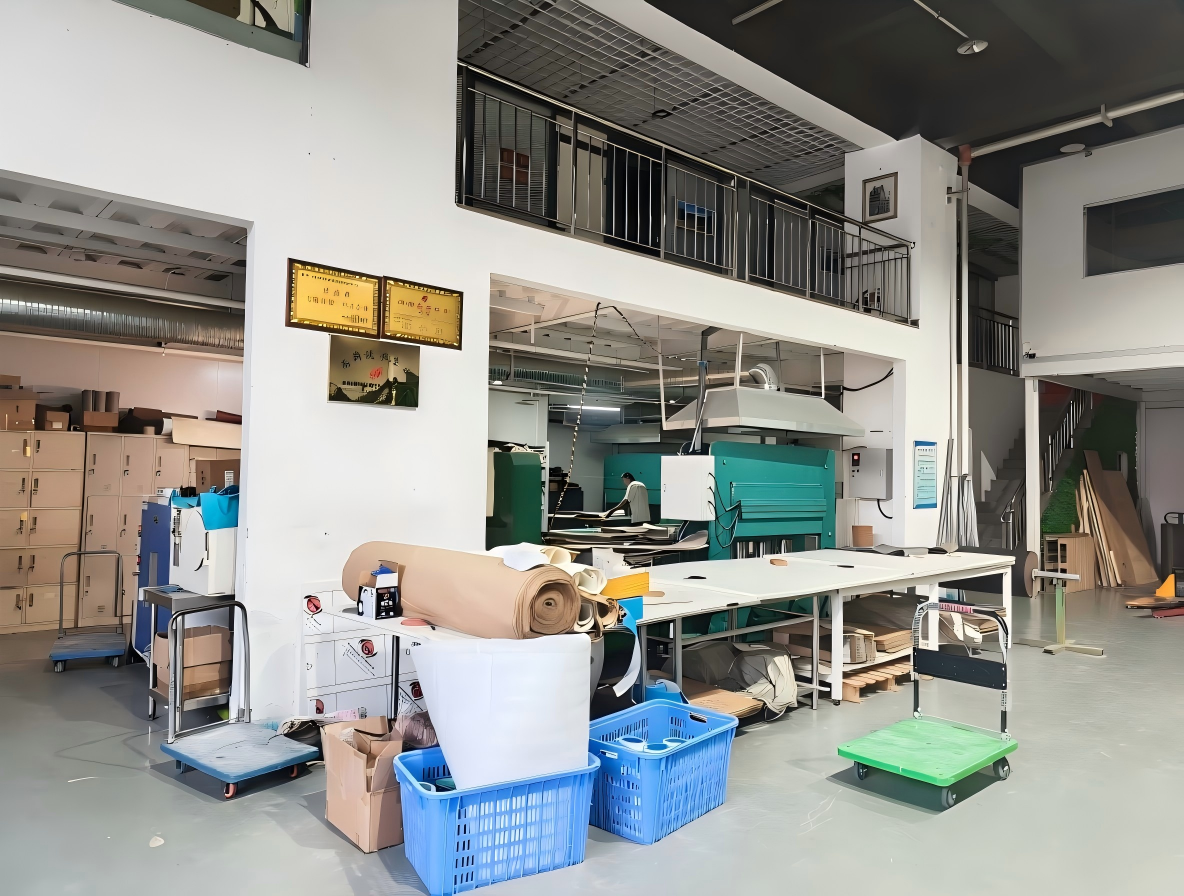
| Company base | Supports continuity planning and audit scheduling | Founded 2003; Zhengzhou, Henan, China; 45 employees; 5 engineers; 500 m² factory; 70% export to EU and USA |
Two checks are worth adding. First, ask for the compliance documentation that applies to your market and confirm the certificate scope actually covers the belt family you are buying - a certificate for a related product line is not the same as a certificate for your item, and the validity date has to be current at shipment. Second, ask for the specification in writing: bond, abrasive, grit stage, dimensions, joint type and coolant compatibility on one sheet. A supplier who can produce that sheet can usually reproduce the belt.
FAQ
Which safety standard applies to diamond sanding belts sold into North America?
ANSI B7.7-2003, Safety Requirements for Abrading Materials with Coated Abrasive Systems, is the core reference for coated abrasive belts in the US and North American market. Buyers should confirm that the belt is marked and used within its stated maximum operating speed, that machine guarding matches the belt construction, and that any compliance document they are shown covers the exact product family being purchased and is valid at the time of shipment.
How do I evaluate a diamond sanding belt manufacturer for glass edging?
Check four things. First, whether the supplier actually offers resin bond belts for wet grinding at medium-to-fine grit stages, since that is the combination glass edging depends on. Second, whether every unit is tested and whether a pre-shipment test is defined as the acceptance criterion. Third, whether OEM production with packing and logo customisation is available, which indicates a supplier set up for repeat programmes rather than spot sales. Fourth, whether there is a repeat application record. RUITE's 5282 has supplied 20,000 units to an Italian OEM for ceramic grinding over 8 years with no complaints reported - a comparable record in your own material is the strongest available signal.
What are the minimum order quantity and payment terms?
For RUITE diamond belts, the MOQ is 50 units. Delivery is quoted FOB, CIF or DDP depending on destination, and payment terms are 100% prepayment. Pricing is quoted per specification, because bond type, grit stage, dimensions and joint construction all change the cost - a unit price quoted without that specification is not comparable with another supplier's figure.
Can we test a belt before placing a production order?
Yes, and testing is the step where bond selection is actually confirmed. Specify the substrate, coolant mode, grit sequence and machine parameters with the sample request so the trial matches production conditions; a sample run under different conditions proves very little. RUITE provides free technical consultation to help define the test specification, and pre-shipment testing is used as the acceptance criterion once a production order is placed.
What lead time should we plan for an OEM order?
The typical lead time is 30-45 days against a monthly capacity of 1,000 units. Add time for first-article approval and for shipping, and set the reorder point against the longer of the two. To start a specification review, send the substrate, coolant mode and grit sequence to sales@ruitechn.com or request a quote through www.ruitechn.com.
Conclusion: Choose the Bond From the Process, Then Verify the Supplier
Electroplated belts are the aggressive option: a single-layer abrasive built for stock removal on thermal spray coatings and tungsten carbide, generally run wet. Resin bond belts are the controlled option: a self-sharpening matrix built for wet grinding, edge rounding and finishing on glass, ceramics and stone, from medium grit through to polishing. Neither is the better belt in isolation; one is the better belt for a defined substrate, coolant mode and finish target.
What separates a good purchase from a repeatable one is the documentation around the belt. Write the bond, abrasive, grit sequence, dimensions and joint type onto one specification sheet. Then verify that the supplier tests every unit, states an acceptance criterion, holds a workable MOQ and lead time, and can support the specification after delivery. RUITE has manufactured diamond and CBN abrasives in Zhengzhou, Henan since 2003, supplies OEM programmes with packing and logo customisation, and backs orders with a 12-month shelf life quality warranty, free technical consultation and replacement for defective batches.
Next step: send your substrate, coolant mode and grit sequence, and RUITE will confirm which bond fits - resin bond, electroplated, or a mixed sequence across both.
Download the RUITE product catalog (PDF)
Email: sales@ruitechn.com | Tel: +0086-371-86555877 | WhatsApp: +8613928451015 | Website: www.ruitechn.com
Have Questions or Need More Details?
Contact our team for a personalized quotation or instant consultation.
Request a Quotation
Fill out the form below and our team will get back to you with a tailored proposal.
WhatsApp Direct Chat
Prefer to chat in real-time? Message us on WhatsApp for instant assistance & quick answers.
- Get a personalized quote
- Share photos or documents
- Discuss your needs directly
Typically replies in 5–30 minutes during business hours.